Moulding and Pressing
A ladleful of curd settles into a Camembert de Normandie mould.
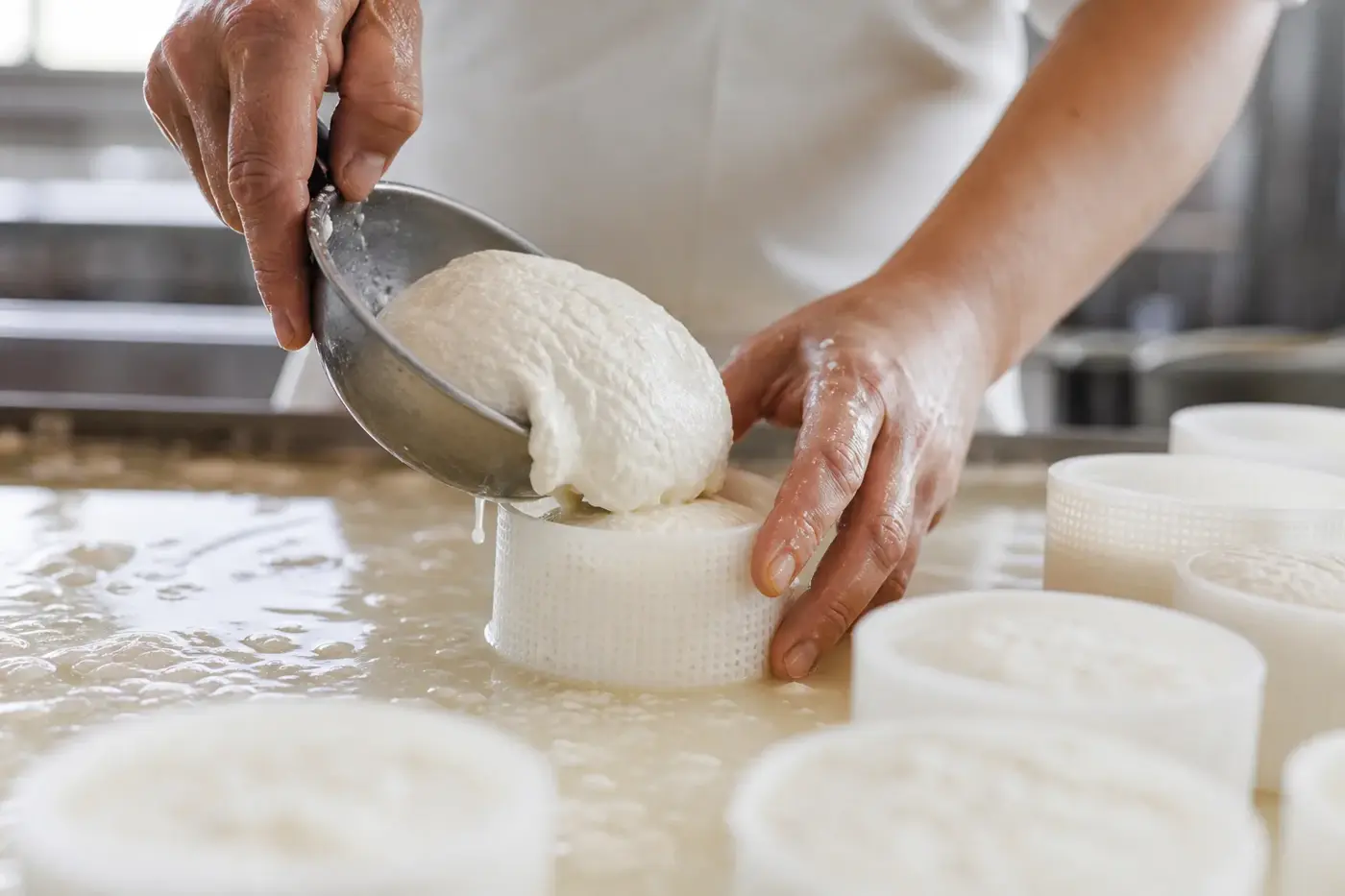
A ladleful of curd settles into a Camembert de Normandie mould. Then you wait. Its 2013 French specification describes at least five deposits, separated by at least 40 minutes, so each addition can drain before the next arrives. This is cheese with little interest in your diary. [4]
At first, a perforated cheese mould holds a loose mass of curd and whey. Later, it releases a cheese that can hold its own shape. The mould sets the boundaries; drainage, developing acidity and, for many cheeses, pressure bring the particles together. What goes into that mould matters just as much as the press. [1,2]
Somewhere for the curd to settle
Here, “mould” means the container that shapes curd, not the fungi that might later grow on a rind. You can mould a cheese without making a mould-ripened cheese. Same word, quite different jobs. [1]
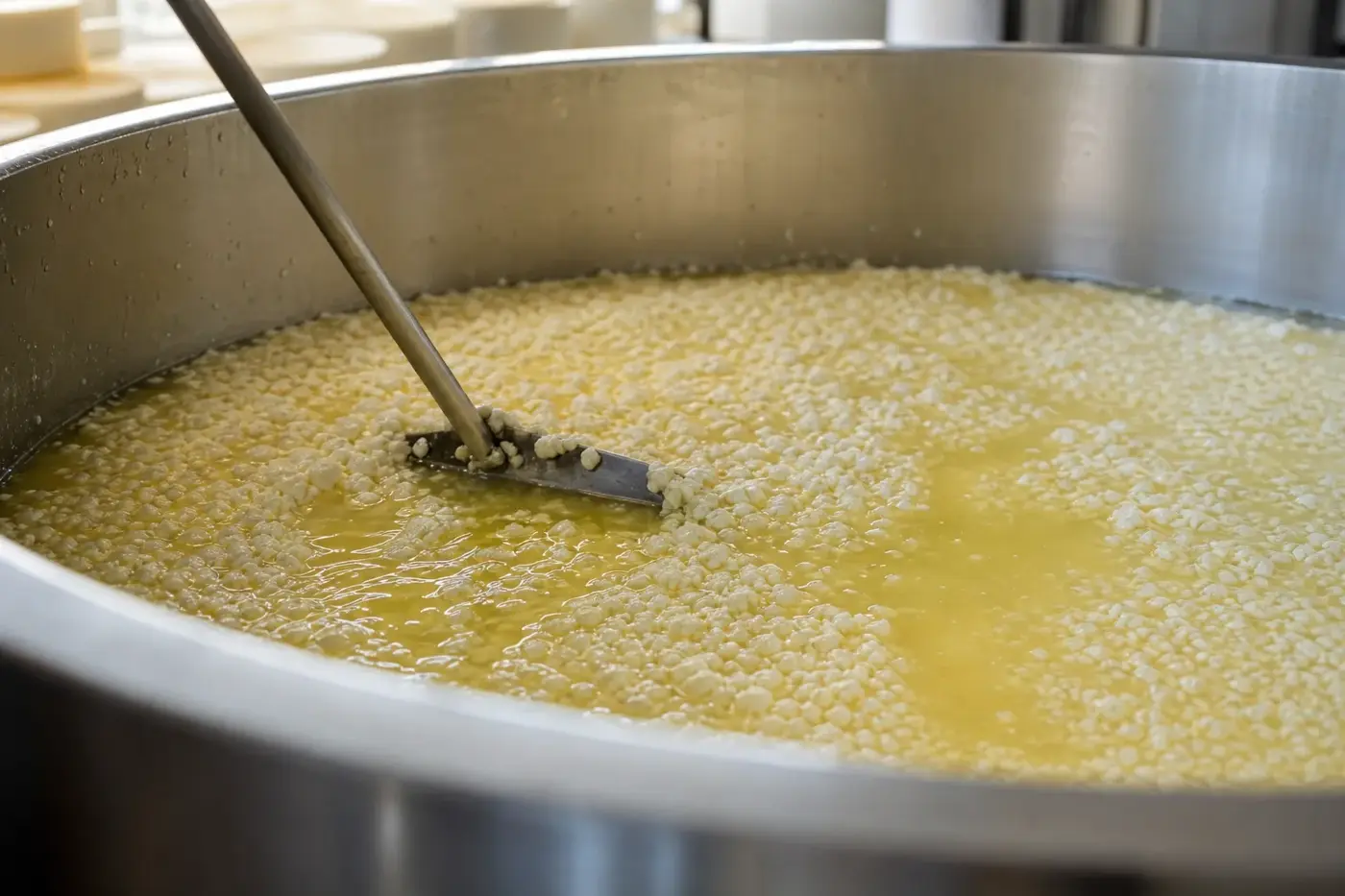
By this point, the milk has coagulated: its proteins have formed a gel. The curd has also had whatever cutting, stirring, heating or draining its style needs, as the milk-to-cheese process explains. Soft cheese curd and Cheddar curd have already taken very different routes before either meets a mould. [1,3]
Ladled gently or packed in pieces
For Camembert de Normandie, keeping the curd portions intact is the point. The 2013 French specification describes lifting them by hand with rounded ladles or transferring them with articulated moulding heads. Both preserve the portions rather than breaking them up. Those pauses between deposits let the earlier additions drain. [4]
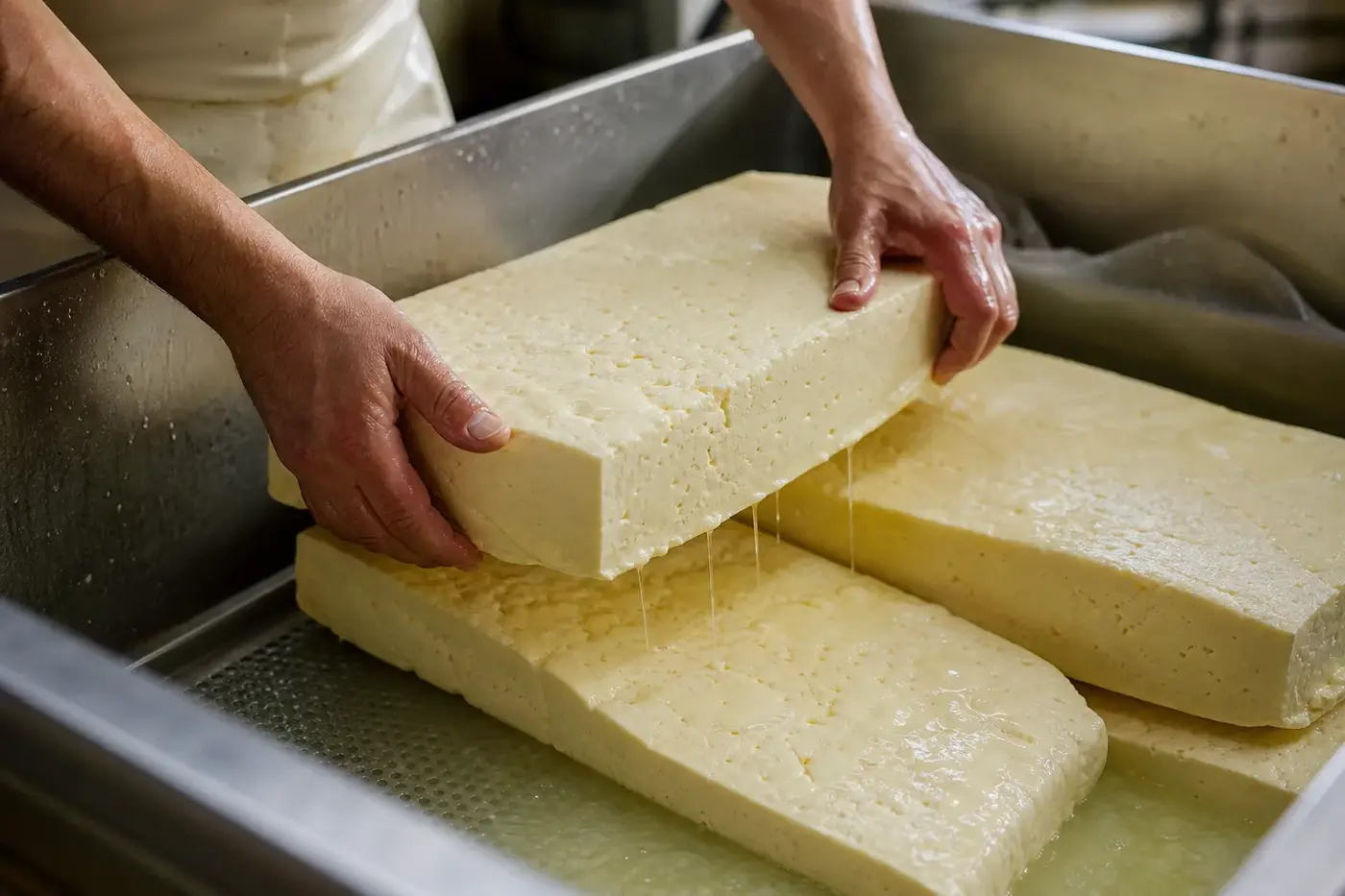
Cheddar arrives looking rather different. Its curd may already have been drained, stacked into slabs, milled into smaller pieces and mixed with salt. In the West Country Farmhouse Cheddar specification, those salted pieces go into cylindrical or rectangular moulds. The mould receives prepared curd, rather than repeating the vat’s work. [3]
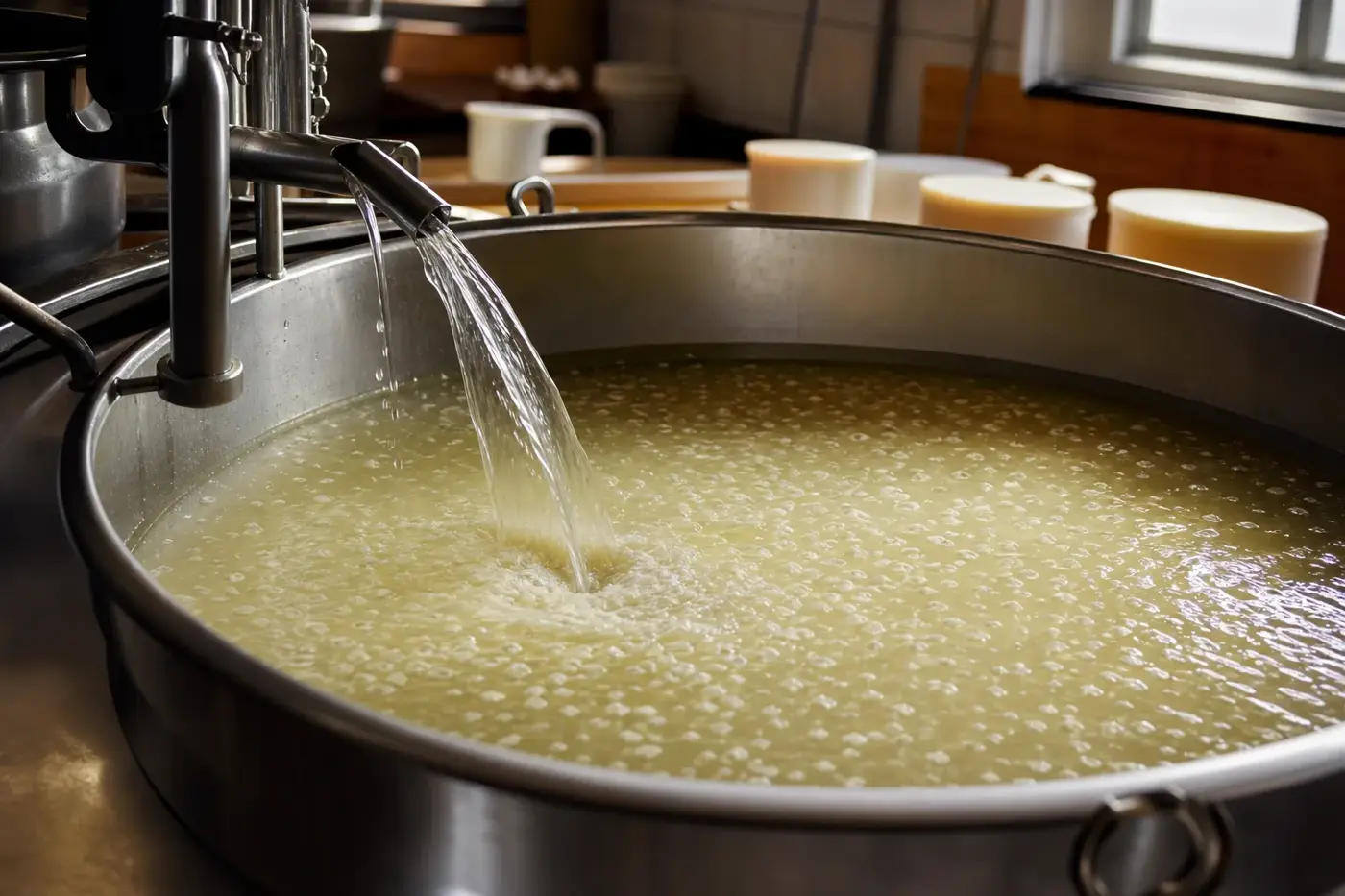
Look beyond the outline and you will find equally important openings. Perforated walls and bases let whey, the liquid separated from curd, escape while keeping the cheese mass inside. A fitted lid, often called a follower, passes the press load to the curd beneath it. [1,2]
Give gravity its moment
Soft cheese can come together without a mechanical press. As the curd settles under its own weight, whey drains away: you will often see this called self-pressing. Drainage and acid development carry on together, rather than taking tidy, separate turns. [1,4]
The 2013 Camembert de Normandie specification described spontaneous drainage in the moulds for at least 18 hours from the first deposit. Then comes a revealing detail: after turning, a metal plate applies slight pressure. That light weighting is a different operation from compacting Cheddar in a press. [4]
Some cheeses need substantial applied compression. Others form chiefly through drainage and their own weight. A mould tells you the intended shape, but gives away nothing about how heavily the cheese was pressed. [1,4]
Inside the press, curd comes together
Pressing brings curd particles closer, helping them knit into a compact mass while more whey escapes through the drainage routes. Canada’s food inspection guidance names both jobs: whey expulsion and compaction. You are changing the body of the cheese, not merely squeezing away the liquid around it. [2]
But a hard squeeze at the start can undo the maker’s intentions. Tetra Pak’s technical handbook explains that excessive initial pressure can compact the surface layer and trap moisture inside. Makers commonly build pressure progressively, giving whey a way out before the outside closes too tightly. [1]
Why a harder squeeze is not the answer
A pressing schedule has to suit the curd and the cheese’s format, not just the name you recognise. Pressure and duration affect compression and whey removal. Temperature and acidity affect drainage and the condition of the curd as its particles join. [1,3]
Together, those controls influence the moisture left behind and the formed cheese’s texture. More force cannot rescue a surface that has compacted too quickly and blocked whey’s escape. The press needs the curd to be ready for it. [1,3]
Acidification means increasing acidity, usually as starter bacteria turn milk sugar into lactic acid. As pH falls, whey releases more readily and the calcium balance within the protein network changes. Whether the particles knit together depends partly on that physical and chemical condition, not force alone. [1]
The Cheddar specification lets you follow these connections through the making. Slabs are turned and stacked until the intended acidity is reached, then milled, salted and pressed; makers may vary pressing pressure and duration. ASHRAE’s dairy engineering handbook likewise puts acidity development before milling. It describes pressing in stages, with cloth adjustment between them. [3,5]
Temperature also affects starter culture activity and the rate of whey expulsion. That is why a maker follows acid development alongside the clock. Keeping curd under pressure for longer does more than add pressing time: fermentation may still be progressing. [1,5]
A careful turn and a smooth cloth
Turning changes which face rests against the draining surface and helps the cheese take an even form. The 2013 Camembert de Normandie specification specified a turn from 1 May 2017. How often you turn depends on the particular production method. [4]
A wrinkle in a liner can leave its signature on the cheese. Cloth or mesh gives curd a permeable contact layer against the mould, and Canadian inspection guidance identifies a smooth rind as a purpose of press cloths. ASHRAE describes removing wrinkles during Cheddar pressing. The cloth deserves attention alongside the press. [2,5]
Some modern moulds replace liners with finely perforated surfaces. The requirements stay the same: support the curd, give whey an escape route and provide suitable contact for the developing surface. Cloth can do that job, but not every pressed cheese needs it. [1,2]
Three cheeses, three routes to a shape
Put these named production documents side by side and the differences become clear. Their sequences describe the specified products, not every cheese bearing those familiar style names. Read them with the guides to Camembert, Cheddar and Gouda to explore the distinctions between the styles and their named regional products. [3,4,6]
| Documented example | What goes into the mould | How it takes shape | When the salt arrives |
|---|---|---|---|
| Camembert de Normandie, French specification, 2013 [4] | Ladled portions of curd | Spontaneous drainage, then light plate pressure after turning | Dry salting after drainage |
| West Country Farmhouse Cheddar, specification published by Defra [3] | Milled, salted curd | Pressed in moulds | Salt mixed into curd before pressing |
| Gouda Holland, EU single document published in 2019 [6] | Separated, processed and washed curd | Pressed into shape | A brine bath after pressing |
Gouda makes washing and salting particularly easy to untangle. Washing prepares the curd; brining immerses the formed cheese in salt water. The 2019 Gouda Holland document puts washing before pressing and the brine bath afterwards. Codex’s international Gouda standard also names brining as the salting method in its additional manufacturing information. [6,7]
Follow the salt through the making
Cheddar receives salt as a collection of milled curd pieces, before those pieces become the final cheese. Gouda Holland reaches the brine as a formed, pressed unit. Camembert de Normandie takes a third route, with dry salt applied after drainage in the mould. [3,4,6]
When you read a production account, ask what actually receives the salt. Is it loose curd, a draining cheese or a pressed cheese? That question tells you more than the loose description “moulded, pressed and salted”. The order belongs to the method, and different cheeses do things differently. [3,4,6]
This page summarises published guidance from the official sources it cites. It is not medical advice. Guidance differs between countries and changes over time, so check the current source for where you live, and ask your doctor, midwife, pharmacist or dietitian about your own circumstances.
Out of the mould, on with maturation
Out comes a shaped cheese, but its texture is still developing. The Gouda Holland document describes natural maturation afterwards, with regular turning and the formation of a dry rind. Codex likewise treats flavour and body development as part of ripening, allowing different ripening conditions where comparable characteristics result. Moulding establishes the form; maturation keeps developing the body inside it. [6,7]
The Cheddar specification links that later handling to the moisture sought earlier. Cloth-bound cylinders and wrapped blocks lose moisture differently during maturation, so makers may prepare a drier curd for the wrapped format. A wheel and a block differ in more than their prospects of fitting in your fridge. The intended ripening system helps shape decisions before pressing even begins. [3]
Clean equipment matters at every turn
Presses, press cloths and draining racks all need hygiene and contamination controls. The Canadian Food Inspection Agency's equipment guidance, modified 29 September 2021, covers these requirements. It also addresses press drippings, drain troughs and the condition of the press itself. [2]
Pressing alone does not make cheese safe. Canadian guidance keeps sanitation and contamination controls in place throughout this stage, including while cheese drains, is turned and leaves the equipment. A compact surface and a well-formed shape are production outcomes, not replacements for hygienic handling. Follow the official guidance linked below and the wider cheese food safety guide for that separate subject. [2]
Questions people ask
Does moulding cheese mean it will grow mould?
No. A cheese mould is a container used to shape curd, not the fungi that may later grow on a rind.
Does every cheese need a mechanical press?
No. Soft cheese can hold together as whey drains and the curd settles under its own weight.
Why is cheese not pressed hard straight away?
Excessive initial pressure can compact the surface and trap moisture inside. Makers commonly increase pressure gradually so whey can escape.
What happens to Camembert de Normandie after it drains?
It is dry salted after drainage in the mould. The 2013 specification also describes a turn and slight pressure from a metal plate.
Why is cloth used when pressing cheese?
Cloth provides a permeable contact layer between the curd and mould. Canadian inspection guidance identifies a smooth rind as one purpose of press cloths, and wrinkles can leave marks on the cheese.
Sources
- Tetra Pak, Dairy Processing Handbook, “Cheese”, online edition, undated. Sections on acid-producing cultures, curd preparation, cheese moulds and pressing. Tetra Pak supplies processing equipment; its handbook is used here as a technical manufacturing reference.
- Canadian Food Inspection Agency, Dairy processing: Evaluation of dairy processing equipment, modified 29 September 2021. Sections “Presses”, “Press cloths” and “Draining racks”.
- Department for Environment, Food & Rural Affairs, West Country Farmhouse Cheddar product specification, undated document hosted on the Great Britain protected food names service. Section 4.5, “Method of production”.
- French Ministry of Agriculture, Cahier des charges de l’appellation d’origine « Camembert de Normandie », specification approved by Décret n°2013-1059 of 22 November 2013, published in the ministry’s official bulletin on 29 November 2013. Production provisions, pages 8 and 9.
- ASHRAE, ASHRAE Handbook, chapter 33, “Dairy products”, 2026 online edition. “Cheddar cheese”, manufacturing and curing sections.
- European Commission, Official Journal of the European Union, C 338, Gouda Holland single document, 8 October 2019. Section 3.4 describes washing, pressing, brining and maturation. This dated production account supplies the Gouda example.
- FAO and WHO, Codex Alimentarius, Standard for Gouda, CXS 266-1966, online text retrieved November 2026. Ripening description and appendix on manufacture. Codex is an international reference standard, rather than automatically binding national law.
Researched through technical manufacturing references, published production specifications and Canadian official equipment guidance, with the three cheese sequences compared as desk research.
Last checked: November 2026
Last checked November 2026.
The editors suggest you read next
Cutting the Curd: Why the Size of the Pieces Matters
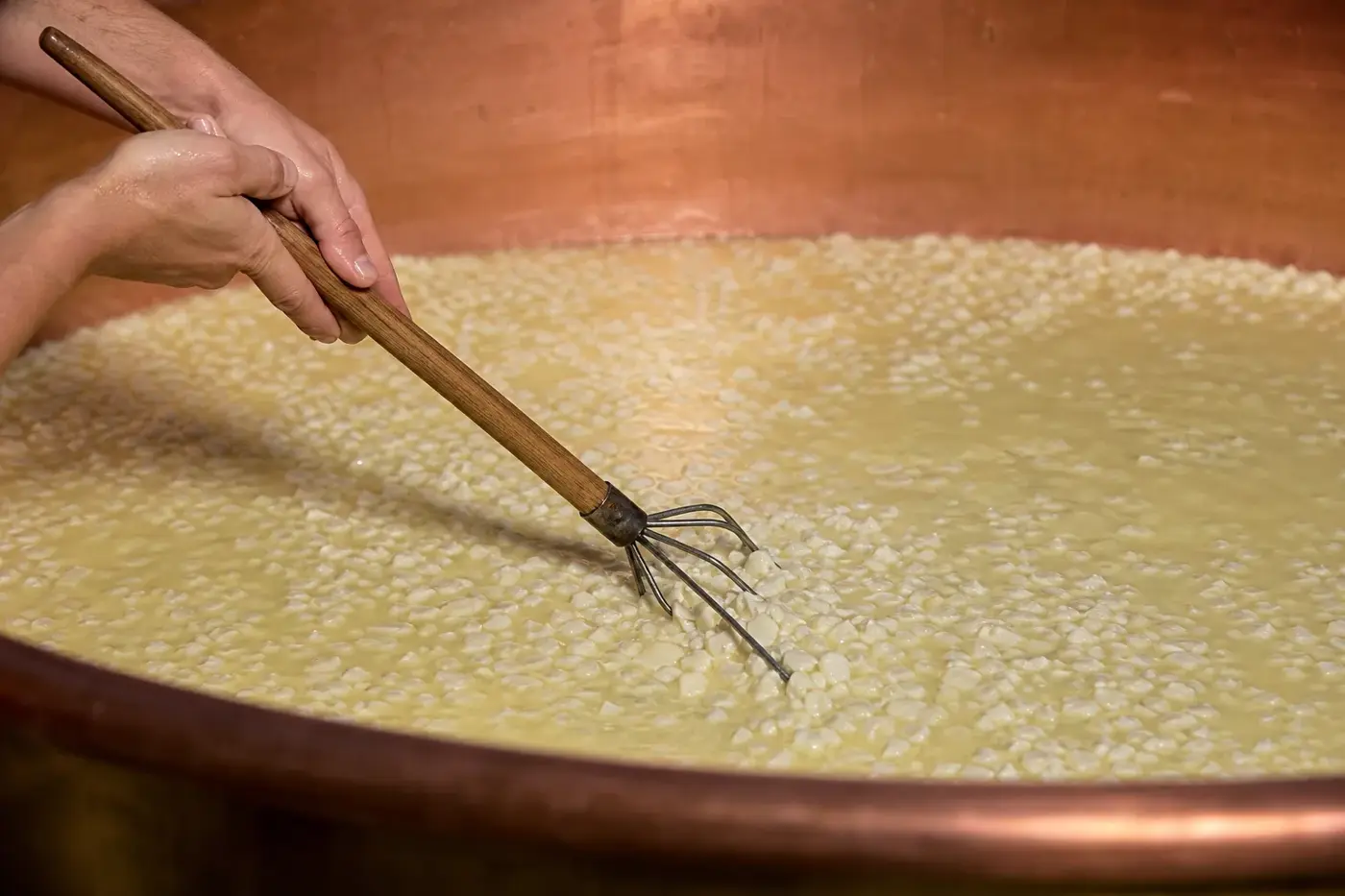
At dairy Boselli, a spino breaks the set milk for Parmigiano Reggiano into minute granules.