Murazzano
A small, milk-white wheel is ready to leave the dairy after just four days of maturation.
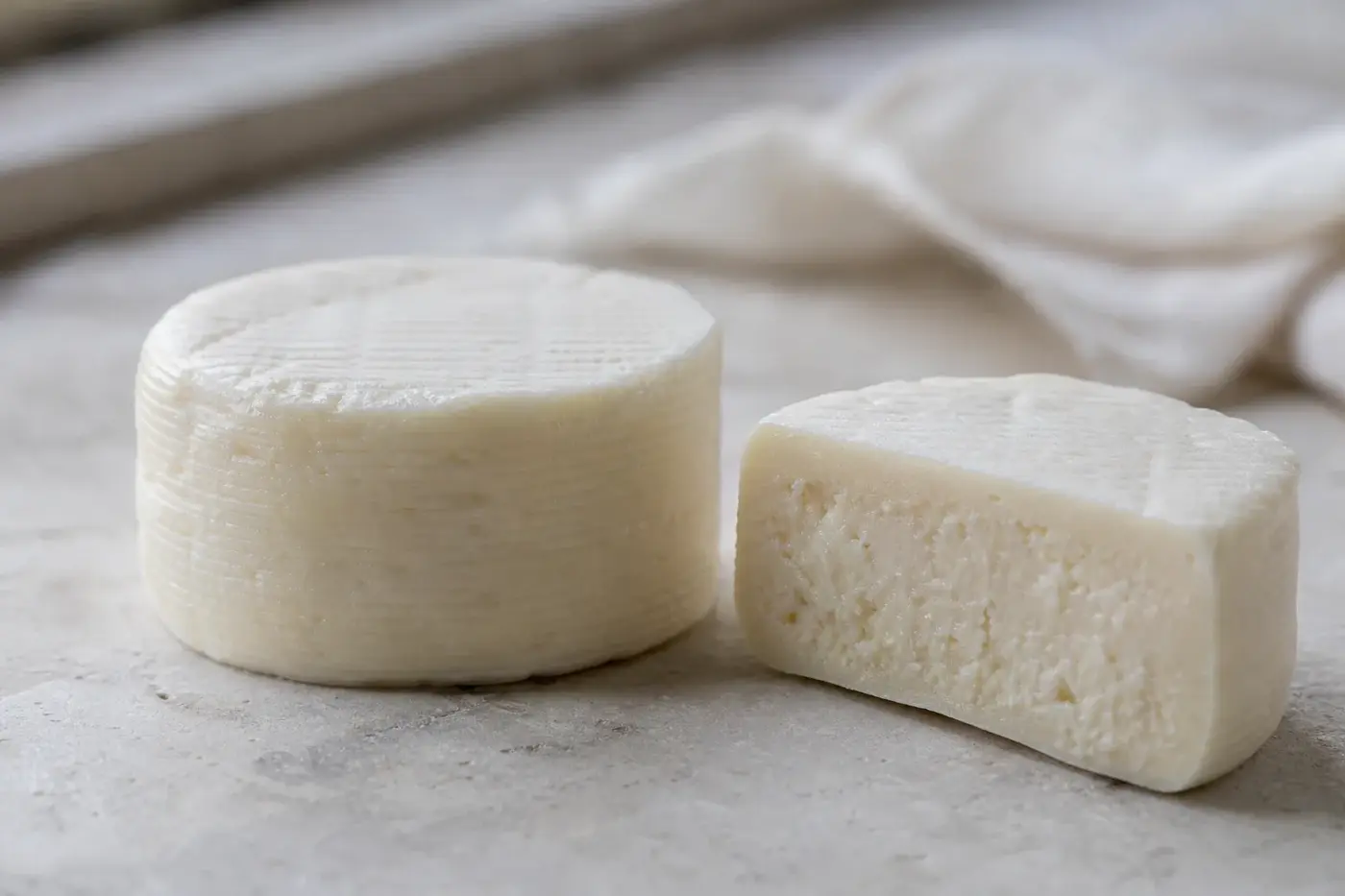
A small, milk-white wheel is ready to leave the dairy after just four days of maturation. Meet Murazzano, from Piedmont’s Alta Langa hills, where Delle Langhe sheep supply its defining milk. Young, this soft Italian cheese tastes delicate and milky. Whether made entirely from sheep’s milk or blended with cow’s milk, it carries an EU protected designation of origin. [1][2][3][5]
| What to know | Murazzano |
|---|---|
| Name to look for | Murazzano, its familiar and registered name. [1][4] |
| Registration authority and register ID | EU: European Commission; register ID: not provided here. [1] |
| Protected status | EU: listed as a PDO by Italy’s agriculture ministry. Great Britain: registered PDO, registration dated 31 December 2020. Northern Ireland and other jurisdictions: status not provided here. EU and Great Britain source date: November 2026. [1][4] |
| Where it belongs | Listed municipalities in the Alta Langa, province of Cuneo, Piedmont, Italy. [2][3] |
| Milk in your wheel | Delle Langhe sheep’s milk, at least 60%; cow’s milk, no more than 40%. All sheep’s milk is permitted. [2] |
| Milk treatment and rennet | Heat treatment permitted; liquid calf rennet. [2] |
| Minimum maturation | Four days. [2] |
| Size at minimum maturation | Cylindrical; 10 to 15 cm across, 3 to 4 cm high, weighing 250 to 400 g. [2] |
| UK pregnancy guidance | Follow the NHS advice linked in Sources. Source date: November 2026. [6] |
Head into the Alta Langa hills
Steep slopes, awkward access, demanding ground. The Alta Langa gives its farmers plenty to contend with. The geographical account accompanying the EU amendment describes how limited productivity and difficult terrain discouraged intensive farming. Keeping sheep offered a way to work with the hills instead. [3]
Murazzano takes its name from a municipality in Cuneo, though its production area reaches into neighbouring communities. Regione Piemonte ties the cheese to this corner of Piedmont. The EU geographical account places the Alta Langa between the lower wine-growing Langhe, the Ligurian Apennines, Monferrato and the Cuneo plain. [3][5]
Picture pastoral hills rather than the wine country below. The same account singles out the Delle Langhe sheep for their hardiness and ability to give milk in demanding conditions. Farming households could use that ground, then turn the milk into a food distinctly their own. [3]
When you choose a wheel, that connection comes with it: a defined district, a named sheep breed and a prescribed method. There is quite a lot of landscape in this little cheese. The guide to protected names explains how those elements come together in a designation of origin.
Let sheep’s milk take the lead
In a mixed-milk Murazzano, sheep’s milk must account for at least 60%, with cow’s milk limited to 40%. A wheel made entirely from sheep’s milk is permitted too. Whichever you choose, sheep’s milk has the leading role. [2]
The milk has local roots before it reaches the dairy. The EU application’s single document requires the supplying dairy flocks and herds to live within the defined geographical area. Place matters well before the curd appears. [3]
At the counter, ask which milks went into your wheel and how they were treated. “Sheep’s milk” answers the first question, but tells you nothing about the second. Read the producer’s information or ask your cheesemonger to consult it.
The milk treatment guide takes you through the distinction. It explains raw, thermised and pasteurised milk, helping you make sense of the answer before you choose.
This page summarises published guidance from the official sources it cites. It is not medical advice. Guidance differs between countries and changes over time, so check the current source for where you live, and ask your doctor, midwife, pharmacist or dietitian about your own circumstances.
Follow the curd from vat to mould
Liquid calf rennet sets the milk into curd, the solid gel that is ready for cutting and draining. The specification puts coagulation at 37 °C, with a tolerance of 3 °C either way. A small cheese still has precise requirements. [2]
The curd is cut twice: first coarsely, then into smaller pieces. It goes into cylindrical, perforated moulds, where turning helps it drain. During moulding, both faces receive dry salt. [2]
Maturation includes at least two quick washes with lukewarm water, although equivalent alternative techniques are allowed. Setting, cutting, draining, shaping, salting and maturing all play their part. Follow those steps and you begin to see how your finished wheel takes shape. [2]
Still finding curd and whey a little mysterious? The guide to how cheese is made gives you the wider picture. These details describe Murazzano’s specified production process, not a method for making it at home.
Take a closer look inside
Soft cheese does not always mean a centre that flows. Regione Piemonte describes Murazzano as a low cylinder with flat faces and a soft, slightly grainy interior. You may spot a few small holes too. [5]
A young wheel has a milk-white surface, without a developed rind. Longer ageing brings a straw-coloured appearance. Those visual clues give you something useful to discuss when a particular wheel catches your eye. [5]
Look for that fine grain rather than expecting a uniformly smooth, flowing paste. Ask your cheesemonger, “How firm is the paste?” It is a more revealing question than simply asking whether the cheese is soft.
A whole Murazzano is small enough to examine easily. Ask to see its surface and, if a cut wheel is available, the interior too. Together, they help you discuss which maturity would suit the way you plan to serve it.
Begin with a young wheel
Regione Piemonte describes young Murazzano as delicately fragrant, with a pleasant flavour recalling sheep’s milk. “Milky” is a useful place to begin. Keep that description in mind, then give your attention to the wheel in front of you. [5]
Age is worth a separate question at the counter. The specification allows ordinary maturation up to 90 days, alongside a separate provision for longer keeping in traditional glass burnie. Ask how maturation has changed the flavour of the cheese on offer. [2]
For your first taste, choose a young wheel and try it plain before adding accompaniments. If several maturities are available, ask about firmness and aromatic intensity. The oldest does not automatically deserve the trophy: choose what interests you and suits the occasion.
Keep a few simple tasting notes for your next visit. How readily does the paste yield, and does the flavour stay gentle? Notice what remains after you swallow, then bring those observations to your next encounter with Murazzano.
Find the useful words on the label
Start with the exact name, Murazzano, and the designation information on the packaging. In Italy, DOP stands for Denominazione di Origine Protetta, the Italian wording for PDO. The British register separately records Murazzano as a protected designation of origin. [1][4]
To understand the milk blend, look beyond a prominent mention of sheep. The specification permits “Con latte di pecora delle Langhe”. The stronger wording, “Solo latte di pecora delle Langhe”, is reserved for cheese made entirely from that sheep’s milk, distinguishing it from a permitted blend. [2]
Choosing a portion from a larger cut, or browsing an unpackaged display? Ask to see the producer’s label. Find out whether the cheese uses sheep’s milk alone or mixed milk, what milk treatment was used, how mature it is, and which storage instructions and date apply.
Tell your cheesemonger how you want to eat it, too. You might want a gentle cheese to enjoy alone, something firmer for a board, or a whole wheel to share immediately. That gives them more to work with than “the best one”.
Keep the original label, or photograph its information before you discard the wrapping. The cheese label guide helps you separate product identity, ingredients and handling information.
Give the first bite a little room
Start with bread and very little else. Cut small wedges through the centre, put accompaniments alongside rather than on top, and taste a plain piece first. That gives you a reference before sweetness, acidity or seasoning enters the picture.
Pear slices and plain bread make a simple plate. For a more savoury approach, offer boiled potatoes and lightly dressed leaves separately. Taste your particular wheel before deciding how much company it needs.
A small spoonful of honey on the side lets you try a sweet contrast without dressing the whole cheese. Compare a plain bite with a dressed one, and give everyone the chance to taste it alone. Your board need not look as though it is expecting more guests.
For drinks, begin with still water, lightly brewed unsweetened tea, or an alcohol-free apple drink. Water is especially useful when you want to concentrate on differences between bites. With tea or juice, alternate sips and tastes rather than pouring either over the cheese.
For more possibilities, turn to the cheese and wine pairing guide. It includes alternatives if you do not drink alcohol.
Keep your wheel cool
For home handling in England, Northern Ireland and Wales, the Food Standards Agency recommends a fridge temperature between 0 and 5 °C. Follow the product’s storage instructions. Keep chilled food out for the shortest possible time. [7]
Once you open the cheese, retain its label so the date and instructions are close to hand. The NHS advises using opened ready-to-eat food within two days unless the packaging says otherwise. Eat, cook or freeze food by its use-by date. [8]
Take out only the portion you intend to eat and leave the rest refrigerated. You can let that portion lose some refrigerator chill while you prepare the bread and plates. The NHS says ready-to-eat food should be eaten within four hours of leaving the fridge, including preparation and time at the table. [8]
The home storage guide offers practical help with wrapping cheese and arranging your refrigerator. Keep the product’s own instructions to hand as you do.
Choose carefully when someone needs extra care
Begin with the actual product’s milk treatment. Then follow current guidance for your country and circumstances. This distinction matters when you are choosing cheese for someone who needs particular care.
The NHS’s UK pregnancy guidance distinguishes between cheese types and permits some hard cheeses made with unpasteurised milk. It advises thoroughly cooking certain soft cheeses until steaming hot all the way through. Consult its current advice for the cheese concerned. [6]
The NHS identifies pregnant people, newborn babies, people with weakened immunity and older people as groups at greater risk of serious listeriosis. Its dairy guidance also highlights children and people who are unwell as particularly vulnerable to food poisoning from unpasteurised dairy products. [8][9]
If you are choosing for someone in a higher-risk group, consult the linked official advice. Ask their doctor, midwife or dietitian when individual guidance is needed. Have the product’s milk-treatment information ready, so the conversation concerns exactly the cheese you are considering.
Questions people ask
Where is Murazzano made?
Murazzano is made in listed municipalities in the Alta Langa, in the province of Cuneo, Piedmont, Italy. It takes its name from a municipality in Cuneo.
What milk is used to make Murazzano?
It is made from Delle Langhe sheep’s milk, either alone or blended with cow’s milk. Sheep’s milk must make up at least 60% of a blend, and cow’s milk no more than 40%.
Is Murazzano made with pasteurised milk?
The specification permits heat treatment, but the type of milk used does not establish how it was treated. Check the producer’s information or ask the cheesemonger to consult it.
What does Murazzano taste and look like?
Young Murazzano has a delicate fragrance and a pleasant flavour recalling sheep’s milk. It has a soft, slightly grainy interior and a milk white surface without a developed rind; longer ageing brings a straw coloured appearance.
Can you eat Murazzano during pregnancy?
The NHS advises thoroughly cooking certain soft cheeses until they are steaming hot all the way through. Check the product’s milk treatment and consult the current NHS pregnancy advice linked in the page for the cheese concerned.
Sources
- Ministero dell’agricoltura, della sovranità alimentare e delle foreste, Elenco e disciplinari DOP e IGP prodotti agricoli, live list, accessed November 2026. Official list and specification index.
- Ministero dell’agricoltura, della sovranità alimentare e delle foreste, Disciplinare della denominazione di origine protetta “Murazzano”, version linked from the ministry’s live cheese specification index, accessed November 2026. Official product specification.
- European Commission, Application for approval of an amendment to the product specification for “Murazzano”, Official Journal C 229, 14 June 2022, document 2022/C 229/06. Official publication.
- Department for Environment, Food & Rural Affairs, Murazzano, protected food name register entry, published 2021, accessed November 2026. GB register entry.
- Regione Piemonte, Murazzano, PiemonteIS agricultural product account, undated, accessed November 2026. Regional account.
- NHS, Foods to avoid in pregnancy, live guidance, accessed November 2026. UK pregnancy advice.
- Food Standards Agency, How to chill, freeze and defrost food safely, published 2017, live version accessed November 2026. Applies to England, Northern Ireland and Wales. Official chilling guidance.
- NHS, Listeriosis, reviewed 10 November 2023, accessed November 2026. Risk groups and handling advice.
- NHS, Dairy and alternatives in your diet, live guidance, accessed November 2026. Dairy and vulnerable-group advice.
This desk-researched article combines official production documents, the British register, Regione Piemonte’s published account and UK public food safety guidance; serving combinations are identified as editorial suggestions.
Last checked: November 2026
Last checked November 2026.
The editors suggest you read next
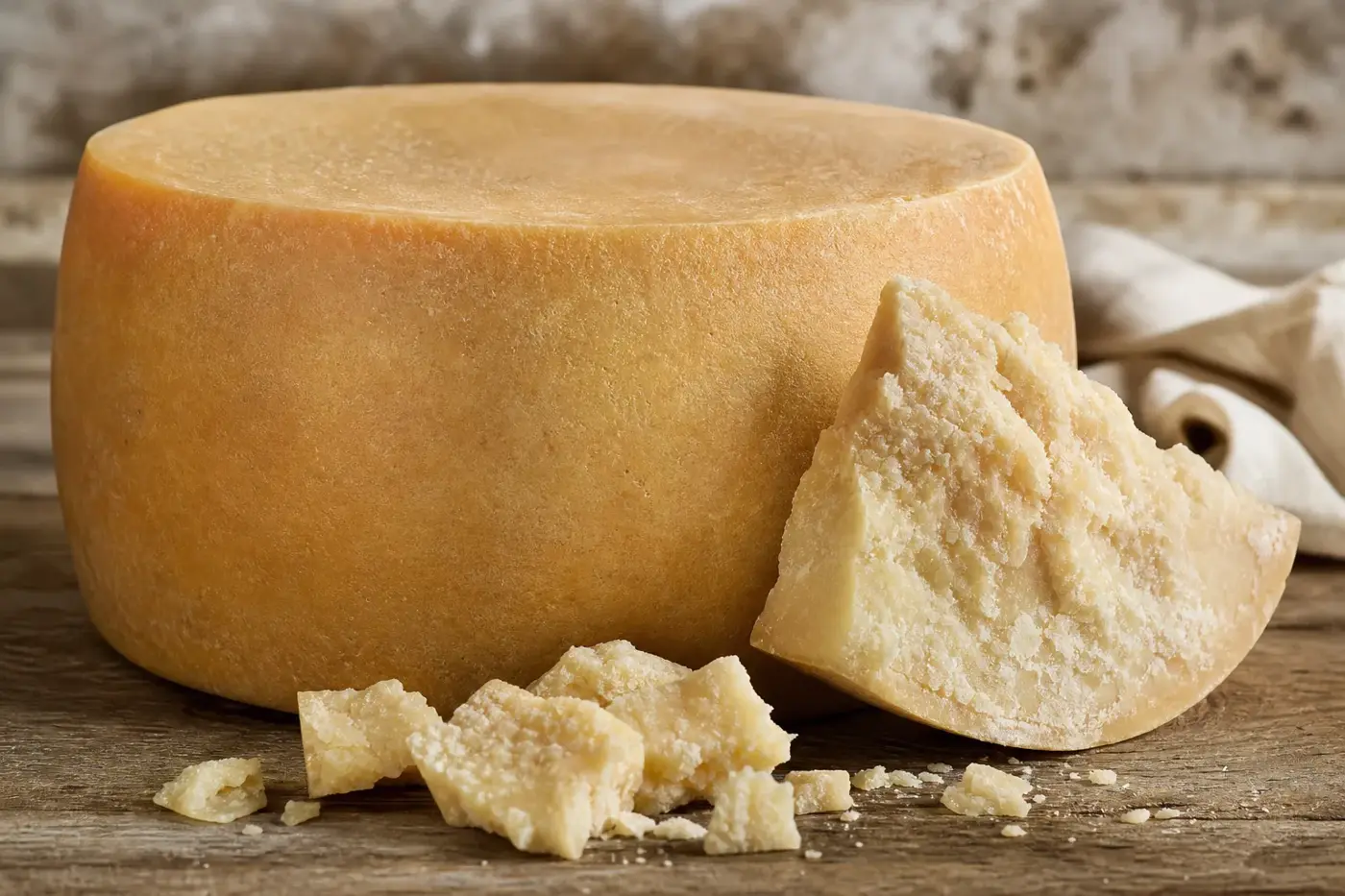
Parmigiano Reggiano
Break into a wheel of Parmigiano Reggiano and flakes fall away, revealing a finely granular cheese, pale straw to straw in colour.