Natural Rind Cheeses Explained
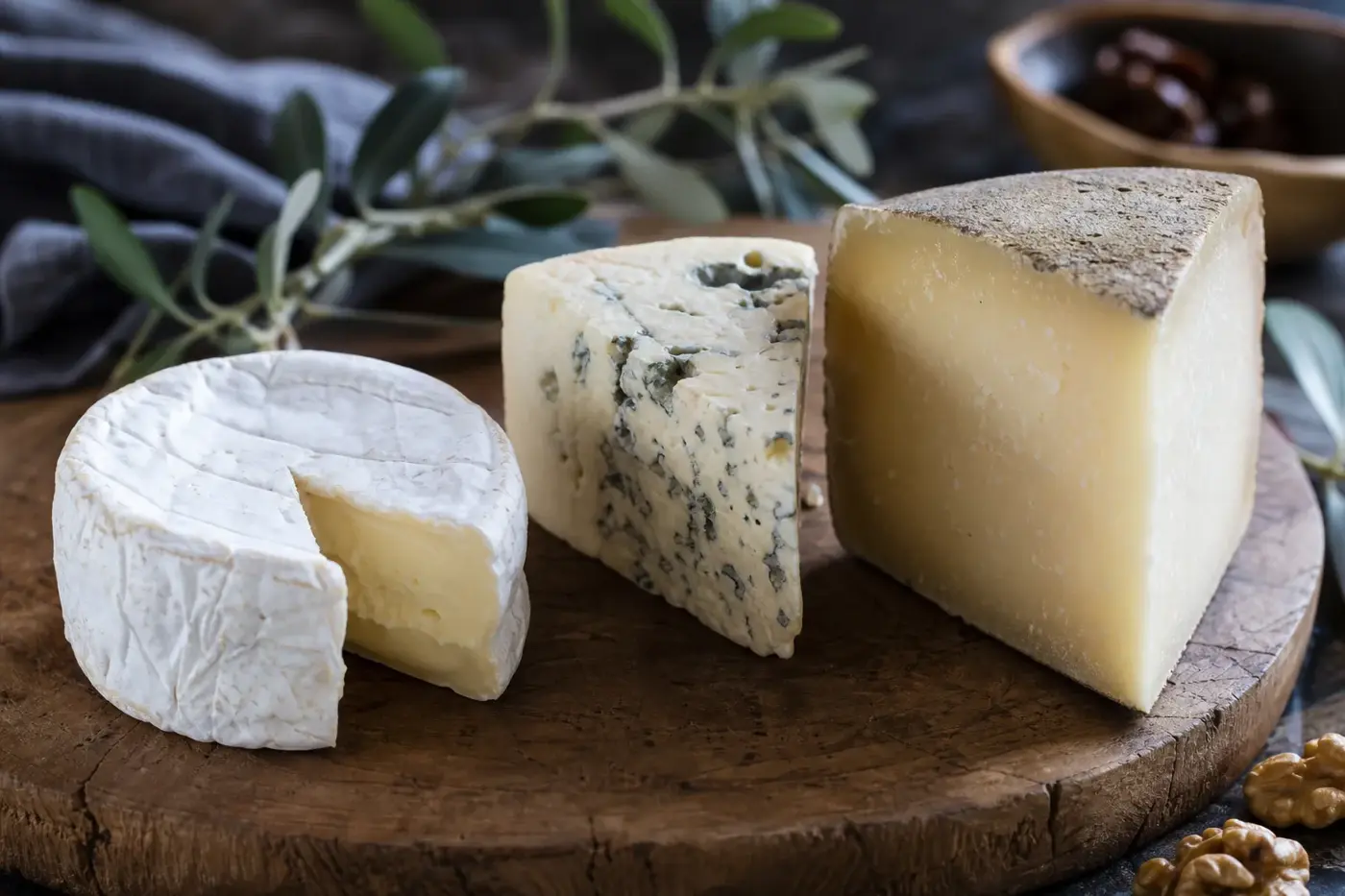
Look closely at Blue Stilton's slightly wrinkled coat.
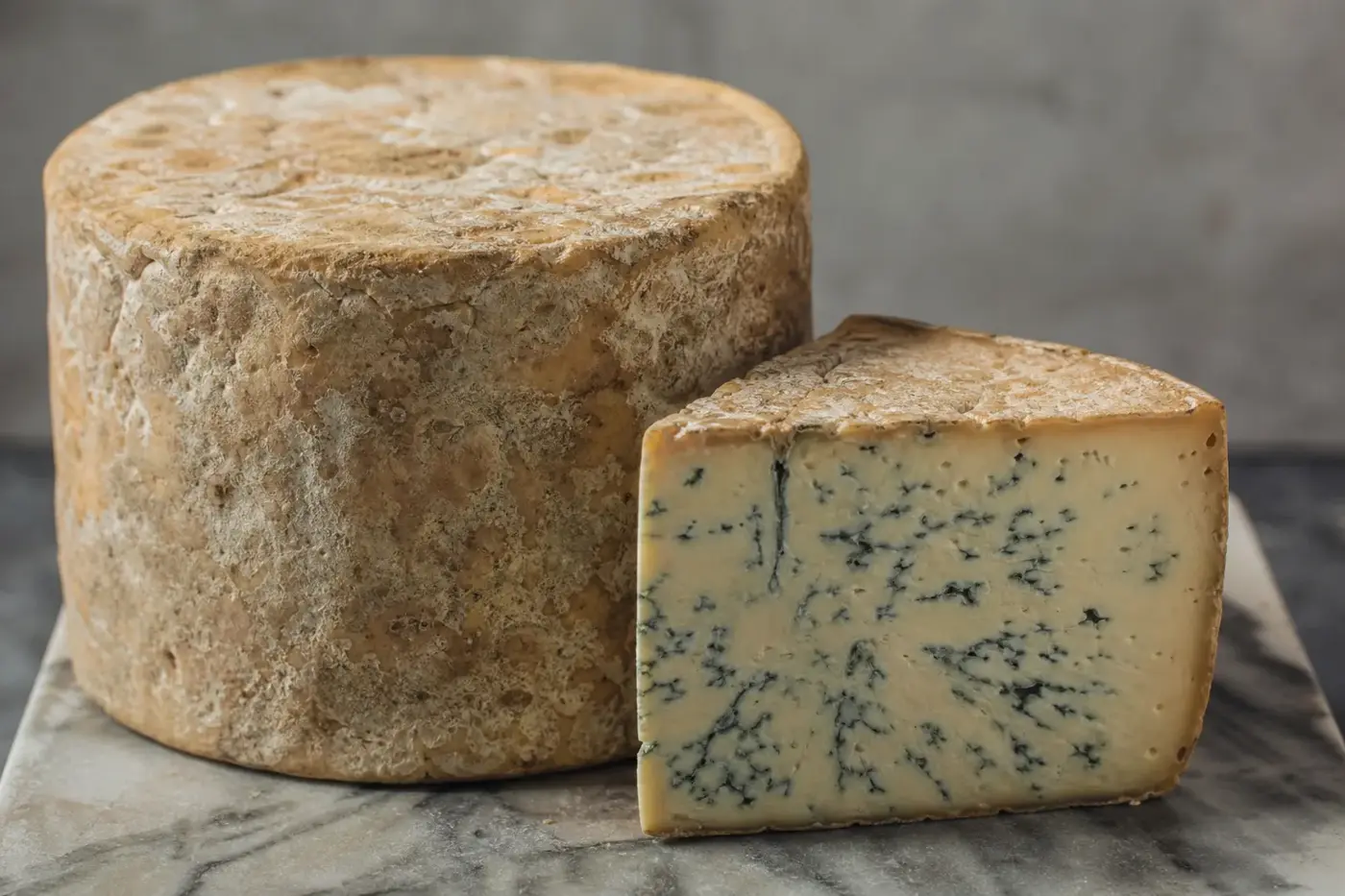
Look closely at Blue Stilton's slightly wrinkled coat. Now picture Parmigiano Reggiano's firm, straw-coloured shell. If you judged cheese by its wardrobe, you might never put these two together. Yet both have natural rinds: living outer surfaces shaped during ageing by drying, microbes and their surroundings. [1,2,3]
How your cheese grows its coat
A natural rind takes shape during maturation. The term describes the cheese's surface, not its milk treatment, texture or ageing period. The two Great Britain product specifications explored here set different requirements for their cheeses, even though both have naturally formed rinds. [2,3]
Start with one useful question: how did that outside layer get there? Did the cheese dry and develop its own surface community, or did someone apply a separate covering? That distinction helps you understand the exterior; for the bigger picture, explore how to tell cheese styles apart. [1,4]
Meet the life on the surface
As moisture leaves a cheese, its outside changes. Parmigiano Reggiano's consortium describes its rind as the result of dehydration of that outer layer. Alongside this drying, many cheese rinds support communities of bacteria, yeasts and moulds, arriving through milk, cultures and the maturation environment. [1,4]
Moisture helps decide which organisms thrive there. A 2014 study investigated 137 cheese rinds from 10 countries, using DNA sequencing and laboratory communities. Surface moisture was the strongest measured predictor of community composition. Salt was measured too, but showed no equivalent community-wide association in that survey. [1]
Milk, salt and the art of waiting
Your natural-rind cheese can begin with either pasteurised or raw milk. The Great Britain specifications describe Blue Stilton made from pasteurised cows' milk and Parmigiano Reggiano from raw, partially skimmed cows' milk. Salt takes different routes too: it is mixed into Stilton's curd, while Parmigiano Reggiano wheels enter brine. [2,3]
Around the moist surface, humidity and airflow work together. Drying depends on the surrounding air as well as the cheese itself. Stilton's specification repeatedly links maturation to controlled humidity and temperature: developing that coat needs careful management, not just somewhere to sit uncovered. [2]
Then comes the wait, with each cheese keeping its own timetable. Parmigiano Reggiano's specification requires at least 12 months of maturation. Stilton's specification explains that seasonal milk composition, cheese size, temperature and the maker's methods affect ripening. Age alone tells you little about the rind you will find. [2,3]
A natural coat still needs care
A natural rind can keep its maker busy. During Stilton production, cheeses are turned to help drainage and distribute moisture. Their surfaces are sealed before further ripening, preparing the coat and restricting air entry into the curd. Later, piercing lets air inside so the blue mould can develop. [2]
Brushing can remove loose surface growth and help shape a rind. Ask your cheesemonger how a particular cheese has been cared for, including whether its rind has been brushed or washed. That apparently effortless exterior may have required rather more attention than yours did this morning.
Where the rind ends and the covering begins
Wax, plastic coatings and cloth are applied coverings, distinct from the cheese's own outer layer. Remove non-food coverings before eating. Food-grade wrapping added after cutting has another job: protecting your portion during storage, rather than creating the original rind. [4]
These categories do not always sit neatly apart. The microbial survey included clothbound cheeses in its natural-rind group and found that washed-rind communities overlapped with other rind types. Blue Stilton brings another combination: blue-veined inside, naturally rinded outside. Rind and interior describe different parts of the same cheese. [1,2]
Look closer at Stilton and Parmigiano Reggiano
Blue Stilton's coat is slightly wrinkled and variable in colour, according to the Great Britain specification. Beneath it, you find a smooth-bodied cheese, rather than an open-textured one, with blue veins radiating from the centre. The coat tells you about the outside; those veins describe what lies within. [2]
Parmigiano Reggiano's specification describes a naturally straw-coloured rind around a granular cheese that breaks into slivers. At about 6 mm thick, this is a substantial outer layer, not a covering of fuzzy mould. Follow the Parmigiano Reggiano guide for the full production story. [3]
Discover what changes at the edge
Drying and microbial activity each bring something different to a rind. Moisture loss can make the outside firmer and drier than the interior. Surface microbes can break down components of the cheese and contribute to aroma and flavour. The results depend on both the organisms and the cheese. [1,4]
Ripening changes what sits beneath the surface too. Parmigiano Reggiano's consortium explains that enzymes break down milk proteins, releasing amino acids; tyrosine can form crystals. Stilton's specification describes flavour and texture changing during maturation. These are parts of the whole ripening process, not aromas and textures you can credit entirely to the rind. [2,4]
At the table, compare the outer layer with the paste, meaning the cheese beneath the rind. Does the edge feel firmer or drier, and does its aroma differ? How much does it change a mouthful? Your answers describe this particular cheese, not a flavour shared by every natural rind.
Before you read the rind, read the label
Begin with the label and your seller's description, then examine your cheese. Parmigiano Reggiano's straw-coloured rind and Stilton's wrinkled coat show how little colour alone tells you. Grey, brown or mottled surfaces need an explanation specific to the cheese in front of you. [2,3]
Ask three practical questions: is this the expected rind, has anything been applied to it, and does the producer recommend eating it? Keep the packaging or seller's information with your portion so those answers stay handy. For help separating product information from appearances, turn to reading a cheese label.
Give your cheese a good home
Keep dairy foods refrigerated and follow their packaging instructions. For England, Wales and Northern Ireland, the Food Standards Agency's storage guidance, as of November 2026, recommends a home fridge between 0 and 5 °C (32 and 41 °F). Use a thermometer to check the temperature. [5]
For a cut piece of Parmigiano Reggiano, its consortium recommends food-grade film or a suitable glass or plastic container to limit drying. Follow the maker's wrapping instructions for other cheeses. Protect the cut face rather than leaving it exposed during storage. [4]
Bring out only what you intend to serve. The FSA advises eating ready-to-eat foods shortly after refrigeration, within four hours, or two hours on a very warm day, away from direct sunlight. Apply those limits while letting cheese lose its refrigerator chill, and follow any stricter instructions on the pack. [8]
For more help with cut surfaces and suitable wrapping, see how to store cheese at home.
Should you eat the rind or leave it?
Whether you can eat a rind depends on the cheese and its treatment. Parmigiano Reggiano's consortium says its rind is edible and recommends cleaning it before use to remove impurities from maturation. Start with that kind of product-specific advice before adding a rind to your meal. [4]
Trimming an expected rind because you dislike its texture is a serving choice. Unexpected mould is a safety question. In its home food guidance, the FSA advises against eating obviously rotten or mouldy food. Removing visible mould and the surrounding material, it warns, cannot guarantee removal of toxins. [6]
That advice concerns unwanted growth, not the deliberately developed rind or veining that defines a cheese. If growth is unexpected, or you cannot establish what it is, discard the cheese rather than tasting it to investigate. Follow any recall notice, and never eat food after its use-by date. [2,6,8]
For help distinguishing normal ripening from spoilage, read mould on cheese. Your nose cannot establish safety: the FSA says organisms responsible for food poisoning may be undetectable by smell. [6]
This page summarises published guidance from the official sources it cites. It is not medical advice. Guidance differs between countries and changes over time, so check the current source for where you live, and ask your doctor, midwife, pharmacist or dietitian about your own circumstances.
Find guidance for pregnancy and higher risk
UK NHS guidance, as of November 2026, says you can eat pasteurised and unpasteurised hard cheeses during pregnancy. It advises against mould ripened soft cheeses with a white coating and soft blue cheeses, whether pasteurised or unpasteurised, unless cooked until steaming hot all the way through. [7]
The FSA identifies pregnancy, older age and weakened immunity as factors that increase listeriosis risk. If you are in one of those groups, consult its published guidance alongside the NHS pregnancy page. Use the official source for your country and ask your healthcare professional about your own circumstances. [7,8]
Taste your way from centre to rind
Begin without accompaniments so you can describe differences between the edge and centre more easily. Keep your comparison small and deliberate. Include rind only when the maker or seller confirms it is intended to be eaten and the cheese is in suitable condition. [4,6]
- Taste a piece from the centre first. Notice its firmness, salt impression and finish.
- If appropriate, compare a small piece nearer the rind, then a little cheese with rind attached. Stop if you dislike the texture.
- Try plain bread or an unsalted cracker, then a slice of fresh pear. Drink water between comparisons.
Keep accompaniments quiet at first: bread offers a neutral comparison, while fruit brings a contrasting mouthful. The cracker need not audition for the leading role. Use this simple structure to discover what suits your particular cheese, rather than trying to match everything by its rind.
Questions people ask
What is a natural cheese rind?
A natural rind forms on the cheese surface during maturation through drying, microbes and surrounding conditions. It is distinct from an applied covering such as wax, plastic or cloth.
Can you eat a natural cheese rind?
It depends on the cheese and how its rind has been treated. Parmigiano Reggiano’s consortium says its rind is edible and recommends cleaning it before use to remove impurities from maturation. Check the producer’s or seller’s advice for a particular cheese.
Can I cut unexpected mould off cheese and eat the rest?
The Food Standards Agency advises against eating obviously rotten or mouldy food and warns that removing visible mould cannot guarantee removal of toxins. If growth is unexpected or you cannot establish what it is, discard the cheese rather than tasting it. See the FSA’s home food guidance.
How should I store cheese with a natural rind?
The Food Standards Agency recommends keeping dairy foods refrigerated and following packaging instructions. It advises a home fridge temperature of 0 to 5 °C, checked with a thermometer. For cut Parmigiano Reggiano, its consortium recommends food grade film or a suitable glass or plastic container to limit drying.
Can I eat natural rind cheese during pregnancy?
The NHS says pasteurised and unpasteurised hard cheeses can be eaten during pregnancy. It advises against soft cheeses with a white mould rind and soft blue cheeses, whether pasteurised or unpasteurised, unless cooked until steaming hot all the way through. Consult the NHS pregnancy guidance and ask your healthcare professional about your circumstances.
Sources
-
Cell Press. Cheese rind communities provide tractable systems for in situ and in vitro studies of microbial diversity. Cell, volume 158, issue 2, 2014. Primary research combining a multinational rind survey with laboratory experiments.
Read at pmc.ncbi.nlm.nih.gov -
Department for Environment, Food & Rural Affairs. Product specification: Stilton Cheese. Officially hosted specification, document revision date not stated. Sections 4.2 and 4.5 cover appearance, milk, salting, surface sealing, turning and piercing.
Read at assets.publishing.service.gov.uk -
Department for Environment, Food & Rural Affairs. Production specifications for Parmigiano Reggiano cheese. Version linked from the Great Britain register when checked in November 2026, document revision date not stated. Pages 1 and 2 cover milk, brining, minimum maturation, rind and texture.
Read at assets.publishing.service.gov.uk -
Consorzio del Formaggio Parmigiano Reggiano. FAQ. Undated web edition retrieved November 2026. The consortium represents the cheese's producers; its explanations of rind edibility, cleaning, protein breakdown and wrapping are attributed to it.
Read at parmigianoreggiano.com -
Food Standards Agency. How to chill, freeze and defrost food safely. Published 2017, web edition retrieved November 2026. Applies to England, Wales and Northern Ireland.
Read at gov.uk -
Food Standards Agency. Home food fact checker. Updated 21 August 2026. Sections on dairy date marking and removing mould. Applies to England, Wales and Northern Ireland.
Read at gov.uk -
NHS. Foods to avoid in pregnancy. Web edition retrieved November 2026, section on cheese, milk and other dairy foods.
Read at nhs.uk -
Food Standards Agency. Listeria. Published 2018, web edition retrieved November 2026. Sections 3 to 5 identify higher-risk groups and give refrigeration, serving and date-marking advice. Applies to England, Wales and Northern Ireland.
Read at gov.uk
This desk-researched article brings together official product specifications, primary microbial research and attributed national food safety guidance.
Last checked: November 2026
Last checked November 2026.
The editors suggest you read next
How to Tell Cheese Styles Apart: Milk, Rind, Texture and Method
Watch mozzarella curd being worked and stretched in hot water.