Nieheimer Käse
Cut into a little round of Nieheimer Käse and you may find caraway dotted through its compact heart.
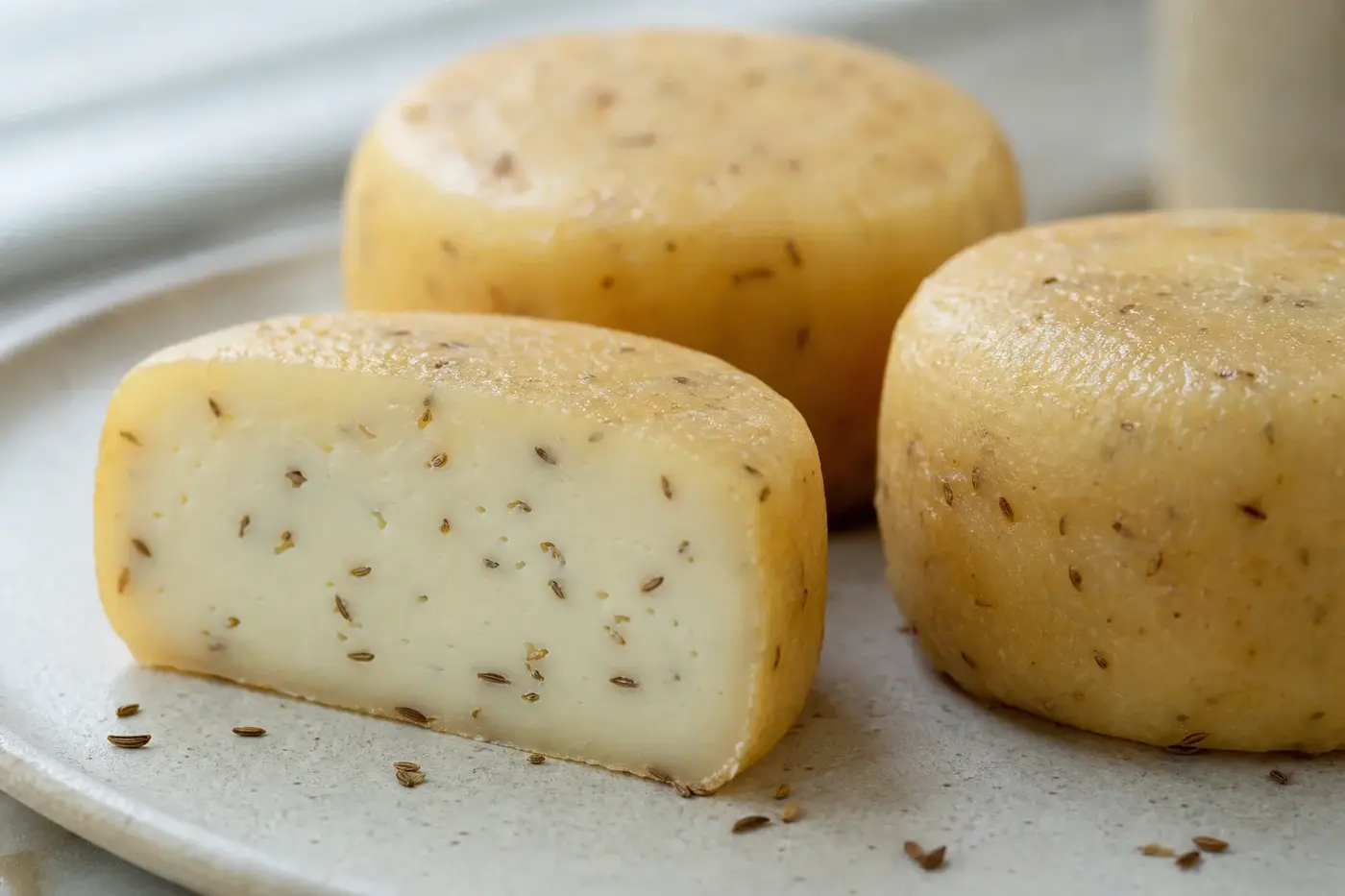
Cut into a little round of Nieheimer Käse and you may find caraway dotted through its compact heart. You get a sharp taste and a texture that might yield to a knife or call for a grater. In Nieheim, a small town in eastern Westphalia, makers ripen, knead and dry lean cow’s milk curd into this sour milk cheese. The surprise comes before the shaping: this curd starts ripening before it becomes a small cylinder. [1][4][5]
| What you might want to know | The detail |
|---|---|
| The name to look for | Nieheimer Käse. [1][3] |
| Registration authority and identifier | European Commission; application identifier DE-PGI-0005-0530-14.03.2006; eAmbrosia record identifier: Not established. [1] |
| EU protection | PGI, registered under Commission Regulation (EU) No 414/2010; specification amended by Implementing Regulation (EU) No 723/2014. Status as of November 2026. [2][7] |
| Great Britain protection | Registered PGI; UK scheme registration dated 31 December 2020. Status as of November 2026. [3] |
| Where it is made | Municipality of Nieheim, Germany; milk and quark may originate elsewhere. [1] |
| Where the cheese begins | Dry sour milk quark made entirely from cow’s milk. Milk treatment: Not specified in the published specification summary. [1] |
| What goes into it | Skimmed milk quark, salt and optional caraway. [1][7] |
| Its usual size and shape | Cylinder, 4 to 4.5 cm across, 2 to 2.5 cm high, weighing 32 to 37 g; variations permitted. [1] |
| Time to ripen | Quark stage normally 3 to 5 days; no separate minimum age for the shaped cheese stated in the published summary. [1] |
A little cheese with a town behind it
Follow the story back to 1857 and you arrive at the Externbrock estate. An agricultural newspaper recorded cheesemaking there, placing Nieheimer Käse firmly in the nineteenth century. The North Rhine-Westphalian agriculture ministry identifies that account and traces the cheese’s roots to households and farms in Nieheim, in eastern Westphalia’s Höxter district. [5]
The town remembers numerous former farm producers. Its own account credits tourism, particularly its German Cheese Market, with bringing fresh interest to these little rounds. Cheese has a permanent place in local museum culture, too: the regional ministry records a dedicated cheese museum within the Westfalen Culinarium, inaugurated in 2006. [4][5]
You are looking at more than a modestly sized cheese. A household way of handling sour milk has become part of Nieheim’s public food culture. The market brings people together to gather and exchange; the museum gives that history space for interpretation and preservation. Together, they keep the connection between town and cheese alive beyond the farms where it began. [4][5]
What the Nieheimer name promises you
When you look for Nieheimer Käse, you are looking for a protected geographical indication in the EU. That is PGI, or geschützte geografische Angabe, abbreviated g.g.A., in German. The registered production area is the municipality of Nieheim: milk and dry quark may come from elsewhere, but production must happen in Nieheim and follow the specified method. [1][2] Great Britain has a separate PGI registration. [3]
The dates mark different moments in that protection. The registration regulation was adopted on 12 May 2010 and published on 13 May 2010. It entered into force on the twentieth day following publication, 2 June 2010. Register summaries commonly give 13 May as the registration date, so adoption, publication and entry into force need to stay distinct. [2][3]
For you at the cheese counter, the distinction is simpler. A sour milk cheese with a similar method or a small round shape does not automatically meet the Nieheimer Käse specification. The guide to protected cheese names explains how the different schemes work.
Plenty of character, very little fat
The starting point is sour milk quark, a fresh curd formed through acidification. For Nieheimer Käse, the specification requires dry quark made entirely from cow’s milk. It must contain at least 33% dry matter, have a pH of 3.9 to 4.3 and contain less than 1% fat in the whole quark. [1]
That low fat content starts with skimmed milk. Draining removes liquid, but there is little milk fat to concentrate in the first place. Nieheim’s municipal description gives less than 1% fat in the whole finished cheese and approximately 1.5 to 1.6% fat in dry matter for the sliceable form. The first figure includes the cheese’s water; the second leaves it out. [4]
Think of dry matter as everything left once you exclude water. As the cheese dries, the balance between water and solids shifts considerably. The municipal account gives approximately 45 to 46% dry matter for sliceable cheese and around 60% for the version intended for grating. [4]
If you would like to follow the wider journey from milk to curd, turn to how cheese is made. It takes you through curd formation and whey separation.
Ripen first, find your shape later
The traditional story begins with soured milk, heat and a hanging cloth bag. Nieheim’s municipal account describes heating the milk, draining the separated curd in the bag, then grinding the dried mass before ripening it. Salt, and sometimes caraway, are kneaded in afterwards. This is a record of local craft, not instructions for home cheesemaking. [4]
The registered method starts with dry quark that meets the specification, whether the cheesemaker makes it or buys it in. Finely ground, it goes into containers to ripen, normally for 3 to 5 days. Temperature and humidity affect the timing. Colour and sensory examination tell the maker when it is ready. [1]
Picture that stage and the cheese begins to make sense. The regional ministry describes initial ripening in vats as preparation for working the material into small cheeses. First the curd ripens; then come seasoning and shaping. It is not shaped fresh and left to rely entirely on later surface maturation. [5]
The seasoned mass becomes rolls, which are cut into individual cylinders. After cooling comes air-permeable packaging, letting the cheese dry gradually; hop leaves are an optional covering. The bacteria and yeasts already associated with the sour quark do the ripening work throughout. No additional ripening cultures join them. [1]
A yellow exterior, a sharp introduction
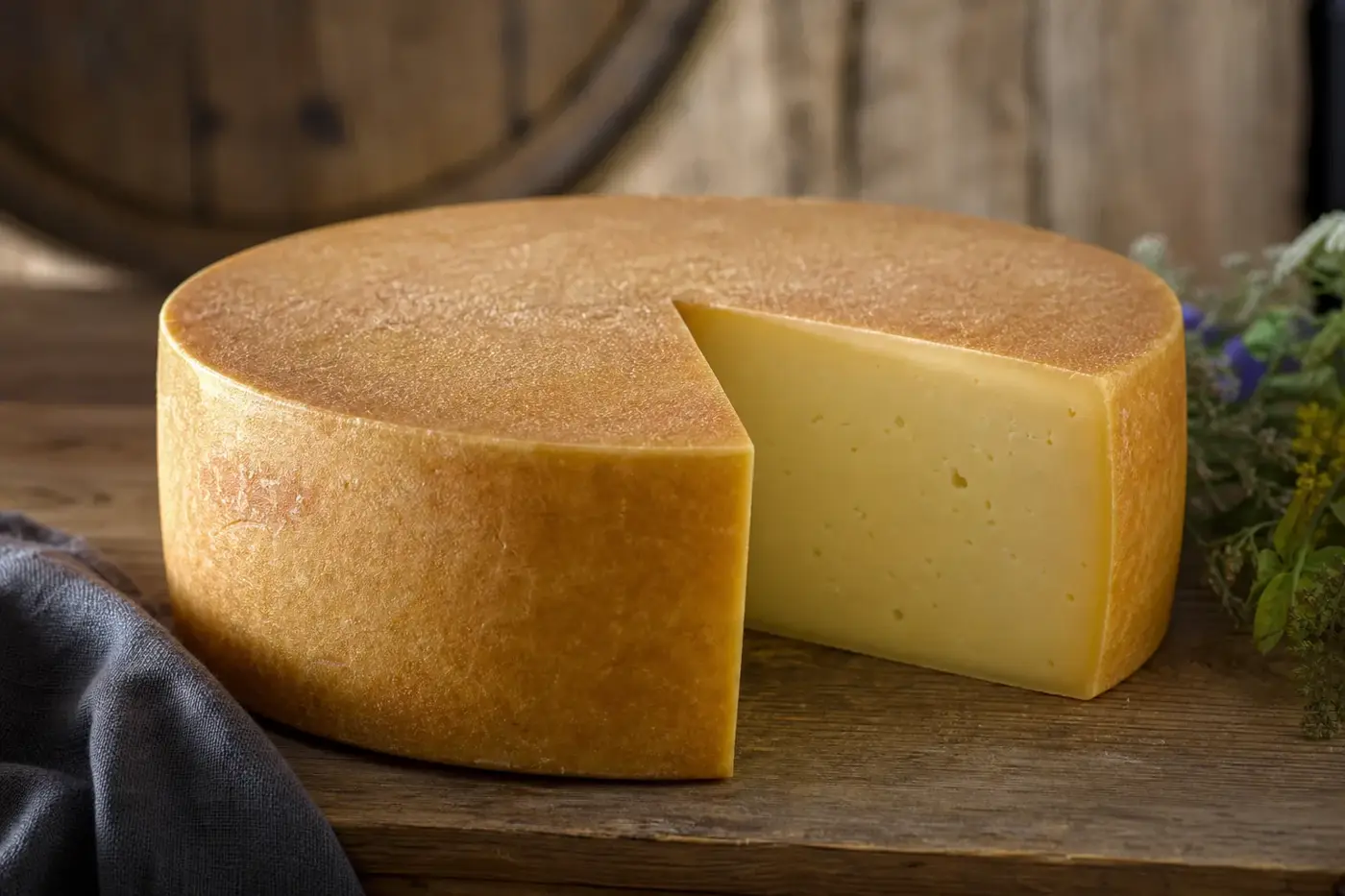
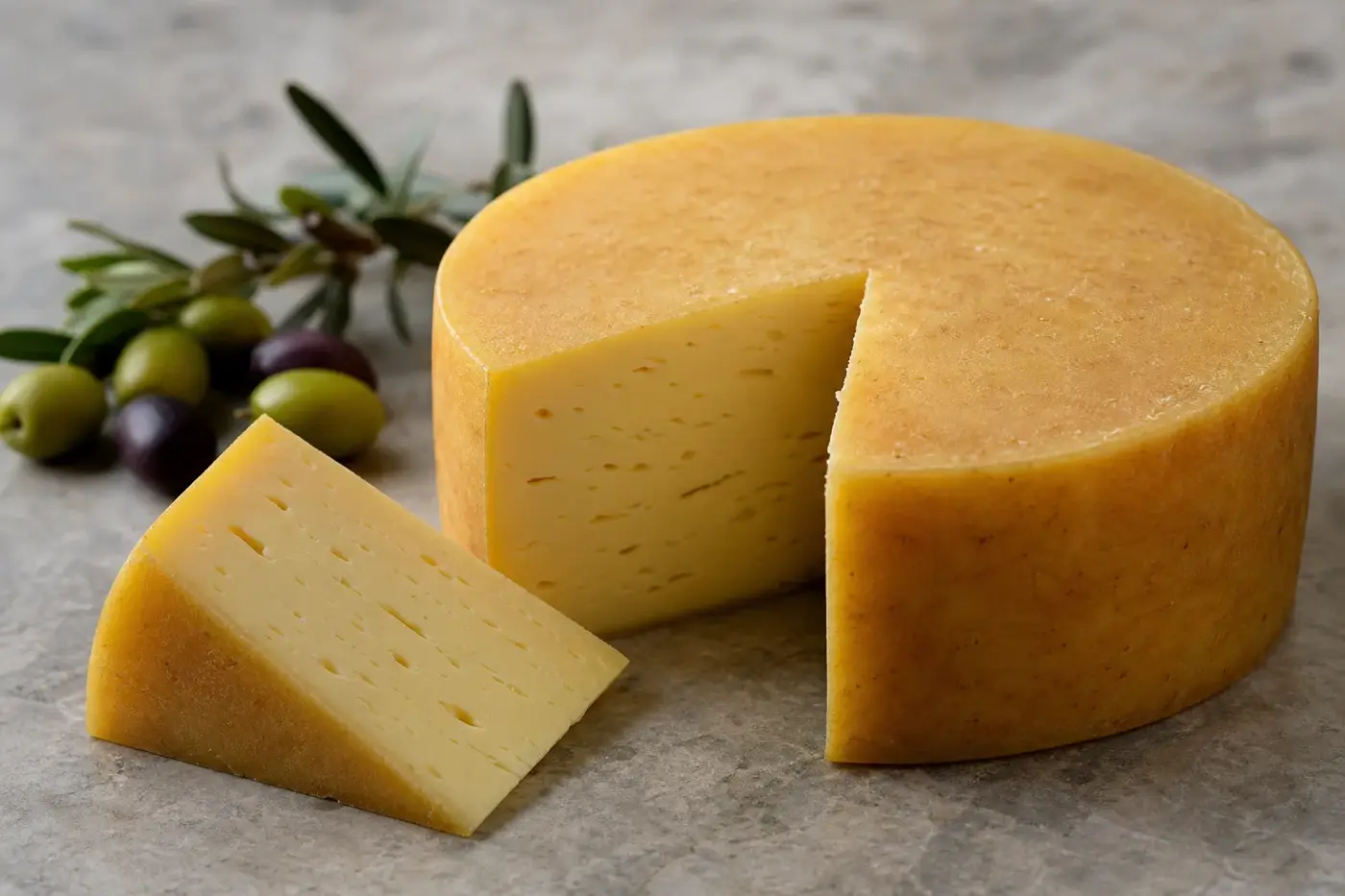
According to Nieheim’s municipal description, you should find a smooth, yellowish exterior around an evenly coloured interior with a clean cut surface. In fully ripened cheese, the white quark centre has disappeared. If caraway is included, its seeds break up the otherwise uniform paste of the little cylinder. [4]
The regional ministry describes the flavour as savoury, slightly tart and sharply piquant. Seasoned versions bring a caraway note, too. This is not a cheese that lets its small size do the talking. [5]
As drying continues, the texture changes what you can do with it. The regional account follows the cheese becoming firmer and firmer, eventually hard enough to grate. Sliceable rounds and dry grating rounds offer you different eating experiences within the same local tradition. [5]
When choosing one, ask about consistency as well as age. “For slicing” or “for grating” tells you more about what will land on your plate than an unexplained description of maturity.
Caraway gets a choice, not the final say
Caraway is optional, not a condition of the name. An unseasoned Nieheimer Käse can meet the specification perfectly well. Its geographical identity rests on more than those distinctive seeds. [1][7]
The official record contains a small but important correction. In 2014, an amendment replaced the original published caraway proportion with 0.1 to 0.3%. The justification records the producer association’s explanation that the earlier figure was a drafting error. That amended range applies whenever caraway is used; adding it remains a choice. [7]
For your first taste, give the cheese a moment on its own before introducing strongly flavoured accompaniments. In a caraway-seasoned round, you will find it easier to distinguish the cheese’s own sharpness from the seeds’ contribution.
Meet the sour milk relatives
Handkäse and Harzer are useful companions when you are getting to know Nieheimer Käse. All belong among Germany’s sour milk cheeses, sharing lean curd as their starting point. That family resemblance only takes you so far, though. Each has its own identity and traditions. [1][8]
Bavaria’s public nutrition competence centre describes Harzer as associated with yellow or red smear cultures. It distinguishes Handkäse made with smear cultures from versions covered with cultivated white mould. Nieheimer Käse follows another path: its published specification relies on the quark’s existing bacteria and yeasts, without additional ripening cultures. [1][8]
The same educational source notes that some sour milk cheeses reach shops with a white centre that disappears as maturation continues. Nieheim’s municipal description, by contrast, expects its finished cheese to be ripened through. If you spot a pale centre, its meaning depends on the cheese in front of you. It is not a universal quality test for the whole family. [4][8]
Bring bread and give the cheese some room
Start with bread. The Bavarian educational account places sour milk cheeses within Brotzeit, a bread-based meal or snack. [8] For Nieheimer Käse, try rye bread or pumpernickel, with slices thin enough to taste alongside the bread rather than overwhelm it.
Butter offers a softer contrast. Add cucumber, radishes or a small portion of pickled vegetables if you like; these are serving suggestions, not a documented Nieheim recipe. With a caraway version, start simply so other spices do not crowd out its flavour. Even an enthusiastic cheese plate need not invite everybody.
For a drink, try sparkling water or an alcohol-free beer. These are possibilities for you to explore, not recorded local pairings. Keep the cheese’s own character at the centre of your plate.
For UK guidance on keeping food chilled, consult the Food Standards Agency and Food Standards Scotland. Follow the storage instructions on the pack. [9][10]
Three questions to ask before taking it home
Ask the seller whether it contains caraway, whether it is intended for slicing or grating, and how to store it after opening. Check the registered name, too. Keep the original label so you have the date, batch details and handling instructions to hand.
For England, Wales and Northern Ireland, the Food Standards Agency advises keeping your refrigerator between 0 °C and 5 °C. It also advises refrigerating dairy products and following packaging instructions. Food Standards Scotland likewise recommends a refrigerator operating between 0 °C and 5 °C. [9][10]
Keep the cheese protected from contamination and separate from raw foods. The FSA’s handling guidance emphasises covered storage, correct temperatures and separation of raw and ready-to-eat food. If the pack specifies a shorter storage period after opening, follow it. [9][11]
A strong flavour cannot tell you whether a cheese is fit to eat. For unexpected mould or other signs of spoilage, consult the relevant food safety agency. Never eat cheese past a use-by date, and follow any recall instructions for the identified product or batch. [1][11]
For more detailed handling decisions, read how to store cheese and mould on cheese.
General information only, not medical advice: follow the official guidance where you live.
Questions people ask
What does Nieheimer Käse taste like?
It is savoury, slightly tart and sharply piquant. Versions containing caraway have a caraway note.
Where is Nieheimer Käse made?
The protected production area is the municipality of Nieheim in Germany. The milk and dry quark may come from elsewhere.
How is Nieheimer Käse made?
Finely ground dry quark normally ripens for three to five days before salt and optional caraway are kneaded in. The mass is then formed into rolls, cut into small cylinders, cooled and packaged to dry gradually.
Does Nieheimer Käse always contain caraway?
No, caraway is optional. When it is used, the amended specification gives a proportion of 0.1 to 0.3%.
How should Nieheimer Käse be stored?
The Food Standards Agency advises refrigerating dairy products and keeping a refrigerator between 0 °C and 5 °C. Consult the agency's guidance and follow the instructions on the pack.
Sources
- European Commission. Publication of an application pursuant to Article 6(2) of Council Regulation (EC) No 510/2006: Nieheimer Käse, 2009/C 234/07, Official Journal C 234, 29 September 2009, pages 15 to 17. Published specification summary, read with source 7. Official document.
- European Commission. Commission Regulation (EU) No 414/2010 of 12 May 2010 entering a name in the register of protected designations of origin and protected geographical indications (Nieheimer Käse (PGI)), 2010. Official legal text.
- Department for Environment, Food and Rural Affairs. Nieheimer Käse, protected geographical food and drink names register, live entry, checked November 2026. Register entry.
- Stadt Nieheim. Nieheimer Käse, municipal account, undated, checked November 2026. Municipal source.
- Ministry of Agriculture and Consumer Protection of North Rhine-Westphalia. Regionale Lebensmittel und Spirituosen, official brochure, edition date not verified, pages 20 to 21. Official brochure.
- European Commission. eAmbrosia: Nieheimer Käse, record EUGI00000013892, linked from the North Rhine-Westphalian ministry’s official regional specialities directory. Register endpoint retrieved November 2026. Official register record.
- European Commission. Commission Implementing Regulation (EU) No 723/2014 of 23 June 2014 approving a minor amendment to the specification for a name entered in the register of protected designations of origin and protected geographical indications (Nieheimer Käse (PGI)), Official Journal L 192, 1 July 2014, pages 36 to 37. Official amendment.
- Kompetenzzentrum für Ernährung, Bavaria. Milch, Käse & Co., second edition, sour milk cheese section, pages 65 to 66; edition year not verified. Public educational reference.
- Food Standards Agency. How to chill, freeze and defrost food safely, 2017, current retrieved version, applying to England, Northern Ireland and Wales. Official guidance.
- Food Standards Scotland. Chilling, current consumer guidance, checked November 2026. Official Scottish guidance.
- Food Standards Agency. Food safety for community cooking and food banks, current retrieved guidance, checked November 2026. Official handling guidance.
Researched through official registration documents, the published specification and amendment, municipal and regional accounts, public educational material and UK food safety guidance; serving combinations are labelled editorial suggestions.
Last checked: November 2026
Last checked November 2026.
The editors suggest you read next
Allgäuer Emmentaler
Two Swiss dairymen arrive in Weiler in 1821, carrying cheesemaking knowledge into the western Allgäu.