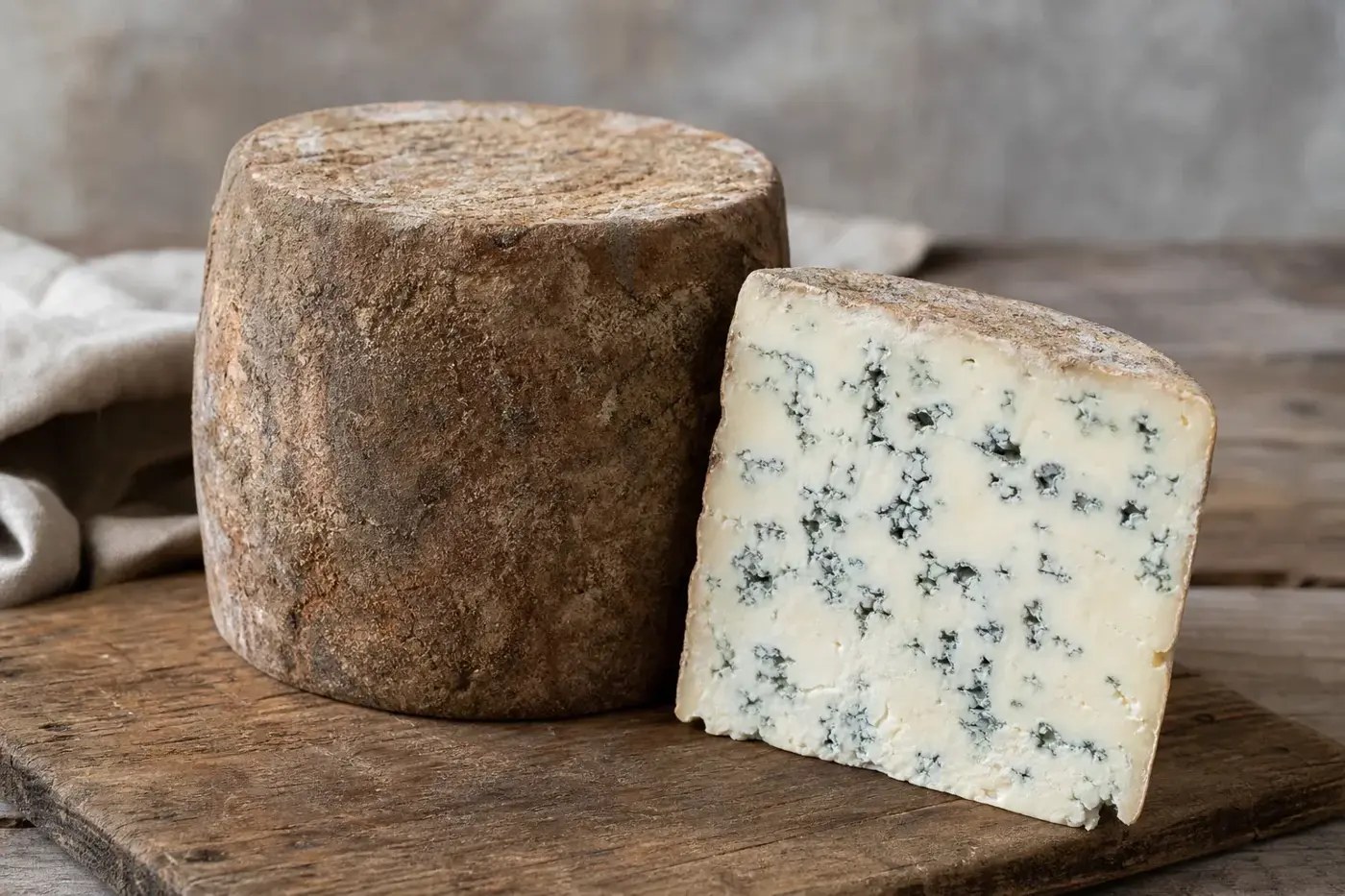
Ogleshield
A slice of Ogleshield softens over a hot potato, and suddenly Somerset has your full attention.
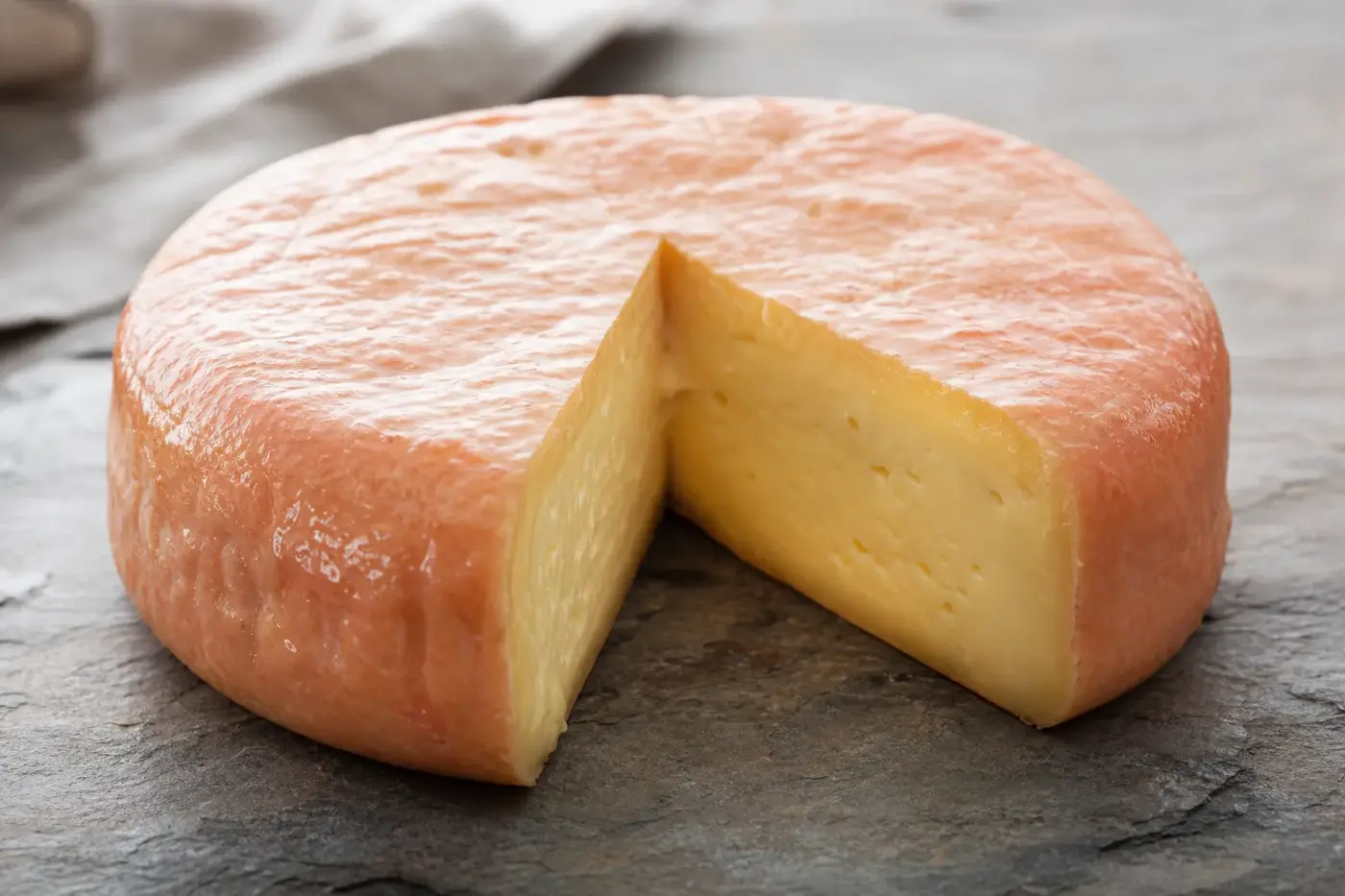
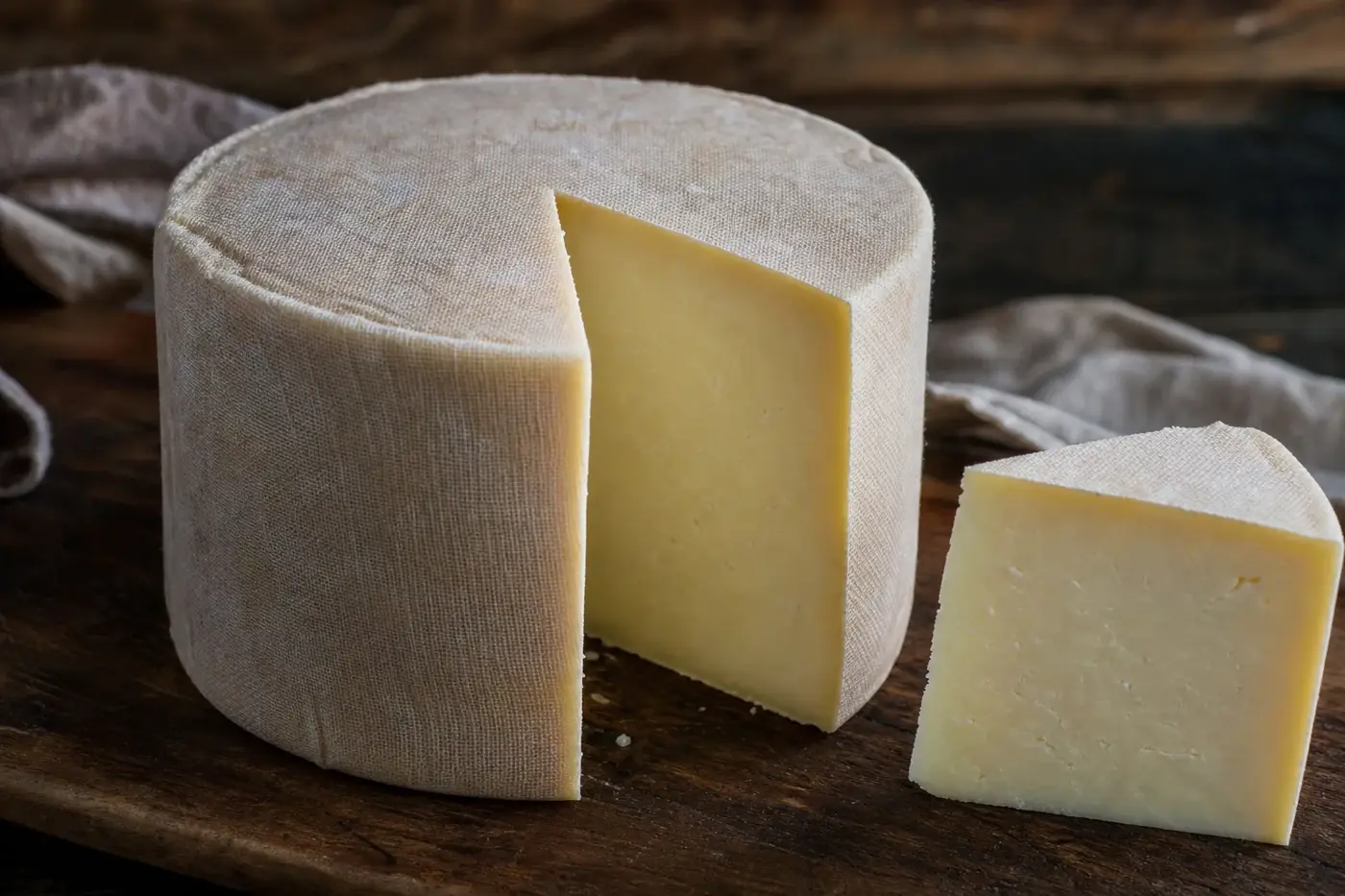
A slice of Ogleshield softens over a hot potato, and suddenly Somerset has your full attention. Beneath its moist, slightly pungent rind is a semi-hard cheese made with the Montgomery farm’s Jersey milk, inspired by raclette and ready for heat.[1][2][3] Every three days, the rind gets a brine wash, a different rhythm for a maker better known for farmhouse Cheddar.[1]
| Get to know Ogleshield | The details |
|---|---|
| Name | Ogleshield.[1] |
| Maker and home | Montgomery’s, North Cadbury, Somerset, England.[2][3] |
| Milk | Cow’s milk from the Montgomery Jersey herd.[1] |
| Style | Semi-hard, washed rind, raclette-inspired.[1][3] |
| Producer’s milk-treatment declaration | Ask the producer to confirm. |
| Neal’s Yard Dairy milk declaration | Pasteurised.[2] |
| Neal’s Yard Dairy coagulant declaration | Animal rennet.[2] |
| Egg lysozyme | Listed by Farm Shop; ask whether this applies to your particular purchase.[3] |
| Rind care | A brine wash every three days.[1] |
| Typical ageing at Neal’s Yard Dairy | An average of three months.[2] |
| Maturation temperature and humidity | Ask the producer for these details. |
A Somerset welcome, with raclette in mind
Put Ogleshield on your table and the raclette comparison soon makes sense. North Cadbury Village Stores calls it a West Country equivalent and recommends it for cooking and melting.[1] A wedge deserves your attention on its own, but melted over potatoes is a particularly persuasive introduction.
Treat raclette as an invitation to eat, not the whole story. Ogleshield has its own name, its Somerset home and its supply of Jersey milk. Get to know those qualities before letting your slice become a hot topping.
The washed rind is part of that identity. During maturation, the cheese receives repeated treatments with brine, a salt-water solution.[1] Explore the rind, the interior and the melted cheese in turn, with the guide to milk, rind, texture and method beside you if you want to understand how those distinctions identify cheese styles.
At Montgomery’s, Cheddar makes room
Ogleshield comes from Montgomery’s cheesemaking operation at North Cadbury in Somerset. Neal’s Yard Dairy names Manor Farm in its account of selecting the farm’s cheeses.[2] The village stores website places Montgomery’s among North Cadbury’s food producers.[4]
If Montgomery’s Cheddar is already familiar, you know Ogleshield’s maker and farm. You are meeting a different cheese, though, with a different maturation routine. The stores describe their mature Cheddar as clothbound and aged for 12 months, quite a contrast with Ogleshield’s washed rind.[5] The Cheddar guide tells the wider story of that style.
Ogleshield also gave the farm’s Jersey milk another role. According to Neal’s Yard Dairy’s development account, that milk had previously been sold for drinking.[2] The ingredient was familiar; its destination was changing.
That account records an earlier name, Jersey Shield, and a suggestion that helped shape the cheese. One of the dairy’s cheese maturers proposed replacing a mould-covered rind with brine washing.[2] So the Ogleshield on your plate owes its character to decisions about maturation as well as to the milk.
Jersey milk, and what your label tells you
The Montgomery retail account records that the farm’s Jersey herd supplies Ogleshield’s milk.[1] Milk treatment is a separate matter. For that, turn to the declaration on the cheese you are buying.
Neal’s Yard Dairy currently lists its Ogleshield as made with pasteurised cow’s milk.[2] The Bristol Cheesemonger describes both raw-milk and pasteurised versions, saying it favours the raw-milk version when possible.[6] Your particular piece’s label is therefore more useful than an assumption based on its name.
Rennet deserves the same attention. Neal’s Yard Dairy declares animal rennet, so if you want vegetarian cheese, ask for an explicit suitability declaration for your purchase.[2] The rennet explainer introduces the different coagulants you may encounter on cheese labels.
Cow breed, milk treatment and rennet answer three different questions. Keep them separate and the label becomes easier to navigate. For more on milk treatment, turn to raw, thermised and pasteurised cheese.
Every three days, another brine wash
Every three days, it is time for brine again. The Montgomery retail account links this routine to Ogleshield’s moist, slightly pungent rind, a softer cheese and greater depth of flavour.[1] This is part of maturation, not a finishing flourish before the cheese leaves the farm.
Before washing begins, the cheeses are moulded, as Neal’s Yard Dairy describes in its production account.[2] Its ingredient declaration lists milk, salt, cheese cultures and animal rennet.[2] Together, those details give you the ingredients and the sequence leading into the repeated washes.
At the counter, look at the rind and interior together. Cheesemakers call that interior the “paste”. Ask about its condition as well as the rind, and your cheesemonger has a useful starting point for describing the wedge in front of you.
Neal’s Yard Dairy gives an average age of three months for its Ogleshield.[2] When comparing purchases, ask how old the piece is and how it is eating. Age tells you one part of the story; the cheese’s condition on the counter tells you another.
Pink rind, sweet milk and a savoury heart
A pink, pungent rind gives way to a yielding interior and the aroma of sweet milk. Neal’s Yard Dairy’s description offers plenty to explore before you reach for the heat. There is a savoury flavour recalling chicken broth, too.[2]
Hamish Johnston describes a yellow interior beneath a sticky, strongly scented rind, with fruitiness and meaty savouriness in its tasting notes.[7] The Bristol Cheesemonger points to sweetness and a slightly pungent character.[6] Take those observations as reference points, then see what your own piece has to say.
Begin with the smell of the rind, then notice the interior’s texture. Give the sweetness and savouriness a little attention, and consider how they sit together. Keep a small piece plain before adding bread or accompaniments, so you get a clear taste of the cheese itself.
Then try it warm. The Montgomery retail account and several cheesemongers emphasise its melting qualities.[1][3][6] Compare your plain slice with the way it coats a potato or fills a toastie, without expecting precisely the same flavour notes in every serving.
Gold and Bronze, with their place in the story
Ogleshield won Gold in class 17, “Wash Rind”, at the 2024 Artisan Cheese Awards.[8] The organiser’s results name the entrant as J A & E Montgomery Ltd.[8]
At the British and Irish Cheese Awards held on 20 March 2026, it received Bronze in class C11, “Hard Rind Washed”, under the same entrant.[9] Each award recognises the cheese within a particular category and year.
Your first cheeseboard needs little fuss
Start with a modest wedge, plain bread and one contrasting accompaniment. Taste Ogleshield alone before building a mouthful around it. Then you can decide whether to bring its milky qualities or its savoury character to the fore.
Apple or pear gives you something fresh alongside. If you like sweetness with a washed-rind cheese, try a small spoonful of onion chutney instead. Cornichons are another possibility, especially if you plan to melt some of the wedge.
These suggestions, and the combinations below, are ideas rather than recorded site tastings or tested recipes. Use them as starting points for your own plate. You need not assemble a supporting cast large enough to obscure the cheese.
Keep the rest of your purchase refrigerated rather than bringing everything to the table. Serve a smaller portion and eat it promptly. Plan what you want now and leave the remainder chilled for another use.
For advice on keeping chilled food out of the fridge during preparation in England, Wales and Northern Ireland, consult the Food Standards Agency’s current guidance.[10] Use that guidance when planning your portions and preparation.
Make room for potatoes, toasties and burgers
Potatoes are the clearest place to start. Farm Shop specifically recommends Ogleshield melted onto potatoes in a raclette-style serving, and also suggests toasties and burgers.[3] Each gives you a straightforward way to enjoy the cheese rather than lose it among other ingredients.
For an uncomplicated meal, melt it over freshly cooked potatoes, with cornichons and a crisp salad alongside. The potatoes provide a plain base. The accompaniments offer contrasting mouthfuls while leaving the cheese easy to taste.
A toastie makes another inviting introduction. For your first attempt, keep the filling simple, perhaps with a little mustard or cooked onion. Find out what Ogleshield brings before inviting the entire fridge.
Farm Shop’s burger suggestion gives you a similar opportunity.[3] Let the cheese be a distinct topping, then choose the other additions to suit it. A simple combination still gives you plenty to enjoy.
You could also try it over cooked cauliflower or leeks, or on an open sandwich topped with cooked mushrooms. These ideas follow its documented use as a melting cheese. Begin with one straightforward dish before combining several cheeses or adding elaborate toppings, so you can judge Ogleshield’s contribution.
If you are sharing a wedge, save a small piece to eat unmelted. Serving it both ways in one meal lets you compare the slice with the hot topping without assembling a large cheeseboard. One purchase gives you something to taste plainly and something to cook.
Look after your wedge, and keep the label
Follow the storage instructions and date supplied with your cheese. In its guidance for England, Wales and Northern Ireland, the Food Standards Agency recommends a domestic fridge temperature between 0 and 5 °C (32 and 41 °F).[10] It also says dairy products should be refrigerated.[10]
Farm Shop suggests wrapping Ogleshield in waxed paper and refrigerating it in a container.[3] Keep the original product information, particularly if you have bought a hand-cut wedge. You will then have its declarations and storage guidance to hand.
For help with wrapping, fridge organisation and managing cut pieces, see how to store cheese at home. Plan your cheeseboard and cooking portions together. The same wedge can give you a plain tasting portion now and the topping for a simple hot dish.
General information only, not medical advice: follow the official guidance where you live.
Questions people ask
Where is Ogleshield made?
Ogleshield is made by Montgomery’s in North Cadbury, Somerset. It uses milk from the farm’s Jersey herd.
Is Ogleshield made with pasteurised milk?
Neal’s Yard Dairy lists its Ogleshield as pasteurised, while The Bristol Cheesemonger describes both raw milk and pasteurised versions. Check the declaration on the piece you are buying.
Is Ogleshield suitable for vegetarians?
Neal’s Yard Dairy declares animal rennet in its Ogleshield. Ask for an explicit vegetarian suitability declaration for your purchase.
What does Ogleshield taste like, and how can I use it?
Neal’s Yard Dairy describes sweet milk aromas and a savoury flavour recalling chicken broth. Ogleshield melts well and can be served over potatoes or used in toasties and burgers.
How should I store Ogleshield?
Follow the storage instructions and date supplied with the cheese. The Food Standards Agency advises refrigerating dairy products and keeping a domestic fridge between 0 and 5 °C in England, Wales and Northern Ireland; consult its current guidance.
Sources
[2] Neal’s Yard Dairy, Ogleshield, undated product information and development account, retrieved November 2026. Product page. A commercial seller and cheese maturer describing its product and involvement.
[3] Farm Shop, Ogleshield, undated product description, ingredients and storage information, retrieved November 2026. Product page. A commercial retailer’s account.
[4] North Cadbury Village Stores, Montgomery Cheeses, undated homepage, retrieved November 2026. Website.
[5] North Cadbury Village Stores, Montgomery Cheese, undated product category, retrieved November 2026. Product category.
[6] The Bristol Cheesemonger, Ogleshield, undated product information, retrieved November 2026. Product page. A commercial retailer’s product and tasting account.
[7] Hamish Johnston, Ogleshield, undated product and tasting description, retrieved November 2026. Product page. A commercial cheesemonger’s account.
[8] Artisan Cheese Awards, Award Winners 2024 Artisan Cheese Awards, 2024, class 17 results. Published results.
[9] British and Irish Cheese Awards, British and Irish Cheese Awards, Non Retailers, show date 20 March 2026, class C11 results. Published results.
[10] Food Standards Agency, How to chill, freeze and defrost food safely, published 18 December 2017, current retrieved text November 2026, section 1, “Chilling food”. Applies to England, Northern Ireland and Wales. Official guidance.
Research combined published product descriptions, a cheese maturer’s development account, competition results and official food-storage guidance; serving suggestions are editorial desk research.
Last checked: November 2026
Last checked November 2026.
The editors suggest you read next
West Country Farmhouse Cheddar Cheese
Large pieces of curd turn and stack under the cheesemaker’s hands.