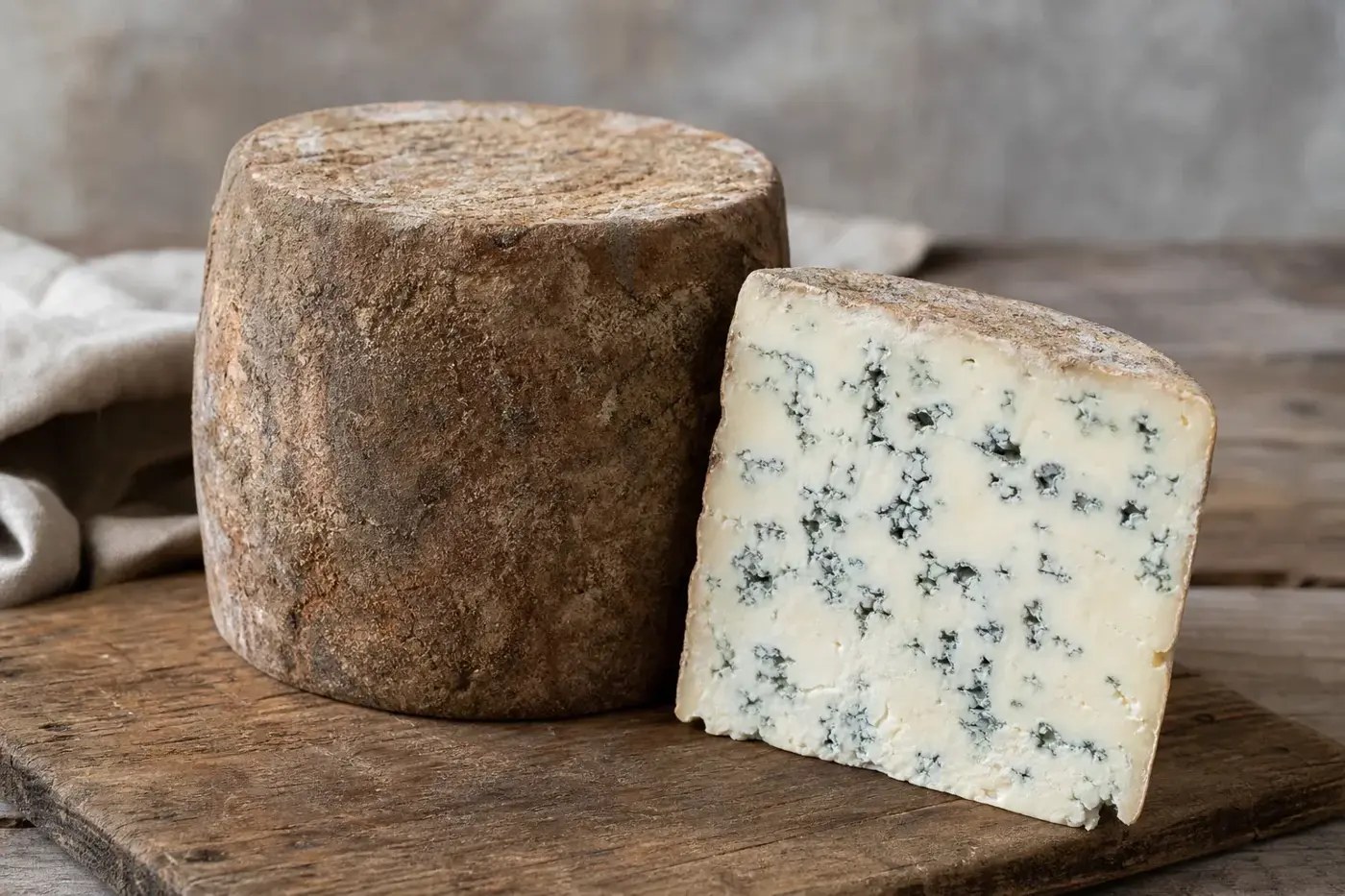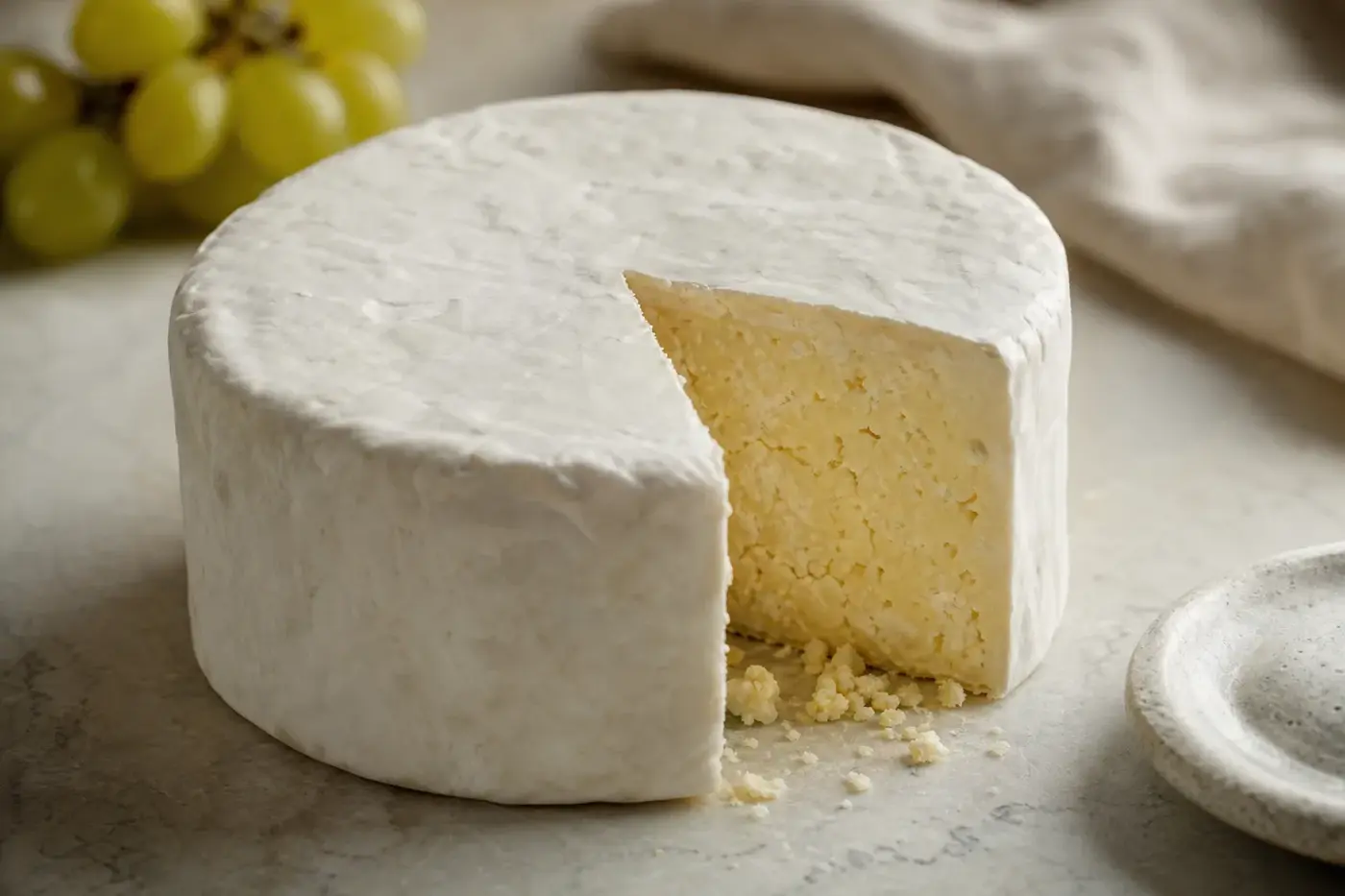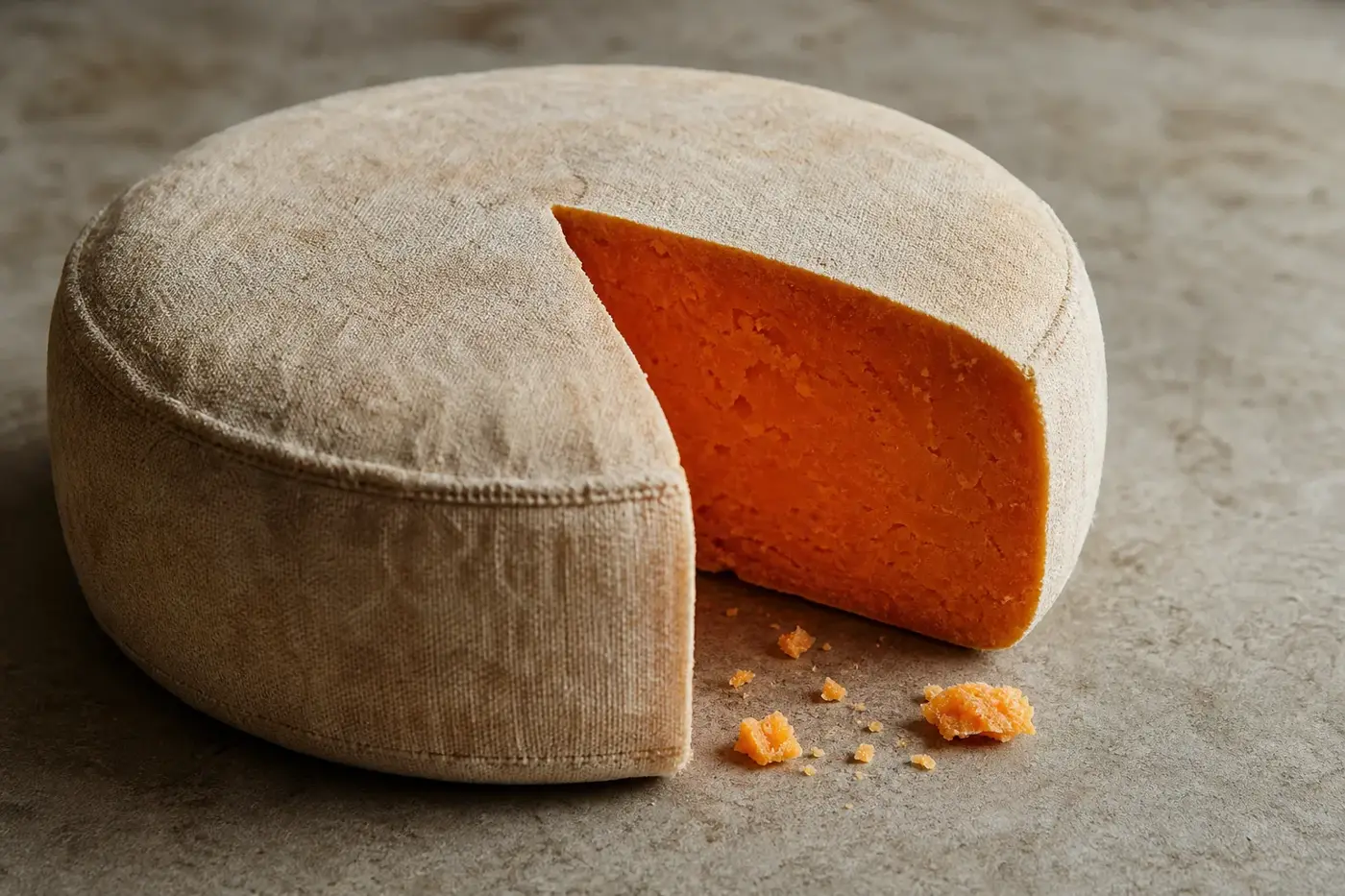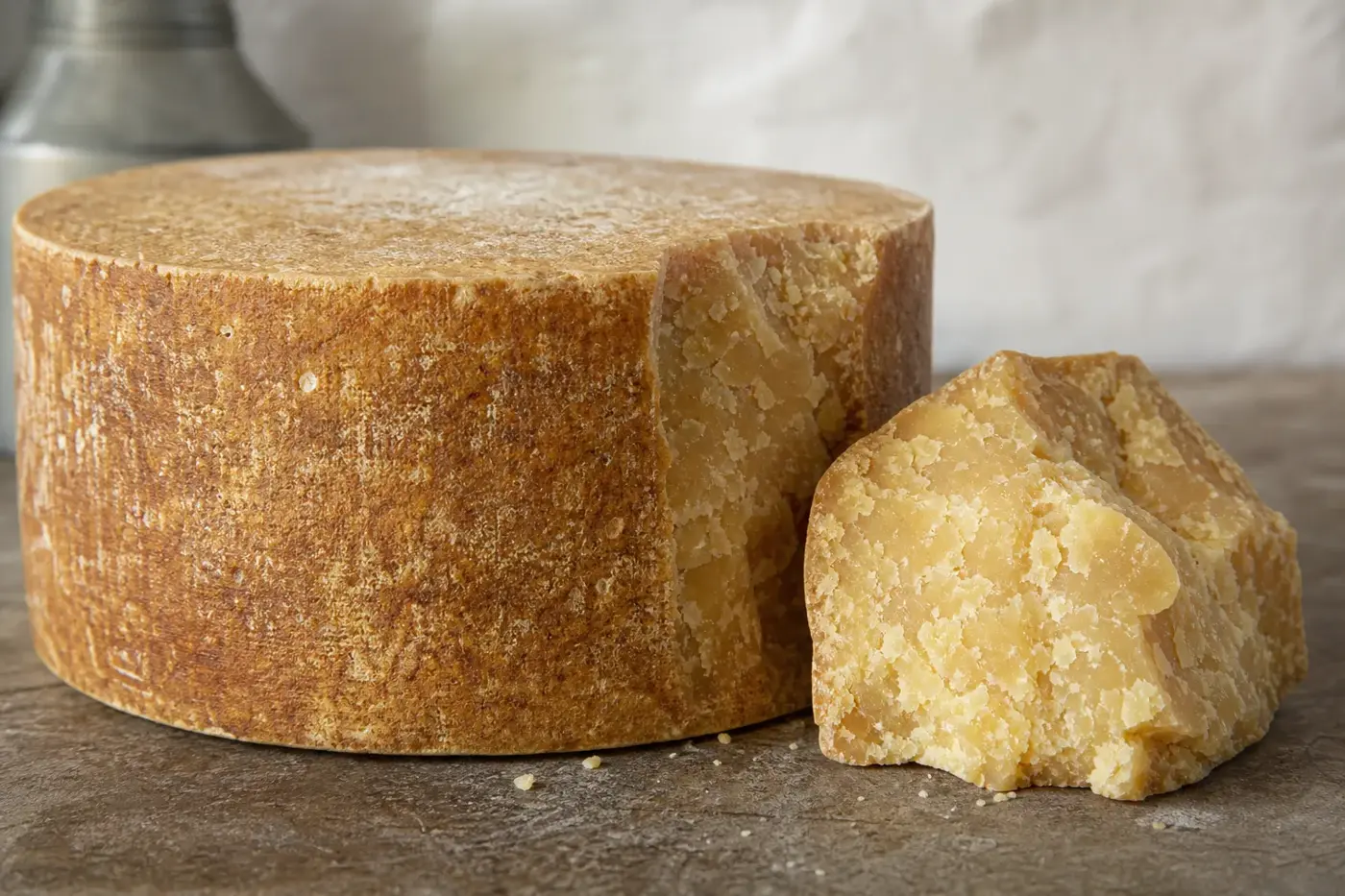
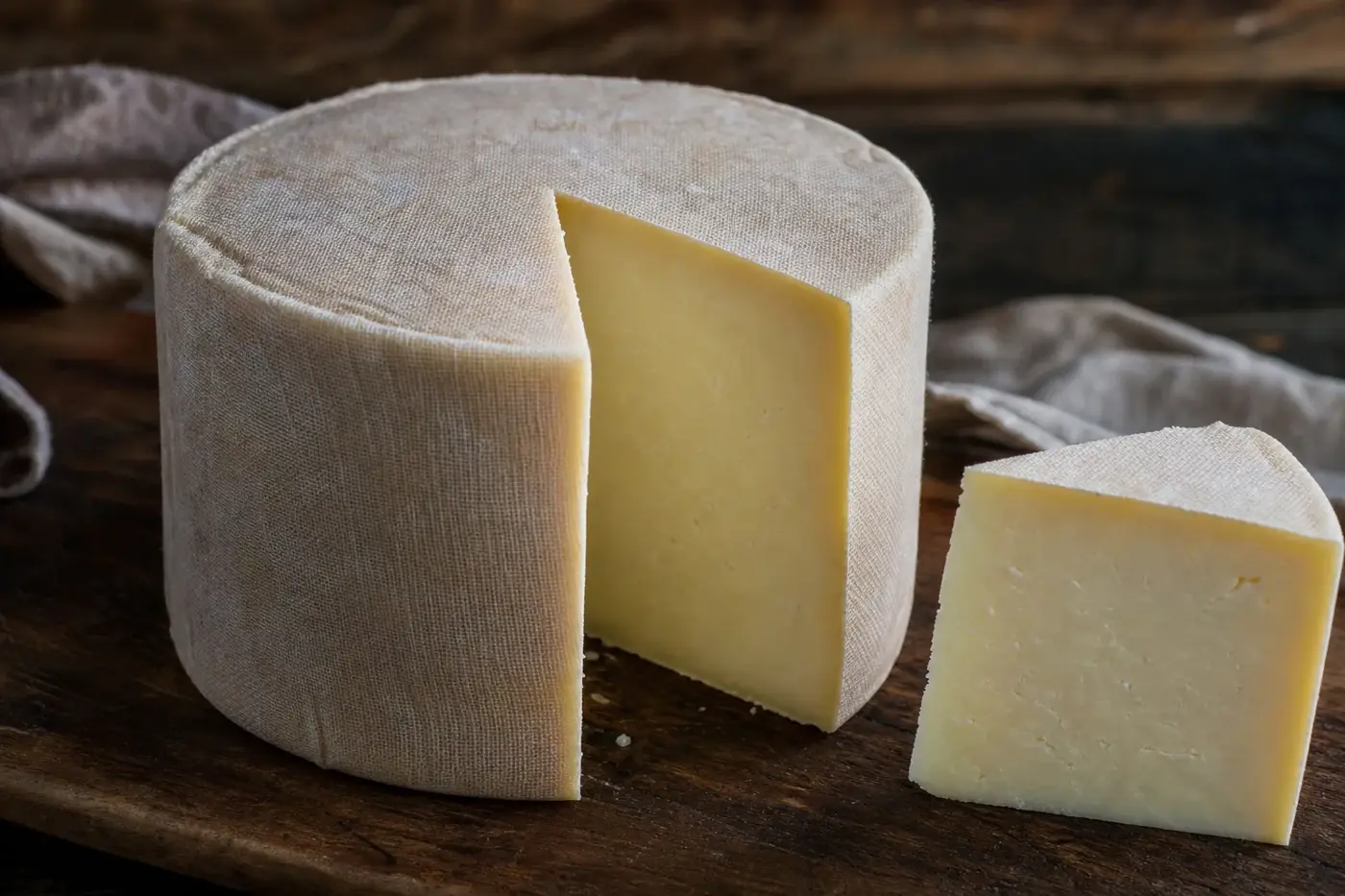
First, the firm bite. Then a tiny crystal crunches between your teeth, with distinctive nuttiness following close behind. Old Winchester is Lyburn Farmhouse Cheesemakers' answer to the long maturation of aged Gouda, made with the farm's own cows' milk. Break it onto your board or grate it over supper: this British farmhouse cheese keeps easy company with northern European hard cheeses. [1,2,9]
Your first acquaintance with Old Winchester
- Who makes it: Lyburn Farmhouse Cheesemakers. [1,2]
- Where you'll find it: Lyburn Farm, Landford, postal address Salisbury, Wiltshire SP5 2DN; northern edge of the New Forest. [3,4]
- The milk: Pasteurised cow's milk from the farm's own herd. [2]
- What sets the curd: Vegetarian rennet, according to Lyburn. [2]
- The wait: About 18 months, the maker's target rather than a fixed age for every wheel. [1]
- Wheel size: Approximately 4.5 kg on average. [1]
- Registered name, authority and identifier: Details unavailable.
- Protection status in Great Britain, EU and Northern Ireland: Details unavailable.
- Rind treatment and edibility: Details unavailable.
- Paste colour and aroma: Details unavailable.
Good things come to those who mature
How far could Lyburn take its younger Lyburn Gold? That question lies at the beginning of Old Winchester's story. In the maker's account, modest changes to the make, followed by eight or nine months of ageing, produced Winchester: somewhere between familiar British hard cheese and Gouda. Give it longer, and you get the harder Old Winchester. [1,5]
Just don't introduce it as Cheddar. Lyburn explicitly objects to menus calling Old Winchester Cheddar, describing it instead as a modern British hybrid closer to northern European cheeses. Think Gouda, rather than Cheddar. Old Winchester names this particular Lyburn cheese, and its history helps explain both the texture and what you can do with it at the table. [1,5]
Follow the Blackwater to the dairy
The River Blackwater runs through Lyburn's farming landscape, on the northern edge of the New Forest. The farm describes itself as part of the Hamptworth Estate, with land on both sides of the river in the Blackwater valley. To get your bearings, its published postal address is Landford, Salisbury, Wiltshire SP5 2DN. That is the dairy behind the name. [3,4]
The New Forest National Park Authority places the Landford and Hamptworth walking area in Wiltshire and maps the River Blackwater through it. Hampshire enters through the family story. Lyburn records that the family began farming at West Tytherley in Hampshire in 1952, then took on Lyburn Farm in 1969. You are looking at borderland farming, with a Wiltshire postal address and documented Hampshire roots. [6,7]
For the cows, the rhythm is seasonal. In summer, they graze nearby fields; when conditions turn wet, they are housed and fed maize, grass silage and supplementary feed. Their milk becomes cheese on the farm, keeping milk production and cheesemaking within the same operation. [2,4]
Milk, rennet and a closer look at the label
Lyburn uses pasteurised cow's milk and vegetarian rennet for its cheeses. Rennet sets milk into curd, the solid material separated from liquid whey. If you are making a vegetarian dish, read the current product information for the suitability of the whole cheese, alongside the maker's declaration about its rennet. [2,8]
Dates matter here. Lyburn says it stopped using egg-derived lysozyme from 1 April 2026, but an older supplier specification, updated in June 2025, lists milk and egg-derived lysozyme. Read the ingredient and allergen information for the actual piece you buy, especially when it comes from older matured stock. [1,9]
From morning milk to the ripening room
Morning milk arrives at the dairy in Lyburn's published account of cheesemaking. It is pasteurised, before starter culture and then rennet are added. Once the milk sets, the curd is cut to release whey. The cheesemaker then judges when it is ready for the moulds. [8]
Next comes a night under pressure. Pneumatic presses hold the filled moulds overnight, bringing the curd together and draining away more whey. The following morning, the cheeses leave their moulds for about 24 hours in brine, a salt solution. They are then dried, given batch numbers and moved into the ripening rooms. [8]
Here, airflow, humidity and temperature are managed, while regular turning encourages even ripening. That is the dairy's general method. Old Winchester's own product page sets out its longer ageing target of about 18 months, although Lyburn says the selling age varies with stock. [1,8]
You can see what that extra time does by looking at younger Winchester. Its maker describes a degree of creaminess at eight or nine months, while Old Winchester is drier, harder and crystalline. A more yielding table cheese becomes something you can also break into small pieces or grate. The wait changes not just its firmness, but how you might choose to eat it. [5,9]
A little crunch, a closer look
Lyburn's clearest flavour descriptions are distinctive nuttiness and a resemblance to old Gouda. Give the texture a moment, too. In your first piece, notice the firm cheese around a crystal, then the small crunch of the crystal itself. It is a tiny interruption worth paying attention to. [1]
A 2015 study offers a glimpse into what cheese crystals can be. Researchers examined crystals in several cheese types using powder X-ray diffraction, a technique that identifies crystalline structures. In long-aged Gouda samples, they identified small internal crystals as tyrosine, an amino acid. They also investigated larger crystalline formations associated with another amino acid, leucine, although that identification was tentative. [10]
That makes tyrosine a plausible explanation for crystals in a Gouda-inspired cheese such as Old Winchester, not a laboratory finding for Lyburn's own product. The same study found different crystalline substances in other cheese types. A white speck cannot tell you its composition by appearance alone. That takes analysis. [10]
Make room on the board, and beside the grater
Lyburn gives Old Winchester two jobs: table cheese and alternative to a hard Italian grating cheese. The suggestions here follow those uses. Before you bring in bread, fruit or a drink, taste a plain piece. Let that first bite tell you how much company it needs. [1]
For your cheeseboard, offer small pieces with plain bread or oatcakes. Put apple slices and a restrained spoonful of chutney alongside, rather than over, the cheese. You can adjust each mouthful, starting plain before trying something sweeter or sharper. Chutney makes a good companion, but it needn't chair the meeting.
If you want to get to know it better, try a simple tasting sequence. Smell a freshly cut piece, then take a small bite without an accompaniment. Keep aroma, flavour and texture separate in your notes, asking whether it seems milky, toasted, savoury or sharp to you. These are prompts for your observations, not flavours you are obliged to find.
Next, compare a fine shaving with a small chunk, then add your chosen accompaniment. Change one element at a time and keep the cheese the same. You will soon discover which texture and combination you prefer, without burying Old Winchester among too many competing flavours.
In the kitchen, try a little grated over pasta, a vegetable gratin or roasted squash. Taste before adding more salt. Keep some cheese back for the finished plate rather than putting it all into the dish. Small shavings give you a more direct encounter with Old Winchester than a finely grated scattering.
To drink, try black tea without a strongly flavoured addition, or apple juice diluted to your taste. Compare either with water. The useful question is which you enjoy with the particular piece in front of you, not which produces the most impressive tasting note.
Keep it chilled, and get to know the outer edge
Keep the main piece refrigerated and serve a smaller portion. For home storage in England, Wales and Northern Ireland, the Food Standards Agency advises a fridge temperature between 0 and 5 °C, alongside following the packaging's storage instructions and date information. The older supplier specification for Old Winchester also says to keep it chilled. [9,11]
For those same jurisdictions, the FSA advises keeping chilled food outside the fridge for the shortest possible time during preparation, with a maximum of four hours. Count preparation time when planning your cheeseboard. Return the cheese promptly rather than leaving a whole wedge out through a long gathering. Elsewhere, follow your own country's official guidance. [11]
Ask your seller to identify the outer treatment on the actual wheel and explain which parts you should remove. A practical approach is to trim the outer edge and use the inner cheese for grating into food. After cutting, keep any accompanying label with the cheese, so its handling instructions stay close at hand.
For wrapping and fridge organisation, turn to how to store cheese at home. If you want to compare Old Winchester with another hard style, how to tell cheese styles apart offers a framework based on milk, rind, texture and method. Ask your cheesemonger about the current wheel's age, particularly if you want a firmer piece for grating.
General information only, not medical advice: follow the official guidance where you live.
Questions people ask
What does Old Winchester taste like?
Old Winchester is distinctive for its nuttiness and resemblance to old Gouda. It has a dry, hard texture with a crystalline crunch.
How long is Old Winchester matured?
Lyburn's target is about 18 months, although the selling age varies with stock. Younger Winchester is described as having some creaminess at eight or nine months.
Is Old Winchester suitable for vegetarians?
Lyburn says it uses vegetarian rennet and pasteurised cow's milk. Check the current product information for the suitability of the whole cheese.
Does Old Winchester contain egg?
Lyburn says it stopped using egg derived lysozyme from 1 April 2026. An older supplier specification lists it, so check the ingredient and allergen information on the piece you buy, especially for older matured stock.
How should I store and serve Old Winchester?
Keep it refrigerated and serve a smaller portion, either in pieces or grated over food. In England, Wales and Northern Ireland, the Food Standards Agency advises a fridge temperature between 0 and 5 °C and following the packaging's storage instructions and date information. The agency also advises keeping chilled food outside the fridge for the shortest possible time during preparation, with a maximum of four hours.
Sources
- Lyburn Farmhouse Cheesemakers, [Old Winchester](../old-winchester/), undated product page containing updates dated 2026. Maker's account of style, flavour, maturation, format and the lysozyme change.
- Lyburn Farmhouse Cheesemakers, Our cheeses, undated, retrieved November 2026. Declaration of own-farm pasteurised cow's milk and vegetarian rennet.
- Lyburn Farmhouse Cheesemakers, Contact & shop, undated, retrieved November 2026. Published postal address.
- Lyburn Farmhouse Cheesemakers, The farm, undated, retrieved November 2026. Farm setting, estate connection and seasonal husbandry account.
- Lyburn Farmhouse Cheesemakers, Winchester, undated product page containing a 2026 ingredient update. Development from Lyburn Gold, maturation and maker's sensory description.
- New Forest National Park Authority, New Forest walking guides: Landford and Hamptworth, undated edition, retrieved November 2026. Geographic introduction and route map.
- Lyburn Farmhouse Cheesemakers, About Lyburn, undated, retrieved November 2026. Family's account of farming in Hampshire from 1952 and taking on Lyburn in 1969.
- Lyburn Farmhouse Cheesemakers, Cheesemaking, undated, retrieved November 2026. Published dairy process, including setting, cutting, pressing, brining and ripening.
- Curd and Cure, Old Winchester 1.25kg, Erudus supplier specification, updated 6 June 2025, hosted by kff. Historical ingredient declaration, texture description and chilled-storage instruction.
- University of Vermont researchers, Crystal fingerprinting: elucidating the crystals of Cheddar, Parmigiano-Reggiano, Gouda, and soft washed-rind cheeses using powder x-ray diffractometry, Dairy Science & Technology, volume 95, pages 651 to 664, 2015. Primary research using powder X-ray diffraction.
- Food Standards Agency, How to chill, freeze and defrost food safely, published 18 December 2017, retrieved November 2026. Consumer guidance applying to England, Northern Ireland and Wales.
Researched from the maker's published accounts, an official geographic guide, primary crystal research, a dated supplier specification and official consumer storage guidance; serving combinations are editorial suggestions.
Last checked: November 2026
Last checked November 2026.
The editors suggest you read next
West Country Farmhouse Cheddar Cheese
Large pieces of curd turn and stack under the cheesemaker’s hands.