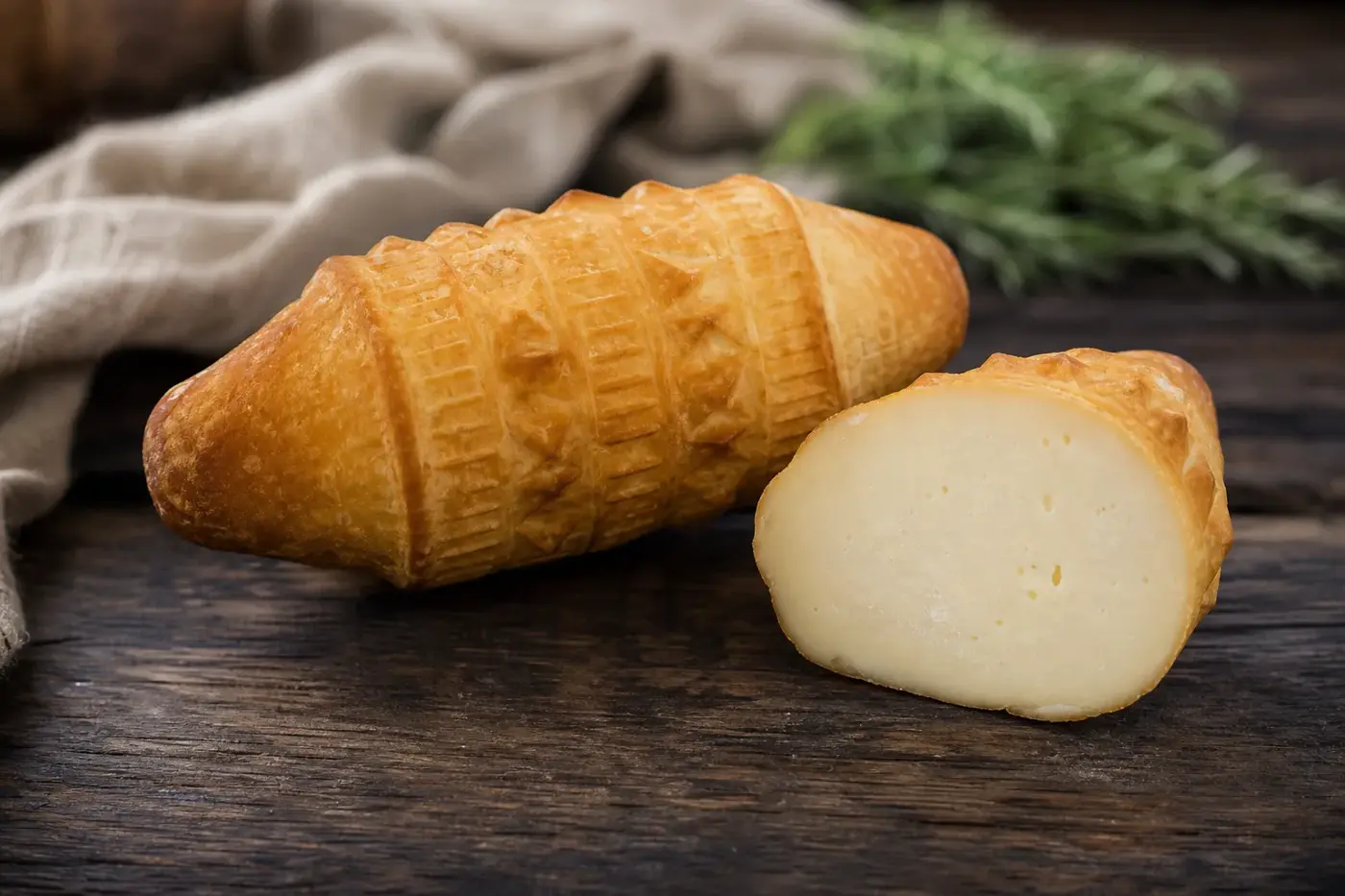
A carved wooden ring presses its pattern into a spindle of cheese. Next come brine, drying and three to seven days of cold smoke.[1] In southern Poland’s mountain pastures, shepherd cheesemakers called bacowie shape Oscypek by hand, turning seasonal sheep milk into something you can recognise before you take a bite.[1][2]
Follow that spindle back to its beginnings and you reach the grazing season. Milk, place and craft are bound together in Oscypek’s protected designation of origin specification. Smoke makes quite an entrance, but it is not the only character worth meeting.[1][2]
Your pocket guide to Oscypek
| What you want to know | The details |
|---|---|
| Name to look for | Oscypek.[2] |
| Registration authority | European Commission for the original EU registration; Defra for the Great Britain register.[2] |
| EU register ID | Not available here. |
| Great Britain protection | Registered PDO; UK scheme registration dated 31 December 2020 at 23:00. Register information: November 2026.[2] |
| Original EU registration | The UK register records 14 February 2008.[2] |
| Where it is made | Defined parts of southern Poland’s Małopolskie and Śląskie provinces.[1] |
| Milk proportions | Sheep milk, with no more than 40% cow milk.[3] |
| Milk treatment | Ask for the individual product’s details. |
| Making season | May to September.[3] |
| Shape and size | Spindle, 17 to 23 cm long, weighing 600 to 800 g.[3] |
| Pregnancy guidance | Consult current NHS guidance and official advice where you live. Source information: November 2026.[6] |
Meet the shepherd behind your spindle
At the heart of Oscypek’s pastoral tradition stands the baca: the shepherd cheesemaker who turns milk into that recognisable spindle. Bacowie is the Polish plural. The specification connects their skills with the mountain grazing that supplies the milk.[1]
Start with the flock and its cheesemaker, and you begin to see how the pieces fit. Smoke may be the first thing you notice, but the milk’s origins and the working of the curd matter too. There is more to this cheese than its brown rind.
That rind alone cannot identify Oscypek. When you buy, ask about the producer and protected designation as well as the flavour. Those answers bring the mountain pasture and the person behind your cheese a little closer.
Follow the grazing season
Oscypek is made from May to September, according to the official Małopolska tourism portal. The same account describes sales continuing through November. That tells you about availability, rather than setting a legally specified marketing period.[3]
If you find it well outside those production months, ask when it was made. Keep the seller’s storage information with the cheese. The season gives you a useful opening question, not a reason to guess.
The regional source also spells out the milk balance. Cow milk may account for no more than 40%, leaving sheep milk at a minimum of 60%. An entirely cow milk cheese does not meet that recorded composition.[3]
Get to know the milk in your cheese
Polish mountain sheep supply the sheep milk. Where cow milk is added, the specification names Polish red cattle.[1] Oscypek’s recipe is more particular than simply choosing between sheep and cow.
For the cheese in front of you, ask what actually went into it. The permitted recipe allows a mixture, but the product declaration tells you what you are buying. A direct question works nicely: “Is this entirely sheep milk, or a sheep and cow milk mixture?”
Keep that answer alongside the producer’s name. Milk treatment needs its own question, so see raw, thermised and pasteurised cheese, then ask the seller for the product’s treatment information. Colour, firmness and smoke cannot tell you whether the milk was raw, thermised or pasteurised.
Watch the pattern take shape
Hand working and repeated scalding give Oscypek its shape. The specification describes rennet coagulation, breaking the curd and draining the whey, followed by working and shaping the cheese. A carved wooden ring impresses the central decoration; brining and drying follow, then three to seven days of cold smoking.[1]
Rennet makes milk set into curd. That solid curd becomes the cheese, while whey is the liquid separated from it. You can follow the broader sequence in how cheese is made.
Look closely at a finished spindle and you can see the work in its form. Take in the tapered ends, wider middle and patterned band together. Give the smoked surface its due, then look beyond it.
Knowing that sequence gives you better questions for a knowledgeable seller. Who made this cheese, and where? Is that named producer working under the Oscypek specification? Those details tell you more about its identity than smoke alone.
Cut a slice and linger a little
Cut through the rind and look inside. The specification describes a firm, elastic body, a pale cream interior, a pronounced smoked aroma and a slightly salty taste.[1] The regional tourism account adds a straw-coloured exterior and identifies the spindle shape as characteristic.[3]
Before you add anything, try a small plain slice. Notice how the firmer outside compares with the centre. Which reaches you first: smoke or salt?
Let those descriptions guide your attention, not turn lunch into an examination. No one needs to mark your tasting notes. You are tasting one cheese, not delivering a verdict on every Oscypek. If you want to compare examples later, record the maker and purchase date; those details make your notes more useful than smokiness alone.
Buying Oscypek: the name matters too
Oscypek is a registered PDO on the Great Britain register, which identifies Poland as its country of origin.[2] PDO means protected designation of origin. It links a product’s qualities or characteristics to its geographical origin and requires its production steps to take place within the defined area.
Look for three things together: the name Oscypek, designation information and a traceable producer. Appearance helps you recognise the format. The designation and producer details help establish what you are being offered.
You can keep the conversation short and specific. These four questions cover the essentials:
- Is the cheese sold as Oscypek under its protected designation?
- Who made it, and where?
- What are the milk mixture and milk treatment?
- What are the date marking and storage instructions?
For the difference between a protected name and a cheese style, see protected names. Buying packaged cheese? Reading a cheese label is your next practical step. Keep that information with the product after purchase.
Give Oscypek and Slovenský oštiepok their own names
Similar looks are no reason to lose sight of a cheese’s name. Slovenský oštiepok is a separate registered name from Slovakia. The Great Britain register lists it as a PGI, or protected geographical indication, with an original EU registration date of 26 September 2008.[4]
| Name | Where it comes from | Great Britain register, November 2026 |
|---|---|---|
| Oscypek | Poland | Registered PDO.[2] |
| Slovenský oštiepok | Slovakia | Registered PGI.[4] |
Use the complete names when you compare them. A similar-looking smoked mountain cheese has its own interest. A different designation is not a quality ranking.
For a tasting comparison, keep both labels and the makers’ information. Compare the milk, method and protected identity actually declared for each product. A familiar shape gives you somewhere to begin, but it cannot establish that two cheeses share a recipe or production requirements.
Bring it to the table, plain or warm
Start with thin slices, served plain. You get to explore the cheese before sweetness or another strong flavour changes the balance. That first taste gives you a clear starting point for choosing what to serve alongside it.
Try a small spoonful of cranberry preserves on the side, rather than covering every slice. Taste the cheese first, then the combination, and adjust the amount to suit you. The official Małopolska tourism portal documents Oscypek served cold or fried with lingonberry jam, a related but different preserve.[3]
If you serve it warm, follow the product’s cooking instructions. The NHS advises following packaging instructions and, for UK handling, cooking or reheating food until it is steaming hot throughout.[6]
Put out only the amount you expect to serve. Follow the product’s storage instructions for the rest, and keep those instructions handy. A smoked appearance is no substitute for storage advice.
Keep your cheese well, and ask when you need to
Follow your cheese’s storage instructions and date marking. For England, Wales and Northern Ireland, the FSA recommends a domestic fridge temperature between 0 and 5 °C and says dairy products should be refrigerated.[5]
Keep the product information after opening, so you can continue to follow its instructions. For the wider practical routine, see storing cheese at home.
Pay particular attention to milk treatment when choosing food for someone at greater risk from foodborne illness. The NHS identifies pregnant people, newborn babies, older people and people with weakened immunity among those at increased risk of serious listeriosis.[6]
During pregnancy, consult the current NHS guidance on cheese and the FSA advice for your country. Ask your doctor or midwife about your own circumstances.
General information only, not medical advice: follow the official guidance where you live.
Questions people ask
Where does Oscypek come from?
Oscypek comes from defined parts of the Małopolskie and Śląskie provinces of southern Poland. It is a registered protected designation of origin, or PDO, in Great Britain.
Is Oscypek made entirely from sheep milk?
Not necessarily: cow milk may make up no more than 40%, leaving sheep milk at a minimum of 60%. Ask the seller whether a particular cheese is entirely sheep milk or a mixture.
What does Oscypek taste like?
The specification describes a pronounced smoked aroma and a slightly salty taste. The cheese has a firm, elastic body and a pale cream interior.
Is Oscypek the same as Slovenský oštiepok?
No. Oscypek is a Polish PDO, while Slovenský oštiepok is a separate registered name from Slovakia and is listed as a protected geographical indication in Great Britain.
Can I eat Oscypek during pregnancy?
The page advises consulting current NHS guidance on cheese and FSA advice for your country during pregnancy. It also suggests asking your doctor or midwife about your own circumstances.
Sources
[1] Defra, Product specification: Oscypek, English-language specification linked from the Great Britain register, undated document retrieved November 2026. Used for breeds, defined area, production sequence and sensory description.
[2] Defra, Oscypek, Great Britain protected food and drink name register, published 2021, checked November 2026. Records registered status, designation and registration dates.
[3] Małopolska regional tourism portal, Oscypek, undated, retrieved November 2026. Used for seasonal account, milk proportion, format and documented lingonberry accompaniment.
[4] Defra, Slovenský oštiepok, Great Britain protected food and drink name register, published 2021, checked November 2026.
[5] Food Standards Agency, How to chill, freeze and defrost food safely, published 2017, retrieved November 2026. Applies to England, Wales and Northern Ireland.
[6] NHS, Listeriosis, reviewed 10 November 2023, retrieved November 2026. Used for consumer handling advice, higher-risk groups and its pregnancy advice.
[7] Food Standards Agency and Food Standards Scotland, The risk to vulnerable consumers from Listeria monocytogenes in blue cheese, May 2023, section 1.2. Used only for its account of distinctions in pregnancy guidance, not to assess Oscypek.
This desk-researched draft draws on the retrieved specification, official registers, regional documentation and UK public health guidance.
Last checked: November 2026
Last checked November 2026.
The editors suggest you read next
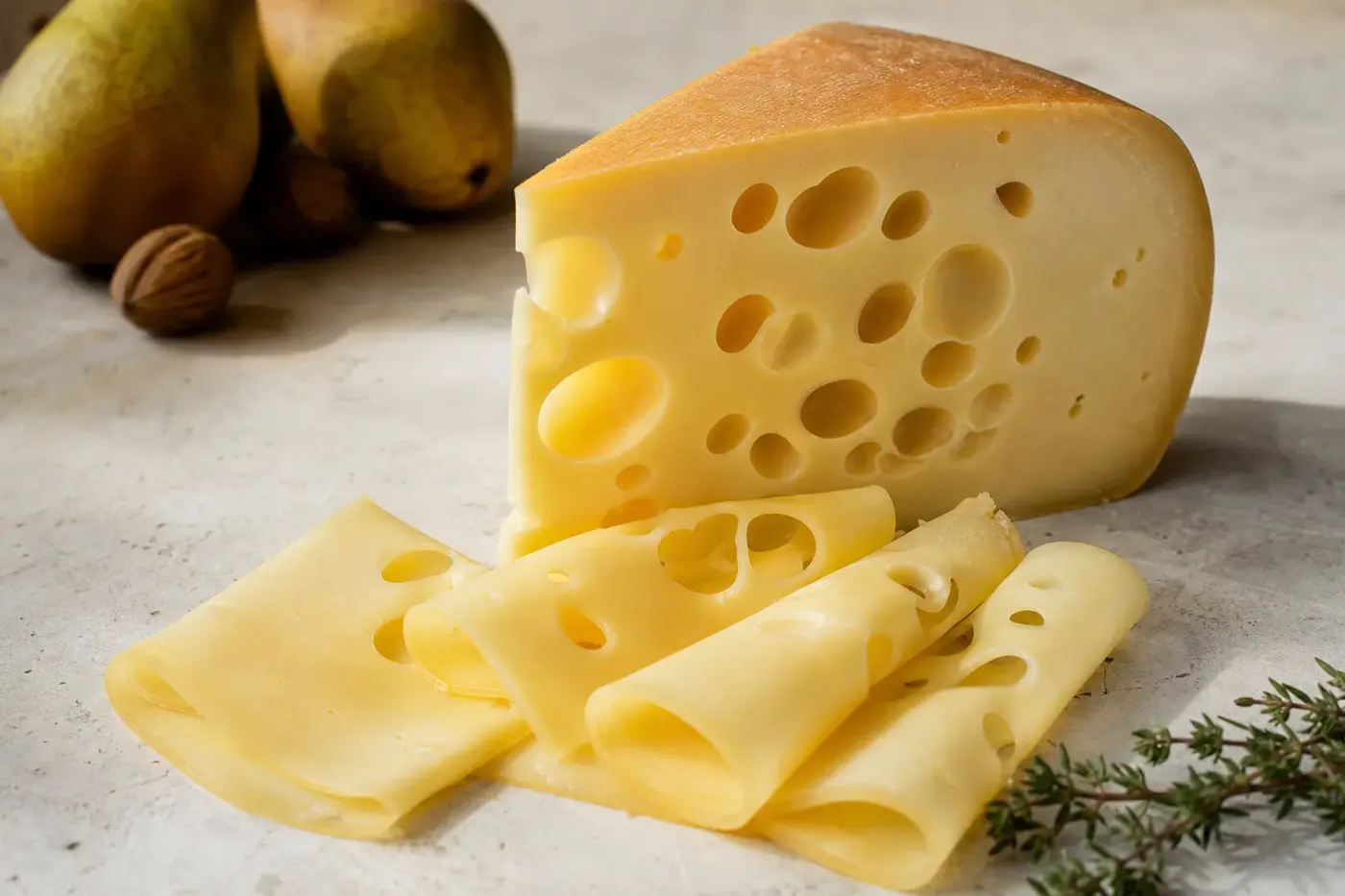
Jarlsberg
Cut into Jarlsberg and those great, rounded holes catch your eye before you take a bite.