Pavé Cobble
Your knife slips through the ash coating into a soft centre, smoother still as Pavé Cobble ripens.
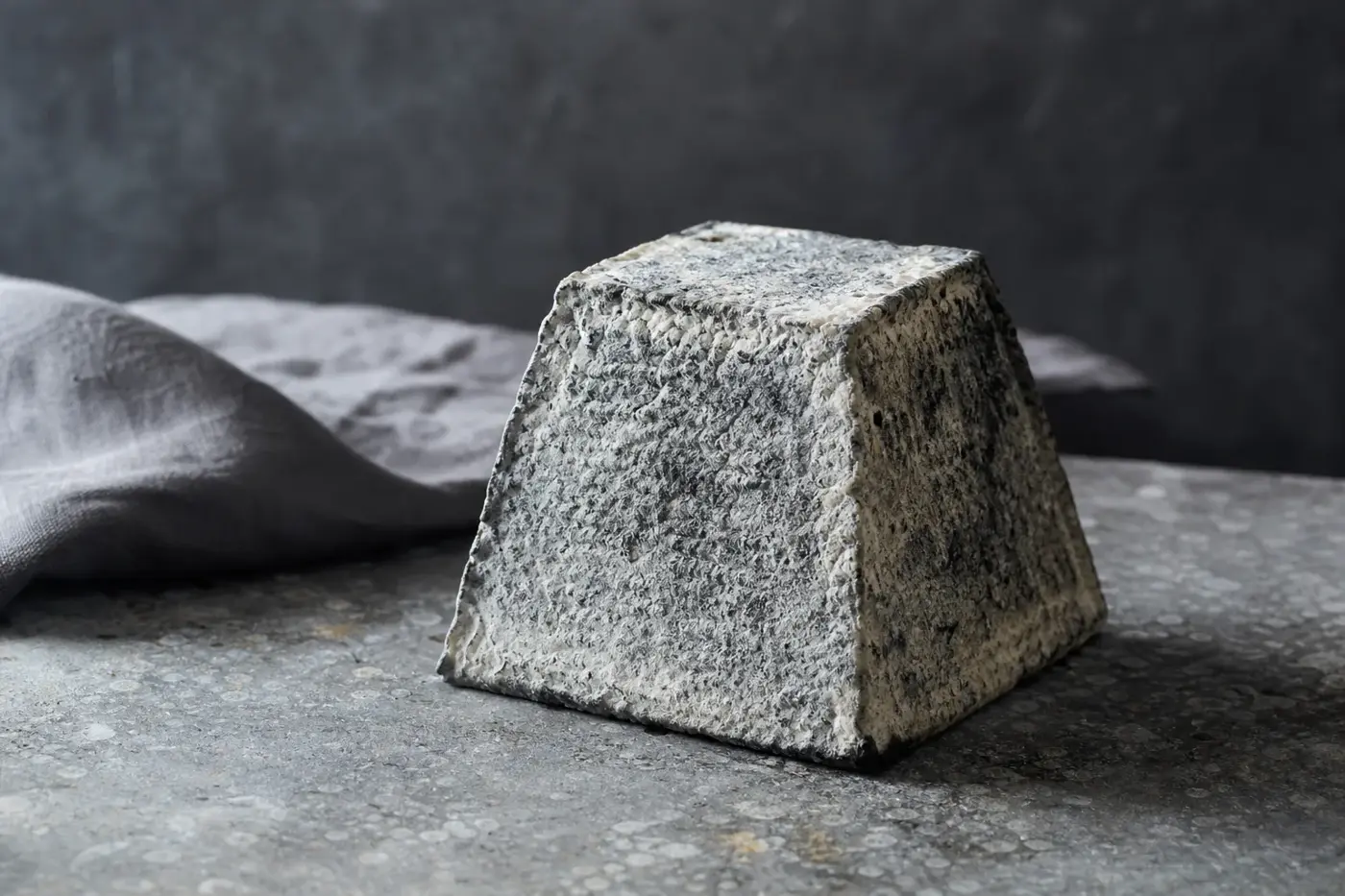
Your knife slips through the ash coating into a soft centre, smoother still as Pavé Cobble ripens. The flat-topped pyramid suggests a French goat’s cheese, but the first surprise is inside. This is sheep’s milk cheese, made by White Lake Cheese at Bagborough Farm in Somerset. [1][2]
| What you might want to know | The details |
|---|---|
| Name | Pavé Cobble. [1] |
| Maker | White Lake Cheese. [1] |
| Made at | Bagborough Farm, Pylle, Somerset, England. [2] |
| Milk | Sheep’s milk, thermised, not pasteurised. [1] |
| Rennet | Vegetarian, according to the maker. [1] |
| Style | Soft, ash-coated pyramid with a flat top. [1] |
| Size | 180 g, as listed by the maker. [1] |
| Sheep’s milk supplier | Details not available here |
| Curd formation and moulding method | Details not available here |
| Ash application method | Details not available here |
| Maturation time and named ripening cultures | Details not available here |
| Protection status and register identifiers | Details not available here |
A Somerset pyramid with a French connection
There is more to the French connection than that shape. White Lake links the name to the cobblestones of a French cycle race, an inspiration you can see in the cheese’s distinctive outline. [1]
For your first encounter, give Pavé Cobble a little breathing room on the board. A crowd of similar-looking soft cheeses makes introductions unnecessarily complicated. Cut a piece with both outside and centre, then taste them separately before trying them together.
That small comparison tells you more than the silhouette can. Give each part its moment, then see what changes when they meet in one mouthful.
Come to Bagborough Farm
White Lake makes its home at Bagborough Farm in Pylle, near Shepton Mallet. The dairy’s own account places it near Glastonbury, in a facility built around small-batch production. Here, the cheesemaking team has room to try different recipes. [2]
The dairy dates its foundation to 2004, while tracing cheesemaking on the family farm back to the 1930s. Today, White Lake works with goat’s, sheep’s and cow’s milk, using outside suppliers as well as its own goat herd. This sheep’s milk pyramid belongs to a dairy with plenty of variety in its repertoire. [2]
As you read the label, separate two questions: where was the cheese made, and where did its milk come from? The dairy’s address tells you the first. It does not answer the second.
Get to know the milk behind the cheese
Pavé Cobble’s product information describes its sheep’s milk as thermised and unpasteurised. Keep those precise terms in mind when you choose it. Heat treatment alone does not mean that milk has been pasteurised. [1]
You can explore the distinctions in raw, thermised and pasteurised milk. At the counter, read the pack itself and compare its description with what you expected. Keep the label until you finish the cheese, particularly if you plan to share it.
Alongside the date and batch, the label holds information about the particular cheese in your fridge. Keep that information with the cheese so you can refer to it later. [1][4]
Let the cheese counter conversation begin
White Lake specifies vegetarian rennet and an ash coating. [1] Details of curd formation, moulding, ash application, maturation time and rind development are not available here.
Make your questions about the cheese in front of you. If the counter has two batches, ask which is firmer today and which offers the texture you enjoy. Their condition now tells you more than a single supposedly ideal age.
For the bigger journey from milk to finished cheese, turn to how cheese is made. When choosing Pavé Cobble, ask for information specific to that product. The age and condition of the batch you are considering are particularly useful details.
Taste from sweet cream to earthy rind
White Lake’s tasting notes start with sweet cream, then move towards Greek yoghurt acidity. At the rind, pepper, salt and earthiness enter the picture. [1] A characteristic aroma and fuller description of the rind and paste appearance are not detailed here.
Treat those notes as an invitation, not a script you must follow. Taste the centre, try a little rind, then bring them together. Does the acidity greet you immediately, or follow that first dairy sweetness?
Before your first bite, pause to smell the cheese and describe the aroma in your own words. Keep bread and water nearby for this introduction. Fruit and other drinks can wait until you have met the cheese on its own terms.
Give every slice some rind and centre
Cut down through the flat top towards the base, so each piece gets both rind and centre. A clean, narrow knife and a stable board help you make deliberate cuts outside the wrapper. Start with a modest piece, leaving more available for afterwards.
White Lake lists a 180 g cheese. Cut six pieces for about 30 g each, or four for about 45 g each. These figures help you plan alongside the other cheeses and food on your table; they are not prescribed portions. [1]
Bring out only the amount you expect to eat at that sitting. Let that portion briefly lose its refrigerator chill rather than trying to warm the whole cheese through. In England, Northern Ireland and Wales, the UK Food Standards Agency advises keeping chilled food out of the fridge for the shortest possible time during preparation. [5]
Read its current guidance before serving, including the applicable time limit and what to do afterwards. Keep the remaining cheese refrigerated until you need it. Serve further portions as needed rather than putting everything out together. [5]
Set plain bread or crackers separately, giving your guests the chance to taste the cheese first. Put sweet preserves in a small dish with their own spoon, and offer a little at a time. You can always add more chutney; excavating the cheese afterwards is a less promising approach.
For lunch, place a wedge beside bread and a separate green salad. Dress the leaves rather than the cheese. If you are serving it at the end of a meal, offer smaller pieces and let your guests choose what goes alongside.
Find its favourite company, and yours
Begin with one accompaniment, then return to a plain bite of cheese before trying another. You are finding a combination you like. There is no obligation to fit every suggestion onto the plate.
Try slices of apple or pear with a younger cheese, or a spoonful of pear preserve beside a softer piece. Look for contrast without introducing a second dominant flavour. If you prefer something savoury, start with an oatcake or plain sourdough and save strongly flavoured crackers for another cheese.
Water makes a simple alcohol-free choice, and sparkling water is another option with Pavé Cobble. For variety, try a small glass of sparkling apple juice, diluted with sparkling water if that suits you. Cooled, unsweetened black tea is another possibility.
Taste your drink before a bite, then again afterwards. Does it leave you wanting another taste of cheese? That question is more useful than trying to declare a pairing perfect.
Make room for it in the fridge
Refrigerate Pavé Cobble and retain its original packaging. White Lake recommends both for soft cheeses, with foil suggested as an alternative for a partly eaten cheese. [3] In England, Northern Ireland and Wales, the FSA advises a home fridge temperature between 0 and 5 °C, measured with a thermometer. [5]
Follow the storage instructions and date on your pack. The FSA distinguishes a best-before date, which concerns quality, from a use-by date, which concerns safety. A sniff test cannot establish whether food carrying a use-by date is safe. [8]
For opened food, the UK NHS advises use within two days unless the packaging says otherwise. Keep the rest of your cheese chilled and separate from raw food. [7] You can find further wrapping and fridge organisation advice in storing cheese at home.
If you are buying for a particular meal, ask about the cheese’s current ripeness and read the pack before deciding when to serve it. White Lake says its cheeses can reach customers at different stages. Discuss what “ready to eat” means for this cheese and for your plans. [4]
Choose with everyone at the table in mind
White Lake specifies vegetarian rennet for Pavé Cobble. If you need certification, or your requirements extend beyond the coagulant, ask for current product information before making your choice. [1]
During pregnancy, consult the current UK NHS guidance on cheese, milk and other dairy, then compare it with the description on your pack. The guidance distinguishes between cheese types and milk treatments. [6]
The UK NHS identifies pregnancy, older age, newborn babies and weakened immunity as circumstances associated with greater risk of serious listeriosis. If you follow a medically restricted diet, seek your own clinician’s advice about choosing cheese. [7]
For milk allergy, intolerance or another dietary restriction, keep the packaging and ask the seller for full ingredient and allergen information. Take that information to your doctor or dietitian for advice specific to your circumstances.
Keep exploring, from rind to label
- How to Tell Cheese Styles Apart: Milk, Rind, Texture and Method: explore how milk and surface treatment shape a cheese’s character.
- How to Read a Cheese Label: get to know the information worth keeping with your cheese.
General information only, not medical advice: follow the official guidance where you live.
Questions people ask
What does Pavé Cobble taste like?
White Lake describes sweet cream followed by Greek yoghurt acidity. It notes pepper, salt and earthiness in the rind.
Is Pavé Cobble pasteurised?
The maker identifies its sheep’s milk as thermised and unpasteurised. Heat treatment alone does not mean milk has been pasteurised.
Is Pavé Cobble vegetarian?
White Lake specifies vegetarian rennet for Pavé Cobble. Anyone needing certification or with requirements beyond the coagulant should ask for current product information.
How should I store Pavé Cobble?
White Lake recommends refrigerating soft cheeses and keeping their original packaging. It offers foil as an alternative for a partly eaten cheese.
Can I eat Pavé Cobble during pregnancy?
The UK NHS advises that its cheese guidance distinguishes between cheese types and milk treatments. Consult its current guidance on cheese, milk and other dairy, and check the pack’s description against it.
Sources
- White Lake Cheese, Pavé Cobble, undated product page, current version retrieved November 2026. Product description, milk treatment, rennet, format and maker-attributed tasting notes. Product page.
- White Lake Cheese, Introduction to Your Cheese, undated company account, current version retrieved November 2026. Farm address, stated foundation date, family cheesemaking history, milk sources and small-batch production. Maker’s account.
- White Lake Cheese, Caring for Your Cheese, undated guidance, current version retrieved November 2026. Refrigeration and packaging recommendations. Care guidance.
- White Lake Cheese, FAQ, undated guidance, current version retrieved November 2026. Dispatch ripeness and pack dating information. Maker’s FAQ.
- Food Standards Agency, How to chill, freeze and defrost food safely, 2017, current online version retrieved November 2026. Domestic refrigeration, thermometer checks and time outside refrigeration; applies to England, Northern Ireland and Wales. Official guidance.
- NHS, Foods to avoid in pregnancy, current online version retrieved November 2026. Advice concerning unpasteurised dairy products, mould-ripened soft cheeses and thorough cooking. UK pregnancy guidance, checked November 2026.
- NHS, Listeriosis, reviewed 10 November 2023, current online version retrieved November 2026. Higher-risk groups, refrigeration, opened-food guidance and separation of raw and ready-to-eat food. UK listeriosis guidance, checked November 2026.
- Food Standards Agency, Home food fact checker, updated 21 August 2026. “Milk” section, including date marks and the limitations of smell as a safety check. Official guidance.
- Food Standards Agency, Alerts, live database retrieved November 2026. Official starting point for the pre-publication recall check, subject to the outstanding check recorded below. Official alerts database.
Researched from White Lake’s published product and company information and UK official food guidance; serving and pairing suggestions are editorial recommendations, without a site tasting.
Last checked: November 2026
Last checked November 2026.
The editors suggest you read next
West Country Farmhouse Cheddar Cheese
Large pieces of curd turn and stack under the cheesemaker’s hands.