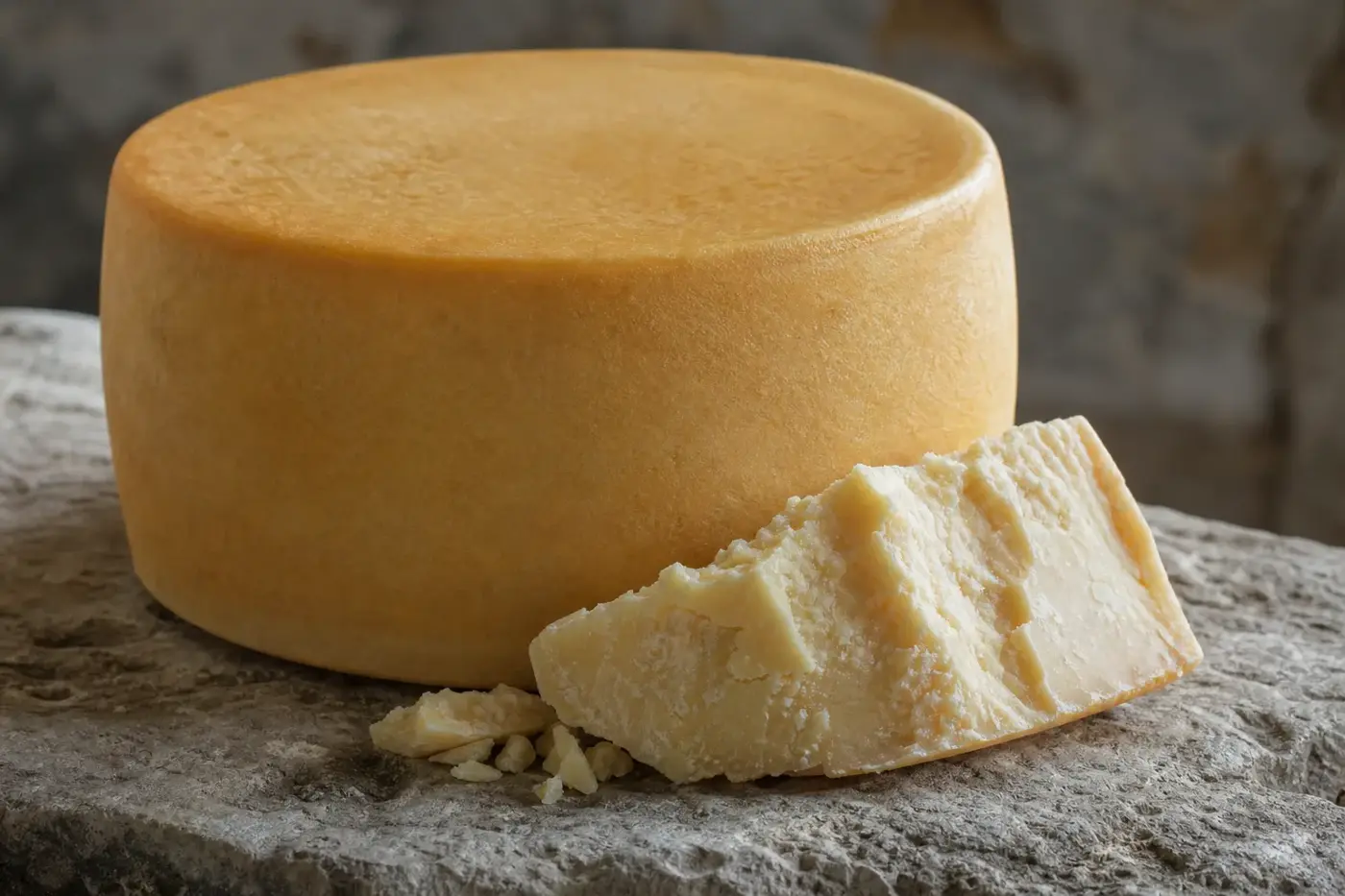
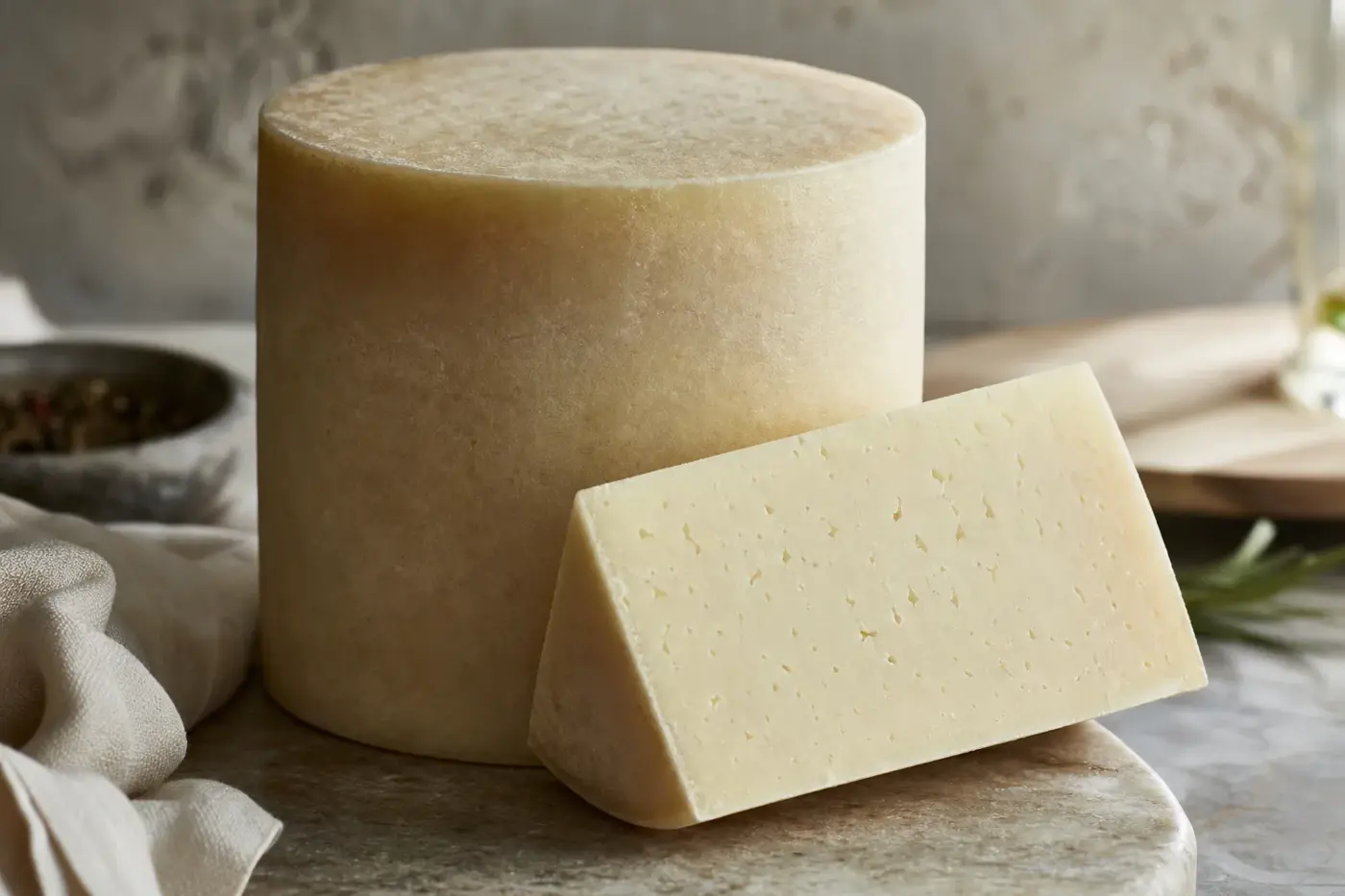
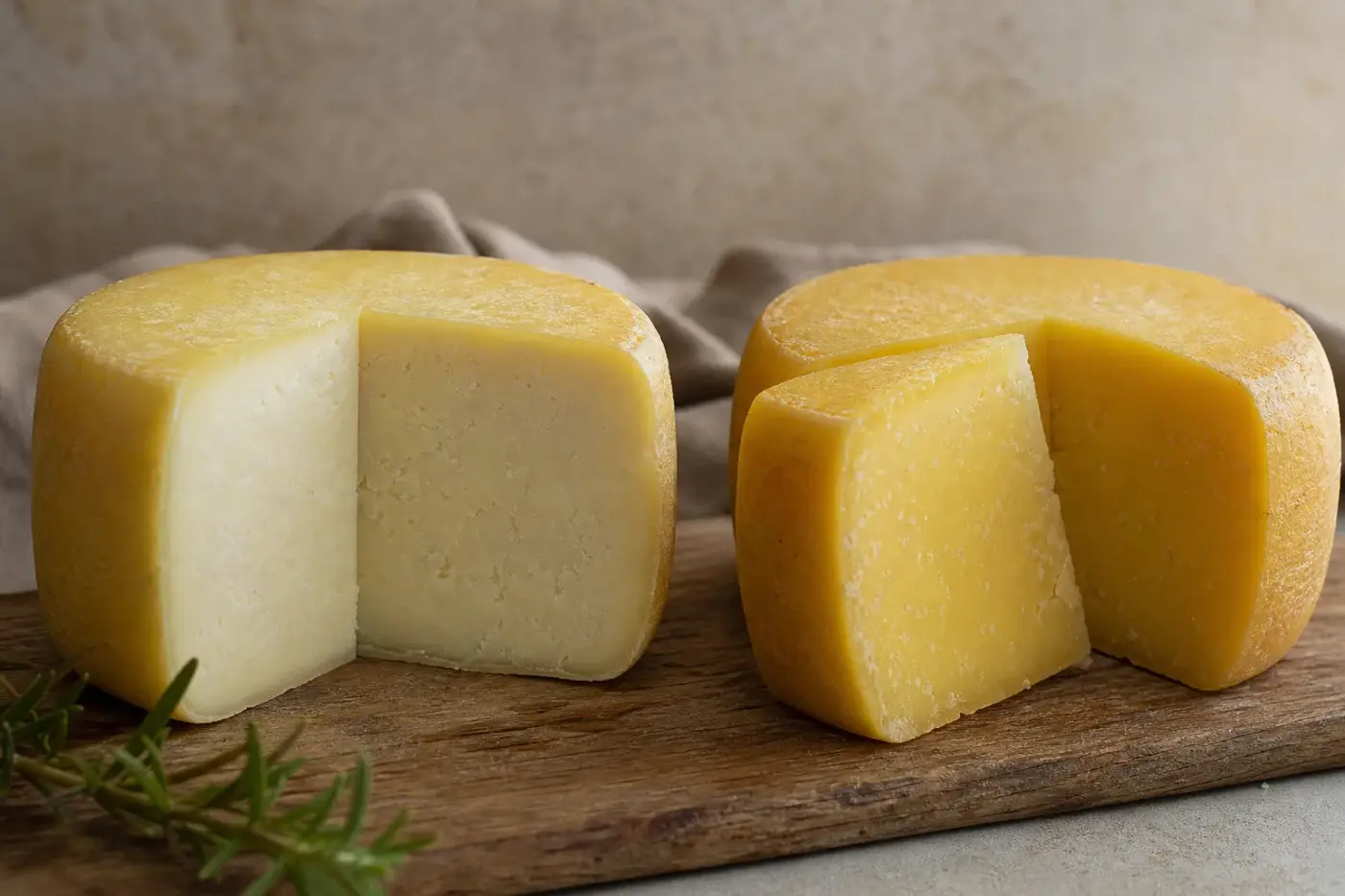
Pecorino di Picinisco
Cut into young Scamosciato and let its mild, mountain pasture aromas lead the way.
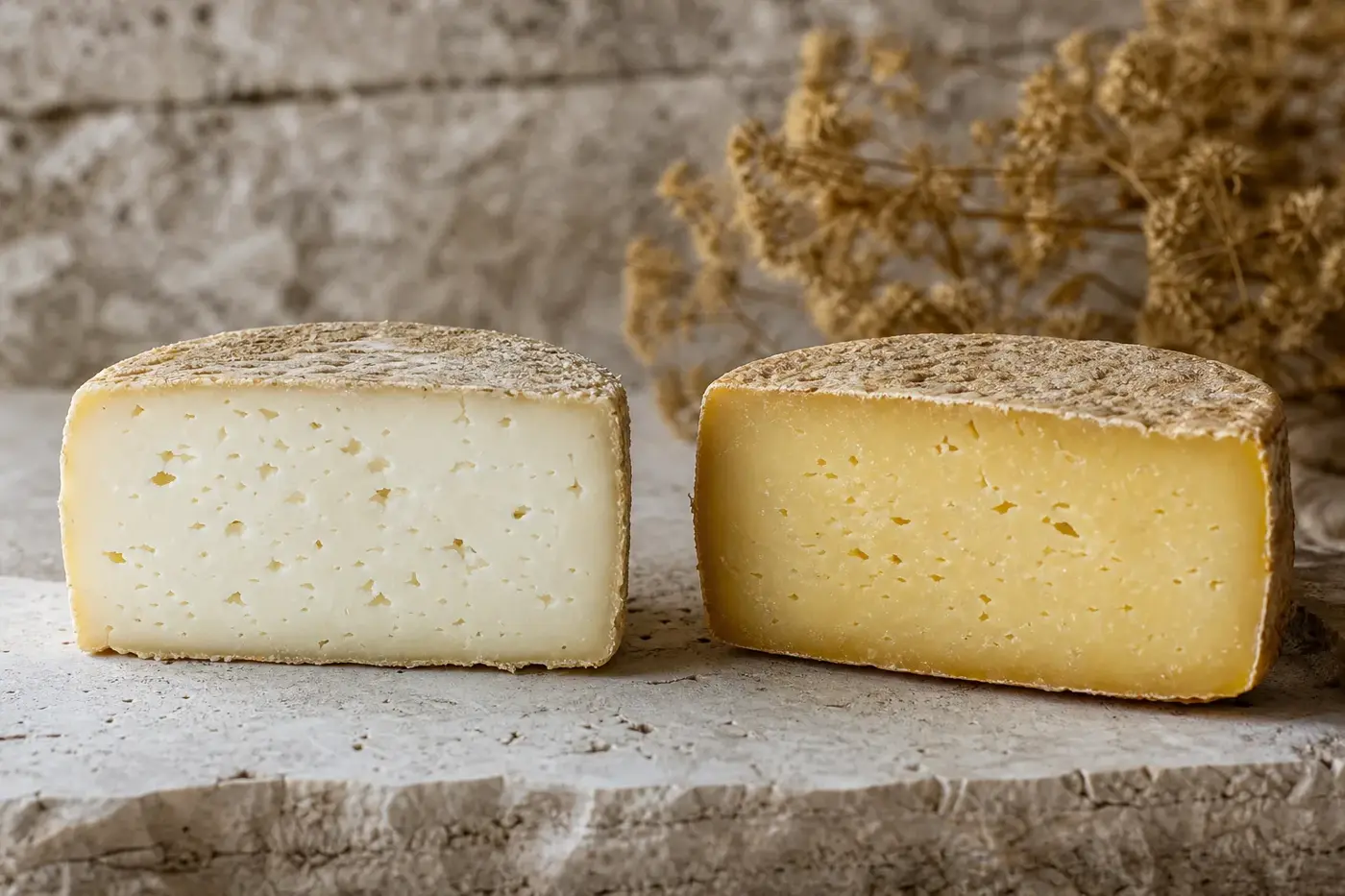
Cut into young Scamosciato and let its mild, mountain pasture aromas lead the way. Then taste Stagionato: stronger, fuller, sharper with age. Here are two faces of Pecorino di Picinisco, a raw sheep’s milk cheese, sometimes blended with goat’s milk, from the pastoral Comino Valley of southern Lazio.[1][2]
| What to know | The detail |
|---|---|
| Familiar and registered name | Pecorino di Picinisco.[2][4] |
| EU registration authority | European Commission, Commission Implementing Regulation (EU) No 1161/2013.[3] |
| Published application identifier | IT-PDO-0005-0859-28.02.2011.[2] |
| Great Britain protection | Registered PDO; UK scheme registration dated 31 December 2020. Register information: November 2026.[4] |
| Where it must be made | Comino Valley municipalities in Frosinone province, Lazio, Italy.[1] |
| Milk in the cheese | Raw whole sheep’s milk; up to 25% goat’s milk permitted.[1] |
| What sets the curd | Lamb or kid rennet paste.[1] |
| Required ageing | Scamosciato: 30 to 60 days. Stagionato: more than 90 days.[2] |
| When it is made | Throughout the year.[2] |
| UK pregnancy guidance | See NHS advice below, November 2026.[6] |
Follow the flocks into Picinisco’s mountains
Picinisco gives the cheese its name, but its territory reaches beyond the village. Picture yourself north of Cassino and east of Sora, around the western Meta and Mainarde mountains. Part of this area lies within the Abruzzo, Lazio and Molise National Park.[1][2]
Here, pastoral life includes monticazione: the seasonal movement of livestock to mountain grazing. The specification’s historical account draws on nineteenth-century statistics and municipal trading records. Together, they tell of an established local economy built around livestock farming and cheesemaking.[1]
Keep that landscape in mind when you taste, along with the flock, its feed and the person making the cheese. Ageing adds another layer. Scamosciato and Stagionato carry the same local tradition in different directions, so your choice is about more than young versus old.
What the protected name promises you
PDO means protected designation of origin; in Italian, the abbreviation is DOP. Pecorino di Picinisco’s registration ties its name to a defined production area and prescribed methods. You are choosing a regional cheese, not simply a recipe for sheep’s milk cheese.[2][3]
The EU registration regulation was adopted on 7 November 2013 and published on 19 November 2013. It provided for entry into force on the twentieth day after publication. These are three separate events, so look closely at the wording beside a registration date.[3]
Great Britain records the name separately under its PDO scheme. Its register identifies Italy as the country of origin and gives the UK scheme registration date and time as 31 December 2020 at 23:00.[4]
Wondering where a regional designation ends and a general cheese style begins? You can untangle the distinction in protected names explained.
Meet the flock behind your piece
Sopravissana, Comisana and Massese are the permitted sheep breeds, alongside qualifying crosses. Goat’s milk is optional, not inevitable. Ask whether your cheese contains it: permission to blend does not mean every maker chooses the same mixture.[1]
Local pastures and forage feature in the official descriptions of the cheese. That gives you a good starting point for a conversation with a producer, alongside the milk blend and the cheese’s age.[1][2]
Keep your questions specific. When was it made, which animals supplied the milk, and how long has it matured? The answers help you compare two pieces, or understand what has changed when you return to the same maker.
From raw milk to a finished wheel
Pecorino di Picinisco begins with raw milk and no added starter cultures. Lamb or kid rennet paste sets it into curd, the solid portion that separates from liquid whey. The maker breaks the curd into rice-sized grains, presses it lightly, transfers it into moulds and presses again.[1]
Drainage comes next, followed by dry salting. The cheeses can mature in a natural room or a controlled environment. During ageing, treatments with olive oil and wine vinegar are permitted.[1]
If the making matters to your shopping, keep two details in mind: raw milk belongs to this cheese’s identity, and its rennet comes from animals. You can explore both in raw, thermised and pasteurised milk and rennet explained.
Find your favourite: Scamosciato or Stagionato
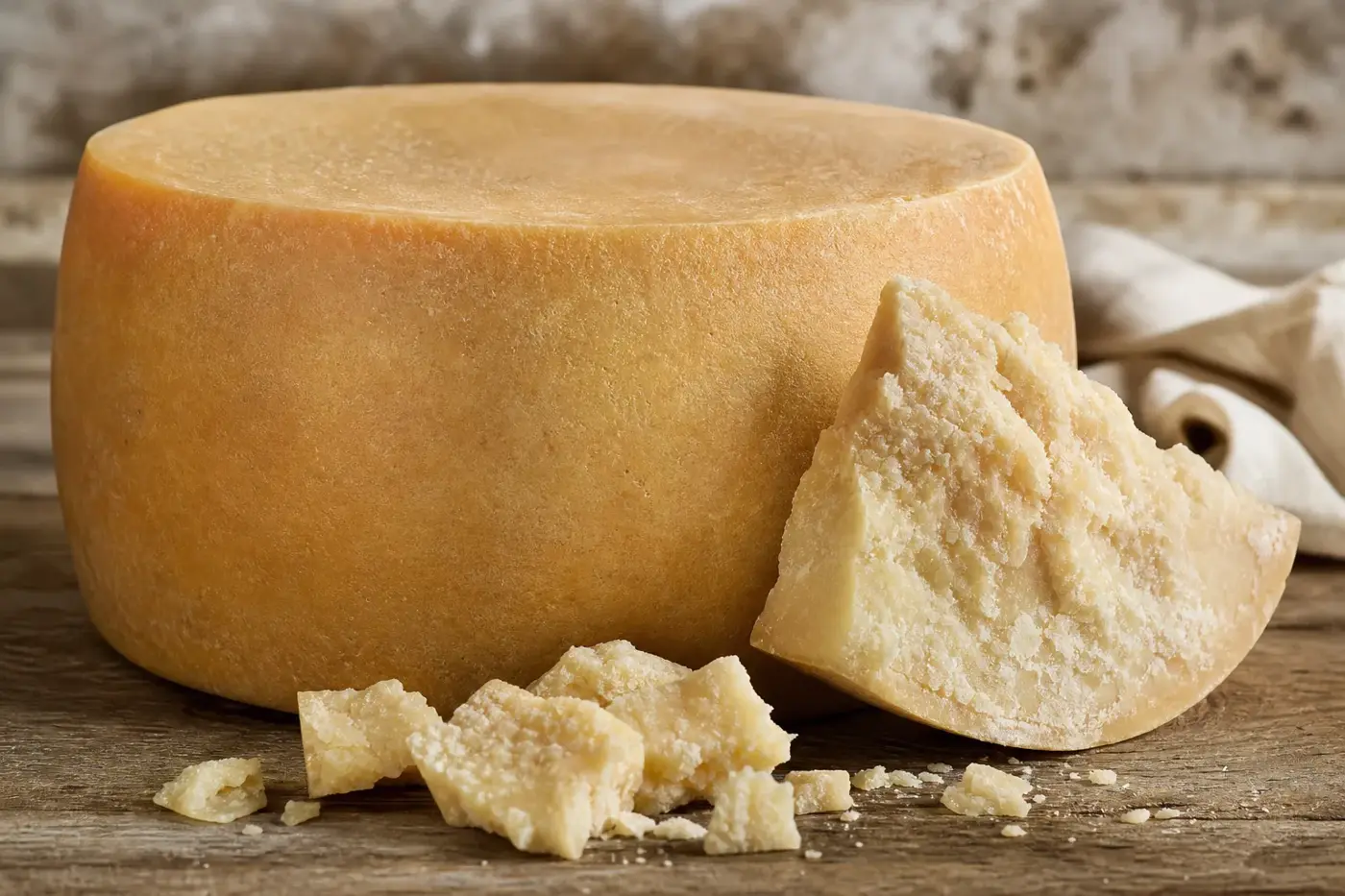
Both maturities are cylinders with flat faces. Expect a thin, rough rind tending towards straw yellow, with a compact paste and a little openness inside. These are the specification’s descriptions, rather than a site tasting.[2]
| What you’ll find | Scamosciato | Stagionato |
|---|---|---|
| Required ageing | 30 to 60 days | More than 90 days |
| Permitted weight | 0.7 to 2.5 kg | 0.5 to 2 kg |
| Colour inside | White towards straw yellow | Straw yellow |
| Specified flavour | Mild, with pasture aromas | Strong and full-bodied, becoming sharp |
Choose Scamosciato to explore the younger expression. Stagionato brings the more forceful flavour. With that documented character in mind, add small portions to a dish and taste before committing to more.
For a revealing comparison, ask for both maturities from the same producer. Find out their actual ages, then taste before adding accompaniments. The names give you the broad distinction; the seller’s batch information fills in the particulars. Buying both is research, naturally.
Give each mouthful its moment
The registration account connects Pecorino di Picinisco’s character to grazing, raw milk, rennet and cheesemaking practice. As it matures, the flavour grows sharper while keeping its pasture-associated aromatic character.[2]
Let smell, texture and finish have a moment each. What rises from a freshly cut piece, how does the paste feel as you chew, and what remains after swallowing? Note these separately and you will learn more than by immediately declaring one piece “stronger”.
Write down your impressions before reading the seller’s notes, then compare and ask about differences. You might prefer the younger cheese alone and the older one with food, or the reverse. There is no prize for choosing the oldest: the point is finding what you enjoy.
Bring home a piece that suits your plans
Start with the full name, Pecorino di Picinisco, and establish which maturity is on offer. Ask who made it, how long it has matured and which milk blend went into it. For a cut portion, request the storage instructions and date information that accompanied the original cheese.
Tell the seller what you have in mind. “I want to taste it alongside the younger version” is a different brief from “I want to grate it over vegetables”. Someone who knows the wheel can help you choose a suitable piece.
If several examples are available, do not let age make the whole decision. Ask which the seller recommends for your dish or tasting. The guide to reading a cheese label helps you separate the food’s name from its producer, packer and other label information.
Let the cheese take the lead at the table
Begin with a small piece, plain bread and water. Taste the cheese alone, then with bread, before introducing fruit or anything sweet. This simple sequence keeps your attention on the cheese during that first comparison.
With Scamosciato, try pear or apple slices alongside the bread. Start Stagionato with the same fruit, then add a little fruit preserve if you enjoy sweet and savoury together. These are serving suggestions, not documented traditional pairings or the results of a site tasting.
For a more mature piece, shave a little over warm beans, roasted vegetables or pasta. Add it gradually and taste before reaching for more salt. That way, you can adjust its contribution without giving the whole portion over to the dish.
Water is a useful alcohol-free choice when you compare maturities. Unsweetened tea is another option to explore, according to your preference.
Keep the rest cool, with its details close by
Keep dairy products refrigerated and follow the packaging’s storage instructions. This follows Food Standards Agency consumer guidance for England, Wales and Northern Ireland. The FSA recommends a fridge temperature between 0 and 5 °C.[8]
Put out only the portion you intend to serve. Leave the rest refrigerated according to its storage instructions.
For a cut piece, keep the seller’s guidance and accompanying information. A container without those details is less useful once the packaging has gone in the bin. You can find practical organisation advice in storing cheese at home.
Give Picinisco its own name, not Romano or Toscano
Pecorino di Picinisco, Pecorino Romano and Pecorino Toscano have separate entries in the Italian agriculture ministry’s list of DOP cheese specifications. Each is a distinct designated product. Each has its own specification for you to consult.[5]
If you want Picinisco, look for the full name and the Scamosciato or Stagionato description. Those tell you more than pecorino alone. When choosing a substitute, start with your intended result: something to slice, shave or grate, with a flavour contribution you can adjust by tasting.
Whichever cheese you use, keep its original name attached. A useful substitute does not have to surrender its identity.
This page summarises published guidance from the official sources it cites. It is not medical advice. Guidance differs between countries and changes over time, so check the current source for where you live, and ask your doctor, midwife, pharmacist or dietitian about your own circumstances.
Raw milk and pregnancy: understand the UK guidance
UK NHS pregnancy guidance, November 2026, specifically includes pasteurised and unpasteurised hard cheeses among foods you can eat during pregnancy. It also includes any cheese cooked until steaming hot. The advice distinguishes these categories from other unpasteurised dairy foods and certain soft cheeses.[6]
For a particular piece of Pecorino di Picinisco, ask your supplier to establish its texture category. If there is uncertainty, take it to your midwife or another healthcare professional. The maturity name alone does not settle the question.
The NHS identifies pregnancy, newborn babies, and conditions or treatments that weaken immunity as circumstances associated with a higher risk of serious listeriosis. Its guidance also lists unpasteurised dairy products among foods that may carry listeria.[7]
If you or someone you are serving falls within these groups, consult current official guidance and your healthcare team about your own circumstances. Outside the UK, follow the advice issued for your country.
Questions people ask
Where does Pecorino di Picinisco come from?
Its production area is in the Comino Valley in Frosinone province, Lazio, Italy. Part of the area lies within the Abruzzo, Lazio and Molise National Park.
What milk is Pecorino di Picinisco made from, and is it vegetarian?
It is made from raw whole sheep’s milk, with up to 25% goat’s milk permitted. It uses lamb or kid rennet paste, which is animal derived.
What is the difference between Scamosciato and Stagionato?
Scamosciato matures for 30 to 60 days and has a mild flavour with pasture aromas. Stagionato matures for more than 90 days and has a strong, full flavour that becomes sharp.
Can I eat Pecorino di Picinisco during pregnancy?
NHS pregnancy guidance includes pasteurised and unpasteurised hard cheeses among foods that can be eaten during pregnancy. The page says to ask the supplier to establish a particular piece’s texture category, since its maturity name alone does not settle the question, and to take any uncertainty to a midwife or another healthcare professional. See the current NHS pregnancy guidance.
How should Pecorino di Picinisco be stored?
The Food Standards Agency recommends keeping dairy products refrigerated and following the packaging’s storage instructions. It recommends a fridge temperature between 0 and 5 °C.
Sources
[1] Ministero dell’agricoltura, della sovranità alimentare e delle foreste. Disciplinare di produzione: denominazione origine protetta “Pecorino di Picinisco”. Ministry-hosted document with filename dated 21 February 2011, Articles 2 to 6.
[2] European Commission. Single document: “Pecorino di Picinisco”, 2013/C 57/11. Official Journal of the European Union, C 57, 27 February 2013, pages 28 to 31.
[3] European Commission. Commission Implementing Regulation (EU) No 1161/2013 of 7 November 2013 entering a name in the register of protected designations of origin and protected geographical indications [Pecorino di Picinisco (PDO)]. Published 19 November 2013.
[4] Department for Environment, Food & Rural Affairs. Pecorino di Picinisco. Protected food names register entry, published 4 January 2021, accessed November 2026.
[5] Ministero dell’agricoltura, della sovranità alimentare e delle foreste. Disciplinari DOP e IGP prodotti agricoli: 1.3 Formaggi. Live specification index, accessed November 2026.
[6] NHS. Foods to avoid in pregnancy. Live guidance, cheese, milk and other dairy section, accessed November 2026.
[7] NHS. Listeriosis. Page reviewed 10 November 2023, accessed November 2026.
[8] Food Standards Agency. How to chill, freeze and defrost food safely. Published 18 December 2017, live guidance accessed November 2026. Applies to England, Northern Ireland and Wales.
Research combined official designation documents, the Great Britain register and UK agency guidance; serving suggestions are editorial proposals, with no first-hand tasting undertaken.
Last checked: November 2026
Last checked November 2026.
The editors suggest you read next
Parmigiano Reggiano
Break into a wheel of Parmigiano Reggiano and flakes fall away, revealing a finely granular cheese, pale straw to straw in colour.