Pélardon
Picture goats picking their way through the scrub and wooded hills of southern France.
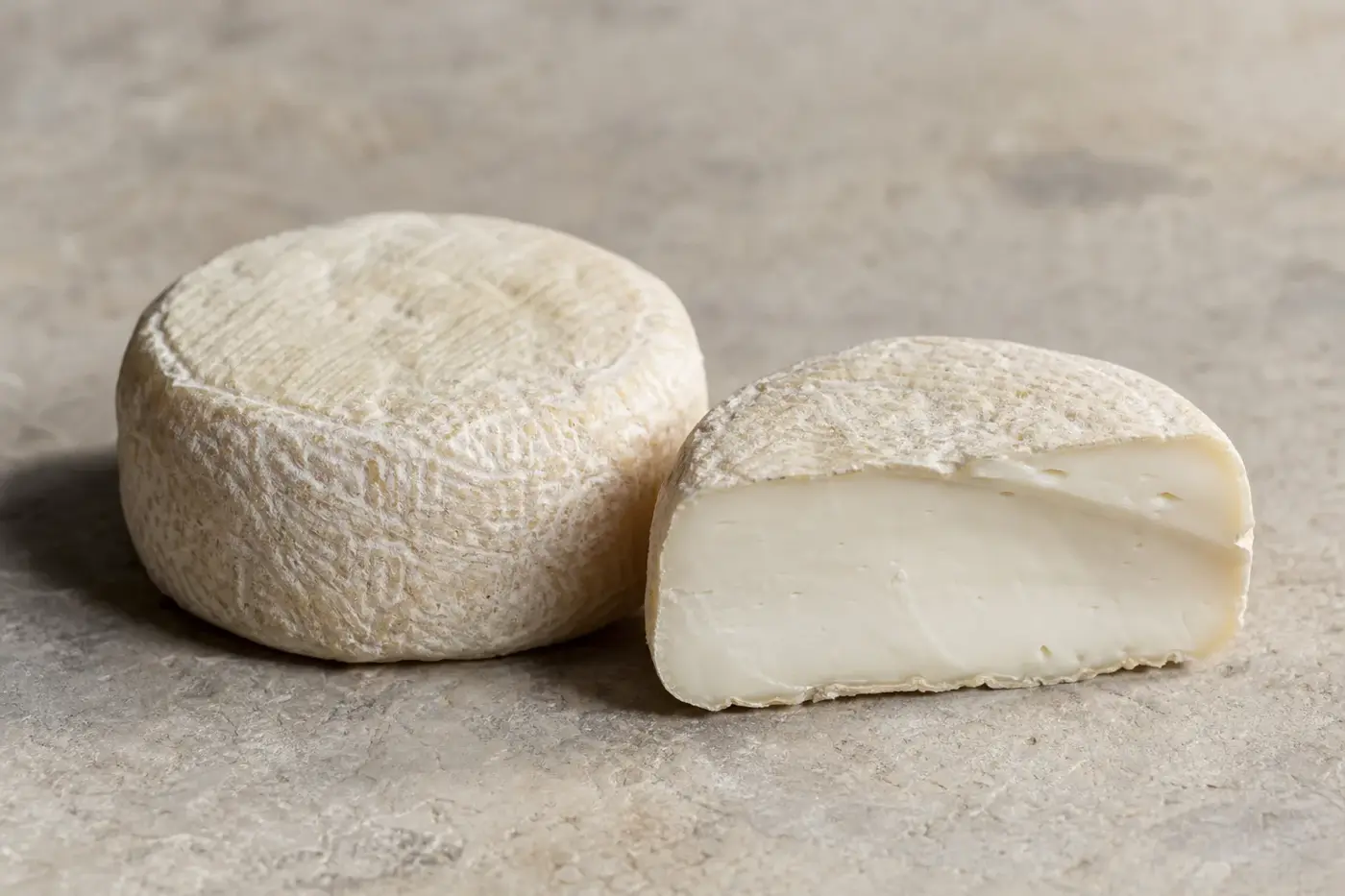
Picture goats picking their way through the scrub and wooded hills of southern France. Meanwhile, milk slowly sets into tomorrow’s Pélardon, a process that takes more than 18 hours alone. This little raw goat’s milk cheese owes its character to the Cévennes landscape, hand moulding and patient ripening. Its name holds protected designation of origin status in the Great Britain register. [1][2][5]
| Field | Your guide |
|---|---|
| Name | Pélardon [1][4] |
| What you’re tasting | Soft cheese from raw, whole goat’s milk [1][4] |
| Where it comes from | Defined communes and parts of communes in Aude, Gard, Hérault, Lozère and Tarn [1] |
| Coagulant | Rennet [1] |
| Pregnancy guidance | NHS guidance, November 2026 [9] |
| EU protection | Current status: Not verified; amendment approved in Regulation (EU) No 1298/2011 [3] |
| Great Britain | Registered PDO; UK scheme registration: 31 December 2020 [2] |
| Registration authority and ID | EU: European Commission; register ID: Not verified [3] |
| Size | Diameter 60 to 70 mm; height 22 to 27 mm [4] |
| Weight | More than 60 g at 11 days after renneting [1] |
| Earliest age | 11 days from adding rennet [1][4] |
| Composition | At least 45% fat in dry matter; at least 40% dry matter [1] |
| Rind and interior | Thin mould rind; white to ivory paste [4] |
Follow the goats into the Cévennes
Think garrigue, maquis, oak woods and pine woods, rather than an uninterrupted green meadow. France’s agriculture ministry describes Pélardon country stretching from the Cévennes towards the Montagne Noire. Garrigue is open Mediterranean scrub associated with limestone; maquis is denser scrub on acidic ground. [1][5]
The scenery is varied, but the designation’s boundary is precise. Its legally delimited area covers specified communes, sometimes only parts of them, in Aude, Gard, Hérault, Lozère and Tarn. [1]
The ministry links the cheese’s character to the vegetation those browsing goats find. You have woodland, scrub and upland grazing, with different plants on offer rather than every herd eating the same grass. The producer’s handling and the cheese’s maturity also help shape what reaches your plate. [5][6]
A year of grazing, down to the last detail
Alpine, Saanen and Rove goats, and their crosses, are permitted. Below 800 metres altitude, they must graze for 210 days each year; higher up, the requirement is 180 days. Each goat must have 2,000 square metres of pasture or browsing land. [1]
Hay, cereals and oilseed meals are allowed alongside that grazing. Silage, wrapped fermented forage and permanent indoor confinement are prohibited. The landscape is not just there to look handsome: these feeding rules are written into the specification. [1]
Slow milk, skilled hands and regular turns
Whole, raw goat’s milk starts the process. France’s agriculture ministry emphasises hand moulding and regular turning as part of preserving Pélardon’s character. Behind those reassuringly familiar cheesemaking terms sit precise controls. [1][5]
Coagulation takes more than 18 hours. Pélardon is not one to watch the clock. Lactic acidification, assisted by rennet, turns the milk into curd, which is hand moulded and drains naturally for at least 24 hours. [1]
Both faces receive dry salt, and drying comes before ripening. The cheese may be sold from day 11 after renneting. That slow setting remains central to the method. [1]
The producers’ syndicate calls the coagulation predominantly lactic, meaning acidification does most of the work. Curd is the set portion; whey is the liquid that drains away. Hand moulding and draining give you Pélardon’s little rounded disc, rather than a large pressed wheel. [4][5]
Then comes affinage, the controlled maturing of cheese. Regular turning accompanies the developing rind and changing interior. The ministry describes a cheese you can enjoy at several stages, with a more or less pronounced taste. Follow the wider journey in how cheese is made. [5]
A little disc with plenty to discover
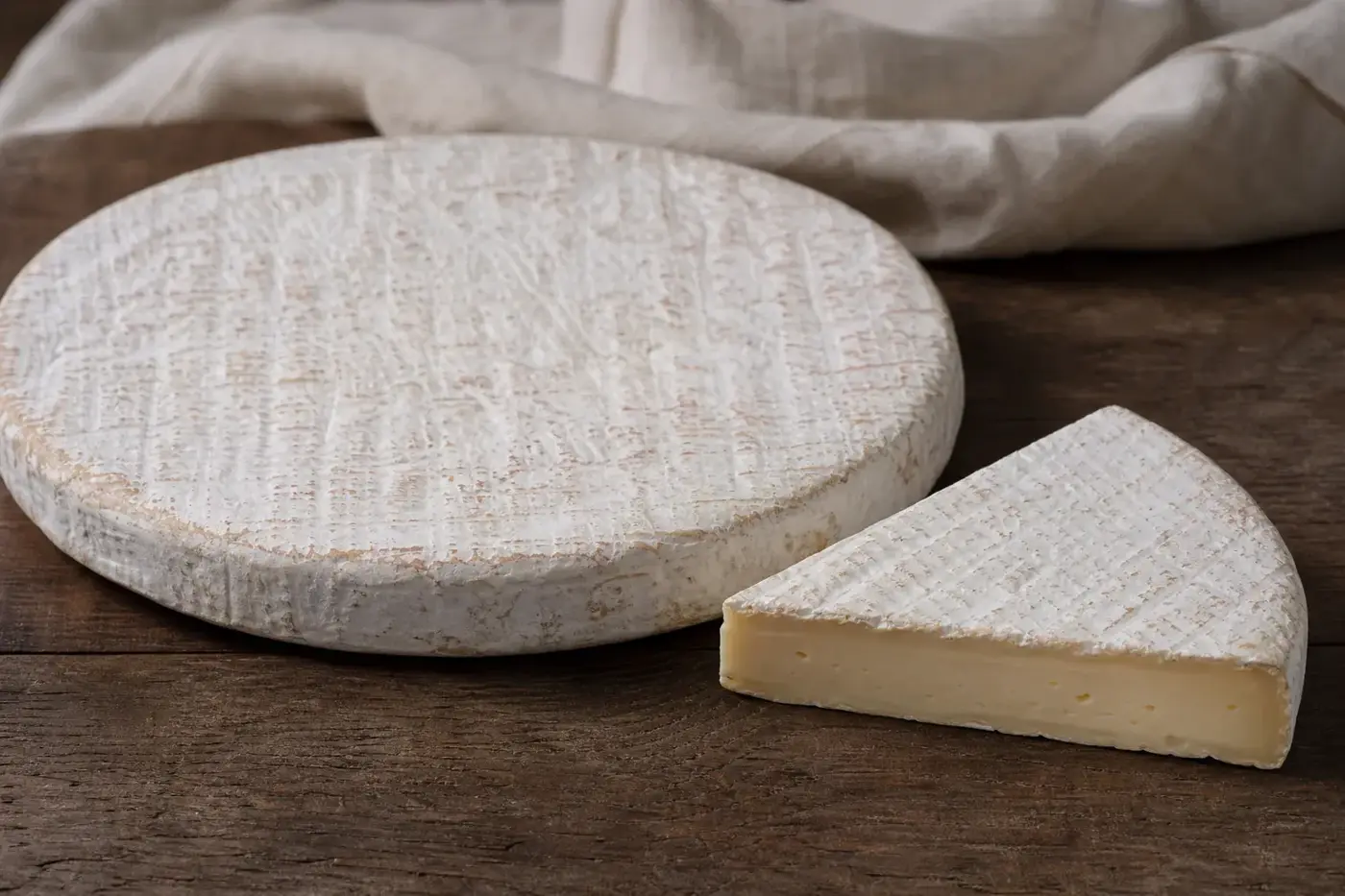
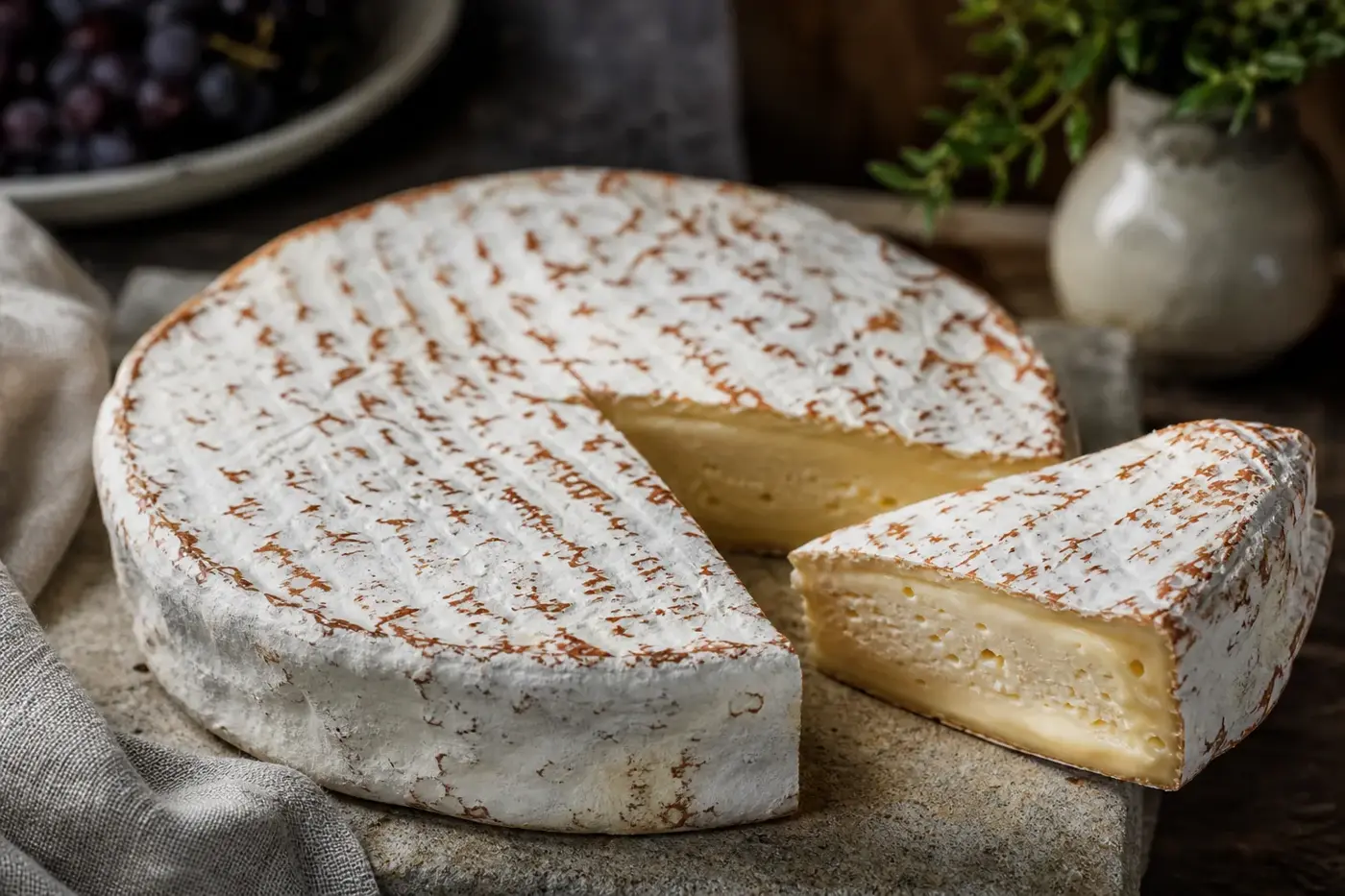
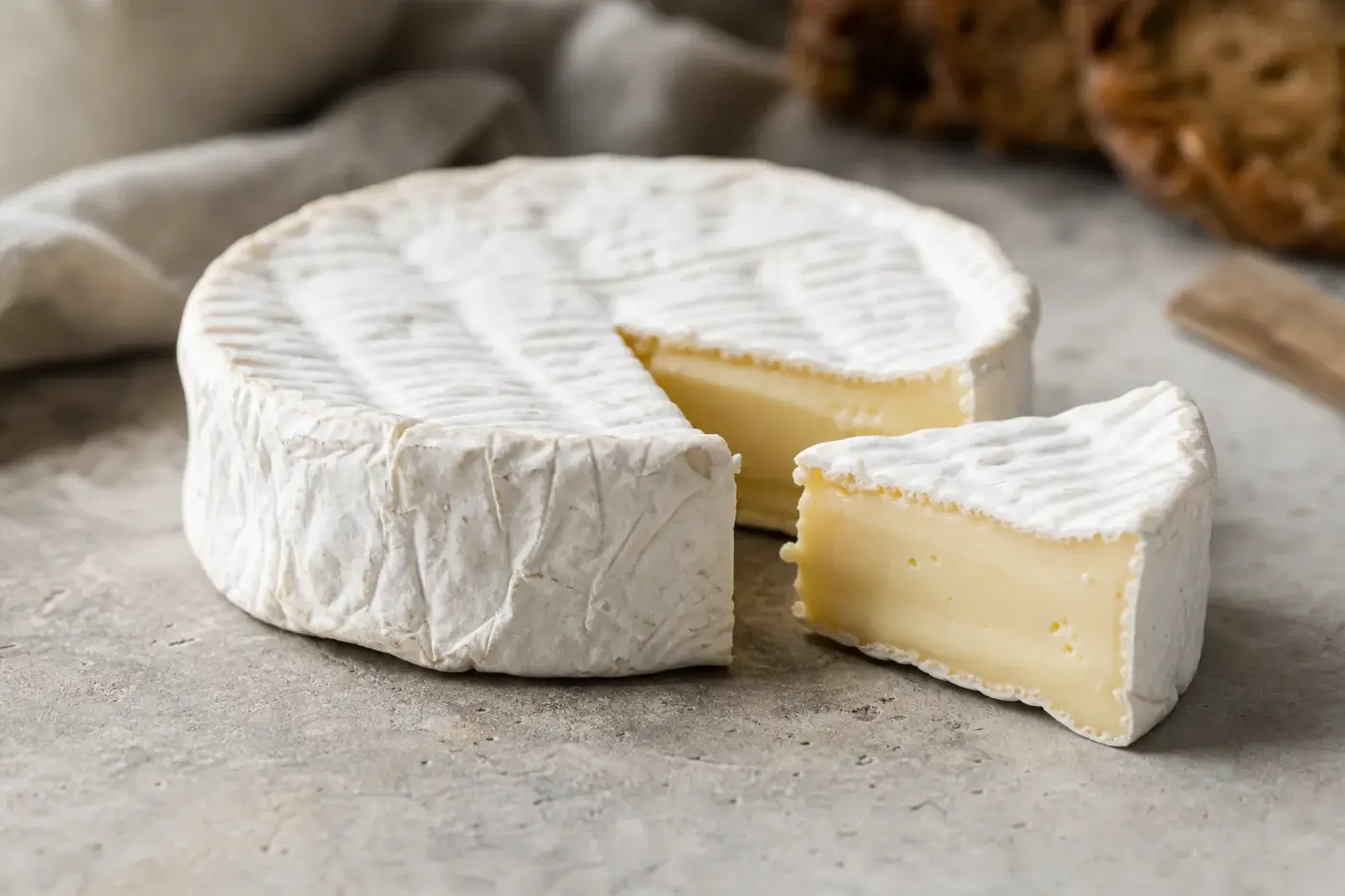
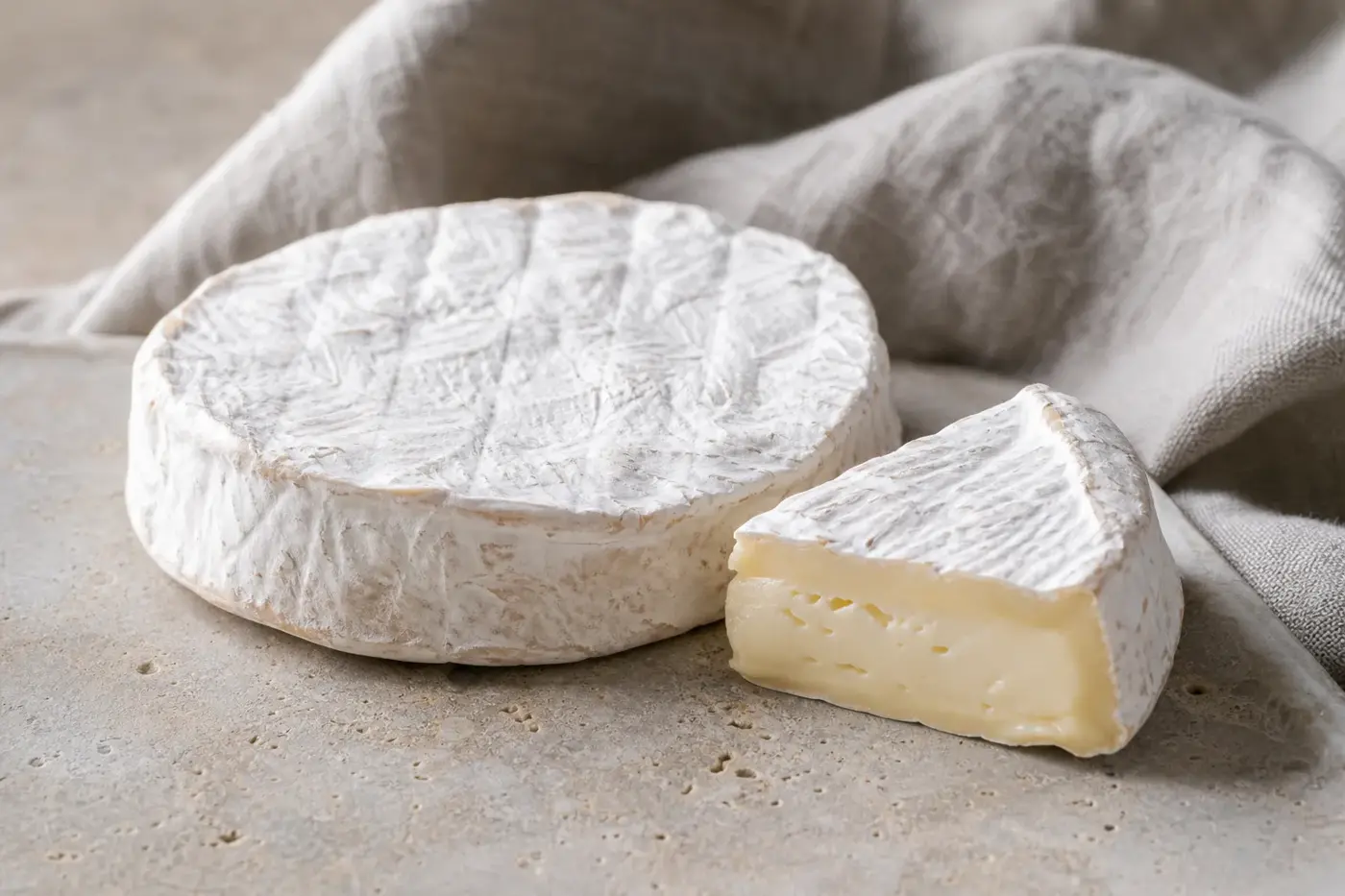
Pélardon is a small cylinder with rounded edges, closer to a thick disc than a miniature tower. According to the producers’ syndicate, its fine rind may be pale yellow, white or blue. Beneath it, the paste, or body of the cheese, is white to ivory, homogeneous and smooth when cut. [4]
Young Pélardon has the delicate character described by the French goat dairy industry body ANICAP. Its tasting account picks out a hazelnut note that becomes more assertive as the cheese ripens, while retaining finesse. The agriculture ministry likewise describes flavour growing more marked with age. [5][6]
Give it longer and the interior can become brittle, the syndicate notes. A young, yielding cheese and a drier, more concentrated one offer distinctly different pleasures. Choose youth if you want delicacy and an easy texture for bread. Ask for a more mature example if ANICAP’s firmer character appeals: maturity matters as much as appearance. [4][6]
Make the most of your cheese counter conversation
Pélardon is a registered name, not a producer’s brand. The French initials AOP stand for appellation d’origine protégée, equivalent to PDO, protected designation of origin. The EU approved a specification amendment in 2011, and the Great Britain register records Pélardon as a registered PDO. [2][3]
When you use a pack or counter label to identify the cheese, check the current designation and label requirements. Ask to see the identification. Then find out who made it, how mature it is and when it should be eaten.
Choose your stage of ripeness rather than assuming an immaculate white surface beats a naturally coloured rind. The syndicate explicitly allows several rind colours in its description. You are choosing cheese, not inspecting the laundry. [4]
Read the designation alongside the storage instructions and date, and keep the label until you have finished the cheese. The guide to protected names explains the difference between origin protection and a familiar cheese style.
Give your Pélardon the right care
Start with the producer’s storage instructions. If you follow UK NHS advice, chilled ready-to-eat foods should stay at 5 °C or below, and opened food should be used within two days unless the packaging says otherwise. Keep your cheese separate from raw foods, in its wrapping or a suitable covered container. [7]
Need advice on chilling or time out of refrigeration? For England, Wales and Northern Ireland, consult the Food Standards Agency guidance. [8]
Use the producer’s description of the expected rind and texture as your quality reference. Blue colouring can belong to Pélardon’s normal rind, and a brittle interior can come with long ageing. If you suspect the cheese is unsafe, do not eat it; consult the relevant official guidance and any recall notice. [7][10]
For food safety, follow the use-by date, storage instructions and any recall notice affecting the batch. Keep those practical checks separate from your preference for a particular ripeness. The guide to how to store cheese covers wrapping and fridge management. [7][10]
Start with bread, then explore the south
Begin with plain bread and wedges cut from the little disc. Taste the cheese alone before adding anything, then decide what you want alongside. If you are comparing young and mature examples, this gives their differences room to emerge. A heavily dressed mouthful makes them harder to follow.
The agriculture ministry suggests Pélardon in salad, while ANICAP includes honey, gratins and mushrooms among its serving suggestions. For a simple plate, set out bread, a lightly dressed green salad and the cheese, so everyone can combine them. Keep honey separate, leaving its sweetness optional rather than letting it take over every bite. [5][6]
For wine, ANICAP points you towards the Languedoc, including Minervois and Faugères. Ask for a regional wine suited to the cheese’s maturity, rather than choosing by geography alone. Let the drink play a supporting role, especially with a younger Pélardon and its delicate character. [6]
Still or sparkling water gives you an alcohol free option. Wine suggestions are for adults of legal drinking age who choose to drink, with small servings. People who are pregnant, driving, taking medicines that interact with alcohol or recovering from alcohol dependence should not drink. See the NHS pregnancy guidance and cheese and wine pairing.
This page summarises published guidance from the official sources it cites. It is not medical advice. Guidance differs between countries and changes over time, so check the current source for where you live, and ask your doctor, midwife, pharmacist or dietitian about your own circumstances.
Find the right guidance if you are at higher risk
Before choosing a soft raw milk cheese, consult the official advice for where you live. The guidance here is dated November 2026. For questions about your own circumstances, speak to your doctor, midwife, pharmacist or dietitian. [7][9]
In the UK, the NHS explains which cheeses to avoid during pregnancy and when thorough cooking is advised. Consult its pregnancy guidance for the current advice. [9]
Older people, newborn babies and people with weakened immunity are among the groups the NHS identifies as being at greater risk of serious listeriosis. Its listeriosis guidance sets out the precautions.
In France, the agriculture ministry’s Pélardon guidance includes advice for young children, pregnant people and people with weakened immunity. Consult that source for its current advice and any exceptions. [5]
Let your cheese curiosity lead you further
- Raw Milk, Thermised and Pasteurised Cheese: get to know milk treatments and what they mean on your label.
- Mould on Cheese: When to Cut and When to Bin: tell expected ripening apart from a food safety concern.
Questions people ask
Where does Pélardon come from?
Pélardon comes from a defined area in southern France, covering specified communes and parts of communes in Aude, Gard, Hérault, Lozère and Tarn. Great Britain records it as a protected designation of origin.
What does Pélardon taste like?
Young Pélardon has a delicate character and a hazelnut note. The hazelnut note becomes more assertive as the cheese ripens, while retaining finesse.
What milk is Pélardon made from?
Pélardon is made from whole, raw goat’s milk. Alpine, Saanen and Rove goats, and their crosses, are permitted.
Can you eat Pélardon during pregnancy?
The NHS explains which cheeses to avoid during pregnancy and when thorough cooking is advised. Consult its current [pregnancy guidance](https://www.nhs.uk/pregnancy/keeping-well/foods-to-avoid/) and ask your doctor or midwife about your circumstances.
How should Pélardon be stored?
Follow the producer’s storage instructions. The NHS advises keeping chilled ready to eat foods at 5 °C or below and using opened food within two days unless the packaging says otherwise.
Sources
- Institut national de l’origine et de la qualité, Cahier des charges de l’appellation d’origine « Pélardon », homologated by Décret n° 2011-1605 of 21 November 2011, published 23 November 2011. The linked compilation contains several specifications; the Pélardon document appears towards its end. Official specification PDF.
- Department for Environment, Food & Rural Affairs, Pélardon, protected food and drink names register, published 4 January 2021, live entry retrieved November 2026. Great Britain register entry.
- European Commission, Commission Implementing Regulation (EU) No 1298/2011 of 9 December 2011 approving a non-minor amendment to the specification for a name entered in the register of protected designations of origin and protected geographical indications [Pélardon (PDO)], Official Journal L 330, 14 December 2011. Binding amendment approval.
- Syndicat des Producteurs de Pélardon, La carte d’identité du Pélardon, undated product description, retrieved November 2026. Producer-group source. Product description.
- French Ministry of Agriculture, Le Pélardon AOP, le fromage des Cévennes, 10 February 2025. Official account.
- ANICAP, Pélardon AOP, Le chèvre, undated, retrieved November 2026. Industry-body descriptions and serving suggestions, attributed in the article. Cheese profile.
- NHS, Listeriosis, page last reviewed 10 November 2023, live guidance retrieved November 2026. Official guidance.
- Food Standards Agency, How to chill, freeze and defrost food safely, published on GOV.UK, 18 December 2017, live guidance retrieved November 2026. Applies to England, Northern Ireland and Wales. Consumer chilling guidance.
- NHS, Foods to avoid in pregnancy, live guidance retrieved November 2026. Official pregnancy guidance.
- Food Standards Agency, Alerts, live recall portal, retrieved November 2026. Official alerts.
This article was researched through official specifications, legislation, register material and national guidance, with sensory descriptions attributed to the producer group and industry body.
Last checked: November 2026
Last checked November 2026.
The editors suggest you read next