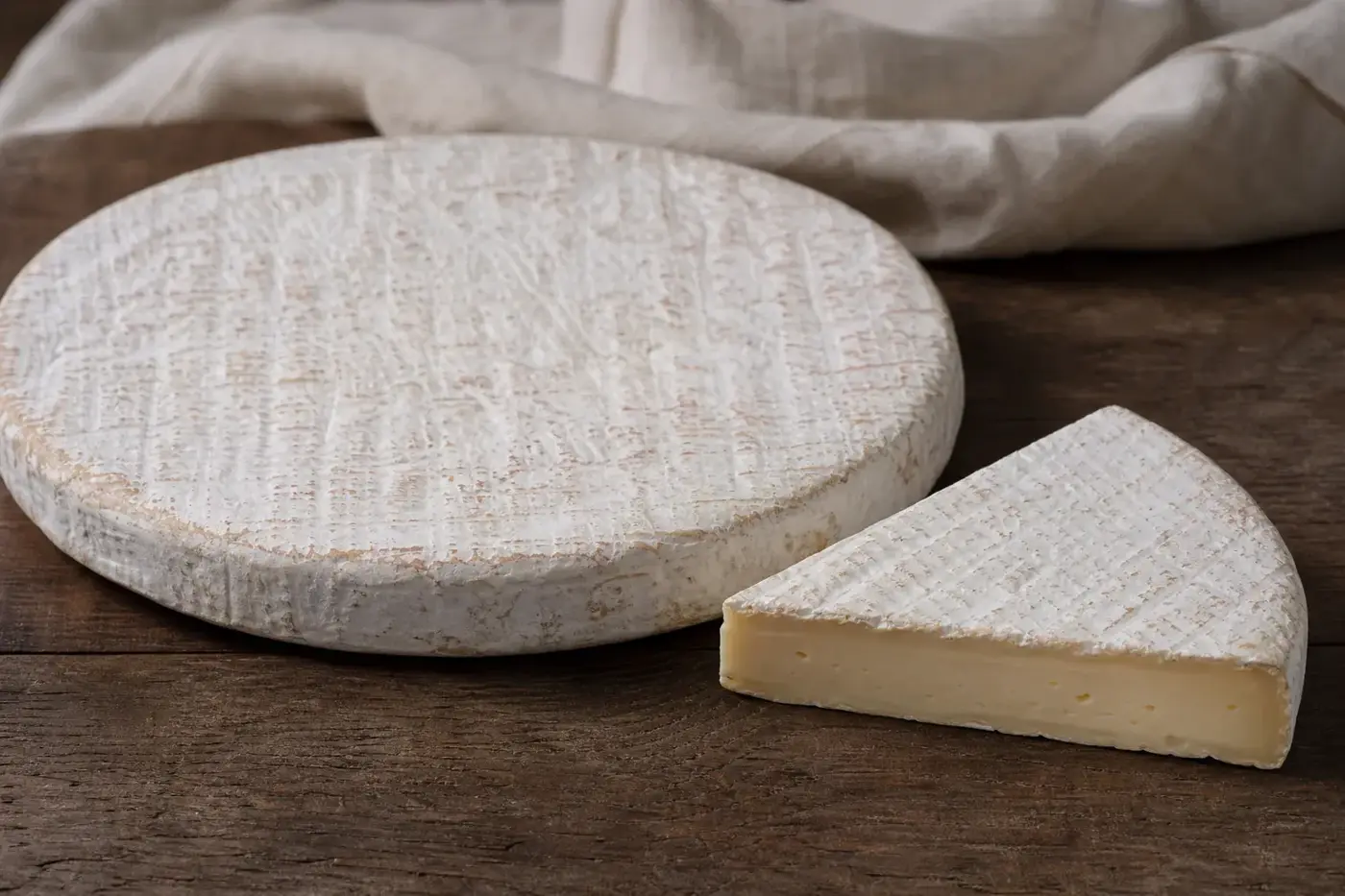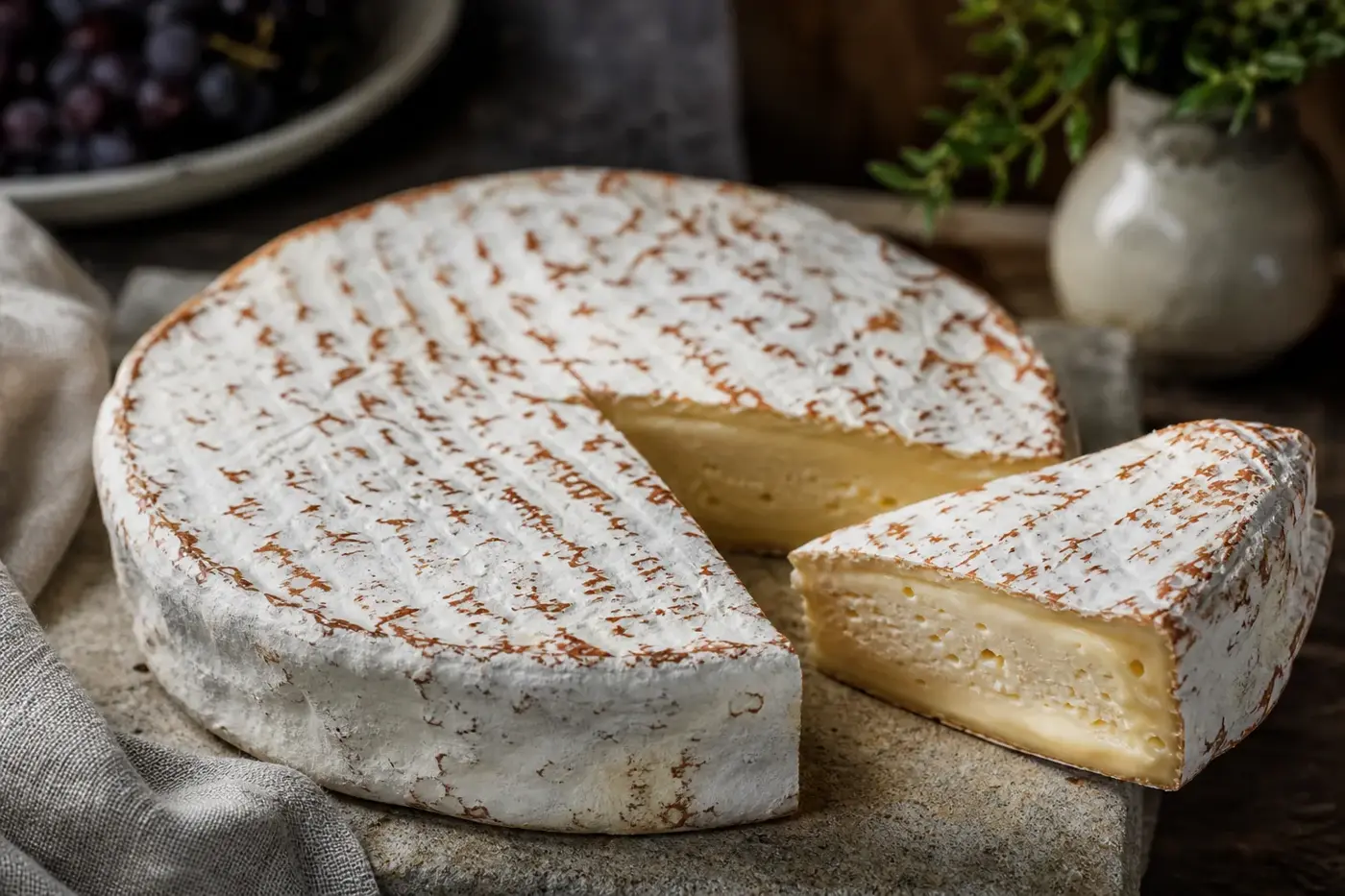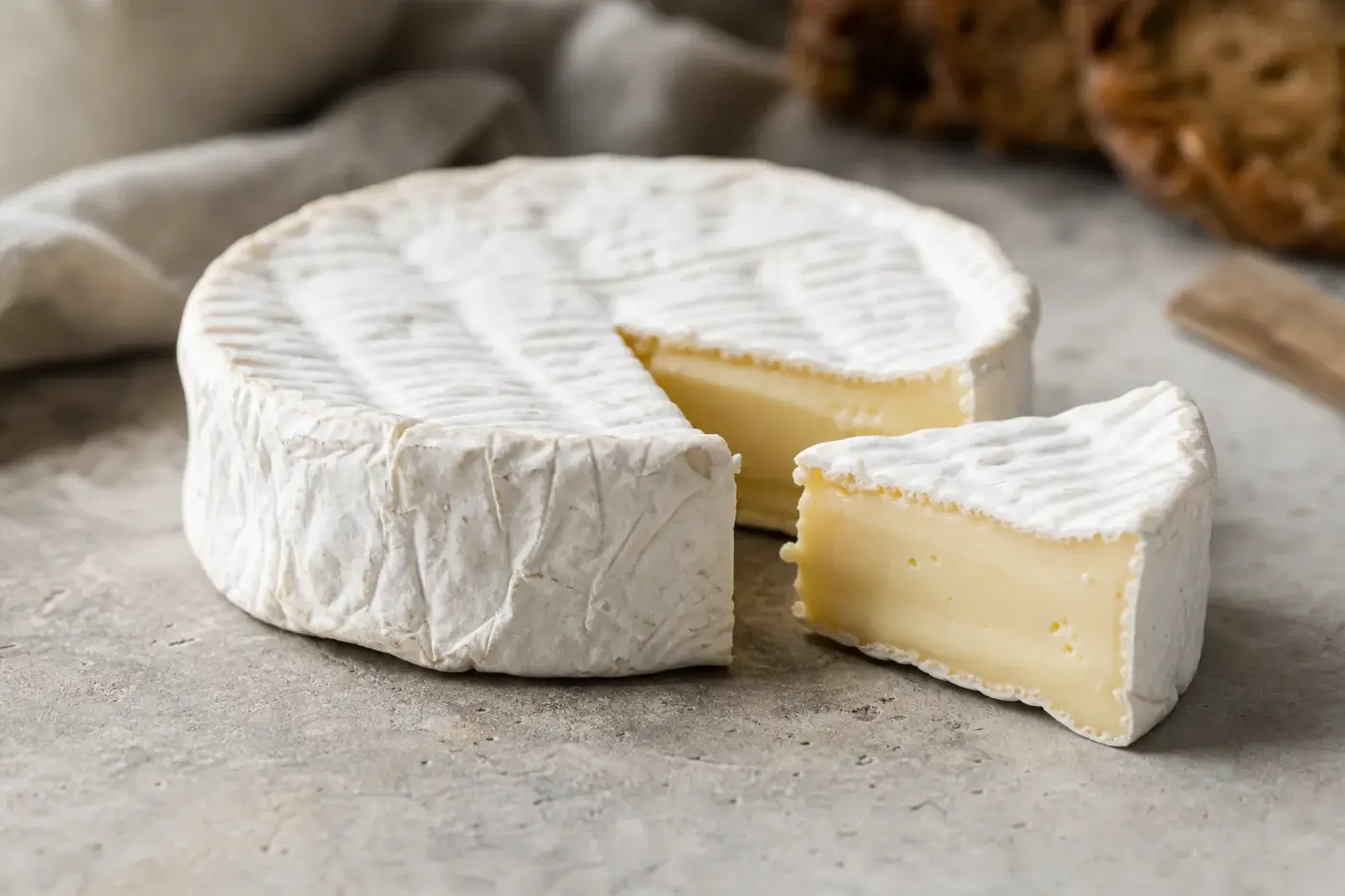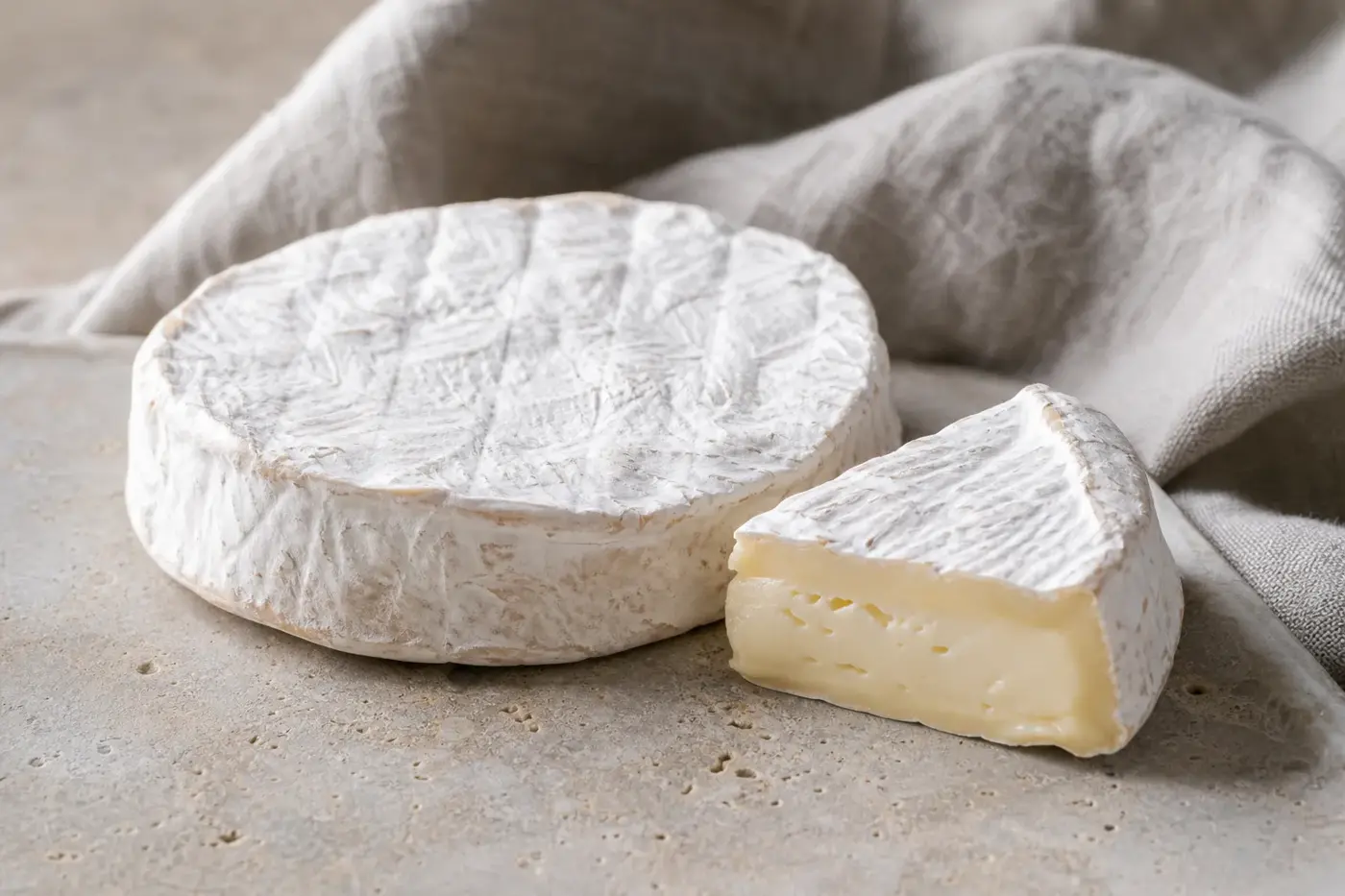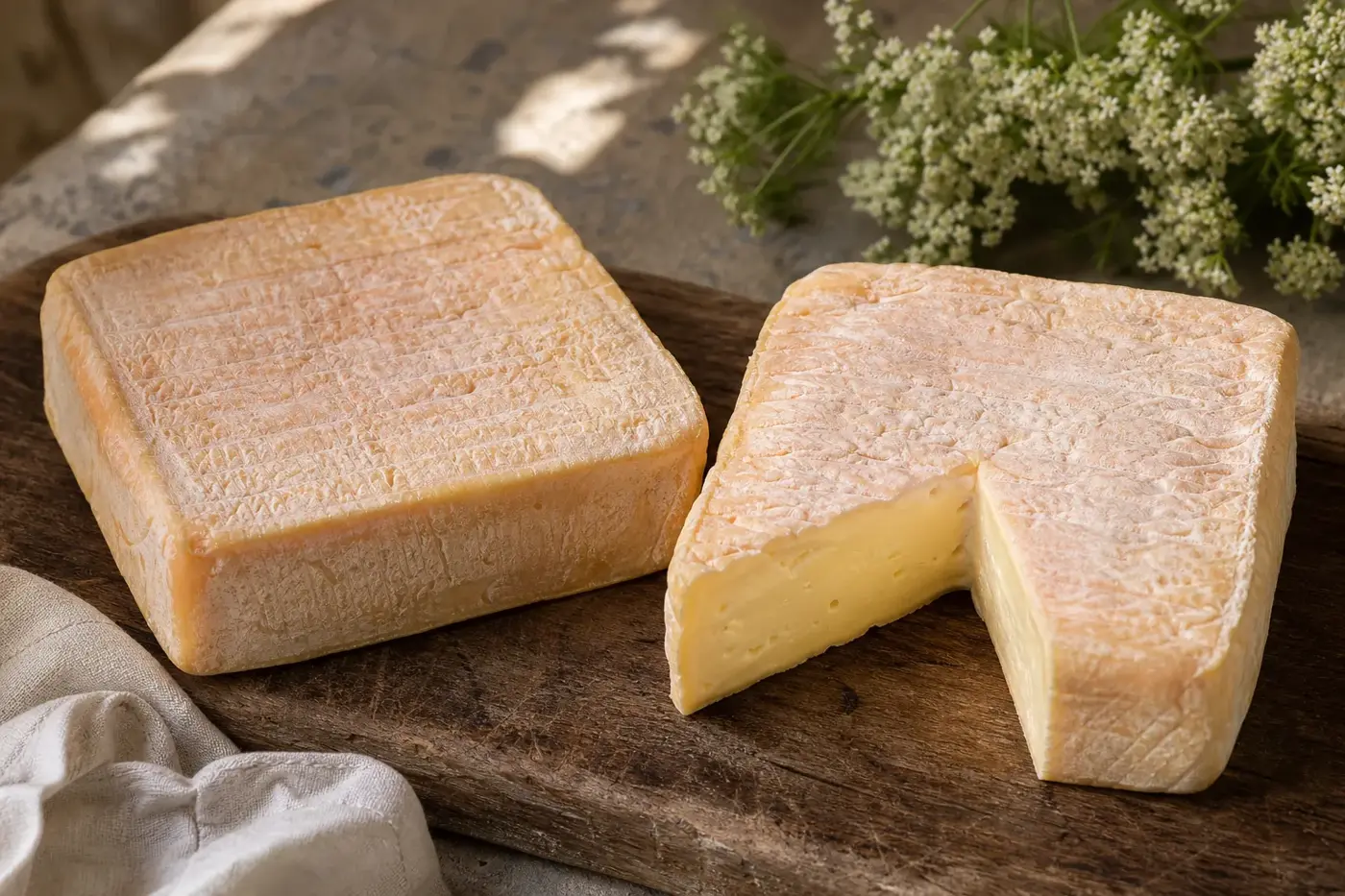
The rind announces itself before you take a bite. Then comes the surprise: a mild mouthful, supple and much gentler than the smell suggested. Pont-l'Évêque, a Norman cow's milk cheese with a brushed or washed rind, has made quite an entrance for something so well mannered. INAO describes lactic and vegetal notes, sometimes lightly smoky; Les Fromages de Normandie draws the same contrast between pronounced smell and gentler taste. [1,6]
| What to know | The detail |
|---|---|
| Familiar and registered name | Pont-l'Évêque. [1,4] |
| Registration authorities | European Commission, EU; Defra, Great Britain. [3,4] |
| EU register ID | Not supplied here |
| EU designation | PDO recorded by INAO; specification amendment approved by Commission Implementing Regulation (EU) 2015/795. [1,3] |
| Great Britain status | Registered PDO since 31 December 2020 at 23:00. [4] |
| Northern Ireland status | Not supplied here |
| French recognition | AOC recognised in 1972. [5] |
| Milk and coagulant | Cow's milk; animal rennet. [2] |
| Production area | Legally delimited communes in Normandy and Mayenne, France. [2] |
| Legal minimum ageing | 18 days for standard, petit and demi; 21 days for grand, counted from renneting. [2] |
| Typical ageing | Not supplied here |
| Pregnancy guidance | UK NHS advice, dated November 2026. [7] |
Let the rind introduce the centre
Give that fragrant rind a moment, then turn your attention inwards. INAO describes a surface ranging from whitish to reddish, so both pale and deeper-coloured examples fit the description. Follow the aromas and you may find milk, cream and vegetation, with an occasional hint of smoke. [1]
Inside, look for suppleness rather than a flowing paste. Les Fromages de Normandie describes an ivory to straw-yellow interior, even in texture with a few openings, neither sticky nor runny. The smell is fairly pronounced, but the taste is mild: here, softness does not mean surrendering all shape on your plate. [6]
Try a small piece from the centre, then another with some rind. Give each part a little attention before deciding what draws you back. It might be the milk-led interior, the more aromatic surface or the balance between the two.
Find its story in a Norman market town
Between Lisieux and Deauville, in the Pays d'Auge, sits the town that gave Pont-l'Évêque its name. Les Fromages de Normandie links that name to the town's market, where cheeses from the surrounding countryside were traded. Think of a meeting place for cheese, not just a name on a map: the town's identity travelled with cheeses made beyond its streets. [6]
The written trail takes you to a poem praising Pont-l'Évêque in 1622, cited in the official specification. A French agriculture ministry article also recounts a medieval Cistercian origin story involving a cheese called angelot. There is an important distinction: the medieval account is a transmitted origin story, while the poem provides dated evidence of an established reputation. [2,5]
The familiar square came later. The specification places the adoption of square wooden moulds in the early eighteenth century. By then, the cheese had another way to make itself recognisable.
Head out to the pastures and Normande herds
The protected area reaches across parts of Normandy and into Mayenne. Rather than picturing a neat circle around Pont-l'Évêque, look to the specification's list of communes. Those entries fix the legal boundary. [2]
Out in that landscape, the farming rules are precise. At least half the dairy cows in each supplying herd must be Normande, and the cows must graze for at least six months annually. The breed requirement counts cows in the herd, not a measured proportion of milk in each cheese. [2]
INAO connects the area's grass-growing conditions with its dairy tradition and the development of soft cheeses needing relatively short ripening. [1] That gives you something more tangible than a picturesque backdrop. Pasture feeds the herd, milk reaches the cheesemaker, and the method shapes the cheese on your plate.
Discover what the protected name promises
The protected name brings place and method together. Milk production, cheesemaking and ripening must all happen within the defined area and follow the specification. [2] AOP means appellation d'origine protégée, the French term for PDO, or protected designation of origin, in English.
The legal history has several milestones, each marking a different event. France recognised the AOC in 1972, and Defra records the original EU registration date as 21 June 1996. The European Commission approved a specification amendment in 2015; registration in the Great Britain scheme followed on 31 December 2020 at 23:00. [3,4,5]
When choosing your cheese, look for the full name and AOP identification. Then read the individual product's milk treatment: the protected name sets requirements for place and production, while the label describes this particular example. For the wider story, explore the guide to protected names.
Pick your square, or make room for a rectangle
Pont-l'Évêque has four authorised presentations. Most are squares, while the demi takes a rectangular turn. The French specification gives these dimensions and packaged net weights. [2]
| Format | Shape | Side dimensions, cm | Net weight, g |
|---|---|---|---|
| Pont-l'Évêque | Square | 10.5 to 11.5 | 300 to 400 |
| Petit | Square | 8.5 to 9.5 | 180 to 250 |
| Demi | Rectangle | 10.5 to 11.5 by 5.2 to 5.7 | 150 to 200 |
| Grand | Square | 19 to 21 | 1,200 to 1,600 |
With a whole square, cut from the centre towards the edge to make triangular portions. That is the agriculture ministry's recommendation, giving each piece a fair share of rind and centre. [5] A small square makes a compact centrepiece; the grand lends itself to portions for a group.
Choose the size around your occasion, then discuss maturity separately. Tell the cheesemonger whether you want a whole cheese to share or portions for several meals. Format answers how much you need and how to serve it; readiness deserves a conversation of its own.
This page summarises published guidance from the official sources it cites. It is not medical advice. Guidance differs between countries and changes over time, so check the current source for where you live, and ask your doctor, midwife, pharmacist or dietitian about your own circumstances.
Follow the cheesemaker from milk to mould
Animal rennet starts the transformation, coagulating Pont-l'Évêque's milk into a gel. Cutting then separates the curd, the solids, from the whey, the liquid. [2] If the coagulant matters to your choice, the rennet guide takes you further.
From here, there is plenty of hands-on work. Les Fromages de Normandie describes cutting and stirring the curd, removing some whey before moulding, then draining in moulds with repeated turning. Salting follows, and the cheeses are surface-dried before ripening. [6] The agriculture ministry's account also emphasises moulding, draining and repeated turning. [5]
You can follow the finished cheese taking shape through these stages. Once the curd has formed, the cheesemaker manages whey loss, establishes the shape and prepares the surface for ripening. The mould provides the outline, but draining and turning help achieve it; explore the broader sequence in how cheese is made.
Ask what time has done for your cheese
Brushing or washing helps shape Pont-l'Évêque's surface during ripening. The specification allows a solution containing water, salt and surface cultures, treatments that help explain the permitted range of rind appearances. This managed ripening is called affinage. [2]
Rind and paste develop together, so ask about both. How has this particular cheese been matured, and how is its centre developing? The useful answer concerns the cheese in front of you, not simply the name printed on its label.
Treat the minimum ageing in the table as a starting point. Ask whether the cheese will be ready for the date you plan to serve it. Describe the balance of aroma and softness you enjoy, and you give the cheesemonger something concrete to work with.
Read the milk label, then follow your taste
Pont-l'Évêque comes in raw, thermised and pasteurised milk versions, according to Les Fromages de Normandie. [6] Look for the treatment on the packaging alongside the maker's name. If the terms leave you wondering, the guide to milk treatments will help.
When comparing cheeses, note treatment, maker and maturity together. If all three change between two pieces, it becomes harder to tell which difference matters most to your enjoyment. Keep those details alongside your tasting notes and the comparison becomes more revealing.
Start with the character you fancy, then use the label and the cheesemonger's description to find a suitable example. Jot down the product details before eating. Your future self should not have to identify a much-loved cheese from a fond memory and a crumpled wrapper.
Bring it home and serve it with care
Ask for Pont-l'Évêque by its full name and say when you plan to eat it. Discuss milk treatment, rind handling and how much aroma you enjoy. If you want clearly defined slices, say so: texture matters as much as flavour.
At home, follow the storage instructions and use-by date. Food Standards Agency guidance for England, Wales and Northern Ireland recommends a fridge between 0 and 5 °C (32 to 41 °F). Keep the cheese separate from raw foods, following NHS advice for chilled ready-to-eat food. [8,9]
To take off the refrigerator chill, bring out only the portion you intend to serve shortly before eating. For UK readers, the NHS says to eat ready-to-eat foods within four hours of taking them out of the fridge. Preparation and serving both count towards that time. [8]
Serve modest portions and bring out more as needed, keeping the remainder refrigerated. You will find more practical guidance in storing cheese at home.
Read the UK guidance on pregnancy and increased risk
During pregnancy, the UK NHS advises against soft cheeses with a white coating or a washed rind unless cooked until steaming hot. That applies whether the milk is pasteurised or unpasteurised. It also advises against soft cheeses made with unpasteurised milk unless cooked until steaming hot. Consult its pregnancy guidance, dated November 2026. [7]
Older people and people with weakened immunity are among the groups the NHS identifies as being at greater risk of serious listeriosis. Its listeriosis guidance, dated November 2026, sets out precautions. Ask your healthcare professional about your own circumstances. [8]
Bring fruit and Norman cider to the table
Start with plain bread, slices of apple or pear, and the cheese. Taste Pont-l'Évêque on its own before adding the fruit. You will get a clearer sense of the difference than if several strongly flavoured accompaniments arrive in the first mouthful.
For adults of legal drinking age who choose alcohol, a small serving of dry Norman cider offers an apple-led contrast to the cheese's lactic character. Sparkling apple juice or sparkling water gives you an alcohol-free alternative. The NHS advises avoiding alcohol during pregnancy. [1,7]
If you would rather cook, consider vegetables with a cheese cream. Graindorge publishes a recipe for garden vegetable skewers with Pont-l'Évêque cream, a suggestion from a producer with a commercial interest in the cheese. [10] Use a complete recipe and follow its cooking and storage instructions when making the dish at home.
Give Livarot and Camembert de Normandie a place beside it
Taste Pont-l'Évêque beside Livarot or Camembert de Normandie, using its mild flavour and supple, non-flowing paste as reference points. [1,6] Take the comparison in three parts. Notice the rind aroma, the texture at the centre and the flavour left after swallowing.
Look closely at the surfaces, too. The NHS describes camembert generally as a white-coated, mould-ripened soft cheese. [7] Pont-l'Évêque can have a whitish to reddish surface, with brushing or washing during ripening. [1] Consider those differences alongside texture, rather than asking colour to settle the matter.
With Livarot, begin by comparing aromatic intensity. Give each cheese a line in your notes, recording maker, milk treatment and maturity where supplied. Taste centre and rind separately before choosing your favourite, and keep your conclusions tied to the particular cheeses on your plate. Next time you are choosing cheese, those details will be worth having.
Questions people ask
What does Pont-l'Évêque taste like?
It has a pronounced smell but a mild taste, with a supple centre. INAO describes lactic and vegetal notes, sometimes with a lightly smoky character.
Where is Pont-l'Évêque made?
It is made in legally defined communes in Normandy and Mayenne, France. Milk production, cheesemaking and ripening must all take place within that area.
Does Pont-l'Évêque contain animal rennet?
Yes, Pont-l'Évêque is made with animal rennet. It is made from cow's milk.
How long is Pont-l'Évêque aged?
The legal minimum is 18 days for the standard, petit and demi formats. For the grand format it is 21 days, with ageing counted from renneting.
Can you eat Pont-l'Évêque during pregnancy?
The UK NHS advises against soft cheeses with a white coating or a washed rind during pregnancy unless cooked until steaming hot, whether the milk is pasteurised or unpasteurised. It also advises against soft cheeses made with unpasteurised milk unless cooked until steaming hot. See the NHS pregnancy guidance at https://www.nhs.uk/pregnancy/keeping-well/foods-to-avoid/.
Sources
- Institut national de l'origine et de la qualité. Pont-l'Évêque. Product entry and linked regulatory documents, undated, accessed November 2026. Official product page.
- French Ministry of Agriculture and INAO. Cahier des charges de l'appellation d'origine « Pont-l'Évêque » associé à l'avis AGRT1512588V. Bulletin officiel No. 24, 2015. Official specification.
- European Commission. Commission Implementing Regulation (EU) 2015/795 of 19 May 2015, approving a specification amendment for Pont-l'Évêque. Official Journal L 127, 22 May 2015. Official legal text.
- Department for Environment, Food & Rural Affairs. Pont-l'Évêque. Great Britain protected food name register, published 4 January 2021, accessed November 2026. Register entry.
- French Ministry of Agriculture. Le Pont-l’Évêque AOP : la reconnaissance d'un savoir-faire quasi millénaire. 9 April 2025. Ministry account.
- Les Fromages de Normandie. Pont l'Évêque (AOP). Regional reference page, undated, accessed November 2026. Used for its attributed sensory description and account of milk treatments and production. Regional guide.
- NHS. Foods to avoid in pregnancy. Current web edition accessed November 2026. Official guidance.
- NHS. Listeriosis. Reviewed 10 November 2023; current web edition accessed November 2026. Official guidance.
- Food Standards Agency. How to chill, freeze and defrost food safely. Published 18 December 2017; current web edition accessed November 2026. Applies to England, Northern Ireland and Wales. Official guidance.
- Fromagerie Graindorge. Brochette du Jardin et sa crème de Pont l’Evêque. Producer recipe, undated, accessed November 2026. Cited as a published cooking suggestion, not a site-tested recipe. Producer recipe.
Researched through official product records, the published specification, government guidance and attributed regional and producer accounts; pairing and tasting suggestions are editorial proposals.
Last checked: November 2026
Last checked November 2026.
The editors suggest you read next