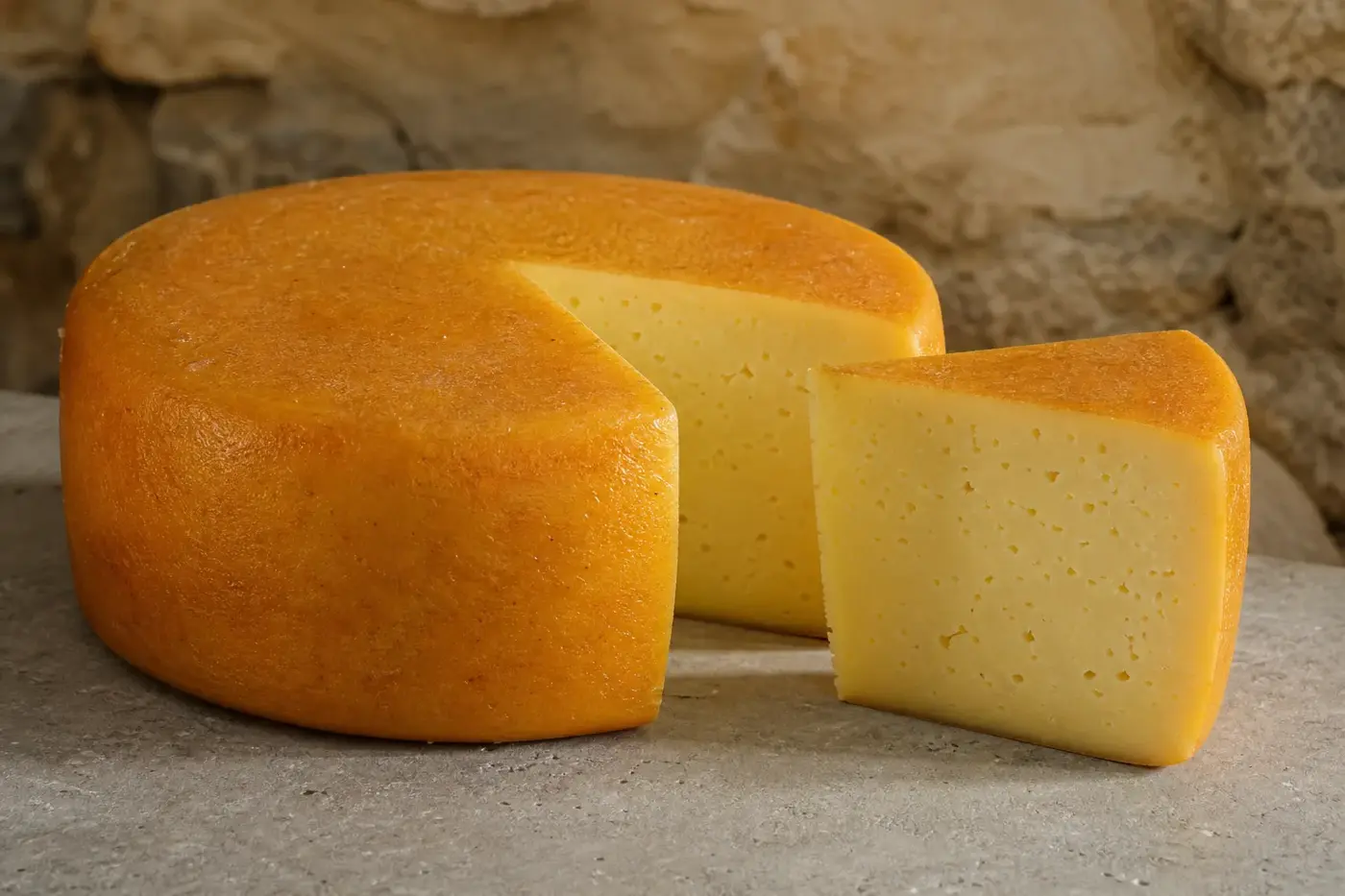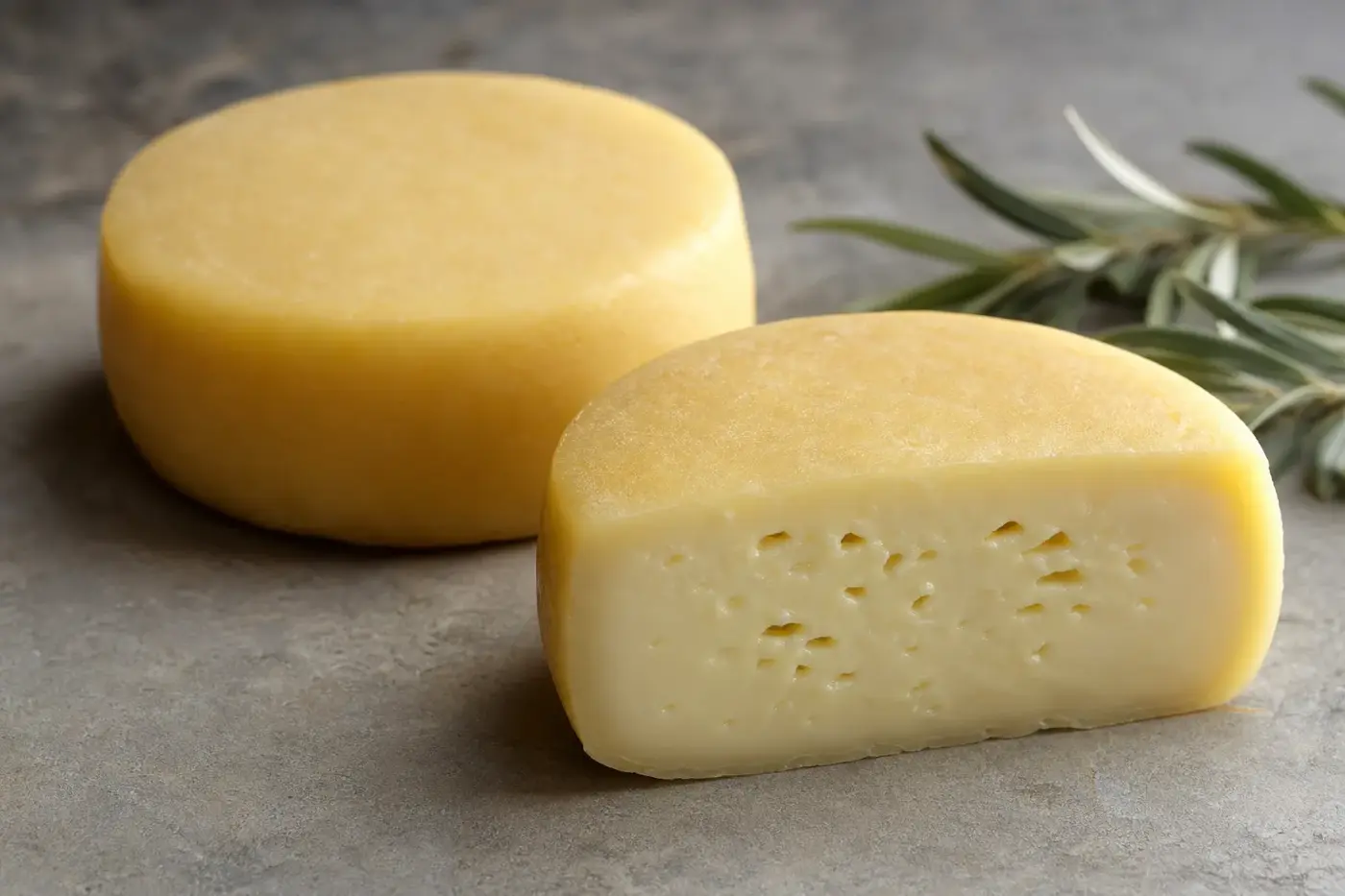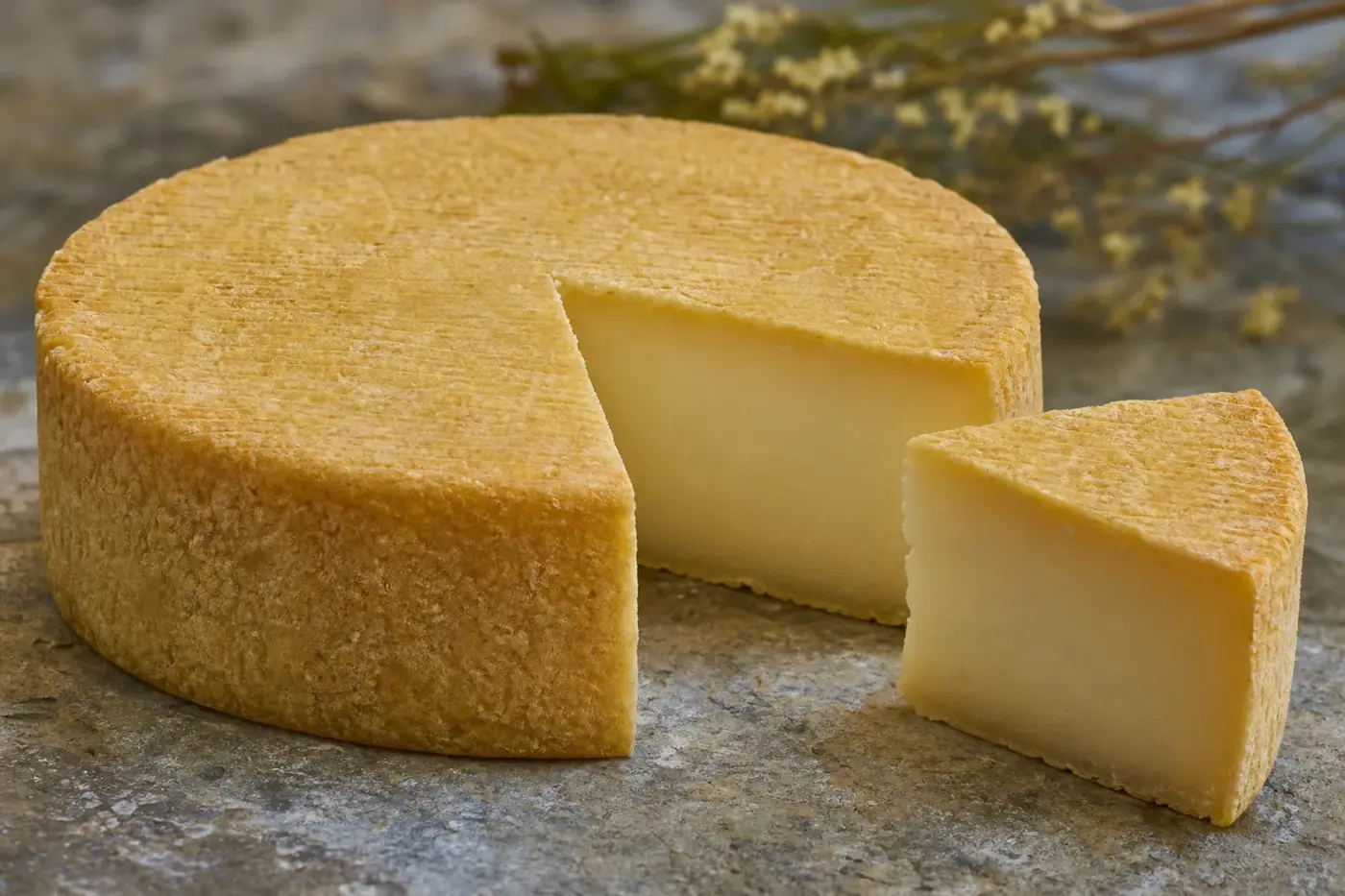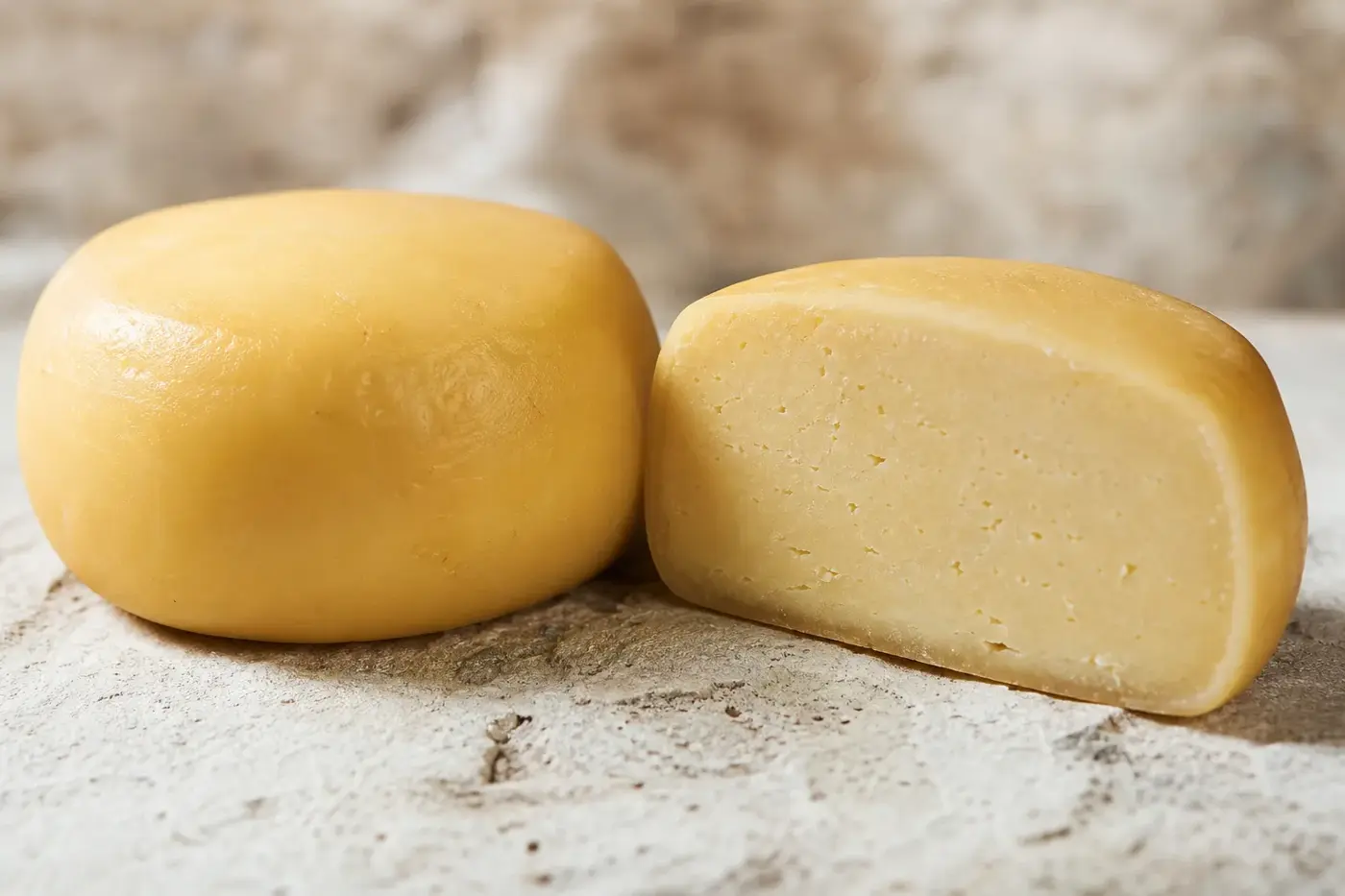
A wood fire warms the milk. Salted cloths and cardoon have their parts to play. These are the beginnings Portugal’s agricultural authority describes for Queijo de Évora, the small, yellowish cheese of the Alentejo.[1] Maturation carries the story onwards, giving the harder forms a more pronounced flavour.[1][2]
| At a glance | What to know |
|---|---|
| Familiar and registered name | Queijo de Évora.[2][3] |
| Home territory | Alentejo, Portugal.[1][2] |
| EU registration authority and ID | European Commission; PDO-PT-0251.[2] |
| EU protection | Registered PDO; registered 21 June 1996. Record status: November 2026.[2][4] |
| Great Britain protection | Registered PDO; registered 31 December 2020. Record status: November 2026.[3] |
| Registration legislation | Commission Regulation (EC) No 1107/96, Article 1 and Annex, EU.[4] |
| Milk | Raw sheep’s milk.[1][2] |
| Legally required sheep breeds | Not established here |
| What sets the milk, according to Portugal’s agricultural authority | Cardoon, Cynara cardunculus L.[1] |
| Legal minimum maturation | Not established here |
| Maturation requirements | The applicable specification and small format remain relevant to establishing these.[1][5] |
| Separate typical ageing range | Not established here |
| Whether you can eat this cheese’s rind | Not established here |
Follow Évora into the Alentejo
Hot, dry summers. Spontaneous Mediterranean pasture. The official GIview record connects Queijo de Évora with sheep farming in this Mediterranean climate, including feeding and animal management.[2] Évora lends its name; the surrounding Alentejo gives the cheese its wider geographical home.
Follow that connection and you travel through the whole making process. Sheep supply the milk, cheesemakers turn it into curd, and maturation develops the finished cheese. Its origins belong to those agricultural and human practices together, rather than to one ingredient taking all the credit.
For your first encounter, ask what is in front of you: semi-hard or hard, and in which format. Those distinctions tell you more about the intended eating experience than the name alone.[1] They also make a useful opening question at the cheese counter, before appetite takes over the conversation.
A name worth reading in full
Queijo de Évora carries a registered protected designation of origin, shortened to PDO in English and DOP in Portuguese. Its EU registration appears in Commission Regulation (EC) No 1107/96, adopted on 12 June 1996 and in force from publication on 21 June 1996.[2][4]
Great Britain has a separate entry for the same name, registered as a PDO on 31 December 2020. These are distinct jurisdictional records. The EU and Great Britain status information here dates to November 2026.[3]
“Portuguese sheep’s milk cheese” gives you a broad category. Queijo de Évora points to a particular registered cheese, so look for the complete name. For the distinctions between PDO, PGI and TSG, turn to the guide to protected names.
The territory reaches beyond Évora itself. Both Portuguese official descriptions include several Alentejo municipalities: Arraiolos, Borba, Estremoz, Montemor-o-Novo, Portel, Redondo and Reguengos de Monsaraz.[1][2] Look for the registered designation, because an Évora postal address alone does not establish this protected identity.
Beside the wood fire, cardoon gets to work
Portugal’s agricultural authority, DGADR, describes milk filtered through previously salted cloths and heated over a wood fire. Then comes the plant coagulant: cardoon. After a resting period of 20 to 40 minutes, the whey is removed.[1]
This is the moment liquid milk becomes a gel. The solid material is curd; the liquid separating from it is whey. DGADR names the botanical coagulating agent as Cynara cardunculus L., rather than an animal-derived coagulant.[1]
Keep that detail in mind when you hear someone say “rennet”. The word is often used loosely, although coagulating enzymes can come from different sources. The guide to coagulants helps you make sense of the vocabulary and understand how different cheeses are set.
For one small Queijo de Évora, a manufacturer’s technical sheet lists raw sheep’s milk, cardoon flower and salt.[5] That declaration belongs to that particular product. It is not a complete account of everything the protected specification permits.
Semi-hard or hard? Let appetite decide
If you like a more assertive cheese, begin by asking about the hard form. DGADR describes Queijo de Évora as slightly sharp and acidulous, with both qualities more pronounced in the hard cheese.[1] Age is not a competitive sport, even at the cheese counter: choose the character you enjoy.
DGADR gives maturation conditions of 8 to 15 °C and 80 to 95% relative humidity.[1] The applicable maturation periods depend on the protected specification and the small format.[1][5] These are cheesemaking conditions, not instructions for keeping your purchase at home.
At the counter, ask which form you are buying and how long that particular cheese has matured. Compare texture category first, then age, then the maker’s description. That gives you a more useful basis for choosing than age alone can offer.
Think of longer maturation as a choice of character, rather than a recommendation in itself. A harder, more pronounced example might be exactly what you fancy. The oldest cheese available need not be the right cheese for every occasion.
A small wheel with plenty to show you
You might be surprised by just how compact a round Queijo de Évora can be. One manufacturer’s technical sheet describes an example weighing approximately 90 g, measuring 6.5 to 7 cm across and 2.8 to 3 cm high.[5] Those measurements belong to that particular product.
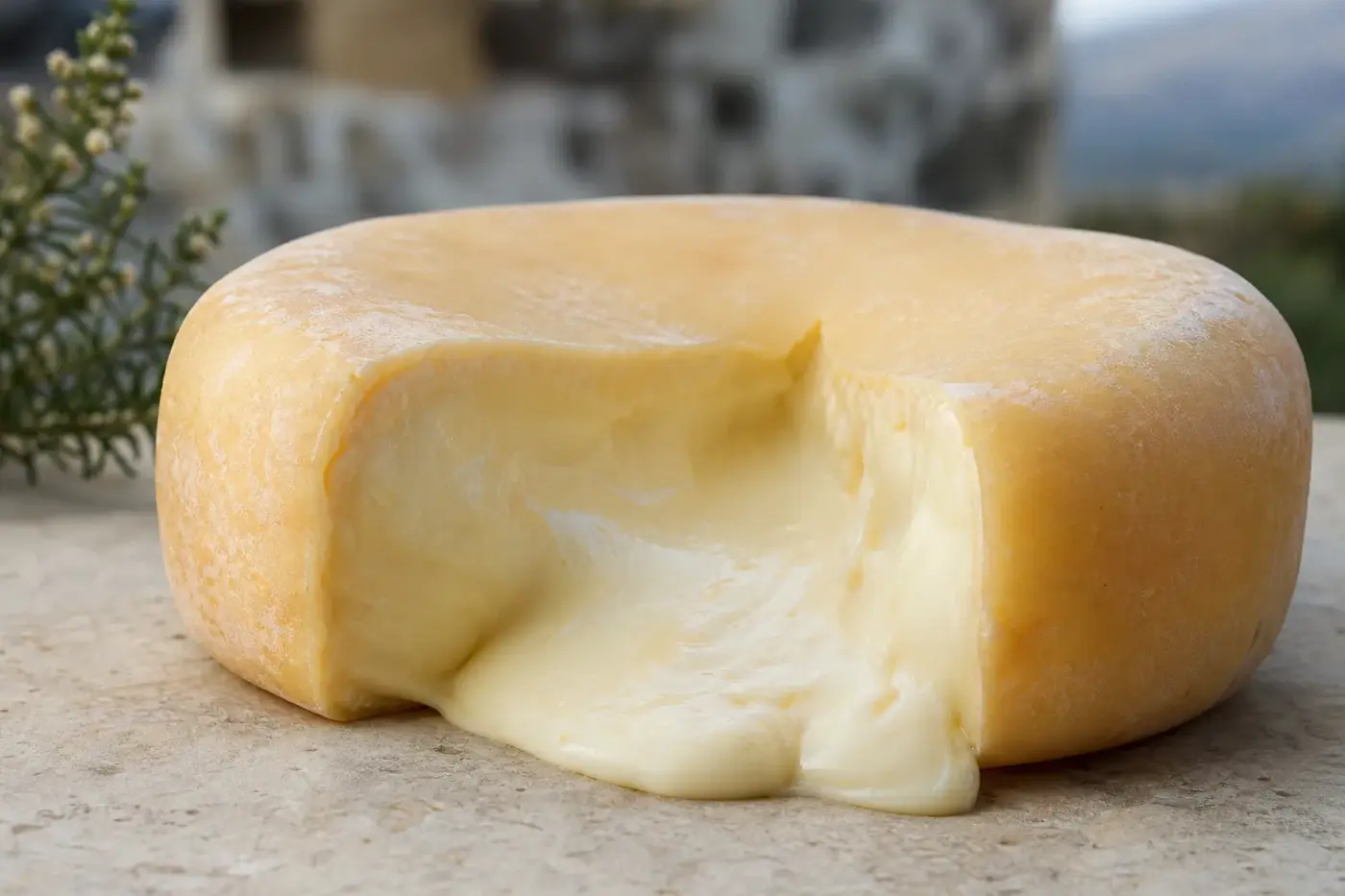
Look from the surface to the centre and you find a clear contrast. The same sheet describes a slightly rough, hard, yellow rind around a cohesive, pale-yellow paste. It allows for some openings inside, while GIview’s broader description gives few or no openings.[2][5]
“Paste” simply means the cheese beneath the rind. If you are buying a cut piece, ask to see that surface as well as the outside. It gives you a chance to discuss firmness, age and the maker’s intended character, rather than judging everything by the rind.
The small cylinder is straightforward to serve. Cut thin pieces and explore it gradually, paying attention to each mouthful. You do not need to put the entire wheel on the table when you only want a portion.
Give its sharpness a moment
Expect a little sharpness and an acidic edge. Sheep’s milk does not automatically mean sweetness or mildness. DGADR describes a characteristic aroma and a slightly piquant, acidulous flavour, with those qualities becoming stronger in the hard cheese.[1]
The manufacturer’s sheet describes its product’s aroma and flavour as pronounced and distinctive.[5] Take those words as an invitation to taste, not a script you must follow. The cheese in front of you deserves your attention on its own terms.
Start with a piece alone, without bread or a drink. Then try a second piece with your chosen accompaniment. You can more easily distinguish the cheese’s own sharpness from acidity, sweetness or bitterness arriving from elsewhere on the table.
Comparing two examples? Note the maker, texture category and stated age. Those details turn “I liked that one” into something useful, helping you find it again or understand what distinguished it from another cheese bearing the same name.
Meet the pastoral work behind the wheel
Behind Queijo de Évora are sheep farming and the practical business of using milk. DGADR places it within the Alentejo’s long-established cheesemaking tradition. It links the cheese’s development to the region’s supply of sheep’s milk.[1]
That gives “tradition” something solid to stand on. Follow the documented ingredients and operations: sheep’s milk, cardoon coagulation, whey removal and maturation. Together, they bring you closer to the making than a picturesque origin story alone could.
They also offer you a route into the Alentejo’s other sheep’s milk cheeses. Begin with each complete name as its own identity, then compare the documented milk, making method, texture and age. A shared regional tradition gives you somewhere to start without smoothing away the differences that make each cheese worth exploring.
Find your cheese, then remember its name
Begin with the complete name Queijo de Évora and the PDO or Portuguese DOP designation. Both the official EU and Great Britain records identify that registered name.[2][3] Those details are your starting point, not simply decoration on the label.
Then ask three questions: who made it, which texture category does it belong to, and what does the seller know about its maturation? Keep the label or photograph it. Your future self, trying to remember “that lovely little cheese”, will appreciate the paperwork.
Read the current pack’s ingredients and storage information, too. The manufacturer’s sheet cited here records ingredients, batch identification, durability information and storage details for one particular product.[5] It shows how much useful information belongs to the individual cheese, rather than to the name in general.
If you buy a cut portion, ask the seller to keep the original product identification with it. The guide to reading a cheese label explains the food name, maker or distributor, milk information and date marking. Keep those details after your cheese leaves the counter.
Keep it cool and know what to do with the rind
Keep dairy products refrigerated and follow the pack’s storage instructions. If your household follows Food Standards Agency guidance in England, Northern Ireland and Wales, set the fridge between 0 and 5 °C. The guidance also recommends using a fridge thermometer to check the temperature.[6]
Take out only what you intend to eat. The FSA advises keeping chilled food out for the shortest possible time during preparation, with a maximum of four hours. Its separate guidance for hotter-than-usual weather says to discard perishables left unrefrigerated for more than two hours.[6][7]
Do not treat the cheese’s maturation temperature as a serving target. Ask the maker or seller whether they recommend a particular serving temperature for their cheese. Keep within the applicable refrigeration guidance.
For the rind, turn to the current label or the maker’s instructions. If you cannot establish whether it is suitable to eat, trim it away and serve the paste. Remove wax, plastic and other packaging.
Keep the remaining cheese identified, and follow its stated instructions after opening. Keeping the label means the relevant guidance stays with your cheese. For broader practical advice, see storing cheese at home.
Bread, a Portuguese drink and a little attention
Start simply with plain pão alentejano, serving bread and cheese separately. Take a bite of each before reaching for stronger accompaniments. Once you have tasted the cheese for itself, you can decide whether you want more contrast.
Offer still or sparkling water, or a Portuguese alcohol free drink. Taste the drink first, before trying the two together. Its sweetness and acidity will influence how the cheese tastes alongside it.
Keep your comparison easy: cheese alone, cheese with bread, then cheese with a sip of your chosen drink. There is no need to turn the tasting into anything more elaborate. Stay with the combination that brings out the character you enjoy.
General information only, not medical advice: follow the official guidance where you live.
Questions people ask
Where does Queijo de Évora come from?
Queijo de Évora comes from the Alentejo region of Portugal and is made from raw sheep’s milk. Its production area includes several municipalities beyond Évora, including Arraiolos, Borba and Estremoz.
What does Queijo de Évora taste like?
Portugal’s agricultural authority describes it as slightly sharp and acidulous, with a characteristic aroma. These qualities are more pronounced in the hard cheese.
How long is Queijo de Évora aged?
The applicable maturation periods have not been verified against the protected specification and the small format. Ask the seller how long the particular cheese has matured.
Can you eat the rind of Queijo de Évora?
Whether the rind is suitable to eat has not been verified for this cheese. Follow the label or ask the maker; if you cannot establish whether it is suitable, trim it away.
How should Queijo de Évora be stored?
Keep it refrigerated and follow the packaging’s storage instructions. For households in England, Northern Ireland and Wales, the Food Standards Agency advises setting the fridge between 0 and 5 °C and checking it with a fridge thermometer. See the Food Standards Agency’s guidance for more information.
Sources
[1] Direção-Geral de Agricultura e Desenvolvimento Rural. Produtos Tradicionais Portugueses: Queijo de Évora DOP. Undated official product profile, retrieved November 2026. Production description, maturation, regional context and sensory description.
[2] European Union Intellectual Property Office, GIview. Queijo de Évora, EUGI00000013087, file PDO-PT-0251. Undated register record, retrieved November 2026. Registration status, origin description and geographical account.
[3] Department for Environment, Food & Rural Affairs. Queijo de Évora. Published 4 January 2021; register entry retrieved November 2026.
[4] European Commission. Commission Regulation (EC) No 1107/96 of 12 June 1996 on the registration of geographical indications and designations of origin under the procedure laid down in Article 17 of Council Regulation (EEC) No 2081/92. Official Journal L 148, 21 June 1996; Articles 1 and 2 and Annex.
[5] Manufacturer technical sheet hosted at coalho.pt. Ficha técnica de produto final: Queijo de Évora peq., DOP. Reference FT PF 02, revision 02, 11 March 2011, pages 1 to 3. Used as a dated manufacturer description, not as the protected specification or current safety guidance.
[6] Food Standards Agency. How to chill, freeze and defrost food safely. Published 18 December 2017; retrieved November 2026. Applies to England, Northern Ireland and Wales.
[7] Food Standards Agency. Food safety in a heatwave, advice for consumers. Published 27 June 2024; retrieved November 2026. Applies to England, Northern Ireland and Wales.
Researched through official registration records, Portuguese agricultural information, a dated manufacturer’s technical sheet and official household food-storage guidance.
Last checked: November 2026
Last checked November 2026.
The editors suggest you read next
Queijo Serra da Estrela
Cut into Queijo Serra da Estrela and watch its pale interior gently abandon its shape.