Queijo Rabaçal
Picture sheep and goats grazing among wild thyme in Portugal’s Sicó country.
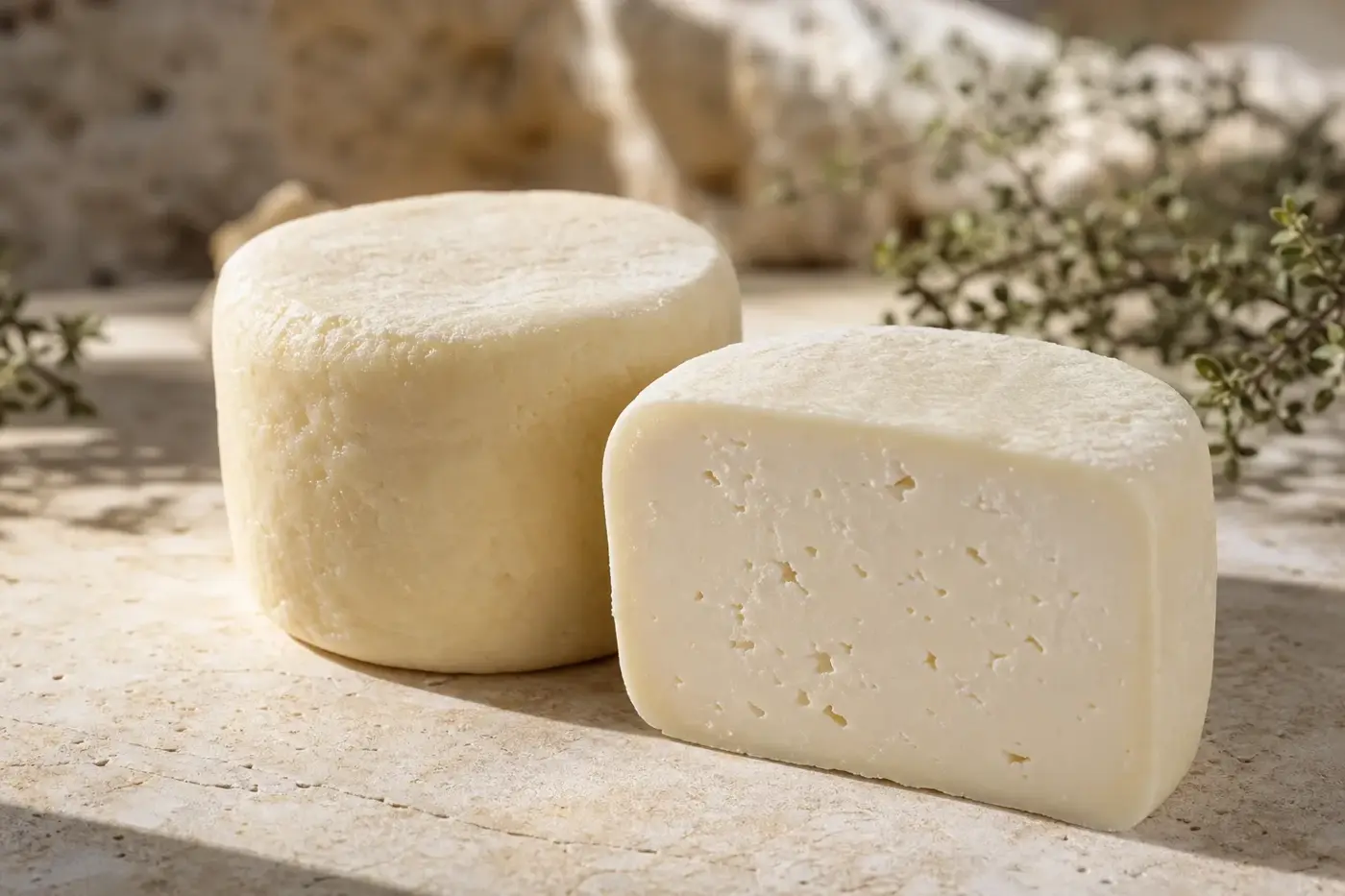
Picture sheep and goats grazing among wild thyme in Portugal’s Sicó country. Underfoot is erva de Santa Maria, the plant Portugal’s agricultural authority credits with much of Queijo Rabaçal’s distinctive flavour. Their mixed milk becomes a small, white cheese, set with animal rennet and slowly drained. Its protected designation ties what you taste to this place and its method.[1][2][3]
| Your question | The useful detail |
|---|---|
| Name to look for | Queijo Rabaçal.[3] |
| Where it comes from | Portugal; Rabaçal, municipality of Penela, district of Coimbra.[2] |
| Milk in your cheese | Sheep and goat milk; described as unpasteurised in the regional agricultural guide.[2] |
| What sets the milk | Animal rennet.[1][2] |
| What to expect inside | Ripened cheese; semi-hard to hard, with a matt-white interior and few or no small, irregular holes.[1] |
| Minimum maturation | At least 20 days, according to the Portuguese agricultural authority’s published account.[1] |
| EU registration event | 21 June 1996, as recorded by Defra.[3] |
| Great Britain status | Registered PDO; UK scheme registration dated 31 December 2020; November 2026 reference.[3] |
| Pregnancy guidance | NHS, Foods to avoid in pregnancy; November 2026 reference.[4] |
Start in Rabaçal, then look a little further
Rabaçal gives the cheese its name, but its home reaches beyond the village. The production territory stretches into the surrounding Sicó country. Portugal’s agricultural authority describes an area crossing the districts of Coimbra and Leiria, including Penela and Ansião and parts of neighbouring municipalities.[1]
You are looking at a regional cheese, then, not a promise that every wheel comes from a dairy inside the village. With a protected cheese, the defined production territory and specification matter more than a picturesque address on the wrapper. Those are your practical guides to where it belongs.
Terras de Sicó, the regional organisation, documents its promotion of Queijo Rabaçal DOP.[8] You will see those initials beside the cheese’s name. DOP means Denominação de Origem Protegida, the Portuguese equivalent of PDO, Protected Designation of Origin.[3]
The village’s history deserves a little care, too. Its antiquity cannot tell you when someone first made cheese there. A longstanding regional reputation does not establish that the recipe has stayed unchanged across centuries.
Ask for a glimpse inside
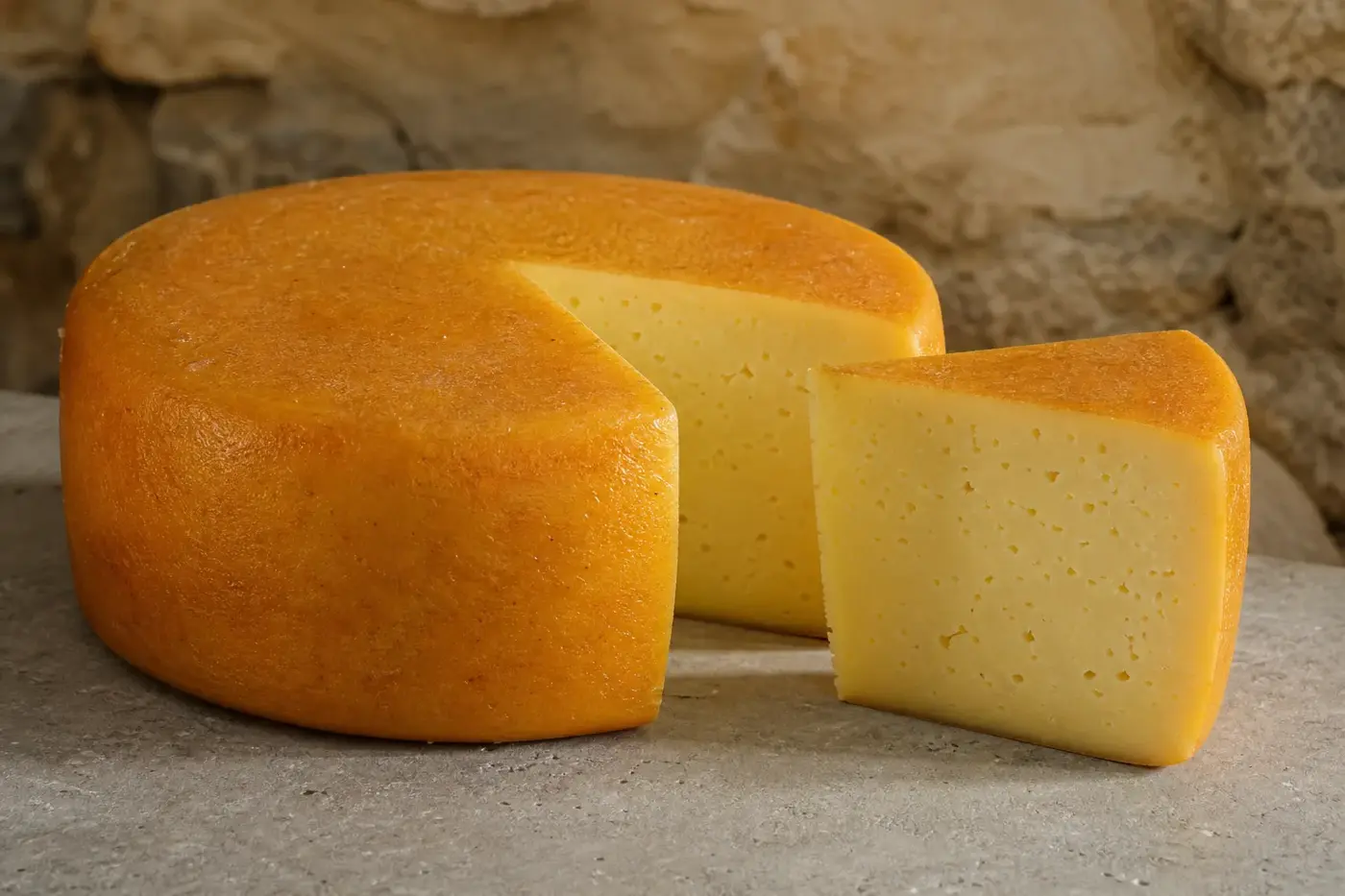
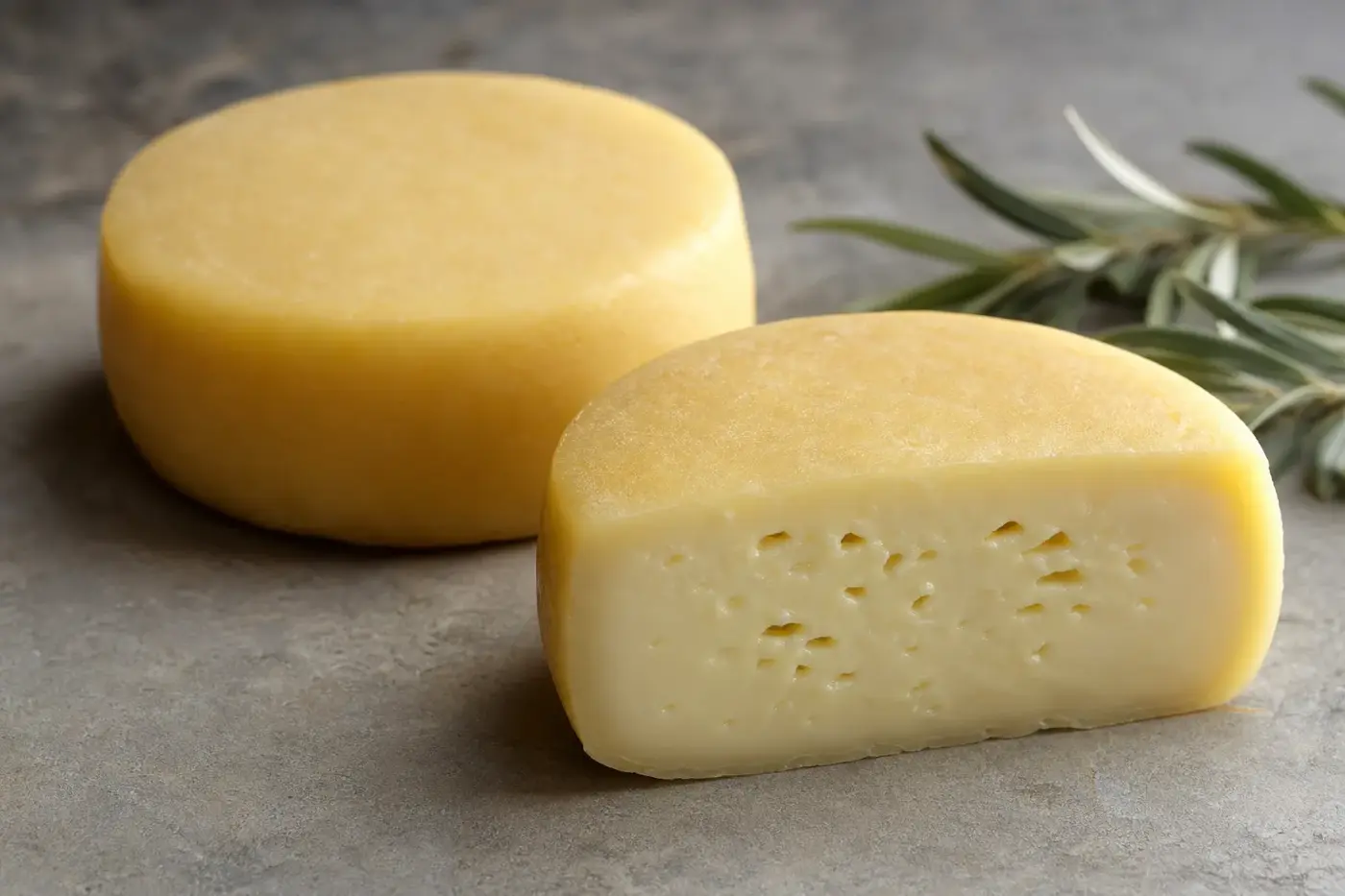
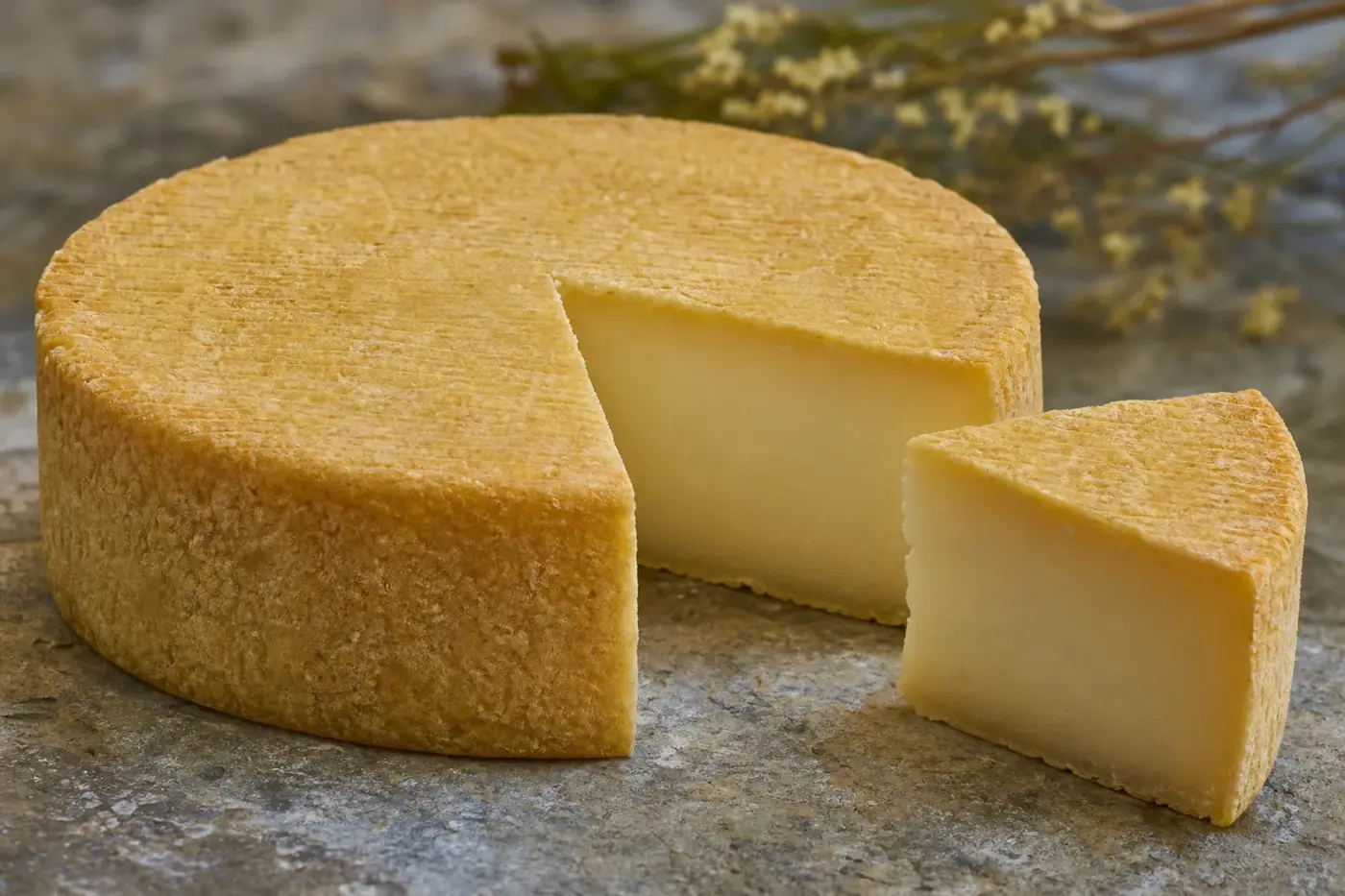
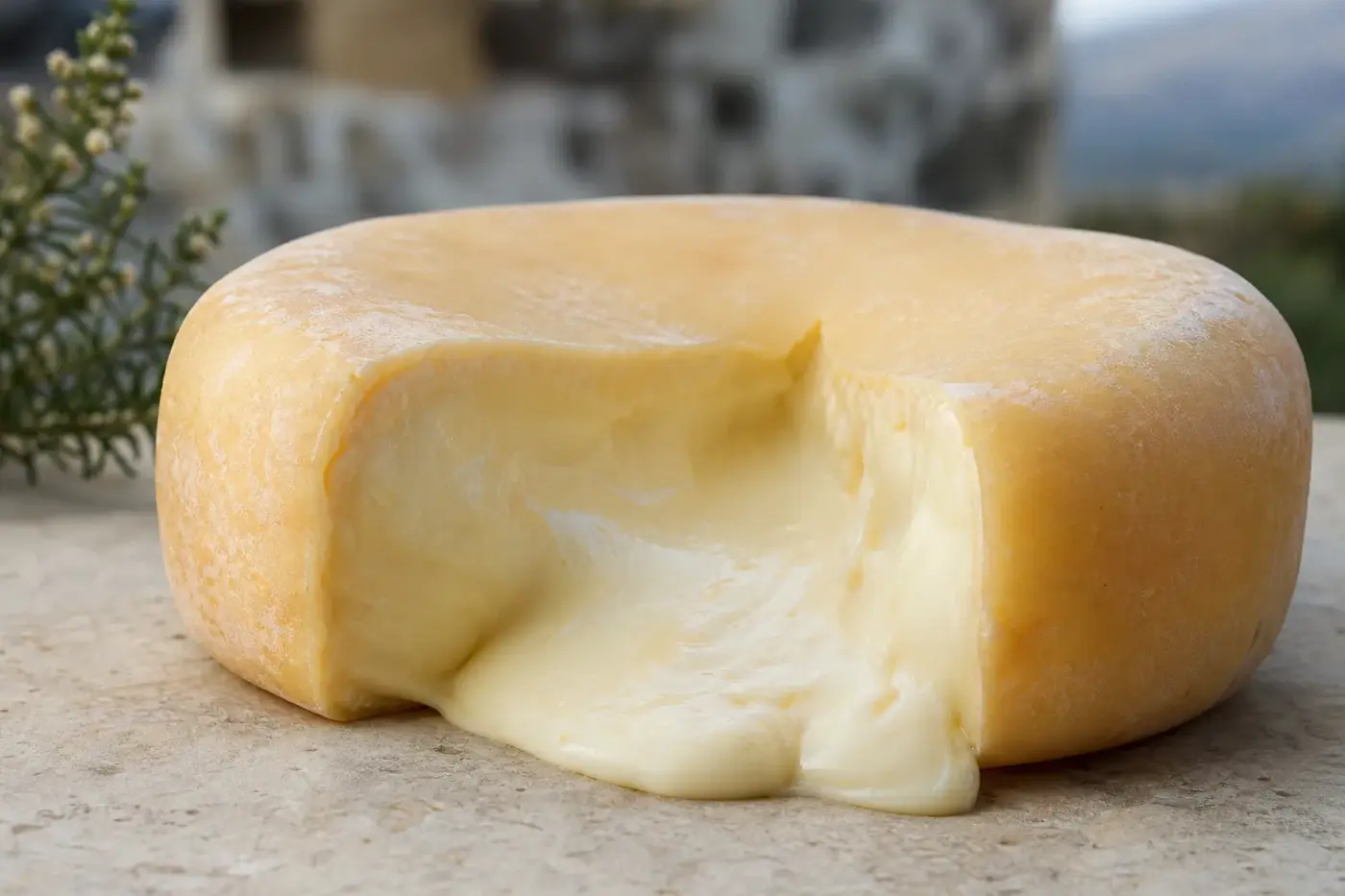
At the counter, ask to see a cut face. The Portuguese agricultural authority describes a matt-white interior with few or no small, irregular holes, and a texture ranging from semi-hard to hard.[1] Start with that picture, rather than expecting a flowing centre or a pattern of large eyes.
The regional agricultural guide shows Rabaçal as a small cylinder.[2] Beneath the rind is the interior, known as the paste. Look at its density, the spread of openings and whether a slice bends or breaks readily. You have something specific to discuss with the seller.
Give flavour the same attention. Is the acidity gentle or pronounced, does salt dominate, and does the finish linger? A description of the cheese in front of you is more useful than a broad maturity word or a claim about an entire category.
Ask about age, too, especially with that published texture range. Read maturation information alongside the seller’s description of its condition now. More age is not automatically a promotion: choose the texture and flavour you actually want.
Meet the milk and its thyme-covered landscape
Sheep and goat milk together sit at the heart of Rabaçal’s documented identity.[1][2] When you compare batches, ask the producer about each blend and note it beside the age. If both change at once, a difference in flavour becomes harder to explain.
Then turn your attention to the grazing. Portugal’s agricultural authority identifies erva de Santa Maria as a spontaneously growing thyme eaten by the sheep and goats. It attributes much of the cheese’s distinctive flavour to that plant.[1]
That is an appealing connection between landscape and cheese. Pinning down a particular aroma, however, would need a tasting that separates the effects of feed, milk blend, manufacture and maturation. Before reaching for a herb’s name, describe what you actually taste and smell.
You can be curious without losing that precision. A producer’s or regional authority’s explanation is not the same as an experimentally demonstrated flavour pathway. The relationship between grazing and cheesemaking is still well worth exploring on its own terms.
Follow the hands that shape the cheese
The agricultural authority’s account begins with filtering and mixing the milks, then coagulating them with animal rennet.[1] Rennet helps milk form curd. That solid material is what becomes your cheese.
The curd is transferred by hand, drained and placed in a mould. Once the whey, the liquid released from the curd, has drained away, the cheese receives light hand pressure and salt. The retaining bands come off, and the cheese goes onto shelves, with repeated surface cleaning during maturation.[1]
The regional agricultural guide singles out slow draining.[2] Together, these stages describe professional production, from handling the milk to tending the cheese on its maturation shelf. You can follow the process in how cheese is made, or compare coagulants in rennet explained.
Bring that making story back to the counter. Ask who made this cheese and when, how long it matured, and how the seller would describe its condition now. Those four straightforward questions focus the conversation on the piece you are buying.
Get to know the name on the label
A protected name gives you more than a sense of place. A PDO links a registered name to a defined origin and product specification. Defra’s register identifies Queijo Rabaçal as a Portuguese PDO registered under the Great Britain scheme, and separately records its original EU registration date.[3]
Start with the complete name, Queijo Rabaçal. Read the designation and producer information together. The regional agricultural guide says the label should identify the protected designation and carry the certification mark applied by the certification body.[2]
Buying a portion at a cheese counter? Ask to see its original identification, then keep the label or photograph it after purchase. That is especially useful when several cheeses share a board, and the wrappers are the first guests to leave. Maker, batch and storage information can disappear with them.
For the distinction between a registered name, a style and a brand, turn to protected names explained. A good buying conversation connects the cheese in front of you with its producer and documentation. That gives the regional story a practical foundation.
Bring home a portion that suits your plans
Buy a quantity that fits what you intend to serve. Ask how the cheese has been stored and which instructions apply after opening or cutting. Keep those details with it, rather than moving it to an unlabelled container and discarding information you might need.
If you follow Food Standards Agency guidance in England, Northern Ireland and Wales, the recommended domestic fridge temperature is 0 to 5 °C. The agency advises refrigerating dairy products. Follow the storage instructions and date information on their packaging, too.[6]
For current UK advice on storing opened food, consult the NHS listeriosis guidance.[5] Follow the product’s own storage instructions alongside that advice.
Keep your cheese separate from raw foods. Protect its cut surface using the packaging or storage arrangement recommended by the seller, with the accompanying instructions still accessible. For the broader routine, see how to store cheese at home.
Make a little room for the first bite
Bring out only the portion you expect to serve. Let it lose some refrigerator chill while you prepare bread and accompaniments. There is no need to leave the whole cheese on display throughout the day.
For current UK guidance on chilled food, consult the NHS listeriosis guidance and the Food Standards Agency chilling guidance.[5][6] Keep those practical considerations part of your serving routine.
Cut a small cylinder into wedges so each serving gets some interior and outer edge. Taste a piece alone, then try it with bread. Notice texture, acidity, salt and persistence before adding anything sweet. You will have a clearer starting point for judging what each accompaniment brings.
Next time, try slices in a bread roll, small pieces beside a tomato salad or shavings over cooked vegetables. Let the cheese’s condition guide the preparation. Ask whether it will slice cleanly or is better broken into pieces, then work with the answer.
Find its company in bread, fruit and a glass
Start with Portuguese broa or plain wheat bread, with pear or apple on a separate plate. Keeping them apart lets you taste the cheese alone first. Then you can judge how each addition changes your perception of it.
Quince paste offers another comparison. Use it sparingly, tasting with and without the sweetness. These are possibilities to explore, not a compulsory supporting cast.
The regional agricultural guide suggests serving Rabaçal as a starter or dessert and mentions wine from the region.[2] If you are an adult of legal drinking age and choose wine, try a small serving of Portuguese white with one sample, or Portuguese red with another. Judge each pairing against the actual cheese on your plate.
Alcohol free options include still or sparkling water, unsweetened tea and an apple drink. People who are pregnant, driving, taking medicines that interact with alcohol or recovering from alcohol dependence should not drink. For the clearest comparison between cheeses, start with water. You can explore the broader approach in cheese and wine pairing.
Invite another Portuguese cheese to the plate
Put Queijo de Castelo Branco beside Rabaçal and your comparison begins before the first bite. The regional agricultural guide describes Castelo Branco as a raw sheep-milk cheese coagulated with cardoon, a plant coagulant. Rabaçal combines sheep and goat milk with animal rennet.[2]
Those ingredients and methods give your tasting a clear starting point before any judgement about flavour. If you add a Portuguese goat cheese, ask the seller to identify its milk species and coagulant. Taste the cheeses separately.
Portuguese sheep-milk cheeses are not interchangeable. Nor should you expect every cheese containing goat milk to taste alike. Note each maker and age, use the same bread throughout and compare similar-sized pieces. Keeping those details consistent makes the differences easier to describe, and the tasting easier to revisit.
Read the raw milk guidance before choosing
The regional agricultural guide describes Rabaçal as unpasteurised.[2] If you want to understand the different milk treatments, read raw milk, thermised and pasteurised cheese.
For current UK pregnancy guidance, consult the NHS advice on foods to avoid in pregnancy.[4] Ask a midwife or doctor about the particular product and your own circumstances.
The NHS identifies pregnancy, newborn babies, weakened immunity and older age as circumstances associated with greater risk from listeriosis.[5] Follow the linked official guidance for your circumstances and country. Keep the packaging so you have the cheese’s identification and product information to hand when asking a health professional about it.
General information only, not medical advice: follow the official guidance where you live.
Questions people ask
Where is Queijo Rabaçal made?
The cheese takes its name from Rabaçal in the municipality of Penela, Portugal. Its production territory extends beyond the village into Sicó country, crossing the districts of Coimbra and Leiria.
What milk is used to make Queijo Rabaçal?
Queijo Rabaçal combines sheep and goat milk and is set with animal rennet. The regional agricultural guide describes the milk as unpasteurised.
How long is Queijo Rabaçal matured?
Portugal’s agricultural authority says it matures for at least 20 days. The ripened cheese ranges from semi hard to hard, with a matt white interior and few or no small, irregular holes.
How can I identify protected Queijo Rabaçal?
Look for the complete name Queijo Rabaçal and its protected designation. The regional agricultural guide says the label should carry the certification mark applied by the certification body.
How should I store Queijo Rabaçal?
The Food Standards Agency advises refrigerating dairy products and following the storage instructions and date information on their packaging. For England, Northern Ireland and Wales, it recommends a domestic fridge temperature of 0 to 5 °C.
Sources
- Direção-Geral de Agricultura e Desenvolvimento Rural, Produtos Tradicionais Portugueses: Queijo Rabaçal DOP, undated official product account, retrieved November 2026. Official product account.
- Direção Regional de Agricultura e Pescas do Centro, cheese guide, section Queijo Rabacal DOP, undated PDF, retrieved November 2026. Regional agricultural guide.
- Department for Environment, Food & Rural Affairs, Queijo Rabaçal, protected food name register entry, published 4 January 2021, retrieved November 2026. Great Britain register entry.
- NHS, Foods to avoid in pregnancy, current retrieved version, November 2026. NHS pregnancy guidance.
- NHS, Listeriosis, reviewed 10 November 2023, retrieved November 2026. NHS listeriosis guidance.
- Food Standards Agency, How to chill, freeze and defrost food safely, published 18 December 2017, current retrieved version, November 2026. Applies to England, Northern Ireland and Wales. FSA chilling guidance.
- Food Standards Agency, Alerts, live alert index, retrieved November 2026. Official alert index.
- Terras de Sicó, official website, item titled Terras de Sicó promoveu o queijo Rabaçal DOP na “FROMAGO Cheese Experience”, listed on the retrieved homepage, November 2026. Terras de Sicó.
Research combined official Portuguese agricultural accounts, the Great Britain protected-name register and current retrieved NHS and Food Standards Agency guidance; outstanding specification checks are recorded below.
Last checked: November 2026
Last checked November 2026.
The editors suggest you read next
Queijo Serra da Estrela
Cut into Queijo Serra da Estrela and watch its pale interior gently abandon its shape.