Queso de Acehúche
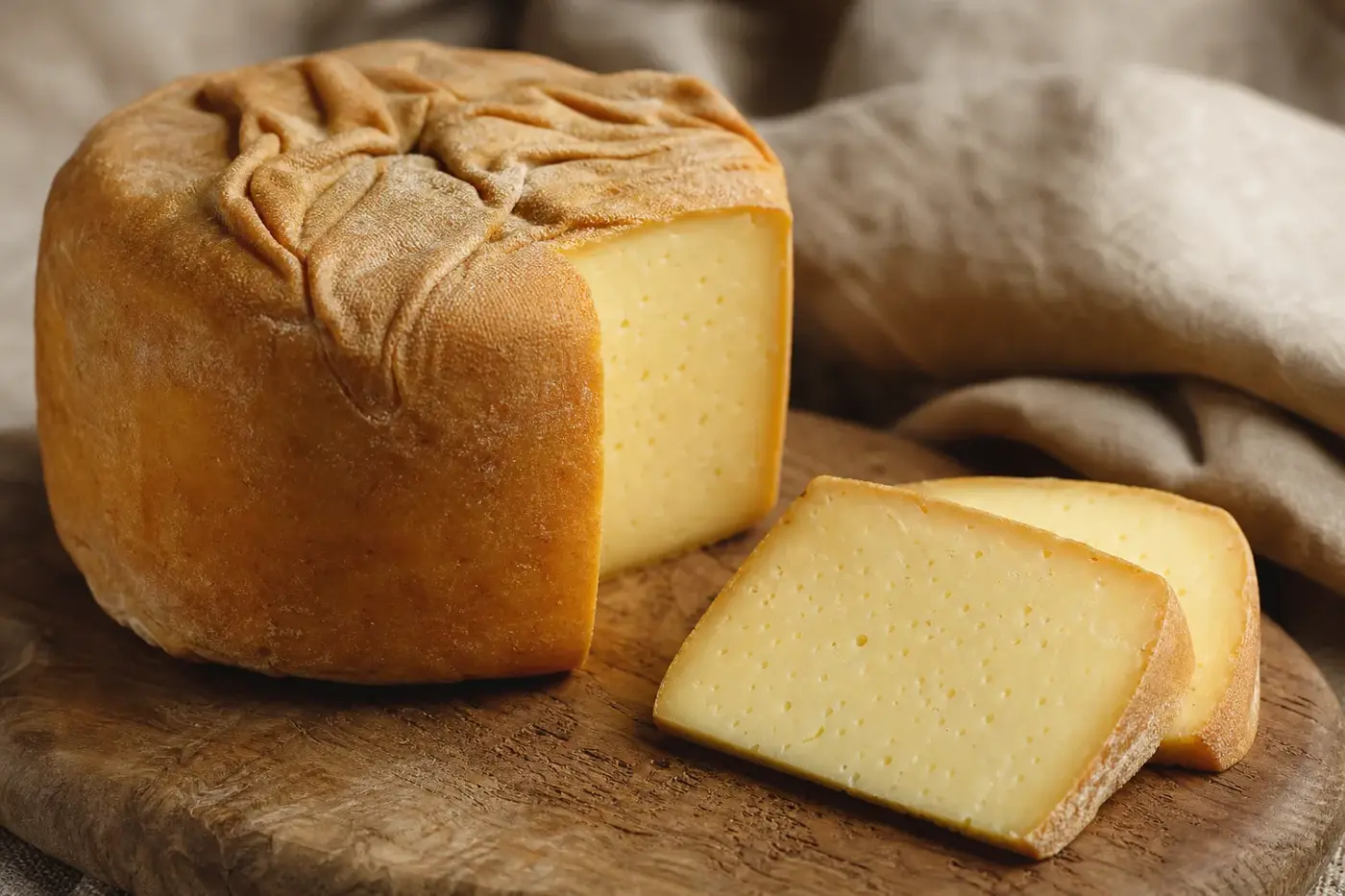
Cut through the waxy yellow to dark ochre rind and your knife reaches a moist, elastic centre.
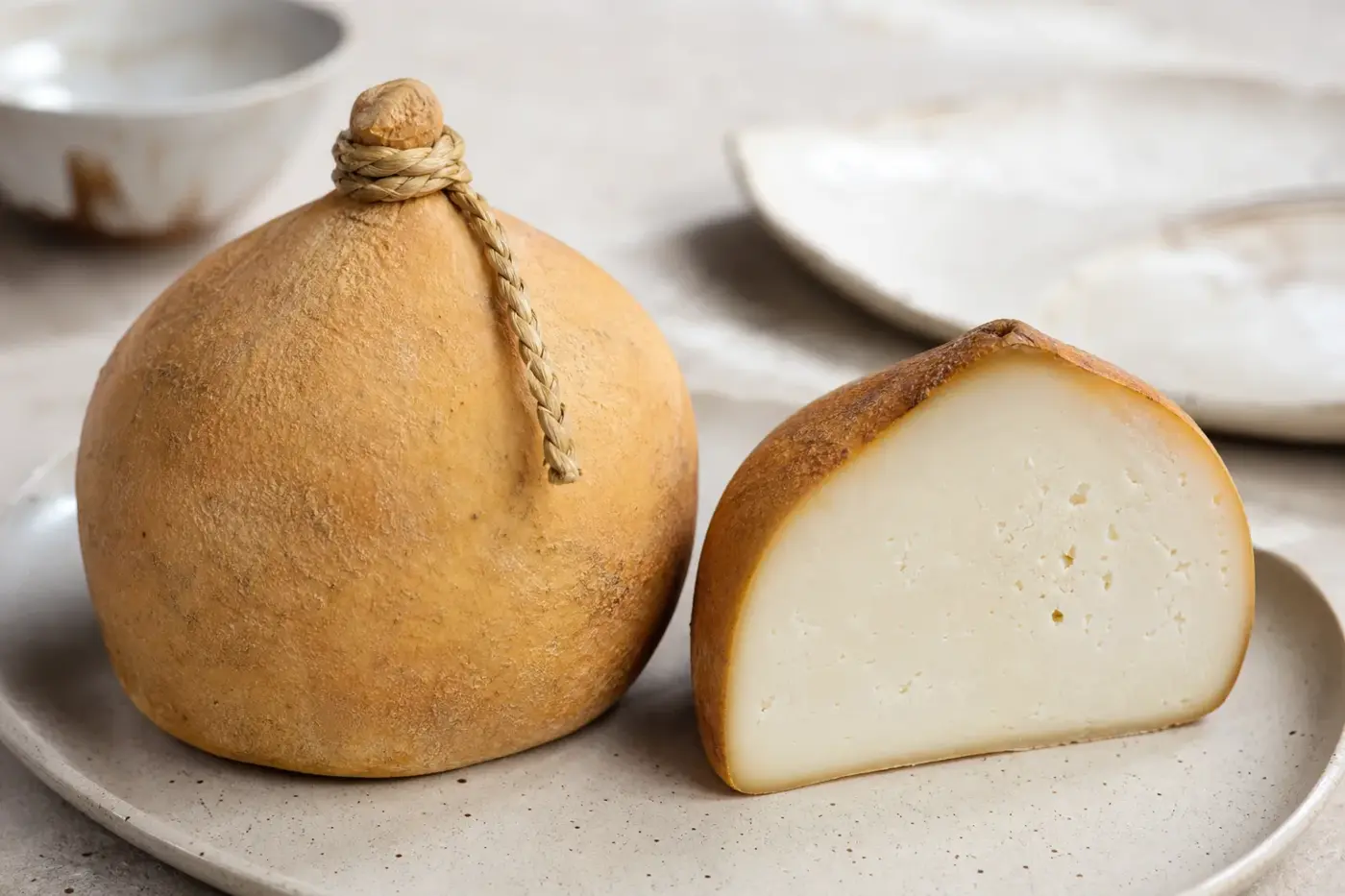
Cut through the waxy yellow to dark ochre rind and your knife reaches a moist, elastic centre. Then the aromas arrive: lactic and pungent, as the specification puts it. This small, supple wheel begins with raw goat’s milk in western Cáceres, with a character rooted in Extremadura’s cheese traditions. [1,2,3]
Its EU protected designation of origin, or PDO, ties the milk, making and maturation to that landscape. There is a good deal of place tucked inside that rind. [1,2,3]
| At a glance | What to know |
|---|---|
| Familiar and registered name | Queso de Acehúche [1] |
| EU authority and register identifier | European Commission; EUGI00000017472 [8] |
| EU status | Registered PDO; registration act: Implementing Regulation (EU) 2022/1106 [1] |
| Legally defined area | Tajo-Salor-Almonte and Valle del Alagón, Cáceres, Spain [2] |
| Milk | Raw goat’s milk [2] |
| Minimum maturation | 40 days [2] |
| Pregnancy guidance | Consult current official advice for your country. |
Meet the town that makes a celebration of cheese
You’ll find Acehúche in Cáceres, the northern province of Extremadura in western Spain. Goat cheesemaking stretches across much of the province. MAPA’s regional account sets it alongside the ewe’s milk traditions of Torta del Casar and La Serena: distinct milks, distinct methods, and no single cheese style to sum them all up. [4]
The town celebrates its contribution at the Feria Ibérica del Queso de Cabra, which its tourism service dates to 2004. Raw goat’s milk cheese also shares the local interpretation centre with the Carantoñas festival. Between the fair and the centre, you begin to see how firmly this cheese belongs to the town whose name it carries. [5,10]
Follow the protected name beyond the town
Queso de Acehúche became a registered name through the European Commission’s Implementing Regulation (EU) 2022/1106. Adopted on 27 June 2022 and published on 5 July 2022, its entry-into-force clause took effect on 25 July 2022. You’ll see PDO in English and DOP on Spanish labels, short for Denominación de Origen Protegida. [1,2]
The name reaches beyond Acehúche itself. The council’s certified producer list includes addresses in both Acehúche and Casar de Cáceres. A wheel made in the latter can carry the protected name too. [6]
Want to untangle origin from method? Start with protected names explained. At the counter, look first for the exact name and certification, then the dairy and the details of the wheel in front of you.
Get acquainted with the goats
The milk must be whole, raw and unstandardised. It comes from Murciana-Granadina, Florida, Malagueña, Verata and Retinta goats, including their crosses. The herds graze under extensive or semi-extensive systems, with supplementary feeding when needed. [2]
Acehúche’s tourism account gives Retinta goats a particularly prominent place. They belong to the local story, but the designation allows several breeds. If you’re curious about the milk in your piece, ask the cheesemonger which supply the dairy uses. [2,5]
Milk terminology can make a cheese counter feel unexpectedly like an exam. For a clear guide to what happens before cheesemaking, turn to raw, thermised and pasteurised cheese.
See the working landscape behind the wheel
Mediterranean scrub and oak pasture feature in the landscape described in the specification. [2] Behind your piece of cheese are people maintaining herds, collecting milk and keeping a rural cheesemaking community going.
Keeping those skills and that work in the area takes more than affection for good cheese. In its March 2024 account of the cheese fair, the regional government highlighted milk supply and the continuation of livestock farming as challenges for cheese designations. [7]
One useful question at the counter is simple: who made it? The council publishes a list of certified dairies. It gives you a direct connection to the place and its producers, beyond a picturesque description in a shop. [6]
Follow the milk from warm vat to supple wheel
Light pressing helps this cheese hold on to its moisture. First, rennet, a preparation containing milk coagulating enzymes, sets warmed milk into curd. These are the solids that separate from the liquid whey. [2]
The curd is cut, moulded by hand, gently pressed and salted, either dry or in brine. Then comes at least 40 days of maturation. An optional treatment called sobao involves rubbing the developing rind with water-moistened hands. [2]
Ask about age, rind treatment and the texture of the current batch. A cheesemonger who has just cut the wheel can tell you more about your piece than a general maturity term on a label.
For a fuller explanation of curd, the solid formed from milk, and whey, the liquid separated from it, explore how cheese is made.
Take a closer look beneath the ochre rind
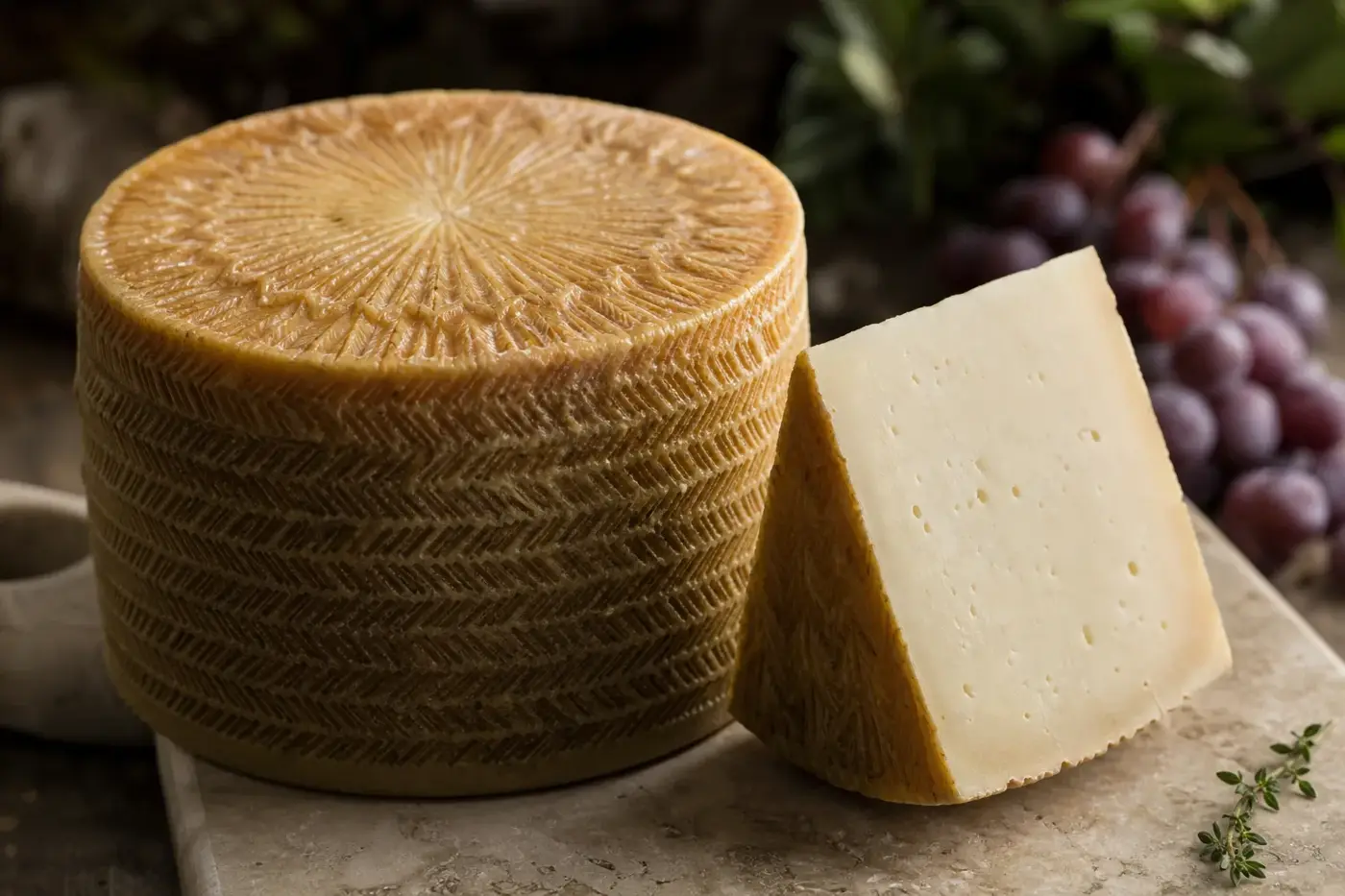
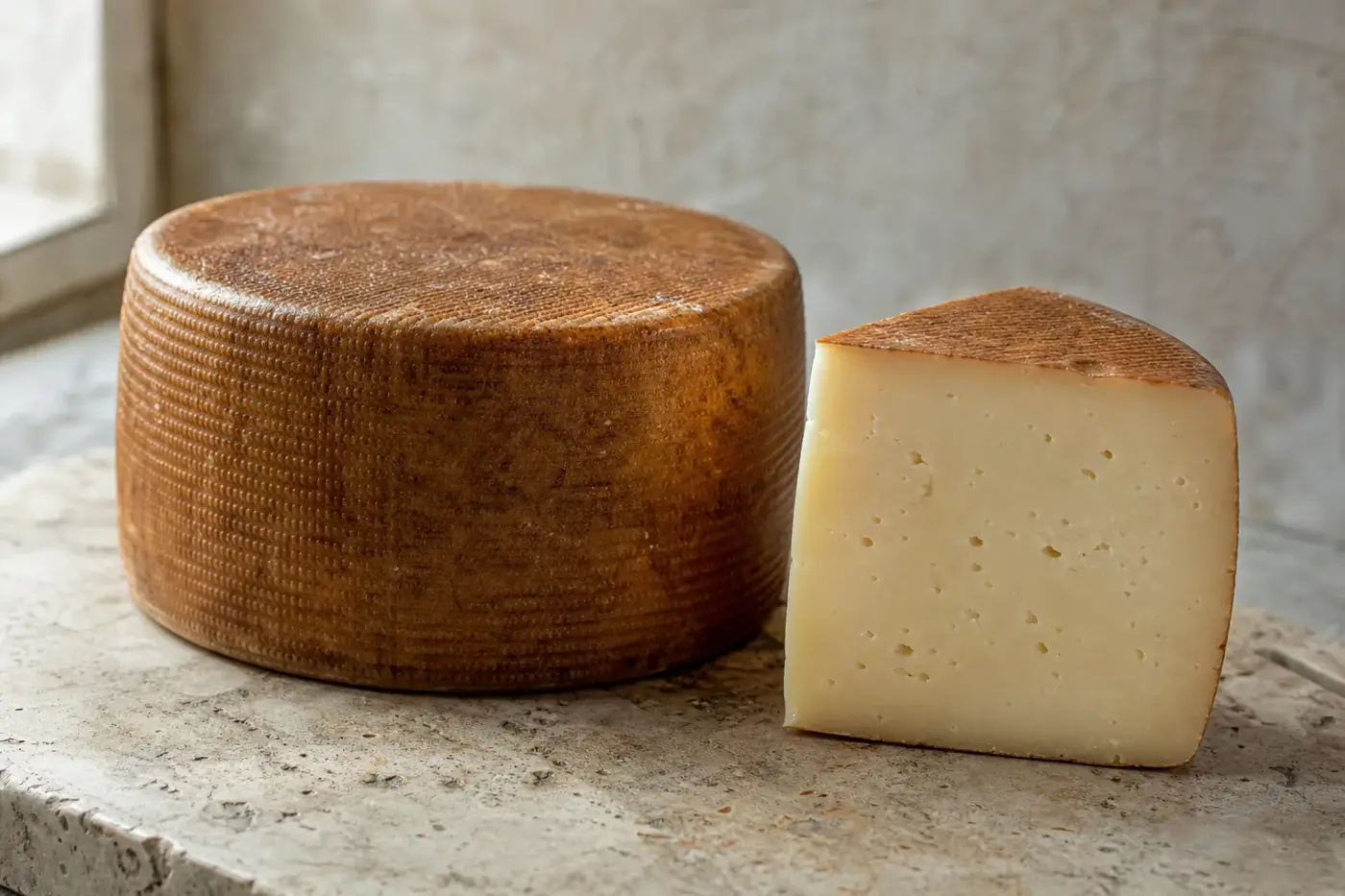
These cylindrical wheels weigh 200 to 1,200 g. Each must measure at least 7 cm across, with a height no greater than half its diameter. The rind runs from waxy yellow to dark ochre, and paprika and oil finishes are permitted. [2]
Acehúche’s tourism service describes a lightly rough, washed rind and a pressed paste that can feel very soft in your mouth. [5] Give the cut face as much attention as the outside. Ask for a yielding piece for bread, or a firmer one if neat slices are your aim.
Taste the piquancy gathering with age
Age turns up the piquancy. The specification describes an elastic, moist paste, lactic and pungent aromas, and moderate acidity. [2] The local tourism account gives you a similar picture: slightly acidic and piquant. [5]
Start with a small piece from the centre, then try another from nearer the rind. Follow the change in aroma. Notice the resistance as you bite, and how long the flavour stays with you.
Two ages from the same dairy make a rewarding comparison. Keep the bread and drink the same for both. This is one occasion when having two pieces counts as research.
Find the right piece for your table
Look for the protected name and unique alphanumeric code on the certification label. [2] Buying a cut portion? Ask to see the original wheel’s label. The council’s website lists certified producers, and MAPA identifies the Consejo Regulador as the designation’s management body. [6,8]
A few questions will get you further than guesswork:
- Which dairy made it, and can you see the certification label?
- How long has this wheel matured, and when was it cut?
- Is the rind plain, washed, oiled or paprika-finished?
- How firm and pungent is this batch?
- What wrapping, refrigeration and use instructions come with this portion?
Choose with your meal in mind. You might want a small wedge to taste alone, a softer piece for bread or something firmer for slicing. Keep the label with it, especially if several different wedges are sharing your fridge.
If you’re offered a sample, taste before deciding how much to take. You don’t need elaborate tasting language. “Supple”, “sliceable” or “soft enough for bread” tells the seller exactly the sort of texture you’re after.
Keep it cool and cut just what you need
Follow the maker’s storage instructions and the date on the pack. For England, Northern Ireland and Wales, the Food Standards Agency advises refrigerating dairy products and setting your fridge between 0 and 5 °C (32 to 41 °F). Keep chilled food out for the shortest possible time, with a maximum of four hours during preparation. Guidance reference: November 2026. [9]
Cut only what your table needs, starting while the cheese is still cool. There’s no need to warm the entire wheel. Ask the maker for a serving temperature suited to that particular cheese.
Cut a round into wedges from centre to edge, so everyone gets some inner paste and outer edge. On a shared board, give a soft piece room rather than crowding it against fruit. Wrap the remainder according to its supplied instructions and return it promptly to refrigeration. [9]
For the broader household method, see how to store cheese at home.
Set the table with bread, fruit and Spanish wine
Plain bread is a good place to start, but give the cheese a mouthful all to itself first. Offer pear, grapes or a little fig separately, so you can try each combination in turn. Keep that first taste simple, particularly if you’re comparing ages or dairies.
For wine, you have a local lead to follow. The Ribera del Guadiana wine and cava route lists tastings pairing this PDO cheese with its wines and cavas. [10] A dry white or dry cava makes a useful first choice, poured in small servings for adults of legal drinking age. Ask the wine merchant about the current bottle’s style, rather than choosing by region alone.
If you’re pregnant, driving, taking medicines that interact with alcohol or recovering from alcohol dependence, do not drink. Consult current NHS or equivalent national guidance.
Treat these as serving suggestions, rather than a recorded site tasting:
| What to put alongside | How to try it | What it brings |
|---|---|---|
| Plain bread | Taste the cheese alone, then with bread | Keeps your first comparison simple |
| Pear or grapes | Try a small piece alongside | Gives you a fresh fruit contrast |
| Dry Spanish white or cava | Take a sip after a mouthful | Lets you explore the documented local wine pairing |
| Still water or unsweetened sparkling water | Sip between tastes | Gives you an alcohol-free option with little competing flavour |
To choose by intensity and style, use cheese and wine pairing.
Leave room for its Extremaduran neighbours
A cheese from Cáceres may begin with a different animal’s milk, or a different way of setting it. MAPA’s account of Extremaduran cheesemaking places Queso Ibores in the goat’s milk tradition. Torta del Casar belongs to the region’s ewe’s milk and vegetable-coagulant tradition. [4]
Building a three-cheese board? Ask the monger to explain the milk, maker and texture of each piece. Keep the labels beside the cheeses, and choose accompaniments that let you taste each one separately.
General information only, not medical advice: follow the official guidance where you live.
Questions people ask
Where is Queso de Acehúche made?
Its protected area covers Tajo Salor Almonte and Valle del Alagón in Cáceres, Spain. Certified producers include dairies in both Acehúche and Casar de Cáceres.
What milk is used to make Queso de Acehúche?
It must be made with whole, raw and unstandardised goat’s milk. The permitted breeds are Murciana Granadina, Florida, Malagueña, Verata and Retinta, including their crosses.
What does Queso de Acehúche taste like?
The specification describes lactic and pungent aromas, moderate acidity and a moist, elastic paste. Its piquancy increases with age, and it must mature for at least 40 days.
How can I recognise a certified Queso de Acehúche?
Look for the protected name and a unique alphanumeric code on the certification label. If buying a cut portion, ask to see the original wheel’s label.
How should Queso de Acehúche be stored?
Follow the maker’s storage instructions and the date on the pack. For England, Northern Ireland and Wales, the Food Standards Agency advises refrigerating dairy products at between 0 and 5 °C. See the Food Standards Agency for its current guidance.
Sources
- European Commission. Commission Implementing Regulation (EU) 2022/1106 of 27 June 2022 entering a name in the register of protected designations of origin and protected geographical indications (‘Queso de Acehúche’ (PDO)). Official Journal L 178, 5 July 2022, p. 1. Articles 1 and 2 establish registration and entry into force.
- Ministerio de Agricultura, Pesca y Alimentación (MAPA). Pliego de condiciones de la denominación de origen Queso de Acehúche. Ministry-hosted version identified as 5 July 2022, 10 pages.
- Consejo Regulador DOP Queso de Acehúche. Official website. Undated live account of the designation, its location, making and identification.
- MAPA. Libro blanco de la agricultura y el desarrollo rural, regional account of Extremadura. 2003, especially p. 603. Historical regional context, not a source for present production totals.
- Turismo de Acehúche. Queso. Undated tourism account. Used for its attributed descriptions and the fair’s history.
- Consejo Regulador DOP Queso de Acehúche. Listado de elaboradores. Undated live list headed “Relación de industrias queseras certificadas”.
- Junta de Extremadura. La Junta celebra la gran aceptación del Queso de Acehúche en su XVIII Feria Ibérica del Queso. 23 March 2024.
- MAPA. DOP/IGP detail: Queso de Acehúche. Undated live record, including its management body and links to eAmbrosia record EUGI00000017472 and GIview.
- Food Standards Agency. How to chill, freeze and defrost food safely. Published 18 December 2017; live version checked November 2026. Applies to England, Northern Ireland and Wales.
- Ruta del Vino y Cava Ribera del Guadiana. Centro de Interpretación del Queso de Cabra y las Carantoñas de Acehúche. Undated tourism listing describing the exhibition and cheese, wine and cava tastings.
This piece was researched from the official specification, registration material, public-sector records and attributed local accounts, with editorial serving suggestions distinguished from documented tasting observations.
Last checked: November 2026
Last checked November 2026.
The editors suggest you read next