Queso Ibores
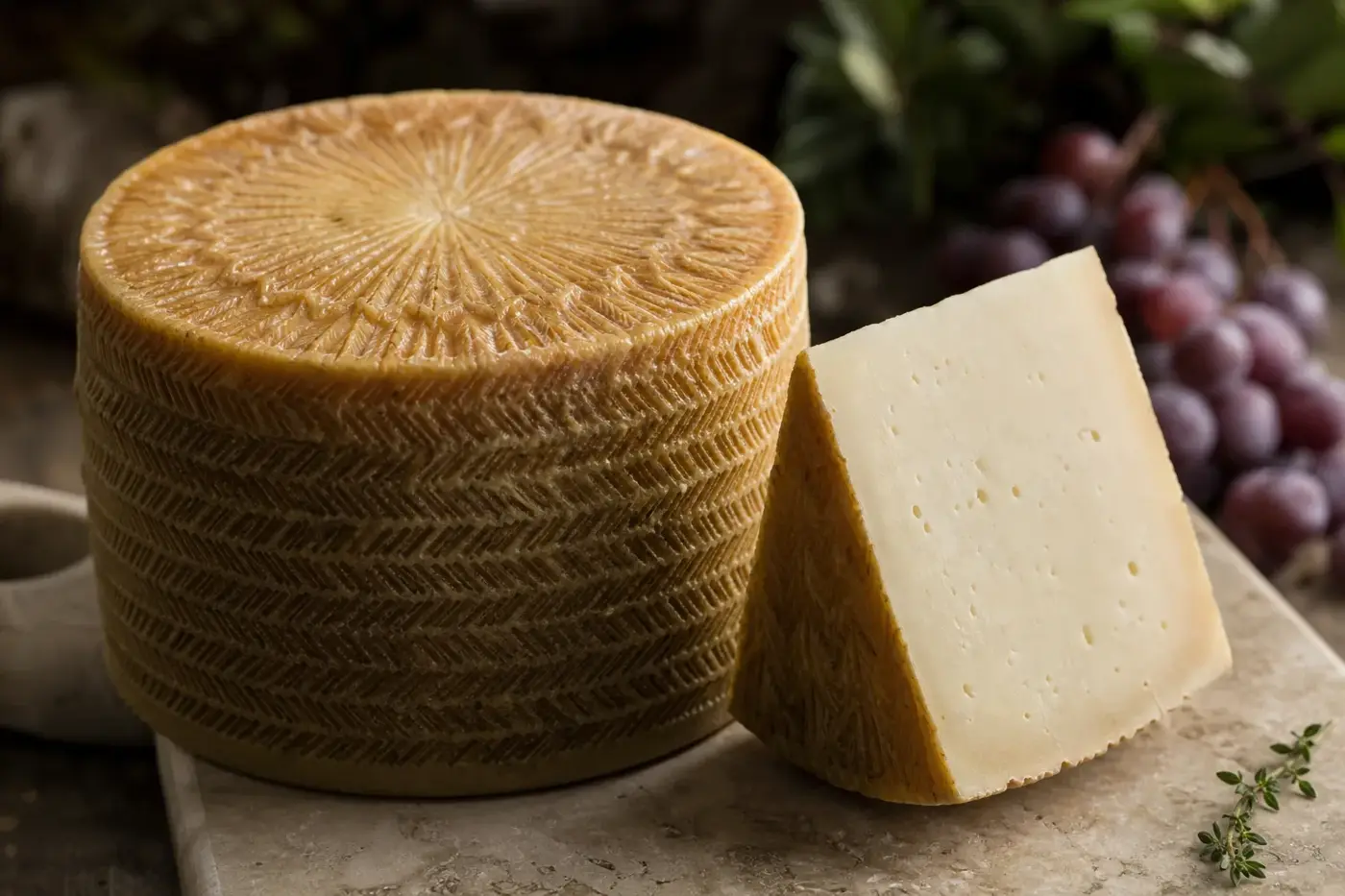
Slide a knife through that orange-red, paprika-rubbed rind and an ivory heart comes into view.
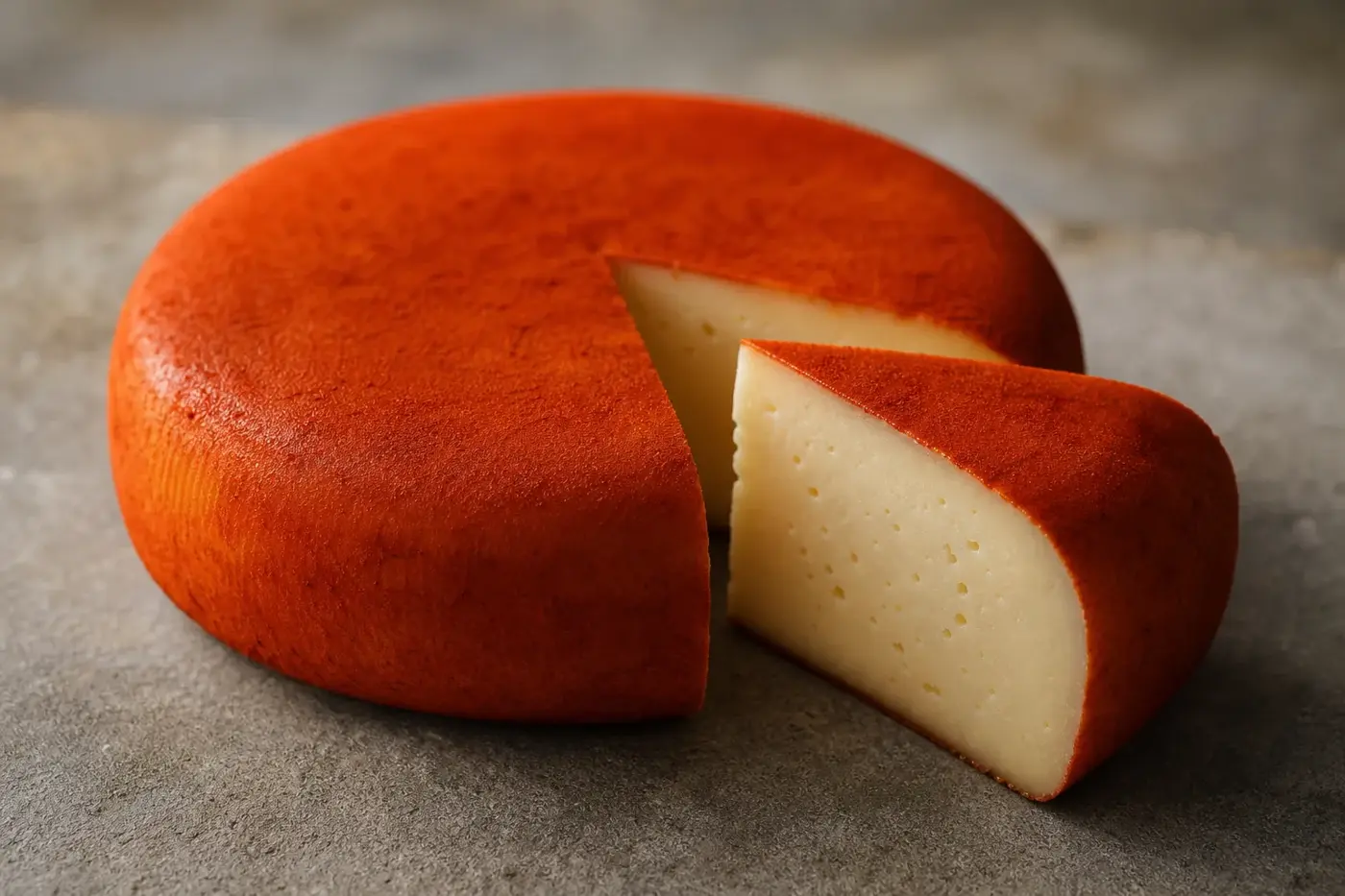
Slide a knife through that orange-red, paprika-rubbed rind and an ivory heart comes into view. You have met Queso Ibores: a semi-hard raw goat’s milk cheese from Cáceres in Extremadura.[1][3][4] Though, as you will discover, orange is not compulsory.
Behind the wheel lie oak woods, scrub and folded hills, where goats graze and browse across difficult terrain. Their milk gives this cheese its character. Its regional name has protected designation of origin status in Great Britain.[2][3][4]
| What you might ask | What to know |
|---|---|
| Familiar and registered name | Queso Ibores.[2] |
| Where it comes from | Cáceres, Extremadura, Spain.[3] |
| Protected status | Listed by Spain’s agriculture ministry as an EU DOP, the Spanish abbreviation for PDO; registered PDO in Great Britain. Register information: November 2026.[1][2] |
| Registration authority and identifier | EU: European Commission; individual register identifier not specified in this account. Great Britain: Defra, register entry “Queso Ibores”.[2] |
| Protection elsewhere | Not specified in this account. |
| The milk | Raw goat’s milk from Serrana, Verata and Retinta goats and their crosses, according to the designation’s published description.[4] |
| Shape and size | Cylinder, 5 to 9 cm high, 11 to 15 cm in diameter, weighing 650 to 1,200 g.[4] |
| Outside and inside | Smooth, semi-hard rind, natural, paprika-treated or oil-rubbed; ivory, semi-hard paste.[4] |
| Published minimum maturation | The Consejo Regulador states 60 days, or 100 days for qualifying artesano cheese.[5] |
| Usual ageing beyond that minimum | Not specified in this account. |
| Current binding specification | Not specified in this account. |
| UK pregnancy guidance | Not specified in this account. |
Meet Queso Ibores in all its colours
Raw goat’s milk, a home in Cáceres and traditional rind finishes give Queso Ibores its identity. Paprika makes the boldest first impression, but the designation’s published description also includes natural-rinded and oil-rubbed cheeses. Before you choose your piece, ask which finish you are looking at.[4]
Queso Ibores is a regional cheese name, not one maker’s product. Look for the producer’s name alongside it, and keep that detail when comparing purchases. Your future tasting notes deserve something more useful than “the orange one”, however persuasive that felt at the counter.
For help separating a regional designation from a brand, try protected names explained. At the counter, you need only a straightforward question: does this cheese carry the registered name and the designation’s identification?
Follow the goats through Cáceres
Mountain ridges, enclosed valleys and the more open country around Trujillo all feature in the area described by the Consejo Regulador, the designation’s industry body. Its geographical account leads you through Ibores, Villuercas, La Jara and Trujillo. Along the way come Castañar de Ibor, Guadalupe, Deleitosa and Trujillo.[3]
Here, Mediterranean grazing country means holm oak, cork oak and scrub, with rockrose, thyme and heather among it. The Consejo describes goats adapted to the difficult terrain of Ibores. You cannot separate the cheese from that herding life: the land provides grazing and browse, and the animals provide the defining milk.[3]
The designation’s published description names Serrana, Verata and Retinta goats and their crosses, with milk supplied by registered herds.[4] To bring that landscape closer to your particular piece, ask whether the dairy uses its own herd’s milk or buys from supplying farms. A regional story becomes much more personal when you know whose animals are involved.
The published description specifies raw milk rather than pasteurised milk.[4] If you would like to understand that distinction, turn to raw milk, thermised and pasteurised cheese.
Take a closer look at that ivory heart
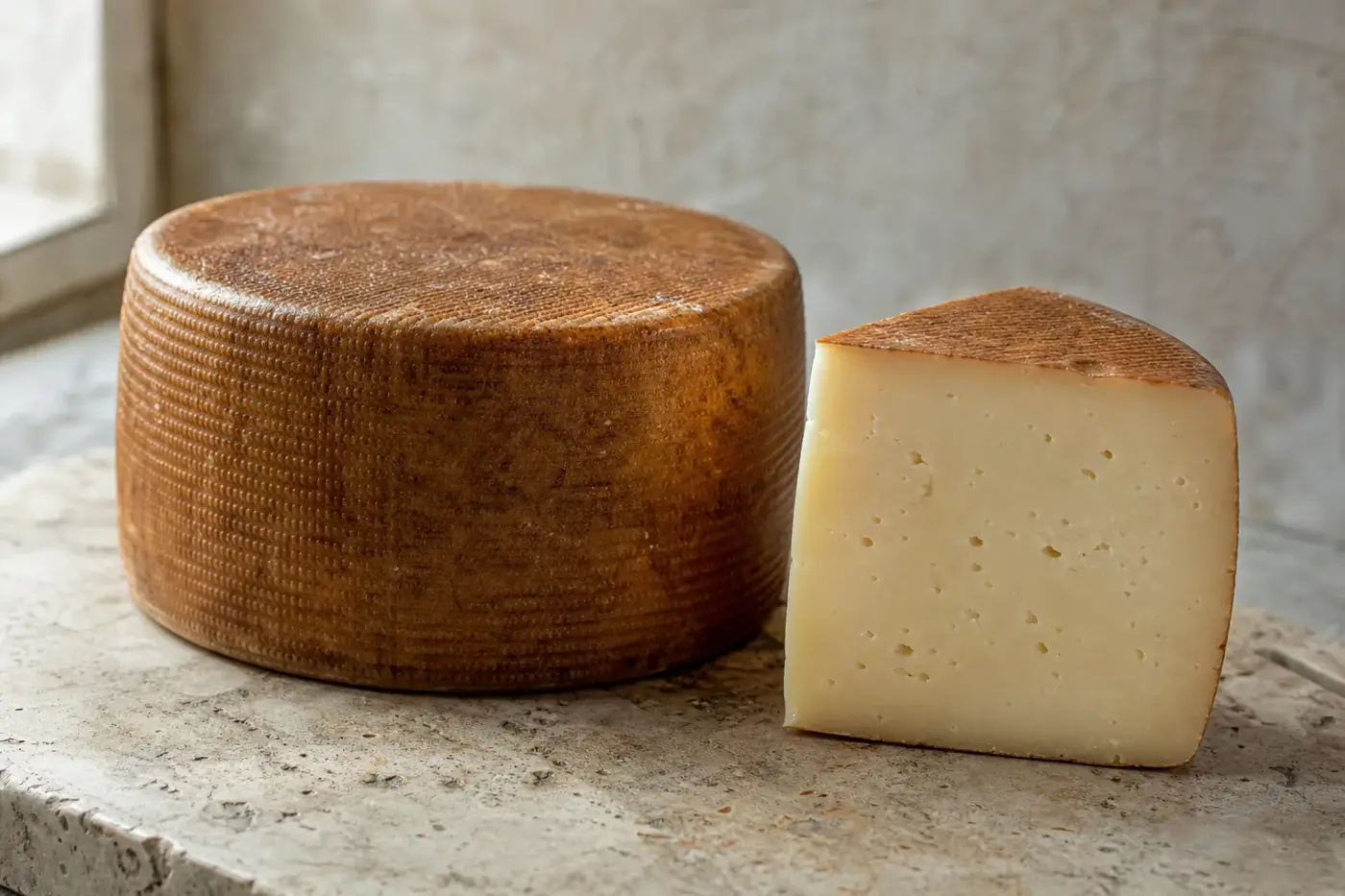
A whole Queso Ibores is a compact cylinder, with substantially flat faces and a side that sometimes curves gently outwards. Its modest height gives it a recognisably squat shape. Not every cheese needs to stand tall to command your attention.[4]
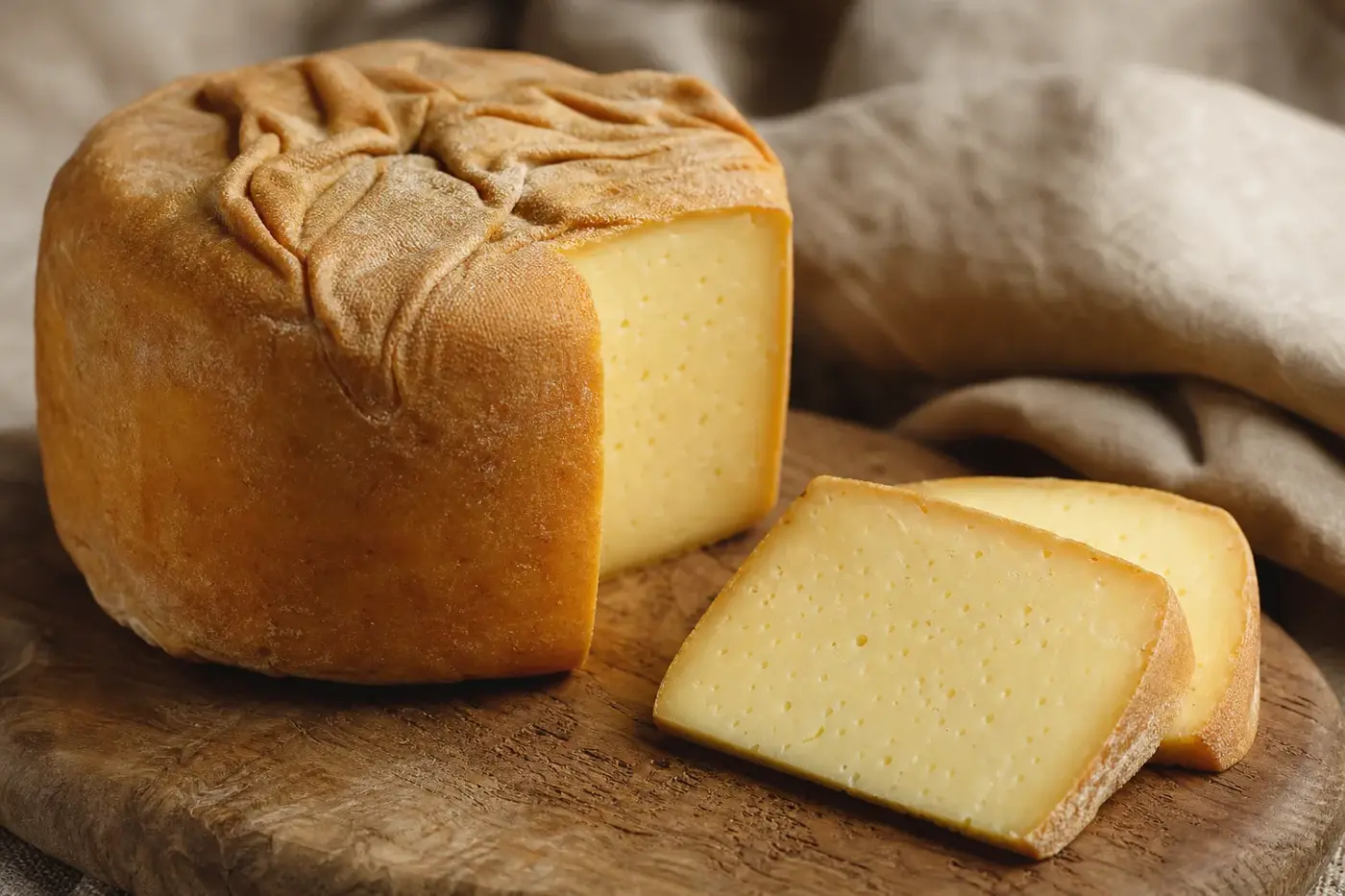
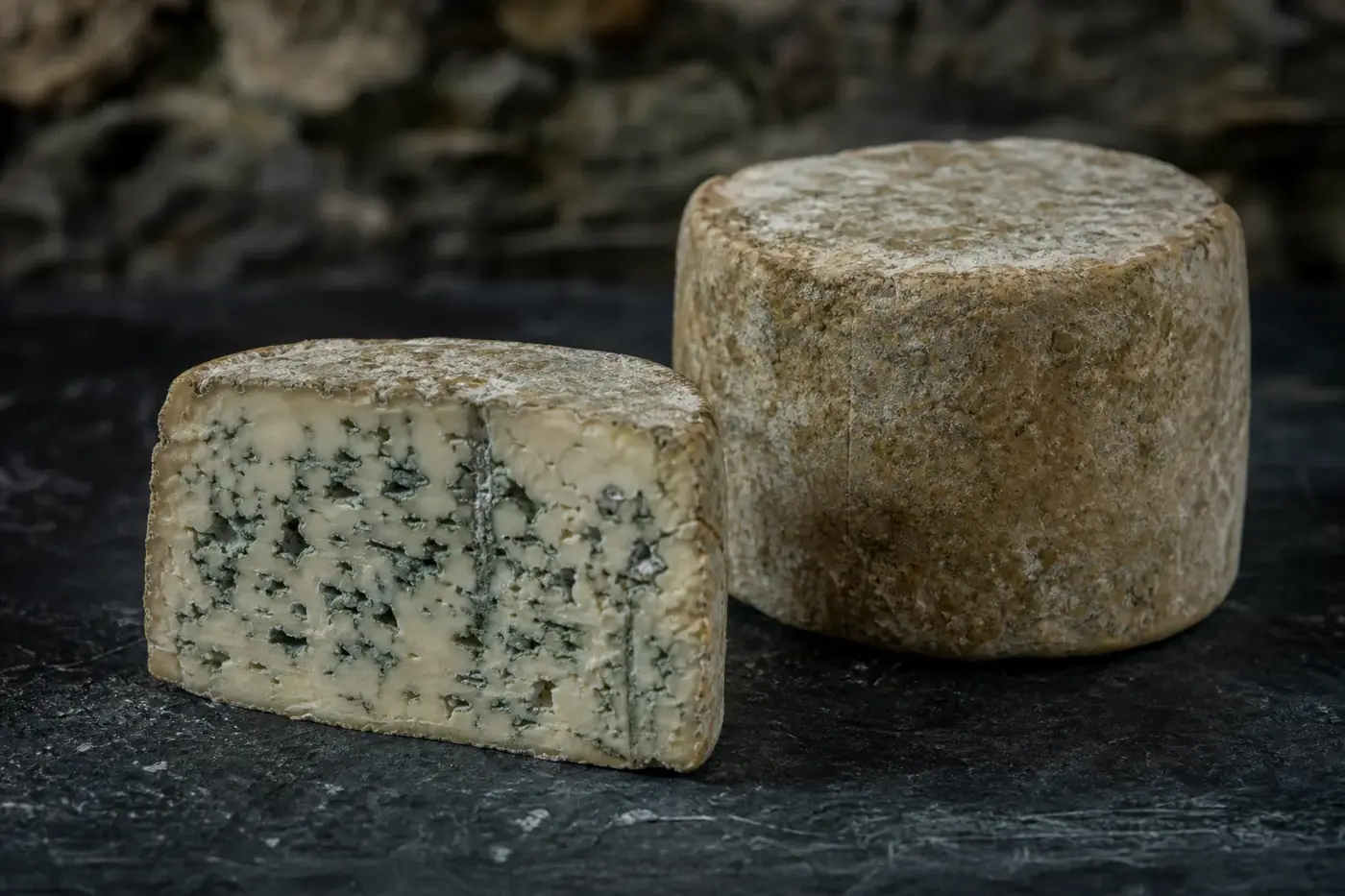
The natural rind ranges from waxy yellow to dark ochre. Paprika-treated cheeses can be orange-red, while oil-rubbed examples can develop yellow-ochre colouring. The Consejo also describes greyish colouring associated with surface moulds.[4]
Cut inside and you find ivory paste with relatively few small holes, scattered unevenly through it.[4] For your first purchase, ask to see the cut face as well as the rind. An open wheel gives you a better sense of how outside and inside relate than a photograph of an unopened one.
When comparing two pieces, keep each maker’s name and maturation details beside it. Enjoy the colours, certainly. Just give them some supporting information before drawing conclusions.
Follow the milk from vat to maturing room
The Consejo’s published production account begins as milk sets into curd. It describes natural rennet from suckling ruminants, while also allowing other coagulating enzymes expressly authorised by the Consejo. Rennet helps form the curd that will become your cheese.[5]
The setting temperature is 28 to 32 °C, and coagulation takes 60 to 90 minutes. The curd is then cut into grains measuring 5 to 10 mm. These details describe the published production process; they are not instructions for making Queso Ibores in your kitchen.[5]
Into the mould, then on to salting
According to the Consejo, salting uses sodium chloride, applied dry or in brine.[5] This account does not specify the moulding method or binding salting limits.
Give it time, and get to know artesano
The published minimum maturation is 60 days. The Consejo describes maturation and storage rooms kept at 4 to 15 °C, with relative humidity above 75%.[5]
Artesano has more specific conditions in the same account. The producer uses raw milk from its own herd, and the cheese matures for at least 100 days. Within a producer grouping, the account distinguishes an individual member’s cheese made from its own herd’s milk from cheese made collectively using members’ mixed milk.[5]
When you buy, ask for the wheel’s actual age and whether it carries artesano. Those answers tell you more about the cheese in front of you than a broad description such as “traditional”.
Taste slowly and see what unfolds
A mild to moderate goat’s-milk smell opens the Consejo’s tasting account. A clean flavour follows, with slight pungency and moderate acidity. As you eat, look for the vegetal, floral and fruity impressions it describes in the aroma.[6]
Think of those words as invitations, not a script your cheese must follow. Try them against the piece in front of you. Which impressions stand out, and which seem less apparent?
Next, notice how it breaks. The Consejo describes a semi-hard texture somewhere between elastic and readily crumbling, becoming firmer and more inclined to break into pieces as maturation progresses. With age, the ivory paste can also acquire ochre tones.[6]
Paprika and oil catch your attention at the surface, but the Consejo says the presentation affects the overall flavour only slightly.[6] Taste the paste on its own first. Then try the edge separately, provided the producer confirms that the rind is intended to be eaten.
For a useful tasting note, capture three things: how the cheese breaks, the balance of acidity and saltiness, and what lingers after swallowing. Your future self will thank you for being more specific than “strong”. The next comparison will be easier, too.
Ask the counter for this wheel’s story
Start with the label. The Consejo describes a numbered counterlabel supplied for qualifying cheese, alongside commercial labelling bearing the designation’s name.[4][5] If you are buying a cut portion, ask the seller to identify the original wheel and keep the label supplied with your piece.
Then think about the occasion. For an introduction, ask for an example the seller considers representative, together with its age and rind treatment. You want a useful first encounter, rather than simply the brightest rind in the cabinet.
For a comparison, choose two clearly identified cheeses and change one variable where possible, such as maturation or finish. That makes the differences easier to understand. Take these five questions with you:
- Who made this cheese?
- How long was this wheel matured?
- Is the rind natural, paprika-treated or oil-rubbed?
- What storage and after-opening instructions apply to this portion?
- Does the producer intend the rind to be eaten?
If the details need untangling, How to read a cheese label can help. Keep the answers with your cheese, ready for when you need them.
Bring it home and keep it well
Keep your cheese with its storage information. For domestic handling, the UK Food Standards Agency advises a fridge temperature between 0 and 5 °C and following the packaging’s storage instructions and date information. Apply those directions to your particular portion, including instructions supplied after cutting or opening.[7]
The label remains useful once you leave the shop, so keep it with the cheese. For a cut piece, ask the cheesemonger how to wrap it and whether the supplied wrapping needs replacing. You can explore the wider practical choices in How to store cheese at home.
Before serving, follow current UK Food Standards Agency guidance on keeping chilled food outside refrigeration.[7] Plan preparation and serving around it, alongside any stricter handling instructions supplied with the product. Keep the cheese away from direct sunlight and strong heat while you prepare the table.
Make room for bread, fruit and a little exploring
Begin with small wedges of cheese, plain bread, and fresh pear or grapes. Taste the cheese alone, then try each accompaniment in turn. Keep plain bread nearby between comparisons so you can consider each combination separately.
For a second serving, try a little quince paste or a dried fig. Use a light hand with the sweetness, leaving room to notice the cheese’s acidity and finish. These are serving suggestions, rather than a recorded site tasting.
Water makes a straightforward alcohol free accompaniment. If you want to explore wine, Cheese and wine pairing offers a fuller framework. Keep the cheese in focus as you compare, rather than letting an accompaniment take over.
Treat the rind as a separate decision. Ask what has been applied and follow the producer’s directions on eating it. For your first taste, trim it away to meet the paste without its surface treatment, then explore the edge if appropriate.
Let Cáceres guide your next Spanish cheese
Queso Ibores gives you a starting point for exploring Spanish goat’s cheeses through place, milk and maturation. Keep its Cáceres origin and documented rind finish in your notes when you move on to another cheese. Those particulars make for a more rewarding comparison than treating Spanish goat’s cheese as one interchangeable style.
Spain’s agriculture ministry lists Queso de Murcia al Vino as a DOP separate from Queso Ibores.[1] A specific comparison between the two falls outside this account. Once published, the related page, Queso de Murcia al Vino, is a sensible place to take your curiosity next.
General information only, not medical advice: follow the official guidance where you live.
Questions people ask
Where does Queso Ibores come from?
Queso Ibores comes from Cáceres in Extremadura, Spain. The area described by the Consejo Regulador includes Ibores, Villuercas, La Jara and Trujillo.
What milk is Queso Ibores made from?
It is made from raw goat’s milk. The designation’s published description specifies Serrana, Verata and Retinta goats and their crosses.
What does Queso Ibores taste like?
The Consejo describes a clean flavour with slight pungency and moderate acidity. It also notes vegetal, floral and fruity impressions in the aroma perceived while eating.
Can you eat the rind of Queso Ibores?
Ask what has been applied to the rind and whether the producer intends it to be eaten. Rinds can be natural, treated with paprika or rubbed with oil.
How should Queso Ibores be stored?
The UK Food Standards Agency advises a fridge temperature between 0 and 5 °C and following the storage instructions and date information on the packaging. Check the agency’s current guidance and any instructions supplied with the particular portion.
Sources
- Ministerio de Agricultura, Pesca y Alimentación. Pliegos de condiciones en vigor, updated 25 November 2025, Extremadura and Murcia entries, pages 21 and 27. Official document.
- Department for Environment, Food & Rural Affairs. Queso Ibores, protected food name register entry, published 4 January 2021, live entry retrieved November 2026. Register entry.
- Consejo Regulador de la DOP Queso Ibores. Ámbito geográfico, undated live webpage, retrieved November 2026. Geographical account.
- Consejo Regulador de la DOP Queso Ibores. Características, undated live webpage, retrieved November 2026. Published characteristics.
- Consejo Regulador de la DOP Queso Ibores. Elaboración, undated live webpage, retrieved November 2026. Published production account.
- Consejo Regulador de la DOP Queso Ibores. Nota de cata, undated live webpage, retrieved November 2026. Tasting account.
- Food Standards Agency. How to chill, freeze and defrost food safely, live PDF, retrieved November 2026. Official household guidance.
- Consejo Regulador de la DOP Queso Ibores. Queso Ibores, homepage, domestic conservation and serving passages, undated, retrieved November 2026. Designation website.
Researched through official government records, the designation body’s published accounts and UK household food-handling guidance, with editorial serving suggestions identified separately.
Last checked: November 2026
Last checked November 2026.
The editors suggest you read next