Queso de Flor de Guía
Cut into the wheel and the paste may be soft enough to almost flow.
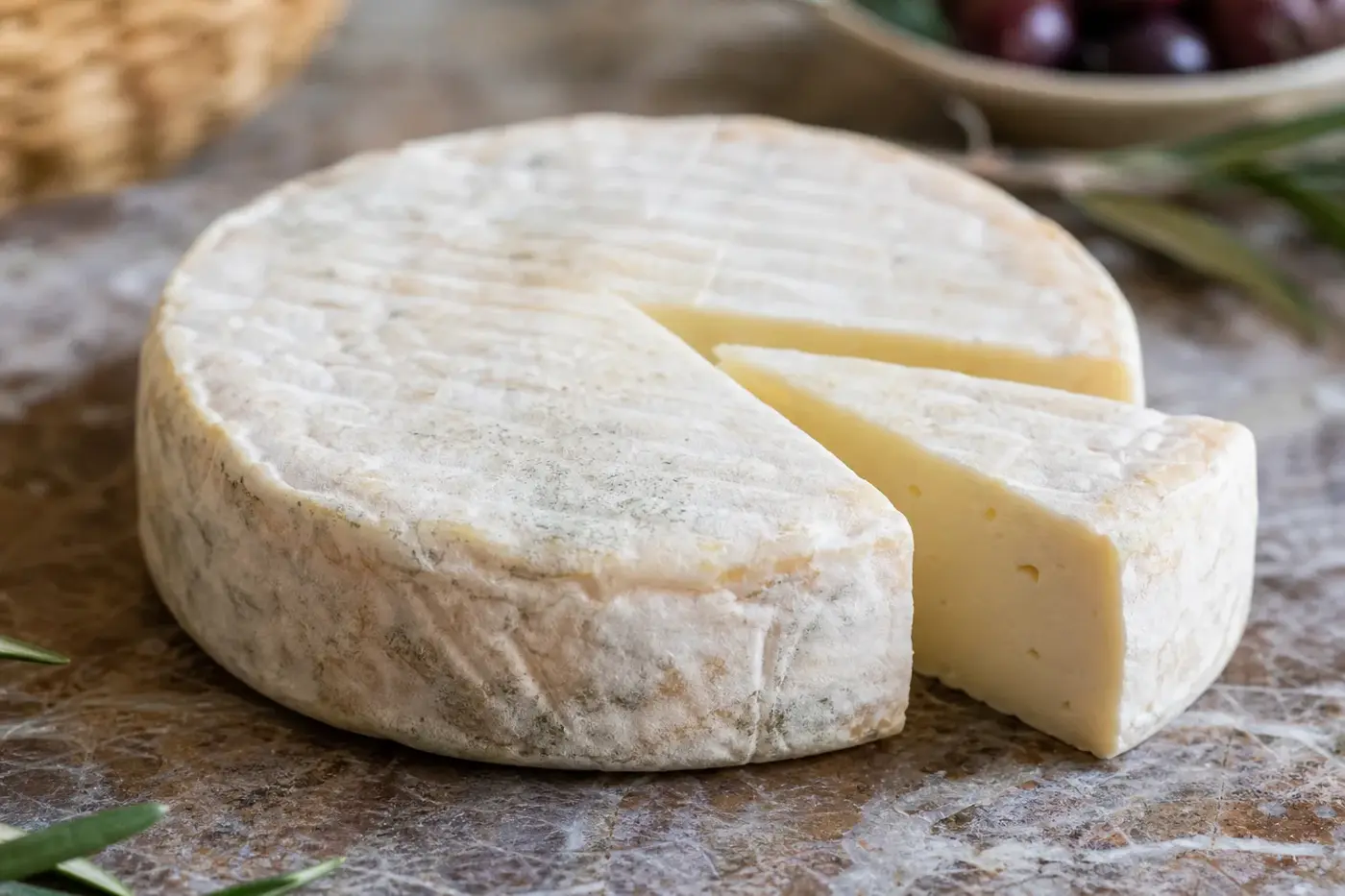
Cut into the wheel and the paste may be soft enough to almost flow. Then the bitter edge arrives. Here in the grazing country of northern Gran Canaria, thistle flowers supply the enzymes that set the milk and give Queso de Flor de Guía its distinctive character. Sheep’s milk anchors the recipe, connecting every wheel to the island’s animals, pastures and cheesemaking knowledge. [1, 4]
| What to know | The details |
|---|---|
| Familiar name | Queso de Flor de Guía. [4] |
| Full registered name | Queso de Flor de Guía / Queso de Media Flor de Guía / Queso de Guía. [3] |
| Registration authorities and register IDs | European Commission and Defra; register IDs: unconfirmed. [2, 3] |
| Registration legislation | EU: Commission Regulation (EU) No 783/2010. [2] |
| Protection in Great Britain | Registered PDO; UK scheme registration dated 31 December 2020. Status as at November 2026. [3] |
| Where it is made | Gáldar, Moya and Santa María de Guía, Gran Canaria, Spain. [1] |
| Milks allowed in the recipe | Canaria sheep, at least 60%; Canaria cows and their crosses, up to 40%; Canarian goat breeds, up to 10%. [1] |
| Flowers used for Flor | Flower extract of Cynara cardunculus var. ferocissima and Cynara scolymus. [1] |
| Shortest maturation | 15 days for all three categories. [1] |
| Production season | January to July. [1] |
First, meet the sheep of Gran Canaria
Before you get to the flowers, meet the Canaria sheep. These animals are at home on volcanic ground, in humid and arid conditions, and on marginal land. Spain’s agriculture ministry identifies milk as the breed’s principal productive use, linking these adaptable sheep with grazing, seasonal livestock movements and cheesemaking. [6]
Their cheese belongs to the north and north west of Gran Canaria, where rural settlements and grazing country spread across varied terrain. The Canary Islands government’s cheese guide describes contrasting microclimates and spontaneous vegetation, including endemic plants, as part of this farming landscape. Traditionally, mixed herds supplied the milk for mixed-milk cheeses. [5]
There is more here than a handsome backdrop to your cheese. The ministry explicitly connects pastoral activity with paths, tracks and the continued occupation of sparsely populated areas. Grazing and livestock movement help keep this countryside in use, with animals and the people tending them central to the story. [6]
Flor, Media Flor or Guía? Let the label guide you
Those words on the label tell you how the milk was coagulated, not how long the cheese has matured. “Flor”, “Media Flor” and “Guía” are three categories gathered under the full registered designation. Age is a separate question, worth asking separately. [1, 3]
| Name on the label | What sets the milk |
|---|---|
| Queso de Flor de Guía | Exclusively plant coagulant. [1] |
| Queso de Media Flor de Guía | The cited Spanish specification differs between sections: B.1 requires more than 50% plant coagulant; E requires at least 50%. Applicable threshold: unresolved. [1] |
| Queso de Guía | Authorised animal, plant or other coagulants. [1] |
When you choose a wheel, ask about its category before its age. Media Flor tells you something different from Flor, but neither word gives you a maturation time. Keep those two details separate and you will find it much easier to compare cheeses.
The designation appears as a protected designation of origin, or PDO, in the Great Britain register, with November 2026 as the reference date. [3] Current EU and Northern Ireland status: unconfirmed. For the broader distinction between a geographical name and a cheese style, turn to protected names explained.
Sheep’s milk leads, but get to know the blend
Sheep’s milk must predominate, but the permitted proportions leave room for different blends. A Flor cheese need not contain both cow’s and goat’s milk. Ask which milks the maker actually used, and in what proportions, rather than expecting every wheel to follow the same mixture.
Those permitted proportions cannot promise you a precise flavour or texture for each blend. Start instead with the maker’s actual mixture, then consider the cheese’s age. Together, those details tell you more about the wheel in front of you than a list of the milks allowed.
Find a wheel you love? Note its blend and maturity before the last piece disappears, taking your powers of recall with it. “Made with thistle flowers” is memorable, but leaves plenty undescribed. Compare two wheels of the same age with disclosed blends, and you will have more to discuss with your cheesemonger, including what you hope to find again.
The flowers are here to set the milk
The flowers are not a floral flavouring sprinkled into the cheese. They set the milk. Coagulation turns liquid milk into a gel, and rennet is the familiar term for enzyme preparations that make this happen. Animal rennet traditionally comes from the stomachs of young ruminants; cardoon flowers provide another source of protein-cutting enzymes. [7, 8]
Research identifies cardosins and related enzymes in Cynara flowers. These act on casein, the principal cheese-forming milk protein, allowing the milk to set. Their continuing breakdown of protein also helps explain the softer textures and bitterness associated with flower coagulants. What starts the curd helps shape the cheese you eventually taste. [7, 8]
Preparing those flowers takes judgement. A 2021 experiment compared flower-drying methods and extraction conditions, finding that changes in preparation altered clotting activity. Choosing, drying and extracting the flowers are consequential parts of the cheesemaker’s skill, rather than small tasks before the real work begins. [7]
A separate study investigated three cardoon extracts in cheeses made at two Serpa dairies. Those cheeses were Portuguese, but the experimental design shows how researchers distinguish an extract’s effects from those of the dairy using it. [8] To untangle the wider terminology, try rennet explained.
From liquid milk to a finished wheel
For Flor, the specification sets coagulation at 28 to 35 °C for 60 to 90 minutes. That is one stage in a longer sequence: filtration, coagulation, cutting and draining the curd, moulding, pressing, salting and maturation. Every wheel follows this progression from milk to cheese. [1]
Curd is the coagulated material kept for cheese; whey is the liquid separated from it. Cutting, draining and pressing turn that first gel into a manageable wheel. If you wonder why two flower-coagulated cheeses have different consistencies, these stages give you useful questions to take to your cheesemonger.
Age has a vocabulary of its own. The specification classes semicurado as 15 to 60 days and curado as more than 60 days. [1] Those words describe maturation; Flor and Media Flor describe coagulation.
At the counter, keep your questions simple: “Which category is this?” and “How old is this wheel?” Together, the answers give you more to go on than asking for the strongest or softest Guía cheese. They also give the seller a better starting point for helping you choose.
Look for a low wheel with a yielding heart
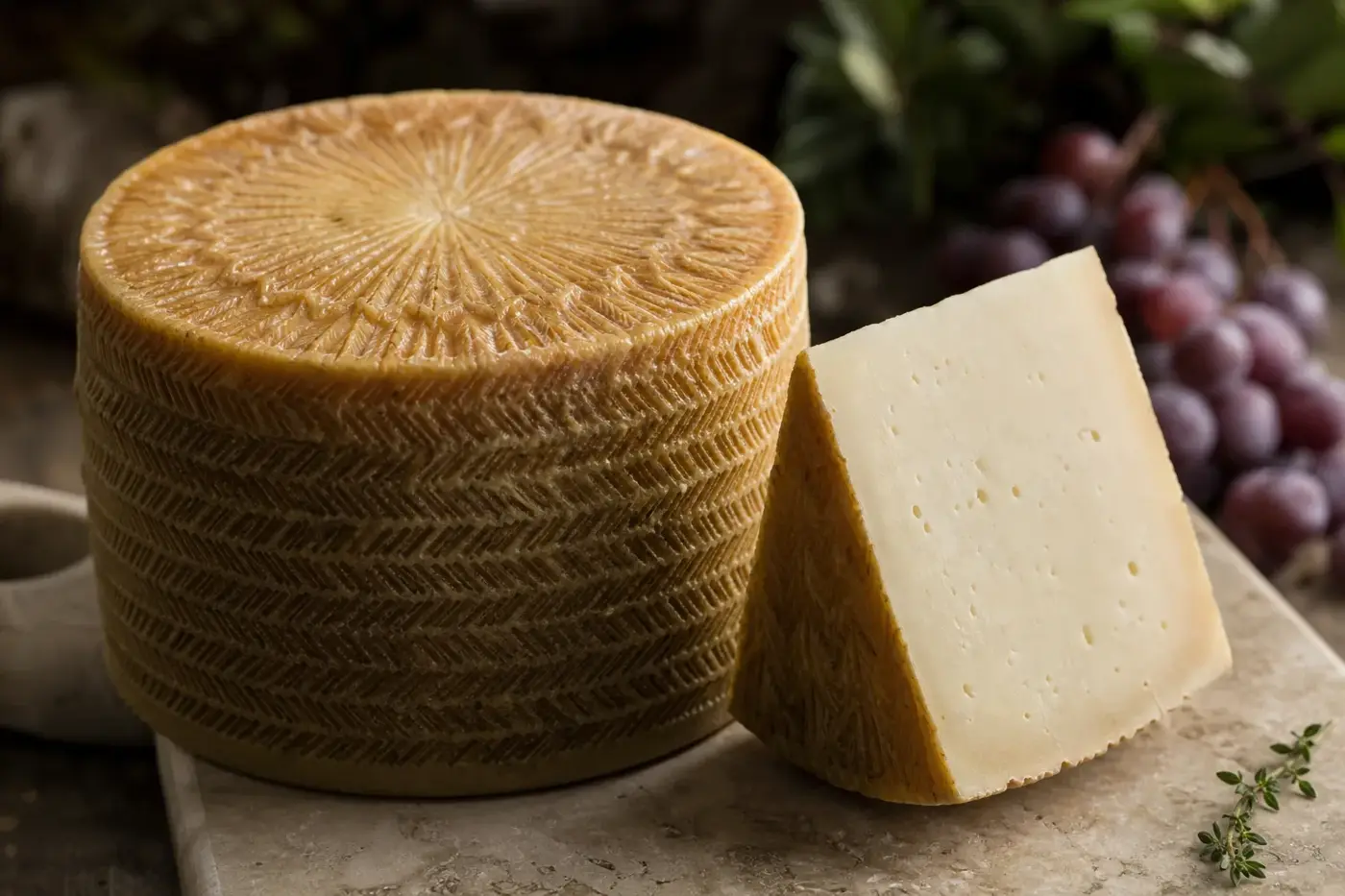
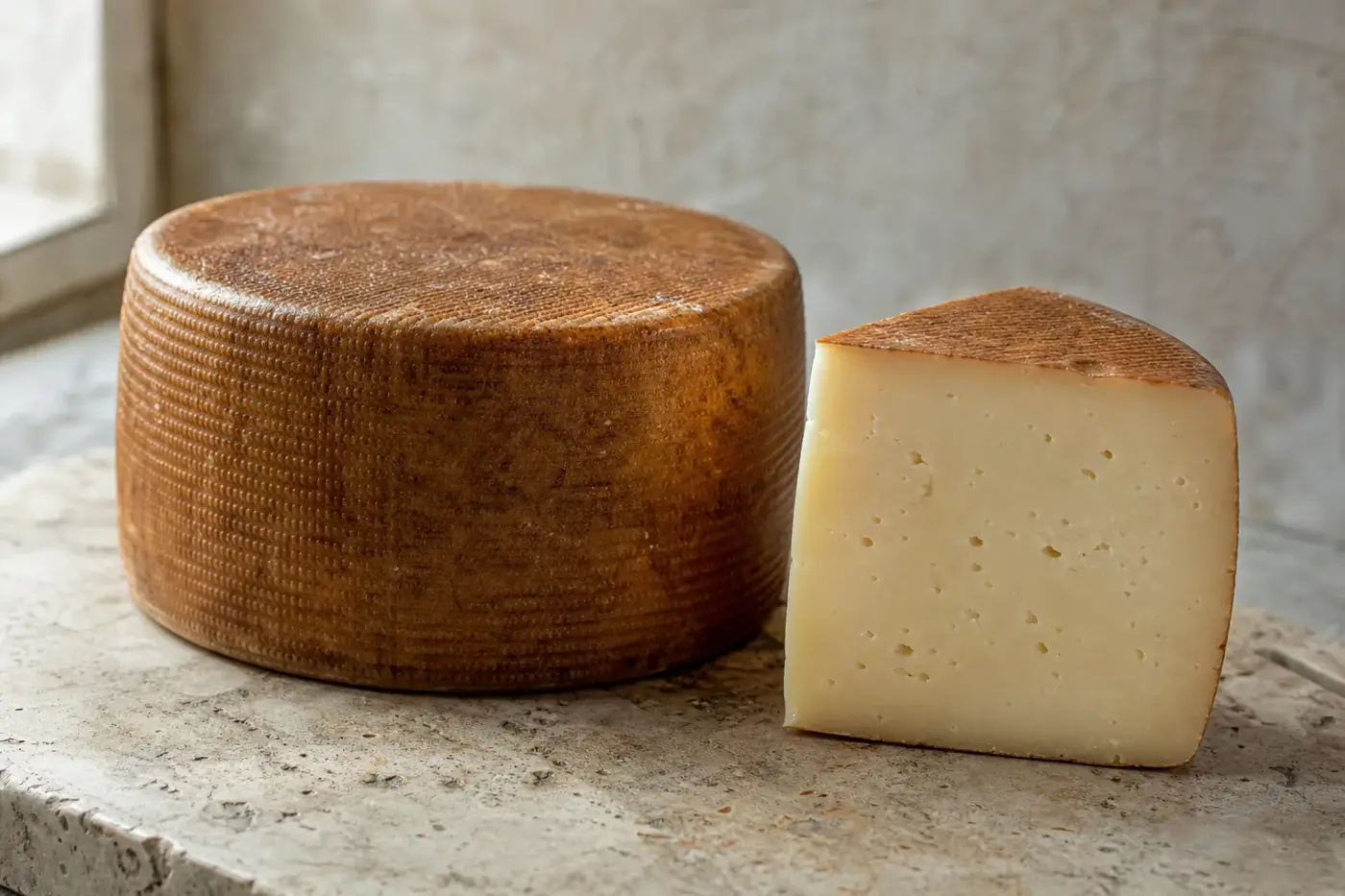
Flor is a flattened cylinder, just 4 to 6 cm high and 22 to 30 cm in diameter. Under the specification, it weighs 2 to 5 kg. Think low and broad rather than tall when you picture the wheel. [1]
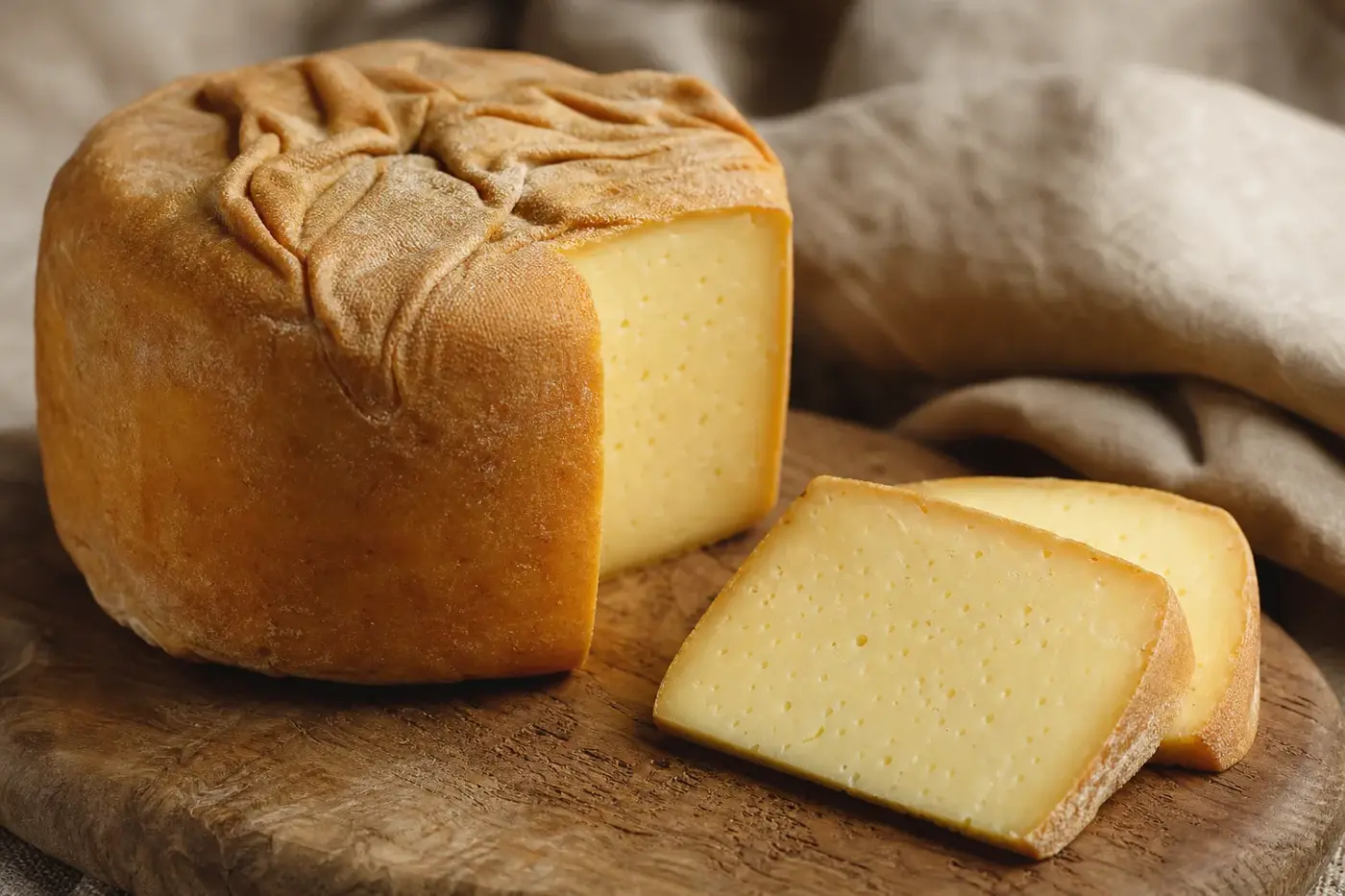
The Canary Islands government describes rounded edges and a waxy-looking exterior. Its colour moves from ivory towards straw yellow, darkening with maturation, while a flower impression marks the flat faces. That waxy appearance does not necessarily mean the rind has a wax coating. [4]
Inside is the soft, almost flowing paste described in the same official account. [4] If that is what you are hoping to bring home, ask to see the cut face of the wheel on sale. The regional description tells you what to look for; the piece before you shows its present consistency.
Does the paste hold a clean slice, bend under the knife or spread readily? Remember what you see, particularly if you want another piece like it. You will turn “I like soft cheese” into a much more useful conversation with your cheesemonger.
Taste your way from dried fruit to bitterness
The Canary Islands government describes early notes of dried fruit or nuts, touched with bitterness. As the cheese matures, its aromas become more pronounced and some pungency develops. Softness may catch your attention first, but there is plenty more to follow. [4]
That bitter edge belongs in any conversation about the cheese’s character. Research on flower coagulants connects bitterness with protein breakdown and the peptides produced along the way. Its extent depends partly on the enzymes and their activity, so the flowers do not deliver one fixed intensity of flavour. [7, 8]
Try a small piece alone before introducing anything alongside. Notice the texture, then the balance of bitterness, acidity and salt, and finally what remains after you swallow. You are finding words for your preferences, not sitting a cheese exam. Following the same tasting sequence simply makes your comparisons easier to explain.
Follow the people, herds and island paths
Local breeds, mixed livestock and seasonal movement underpin the farming tradition described in the regional cheese guide. It is a picture of that tradition at publication, rather than a count of today’s producers. Read it for a sense of the farming system behind your piece of cheese. [5]
The agriculture ministry’s breed profile brings the wider pastoral context into view. Grazing and transhumance, meaning seasonal livestock movement, connect a distinctive way of life with particular island environments. [6] The animals, their routes and the knowledge needed to manage them are all part of the same production story.
Together, these records suggest a practical preservation challenge. Keeping a cheese name alive also means retaining the skills to manage livestock, use grazing country and pass on cheesemaking knowledge. This is an inference from the documented system, not evidence of a measured decline. Continuity depends on both the cheese and the pastoral work that supplies its milk.
Choose your piece, then give it good care
Start with the exact category on the label. Ask for the maker, production date, actual milk blend and maturity. If you buy a cut portion, request the identifying information from the original wheel and keep it with your cheese. For help with the wider vocabulary, see reading a cheese label.
Follow the producer’s storage instructions for that particular cheese, and retain the wrapping and date information. In England, Northern Ireland and Wales, the Food Standards Agency advises keeping a home fridge at 5 °C or below, with November 2026 as the reference date. [10] Elsewhere, follow your own food authority’s advice; see also how to store cheese at home.
Ask the seller for serving-temperature instructions suited to the wheel’s consistency. An exceptionally soft paste needs a dish and utensil that can contain it comfortably; a cheese that holds its shape can become small wedges. Before planning an extended cheeseboard service, get the applicable refrigeration and display limits.
Start with plain bread, then follow the flowers further
Begin with the cheese alone, then try plain crusty bread. Simple accompaniments let you explore the texture and bitter finish without competing flavours. Water makes a straightforward alcohol-free drink, while a little apple juice offers a sweet contrast.
Keep that same aim in mind when choosing your drink: let the cheese’s texture and bitter finish remain clear. Water and apple juice are starting points, not an elaborate pairing prescription. Begin simply, taste attentively and notice what you enjoy.
For a comparison beyond Gran Canaria, look to Torta del Casar and Queso de La Serena. Both use Cynara flower coagulants, and research places them within the same wider Iberian tradition. [7] Approach them as distinct cheeses connected by the flower. Compare their pastes, bitterness and finishes, rather than expecting each to give you the same experience.
General information only, not medical advice: follow the official guidance where you live.
Questions people ask
Where is Queso de Flor de Guía made?
It is made in Gáldar, Moya and Santa María de Guía on Gran Canaria, Spain. Its production area lies in the north and north west of the island.
What milk is used in Queso de Flor de Guía?
The cheese must contain at least 60% Canaria sheep’s milk. It may also contain up to 40% milk from Canaria cows and their crosses, and up to 10% milk from Canarian goat breeds.
What is the difference between Flor, Media Flor and Guía?
The names describe how the milk is set, not how long the cheese has matured. Flor uses only plant coagulant, while Guía permits authorised animal, plant or other coagulants. For Media Flor, sections of the cited specification give different plant coagulant thresholds, and the applicable threshold is not verified.
How long is Queso de Flor de Guía matured?
All three categories must mature for at least 15 days. Semicurado means 15 to 60 days, while curado means more than 60 days.
What does Queso de Flor de Guía taste like?
The Canary Islands government describes early notes of dried fruit or nuts with a touch of bitterness. With maturation, the aromas become more pronounced and some pungency develops.
Sources
- Instituto Canario de Calidad Agroalimentaria, Pliego de condiciones DOP Queso de Flor de Guía, de Media Flor y Queso de Guía, corrected specification published in the Boletín Oficial de Canarias, 30 March 2007. Sections B, C and E contain the category, milk, geographical and production provisions used here. Official specification.
- European Commission, Commission Regulation (EU) No 783/2010, 2010, registration instrument for the three-part designation. EUR-Lex record.
- Department for Environment, Food & Rural Affairs, Queso de Flor de Guía / Queso de Media Flor de Guía / Queso de Guía, protected food name register entry, published 2021, checked November 2026. The entry records registered PDO status and the UK scheme registration date. Register entry.
- Gobierno de Canarias, Instituto Canario de Calidad Agroalimentaria, Queso de Flor de Guía, de Media Flor y Queso de Guía, undated product account, checked November 2026. This supplies the attributed appearance and sensory descriptions. Official product account.
- Gobierno de Canarias, Guía de quesos de Canarias, undated edition, section beginning on printed page 73. Its account describes the regional farming context and traditional mixed-milk production. Official cheese guide.
- Ministerio de Agricultura, Pesca y Alimentación, Raza ovina Canaria: usos y sistema de explotación, undated breed catalogue entry, checked November 2026. It describes milk production, adaptation, grazing and the breed’s sociocultural role. Official breed profile.
- Italian Journal of Food Science, Effects of the drying method for flowers of Cynara cardunculus var. Altilis on milk coagulating properties, volume 33, issue 4, 2021. This experimental paper examines flower preparation and clotting activity, with background on Iberian flower-coagulated cheeses. Research paper.
- Impact of different Cynara cardunculus L. extracts on the physicochemical, microbial, and sensory properties of Serpa cheese, 2025, institutional repository copy. The study used three extracts at two dairies. Research paper.
- Cynara cardunculus as a potential source of milk coagulating protease: Effects on physical properties of cow’s milk, 2022. The experiment compares gel properties in different cow’s milk substrates. Research paper.
- Food Standards Agency, How to chill, freeze and defrost food safely, 2017, checked November 2026; applies to England, Northern Ireland and Wales. Official household guidance.
Researched through official designation documents, government accounts and experimental research, with sensory descriptions attributed and serving suggestions identified as editorial judgements.
Last checked: November 2026
Last checked November 2026.
The editors suggest you read next