Quicke's
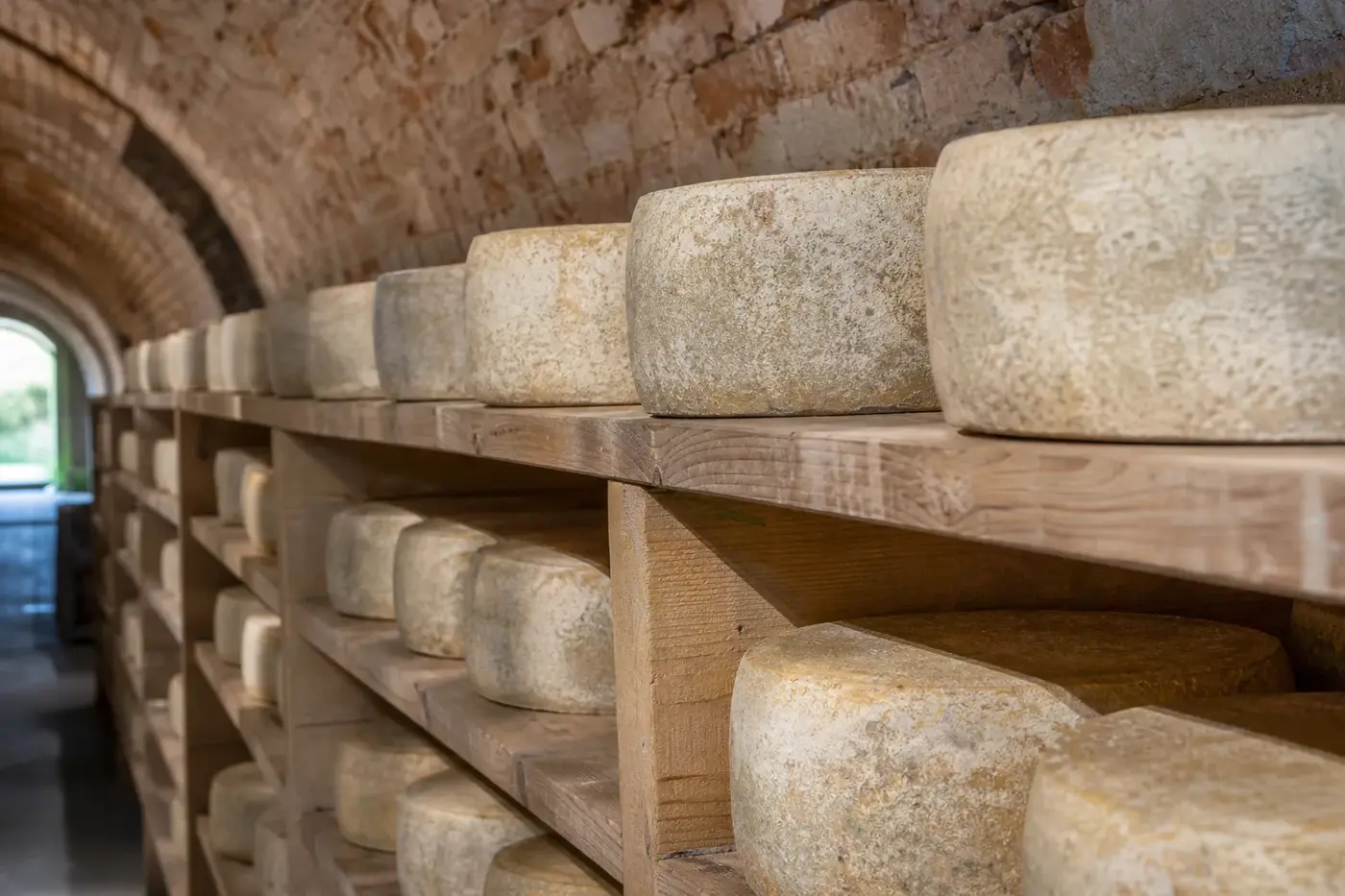
Every ten days, the clothbound truckles in Quicke's Cathedral of Cheese get their turn.
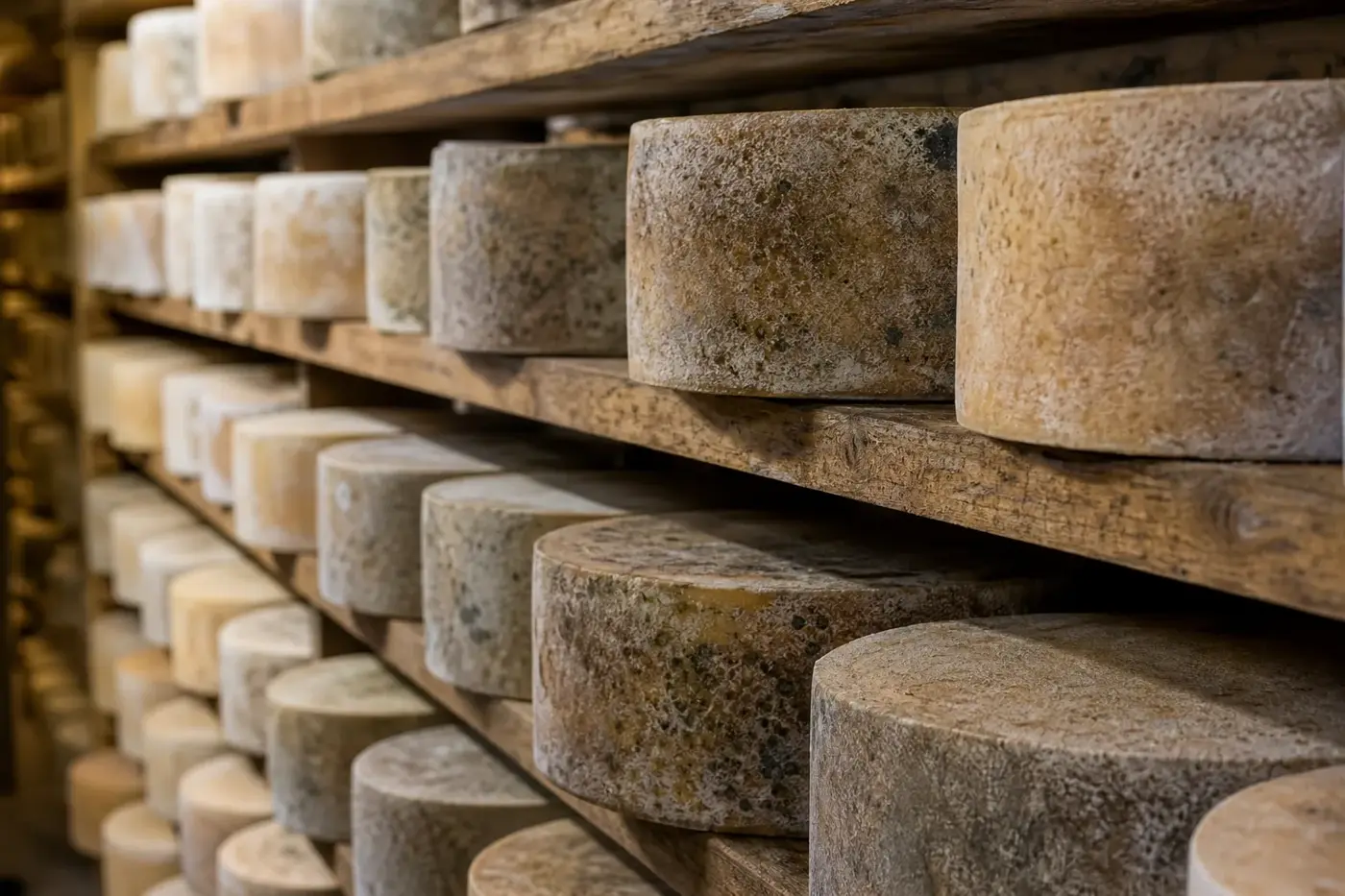
Every ten days, the clothbound truckles in Quicke's Cathedral of Cheese get their turn. Before this patient life in the stores, their story begins in the grazing fields of Home Farm near Newton St Cyres in Devon, where the family business keeps its own dairy herd. Hand cheddaring, muslin binding and regular grading take the milk from pasture to finished Cheddar. If you like cheese with a little ceremony, this is a promising start. [1,2,5]
Nearly 500 years in a Devon valley
Quicke's traces its family's connection with this Devon valley back nearly 500 years. The present cheese business grows from those farming roots, linking the land, dairy and maturing stores. Follow the story and you keep returning to the same work on the same land: growing grass, keeping cows and turning their milk into cheese. [1]
Mary Quicke's role comes into sharp focus in the grading room. The business says she attends every grading and tastes all its cheeses. At monthly sessions, an external assessor joins the examination of flavour and aroma, body and texture, finish and colour. Months of farming and cheesemaking come down to what you find in a cut piece. [6]
Good cheese starts with the grass
Quicke's has developed its crossbred herd for grazing and for the milk composition its cheesemakers want. Its published breeding mix includes Scandinavian Red, Kiwi Holstein, Friesian, Montbéliarde, Brown Swiss and Jersey ancestry. Hardiness, milk yield and protein guide the choices. Rather than relying on a single breed, the farm has shaped its herd through years of selection and adjustment. [3]
The grazing plan follows the grass, with a little help from a rising plate meter. Quicke's says it measures paddocks each week with this device to estimate the available grass. Those results help decide where the cows graze and whether they need supplementary silage. Perennial ryegrass and white clover lead the pasture mix, alongside deeper-rooted plants including chicory, sainfoin and salad burnet. [4]
Each plant has its season. In the farm's account, ryegrass starts growing early and continues late, while clover contributes during summer. As the supply changes through the year, weekly measurements guide grazing, with conserved forage available when growth falls short. [4]
Into the vat: milk, cultures and rennet
All of Quicke's clothbound cheeses use pasteurised milk. The cow's milk comes from its own herd, while other farmers in South West England supply the goat's and ewe's milk. Quicke's does not keep goats itself. When you choose between milk species, you are choosing between farming sources as well as cheeses. [2]
In the dairy's published method, milk fills large vats before starter culture is added. These bacteria develop acidity and flavour; Quicke's describes its cultures as longstanding and inherited. Rennet follows, setting the milk into a gel. Its Cheddars use animal rennet, while Double Devonshire, Devonshire Red and its goat's milk cheeses use vegetarian rennet. [2,5]
For a closer look at those choices, read milk treatments and rennet explained.
Cheddar takes a pair of hands
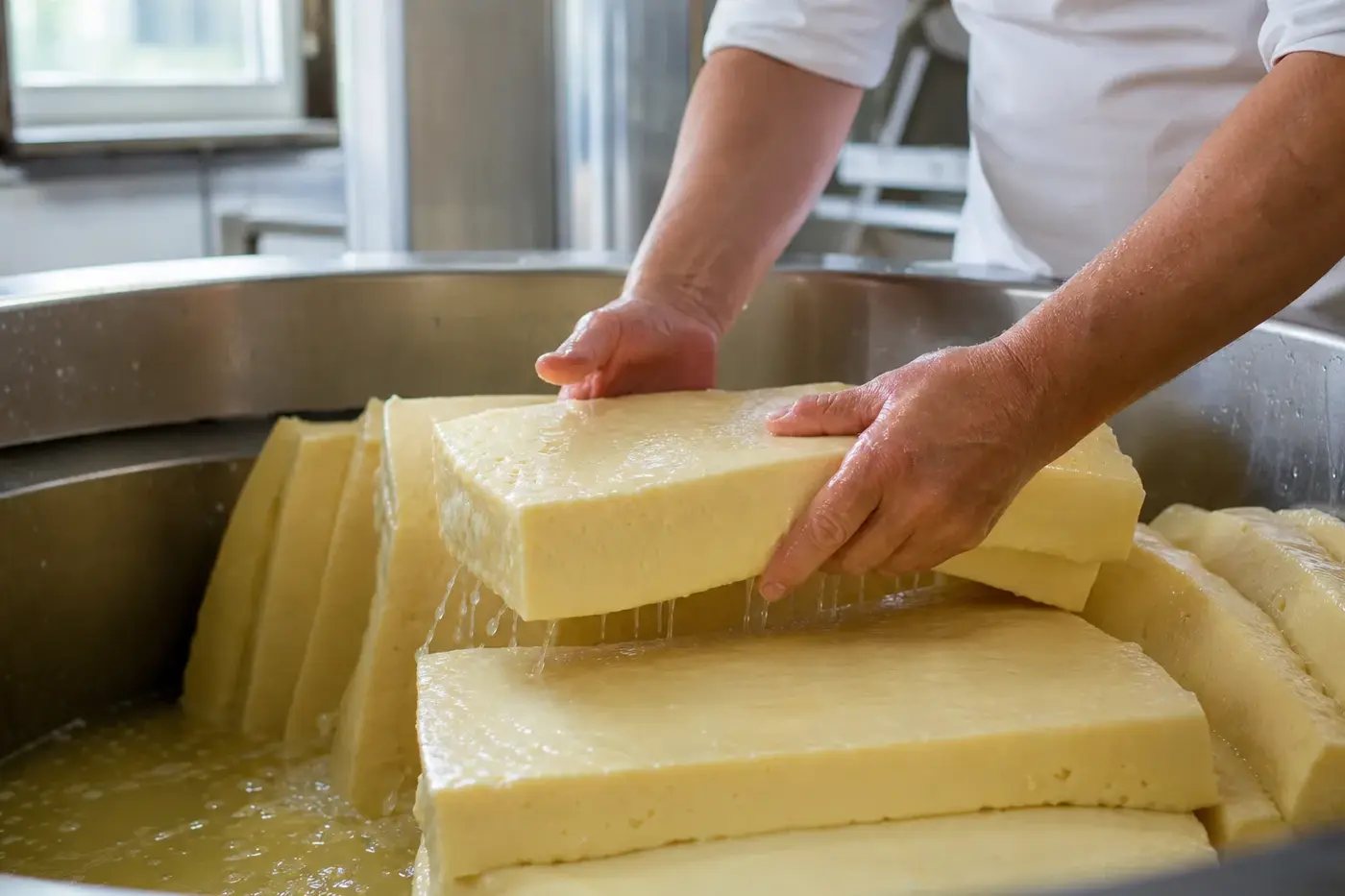
In cheddaring, cheesemakers work the soft set into curd that can drain, knit and mature. Curd is the solid material kept for cheese; whey is the liquid released from it. At Quicke's, the curd settles into a thick layer before cheesemakers cut it into strips and turn it by hand. [5,9]
Next, the dairy mills the curd into smaller pieces and adds Cornish sea salt. Its published account then takes you to muslin wrapping and the maturing stores. These are separate jobs: hand cheddaring means handling the draining curd, while clothbound describes the covering given to the formed cheese for maturation. [5]
| Stage | What happens at Quicke's |
|---|---|
| Cutting and turning | Curd cut into strips and turned by hand [5] |
For the bigger picture, see how cheese is made. For the style itself, turn to cheddar.
Inside the Cathedral of Cheese
Muslin is more than a handsome wrapper. Quicke's binds its cheeses by hand, and the treatment of that cloth matters when you choose a cheese. For Cheddar, its FAQ says the cloth is soaked in lard; vegetarian cheeses use vegetable oil instead. For a vegetarian guest, check the outside treatment as well as the rennet. [2,5]
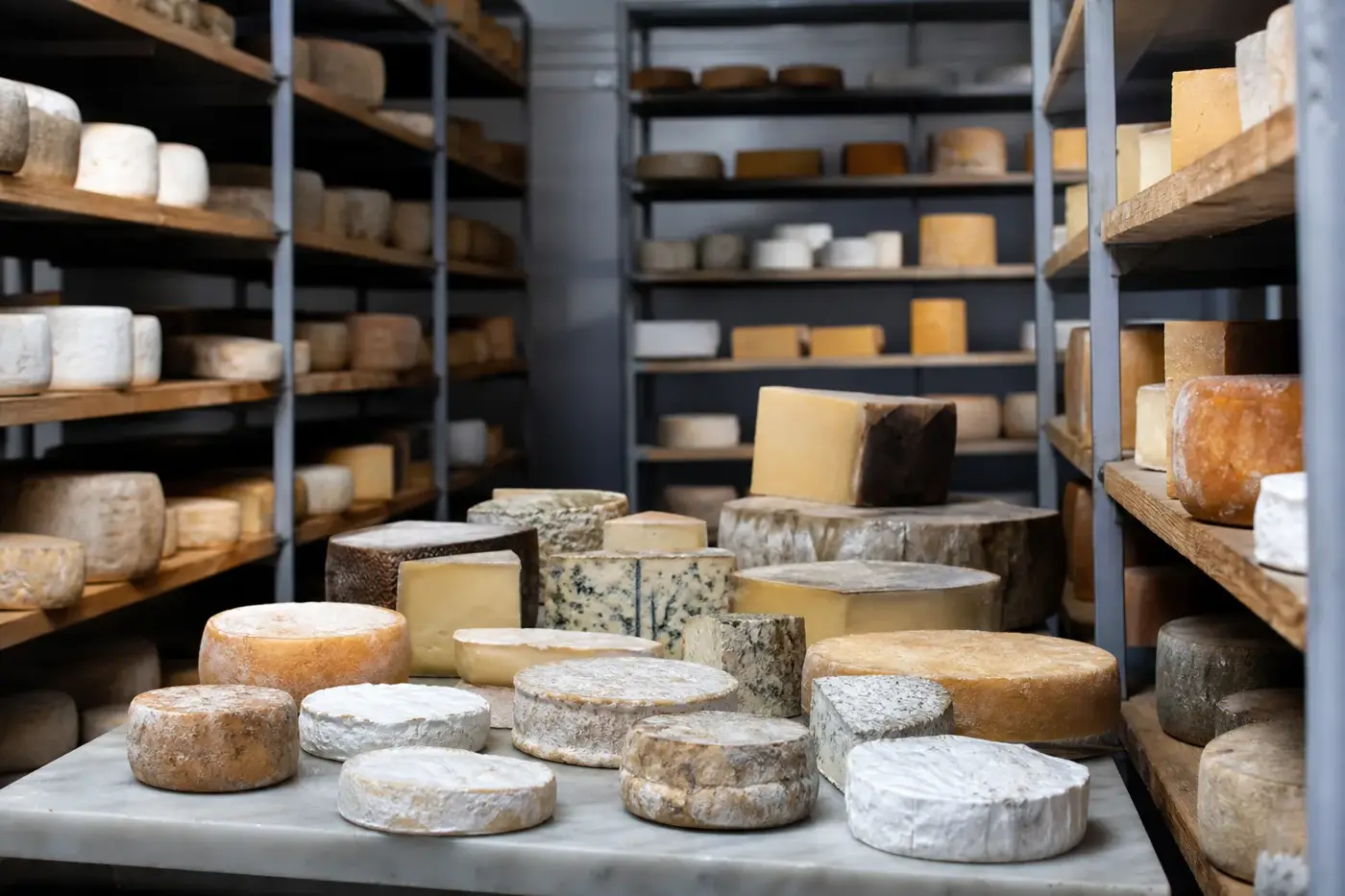
Maturation starts in a more humid nursery store. After about three months, the cheeses move to the main store, the Cathedral of Cheese, where truckles are turned every ten days. The tour description calls the surface mould a mould garden. It is part of the maturation happening around the cheeses, rather than a reason to fetch the gardening gloves. [5,12]
Time changes both texture and flavour. Quicke's describes its youngest Cheddar as mellow and its two-year Vintage as crumbly and complex. Graders use a cheese iron, a coring tool, to draw samples from the centre. Seasonal and batch differences also play their part, so read the age alongside the description of the particular cheese you are considering. [1,6]
Find the Quicke's cheese for you
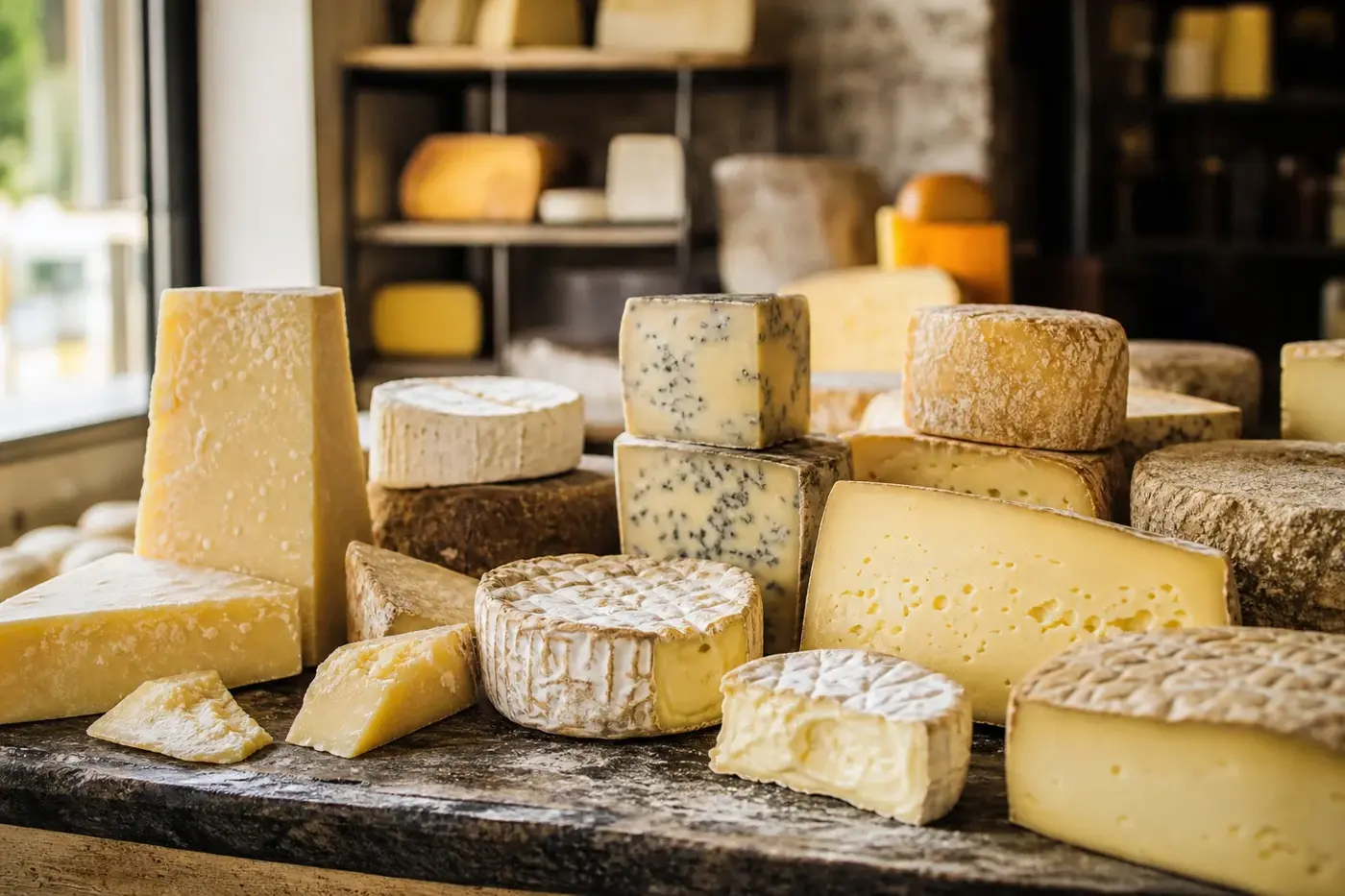
The current online collection lists these principal cheeses. The clothbound range is pasteurised throughout; the maturation ages shown are the producer's statements as of November 2026. [1,2,7]
| Cheese | Milk | Style | Stated maturation |
|---|---|---|---|
| Buttery Clothbound Cheddar | Cow | Cheddar | |
| Mature Clothbound Cheddar | Cow | Cheddar | |
| Extra Mature Clothbound Cheddar | Cow | Cheddar | |
| Vintage Clothbound Cheddar | Cow | Cheddar | Two years [1] |
| Oak Smoked Clothbound Cheddar | Cow | Smoked Cheddar | |
| Double Devonshire | Cow | Clothbound cheese | |
| Devonshire Red | Cow | Clothbound cheese | |
| Goat's Milk Clothbound Cheese | Goat | Clothbound cheese | |
| Oak Smoked Goat's Milk Clothbound Cheese | Goat | Smoked clothbound cheese |
Start with two Cheddars of different ages, rather than the whole range. Quicke's describes Buttery through mellow milkiness, Mature through greater intensity, and Vintage through crumble and complexity. You get a useful comparison of flavour and texture, without needing to turn the kitchen table into a grading room. [1,6]
The maker's tasting vocabulary includes broth, caramel and the warm, animal aroma it calls cow's breath. Treat these as prompts, not a checklist you must complete. Taste the cut in front of you and see which qualities emerge. [1,6]
Reading the protected West Country name
West Country Farmhouse Cheddar Cheese is registered as a protected designation of origin, or PDO, in Great Britain. The official register records its UK scheme registration at 23:00 on 31 December 2020 and its original EU registration on 21 June 1996. These entry details are current as of November 2026. [8]
The linked specification defines the production area as the historical counties of Devon, Cornwall, Dorset and Somerset. It requires at least nine months' maturation and permits either raw or pasteurised cow's milk. Its milk sourcing provisions include exceptions for shortages, so they are more precise than the shorthand “local milk”. Quicke's pasteurisation statement describes its own products; the specification describes what the designation allows. [2,9]
On a particular cut, look for the full product name and any PDO declaration on the pack. Devon origin alone does not identify the registered name being claimed. If you want to untangle a producer's name, a cheese style and a registered geographical name, the guide to protected names explains the differences. [8,9]
Bring it home, keep it well, taste it properly
For household storage, the Food Standards Agency recommends a fridge between 0 and 5 °C in its guidance for England, Wales and Northern Ireland. Follow the pack's storage and date instructions. After opening, Quicke's recommends greaseproof paper inside an airtight container. You can find the wider method, including protecting a cut face, in how to store cheese. [2,10]
When you taste, compare a small piece from the centre with one from the paste just inside the rind. Give texture as much attention as flavour.
Remove the cloth before eating, and ask the seller about the rind treatment of your particular cut. Check the pack for milk, added ingredients and precautionary allergen wording. For a vegetarian board, choose from the producer's expressly identified vegetarian range and confirm the current label. [2]
Visit Home Farm, then ask at the counter
Quicke's sells through its website and Cheese Shop at Home Farm. Its current visitor page describes booked farm tours with a dairy viewing room, a tasting and a look at the maturing stores. As of November 2026, the page advertises 2027 tours. Confirm current booking details and accessibility directly before travelling, and bear in mind that Quicke's says visitors may not always see cheesemaking. [1,11,12]
At the counter, ask three questions: which cheese is this, how has this batch developed, and what dietary information applies? The answers bring the farm and the maturing stores back to the cut you take home. To follow the wider production story, continue with how cheese is made.
General information only, not medical advice: follow the official guidance where you live.
Questions people ask
Is Quicke's cheese made with pasteurised milk?
All of Quicke's clothbound cheeses are made with pasteurised milk. Its cow's milk comes from its own herd, while goat's and ewe's milk come from other farmers in South West England.
Which Quicke's cheeses are vegetarian?
Quicke's says Double Devonshire, Devonshire Red and its goat's milk cheeses use vegetarian rennet. Its Cheddars use animal rennet, and their muslin cloth is soaked in lard, while vegetarian cheeses use vegetable oil.
Can you visit Quicke's farm?
Quicke's has a cheese shop at Home Farm and offers farm tours by booking. The tours include a dairy viewing room, a tasting and a look at the maturing stores, although visitors may not always see cheesemaking.
How should I store Quicke's cheese?
The Food Standards Agency recommends a fridge temperature between 0 and 5 °C in its guidance for England, Wales and Northern Ireland. After opening, Quicke's recommends greaseproof paper inside an airtight container.
What does West Country Farmhouse Cheddar Cheese PDO mean?
The protected name covers a production area comprising the historical counties of Devon, Cornwall, Dorset and Somerset. Its specification requires at least nine months of maturation and allows raw or pasteurised cow's milk.
Sources
- Quicke's. Quicke's, current homepage, undated, retrieved November 2026. Family provenance statement, range descriptions and Vintage maturation. Official website.
- Quicke's. FAQs, undated, retrieved November 2026. Milk supply, pasteurisation, vegetarian suitability, binding fats and wrapping advice. Producer FAQ.
- Quicke's. Cows, undated, retrieved November 2026. Published breeding mix and herd selection priorities. Producer herd account.
- Quicke's. Grass, undated, retrieved November 2026. Paddock measurement, supplementary forage, pasture species and seasonal growth. Producer grazing account.
- Quicke's. Make, undated, retrieved November 2026. Cultures, curd handling, milling, salting, binding and maturation arrangements. Producer cheesemaking account.
- Quicke's. Grading, undated, retrieved November 2026. Assessment method, Mary Quicke's participation and attributed sensory vocabulary. Producer grading account.
- Quicke's. Cheese and butter, current online collection, retrieved November 2026. Product names and distinction between the producer's range and guest cheeses. Current collection.
- Department for Environment, Food & Rural Affairs. West Country Farmhouse Cheddar Cheese, UK geographical indications register entry, published 4 January 2021, retrieved November 2026. Official register entry.
- Department for Environment, Food & Rural Affairs. Product specification: West Country Farmhouse Cheddar, version linked from the official register, retrieved November 2026. Sections 4.2, 4.3 and 4.5. Official specification.
- Food Standards Agency, GOV.UK. How to chill, freeze and defrost food safely, published 18 December 2017, official guidance retrieved through search in November 2026. Applies to England, Northern Ireland and Wales. Official guidance.
- Quicke's. The Cheese Shop, current contact and visitor information, retrieved November 2026. Official shop information.
- Quicke's. Cheese Tours 2027, current visitor information, retrieved November 2026. Official tour information.
This desk-researched draft brings together the producer's published farming, cheesemaking and grading accounts, the official GB protected-name record and attributed household storage guidance.
Last checked: November 2026
Last checked November 2026.
The editors suggest you read next
Farmhouse, Artisan and Industrial Cheesemakers Explained
Slabs of curd are turned and stacked by hand.