Requesón
Push your spoon into requesón and the white curds give way: soft, fragile and, in SENA’s description, tender.
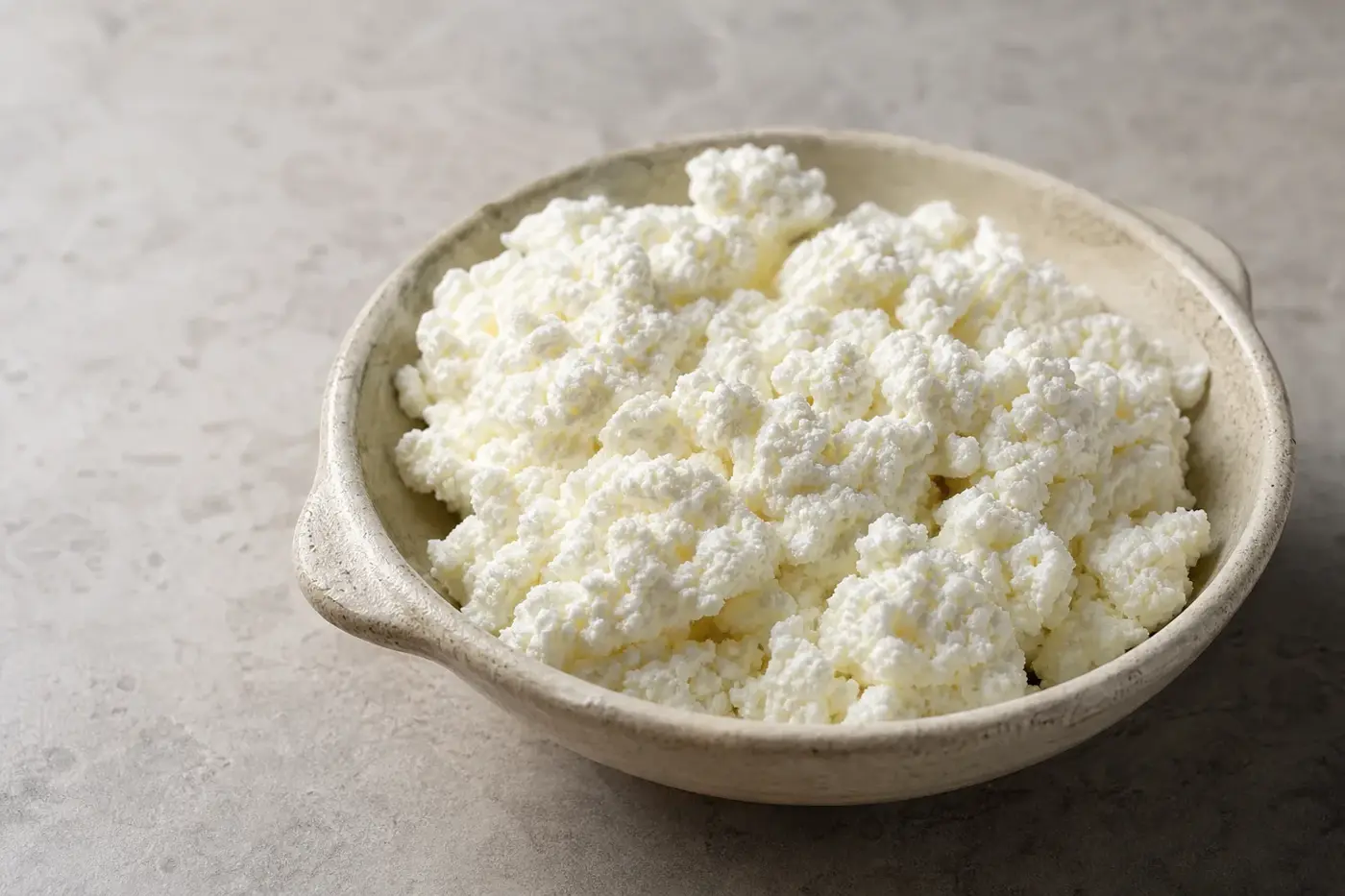
Push your spoon into requesón and the white curds give way: soft, fragile and, in SENA’s description, tender. This fresh, usually rindless whey cheese starts with what another cheese leaves behind. Heat gathers the remaining proteins into curds, moist and spoonable or firmer and more closely gathered, depending on making and draining.[1][2]
In Mexico, you will find those curds tucked into tortillas, baked into sweet dishes and put to work in baking. Whey, it turns out, has no intention of retiring quietly.[5]
| What to know | The essentials |
|---|---|
| Name | Requesón |
| Mexican classification | Consult the applicable Mexican standards. |
| Main raw material | Whey left after cheesemaking.[1][2] |
| Milk species in Mexico's whey cheese definition | Cow, goat or sheep.[1] |
| Ripening | Fresh, with no maturation stage.[1][2] |
| Appearance | White, soft curds; usually rindless.[2] |
| Closest practical substitute | Plain ricotta, chosen for matching moisture and texture.[1][2] |
Whey gets another turn
Requesón begins where another cheese leaves off. During cheesemaking, whey separates from the curds after much of the milk’s casein, its principal cheesemaking protein, has gathered into those first curds. Other proteins remain in the liquid, ready to be recovered through heating.[1][2]
That distinction matters when you choose your cheese. Setting milk into curds and recovering curds from whey are different processes. Both may give you something fresh and white, but they take different routes to your spoon.[1][2]
Colombia’s national vocational training service, SENA, describes requesón made principally from sweet whey, sometimes with added skimmed milk. Heating and, in that method, acidification bring the proteins together; the curds are then collected and drained. Added milk brings casein alongside the proteins already in the whey, changing the starting material rather than simply making more of it.[2]
For Mexico’s current legal definition and permitted ingredients, consult the applicable standards before relying on a legal description of requesón. To follow the earlier stages, explore how cheese is made. For milk treatment terminology, see raw milk, thermised and pasteurised cheese.
Find the curds you love
Think spoon, not cheese knife. SENA describes white curds with a soft, fragile, somewhat buttery texture: a moist mass you can spoon or break apart, rather than a block to slice. Some versions have loose, grainy curds; others are worked into a smoother paste.[2][4]
Creaminess and graininess both belong here, so you have room to find your preference. Before trying the serving ideas below, check whether your requesón is salted.
A 2019 study in Sonora compared requesón from different cheesemaking streams with commercial examples. Moisture and fat varied substantially between samples, helping to explain why one texture cannot tell the whole story. Those measurements describe the products studied, not a national recipe.[4]
Follow the whey to Chihuahua
In Hormigueros, Urique, whey is heated and stirred, then strained to collect the requesón gathering above the liquid. You can read this account in a Mexican education ministry collection of Rarámuri writing from Chihuahua. It preserves a community’s practical knowledge of using whey, rather than offering a single origin story for every requesón.[3]
The details change as you travel. SENA’s Colombian account describes the finished cheese packed into bags or parchment paper. It is a small, practical glimpse of the journey from making to table.[2]
The name travels beyond Mexico, too. Spain’s agriculture ministry discussed requesón and cheesemaking whey in a July 2026 consultation on updating food quality rules. Alongside the Colombian training record, this places requesón in a wider Spanish-speaking context, where local ingredients, draining and packing practices deserve attention on their own terms.[2][9]
Know your requesón from your ricotta
Fresh and white may be a family resemblance, but it does not make two cheeses interchangeable. Requesón and Mexican queso fresco begin with different materials: NOM-243 lists fresco among fresh cheeses and requesón among whey cheeses. Ask what your dish needs: curds recovered from whey, or a fresh milk cheese that crumbles into more defined pieces.[1]
Ricotta is the closest comparison by method. The Mexican standard puts it in the whey cheese group too, making plain ricotta a useful starting point when you need a substitute. Before either goes into your filling, compare moisture, curd size and salt in the actual products.[1][2]
Brazilian requeijão needs a closer look before you reach for it. Consult the product description and the applicable current Brazilian standard before treating it as a substitute for Mexican requesón.
Bring on the tortillas, cakes and honey
Requesón is comfortable in a savoury filling or something sweet. The Mexican culinary dictionary published by Larousse records it in gorditas, quesadillas, tlacoyos and empanadas, as well as cakes, breads, biscuits and other desserts. It also records the simple pleasure of eating it with honey or jam.[5]
For an easy savoury serving, fold chopped herbs through the curds, then spoon them into a tortilla or serve alongside vegetables. In a quesadilla, cooked vegetables and requesón both contribute liquid. Choose a texture that gives you the filling you want: loose and spoonable, or more firmly held together.
For something sweet, try plain requesón with sliced fruit and honey. Taste the fruit before adding sweetness; it gets a say, too.
Larousse also records requesón batido, a traditional Guanajuato sweet made with sugar syrup and honey, then beaten until pale and firm. This is a distinct preparation. Fresh curds with honey spooned over them are a different pleasure.[5]
Choose a stand-in that suits supper
Match your replacement to its task, not just its colour. For cooking, the production differences above make plain ricotta the starting point. Adjust its consistency to suit the requesón your recipe expects.[1][2][6]
| What you’re making | Where to start | How to help it along |
|---|---|---|
| Soft tortilla filling | Plain ricotta | Choose moist but spoonable ricotta; mix the filling before adding liquid. |
| Pastry or empanada filling | Firmer ricotta | If liquid separates, drain in the fridge; assess the whole filling before enclosing it. |
| Fruit, honey or a sweet dessert | Plain, unsalted ricotta | Match smoothness to the dish; check ingredients for added salt. |
| Crumbled topping | Queso fresco, if you want defined crumbs | Expect a different structure; check salt before seasoning. |
| A recipe specifying Mexican requesón | Look closely at Brazilian requeijão | Fused curd production makes it a different starting material.[6] |
Keep any substitute refrigerated while draining, and follow its storage instructions. Judge how much liquid to remove by the filling you are making. One fixed draining time will not suit every tub.[7]
Shop for your dish, then keep it cold
Start with the ingredient list, storage directions and date marking. Check whether the requesón contains whey alone or includes milk or cream, and whether it is salted. If you buy unpackaged cheese, ask the seller for the same information, especially refrigeration and use by instructions; reading a cheese label explains what to look for.
Buy an amount that suits your planned dishes and the producer’s keeping instructions. Wetter requesón can be handy for spooning, while a drier cheese may suit an enclosed filling. At the cheesemonger’s counter, describe your dish and ask whether the cheese is loose, spreadable or firm enough to hold its shape.
At home, the Food Standards Agency’s guidance for England, Wales and Northern Ireland advises a fridge between 0 and 5 °C. Keep dairy products refrigerated and follow packaging instructions. Take the portion you need, return the cheese promptly, and keep chilled food out for the shortest possible time during preparation.[7]
Follow the producer’s use by and after opening instructions for that particular product. For the wider routine, turn to the home cheese storage guide.[7]
This page summarises published guidance from the official sources it cites. It is not medical advice. Guidance differs between countries and changes over time, so check the current source for where you live, and ask your doctor, midwife, pharmacist or dietitian about your own circumstances.
Nutrition and lactose: get to know your cheese
The Sonora study offers a useful reminder of how much composition can vary. Of its two commercial examples, the branded sample contained 4.2 g fat and 12.3 g protein per 100 g. The regional artisanal sample contained 7.3 g fat and 11.5 g protein per 100 g.[4]
These were individual samples analysed in duplicate, not a survey of everything sold as requesón. For the cheese you buy, use its own nutrition declaration rather than borrowing another product’s numbers.[4]
For lactose, you need information about the specific requesón product; this page provides no lactose values for individual products. The Sonora paper reports carbohydrate by difference, not a direct lactose measurement, so those carbohydrate figures cannot stand in for lactose values. Consult the product information and see lactose in cheese for the broader explanation.[4]
Questions people ask
What is requesón made from?
Requesón is made principally from whey left after cheesemaking. Heating brings the remaining proteins together into soft curds, which are collected and drained.
How is requesón different from queso fresco?
Requesón starts with whey, while Mexican queso fresco is a fresh milk cheese. Queso fresco can crumble into more defined pieces.
What can I use instead of requesón?
Plain ricotta is the closest practical substitute. Compare the moisture, curd size and salt in the products before using them in a filling.
Does requesón contain lactose?
Lactose content has not been verified for specific requesón products. Check the product information and the page’s guide to lactose in cheese.
How should I store requesón?
The Food Standards Agency advises keeping dairy products refrigerated and following packaging instructions. Its guidance for England, Wales and Northern Ireland recommends a fridge between 0 and 5 °C.
Sources
-
Secretaría de Salud, Mexico. NOM-243-SSA1-2010, Productos y servicios. Leche, fórmula láctea, producto lácteo combinado y derivados lácteos. Disposiciones y especificaciones sanitarias. Métodos de prueba, 2010. Sections 3.50, 3.54 and 4.4.1.
Read at sidof.segob.gob.mx -
Servicio Nacional de Aprendizaje, Colombia. Derivados lácteos, Bloque modular 6, Procesamiento de quesos cocidos, Módulo 5: Preparación de requesón, September 1987. Introduction, preparation, draining, packing and quality assessment sections. Historical technical source used for process explanation, not as a current home cheesemaking method.
Read at babel.banrepcultural.org -
Secretaría de Educación Pública, Mexico. Alabe raíchali wichi japi rika ralamu: Mensajes buenos caen como rayo, Rarámuri school collection. “Cómo hacer el requesón”, p. 42. Publication year not verified.
Read at dgeiib.basica.sep.gob.mx -
Nova Scientia. “Caracterización del lactosuero y requesón proveniente del proceso de elaboración de queso cocido (asadero) región Sonora”, 2019. Table 2 and its methodological notes.
Read at scielo.org.mx -
Larousse Cocina. Diccionario enciclopédico de la Gastronomía Mexicana, “Requesón”, live online edition, publication year not stated.
Read at laroussecocina.mx -
Ministério da Agricultura e do Abastecimento, Brazil. Portaria No. 359, de 04 de setembro de 1997: Regulamento técnico para fixação de identidade e qualidade de requeijão ou requesón, 1997. Sections 2.1, 2.2 and 4.1. Official document copy hosted by Chile's agricultural authority.
Read at www2.sag.gob.cl -
Food Standards Agency. How to chill, freeze and defrost food safely, published 18 December 2017, live guidance retrieved November 2026. Applies to England, Northern Ireland and Wales.
Read at gov.uk -
Food Standards Agency. Why is cleaning important, live publication landing page retrieved November 2026. Publication year and underlying guidance version not verified.
Read at gov.uk -
Ministerio de Agricultura, Pesca y Alimentación, Spain. El Ministerio de Agricultura, Pesca y Alimentación abre la consulta pública para avanzar en la actualización de las normas de calidad alimentaria, 3 July 2026. Consultation announcement, not an operative replacement standard.
Read at mapa.gob.es -
Experiencias para la restauración, digital volume, edition and year not verified. Retrieved indexed passage describing Mexican requesón sold in fresh maize leaves; full bibliographic and primary ethnographic verification outstanding.
Read at simehbucket.s3.amazonaws.com
This desk-researched article brings together official dairy definitions, institutional accounts, a small compositional study and documented culinary uses, with substitution advice identified as editorial guidance.
Last checked: November 2026
Last checked November 2026.
The editors suggest you read next