Rigotte de Condrieu
Cut into this little goat’s cheese and follow your nose: hazelnut, woodland and whey are the aromas its specification promises.
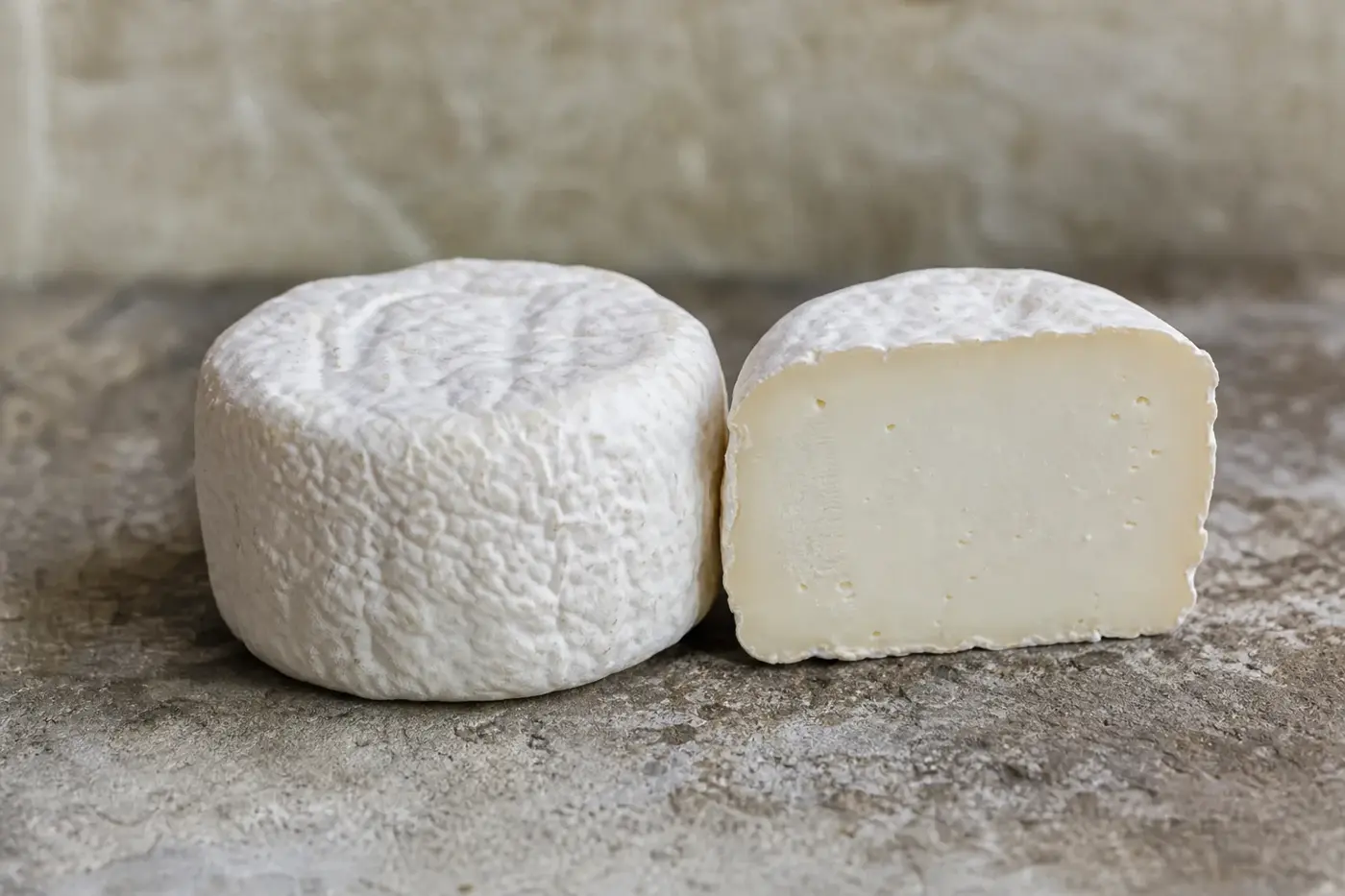
Cut into this little goat’s cheese and follow your nose: hazelnut, woodland and whey are the aromas its specification promises. You’re tasting a small corner of the Pilat hills south-west of Lyon, where raw whole milk becomes a delicate lactic curd, then a soft round with a naturally moulded rind. Its EU protected designation of origin ties both making and maturation to the landscape around Condrieu.[1,2]
| A quick look | What to know |
|---|---|
| Familiar and registered name | Rigotte de Condrieu.[1,2] |
| Registration authority and identifier | European Commission; registering act: Commission Implementing Regulation (EU) No 1160/2013. Register record ID: Unconfirmed.[2] |
| Protection by jurisdiction | EU, Great Britain, Northern Ireland, Switzerland and the US: current status unconfirmed. |
| Where it must be made | Specified communes and parts of communes in the Loire and Rhône departments, around the Pilat massif.[1] |
| Milk and coagulant | Raw, whole goat’s milk without standardisation; kid rennet, with other animal rennets permitted under the specification’s supply-related authorisation procedure.[1] |
| Shape and size | Circular palet, 4.2 to 5 cm across and 1.9 to 2.4 cm high after minimum ripening; at least 30 g at prolonged ripening.[1] |
| Minimum ripening | Eight days from the day of unmoulding.[1] |
| What’s in the cheese | At least 40% fat in dry matter and at least 40% dry matter in the whole cheese.[1] |
Follow the hillside cheeses into Condrieu
Small goat’s cheeses were already travelling from these hills to neighbouring towns and Lyon in 1865. An account cited in the specification calls them rigottes. Condrieu helped them find a wider market, drawing hillside farming into the town’s trading life.[1]
You’re on the eastern edge of the Massif Central here, where the Pilat rises west of the Rhône valley. The legally defined area crosses the Loire and Rhône departments and includes Condrieu itself. Milk production, cheesemaking and ripening must all happen within that area.[1]
The name keeps that connection between hills and market town alive. It doesn’t mean every cheese comes from one village. When you reach the counter, look for the full registered name, Rigotte de Condrieu, rather than “rigotte” alone.[1]
Want to untangle a protected origin from a cheese style? See protected names explained.
A little round with a changing rind
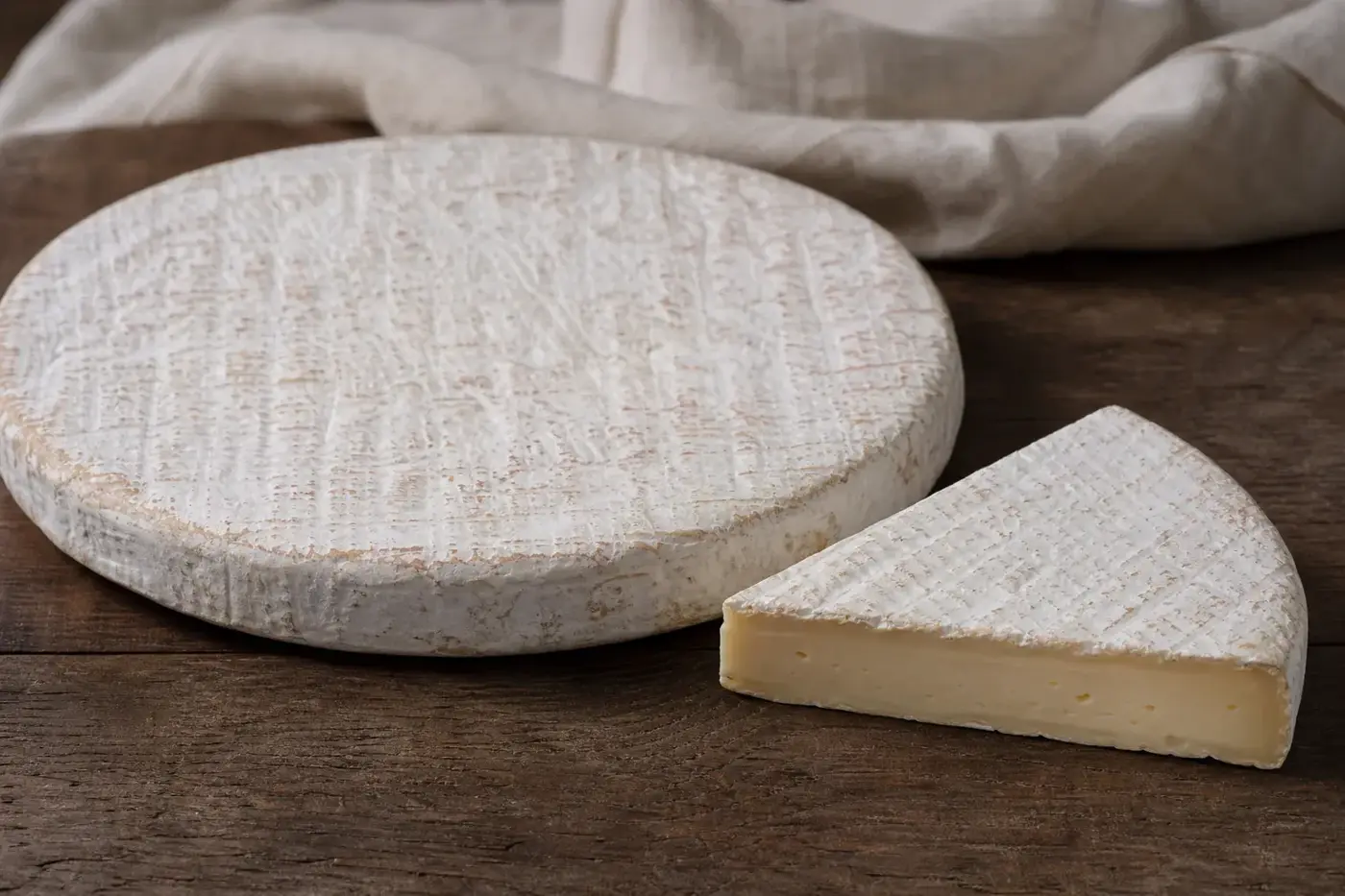
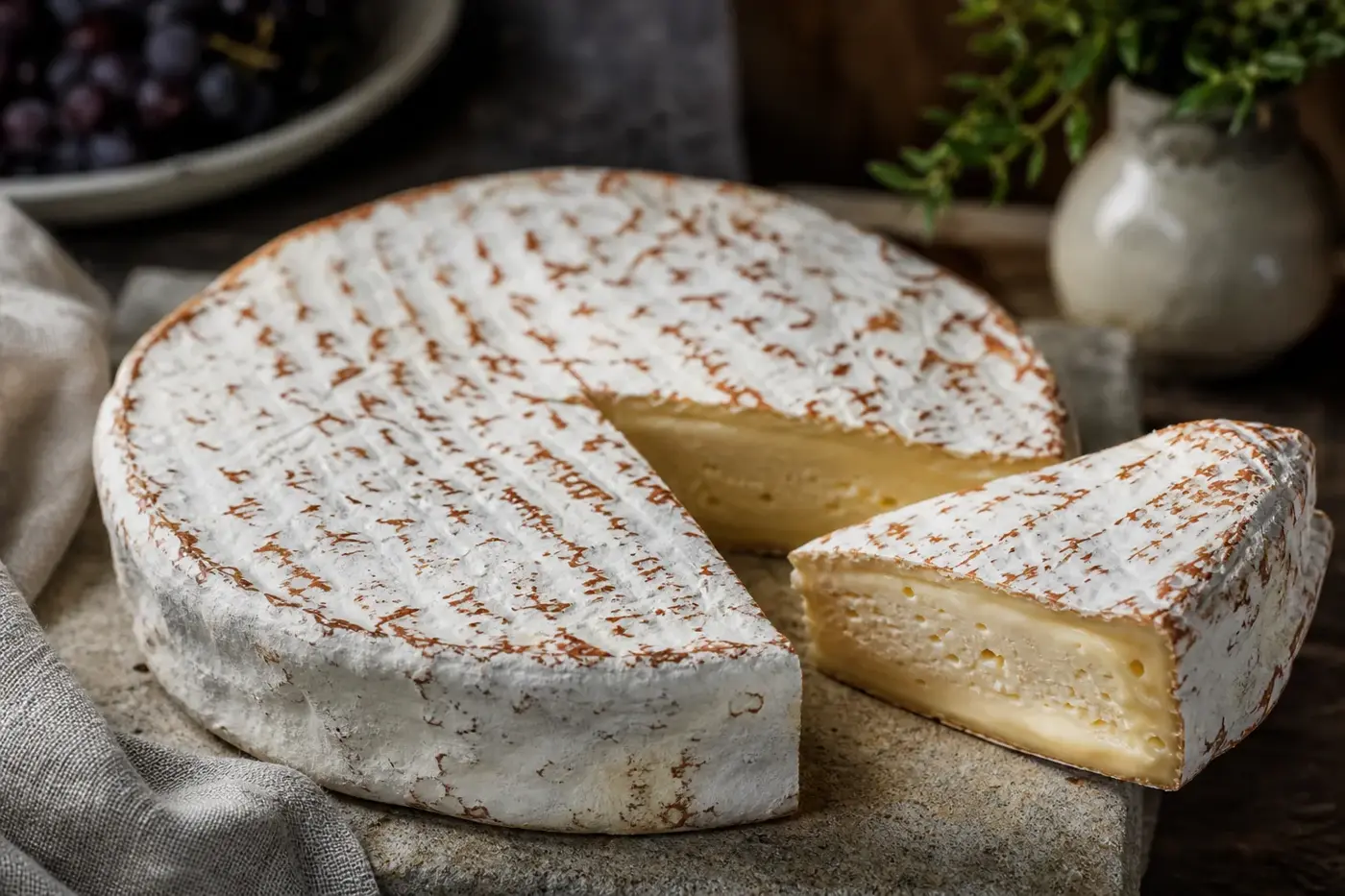
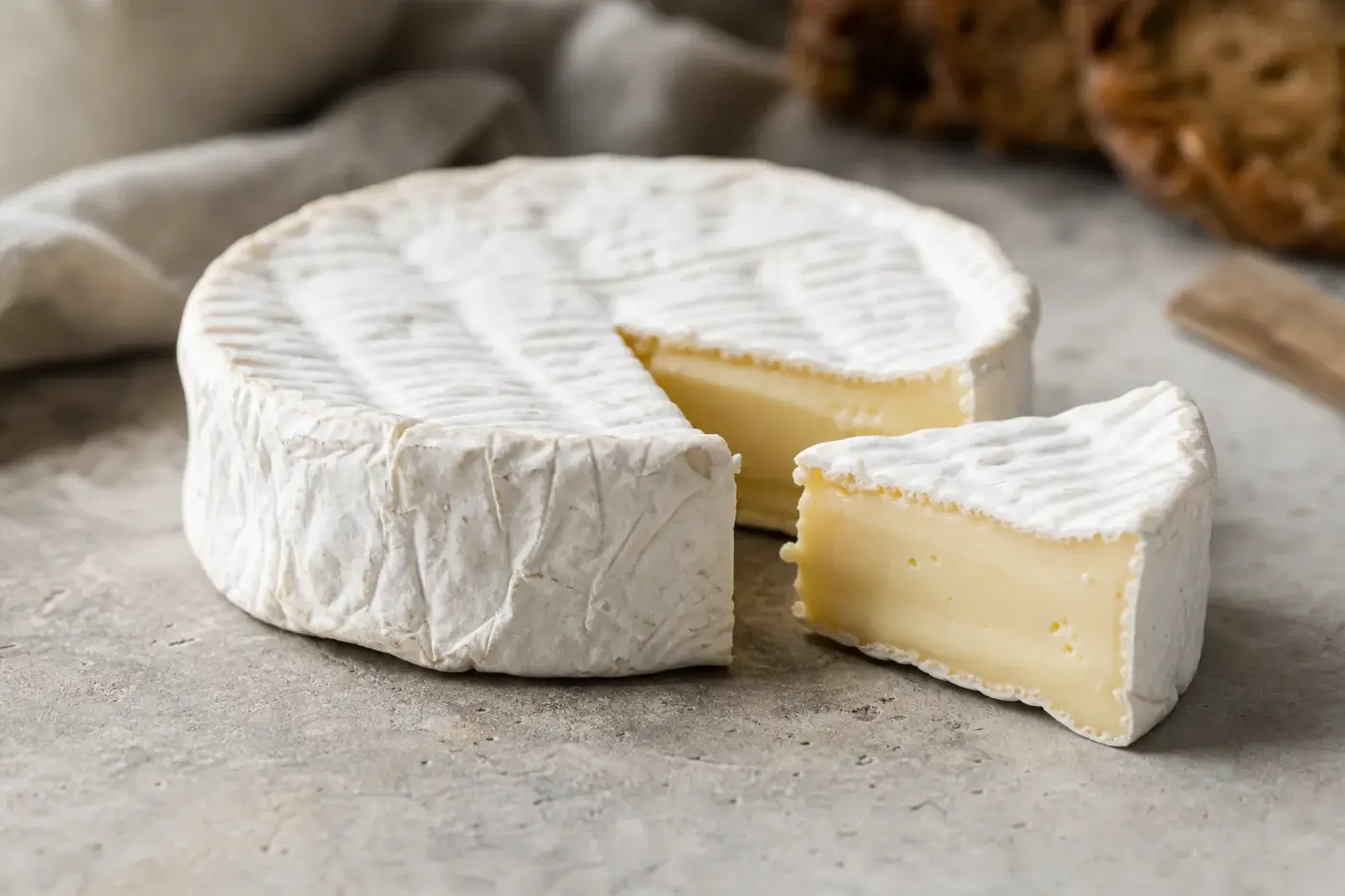
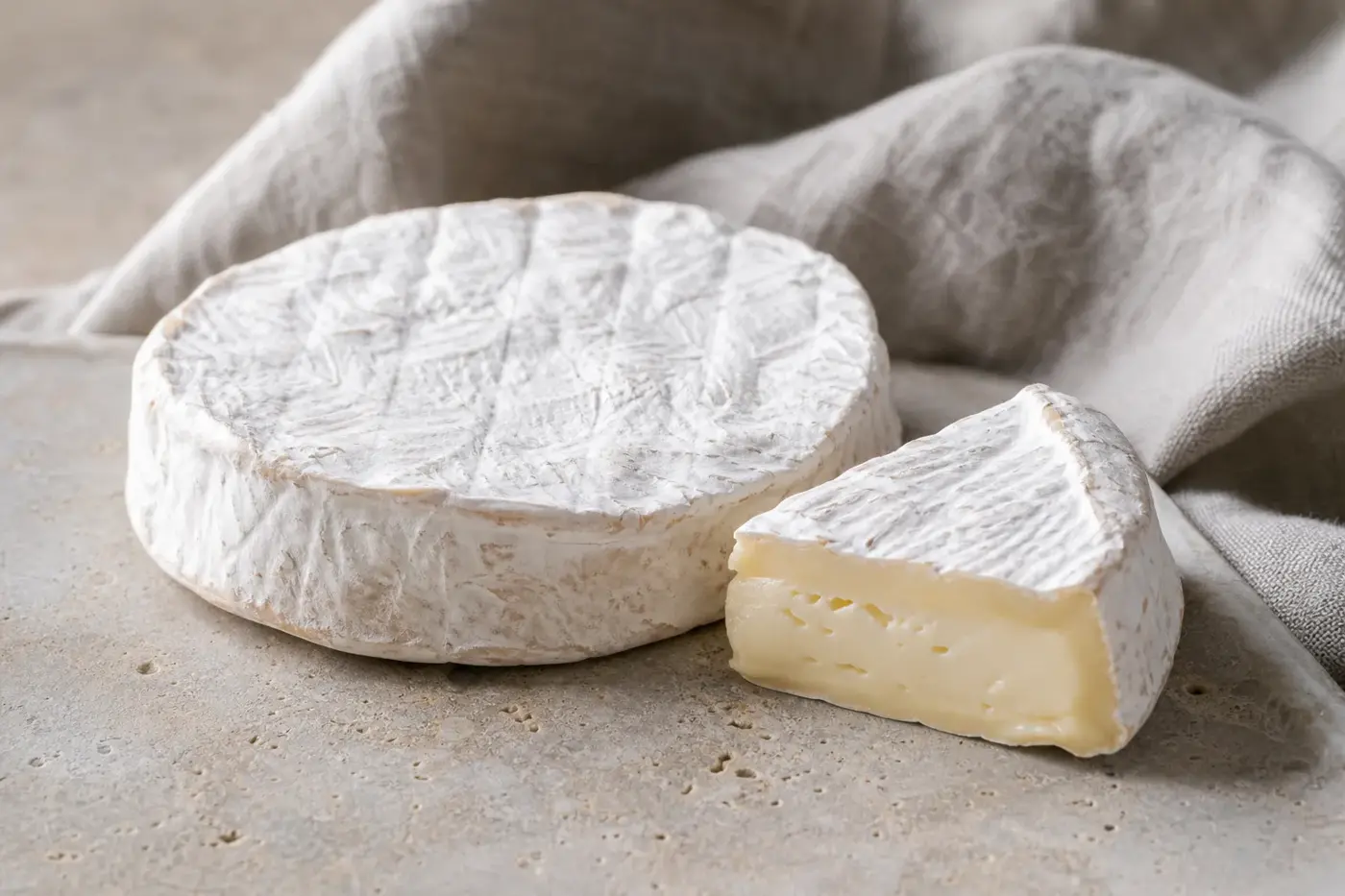
Picture a thick, miniature disc. Cut through it and you’ll find the white to ivory paste described in the specification: firm and smooth, though this belongs to the family of soft, unpressed cheeses. Small cheese, plenty of character.[1]
The surface changes as it matures. The producers’ syndicate describes a white bloom on younger cheeses, with yellow or blue colouring developing with age. That is the rind’s natural development, and its appearance varies from cheese to cheese.[4]
Ask your seller what the rind should look like at the age you’re buying. A blue patch on a cheese sold with a developed blue rind is one thing. Unexpected growth during home storage is another.[4,9]
Gentle hands make the difference
Raw whole goat’s milk is essential here. The specification forbids standardisation, meaning its composition isn’t adjusted to a fixed fat level; pasteurised and thermised milk don’t meet the requirements either. Rennet comes from kids’ stomachs, with other animal rennets allowed only through the specification’s supply-related authorisation procedure.[1]
Most of the work is lactic: bacterial acidification helps milk become curd, the gel that will become cheese. A small addition of rennet helps it coagulate. The specification favours whey from a previous local goat’s milk coagulation or a local starter culture, with defined exceptions for commercial cultures.[1]
Once the curd has formed, gentle handling protects its structure. Draining, drying and maturation then manage moisture loss and develop the surface.
| Stage | What’s happening to your cheese |
|---|---|
| Coagulation | Milk forms a firm, homogeneous lactic curd with a small addition of rennet.[1,5] |
| Moulding | The curd goes gently into perforated moulds, keeping its structure intact.[1,5] |
| Draining | Whey, the liquid separated from the curd, drains away; the cheeses are turned.[5] |
| Salting | Dry salt goes onto both faces.[1,5] |
| Ripening | Initial draining, drying and humid maturation establish the surface and develop the cheese.[1,5] |
The ripening clock starts at unmoulding. Those minimum eight days don’t begin at milking, or when rennet meets milk.[1] For the bigger picture, see how cheese is made.
Choose your age: fresh milk or woodland depth?
Age gives this small cheese plenty to say. The syndicate describes a young Rigotte de Condrieu, around eight to ten days into ripening, as mild, fresh-tasting and lactic. Leave it longer and mushroom, woodland and hazelnut notes emerge; at three weeks to a month, its account describes a drier cheese with a more pronounced taste.[6]
The specification gives you some sensory landmarks: hazelnut, woodland undergrowth and whey aromas, with moderate saltiness.[1] Keep those in mind when you’re choosing at the counter, rather than expecting every age to taste the same.
For something gentler and moister, ask for a younger cheese. If you prefer firmer texture and stronger flavour, choose a more developed one.[5,6] Better still, try two ages from the same maker, so maturation becomes the focus rather than a change of producer. A perfectly respectable reason to buy two.
Meet the goats and their hillside menu
The herds include Alpine and Saanen goats, goats from the Massif Central population, and crosses between them. Their food helps connect the cheese to its surroundings. Under the standard specification, feed from outside the area may account for no more than 20% of the animals’ consumed dry matter.[1]
Fresh grass comes through grazing or arrives as freshly cut forage. The specification requires at least 120 days a year of grazing or green feeding, plus further requirements for grass as a share of the ration. Goats spending fewer than 180 days at pasture or on browsing land must also have an outdoor exercise area.[1]
That leaves room for different ways of farming. You get rules that tie herds to local feed, without requiring every holding to follow an identical grazing routine.
The cheesemaking calendar has its variations, too. The syndicate explains that some farms stagger kidding to help keep production going across the year. Its account links changes in flavour to both the seasons and ripening.[7]
Take three questions to the cheese counter
Start with the full name and the EU PDO symbol. The specification puts them together on the label, while allowing a particular display-and-label arrangement for direct sales by the producer or someone under their responsibility.[1]
Then ask: who made it, how far has it ripened, and what should its rind look like now? As the syndicate’s descriptions show, choosing only “the whitest one” means missing some of the pleasure. An older cheese may have a more developed surface quite deliberately.[4,6]
Check the packaging, date and storage instructions. Tell the cheesemonger when you plan to eat it and whether you’d prefer a younger or drier texture, especially on your first purchase. Buy it at the maturity you want, rather than attempting professional ripening conditions at home.
For the other details worth a look, see reading a cheese label.
Keep it cool, and know when to let it go
Refrigerate your Rigotte de Condrieu promptly and follow the labelled storage and opening instructions. For households in England, Wales and Northern Ireland, the Food Standards Agency recommends a fridge at 5 °C (41 °F) or below. US FDA guidance recommends 4.4 °C (40 °F) or below.[8,9]
Keep it in its original food wrapping where suitable, protected from contact with other foods. The syndicate recommends keeping the original packaging; the FDA advises covering refrigerated foods and separating ready-to-eat foods from raw foods.[10,9] If your particular cheese comes with a shorter instruction, that takes precedence.
At serving time, put out only what you expect to eat shortly and let it lose its refrigerator chill. Apply the US FDA’s limit for foods needing refrigeration: no more than two hours at room temperature. That drops to one hour when the air temperature exceeds about 32 °C (90 °F).[9]
A developing rind isn’t the same as a deteriorating cheese. If the appearance or smell becomes suspicious, discard it rather than tasting it to investigate. As FDA guidance stresses, harmful contamination can also be present without an unusual smell or appearance.[9] See mould on cheese for more detail.
Give it bread, apple and your attention
Try a small piece on its own first. Give the whey, woodland and hazelnut characteristics described in the specification a moment of your attention before stronger accompaniments join in.[1]
Plain bread and thin apple slices make a useful first serving. The producers’ syndicate specifically suggests apple and quince jelly; go lightly with the jelly so you can still taste the cheese clearly.[10] Comparing ages? Put a younger and a more mature cheese beside the same bread.
If you’re an adult of legal drinking age and choose wine, an optional small glass of Condrieu white wine makes a regional pairing. Dry Sauvignon blanc is another suggestion, though neither is prescribed. Serve still or sparkling water alongside, and offer apple slices and bread as an equally complete alcohol-free accompaniment.
For more on matching intensity and texture, see cheese and wine pairing.
Small goat’s cheeses, distinct personalities
Two little rounds may look like natural companions, but size tells you little about how they’ll compare. For Rigotte de Condrieu, start with the essentials: required raw whole milk, a predominantly lactic process, the small palet shape and at least eight days of ripening counted from unmoulding.[1]
Ask the seller for those same details about the other cheese, then choose examples at similar maturity. You’ll learn more than you would by assuming two small rounds should taste alike. Rigotte de Condrieu’s own journey from younger to drier cheese shows just how much maturation can change the experience within a single registered name.[6]
General information only, not medical advice: follow the official guidance where you live.
Questions people ask
Where is Rigotte de Condrieu made?
It is made in a defined area around the Pilat massif, including specified communes and parts of communes in the Loire and Rhône departments. Milk production, cheesemaking and ripening must all take place within that area.
What milk and rennet are used in Rigotte de Condrieu?
The cheese is made from raw, whole goat’s milk without standardisation. It uses kid rennet, although other animal rennets are permitted under a supply related authorisation procedure.
What does Rigotte de Condrieu taste like?
At around eight to ten days of ripening, it is described as mild, fresh tasting and lactic. Further maturation brings mushroom, woodland and hazelnut notes, and at three weeks to a month the cheese is drier with a more pronounced taste.
Can Rigotte de Condrieu have a blue rind?
Yes. The producers’ syndicate describes younger cheeses with a white bloom and more mature ones with yellow or blue colouring. Ask the seller what the rind should look like at the stage you are buying.
How should Rigotte de Condrieu be stored?
Refrigerate it promptly and follow the storage and opening instructions on its label. For households in England, Wales and Northern Ireland, the Food Standards Agency recommends a fridge at 5 °C or below; see its guidance.
Sources
- French Ministry of Agriculture and INAO, Cahier des charges de l’appellation d’origine « Rigotte de Condrieu », homologated by the order of 21 March 2022, published 29 March 2022, Bulletin officiel No 2022-16. Ministry document retrieved from the producers’ syndicate website.
- European Commission, Commission Implementing Regulation (EU) No 1160/2013 of 7 November 2013 entering a name in the register of protected designations of origin and protected geographical indications [Rigotte de Condrieu (PDO)], 2013, Articles 1 and 2 and Annex.
- Department for Environment, Food & Rural Affairs, Rigotte de Condrieu, protected food name register entry, published 4 January 2021, retrieved November 2026.
- Syndicat de Défense de l’Appellation Rigotte de Condrieu, Les spécificités de la Rigotte de Condrieu, undated, retrieved November 2026. An industry source describing its members’ cheese.
- Syndicat de Défense de l’Appellation Rigotte de Condrieu, La fabrication, undated, retrieved November 2026.
- Syndicat de Défense de l’Appellation Rigotte de Condrieu, Comment affiner la Rigotte de Condrieu, 29 June 2020.
- Syndicat de Défense de l’Appellation Rigotte de Condrieu, Manger de la Rigotte toute l’année, 29 June 2020.
- Food Standards Agency, How to chill, freeze and defrost food safely, published 18 December 2017, live guidance retrieved November 2026. Applies to England, Wales and Northern Ireland.
- US Food and Drug Administration, Are You Storing Food Safely?, live edition retrieved November 2026, “Storage Basics”.
- Syndicat de Défense de l’Appellation Rigotte de Condrieu, Comment déguster la Rigotte de Condrieu, 29 June 2020.
Researched through desk comparison of the registering legislation, the published specification, the Great Britain register, official household food guidance and attributed producers’ syndicate accounts.
Last checked: November 2026
Last checked November 2026.
The editors suggest you read next