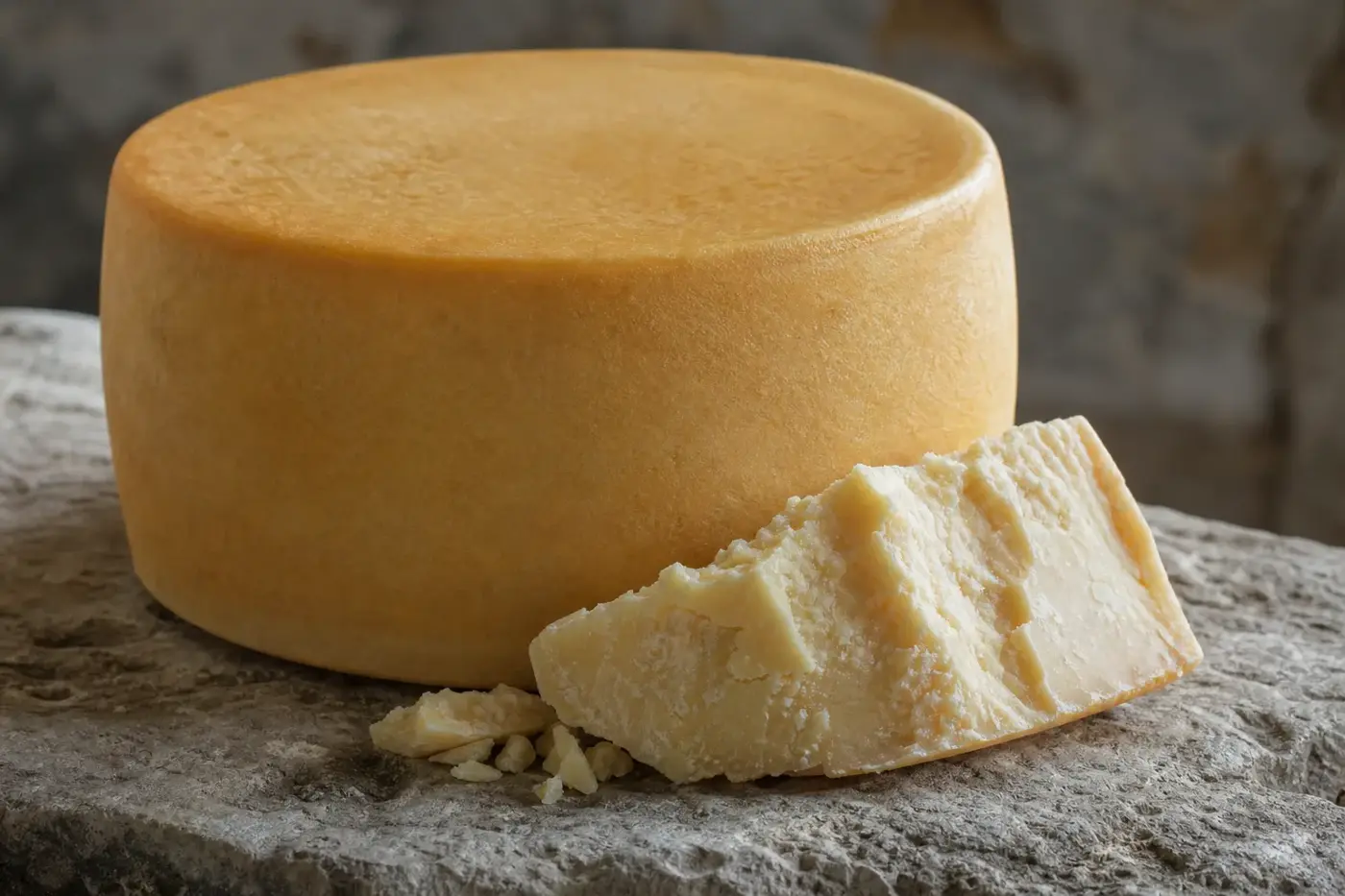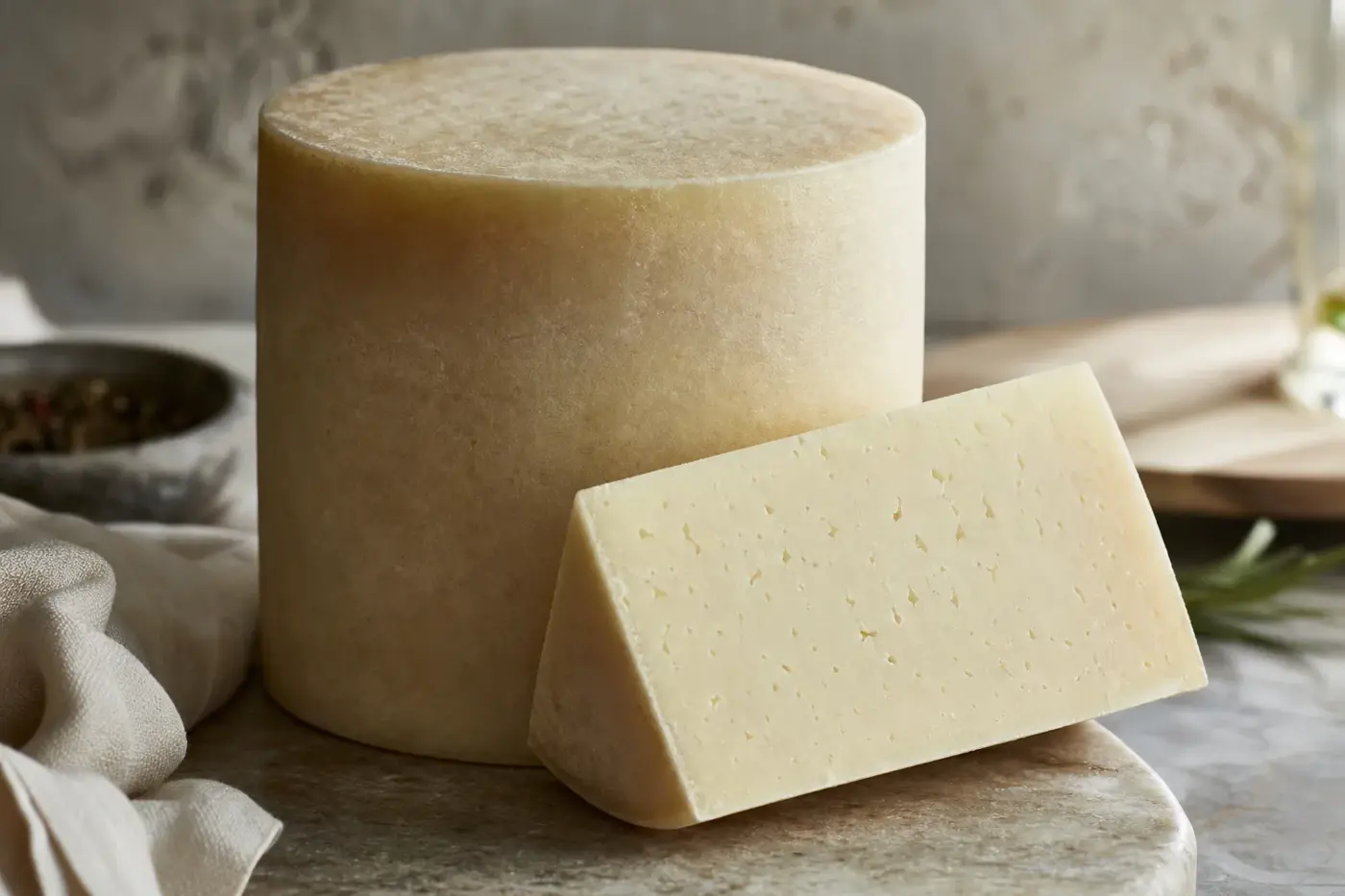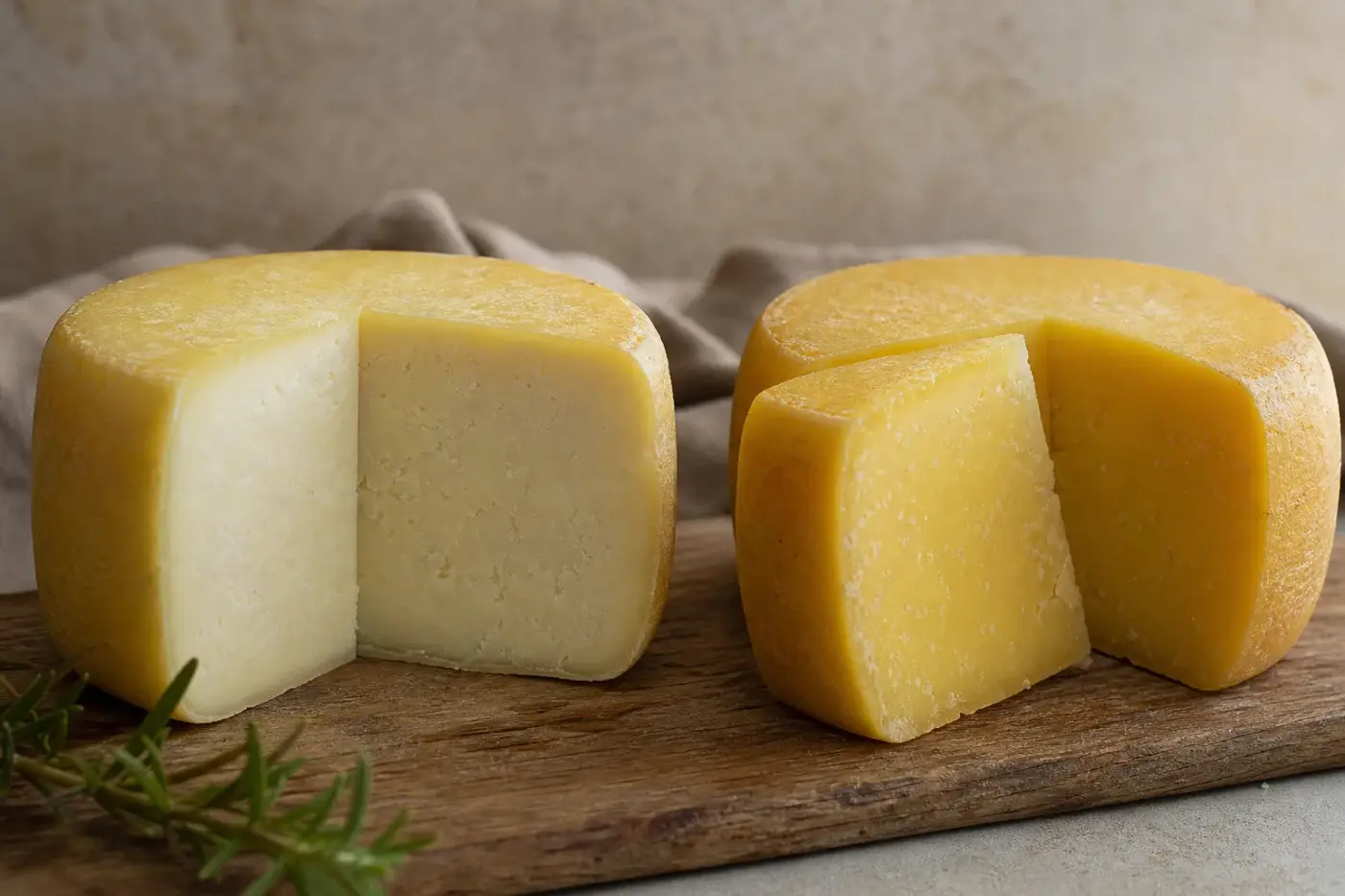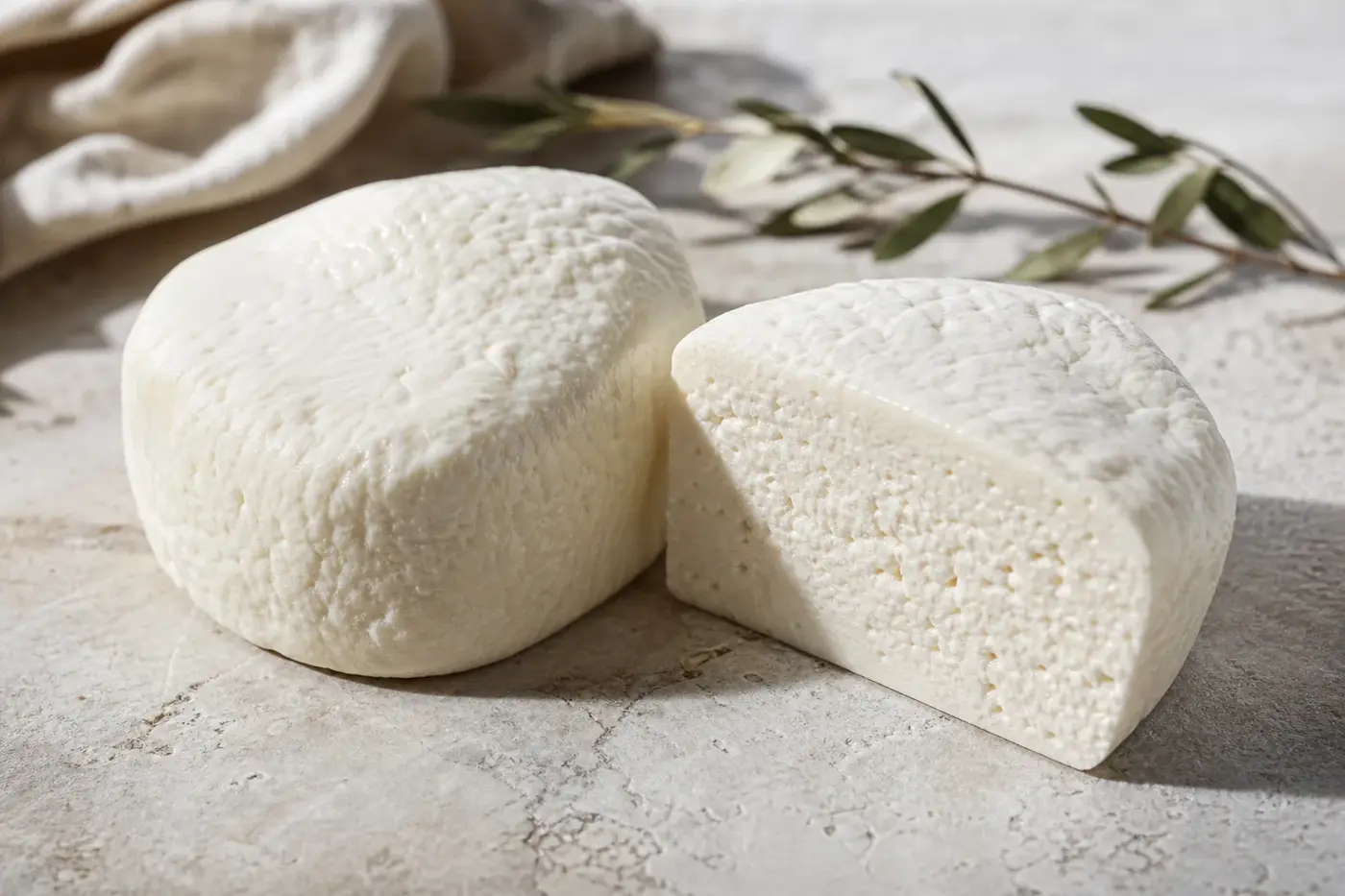
A velvety surface gives way to a white centre. The aroma is milky, the invitation quiet: fresh Robiola d'Alba doesn't need to make a fuss. Give it time to ripen and a wrinkled, reddish exterior appears, as Regione Piemonte describes. There's quite a transformation tucked beneath that modest name. [1]
With Robiola, you're exploring a family of small, soft Italian cheeses with a strong Piedmontese identity. Some arrive fresh and rindless; others develop a delicate surface and a more pronounced aroma. Milk, method and maturation make the name a starting point, not the whole story. [1,2,3,4]
Begin your journey in Alba and the Langhe
Alba and the Langhe introduce you to Robiola better than any single recipe could. Regione Piemonte describes Robiola d'Alba as a cow's milk cheese sold fresh or ripened. Cora places its three-milk Robiola in the cheesemaking tradition of the Langhe. Even here, there's variety rather than one fixed formula. [1,2]
At the counter, give your cheesemonger a little more than “Robiola”. Add a locality, producer or product name: Robiola d'Alba, perhaps, or a named dairy's Robiola. Otherwise, it's rather like asking a bookseller for “a book”.
That extra detail gives you something specific to discuss, with less mystery around milk and maturity. It also helps you find the cheese you actually want. If the vocabulary feels unfamiliar, start with how to tell cheese styles apart.
Follow the milk towards your favourite flavour
Cow's milk, goat's milk and sheep's milk all have a place in Robiola's story. The blend belongs to the individual recipe, though. Regione Piemonte describes Robiola d'Alba as principally cow's milk, sometimes with small additions of goat's or sheep's milk. [1]
Cora lists cow, goat and sheep for Robiola Tre Latti. Caseificio dell'Alta Langa uses all three species, plus cream, for Rocchetta. These cheeses share a family resemblance, not an identical shopping list. [2,3]
Read the milk blend, then follow the maker's tasting notes. Caseificio dell'Alta Langa describes Rocchetta through butter and sour cream aromas, finishing with a lightly toasted note. Cora's Tre Latti offers sweetness, gentle saltiness, and aromas of butter, cream and dried fruit or nuts. Those descriptions help distinguish the products, while leaving room for batches to vary. [2,3]
Get to know the velvet, bloom and wrinkles
Don't expect every Robiola to wear a little white coat. According to Regione Piemonte, fresh Robiola d'Alba is rindless and velvety, with a white interior, milky aroma and acidity. Ripening brings that wrinkled, reddish exterior. Freshness and surface development are better guides than an expectation of miniature white-rinded cheeses. [1]
The named ripened cheeses have distinct shapes and surfaces, too. Caseificio dell'Alta Langa's Bosina is square, with a thin white bloom and soft interior; its aroma notes include fresh butter, hay and undergrowth. Rocchetta, from the same dairy, is cylindrical beneath a soft, wrinkled rind. You have plenty of clues before your first taste. [3,4]
Choose rindless Robiola when you want the fresh cheese itself to lead. If surface aroma is part of your cheese board pleasure, ask for a ripened example and discuss its condition that day. Neither wins a quality contest. They're different pleasures, which is a good reason to stay curious.
Watch milk become something quite different
The journey from liquid milk to curd helps explain those differences. Caseificio dell'Alta Langa distinguishes lactic coagulation, where slow acidification sets the milk with a small supporting addition of animal rennet, from a method led by rennet. Coagulation means liquid milk setting into curd; rennet is the enzyme preparation that helps it happen. Rocchetta belongs to the dairy's lactic group, Bosina to its rennet-led group. [5]
Next, the cheeses are turned to drain whey, the liquid released from curd. The dairy describes salting and maturation under controlled conditions, with further turning during ripening to encourage an even surface bloom. Its product pages give seven days for Rocchetta and eight to ten days for Bosina. Those ages belong to those products, not to every Robiola. [3,4,5]
When you're choosing, read the method alongside the milk list. Similar blends can lead to different surfaces and textures. Put the age beside the maker's texture description, then ask the useful question: is this one for spreading or cutting?
Roccaverano brings its own rulebook
Ask for Roccaverano and geography becomes part of your choice. This cheese has a defined production territory and its own specification. Commission Implementing Regulation (EU) 2023/335 approved amendments changing the EU registered name from Robiola di Roccaverano to Robiola di Roccaverano/Roccaverano. The act was adopted on 1 February 2023 and published on 15 February 2023. [6]
That full designation matters when you're buying. Robiola Tre Latti identifies a particular producer's recipe; the Roccaverano specification governs a protected designation of origin, or PDO. Use the complete name when asking about origin and production rules. The guide to PDO, PGI and TSG unpicks the difference between a geographical designation and a cheese family name. [2,6]
| Roccaverano detail you may need | Where to look |
|---|---|
| Current legally defined production area | Consult the current specification. |
| Permitted milk, breeds and proportions | Consult the current specification. |
| Minimum maturation and required appearance | Consult the current specification. |
| Current EU registration status | Consult the official register and current specification. |
Take four questions to the cheese counter
Start with the experience you fancy, then turn to the label or your cheesemonger. These four details take you from a broad family name to a cheese you can choose with confidence:
- Which milk, and how was it treated? Read the species list and ask whether the milk is raw or pasteurised. Those are separate questions.
- How mature is this cheese? Ask about its maturation and intended condition. Follow the producer's information, not a supposed standard age for Robiola.
- What should it look like? Choose between fresh and rindless, white-bloomed or wrinkled. Compare its appearance with the named product's description. [1,3,4]
- Can you find it again? Keep the producer's name and original label. Buying unpackaged cheese? Ask for its name and handling instructions too.
Let Robiola have the first mouthful
Before you reach for bread or fruit, taste a little cheese alone. You'll discover whether the interest lies in the fresh cheese, the rind or the contrast between them. Comparing several cheeses? Keep the accompaniments the same, and note texture, acidity and aroma separately.
For Bosina, Caseificio dell'Alta Langa suggests country bread, pears, Golden apples and white grapes. Arneis and Alta Langa DOCG feature among its wine choices. For Rocchetta, the dairy proposes country bread or wholemeal focaccia, figs and grapes, with wines including Gavi di Gavi. These are the maker's pairings. [3,4]
You can begin with plain bread and one fruit. Leave honey and preserves for a second taste: they can wait their turn. Choose water for a straightforward accompaniment without alcohol. The cheese and wine pairing guide explores wider choices.
Wine suggestions are for adults of legal drinking age who choose to drink, in small servings. People who are pregnant, driving, taking medicines that interact with alcohol or recovering from alcohol dependence should not drink. See the NHS pregnancy guidance and consult official advice relevant to your circumstances.
For both Bosina and Rocchetta, the maker recommends taking the cheese out thirty minutes before serving. Balance that flavour advice with the Food Standards Agency's guidance for England, Wales and Northern Ireland: chilled food should stay out for the shortest possible time, with a maximum of four hours during preparation. Put out only as much as you expect to eat. [3,4,7]
Make room in the fridge, and save the label
Your Robiola belongs in the fridge. For home storage in England, Wales and Northern Ireland, the Food Standards Agency advises a temperature between 0 and 5 °C (32 to 41 °F) and says dairy products should be refrigerated. Follow the packaging instructions, including directions after opening. If you move the cheese into another container, keep its original label alongside it. [7,8]
The date wording matters. Under UK official guidance, a use by date concerns safety; a best before date concerns quality. Eat refrigerated Robiola by its use by date and follow any shorter instruction for after opening. If that date has passed without the cheese being appropriately cooked or frozen beforehand, throw it away. [8]
A dairy's controlled maturation is not the same as keeping bought cheese at home. Follow your particular cheese's storage instructions rather than treating the fridge as a ripening room. For practical help, turn to how to store cheese at home.
This page summarises published guidance from the official sources it cites. It is not medical advice. Guidance differs between countries and changes over time, so check the current source for where you live, and ask your doctor, midwife, pharmacist or dietitian about your own circumstances.
Choosing Robiola during pregnancy: milk and rind matter
When you're choosing Robiola during pregnancy, look at both milk treatment and rind. In its November 2026 guidance, the NHS includes pasteurised soft cheeses such as cream cheese and goat's cheese without a white rind among permitted choices. Mould ripened soft cheeses with a white coating should not be eaten unless cooked until steaming hot, whether the milk is pasteurised or unpasteurised. Consult the NHS guidance for advice on other dairy products. [9]
The NHS also states that cheese cooked until steaming hot can be eaten during pregnancy. You'll find the complete advice in its current foods to avoid in pregnancy guidance; ask your midwife or doctor about your circumstances. This guidance is specific to the UK. [9]
Buying for someone following these precautions? Ask the seller for the actual product information. The family name cannot settle the choice, and a fresh appearance tells you nothing about how the milk was treated. For help with that part of the label, see raw milk, thermised and pasteurised cheese.
Questions people ask
What milk is Robiola made from?
Robiola recipes can use cow's, goat's or sheep's milk. Robiola d'Alba is principally made with cow's milk, while Cora's Robiola Tre Latti uses all three.
Does Robiola have a rind?
It depends on the cheese and its maturity. Fresh Robiola d'Alba is rindless, while Bosina has a thin white bloom and Rocchetta has a soft, wrinkled rind.
Is Roccaverano a protected cheese?
Roccaverano has a protected designation of origin with its own specification. The page says the current EU registration status and details of the current specification have not been verified.
Can you eat Robiola during pregnancy?
The NHS says mould ripened soft cheeses with a white coating should not be eaten unless cooked until steaming hot, whether made with pasteurised or unpasteurised milk. It includes pasteurised soft cheeses without a white rind among permitted choices. See the NHS foods to avoid in pregnancy guidance for its full advice.
How should Robiola be stored?
The Food Standards Agency advises keeping dairy products refrigerated and a fridge temperature between 0 and 5 °C in England, Wales and Northern Ireland. Follow the packaging instructions, including any directions for after opening.
Sources
-
Regione Piemonte, PiemonteIS. Robiola d'Alba cheese. Undated regional product account, accessed November 2026. Sections describing milk, fresh and ripened appearance, aroma and production. Source.
-
Cora Formaggi. Catalogo Cora 2024. 2024 edition, entry headed “Robiola Tre Latti al latte vaccino, caprino e ovino”. Producer source for its own product and tasting description. Catalogue.
-
Caseificio dell'Alta Langa. Rocchetta. Undated product page, accessed November 2026. Producer source for ingredients, seven-day maturation, rind, tasting notes, serving suggestion and pairings. Product account.
-
Caseificio dell'Alta Langa. Bosina. Undated product page, accessed November 2026. Producer source for shape, rind, maturation, tasting notes, serving suggestion and pairings. The milk information is internally inconsistent, as recorded below. Product account.
-
Caseificio dell'Alta Langa. La lavorazione. Undated production account, accessed November 2026. Sections “Lattica”, “Presamica”, “I rivoltamenti”, “La salatura” and “La stagionatura”. Production account.
-
European Commission. Commission Implementing Regulation (EU) 2023/335 of 1 February 2023 approving non-minor amendments to the specification for a name entered in the register of protected designations of origin and protected geographical indications (‘Robiola di Roccaverano’ (PDO)). Official Journal L 47, 15 February 2023, pages 46 and 47. Recitals 1 and 2 and Articles 1 and 2. Official text.
-
Food Standards Agency. How to chill, freeze and defrost food safely. Published 18 December 2017, current retrieved version accessed November 2026. Applies to England, Northern Ireland and Wales. Recommendations and section 1, “Chilling food”. Official guidance.
-
GOV.UK. Understanding food labelling: Best before and use-by dates. Current retrieved version, accessed November 2026. Sections distinguishing safety from quality, storage instructions and use by dates. Official guidance.
-
NHS. Foods to avoid in pregnancy. Current retrieved version, accessed November 2026. Section “Cheese, milk and other dairy”. Official guidance.
-
Food Standards Agency. Alerts. Live official alert index, accessed November 2026 for the preliminary recall check recorded in the evidence log. Official alert index.
This piece was researched from regional product records, producers' published descriptions, an EU legal act and official UK consumer guidance; the comparison and serving preferences are desk research.
Last checked: November 2026
Last checked November 2026.
The editors suggest you read next
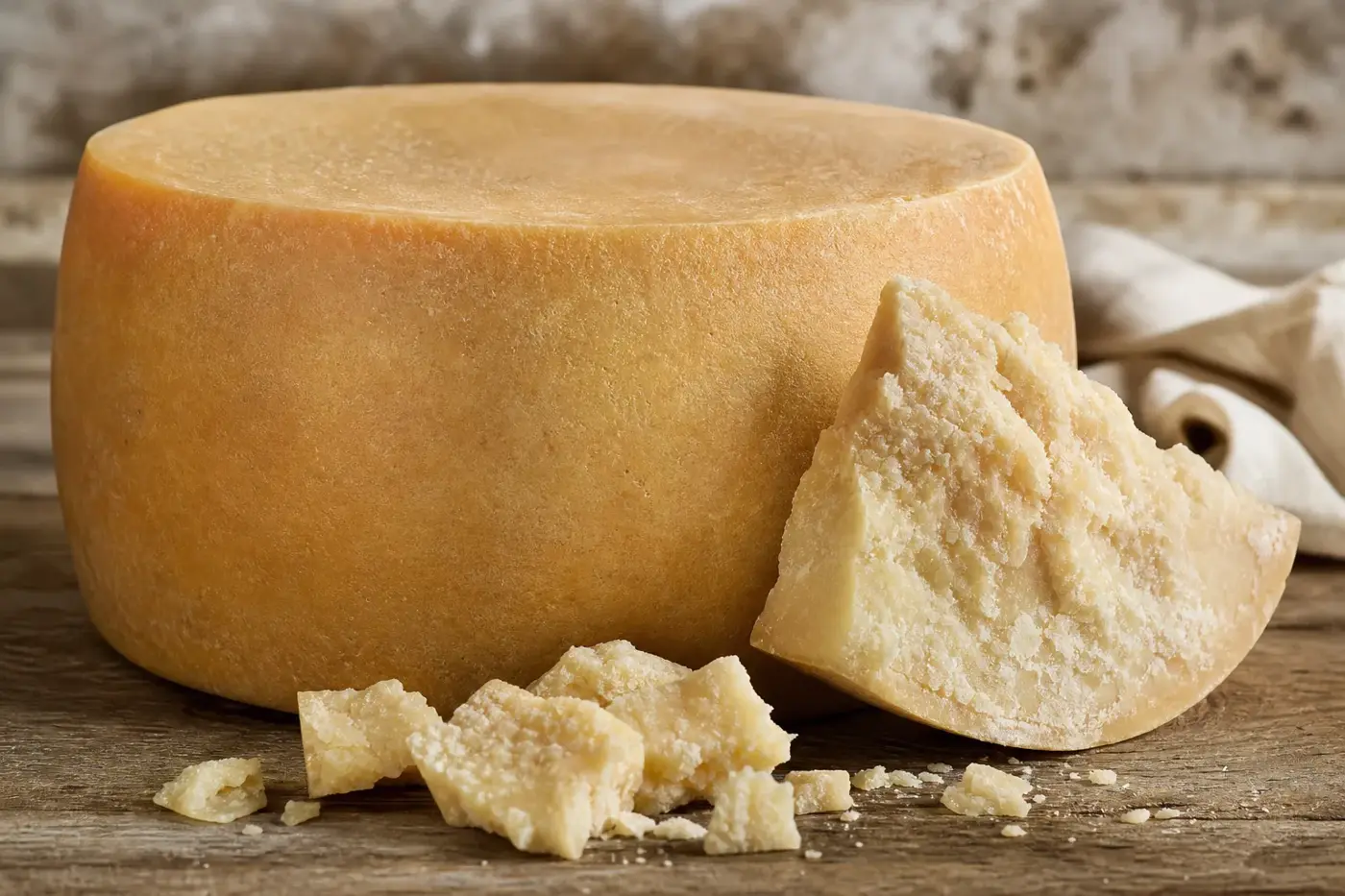
Parmigiano Reggiano
Break into a wheel of Parmigiano Reggiano and flakes fall away, revealing a finely granular cheese, pale straw to straw in colour.