Sharpham Brie
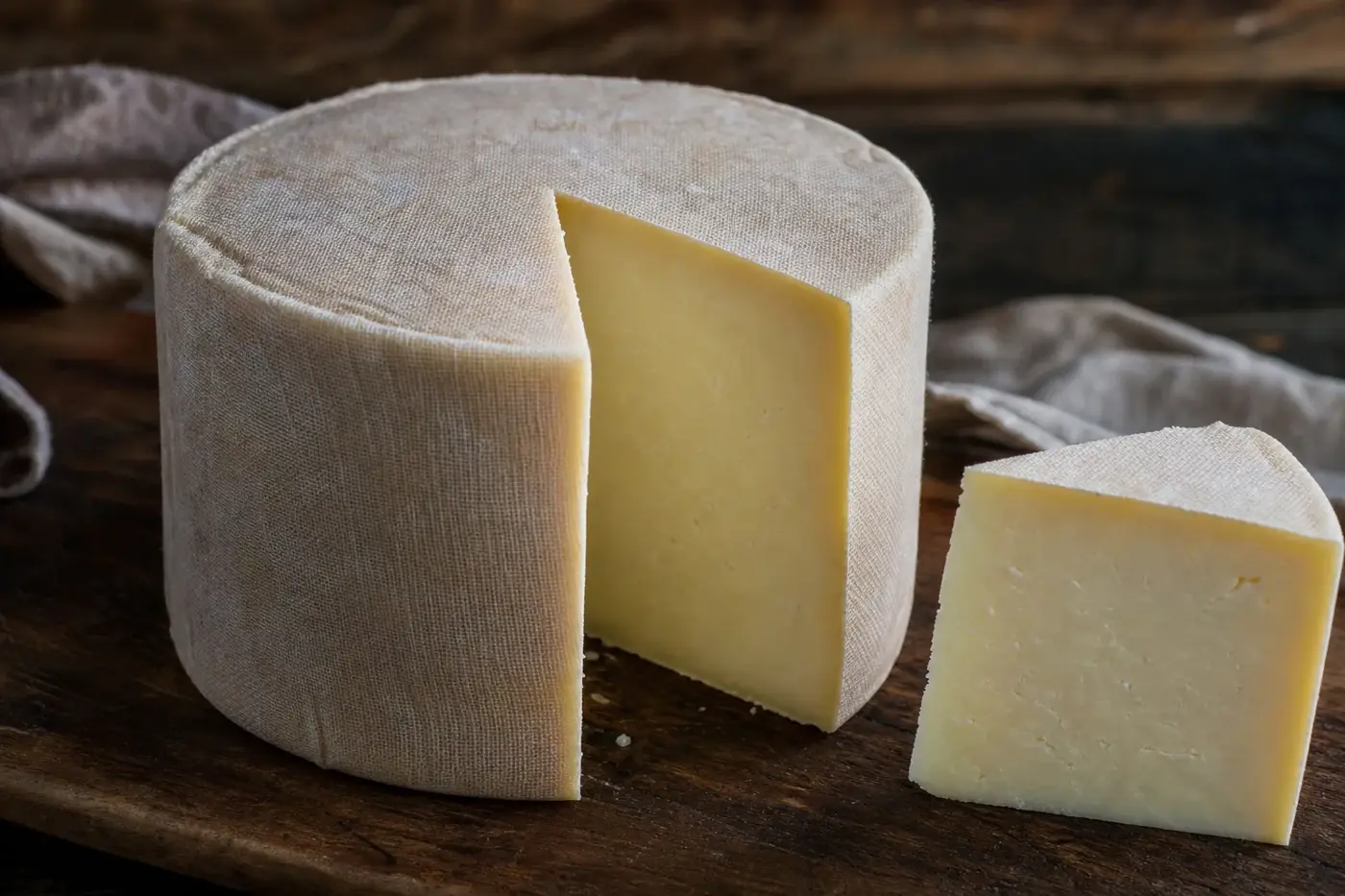
Cut through the white bloom and a golden centre comes into view.
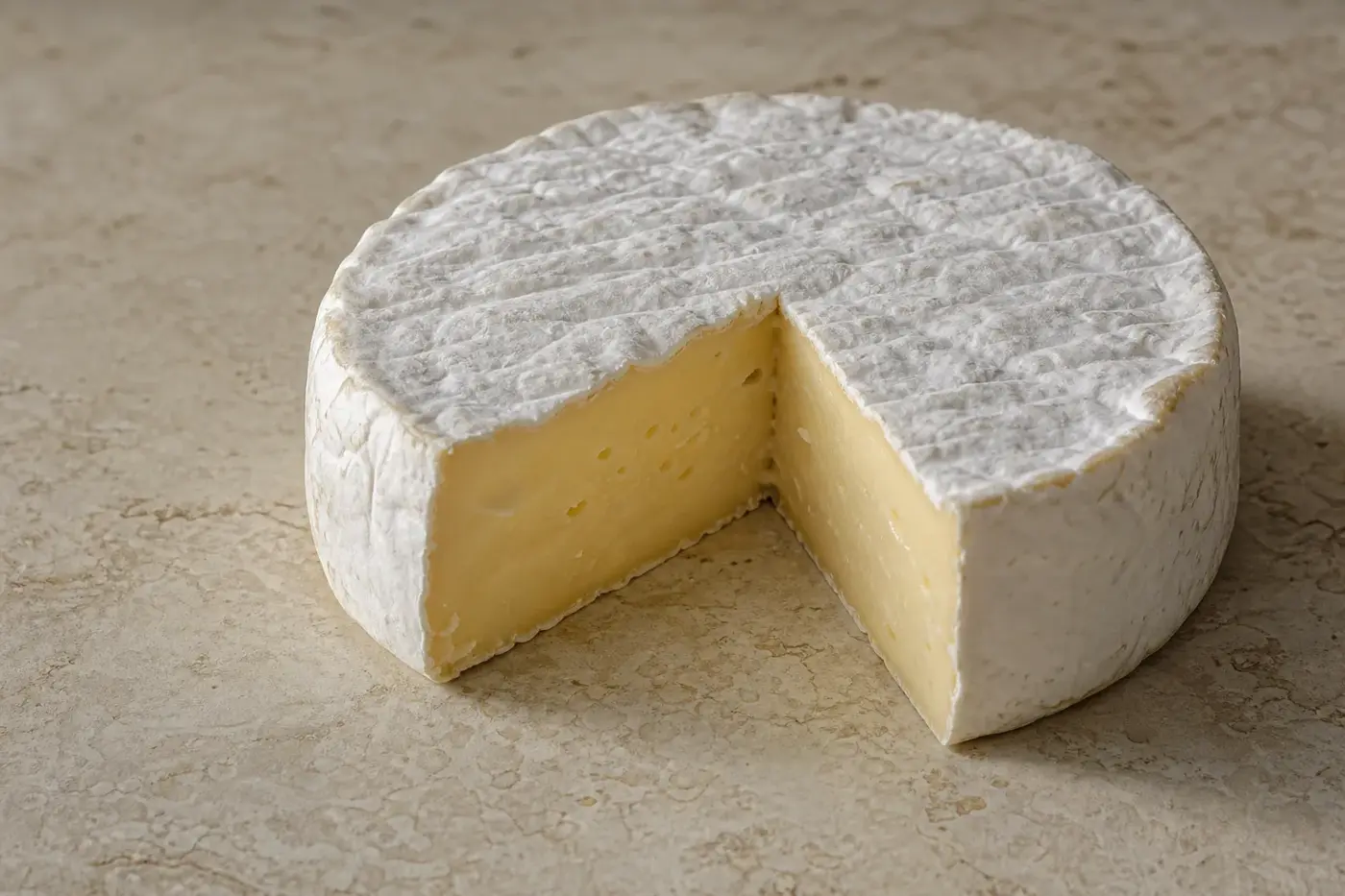
Cut through the white bloom and a golden centre comes into view. What you find beneath your knife depends on when you catch it: firm and milk-rich when young, softer, mushroomy and more savoury with time. Made by Sharpham Dairy in Devon, England, this soft, white mould-ripened cheese begins with pasteurised Jersey cows’ milk. Patience changes the cheese, though cheese lovers are not always famous for having any. [1, 2]
| At a glance | Sharpham Brie |
|---|---|
| The people who make it | Sharpham Dairy. [1] |
| Its home county | Devon, England. [2] |
| Where it is made | Production moved to the South Devon Food Hub at Longcombe in 2024, according to the maker. [3] |
| The milk | Pasteurised Jersey cows’ milk. [2] |
| The style | Soft, white mould-ripened, Brie-style cheese. [1, 2] |
| The rennet | Vegetarian rennet, according to the maker. [2] |
| The ripening culture | The dairy names Penicillium candidum in its soft-cheese process. [4] |
| Time maturing at the dairy | 3 to 5 weeks, according to the product sheet. [2] |
| The rind | Natural, white and bloomy; edible, according to the maker. [1, 2] |
| Shapes and sizes listed | Approximately 1.2 kg round, 300 g square and 230 g heart. [2] |
| Protection status by jurisdiction | Unconfirmed for the EU, Great Britain, Northern Ireland, Switzerland or the United States |
Meet the Devon cheese with a character of its own
The Brie name points you in the right direction, but it does not tell the whole story. Sharpham describes this cheese as closer to a Coulommiers-style cheese. It belongs to the dairy’s handmade range and follows an original Sharpham recipe, with a texture and ripening character of its own. [1]
Its story starts on the Sharpham Estate in South Devon. In the dairy’s published history, traditional cheesemaking and local milk sit at the heart of the business, followed by the move to the South Devon Food Hub in 2024. A separate story page places the new premises at Longcombe, in a working-farm setting shared with other food and drink businesses. [3, 5]
These are two places in one Devon story, rather than two names for the same premises. The estate is where the dairy developed; Longcombe is where production moved. If you have an older description or a label in front of you, look at the production details: the estate name alone does not give you the making address. [3, 5]
You can get to know the wider family through Brie. Here, the particular pleasure is in the Jersey milk, the hand-ladled curds and what happens slowly beneath that white rind.
Look closer at that golden Jersey centre
That yellow interior is worth a second glance before you take a bite. Sharpham draws attention to it on the product page. The dairy’s current history page connects the golden colour and substantial texture of its cheeses with Jersey milk from herds grazing on Dartmoor pastures. [1, 5]
The product information sheet gives you the essentials plainly: cows’ milk, Jersey breed, pasteurised. It also specifies vegetarian rennet. Those details apply to Sharpham Brie itself, so there is no need to guess the milk treatment or rennet from the cheese’s appearance. [2]
Pasteurisation treats the milk; ripening develops the cheese after it has been formed. Sharpham adds cultures during cheesemaking, so pasteurised milk and a deliberately mould-ripened rind belong quite comfortably in the same process. [4] For a closer look at the terminology, turn to raw milk, thermised and pasteurised cheese.
From local milk to hand-ladled curds
Before you get that white bloom, there is milk arriving from local farmers. The dairy’s process account describes testing and chilling it, then passing it through heat-treatment equipment into a making vat. Starter culture begins acid development, while rennet, the enzyme preparation that sets milk, creates a gel from which the solid curd forms. [4]
Then comes the handwork. Sharpham Brie’s curds are hand-ladled into moulds and brined. You will find those handling steps in the product specification, alongside the milk, rennet and salt that go into the cheese. [2]
Turning helps release whey, the liquid separated from the curd. It also helps control shape and acidity. The dairy names Penicillium candidum in its soft-cheese process: this is the white mould responsible for the bloom on the finished cheese. [4]
Each stage contributes something different. Setting creates curd, draining changes its moisture, and salting contributes to flavour and surface conditions. Ripening develops both rind and interior, so the cheese you eventually taste reflects the whole sequence, including its care after it leaves the mould. [4]
A few weeks of turning, wrapping and waiting
Sharpham Brie matures at the dairy for 3 to 5 weeks, according to its product sheet. The fuller soft-cheese process describes a spell in a ripening room, followed by further maturation after wrapping. These are stages of the dairy’s work, not extra weeks for you to add at home. [2, 4]
During the first week, the dairy turns its soft cheeses daily, then every other day. Once each cheese has an even white coat, it is hand-wrapped in breathable paper. It then moves into refrigerated finished-cheese storage to mature further. [4]
Even in its paper, the cheese needs air circulating around it. The maker specifically warns against stacking cheeses directly on top of one another. At home, keep the intended wrapping and follow the pack’s storage instructions. [2]
Beneath the bloom, the texture is changing
That white surface has more to do than look inviting. University of Guelph cheesemaking teaching explains that surface microorganisms consume lactic acid, leaving the surface less acidic than the centre. Their enzymes also help break down proteins and fats as the cheese ripens. [6]
The protein breakdown is called proteolysis. In a surface-ripened cheese, it helps softening progress from near the rind towards the core. This explains why your slice can offer several textures at once: a softer outer layer around a firmer centre, rather than the same consistency throughout. [6]
A 1987 study of Brie examined different parts of ripening wheels and found changes in the distribution of lactic acid, ammonia and calcium. Its proposed model connected acidity, mineral movement and protein changes with the developing texture. It helps explain the mechanisms at work, rather than giving you a maturation timetable for Sharpham Brie. [7]
Find your favourite moment to take a slice
Young Sharpham Brie is firm and milk-rich. As it ages, it becomes softer and more mushroom-like, with a chicory-like finish also noted in Sharpham’s published tasting descriptions. The dairy says its soft cheeses grow more aromatic as they ripen, too. [1]
Start by enjoying the contrast between the white exterior and yellow interior, both characteristic in the maker’s account. Then study the paste, the body beneath the rind. Is it firm throughout, or can you see a softer layer just inside the bloom? That cut face offers a glimpse of ripening moving from the outside in. [1, 6]
Use the maker’s descriptions of youthful firmness and later softness to help choose your moment. Ask the cheesemonger about the particular piece in front of you, too. A firmer centre and a more yielding paste have different pleasures; thankfully, you do not have to appoint a winner. [1]
Make room for it in the fridge
Keep Sharpham Brie refrigerated and follow the pack’s storage and date instructions. For household handling in England, the Food Standards Agency advises a fridge temperature between 0 and 5 °C. Check with a fridge thermometer rather than relying on the control dial alone. [9]
Keep the intended wrapping, in keeping with Sharpham’s use of breathable paper. If you are buying for a particular meal, ask about the cheese’s current maturity and explain the texture you would like. Choosing a suitable piece is more useful than assuming every cheese needs the same fixed period of extra ageing at home. [2, 4]
Briefly bringing a serving portion towards room temperature is a different decision from allowing a cheese to develop further. The dairy matures its cheeses under managed conditions; at home, follow the pack and official refrigeration guidance. For practical help with wrapping and fridge organisation, see how to store cheese at home. [4, 9]
Try the centre first, then the rind
If you will not eat the whole cheese, Sharpham suggests portioning it first. When handling what remains, follow the pack’s storage instructions and the current food safety advice where you live. [1]
For your first taste, try a little of the paste by itself, then take a mouthful with the rind. Sharpham describes that natural rind as edible. Tasting both ways lets you explore how the surface and centre work together, and choose how much rind you enjoy with each piece. [1, 2]
Bring bread, fruit and a little curiosity
Begin with plain bread, one fresh fruit and water. Taste the cheese before reaching for chutney, then consider what you would like in the next mouthful: sweetness, acidity or simply more bread. Give the cheese a moment to speak before the accompaniments join the conversation.
A lightly flavoured loaf or plain cracker gives you a quieter starting point than strongly seasoned bread. Try slices of pear or apple alongside, keeping the fruit separate so you can choose each mouthful. These serving suggestions leave space for the cheese’s changing character rather than covering it up.
For an alcohol-free drink, start with still water or a lightly sparkling apple drink, served separately. Keep the accompaniments modest enough that you still enjoy returning to the cheese on its own. If you would like to explore a broader approach, read cheese and wine pairing.
General information only, not medical advice: follow the official guidance where you live.
Questions people ask
Where is Sharpham Brie made?
Sharpham Brie is made in Devon, England, by Sharpham Dairy. Production moved to the South Devon Food Hub at Longcombe in 2024.
What milk is used in Sharpham Brie, and is its rennet vegetarian?
Sharpham Brie is made from pasteurised Jersey cows’ milk. The maker specifies vegetarian rennet.
What does Sharpham Brie taste like?
The maker describes it as firm and milk rich when young, becoming softer, more mushroomy and more savoury as it ripens. Its tasting description also notes a chicory finish.
Can you eat the rind of Sharpham Brie?
Yes. Sharpham describes the natural white rind as edible.
How should Sharpham Brie be stored?
Keep it refrigerated and follow the storage and date instructions on the pack. For household handling in England, the Food Standards Agency advises a fridge temperature between 0 and 5 °C; see its fridge guidance.
Sources
- Sharpham Cheese, Sharpham Brie, undated product page, retrieved November 2026. Product identity, milk treatment, sensory descriptions, serving suggestions and rind information.
- Sharpham Cheese, Sharpham Brie Product Information Sheet, undated PDF in the maker’s August 2025 upload directory, retrieved November 2026. Milk, breed, rennet, formats, maturation and handling.
- Sharpham Cheese, Our Story, undated, retrieved November 2026. Production move to Longcombe in 2024.
- Sharpham Cheese, Cheesemaking at Sharpham, undated, retrieved November 2026. Dairy process, cultures, turning, wrapping and maturation.
- Sharpham Cheese, Our History, undated, retrieved November 2026. Estate origins, 2024 relocation and milk sourcing account.
- University of Guelph, CMC1: Introduction to Cheesemaking, “Unit 3b. Secondary Cultures in Cheese making”, undated online edition, retrieved November 2026. Surface acid metabolism, enzymes and texture gradients.
-
American Dairy Science Association, Integrated Roles of Lactate, Ammonia, and Calcium in Texture Development of Mold Surface-Ripened Cheese, Journal of Dairy Science, volume 70, issue 5, 1987, pages 909 to 918. Retrieved abstract.
-
Food Standards Agency, How to chill, freeze and defrost food safely, published 18 December 2017, retrieved November 2026. Applies to England, Northern Ireland and Wales.
- Food Standards Agency, Food safety in a heatwave: advice for consumers, retrieved November 2026. Refrigeration and hot-weather time limits.
This piece combines the maker’s published product and process information with cheesemaking research and official household food-handling guidance.
Last checked: November 2026
Last checked November 2026.
The editors suggest you read next
West Country Farmhouse Cheddar Cheese
Large pieces of curd turn and stack under the cheesemaker’s hands.