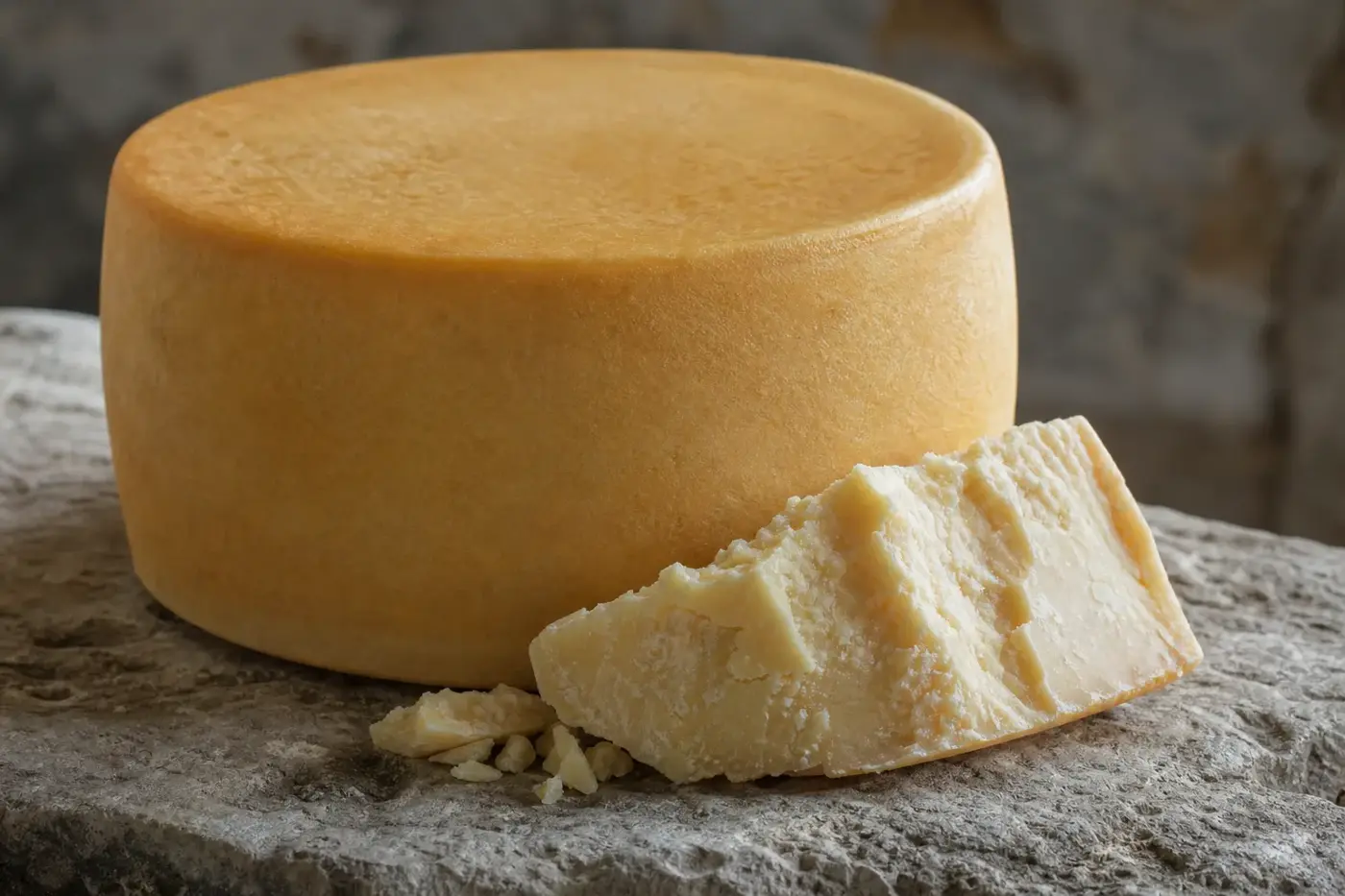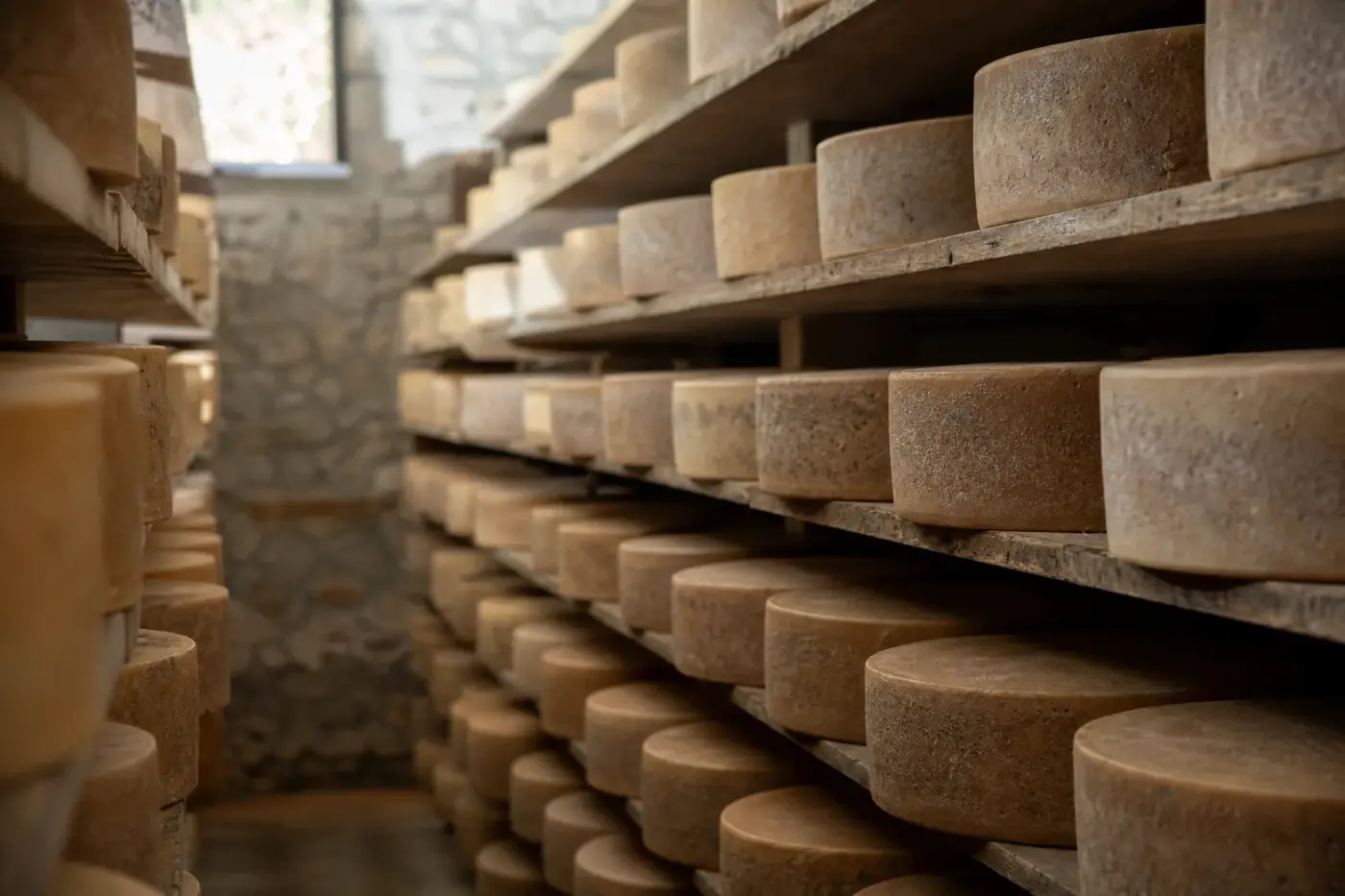
Picture a wheel resting on a wooden shelf, its work far from finished. From the mountain pastures of Valle Camonica to the ageing rooms of the Sebino Bresciano, Silter belongs to farms and dairies in Lombardy’s province of Brescia. This hard Italian cows’ milk cheese is made from raw, naturally partially skimmed milk and registered as a protected designation of origin, or PDO, in the EU. [2,4,8]
Your quick guide to Silter
| What to know | The detail |
|---|---|
| Familiar and registered name | Silter. [2,5] |
| Registration authority | European Commission, EU register; eAmbrosia record ID: Not established. [2,3] |
| EU protection | Registered PDO; registration act: Regulation (EU) 2015/1724. [2,3] |
| Great Britain protection | Registered PDO, UK scheme entry dated 31 December 2020. [5] |
| Legally defined area | Specified municipalities of Valle Camonica and Sebino Bresciano, province of Brescia, Italy. [4] |
| Milk and coagulant | Raw cows’ milk, partially skimmed; calf rennet. [1,8] |
| Legal minimum maturation | 100 days from production. [1,11] |
| Production season | All year. [7] |
| Allergen | Milk. [8] |
| UK pregnancy guidance | NHS hard cheese advice, November 2026. [10] |
Step inside the room behind the name
Locally, a silter is a cheese ageing room, corresponding to the Italian casera. The cheese takes its name from that room. [1]
It is a good place to begin. Picture the wheel on its wooden shelf, with the dairy’s work continuing through turning and maturation, rather than ending when the curd leaves the vat. The consortium describes cheesemaking skills passed between generations, both on the valley floor and at alpine dairies. [6,11]
Follow Silter into the mountains
The protected area stretches through Alpine and Prealpine country from Lake Iseo towards the Tonale and Gavia passes. Its legal boundary follows specified Brescia municipalities in the Valle Camonica and Sebino Bresciano mountain communities. Both production and maturation belong here, in places including Breno, Ponte di Legno, Pisogne and Monte Isola. [4]
A valley farm and a high pasture face different growing conditions. The consortium describes permanent meadows below, limestone and dolomite pasture in part of the southern alpine zone, and acidic soils further north around the Adamello and Stelvio parks. You can see why the landscape matters: grass and hay form the foundation of the cows’ diet. [7]
Silter is made throughout the year, not just during summer pasture season. When buying, ask whether your wheel came from a valley dairy or a malga, an alpine pasture farm, and ask for its production date. Those details tell you more about season than colour alone. [4,7]
Meet the cows and their menu
At each farm, at least 80% of the lactating cows must belong to the Bruna, Grigio Alpina or Pezzata Rossa breeds. Bruna cattle alone must account for at least 60% of all lactating cows. These rules describe the herd, not percentages of milk blended in the vat. [1,7]
Grass or hay is required, with no silage or wrapped forage. Concentrates stay below 40% of ration dry matter, while local forage exceeds 50% of total dry matter supplied. At alpine pasture, forage is entirely local and concentrates cannot exceed 30% of average dry matter intake. [1]
From warm milk to a fresh wheel
Milk from one or more milkings goes into shallow vessels while still warm. During a rest of 8 to 48 hours, cream rises naturally, and all the milk is partially skimmed this way. That quiet wait is a defining part of Silter, not an optional adjustment for certain wheels. [8]
Calf rennet sets the milk at 36 to 40 °C. The curd is cut to rice or maize size, heated to 46 to 52 °C, then settled, moulded and pressed. Salting follows, either dry or in brine. [1]
The consortium explains that makers may reinforce the milk’s local microorganisms with a starter made from local milk or whey, or selected indigenous cultures. A starter is a preparation of microorganisms that guides fermentation. You can follow the broader sequence in how cheese is made, while rennet explained covers the milk setting step. [9]
Take a closer look at the wheel
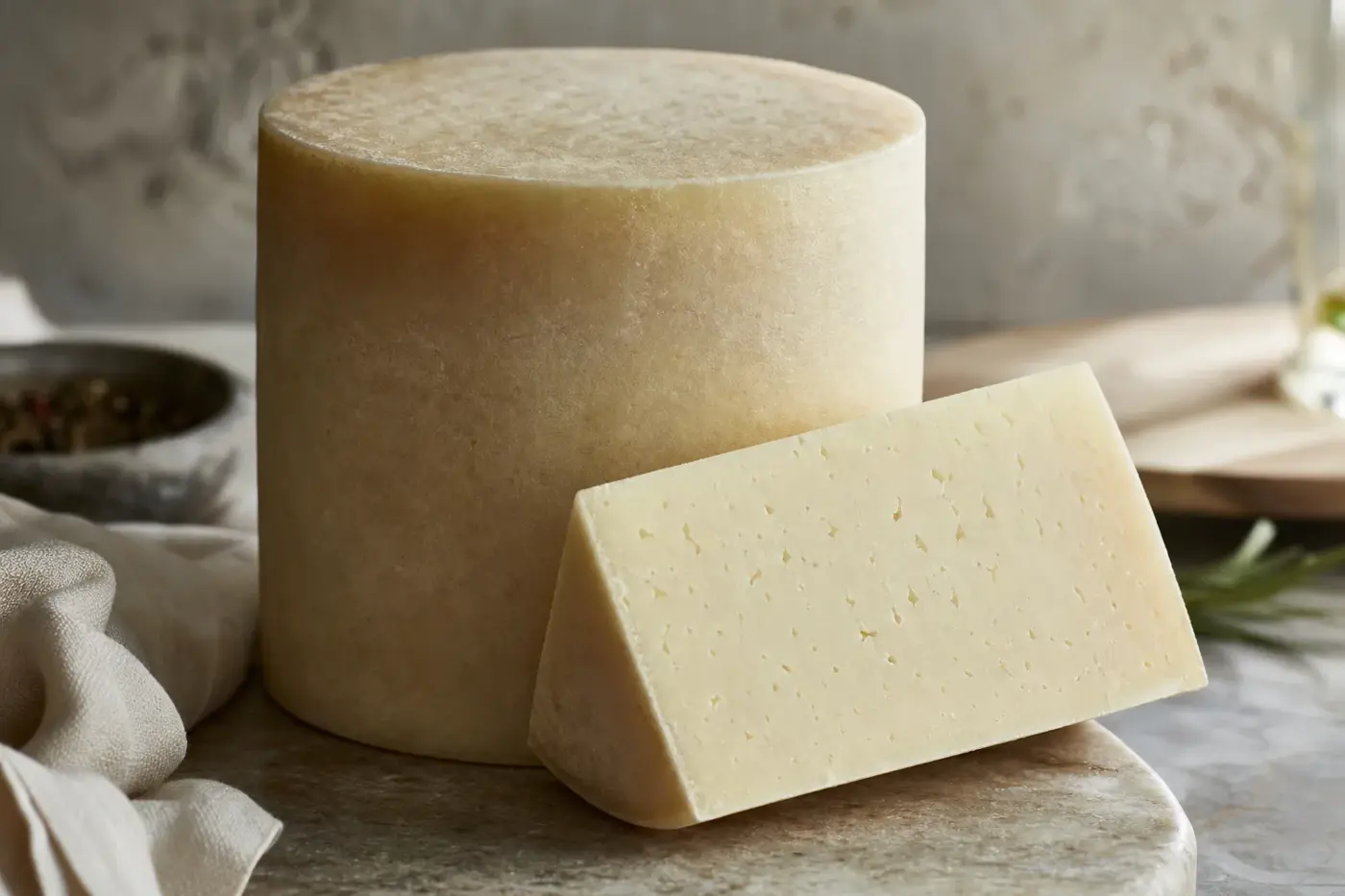
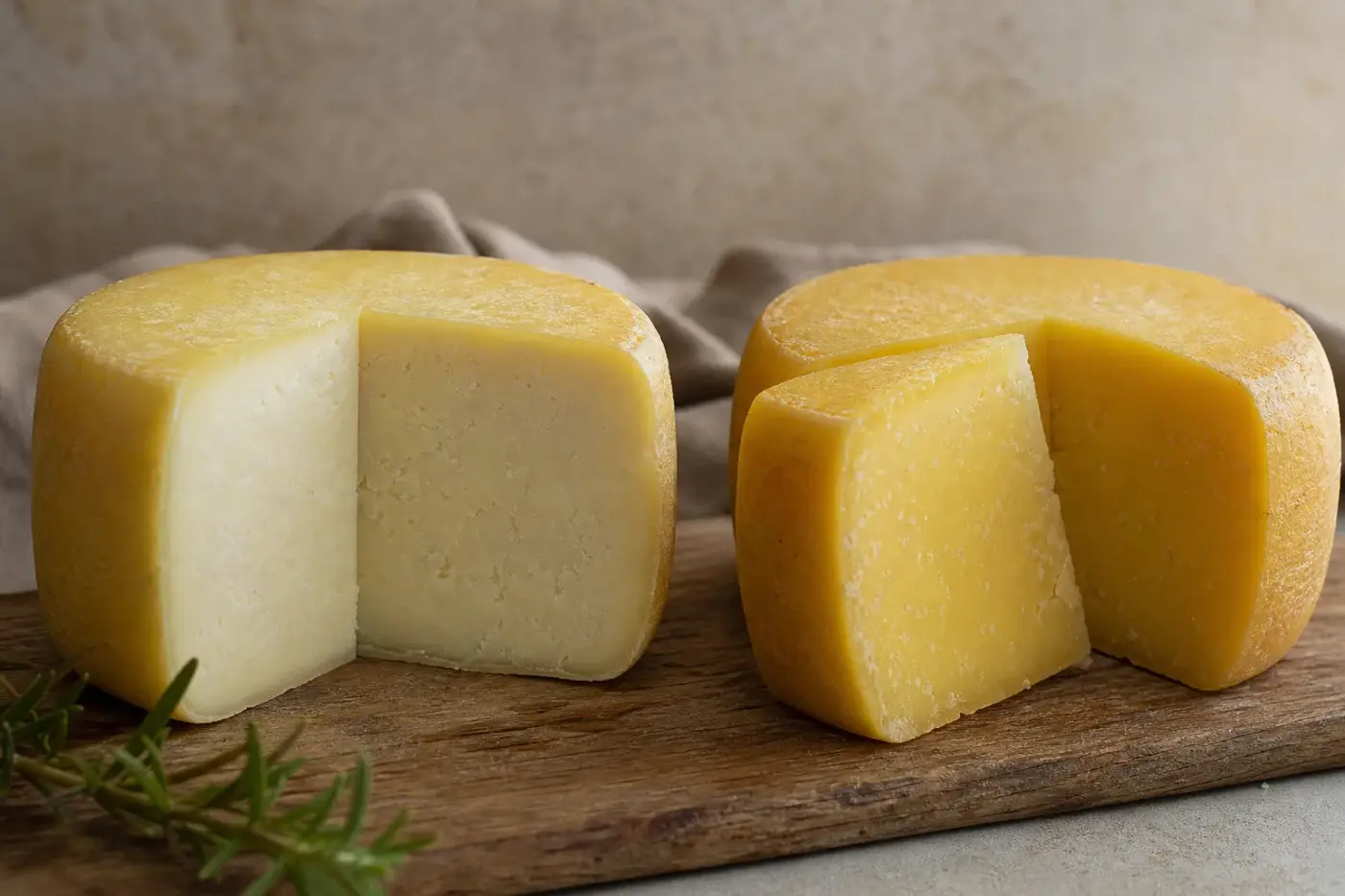
Silter’s cylindrical wheel has a hard natural rind, ranging from straw to brown. Inside, the paste is white to yellow, sometimes with small to medium, evenly distributed holes. Expect a hard texture with limited elasticity. [1]
When your cheesemonger cuts a wedge, ask to see the centre and the rind edge. Ask about age and production season, too. You will learn more than you would by choosing on colour alone, especially if two wheels from the same maker have different production dates.
Give the ageing room its due
Silter needs at least 100 days of maturation from production. The consortium describes wooden shelves, temperatures of 7 to 20 °C and 70 to 90% relative humidity, with periodic turning. Controlled maturing rooms must preserve that specified environment too, even when the equipment is modern. [11]
Ageing can happen at alpine or valley sites within the defined area. The consortium explains that local conditions influence maturation, and that spring and summer microbial activity can temporarily make the faces slightly convex. A wheel does not simply sit there looking exactly as it did on arrival. [4,11]
The consortium links maturation to physical and chemical changes that shape sensory character. So when you compare older wheels, pay attention to texture as well as stronger flavours. [11]
Treat age as a question about character, not a competition for the oldest wedge. Ask whether this wheel is firmer or more yielding than another, and whether its finish is sweeter, more savoury or sharper. A production date and a description of the cut cheese are more useful than a grand maturity adjective.
Find the butter, fruit and chestnut notes
The specification describes sweetness, little bitterness, and persistent aromas of milk, butter, dried fruit and chestnut flour. Longer maturation brings more savoury or piquant notes. There is plenty here to notice before you reach for anything else on the board. [1]
The consortium connects part of that aromatic character to forage, particularly grasses and other plants with aromatic properties. It also describes different plant communities across the area’s soils and elevations. That gives you a grounded reason to ask about season and pasture, without overlooking the maker or the time spent maturing. [7]
Try a plain piece before adding bread or fruit. Notice the texture, then the balance of sweetness and savouriness, and finally how long the aroma stays with you. If two ages are available, taste them side by side: a perfectly respectable reason to request another piece.
Make room for Silter at your table
My serving suggestion is a simple board: Silter, plain bread, pear or apple, and a few walnuts. Taste the cheese alone first, then try the fruit for contrast. Cut a stronger, longer matured wedge into small pieces so your guests can choose their level of intensity.
For a drink, try sparkling water or an unsweetened apple drink. Think of these as starting points rather than rules. Let the age and character of your particular cheese lead the choice.
For cooking, the consortium’s recipe collection puts Silter into fonduta with polenta gnocchi, risotto, and shavings over filled buckwheat pasta. That gives you three useful roles: cheese sauce, a finishing ingredient stirred through a dish, or shavings added at the table. Choose the job first, then ask your cheesemonger which age suits it. [12]
Choose your wedge and keep it well
Look for Silter DOP on the label, alongside the maker and the age or production date. The consortium says only wheels bearing the required fire brand can be marketed as Silter DOP. If you buy a cut portion, keep its label so you retain the producer and batch details. [13]
For UK households, the FSA advises a fridge temperature between 0 and 5 °C and following the packaging’s storage instructions. Keep cut cheese covered, use clean utensils and return what you are keeping to the fridge promptly. Follow the labelled use-by date and any instructions for use after opening. [14]
Put out a small portion rather than your whole purchase. UK FSA guidance says chilled food should be out for the shortest possible time during preparation, and discarded if left out for more than four hours. In hotter than usual weather, the FSA advises throwing away perishables left unrefrigerated for more than two hours. [14,15]
Find the raw milk guidance for your circumstances
UK NHS pregnancy guidance lists pasteurised and unpasteurised hard cheeses among those that can be eaten. Silter’s specification classifies it as hard cheese. Follow the NHS’s current advice for the product category and your circumstances; the guidance referenced here is from November 2026. [1,10]
For other vulnerable groups, NHS dairy guidance identifies infants and young children, people over 65, and people with a long-term medical condition or weakened immunity. These groups are among those advised to avoid certain cheeses, including mould-ripened soft and soft blue cheeses. Ask your healthcare professional about any individual dietary restrictions. [16]
Check the current official guidance where you live, because national advice differs. For the underlying distinctions, read raw milk, thermised and pasteurised cheese. For everyday handling, use how to store cheese at home.
General information only, not medical advice: follow the official guidance where you live.
Questions people ask
What is Silter cheese?
Silter is a hard Italian cows’ milk cheese made from raw, naturally partially skimmed milk. It has PDO protection in the EU and Great Britain and must mature for at least 100 days.
Where is Silter made?
Silter is produced and matured in specified municipalities of Valle Camonica and Sebino Bresciano, in Lombardy’s province of Brescia. The area includes Breno, Ponte di Legno, Pisogne and Monte Isola.
Does Silter contain animal rennet?
Yes. Silter is made using calf rennet.
What does Silter taste like?
The specification describes sweetness, little bitterness, and persistent aromas of milk, butter, dried fruit and chestnut flour. Cheese matured for longer can have more savoury or piquant notes.
Can you eat Silter during pregnancy?
The NHS lists pasteurised and unpasteurised hard cheeses among the cheeses that can be eaten during pregnancy, and Silter is classified as a hard cheese. Check the current NHS pregnancy guidance for the product category and your circumstances.
Sources
- MASAF. Disciplinare di produzione della denominazione di origine protetta «Silter». Undated ministry-hosted specification, Articles 2, 5 and 6, consulted November 2026. Official specification.
- European Commission. Commission Implementing Regulation (EU) 2015/1724 of 23 September 2015 entering a name in the register of protected designations of origin and protected geographical indications [Silter (PDO)]. Published 29 September 2015. EUR-Lex text.
- MASAF. Disciplinari DOP e IGP prodotti agricoli: 1.3 Formaggi. Current ministry index, consulted November 2026. Official cheese specifications index.
- Consorzio per la Tutela del Formaggio Silter. Il legame con il territorio geografico. Undated industry account, consulted November 2026. Territory.
- Department for Environment, Food & Rural Affairs. Silter. GB protected food names register entry, published 4 January 2021, consulted November 2026. GB register entry.
- Consorzio per la Tutela del Formaggio Silter. Le origini del formaggio Silter. Undated industry history, consulted November 2026. History.
- Consorzio per la Tutela del Formaggio Silter. I pascoli e l’alimentazione. Undated industry account, consulted November 2026. Cattle, pasture and feeding.
- Consorzio per la Tutela del Formaggio Silter. Il latte crudo e genuino. Undated production account, consulted November 2026. Milk and natural creaming.
- Consorzio per la Tutela del Formaggio Silter. La lavorazione che rispetta la tradizione. Undated production account, consulted November 2026. Cheesemaking.
- NHS. Foods to avoid in pregnancy. Current online guidance, consulted November 2026. Pregnancy guidance.
- Consorzio per la Tutela del Formaggio Silter. La stagionatura nei Silter. Undated production account, consulted November 2026. Maturation.
- Consorzio per la Tutela del Formaggio Silter. Ricette. Recipe collection, including entries dated April 2026, consulted November 2026. The consortium promotes the cheese. Recipe collection.
- Consorzio per la Tutela del Formaggio Silter. Controllo Qualità. Undated control information, consulted November 2026. Quality control and marking.
- Food Standards Agency. How to chill, freeze and defrost food safely. Current consumer guidance, consulted November 2026. Chilling guidance.
- Food Standards Agency. Food safety in a heatwave: advice for consumers. Current consumer guidance, consulted November 2026. Hot weather guidance.
- NHS. Dairy and alternatives in your diet. Current online guidance, consulted November 2026. Dairy guidance.
- Food Standards Agency. Raw drinking milk. Current guidance, consulted for the scope check recorded below, November 2026. Raw drinking milk and cream guidance.
- Food Standards Agency. Alerts. Official alert service, accessed for the incomplete recall check recorded below, November 2026. Official alerts.
This desk research brings together official designation documents, the producers’ consortium’s accounts and UK agency guidance, with serving suggestions identified as editorial recommendations.
Last checked: November 2026
Last checked November 2026.
The editors suggest you read next
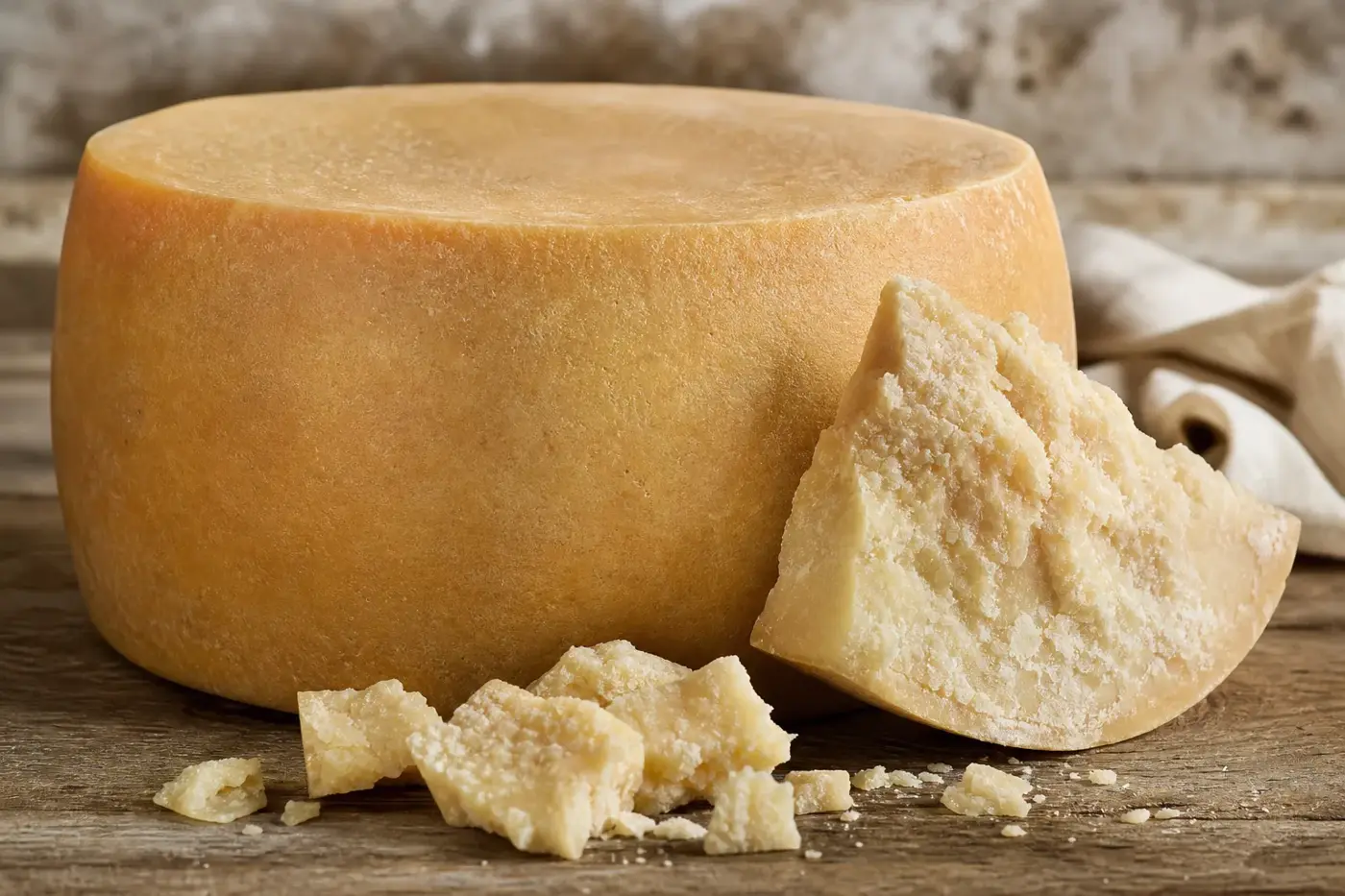
Parmigiano Reggiano
Break into a wheel of Parmigiano Reggiano and flakes fall away, revealing a finely granular cheese, pale straw to straw in colour.