Stelvio
Cut through Stelvio's yellow to orange-brown rind and the knife meets supple, pale yellow cheese.
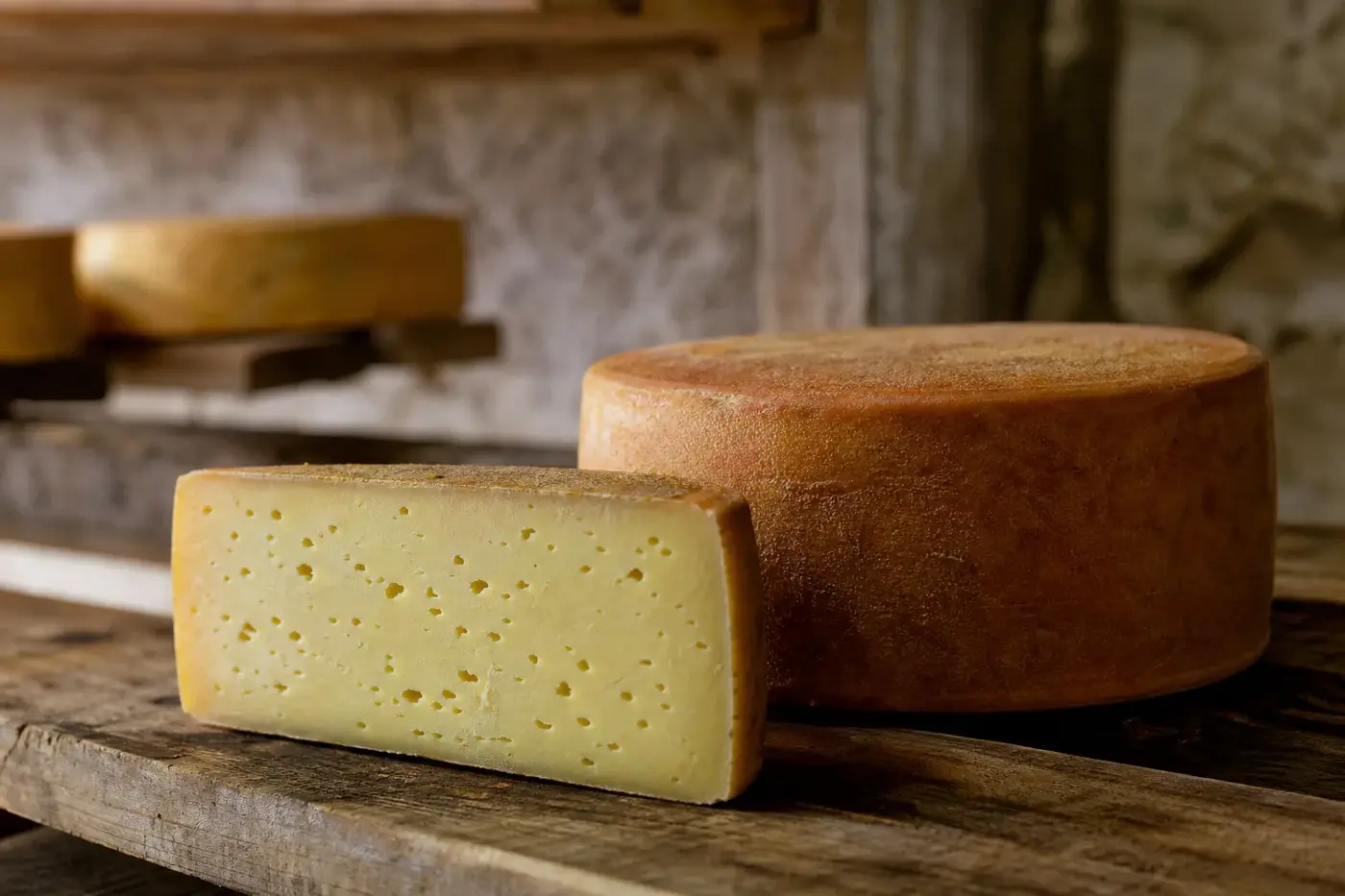
Cut through Stelvio's yellow to orange-brown rind and the knife meets supple, pale yellow cheese. Behind that slice are wooden boards in South Tyrol, saltwater washes and local ripening cultures. Also called Stilfser, this mountain cow's milk cheese received EU Protected Designation of Origin (PDO) registration in 2007.[1,2,5]
| At a glance | What to know |
|---|---|
| Names you might know | Stelvio; Stilfser |
| Registered name | Stelvio / Stilfser [5] |
| EU registration authority | European Commission; eAmbrosia register ID: Not verified [5] |
| Protection, checked November 2026 | Great Britain: registered PDO, entered 31 December 2020 at 23:00; EU current register status: Not verified [5] |
| Where it comes from | Specified districts and municipalities of South Tyrol, Italy [1,2] |
| The milk | Cow's milk; treatment: Not verified [2] |
| Minimum time to mature | 60 days from moulding [1] |
| Size of a whole wheel | 8 to 10 kg; diameter 34 to 38 cm; height 8 to 11 cm [1] |
| Allergen to know | Milk; check the individual product's ingredients [2] |
| Pregnancy guidance | UK NHS advice, checked November 2026, see below [6] |
Follow the milk into South Tyrol
Your slice begins in the province of Bolzano, also known as South Tyrol, in northern Italy. The production area includes specified municipalities in Val Venosta, Burgraviato, Salto-Sciliar, Val Pusteria and Val d'Isarco, plus the municipality of Bolzano. The certifier's production summary sets out those boundaries; the consortium describes milk coming from mountain dairy farms within the region.[1,2,3]
That mountain address is more than scenery on a packet. The control system links eligible milk to farms in the defined area, then follows it through cheesemaking and maturation. Behind your wedge is a regional dairy network, with traceability from milk supplier to finished cheese.[1]
Meet the cheese beneath the rind
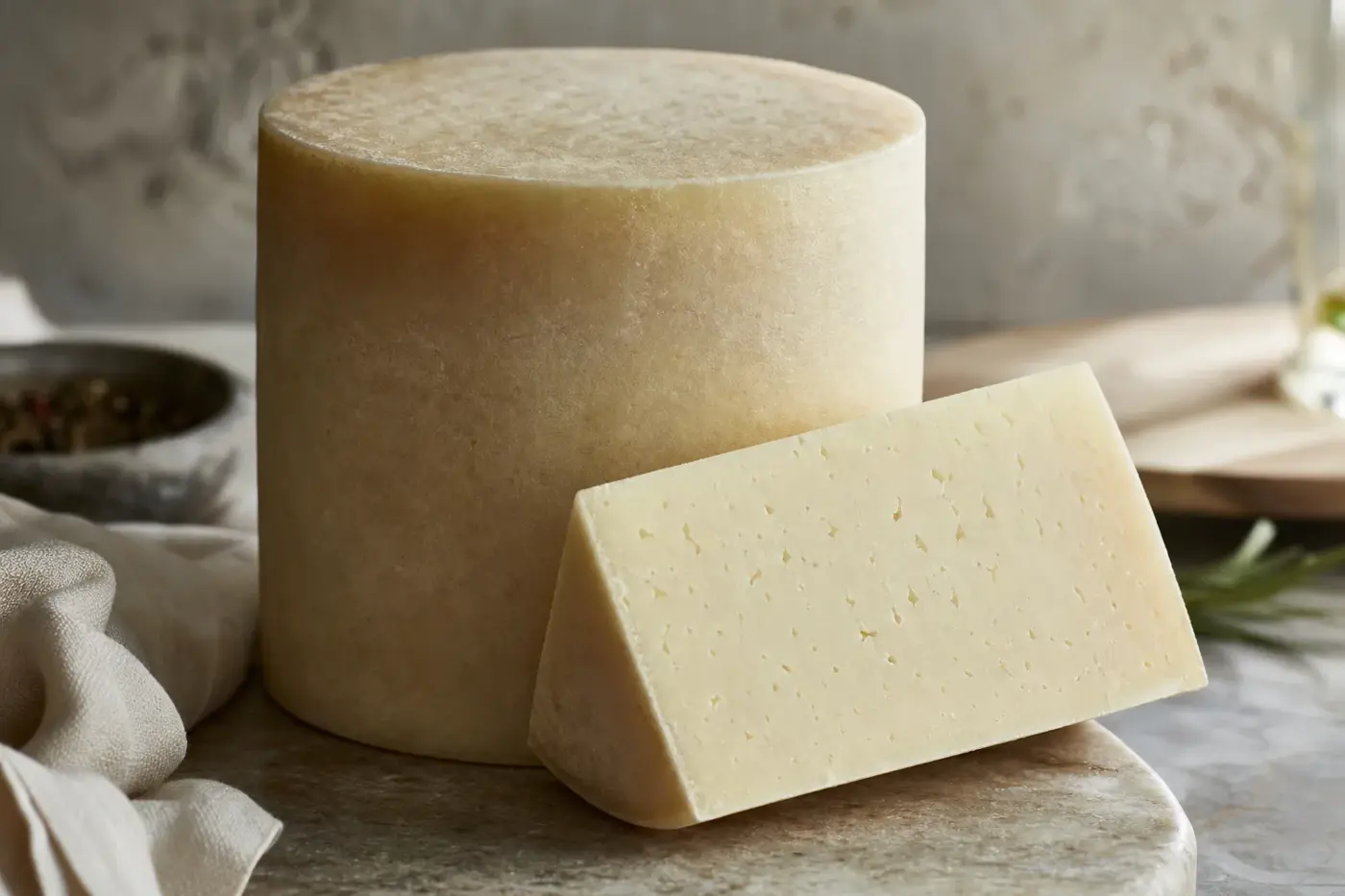
Cut a wheel and you find a compact interior that yields, then springs back. The certifier's control plan describes light yellow to straw colouring, scattered with irregular small and medium holes. The cylindrical wheel has nearly flat faces, a straight or slightly concave side and that yellow to orange-brown rind.[1]
What about the flavour? Producer Mila describes its Stelvio as aromatic and spicy, with light nut notes and fine wood nuances attributed to maturation on wooden boards. It also describes a soft paste and pea-sized holes: useful clues to Mila's cheese, rather than a promise about every wheel.[4]
At the counter, ask who made the cheese, how old it is and how this batch compares with the shop's previous delivery. You will learn more from that conversation than from a fixed strength scale. For your first purchase, look for supple paste balanced by the rind's character. A little cheese-counter conversation is a perfectly respectable form of research.
From milk to a slice that holds together
Stelvio is for slicing, not spooning. Pressing and drainage help build its compact body, so your slices hold together. Maturation comes afterwards, as a separate stage.[1,2]
The making begins with rennet, an enzyme preparation that sets milk into curd, the solid part separated from liquid whey. The certifier describes adding rennet, cutting the curd and giving it an initial pressing. Next, the curd is formed in cloths, pressed in moulds and salted in brine.[2,9]
For the wider story, follow how cheese is made. If packet wording has you pausing at the counter, turn to milk treatments explained.
Ask about milk treatment and coagulant choice separately. Your seller should be able to show you the product's milk-treatment declaration and ingredients, especially if you need a particular coagulant. The regional name gives you one set of details; the individual producer's declaration supplies another.
Salt water, wooden boards and a watchful eye
The wooden boards are only part of Stelvio's ripening story. Repeated saltwater treatment shapes the rind, with local ripening cultures added to the washing solution during the first weeks. The certifier identifies bacteria associated with the characteristic surface colour, aroma and flavour, including Brevibacterium and the group named Arthobacterium in its text.[1,2]
That orange surface is part of the cheese's ripening character. Mila credits saltwater care and indigenous red cultures with contributing to its cheese's flavour. When you study a wheel, consider the tended, coloured rind alongside the elastic paste: colour alone cannot tell you the whole story.[4]
Why those first 60 days matter
Stelvio must mature for at least 60 days, counted from moulding. That is the designation's minimum in the control plan, not necessarily the age of the wheel on the counter. Mila also gives a minimum maturation of 60 days for its product.[1,4]
As the cheese is tended with ripening cultures, its rind develops its characteristic aroma and taste. Choosing between ages? Ask what further maturation has changed in the maker's assessment: a more developed aroma, a more intense flavour or a firmer texture. Choose for your meal; the oldest cheese does not automatically deserve a medal.[1,4]
A protected name with a trail to follow
PDO means Protected Designation of Origin; DOP is the Italian abbreviation. You will find Stelvio / Stilfser in Great Britain's official register, with an entry dated 31 December 2020 at 23:00. That register gives 16 February 2007 as the original EU registration date.[5]
The control plan covers the defined origin, eligible milk, production, maturation and finished cheese. Once the minimum maturation is complete, whole wheels carry the designation's identifying mark. They also bear markings for the batch, production date and producer code.[1]
Buying a cut wedge? Ask for the original wheel label or supplier information that links your portion to its wheel. Look for the registered name and a named producer; reading a cheese label helps you distinguish the maker from the businesses that pack and sell the cheese.
Set out the bread, fruit and glasses
Begin with a few slices of Stelvio, plain bread and fresh pear or apple. Taste the cheese on its own, then add fruit and see whether you like the contrast. If you want the bread to have more of a say, try rye.
Serve a small portion cool and leave the rest of the wedge refrigerated. For home handling in England, Wales and Northern Ireland, the FSA advises a fridge temperature between 0 and 5 °C (32 to 41 °F). Keep chilled food out for the shortest possible time, with a four-hour maximum during preparation; Scotland's agency also sets a four-hour maximum for party food on display.[7,8]
Alongside the fruit, pour a dry white wine, a restrained pale lager or sparkling water, according to your taste. These are starting points, not instructions; the wine pairing guide offers a wider approach. Alcoholic pairings are for adults of legal drinking age, in small servings, and alcohol-free choices deserve room too.
Look after your wedge, then consider the rind
Keep the label with your cut portion. Its refrigeration instructions, date marking and any directions for use after opening still matter once the cheese is unwrapped. The FSA advises refrigerating dairy products and following their packaging's storage instructions; storing cheese at home covers the broader method.[7]
Mila explicitly describes its Stelvio rind as edible. For another producer's cheese, check that producer's declaration or ask your cheesemonger. Eating an edible rind is a matter of taste: begin with the paste, then try a little rind if the product information permits it.[4]
Find a substitute to suit your plate
Before choosing a substitute, ask how the rind is matured and how the interior behaves. Stelvio combines saltwater rind care with a yielding but compact paste. For your cheeseboard, seek that balance of rind character and texture; for sliced bread, look for cheese that cuts into similar slices.[1,2]
A soft washed-rind cheese might bring the aroma you want but a quite different texture. A firmer Alpine cheese might slice beautifully while changing the rind experience. Ask your monger to compare the actual cheeses available, including their ages, rather than expecting either family name to guarantee an equivalent.
This page summarises published guidance from the official sources it cites. It is not medical advice. Guidance differs between countries and changes over time, so check the current source for where you live, and ask your doctor, midwife, pharmacist or dietitian about your own circumstances.
Pregnancy and milk treatment: start with the label
UK NHS guidance checked in November 2026 lists pasteurised semi-hard cheeses among those you can eat during pregnancy. It separately advises thoroughly cooking mould-ripened soft cheeses with a white coating and soft blue-veined cheeses. Cheese cooked until steaming hot is also among its permitted choices.[6]
For Stelvio, compare the individual product's milk treatment and cheese category with that guidance. Both matter: “washed rind” tells you too little about either to settle the question. If the label leaves gaps, ask the maker or cheesemonger for the missing details, and discuss personal questions with your midwife or doctor.[6]
Stelvio is made from cow's milk. Read the actual ingredient and allergen declaration, including any additional ingredients, rather than relying on the cheese name. Keep those product details handy when you ask a health professional about an allergy or another dietary concern.[2]
Take your curiosity to the next cheese
- How to Tell Cheese Styles Apart: Milk, Rind, Texture and Method: get to know the features that give a cheese its style.
- Protected Names Explained: PDO, PGI and TSG: find your way through the different designations and their geographical scope.
Questions people ask
Where does Stelvio cheese come from?
Stelvio comes from specified districts and municipalities of South Tyrol, also known as the province of Bolzano, in northern Italy. Its production area includes the municipality of Bolzano and specified municipalities in five surrounding districts.
What does Stelvio taste like?
Producer Mila describes its Stelvio as aromatic and spicy, with light nut notes and fine wood nuances. The interior is supple, with small and medium irregular holes.
Can you eat the rind of Stelvio?
Mila describes the rind of its Stelvio as edible. For cheese from another producer, check its declaration or ask the cheesemonger.
How long is Stelvio matured?
Stelvio must mature for at least 60 days from moulding. A wheel may be older when it is sold.
Can you eat Stelvio during pregnancy?
The NHS says pasteurised cheeses classified as semi hard can be eaten during pregnancy, and cheese cooked until steaming hot is also among its permitted choices. Check the individual product’s milk treatment and category against the NHS pregnancy guidance, and discuss personal questions with your midwife or doctor.
Sources
- IFCQ Certificazioni, Piano dei controlli della Denominazione di Origine Protetta Stelvio o Stilfser, revision 0, 10 December 2024. References to the governing specification, traceability requirements, maturation, physical characteristics and identification. Control plan.
- IFCQ Certificazioni, Stelvio/Stilfser DOP, undated production summary, retrieved November 2026. Production area, cow's milk, curd handling, pressing, brining and rind care. Production summary.
- Konsortium Stilfser Käse, Stelvio PDO, undated, retrieved November 2026. The consortium's account of mountain-farm milk and regional production. Consortium account.
- Mila, Stelvio PDO: Semi-hard cheese, undated product information, retrieved November 2026. Producer's sensory descriptions, maturation account and edible-rind declaration. Mila makes the product described and has a commercial interest in it. Product information.
- Department for Environment, Food & Rural Affairs, Stelvio / Stilfser, official Great Britain protected food-name register entry, published 4 January 2021, retrieved November 2026. Register entry.
- NHS, Foods to avoid in pregnancy, current online guidance retrieved November 2026. Cheese categories, milk treatment and cooking advice. UK pregnancy guidance.
- Food Standards Agency, How to chill, freeze and defrost food safely, published 18 December 2017, current online text retrieved November 2026. Applies to England, Northern Ireland and Wales. Chilling guidance.
- Food Standards Scotland, Chilling food, undated current online guidance retrieved November 2026. Domestic refrigeration and party-food display advice. Scottish chilling guidance.
- IFCQ-hosted specification document, Proposta di modifica del disciplinare di produzione della denominazione di origine protetta “Stelvio” o “Stilfser”, undated. Articles 4 and 5 provide supporting descriptions of manufacture, rind development and physical characteristics. The document is labelled as an amendment proposal; its operative status requires confirmation against the official adopted specification. Specification document.
This piece was researched through desk comparison of certification documents, the official Great Britain register, producer and consortium accounts, and national health and food-safety guidance.
Last checked: November 2026
Last checked November 2026.
The editors suggest you read next
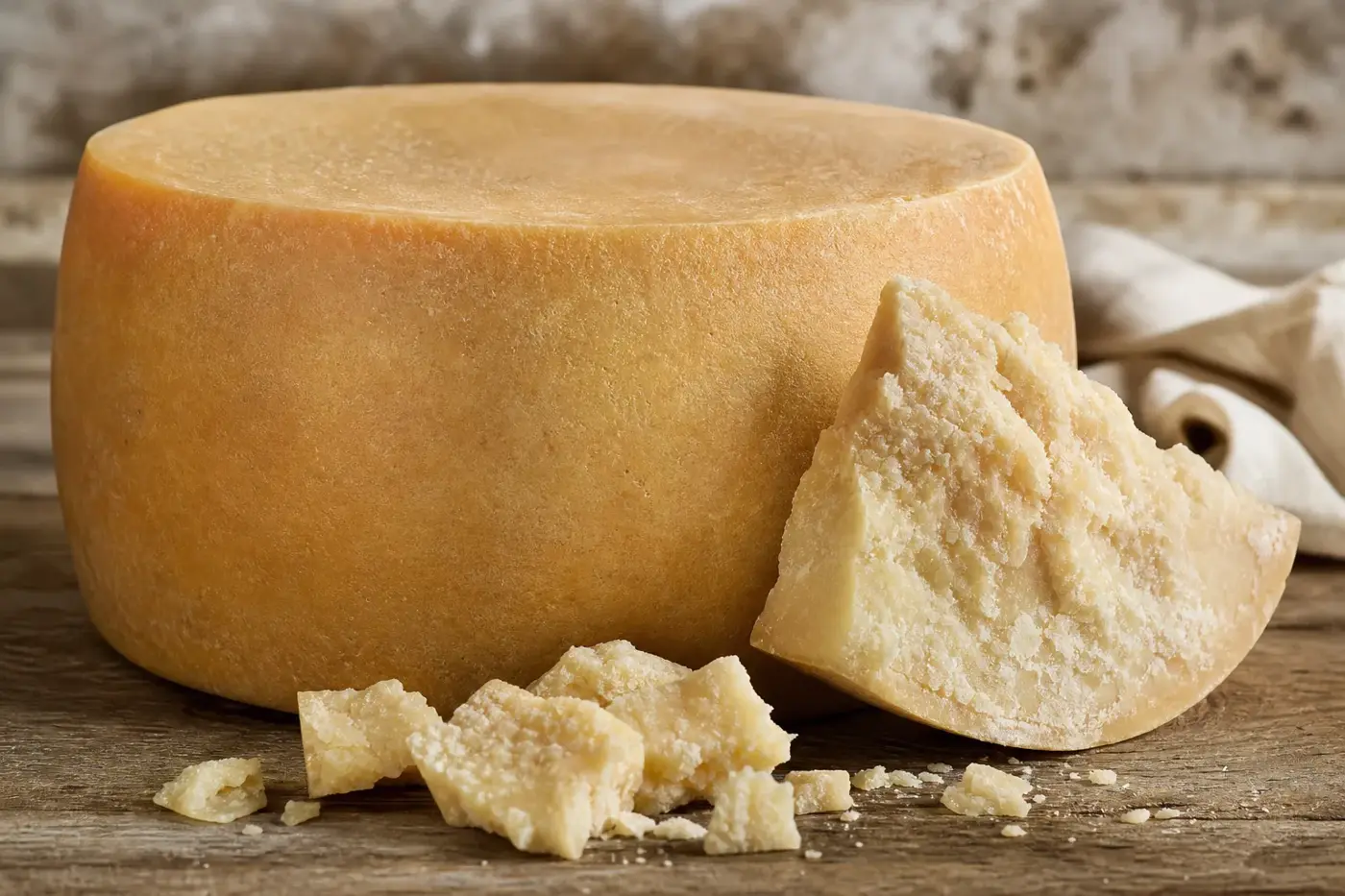
Parmigiano Reggiano
Break into a wheel of Parmigiano Reggiano and flakes fall away, revealing a finely granular cheese, pale straw to straw in colour.