Three cows and a bull. In 1972, that was the beginning of the Gloucester herd at Charles Martell & Son. Their milk, and the cheese made from it, would give this rare breed a continuing purpose on the farm. [9] You can follow that thread through Single Gloucester today: its protected specification requires producing farms to keep registered Gloucester cattle. [1][2]
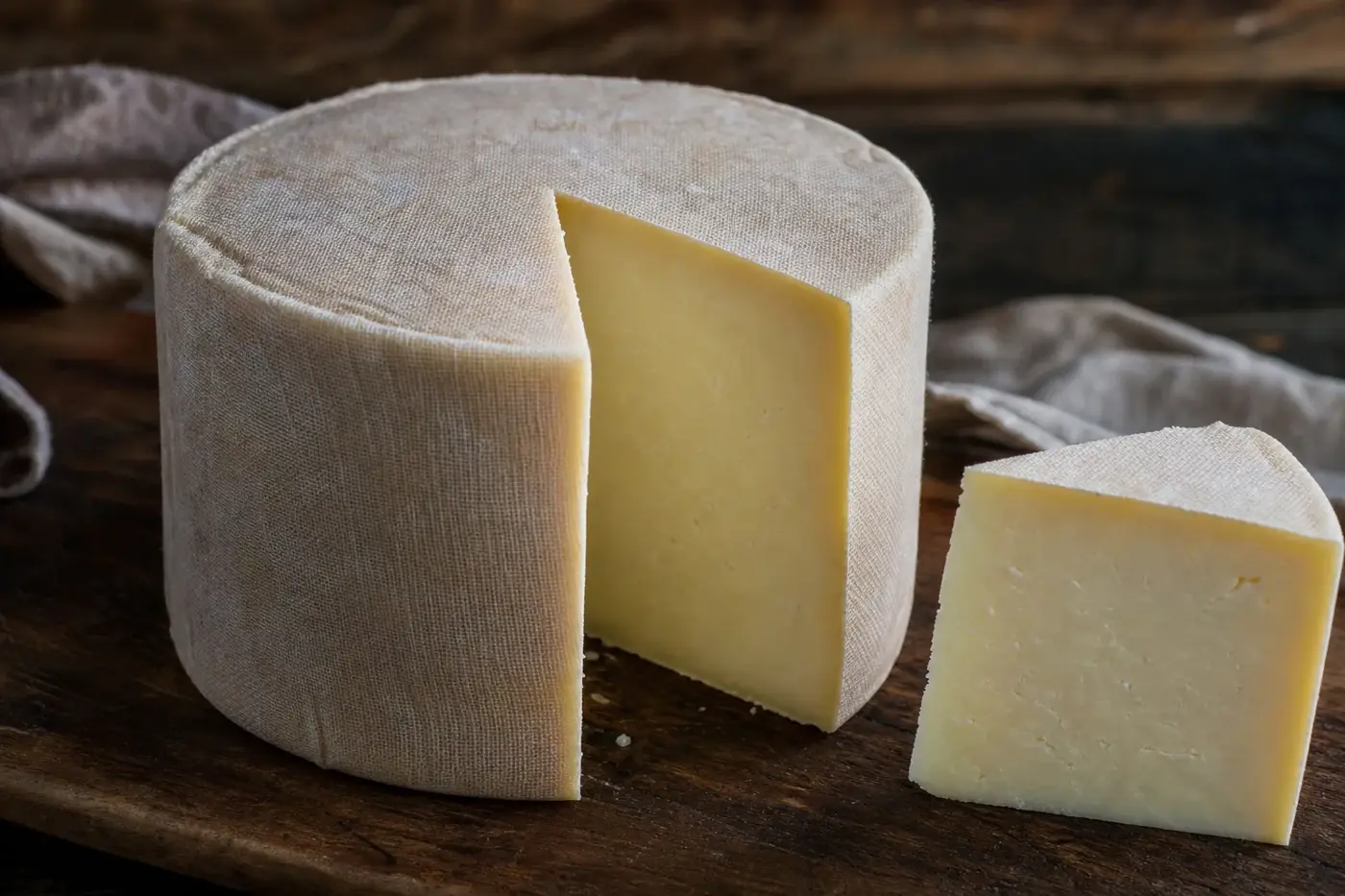
Expect a pale, gently lactic cheese, traditionally flatter than Double Gloucester. Its character comes from the milk, the making and time spent maturing. This modest Gloucestershire disc has rather more to say for itself than its quiet appearance suggests. [1][2]
| What you might like to know | Single Gloucester |
|---|---|
| Name to look for | Single Gloucester. [1] |
| Registration authority and record | Great Britain: Department for Environment, Food & Rural Affairs, register entry “Single Gloucester”. EU register record: EUGI00000013115. [1][3] |
| Protection in Great Britain | Registered PDO as of November 2026; UK scheme registration dated 31 December 2020, 23:00. [1] |
| EU and Northern Ireland | Original EU registration dated 21 June 1996; current register status: Not verified. [1][3] |
| Where it is made | Gloucestershire. [2] |
| Milk and coagulant allowed | Cows’ milk, pasteurised or unpasteurised; rennet or non-animal coagulants. [2] |
| What the specification says | Ready for consumption at about two months. [2] |
| One maker’s size, not a requirement | Charles Martell & Son lists a nominal 2.5 kg cheese, approximately 21.5 cm across and 6.5 cm high. [4] |
Meet the pale wheel with a buttery heart
Picture shelves in a farmhouse cheese loft, with low wheels tucked neatly into place. The original registration dossier connects Single Gloucester’s shape with elm moulds turned on a lathe and convenient storage on those shelves. Long before you met it at a cheese counter, this was a practical shape for a working farmhouse. [5]
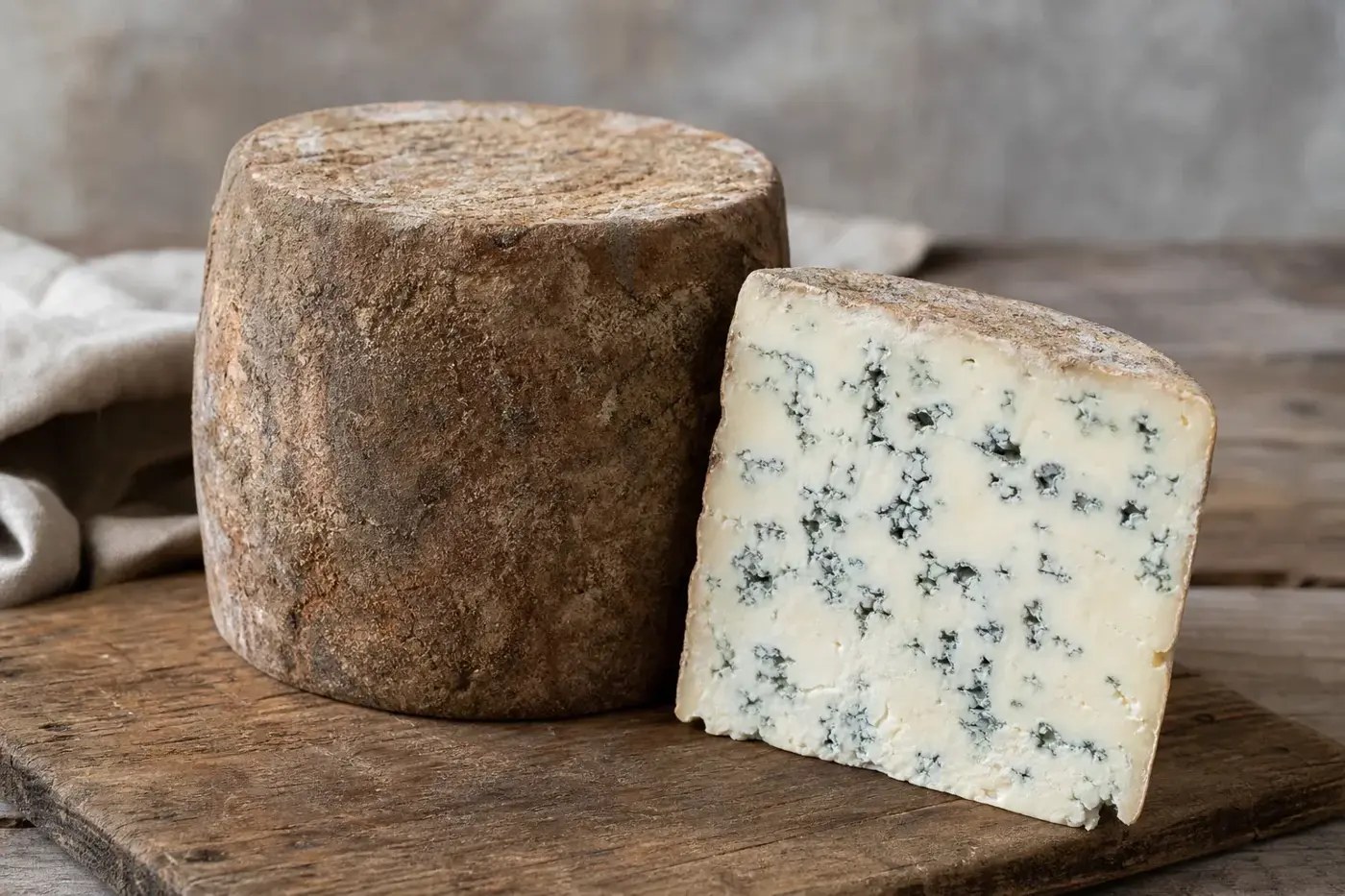
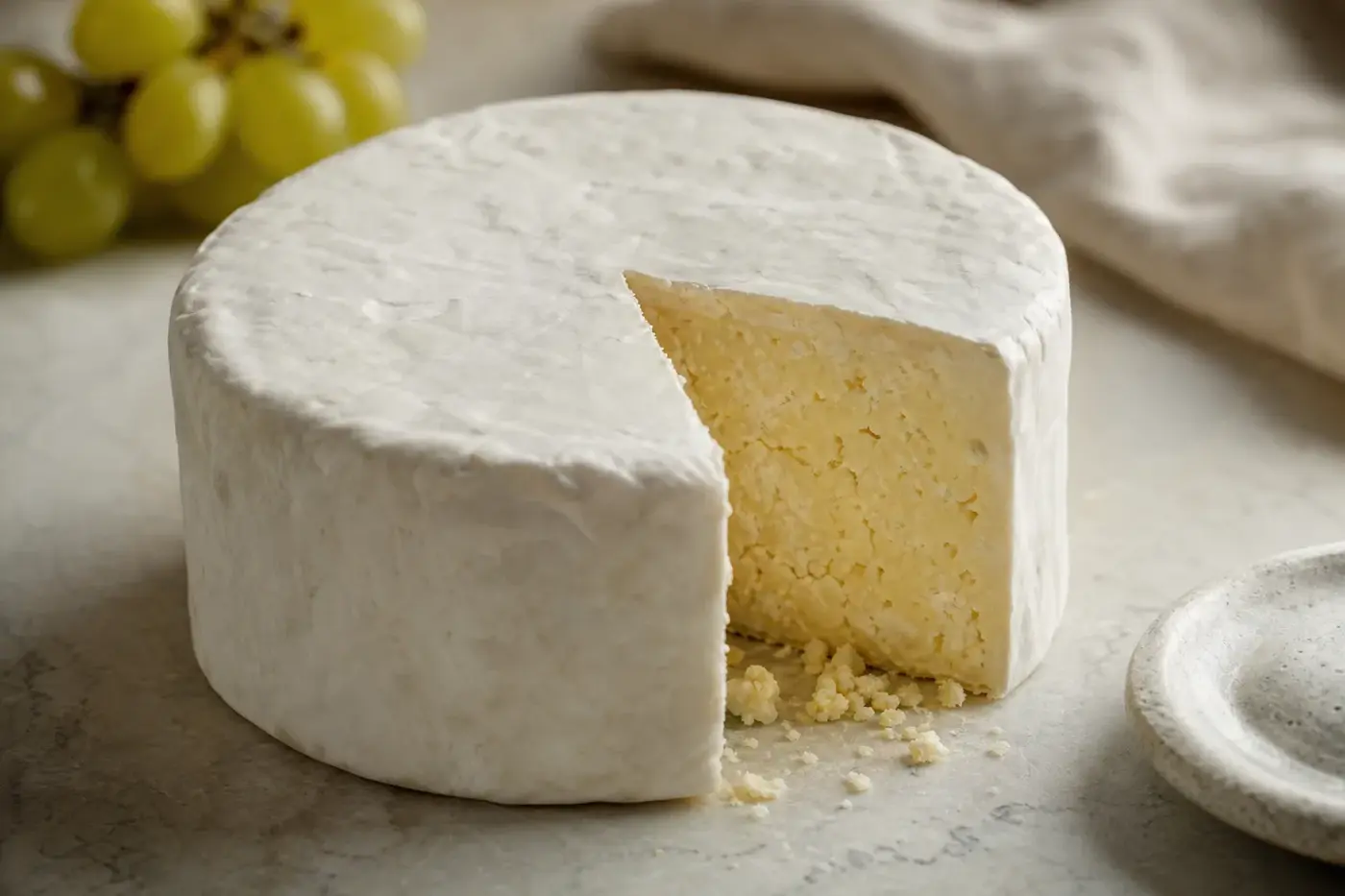
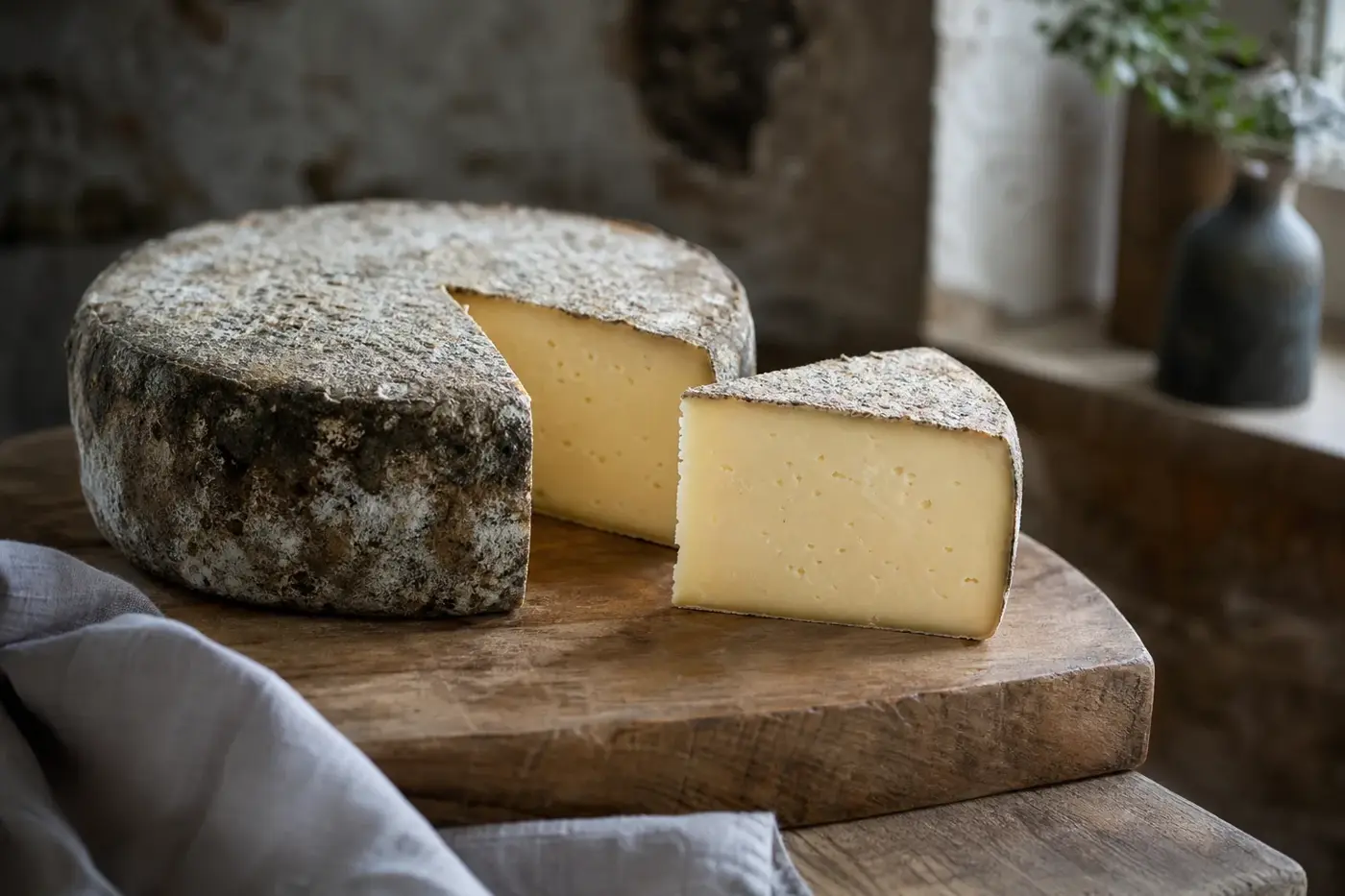
Inside, you find pale, uncoloured cheese rather than the orange of many Double Gloucesters. Charles Martell & Son describes its Single Gloucester as naturally mouldy on the rind, softer and more open-textured than most English hard cheeses. Think firm enough to slice, rather than necessarily dense and tightly packed. [4][6]
The PDO specification offers some appetising clues: mild, lactic flavour, a buttery note, smooth texture and a body that yields under pressure. That lactic smell is particularly noticeable in a young cheese. Ask the age of your piece, then see whether you catch its youthful milk character or something further along in maturation. [2]
Take your first small piece on its own. Notice the resistance as you bite, the milk-like acidity and how long the flavour stays. Then try bread or fruit: you are getting acquainted, not conducting a cheese performance review.
Follow the herd home to Gloucestershire
The Gloucester cow still has a working role here. Smart’s Traditional Gloucester Cheese makes both Single and Double Gloucester from its own closed, mixed-breed herd. Jonathan Crump’s Gloucester Cheeses makes its Single Gloucester entirely from Gloucester milk, giving you different farming arrangements within the same regional tradition. [7][8]
At Charles Martell & Son, the farm’s published account puts Gloucester cattle at the heart of its work. Producing milk for Single and Double Gloucester gives the breed a continuing purpose. Its story starts with that herd of three cows and a bull, established in 1972. [9]
The original PDO application tells you how precarious farmhouse cheesemaking became. It attributes much of the Gloucestershire industry’s decline to the Second World War and demand for liquid milk. Surviving makers wanted to retain local skills, and its historical account places Single Gloucester’s revival at Laurel Farm in 1978. [5]
That helps explain why the cheese’s identity stretches beyond flavour. You have a local making tradition, a dairy breed and farms keeping both in use. Protection makes those connections part of the production requirements, tying the name on your cheese to the place and herds behind it.
Follow the cream to understand “Single”
Look into Single Gloucester’s history and you find milk with some cream removed. The nineteenth-century Book of Household Management describes Gloucestershire cheesemaking using new milk mixed with skimmed milk. For Single Gloucester specifically, it describes skimmed milk or milk deprived of half its cream; its Double Gloucester description uses whole milk and cream. [10]
That household reference gives you an understanding of the distinction at the time, not one exact historical ratio. Both “skimmed” and “partly skimmed” appear in its explanation. Cream removal is the useful thread to follow, rather than a single recipe for every cheese bearing the name. [10]
Today’s Great Britain specification describes a full fat hard cheese. It also permits a lower fat version at the maker’s discretion, identified on the label. It does not prescribe evening skimmed milk mixed with morning whole milk: history supplies the background, while the specification and producer’s information explain today’s wheel. [2]
Charles Martell & Son connects the names with Single Gloucester’s traditionally thinner shape and generally lower fat content. That gives you another way to understand the historical milk descriptions. It still leaves no fixed formula for comparing any Single Gloucester with any Double Gloucester. [4]
From the vat to a wheel you can slice
The published method begins with starter culture added to milk in a vat. Rennet or a non-animal coagulant follows, setting the milk into curd, the solid material that becomes cheese. The maker cuts the curd, warms it with the whey and drains it, then mills and salts it before moulding and pressing. [2]
Turning and pressing establish the wheel’s shape before maturation begins. The specification allows it to leave the press on the following day or up to five days later. It describes the cheese as ready for consumption at about two months, which is distinct from either a legal minimum or a typical ageing period. [2]
For a closer look at curd formation and whey removal, turn to how cheese is made. At the counter, keep what the method permits separate from what a particular farm chooses. Milk treatment, coagulant and the age at which the maker offers the wheel are three different questions worth asking.
The PDO keeps the farm in the picture
Single Gloucester appears on the Great Britain register as a registered protected designation of origin, or PDO. Defra explains that UK geographical indication schemes protect registered names sold in England, Scotland and Wales. In Northern Ireland and the EU, protection falls under the EU schemes. [1][11]
For this cheese, place and herd are connected. Production is tied to Gloucestershire, and producing farms must run a herd of registered Gloucester cattle. Whenever possible, the milk must include milk from Gloucester cows; exceptionally, the specification allows milk from other breeds obtained within the defined area. [2]
That distinction matters when you are choosing a piece. Keeping a registered Gloucester herd is not the same requirement as making every wheel exclusively with Gloucester-breed milk. Jonathan Crump’s Gloucester Cheeses publishes an entirely Gloucester-milk declaration for its own cheese, giving you specific information about that producer within the regional tradition. [8]
The protected name is not a business name, either. Defra says a geographical indication belongs to no individual business: producers may use a registered name when they follow its specification and are verified to do so. You can explore the wider picture in protected cheese names. [11]
Give Single and Double a place on your board
For a useful comparison, start with two cheeses from one maker. That tells you more than assumptions about every Double Gloucester you might encounter. Charles Martell & Son publishes these details for its Single and Double Gloucester, showing shared milk options alongside differences in colour and shape. [4][6]
| What to compare | Its Single Gloucester | Its Double Gloucester |
|---|---|---|
| Milk | Pasteurised or unpasteurised Gloucester cows’ milk. [4] | Pasteurised or unpasteurised Gloucester cows’ milk. [6] |
| Colour | Uncoloured. [4] | Annatto-coloured. [6] |
| Nominal wheel weight | 2.5 kg. [4] | 3.5 kg. [6] |
| Published dimensions | 21.5 cm across, 6.5 cm high. [4] | 21.5 cm across, 11 cm high. [6] |
The matching diameter makes that difference in height easy to picture. Across different makers, though, “Double” is not an instruction to double the weight, ageing period or flavour intensity. Cheese names are not always obliging enough to do the arithmetic for you.
For your own tasting, choose both from one maker and ask their ages. Taste Single Gloucester first, then return to it after the Double. Keep bread, fruit and other accompaniments identical, so you are comparing the cheeses rather than the company they keep.
Get to know your maker’s choices
Milk treatment and rennet choices vary between producers. Smart’s says its farm-made cheeses use unpasteurised cows’ milk and are vegetarian. Jonathan Crump’s Gloucester Cheeses explicitly declares vegetarian rennet and entirely Gloucester-breed milk. [7][8]
Charles Martell & Son’s Single Gloucester description allows pasteurised or unpasteurised milk and uses the wording “natural rennet”. [4] Take each declaration for what it tells you. Information about the cows’ breed cannot answer a question about the coagulant.
If vegetarian suitability matters to you, ask explicitly about the piece you are buying. “Natural rennet” leaves more to establish than a direct vegetarian statement. It is a small, useful question to settle before your cheese is wrapped.
Ask about milk treatment too, rather than assuming every Single Gloucester is raw-milk cheese. You can read the background in raw milk, thermised and pasteurised cheese and rennet explained. For the piece in front of you, begin with the producer’s own details.
Bring home more than a name
At the counter, ask four questions: who made it, how old is it, which milk treatment was used, and what does the maker say about rennet? Then ask the cheesemonger about the wheel being cut. Its texture and stage of maturity tell you more about tonight’s cheese than the name alone.
If your piece is freshly cut, ask for storage instructions and any date information. For household handling in England, Northern Ireland and Wales, the Food Standards Agency advises refrigerating dairy products, following packaging instructions and keeping your fridge between 0 and 5 °C. It also advises checking that temperature with a fridge thermometer. [12]
When serving in England, Northern Ireland and Wales, consult the Food Standards Agency’s chilled food guidance and follow the instructions supplied with your product. Keep those instructions to hand. Advice intended for another cheese is no substitute for the information supplied with yours. [12]
For wrapping and caring for cut pieces, read how to store cheese at home. Keep the maker’s information with the cheese, including any dates. Do not borrow a general shelf life from another producer: your piece’s own guidance is the practical reference.
Let the first mouthful be about the cheese
Begin with plain bread, a lightly flavoured cracker or slices of pear. Put assertive chutney and pickles in separate dishes, then try them after tasting the cheese alone. You can introduce contrast at your own pace without losing Single Gloucester in the first mouthful.
For an alcohol-free drink, try still water or a little pear juice diluted to your taste. Both make quiet companions. They give you room to notice the cheese instead of handing the whole occasion to the accompaniments.
Charles Martell & Son recommends its Single Gloucester for toasting and cooking. [4] Try it on plain toast or over a baked potato before moving towards a strongly seasoned dish. Keep that first serving simple enough to recognise the cheese you chose, then decide where you would like to take it next.
General information only, not medical advice: follow the official guidance where you live.
Questions people ask
What does Single Gloucester taste like?
The PDO specification describes a mild, lactic taste with a buttery note. It has a smooth texture and a body that yields under pressure.
How is Single Gloucester different from Double Gloucester?
Single Gloucester is traditionally flatter and uncoloured, unlike the orange colour of many Double Gloucesters. Charles Martell & Son’s Single and Double have the same published diameter, but its Single is 6.5 cm high and its Double is 11 cm high.
Where is Single Gloucester made, and must it use Gloucester cows’ milk?
Single Gloucester is produced in Gloucestershire, and producing farms must keep registered Gloucester cattle. Milk must whenever possible include milk from Gloucester cows, although the specification allows exceptional use of milk from other breeds obtained within the defined area.
Is Single Gloucester vegetarian?
The specification permits rennet or non animal coagulants, so this depends on the maker. Smart’s says its farm made cheeses are vegetarian, and Jonathan Crump’s Gloucester Cheeses declares vegetarian rennet.
Is Single Gloucester made with pasteurised milk?
It can be made with pasteurised or unpasteurised cows’ milk. Check the producer’s information for the particular cheese.
Sources
- Department for Environment, Food & Rural Affairs. Single Gloucester, protected food name register entry, published 4 January 2021; retrieved November 2026. Official register entry.
- Department for Environment, Food & Rural Affairs. Product specification: “Single Gloucester”, undated document linked from the current Great Britain register; retrieved November 2026. Product specification.
- European Commission. eAmbrosia, record EUGI00000013115; register interface retrieved November 2026. Its substantive fields were not readable in this research session. Official register record.
- Charles Martell & Son. Single Gloucester, undated producer product description; retrieved November 2026. Commercial producer source. Producer description.
- European Commission, eAmbrosia document repository. Application for registration as designation of origin/protected geographical indication: Single Gloucester Cheese, original application dossier, including typed transcription; retrieved November 2026. Registration dossier.
- Charles Martell & Son. Double Gloucester, undated producer product description; retrieved November 2026. Commercial producer source. Producer description.
- Smart’s Traditional Gloucester Cheese. Home and Our Cheese, undated producer statements; retrieved November 2026. Commercial producer sources. Farm description and cheese description.
- Jonathan Crump’s Gloucester Cheeses. Frequently Asked Questions, undated producer statement; retrieved November 2026. Commercial producer source. Producer declarations.
- Charles Martell & Son. Gloucester Cattle, undated farm account; retrieved November 2026. Commercial producer source. Farm account.
- The Book of Household Management, 1861, paragraphs 1621 and 1622, retrieved online transcription, November 2026. Historical text.
- Department for Environment, Food & Rural Affairs. Protected geographical food and drink names: UK GI schemes, updated 8 March 2024; retrieved November 2026. Official scheme guidance.
- Food Standards Agency. How to chill, freeze and defrost food safely, published 18 December 2017, current retrieved version, November 2026; applies to England, Northern Ireland and Wales. Official household guidance.
This desk-researched article brings together official production documents, a contemporary historical account and makers’ own declarations; serving suggestions are identified as editorial judgement.
Last checked: November 2026
Last checked November 2026.
The editors suggest you read next
West Country Farmhouse Cheddar Cheese
Large pieces of curd turn and stack under the cheesemaker’s hands.