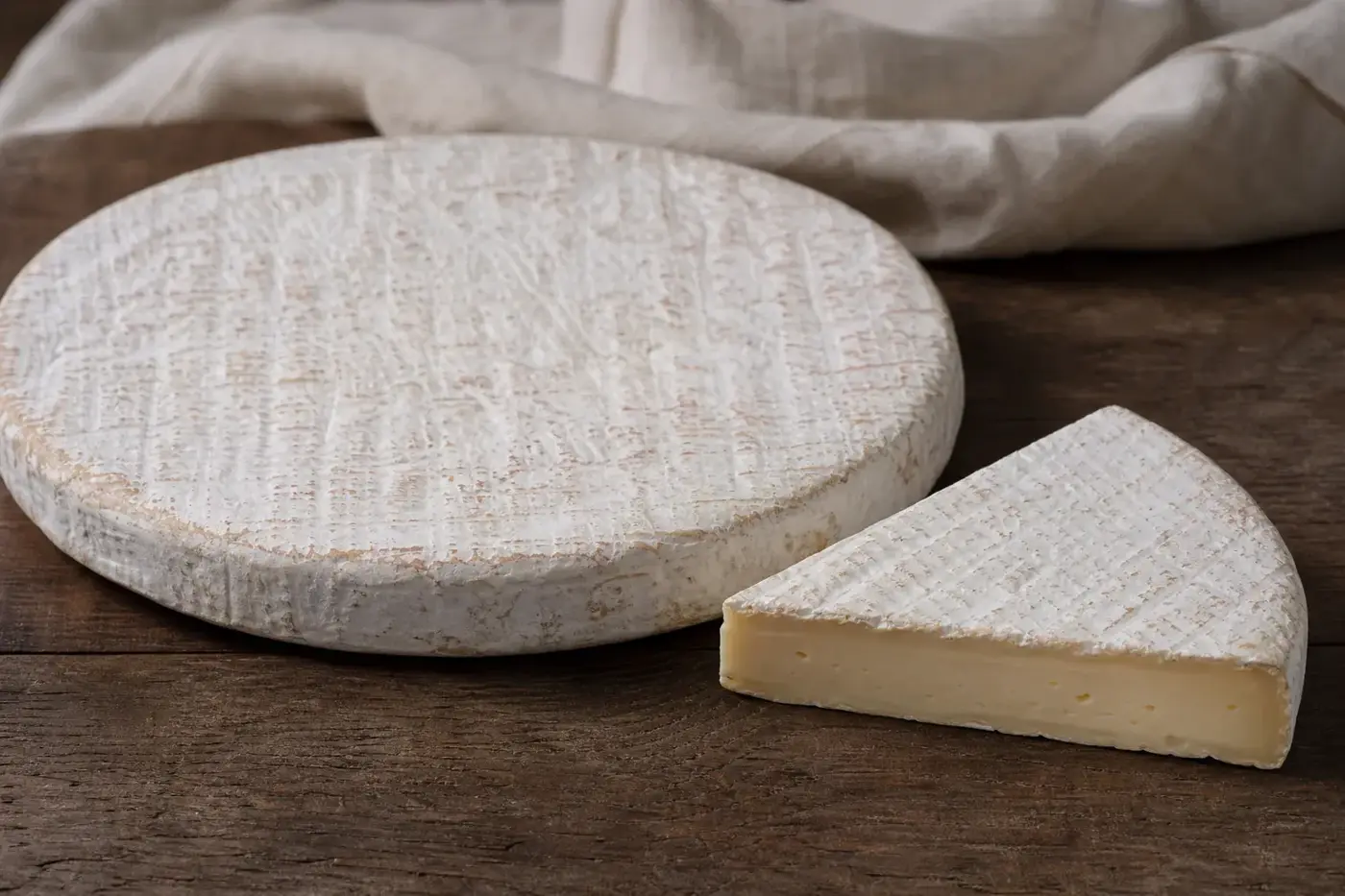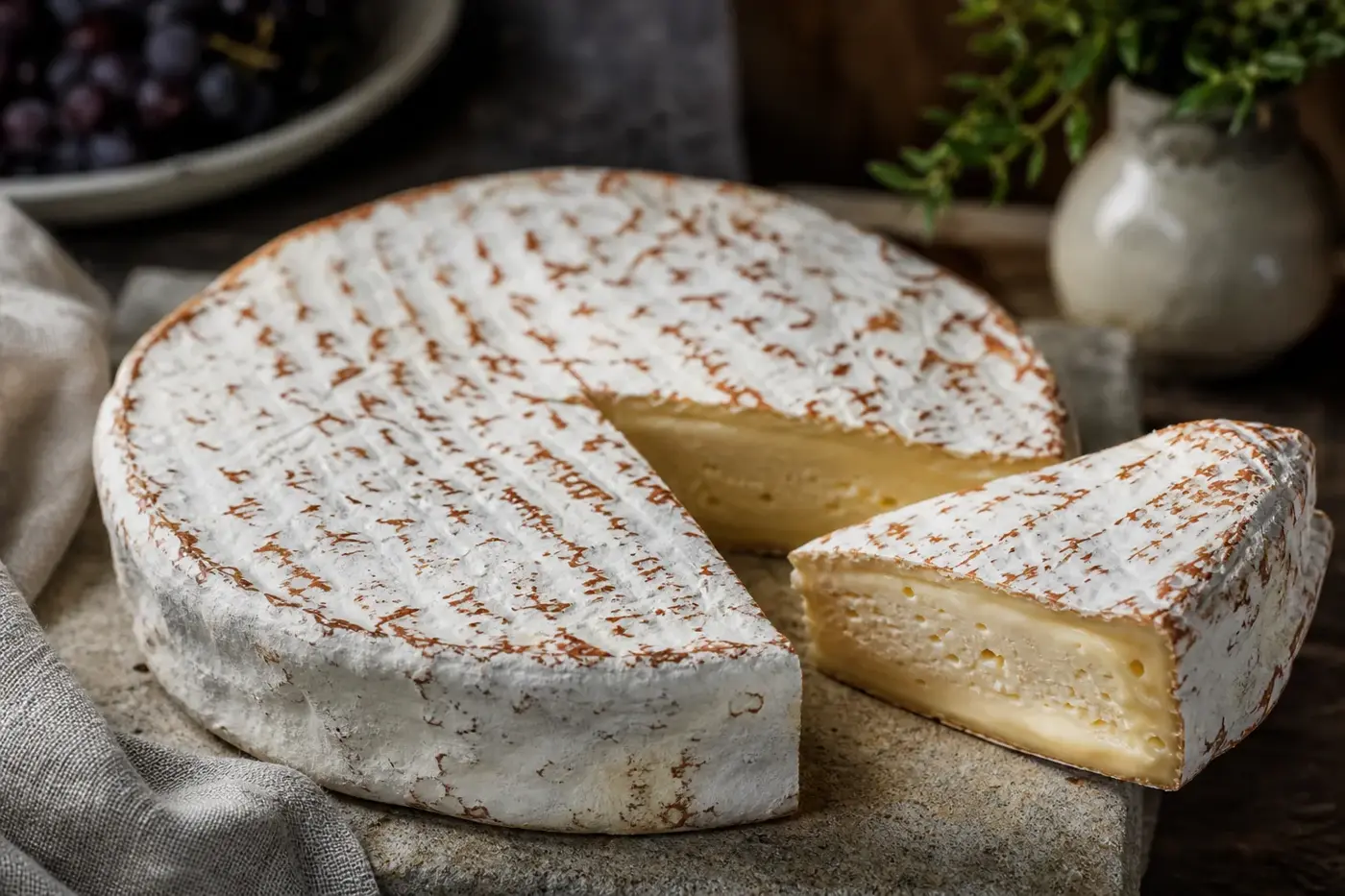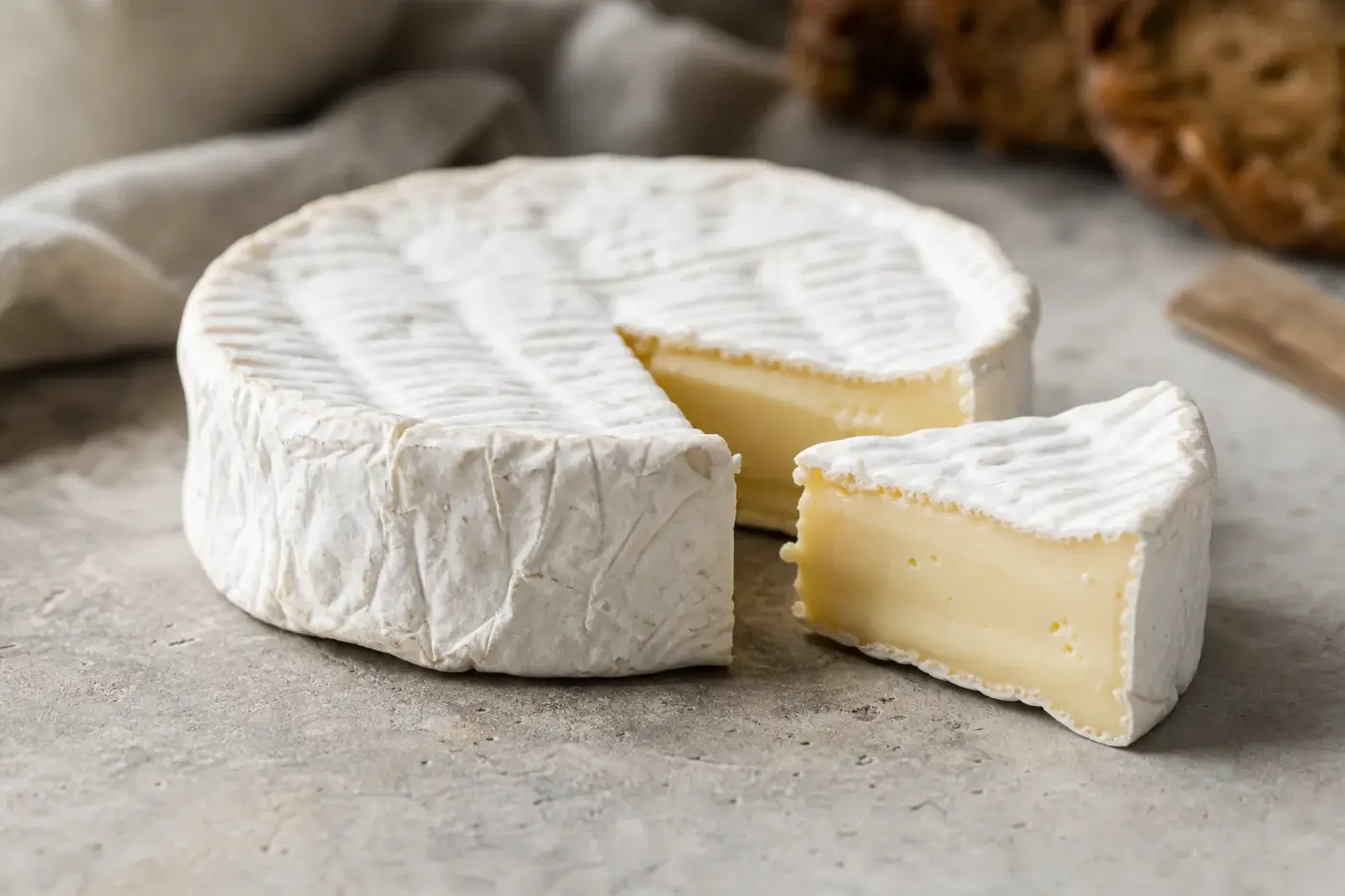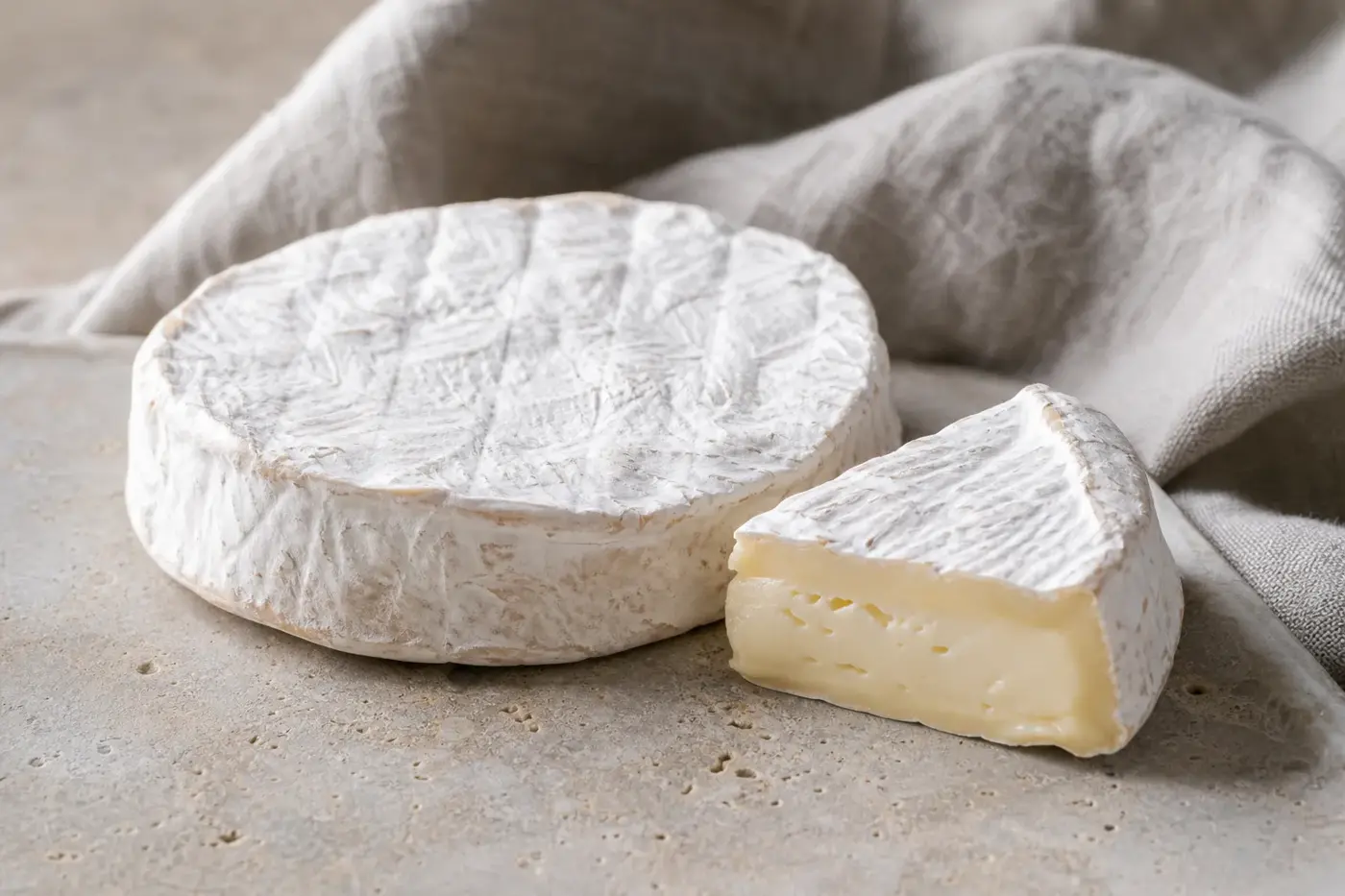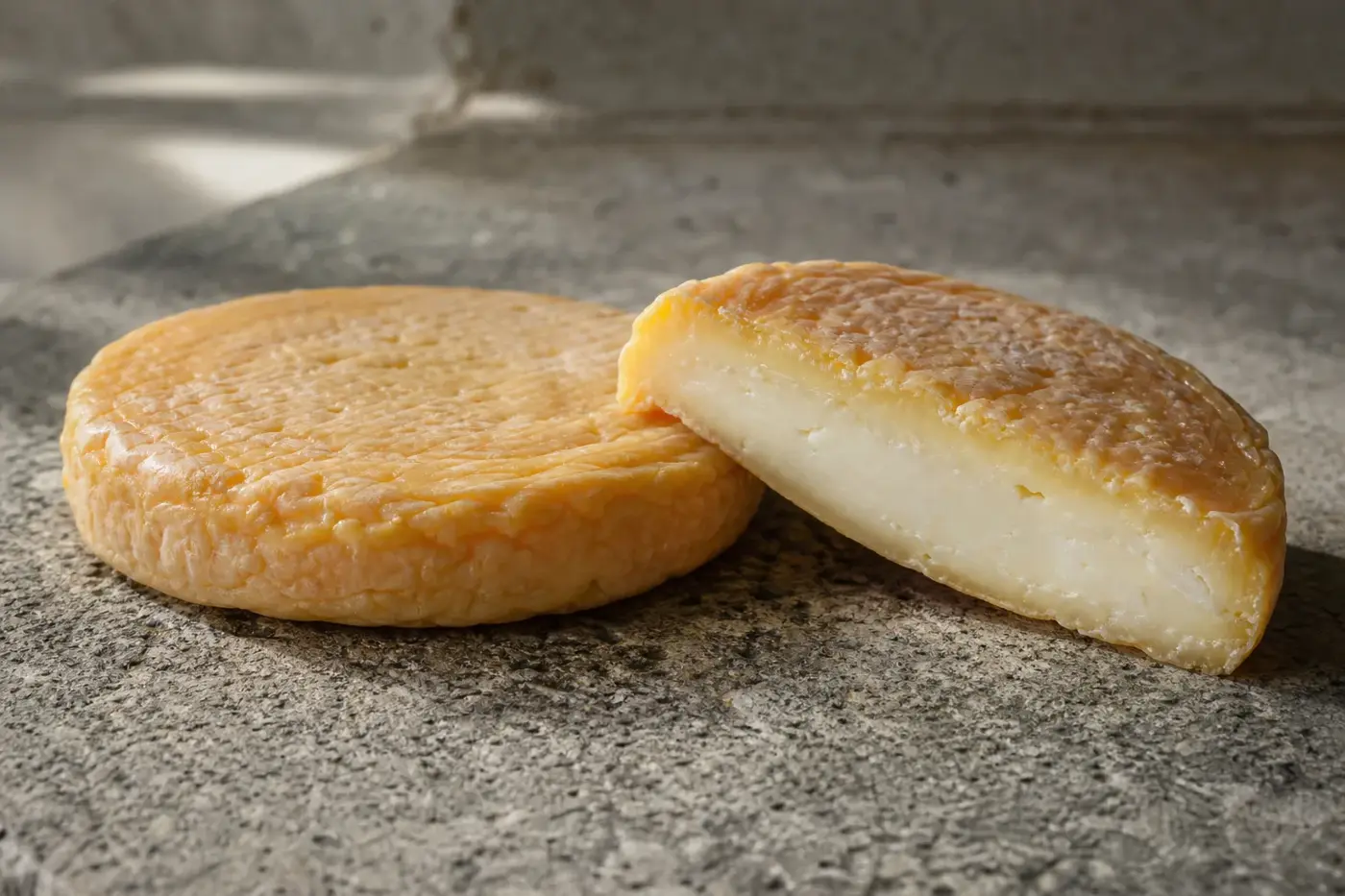
The rind announces itself before you reach for the knife. Pungent, slightly moist and decidedly present, it gives little warning of the delicate ivory interior and fresh, lactic tang beneath. Soumaintrain likes to make an entrance: this soft, whole cow’s milk cheese takes its name from a village in the Yonne and gained European Union recognition as a protected geographical indication in 2016. [1, 2]
| At a glance | Soumaintrain |
|---|---|
| The name to look for | Soumaintrain. [3] |
| Registration authority and identifier | European Commission; FR-PGI-0005-01298. [3] |
| EU recognition | PGI, recognised in 2016. [1] |
| Great Britain status | Registered PGI from 31 December 2020; status noted November 2026. [4] |
| Where it must be made | Parts of Aube, Yonne and Côte-d’Or, France. [3] |
| Milk | Whole cow’s milk; raw and pasteurised versions documented. [2] |
| Shape and size | Flat cylinder, 90 to 130 mm across, weighing 180 to 600 g. [3] |
| Rind and centre | Slightly moist, ivory-yellow to ochre rind; soft, ivory-white paste. [3] |
| Minimum production time | 21 full days from renneting to leaving the ripening room. [5] |
Look beneath that softly coloured rind
Picture a low round, rather than a tall drum. INAO, France’s national origin and quality institute, describes an ivory-yellow to ochre rind surrounding a fine, soft, ivory-white paste. If you have orange in mind, allow for the wider, often paler range of colours too. [1]
Look closely and you may find wrinkles or draining-rack marks on the slightly damp rind. Inside, smoothness can meet a little fine graininess, with a softened layer just beneath the surface. That layer belongs to the cheese’s specified character: the centre and outside need not feel alike. [3]
At the cheese counter, ask how far the softening has travelled towards the centre. You will learn more than you would from simply asking whether it is “ripe”. The smell cannot tell you everything about the mouthful ahead.
Follow the cheese home to the Yonne
Soumaintrain village lies in the Yonne, around Saint-Florentin, in the historic border country between Burgundy and Champagne. The producers’ association describes grassland and damp valleys threaded by the Armance, Yonne, Serein and Seine, among other rivers. Keep that landscape in mind when you taste. [2]
The protected area reaches beyond the village into specified parts of Yonne, Aube and Côte-d’Or. Under the published European single document, milk production, cheesemaking and ripening must all happen within it. Making the cheese elsewhere and merely packing it near Soumaintrain does not meet those requirements. [3]
You will find farm-made Soumaintrain as well as dairy-made cheese using milk collected from several farms. The association places both within the regional tradition. Ask who made yours, which milk treatment they used and how they matured it. [2]
Meet the grazing cows and open the abbey archives
Those grasslands have a job to do. Productive dairy cows must graze for at least five months, while grass must supply at least 30% of the dry matter of coarse fodder over a year. The European single document links this feeding system to the cheese’s seasonal plant-like aromas. [3]
The producers’ association traces local cheesemaking references through the archives of nearby Pontigny Abbey. There, payments in kind included matured cheeses. Its historical account also describes markets expanding in the nineteenth century as transport improved, rooting Soumaintrain in the surrounding region’s cheesemaking tradition. [6]
For a closer look at the cheese itself, turn to the 1889 agricultural household manual cited in the European application. Its account describes moulding, draining, salting and repeated washing. That patient work on the surface connects the recorded cheese with the way Soumaintrain is made today. [3]
Give the delicate centre a slow beginning
Soumaintrain starts with whole milk, without adjustment to its fat and protein composition. The production text also prohibits concentrating it by removing water before coagulation. That is the stage when milk sets into curd. [5]
The make is predominantly lactic: acidification by lactic cultures works alongside animal rennet, the milk-setting enzyme preparation. Coagulation must last at least eight hours before moulding. This slow start helps establish the fresh acidity that still matters after ripening. [5]
Then comes gentle handling, rather than firm pressing. The curd drains naturally in moulds, with farm-made cheese hand-ladled into them. Unmoulding happens at least 20 hours after moulding, followed by dry salting. [5]
This is why such an aromatic cheese still belongs among soft, lactic cheeses. To follow the broader sequence, visit how cheese is made. The separate guide to rennet explains its part in setting milk.
Discover what those rind washes do
During ripening, Soumaintrain receives at least four washes with water that may be salted or unsalted. Colourings and colour activators are prohibited in that washing water. The rind’s appearance must develop without them. [5]
According to the European application, washing manages the surface flora and contributes to the moist rind. Regular removal of surface growth also helps explain its relatively pale appearance beside neighbouring washed-rind cheeses. Do not mistake a quieter colour for a quieter aroma. [3]
Meanwhile, ripening travels inwards. Proteolysis, the breakdown of proteins, softens the paste beneath the rind while the centre keeps more of its original lactic character. You need not wait for the whole round to flow uniformly: that contrast is part of Soumaintrain’s identity. [3]
Lincet describes its own Soumaintrain as yielding, with a slightly chalky centre. Keep that maker’s description in mind as you look at an individual cheese. It offers a useful example of the contrasting textures you might find. [7]
Raw or pasteurised? Ask about your particular cheese
The producers’ association documents Soumaintrain made with either raw or pasteurised whole cow’s milk. Read the individual cheese’s milk treatment alongside its maker and maturity. The name alone cannot answer that question for you. [2]
For a revealing comparison, choose cheeses of similar age and ask how each was matured. Notice the centre’s texture, the thickness of the softened outer layer, the acidity and the aroma’s persistence. Those details are more useful than deciding beforehand that one milk treatment must produce the stronger cheese.
You can explore the treatments separately in the guide to raw, thermised and pasteurised cheese. Then come back to the cheese in front of you. Let its texture and flavour have your attention.
Let the fresh flavour have its say
Beneath the aroma, the producers’ association describes a gentle, fresh paste. Its flavour is whey-like and lactic, with slight acidity and a touch of bitterness. As maturation progresses, the account finds mushroom, humus, hay and straw aromas, with animal notes becoming more prominent. [2]
Lincet describes a mild, balanced taste, lactic acidity and persistent animal and seasonal plant-like aromas. Here is much of Soumaintrain’s appeal. The rind may have introduced itself to the whole room, but the mouthful can still be comparatively delicate. [7]
Try a little paste first, then a piece with rind attached. Give acidity, texture and aroma their own moment before deciding which dominates. A little bread between samples offers a useful pause, particularly if you are comparing different stages of maturity.
Read the promise behind the protected name
IGP is the French abbreviation for protected geographical indication, or PGI. Soumaintrain’s published European application identifies its geographical link through established quality and reputation. It specifies local milk production, cheesemaking and maturation. [3]
The EU schemes make different promises. A protected designation of origin, or PDO, requires all production steps within the defined area, with a strong link between the product and its geographical environment. A PGI requires at least one production step there, with a link based on quality, reputation or another characteristic. [3]
Soumaintrain goes further than the PGI minimum. Its requirements specify local milk production, cheesemaking and ripening. [3] For more detail on the distinctions, turn to the guide to PDO, PGI and TSG.
Your location matters too, because protection depends on jurisdiction. Great Britain’s official register lists Soumaintrain as a registered PGI from 31 December 2020. It records the original EU registration date as 14 June 2016. [4]
Choose your texture, then take care of the fridge
Tell your cheesemonger when you plan to eat your Soumaintrain. Would you prefer a more distinct centre, or a softer outer layer? Ask to see the maker’s name, milk treatment and storage instructions; the published European labelling requirements include “Soumaintrain” and identification of its production unit. [3]
At home, follow the packaging instructions for your particular cheese. The Food Standards Agency guidance cited here applies to England, Northern Ireland and Wales. It recommends a domestic fridge temperature between 0 and 5 °C and keeping dairy products refrigerated. [8]
Before serving, consult the current Food Standards Agency guidance on refrigeration and time outside the fridge. Keep that practical step separate from deciding which texture you most enjoy. [8]
Put a portion on a plain plate and notice its texture as you eat. A small wedge containing centre, softened outer paste and rind makes the differences easy to compare. For the wider routine, visit storing cheese at home.
Make a little room for bread and fruit
Start with plain bread, before anything sweet or strongly seasoned joins the plate. It gives you room to notice the lactic acidity and the difference between paste and rind. Afterwards, try a little ripe pear in autumn, or crisp apple when you fancy a firmer contrast.
Treat these as serving suggestions, with the accompaniments kept separate at first. You can then choose how much sweetness and crunch each mouthful gets. It also leaves you free to return to the cheese on its own.
For its own Soumaintrain, Lincet recommends pain d’épices, French spiced honey bread. If that appeals, taste the cheese first, then bring in the spiced bread. That way, you can notice what changes. [7]
To drink, try still water when you want a neutral comparison. An unsweetened apple drink offers an alternative to fresh fruit.
Taste Soumaintrain alongside Époisses and Langres
If you are choosing between Soumaintrain, Époisses and Langres, begin with the actual cheeses on the counter. Ask about each maker, milk treatment, maturity and current texture. Those details give you a useful starting point, rather than leaving the names to do all the talking.
With Soumaintrain, look for retained lactic freshness alongside the washed rind. Judge that combination in your mouth, not by smell alone. Taste centre against centre and rind against rind, noticing differences in acidity, softness and how long the aromas linger. [2, 7]
General information only, not medical advice: follow the official guidance where you live.
Questions people ask
What does Soumaintrain taste like?
The producers’ association describes a fresh, whey like lactic flavour, slight acidity and a touch of bitterness. As it matures, aromas can include mushroom, humus, hay and straw, with animal notes becoming more prominent.
Where is Soumaintrain made?
It takes its name from a village in the Yonne, France. Its protected production area covers specified parts of Yonne, Aube and Côte d’Or, where the milk production, cheesemaking and ripening must all take place.
Is Soumaintrain made with raw milk?
Soumaintrain can be made with either raw or pasteurised whole cow’s milk. Check the milk treatment on the individual cheese.
How long does Soumaintrain take to make?
The minimum production period is 21 full days from renneting to leaving the ripening room. Typical ageing beyond that minimum is not verified on the page.
How should I store Soumaintrain?
Follow the packaging instructions for the individual cheese. For England, Northern Ireland and Wales, the Food Standards Agency recommends keeping dairy products refrigerated and setting the domestic fridge between 0 and 5 °C; consult its current guidance on refrigeration and time outside the fridge [8].
Sources
- Institut national de l’origine et de la qualité, Soumaintrain, product overview and technical references, undated, retrieved November 2026.
- Association de Défense et de Promotion du Fromage de Soumaintrain, Patrimoine / Fromage, page updated July 2026. Producer-group descriptions and tasting account.
- European Commission, Publication of an application pursuant to Article 50(2)(a) of Regulation (EU) No 1151/2012: Soumaintrain, single document, 2016/C 47/09, Official Journal C 47, 6 February 2016.
- Department for Environment, Food & Rural Affairs, Soumaintrain, Great Britain protected food and drink names register, published 4 January 2021, retrieved November 2026.
- INAO, Cahier des charges de la dénomination « Soumaintrain », text associated with the order of 18 November 2014, national opposition version showing proposed changes. Used for production details subject to the legal verification flag below.
- Association de Défense et de Promotion du Fromage de Soumaintrain, Un précieux héritage, page updated July 2026. Attributed industry history.
- Fromagerie Lincet, Soumaintrain IGP, undated product page, retrieved November 2026. Commercial producer source for its own tasting notes and pairing recommendations.
- Food Standards Agency, How to chill, freeze and defrost food safely, published 18 December 2017, retrieved November 2026; stated territorial coverage: England, Northern Ireland and Wales.
Research used official registration material, production documentation, attributed producer-group accounts, a maker’s published descriptions and national food-handling guidance; no site tasting or visit was undertaken.
Last checked: November 2026
Last checked November 2026.
The editors suggest you read next