Spenwood
A slice for your board, a grating for your dinner: Spenwood has more than one way of making itself useful.
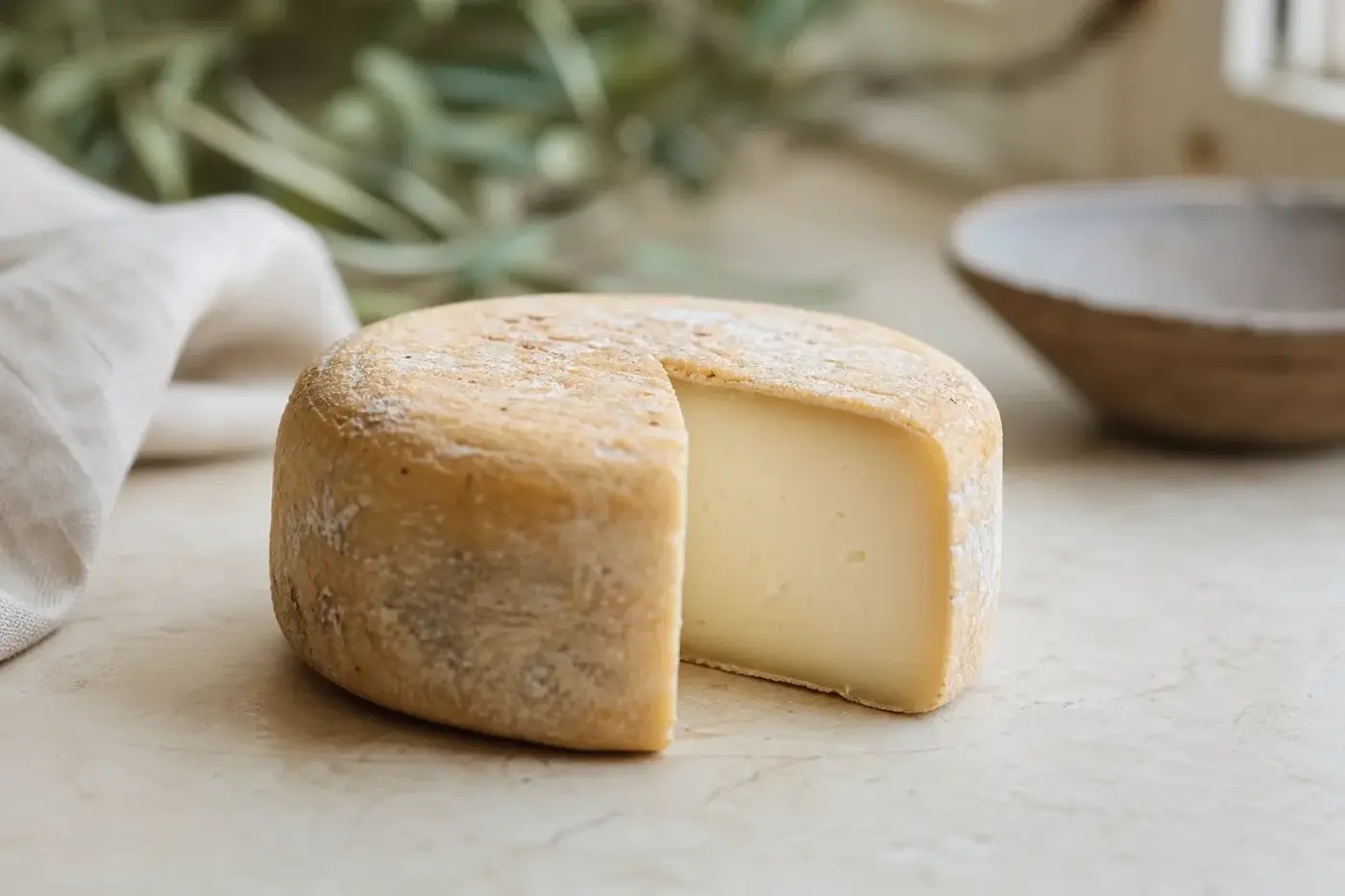
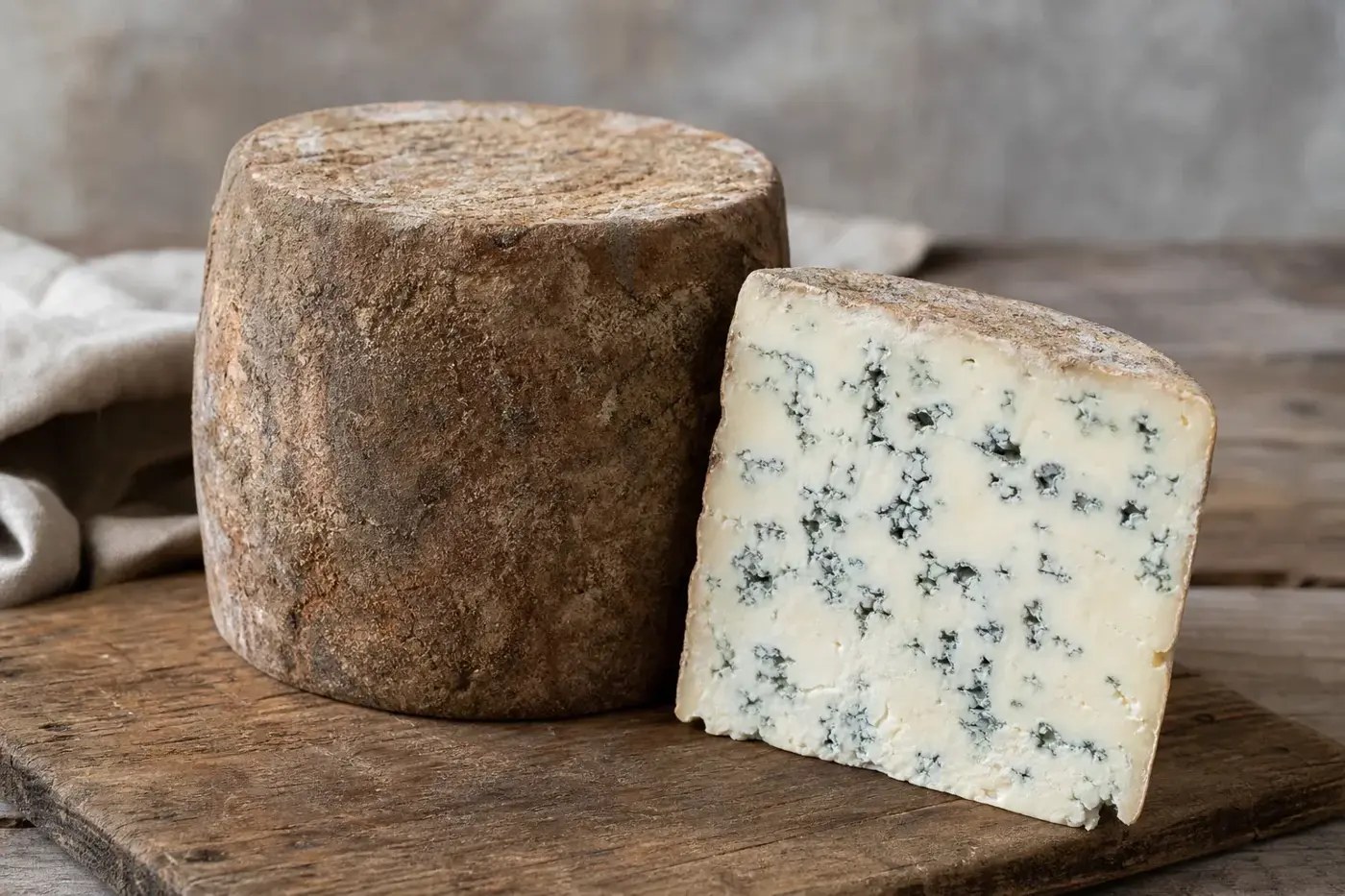
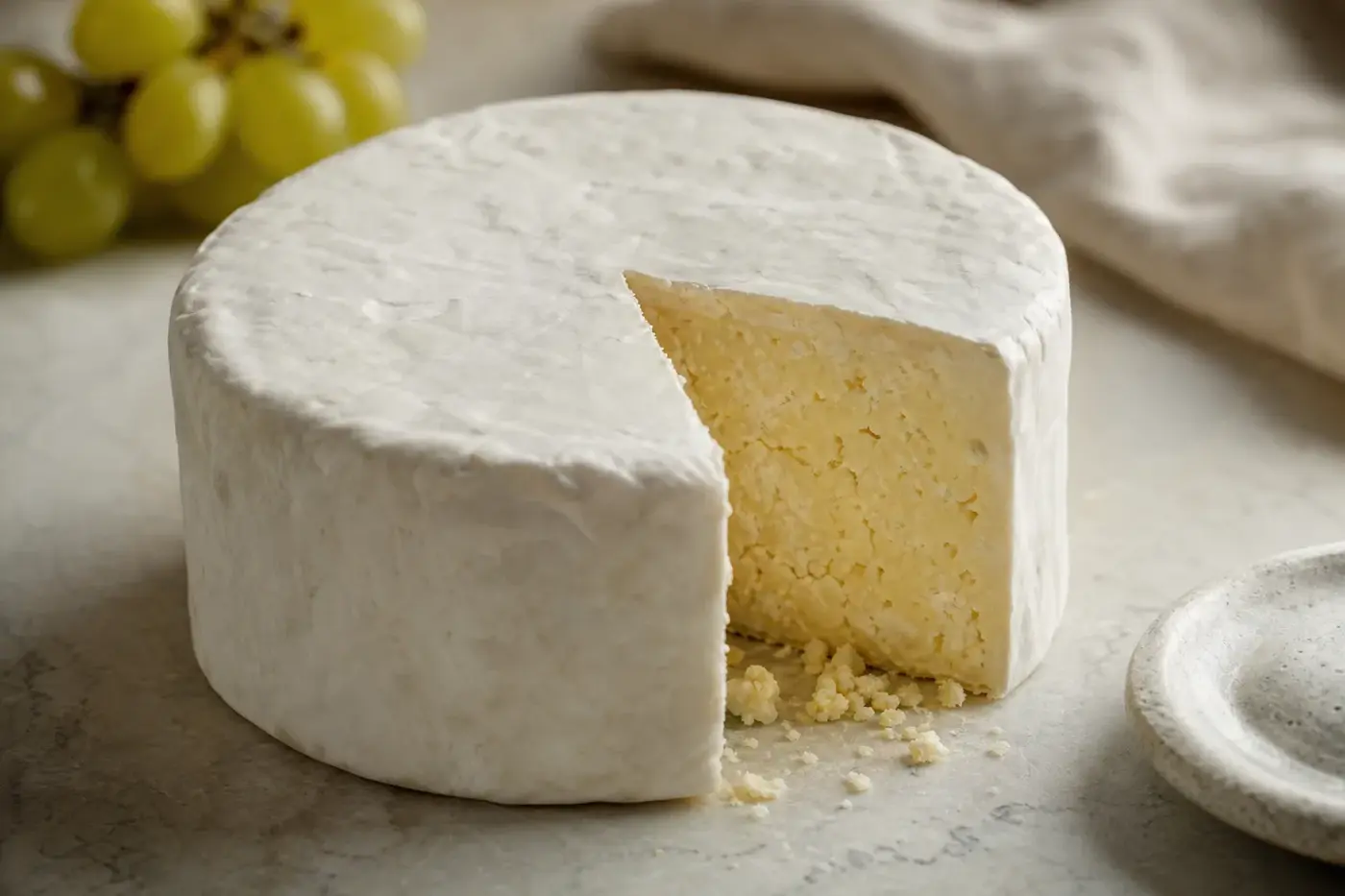
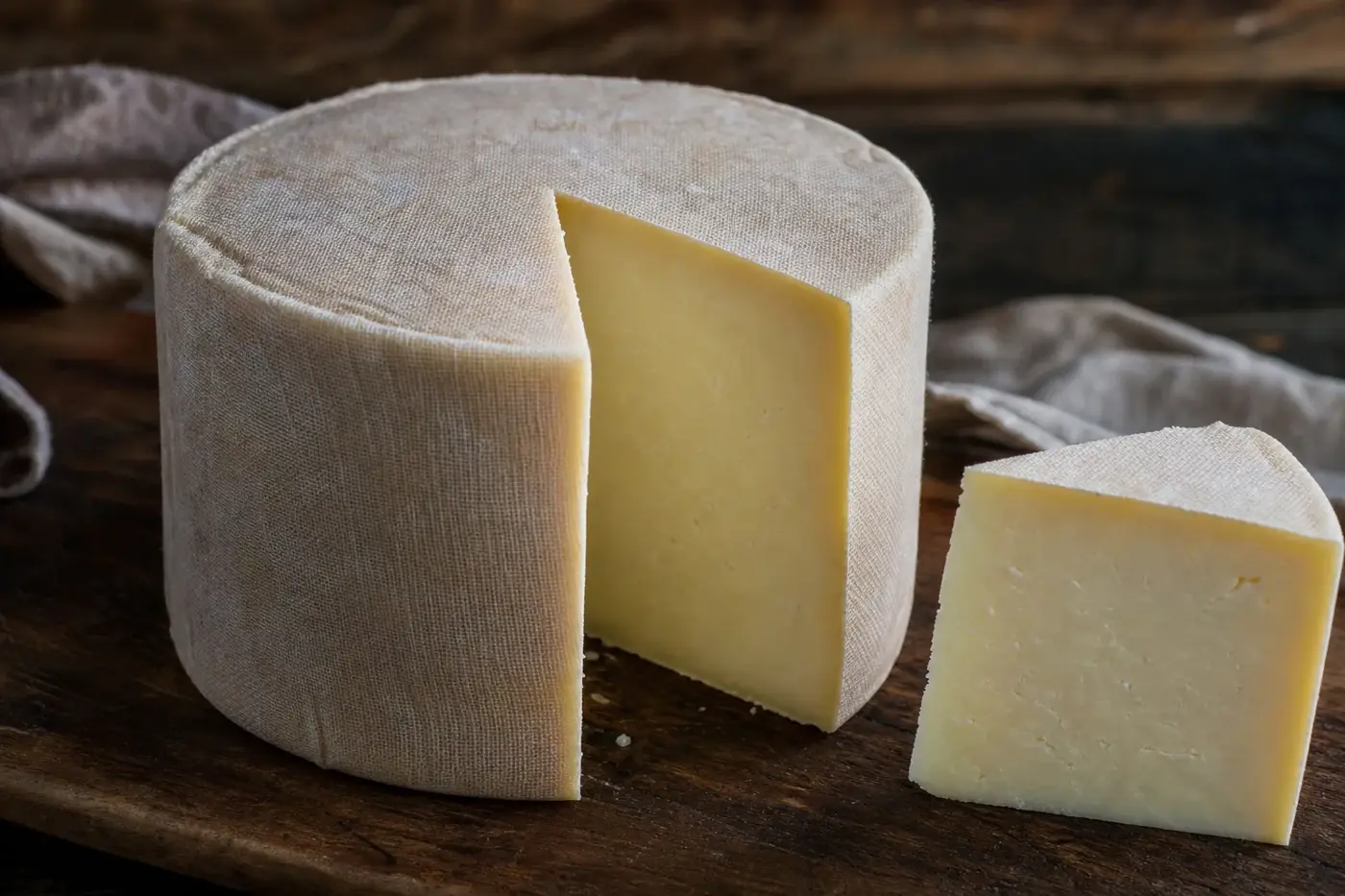
A slice for your board, a grating for your dinner: Spenwood has more than one way of making itself useful. Beneath its thin natural rind sits a firm, hard-pressed Berkshire cheese with a Sardinian memory. Village Maid Cheese’s founder encountered Sardinia’s sheep’s milk cheeses, then spent years experimenting to capture the character of Pecorino Sardo. The dairy still adjusts Spenwood to keep that memory alive. [1][2]
Your first stop at the cheese counter
| What you might ask | What to know |
|---|---|
| What’s its name? | Spenwood. [1] |
| Who makes it, and where? | Village Maid Cheese, Riseley, Berkshire, England. [10] |
| What milk goes into it? | Pasteurised sheep’s milk. [1][4] |
| Who supplies the milk? | The supplier is unspecified. |
| What sets the curd? | Vegetarian rennet, according to the maker. [1] |
| What are the style and rind? | Hard-pressed, with a thin natural rind. [1] |
| How long does the maker mature it? | 7 to 8 months. [1] |
| What does a whole cheese look like? | A round wheel, approximately 2 kg according to the maker. [1] |
| What’s on the ingredients list? | Pasteurised sheep’s milk, salt, cheese cultures and vegetarian coagulant, listed by Neal’s Yard Dairy. [4] |
From a Sardinian memory to a Berkshire outbuilding
The story starts in a garden outbuilding in Spencers Wood, near Reading. Village Maid began there in May 1986, with a founder whose experience came from the National Institute for Research in Dairying in Shinfield. A move from microbiology into cheesemaking in the institute’s experimental dairy had provided a practical grounding in what milk could become. [2]
The inspiration for Spenwood came from further afield. Village Maid’s history recalls its founder’s enthusiasm for Sardinia’s ewe’s milk cheeses, particularly Pecorino Sardo, followed by years of trials. This was no inherited Berkshire recipe. It was a cheese patiently coaxed into character through experiment. [2]
Even the name takes you back to that first address. In a published interview with Paxton & Whitfield, a member of the cheesemaking family explicitly connects “Spenwood” with Spencers Wood. The same account recalls the move to Riseley in 1991, when a former workshop became the next dairy. [3]
Today, Village Maid identifies Riseley, Berkshire, as its production location. You can trace two threads through Spenwood: Italian inspiration for its intended character, and Berkshire technical experience shaped by repeated practical trials. Both belong to this modern British cheese. [2][10]
What the milk and rennet tell you
Spenwood starts with pasteurised sheep’s milk and is suitable for vegetarians, according to Village Maid. Neal’s Yard Dairy’s ingredients also specify pasteurised sheep’s milk and vegetarian coagulant, alongside salt and cheese cultures. Those details come from the product declarations, not from a family resemblance to pecorino. [1][4]
Rennet helps milk become curd, the solid material that forms the cheese. In its dairy interview, Village Maid describes adding cultures and bringing the milk to the temperature for renneting. Later in the working day, the curds go into moulds. [3]
The maker declares vegetarian rennet, but leaves the specific enzyme source unspecified. If you would like to untangle the different coagulant types, turn to rennet explained.
When you read the label, keep two questions separate: which animal, and which treatment? “Sheep’s milk” tells you where the milk comes from; “pasteurised” tells you how it has been treated. You can explore that distinction in milk treatments.
A working day of curds, presses and brine
Pressing gives Spenwood its firm structure. Village Maid calls it “hard-pressed”: the curd is pressed into a firm cheese. [1] The dairy interview gives you a sense of the daily rhythm, with cultures added, milk renneted, moulds filled and the previous day’s cheeses moved into brine tanks. [3]
That interview ranges across the dairy’s cheeses. For a closer look at Spenwood, turn to a cheesemonger’s first-hand visit published by The Cheese Lady. The visitor saw Spenwood immersed in brine, a salt solution, and reported that firmer cheeses spent longer there than some of the others. [5]
The same visitor saw Spenwood ageing first in vacuum bags. It was then unwrapped and moved to another room to develop its natural rind. Together, these accounts describe curd formation, moulding, pressing, brining and enclosed maturation followed by rind development. They offer a glimpse of the work, rather than a complete manufacturing recipe or an account of every stage used today. [1][3][5]
If you would like to start with the basics, how cheese is made follows milk’s transformation into curd and whey. Whey is the liquid separated during cheesemaking.
Find your moment: a supple slice or a firmer crumble
Time changes what you can do with Spenwood. According to Village Maid, longer maturation makes it firmer, more crumbly and more piquant. That gives you two useful possibilities: slices while it is relatively supple, or a more assertive cheese to grate as it ages. [1]
Tell your cheesemonger what you have planned for dinner. For a board, ask for a piece that cuts neatly into small slices. For finishing pasta, ask for something firmer and suited to grating. Maturity is much more useful when it has a job to do.
Follow the sweetness, and see if pineapple appears
Beneath that thin rind, Neal’s Yard Dairy describes a cream-coloured interior, known as the paste, with a supple texture. Its tasting notes start with milk sweetness and move towards developing piquancy. Before you settle for “strong sheep’s cheese”, give the sweetness and texture a little attention. [4]
English Heritage offers another way into the flavour. Its cheese selection describes malt-like sweetness and identifies pineapple in Spenwood’s aroma. These are invitations to explore your piece, not an exam: nobody is taking marks off if the pineapple fails to appear. [6]
Smell a freshly cut surface first, then taste a small piece without bread or chutney. Does the sweetness seem milky or more malt-like? Is the finish gentle or pointed? Separating aroma from taste for a moment helps you notice what each brings.
Give the texture its turn, too. Your slice might bend slightly, break cleanly or fall into smaller fragments. Neal’s Yard Dairy’s suppleness and the maker’s description of increasing crumbliness with age give you two reference points. Use them to think about the maturity of the piece in front of you. [1][4]
Get to know the Best Sheep Cheese of 2025
Spenwood won Best Sheep Cheese at the British & Irish Cheese Awards in 2025. The official results name Village Maid Cheese Ltd and record the show date as 21 March 2025. [7]
That gives you a clear place to find Spenwood in the competition’s results. At the counter, take the conversation a little further: how mature is this piece, what condition is it in, and would you slice it or grate it? The award introduces the name. Those answers help you choose what comes home.
Make a little room on your cheese board
Start with a few small slices, plain bread or crackers, and water. That leaves room for the milk sweetness and developing piquancy described by Neal’s Yard Dairy. Bring in the accompaniments once you have met the cheese itself. The chutney can wait for its introduction. [4]
If you have a whole round, cut wedges from the centre towards the outside. With a wedge, cut smaller pieces that keep some of the outer edge, rather than taking off the pointed centre first. Use a stable board and manageable portions. There is no need to force a knife through an awkwardly positioned wheel.
Give yourself a simple tasting route:
- Look at the cut surface and notice the difference between paste and rind.
- Smell a freshly cut piece.
- Taste a small portion on its own.
- Try a second portion with bread.
- Choose an accompaniment after deciding what you enjoy about the cheese.
Keep food chilling in mind while you prepare and serve. For England, Northern Ireland and Wales, consult the Food Standards Agency’s guidance on keeping food chilled during preparation and in hot weather. [8][9]
Bring fruit, crackers and a glass to the table
Try fresh pear, apple or a little fruit chutney. Serve them separately so everyone can decide how much sweetness to add. Village Maid includes Spenwood in a selection with apple and plum chutney, date and tamarind chutney, and plain-style crackers. [11]
For an alcohol-free drink, start with still water. An unsweetened apple drink is another option if you fancy your fruit accompaniment in the glass. These fresh fruit and drink ideas are serving suggestions rather than tested pairings. Taste the cheese alone first, then find the additions you prefer.
Put Spenwood to work in your kitchen
Pasta is an easy place to begin: grating Spenwood over it is the maker’s own suggestion. [1] Finish a simple dish with a little finely grated cheese. Taste, then decide whether you want more.
You could also try shavings over roasted vegetables or grated cheese scattered over a warm bean dish. Small fragments can go into a salad just before serving. Each approach lets you adjust the amount at the table, rather than commit a whole dish to a cheese you are still getting to know.
Choose the cut to suit the job. Slices give you a distinct piece to chew, shavings offer lighter coverage, and a fine grating gives an even finish. If you are comparing pieces at the counter, ask which the seller would choose for each task. That difference between supple and firmer, more mature Spenwood matters in the kitchen just as much as on your board.
Give your Spenwood a good home
Follow the storage instructions and date information supplied with your piece. For home refrigeration in England, Northern Ireland and Wales, the Food Standards Agency recommends a fridge temperature of 5 °C or below, measured with a thermometer. Leave room for air to circulate. Avoid overfilling the fridge. [8]
Take out the portion you intend to use and leave the rest refrigerated. For more detailed advice on handling cut cheese, visit how to store cheese at home.
For current product information, head to Village Maid’s Spenwood page. The maker’s wider website is your starting point for its current range and dairy details. [1][10]
General information only, not medical advice: follow the official guidance where you live.
Questions people ask
What milk is Spenwood made from, and is it vegetarian?
Spenwood is made from pasteurised sheep’s milk. Village Maid says it is suitable for vegetarians and uses vegetarian rennet.
Where did Spenwood come from?
Village Maid’s founder was inspired by Sardinia’s sheep’s milk cheeses, particularly Pecorino Sardo. Years of trials followed, and Village Maid now makes Spenwood in Riseley, Berkshire.
What does Spenwood taste like?
Neal’s Yard Dairy describes milk sweetness followed by a developing piquancy. According to Village Maid, Spenwood becomes firmer, more crumbly and more piquant as it matures.
How should I serve Spenwood?
A relatively supple piece can be sliced, while a firmer, more mature piece is suited to grating over pasta. Village Maid also includes Spenwood in a selection with chutney and plain crackers.
How should I store Spenwood?
Follow the storage instructions and date information supplied with your piece. For England, Northern Ireland and Wales, the Food Standards Agency recommends a fridge temperature of 5 °C or below, checked with a thermometer; consult its guidance for more details.
Sources
- Village Maid Cheese, Spenwood, undated current product page, accessed November 2026. Product page.
- Village Maid Cheese, Our Story, undated current company account, accessed November 2026. Maker’s history.
- Paxton & Whitfield, Meet the Maker, Wigmore, published maker interview, 19 April 2024. Interview.
- Neal’s Yard Dairy, Spenwood, current product and ingredient information, accessed November 2026. The retailer sells the cheese. Product information.
- The Cheese Lady, Behind the Cheese: My Visit to Village Maid Cheese, undated first-hand visit account, accessed November 2026. The author reports stocking the maker’s cheeses. Visit account.
- English Heritage, The History of Cheese Making in England, undated editorial cheese selection, accessed November 2026. Published sensory description.
- British & Irish Cheese Awards, British and Irish Cheese Awards, Non Retailers, results dated 21 March 2025, class CS12. Official results.
- Food Standards Agency, Storing chilled foods at incorrect temperatures, published research summary reproducing household guidance, accessed November 2026. FSA source.
- Food Standards Agency, Food safety in a heatwave, advice for consumers, 27 June 2024, England, Northern Ireland and Wales. Official guidance.
- Village Maid Cheese, homepage, current production-location statement, accessed November 2026. Official website.
- Village Maid Cheese, Village Maid Hamper, current contents and accompaniment information, accessed November 2026. Maker’s selection.
Researched from the maker’s published records, a maker interview, first-hand trade observations, official competition results and Food Standards Agency guidance; serving suggestions identified as editorial are desk-researched recommendations.
Last checked: November 2026
Last checked November 2026.
The editors suggest you read next
West Country Farmhouse Cheddar Cheese
Large pieces of curd turn and stack under the cheesemaker’s hands.