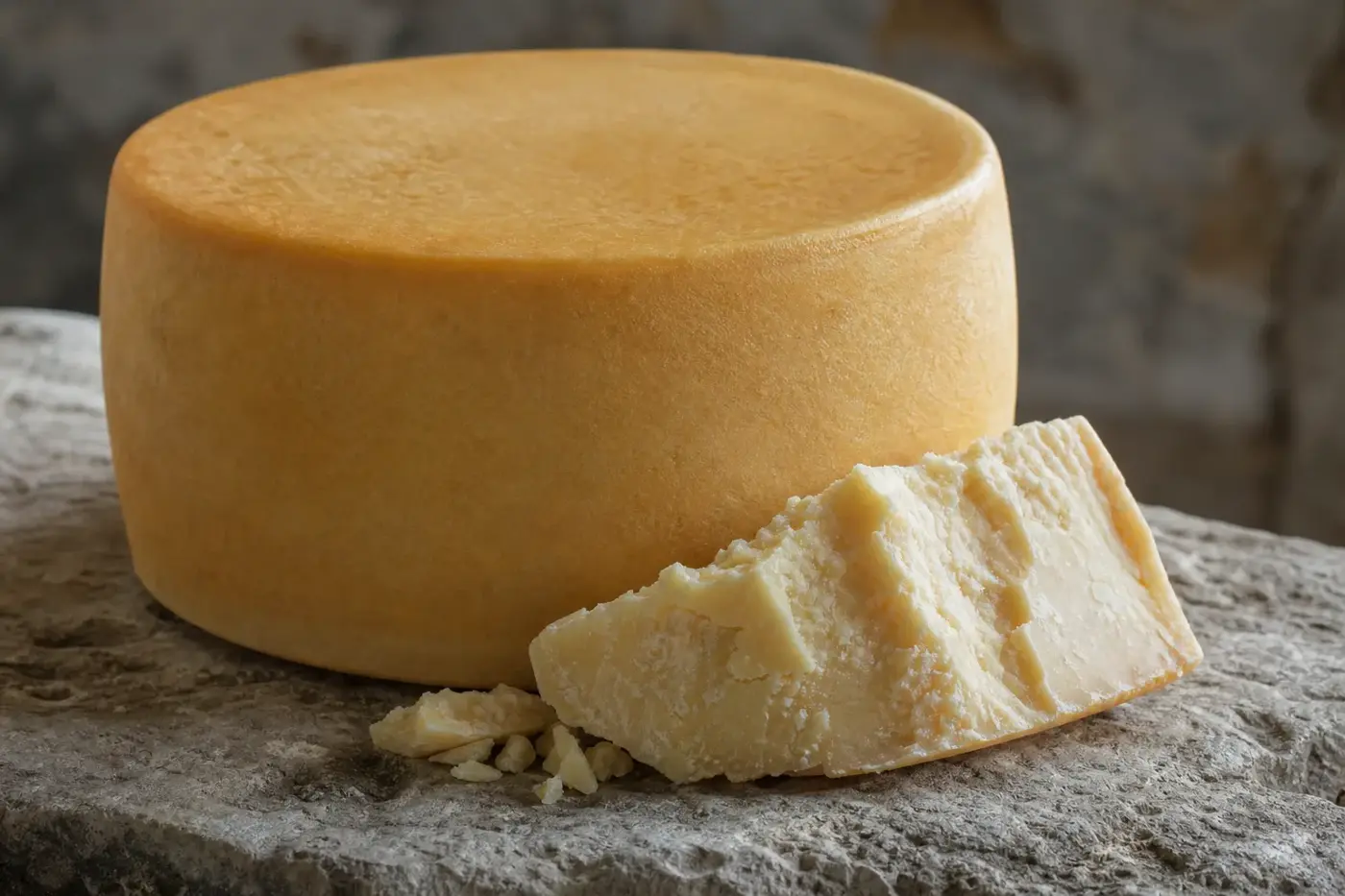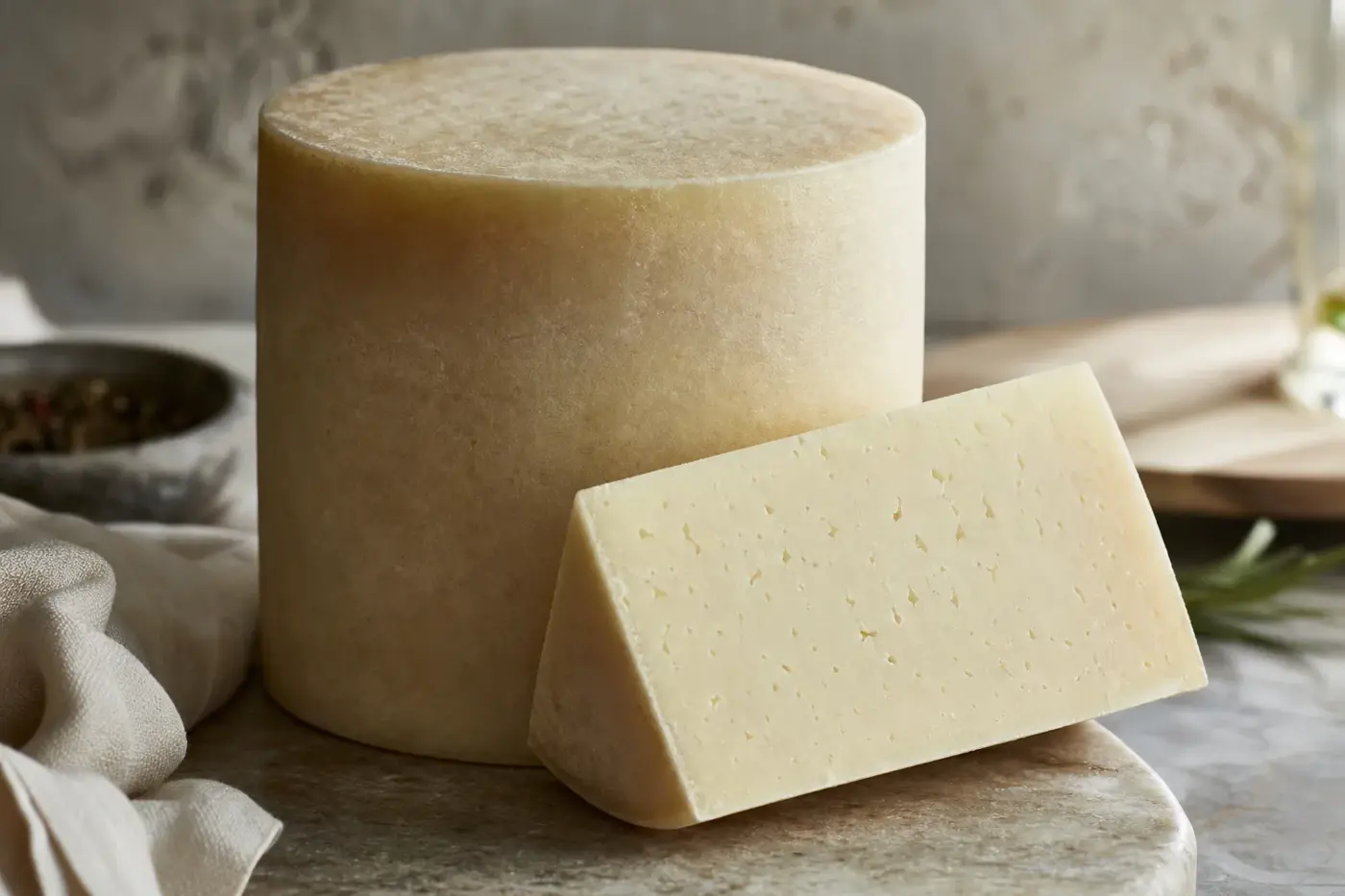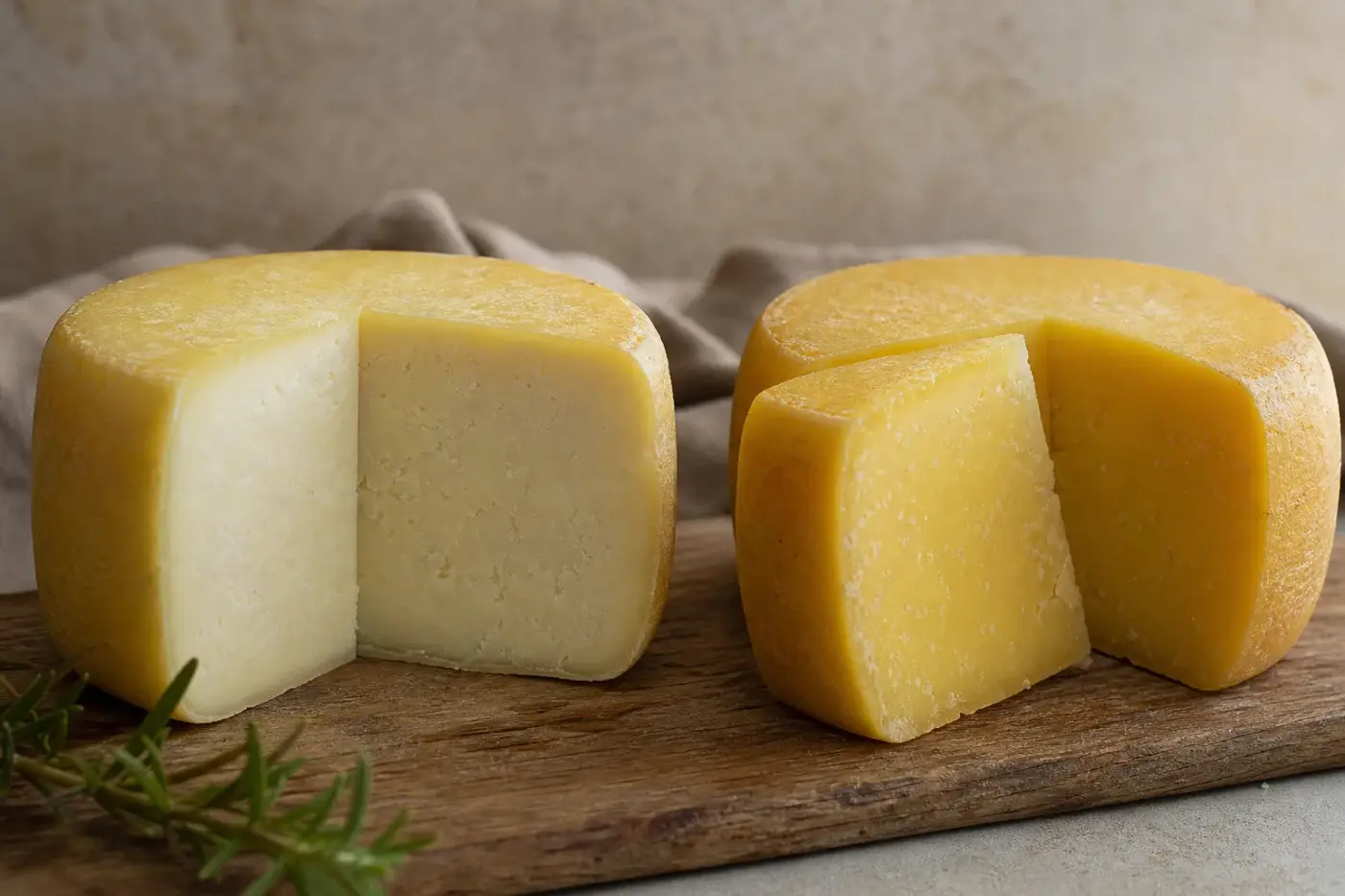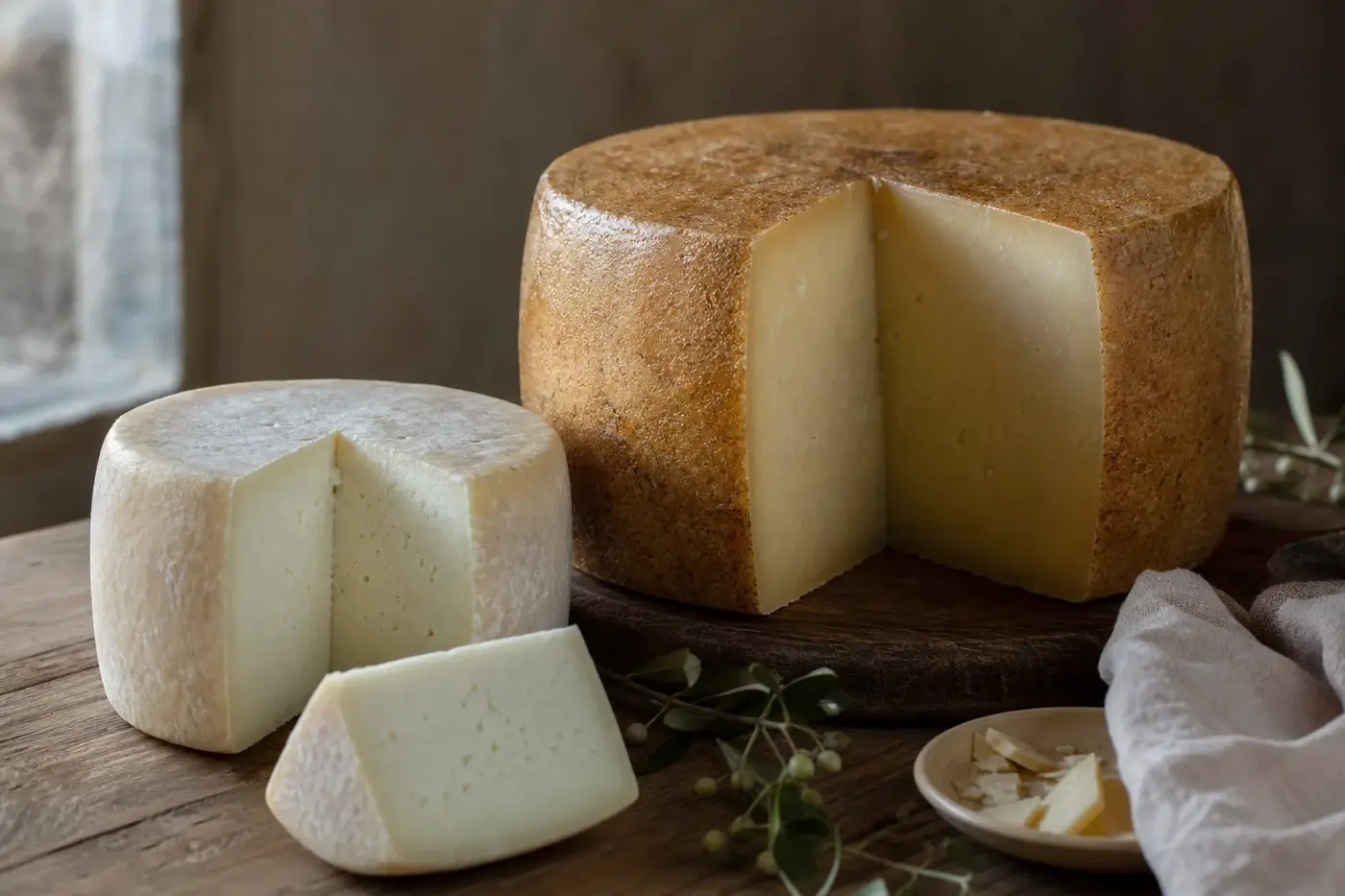
Take a slice of Dolce: white, soft, sweet and aromatic. Now try Maturo, with its compact, straw-coloured interior, browning rind and pleasantly piquant flavour. You have two expressions of Sardinia’s whole sheep’s milk on your plate, both made and matured on the island under the Pecorino Sardo designation, which holds Protected Designation of Origin status on Great Britain’s register. [1][3][4]
Pecorino Sardo at a glance
- The name to look for: Pecorino Sardo, its familiar and registered name. [1][3]
- What you’re getting: semi-cooked sheep’s milk cheese. [1]
- Its legally defined home: all Sardinia, covering milk production, cheesemaking and maturation. [1]
- Milk and rennet: whole sheep’s milk, raw, thermised or pasteurised; calf rennet. [1][5]
- Time to mature: Dolce, 20 to 60 days; Maturo, at least two months. [1]
- Registration authority: European Commission; identifier PDO-IT-0018, recorded by Italy’s agriculture ministry. [2]
- Great Britain’s register, November 2026: registered PDO, UK scheme registration 31 December 2020 at 23:00. [3]
Start gently with Dolce, or meet Maturo
If you like a gentle introduction, start with Dolce. The consortium describes this young cheese as sweet and aromatic, with a white, soft interior, or paste. You get sheep’s milk character in supple slices, without a pronounced sharp finish; Maturo brings greater firmness and intensity, eventually lending itself to shavings or grating. [4]
Maturo changes noticeably with age. The consortium describes a compact paste moving from white towards straw colour, while older wheels develop a brown rind. The specification allows an elastic interior when young, becoming hard and sometimes slightly granular later, so two pieces labelled Maturo can feel and taste quite different. Ask how old yours is before you choose. [1][4]
These are not simply the same wheel with different birthdays. Dolce and Maturo have different curd sizes and permitted formats, too. Choose the texture and intensity you enjoy: Maturo is another expression, not an automatic promotion from Dolce. [1][5]
Get to know the wheel
Both styles come as cylinders, with flat faces and straight or slightly convex sides. The specification sets out these dimensions and weights, allowing variations associated with production conditions and maturation. Here is what you can expect to find. [1][9]
| What to look at | Dolce | Maturo |
|---|---|---|
| Wheel weight | 1.0 to 2.3 kg | 1.7 to 4.0 kg |
| Diameter | 15 to 18 cm | 15 to 22 cm |
| Height | 8 to 10 cm | 10 to 13 cm |
| Rind | Thin, smooth, white or pale straw | Firmer, pale straw to brown |
Source: Pecorino Sardo product specification, Article 3. [1][9]
Before you eat the outside, read the rind instructions. The specification permits oiling, anti-mould treatments and a colourless food-contact plastic coating. Remove any plastic coating, and follow the instructions for your particular cheese. [1][9]
Follow the sheep to Sardinia’s pastures
Start with what the sheep eat. The consortium describes a diet mainly of natural pastures, meadows and grasslands, linking that vegetation to the milk’s character. Under the designation, the whole journey stays in Sardinia: milk production, cheesemaking and maturation must all happen on the island. [1][5]
That distinction matters when you reach the cheese counter. A Sardinian address on a packet gives you an address; the designation identifies a defined milk supply and production area. Look for the full cheese name and traceable labelling, especially when several of the island’s sheep’s milk cheeses are sitting side by side. [1][6]
In the dairy, two paths from whole milk
Both styles begin with whole sheep’s milk, which may be raw, thermised or pasteurised. Calf rennet sets it into curd, and local lactic cultures may be added. To explore those distinctions, turn to raw, thermised and pasteurised milk and rennet explained. [1][5]
The cheesemaker cuts Dolce’s curd into pieces roughly the size of hazelnuts; for Maturo, picture maize kernels. Those different sizes help distinguish the styles. The curd is gently heated to no more than 43 °C, then placed in circular moulds. [1][5]
Next comes warm holding and/or pressing, supporting acidification and draining the whey, the liquid separated from the curd. Brine and/or dry salt follows. Only after those stages do the cheeses move into dedicated rooms to mature. [1][5]
Buying ready-grated Pecorino Sardo? There is a separate maturation rule for that: packaged grated cheese must come from certified Maturo aged for at least four months in the production area. Maturo sold as a wheel or wedge has a two-month minimum. [1]
Read the label before you choose
Green identifies Dolce; blue identifies Maturo. On a whole wheel, the consortium points to three clues: the designation’s logo repeated around the label, a numbered identification sticker and the European PDO symbol. DOP is the Italian abbreviation for PDO, so read the printed style name as well as looking at the colour. [6]
You have another mark to look for, too. The consortium describes food ink showing “PS DOP” and the dairy’s identifying code. If your cut piece has little of its original label, ask the person at the cheese counter to show you the wheel label; it tells you more than a dark rind or “pecorino” alone. [6]
Want to untangle a protected name from a cheese style? Read protected names explained. For practical help at the counter, see how to read a cheese label.
Sardo, Fiore Sardo and Romano: know your wedge
Sardinia makes several distinct named sheep’s milk cheeses, so the details deserve your attention. Fiore Sardo’s published specification calls for whole raw milk from Sarda sheep, lamb and/or kid rennet, and an uncooked curd. Its shape is distinctive, too: two flattened truncated cones joined at their broad bases, rather than Pecorino Sardo’s straightforward cylinder. [7]
Pecorino Romano has a broader geographical home. Italy’s official list records Sardinia, Lazio and Tuscany, with Grosseto the Tuscan province included; Pecorino Sardo’s area is Sardinia alone. Romano made on the island still belongs to its own designation and specification: a Sardinian origin does not make it Pecorino Sardo. [1][2]
If you need a substitute, look closely at the wedge in front of you. Age, firmness and strength matter most. Sheep’s milk gives these cheeses a shared starting point, but each cheese’s character determines how much your dish needs.
Give Dolce a place on the board and Maturo a grater
Choose Dolce when you want soft slices and a gentler flavour. Pick Maturo for firmer pieces and a piquant finish. If you serve both on a board, taste Dolce first, then Maturo, with simple accompaniments that let you appreciate the differences. [4]
In the kitchen, start with Dolce for slices or small cubes, and Maturo when your dish needs a sharper accent. Try them with vegetables, savoury fillings or pasta. Decide whether you want cheese as a main component or a finishing seasoning; the consortium presents both styles as table cheeses and cooking ingredients. [4]
For home grating, ask for a firm, well-matured Maturo. A wedge lets you choose between fine gratings and broader shavings, a small but satisfying exercise in cheese ownership. Add it gradually and taste as you go, checking the dish before you reach for more salt.
Make room for bread, fruit and wine
Let your cheese lead the way. These pairing suggestions start with the consortium’s published descriptions. Offer an alcohol-free drink alongside any wine, too. [4]
| Your cheese | Bread and fruit | Wine to try | Alcohol-free choice | Why it works |
|---|---|---|---|---|
| Dolce | Plain bread, fresh pear or grapes | Vermentino | Still water or mild unsweetened tea | Leaves the mild cheese centre stage |
| Maturo | Crisp bread, apple or dried figs | Cannonau | Sparkling water or unsweetened black tea | Sweet fruit contrasts with piquancy |
Bread gives each mouthful of cheese a plain counterpart. Fresh fruit brings a contrasting texture; dried fruit makes things sweeter, so start with a little. You want the accompaniments to share the plate, not chair the meeting.
Vermentino and Cannonau are suggested directions for Dolce and Maturo respectively. If you fancy another wine, tell the merchant which style you have and how old it is. Wine suggestions are for adults of legal drinking age, in small servings.
Look after your wedge at home
Keep cut cheese wrapped or in a suitable covered container, and retain its label for reference. Follow any stated time limit after opening. Food Standards Agency guidance published for England, Wales and Northern Ireland recommends a home fridge between 0 °C (32 °F) and 5 °C (41 °F), with dairy products kept refrigerated. [8]
Set out only what you expect to eat, letting it lose its refrigerator chill while you prepare the rest of the table. Leave the remaining wedge in the fridge. The same FSA guidance says chilled food should be out for the shortest possible time, up to a maximum of four hours, including preparation and display. [8]
Use clean utensils, keep the cheese away from raw-food preparation, and return the unserved portion promptly to the fridge. For cooked dishes containing cheese, the FSA advises cooling and refrigerating within one to two hours, then eating the leftovers within 48 hours or freezing them. Follow the dish’s own storage instructions where supplied. [8]
For wrapping choices and looking after a cut face, see how to store cheese at home. Keep the original packaging information until you finish the cheese. You will find it particularly useful when sharing several similar-looking wedges.
General information only, not medical advice: follow the official guidance where you live.
Questions people ask
What is the difference between Pecorino Sardo Dolce and Maturo?
Dolce is soft, sweet and aromatic, with a white interior, and matures for 20 to 60 days. Maturo matures for at least two months and becomes firmer and pleasantly piquant, with a paste that can turn straw coloured.
Where is Pecorino Sardo made?
Pecorino Sardo is made in Sardinia. The milk production, cheesemaking and maturation must all take place on the island.
Is Pecorino Sardo made with pasteurised milk?
It can be made with pasteurised milk, but raw or thermised whole sheep’s milk may also be used. Calf rennet sets the milk into curd.
Can you eat the rind of Pecorino Sardo?
Check the instructions for the particular product before eating the rind. The specification permits oiling, treatments against mould and a colourless plastic coating, which must be removed.
How should Pecorino Sardo be stored?
The Food Standards Agency advises keeping dairy products refrigerated and the home fridge between 0 °C and 5 °C. See its guidance for England, Wales and Northern Ireland, and follow any stated time limit after opening.
Sources
- Ministero dell’agricoltura, della sovranità alimentare e delle foreste (MASAF). Disciplinare di produzione della denominazione di origine protetta “Pecorino Sardo”. Four-page version linked from the ministry’s cheese specifications index, retrieved November 2026. Articles 2 to 4 and 8 cover origin, characteristics, production and labelling. Official specification.
- MASAF. Elenco delle denominazioni italiane, iscritte nel Registro delle denominazioni. Official list, version retrieved November 2026; entries for Pecorino Sardo and Pecorino Romano. Official list.
- Department for Environment, Food & Rural Affairs. Pecorino Sardo. GB protected food names register entry, published 4 January 2021, retrieved November 2026. Register entry.
- Consorzio per la Tutela del Formaggio Pecorino Sardo DOP. Dolce e Maturo. Undated producer-industry account, retrieved November 2026. Used for attributed sensory descriptions and table or cooking uses, not its health claims. Consortium descriptions.
- Consorzio per la Tutela del Formaggio Pecorino Sardo DOP. The PDO. Undated producer-industry account, retrieved November 2026. Used for the consortium’s account of pasture feeding and the production sequence. Production account.
- Consorzio per la Tutela del Formaggio Pecorino Sardo DOP. Come riconoscerlo. Undated identification guidance, retrieved November 2026. Identification guidance.
- MASAF. Scheda guida per la produzione della DOP “Fiore Sardo”. Seven-page document linked from the ministry’s specifications index, retrieved November 2026; pages 1 and 2 inspected as images. Official document.
- Food Standards Agency. How to chill, freeze and defrost food safely. Published 18 December 2017 on GOV.UK, retrieved November 2026; expressly applies to England, Northern Ireland and Wales. Official household guidance.
- MASAF. Disciplinare di Produzione della D.O.P. “Pecorino Sardo”. Earlier three-page version, undated in the retrieved text. Used to cross-check unchanged dimensions, physical characteristics and permitted rind treatments against source 1. Earlier specification.
Researched through official specifications, ministry and GB register records, attributed consortium descriptions and official household food-handling guidance.
Last checked: November 2026
Last checked November 2026.
The editors suggest you read next
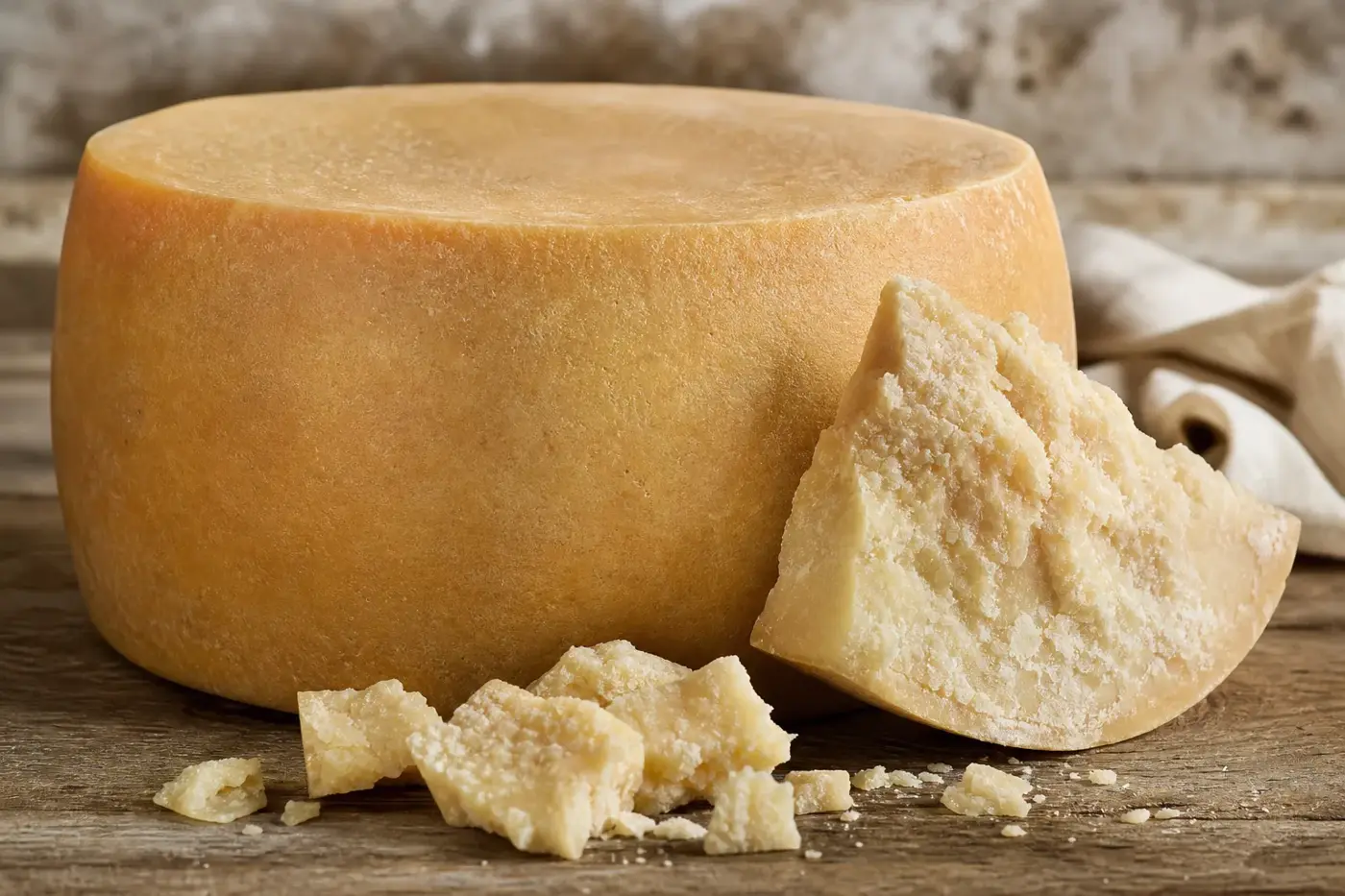
Parmigiano Reggiano
Break into a wheel of Parmigiano Reggiano and flakes fall away, revealing a finely granular cheese, pale straw to straw in colour.