St Cera
Put a spoon into ripe St Cera and you may find a centre like custard, soft enough to scoop rather than slice, according to the Academy of Cheese and Neal’s Yard Dairy.
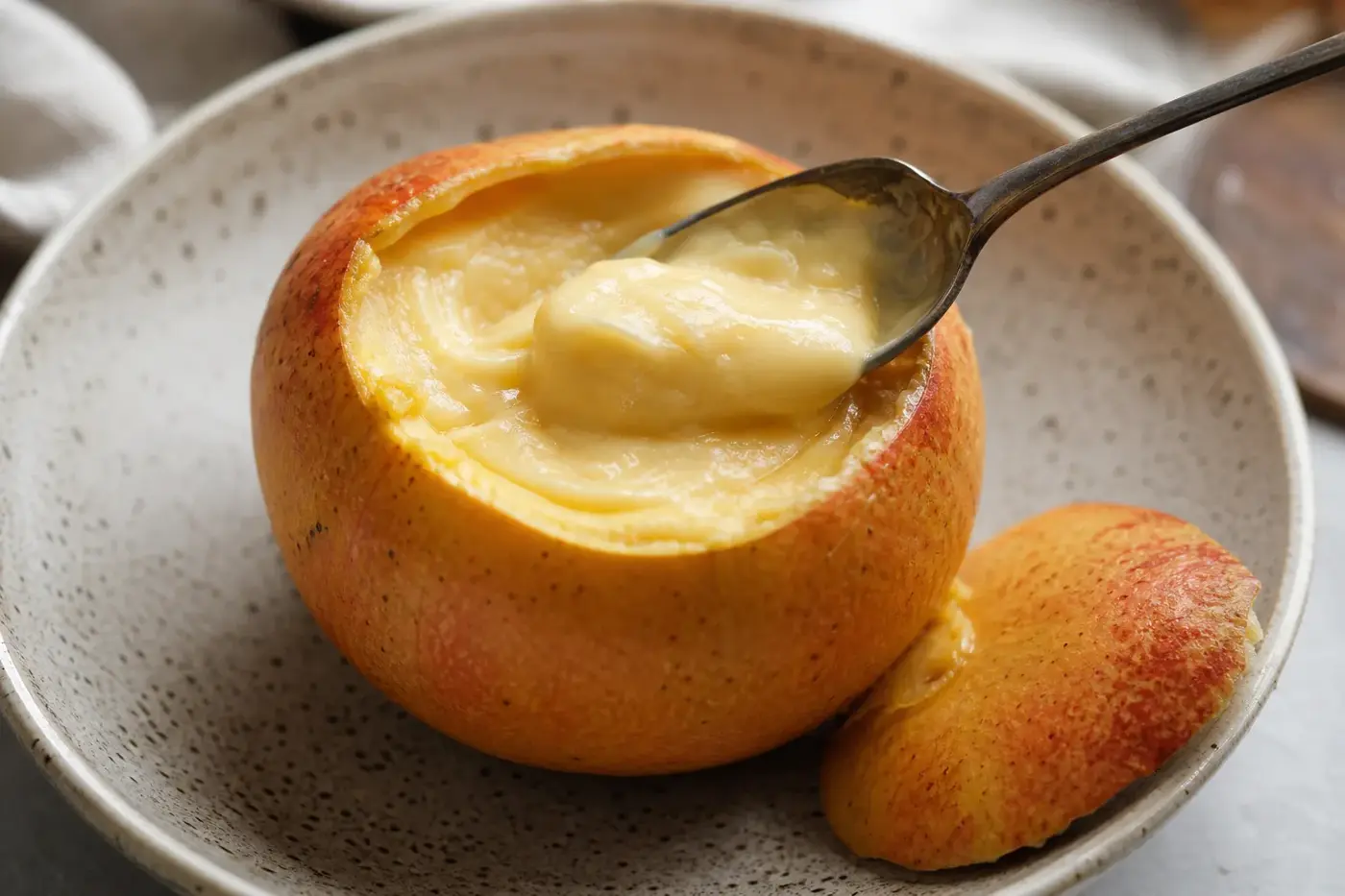
Put a spoon into ripe St Cera and you may find a centre like custard, soft enough to scoop rather than slice, according to the Academy of Cheese and Neal’s Yard Dairy. Your knife can take the afternoon off. Made by St Jude Cheese with raw cow’s milk in Norfolk, England, this small cheese begins with a delicate lactic set. Brine washing brings a pink-orange blush and warmer, stronger flavours. [1, 2, 5, 8]
| Meet St Cera | Your introduction |
|---|---|
| Maker | St Jude Cheese, Wheatacre, Norfolk, England. [3] |
| Milk | Raw cow’s milk from the Burroughs family farm in Wheatacre. [4] |
| Herd | British Friesian, with Brown Swiss and Ayrshire cows also present. [4] |
| Style | Soft, lactic, washed rind. [2, 5] |
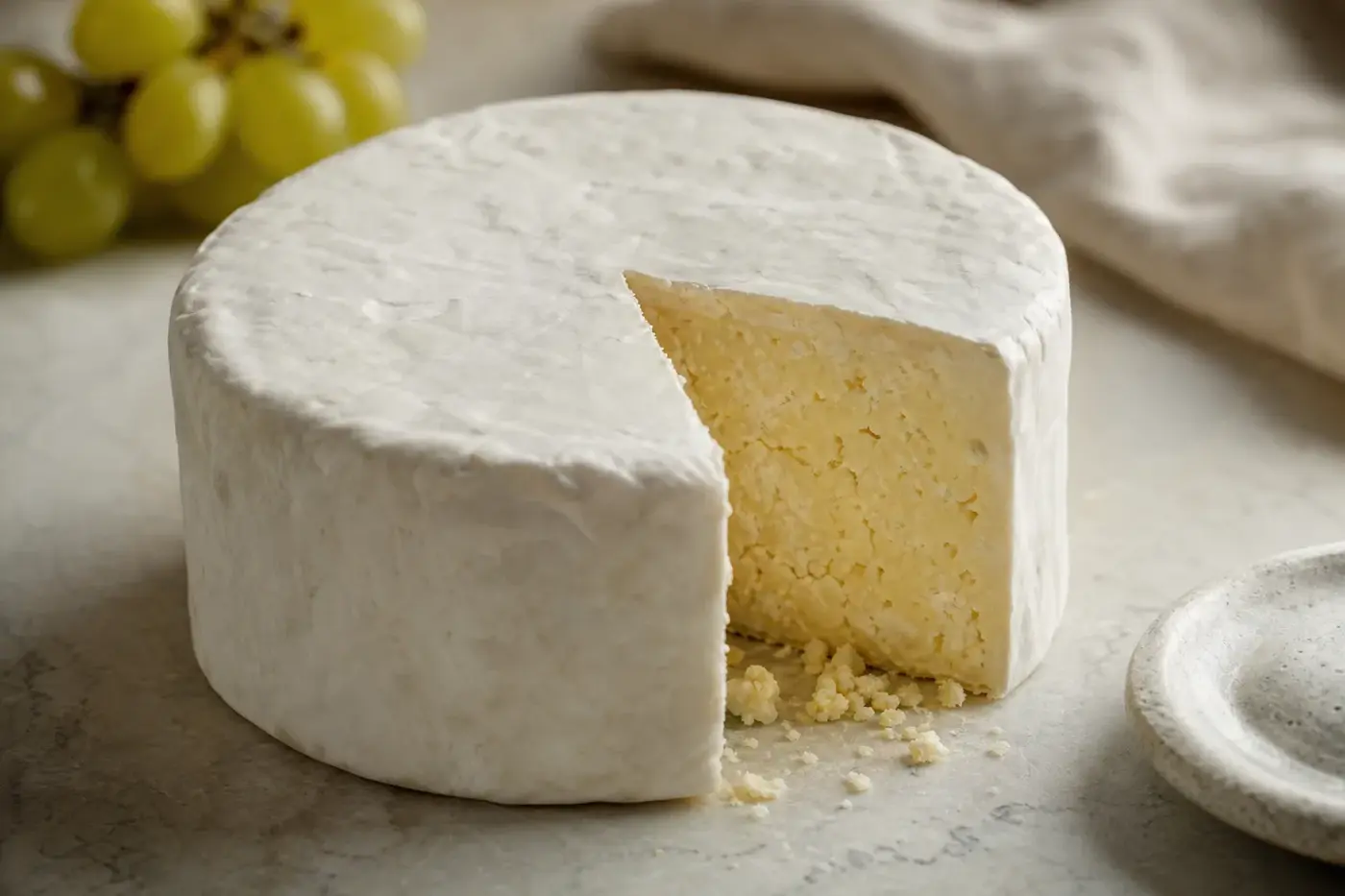
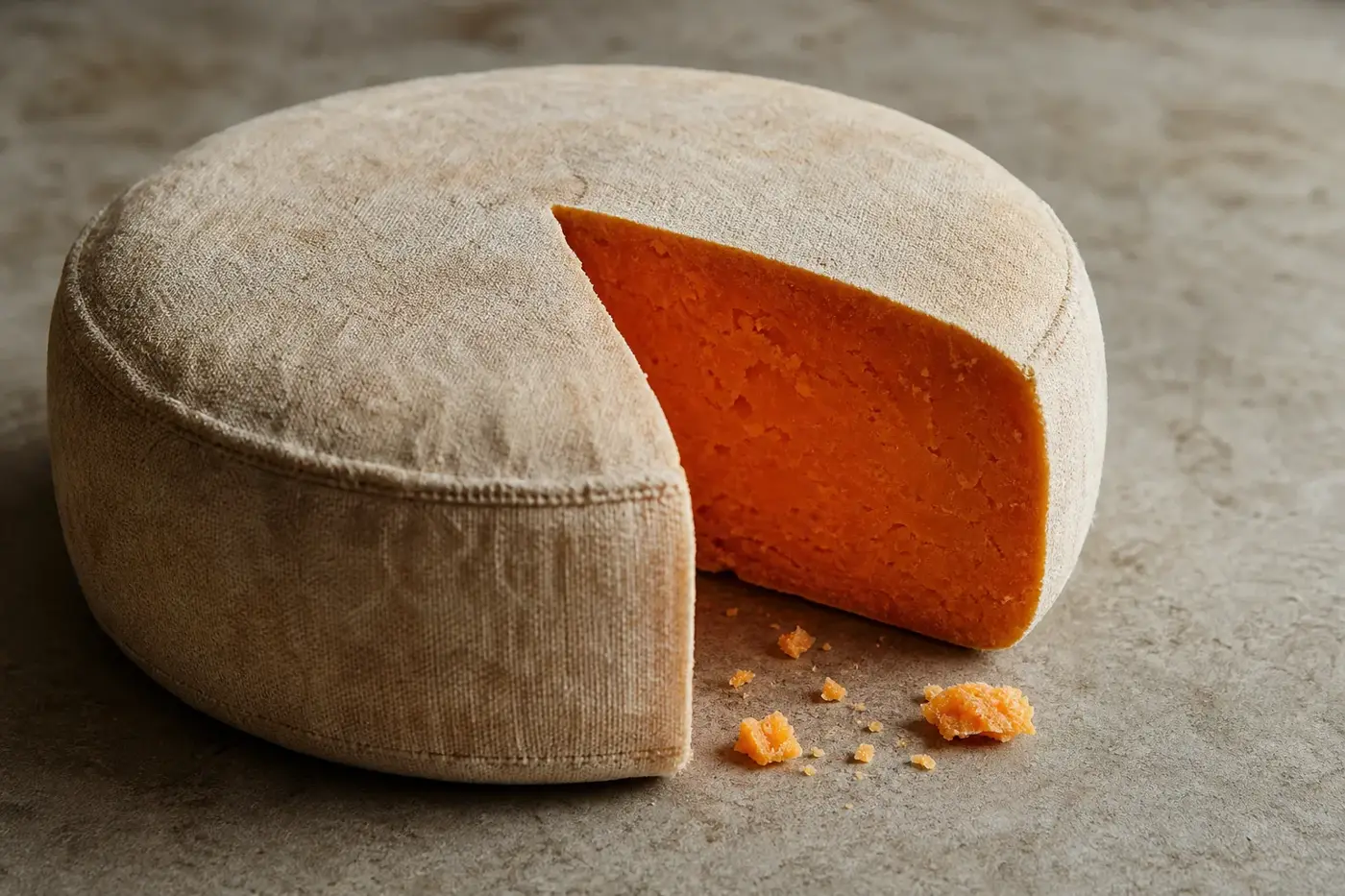
| Rind | A pink-orange blush developed through brine washing. [2] |
| Size | Average 80 g for Neal’s Yard Dairy’s version, according to its 2026 crib sheet. [6] |
| Usual ageing | 4 to 8 weeks for Neal’s Yard Dairy’s version. [6] |
| Declared coagulant | Animal rennet in the Neal’s Yard Dairy product. [6] |
The week St Jude takes a different path
At about a week old, selected St Jude cheeses begin a different life. The maker washes their surfaces with a weak salt solution, changing the conditions in which the rind develops. The result is St Cera, St Jude’s washed-rind sister, with the stronger colours and flavours the maker associates with that treatment. [2, 7]
At the counter, you might hear both “lactic” and “washed rind”. These describe different parts of the story: lactic tells you how the milk sets; washed rind tells you what happens to the surface later. St Cera combines both, a useful distinction when you explore how to tell cheese styles apart.
The maker describes that pink-orange blush, although the cheese’s precise shape remains unspecified here. Neal’s Yard Dairy, which matures its own version, describes a centre that can become fluid enough to need a spoon. The Academy of Cheese calls ripe St Cera spoonable and custard-like. Think of a whole small cheese with a dish beneath it, rather than a wedge holding a neat edge. [2, 5, 8]
A new home beside the Norfolk Broads
St Cera’s current home is close to its milk supply, on the edge of the Norfolk Broads. St Jude Cheese gives its dairy address as Dairy Farm, Burgh Road, Wheatacre, Norfolk. The Academy of Cheese identifies it as a Norfolk producer specialising in raw-milk soft cheeses. [3, 5]
If you remember St Cera as a Suffolk cheese, your memory is serving you well. In an account published on 27 April 2026, Neal’s Yard Dairy records St Jude Cheese’s move from Fen Farm Dairy in Suffolk to a newly built creamery at the Burroughs family farm in July 2025. Those Suffolk descriptions belong to its previous home. [9]
Neal’s Yard Dairy has a place in the story, too. The London affineur, a business that matures cheese, helped develop this washed-rind counterpart to St Jude and still matures the St Cera it sells. The Norfolk dairy makes and matures its own version for other customers. [6]
It is worth asking who matured your cheese. The place where milk becomes cheese need not be the place where it finishes ripening. With St Cera, that distinction helps you understand what is on the counter.
One family farm, a changing season in every batch
Within two hours of milking, the milk reaches the cheesemaking process. The maker says all its cheeses use raw milk from one Norfolk family farm: the Burroughs family’s farm in Wheatacre. The herd includes British Friesians, Brown Swiss and Ayrshire cows. [1, 4]
Raw milk is the treatment currently declared by St Cera’s maker. If you would like a clearer picture of the alternatives, turn to raw, thermised and pasteurised milk.
The recipe may stay the same, but the cheese need not taste identical all year. As the maker explains, the cows’ diet and stage of lactation change the milk’s composition. Those changes help shape the flavour and texture you find beneath the rind. [4]
By the time the milk reaches the dairy, the seasons have already had their say. Washing adds another influence, followed by maturation. The starting milk and the treatment of the young cheese both help determine what reaches your table. [4, 6]
Before the ladle comes a patient wait
St Jude Cheese allows fermentation to take up to 24 hours before ladling. The maker describes this lactic process as slow and gentle, with rennet also helping the milk set. Even with rennet involved, gradual acid development remains at the heart of the method. [7]
During that wait, starter bacteria convert lactose, the milk sugar, into lactic acid. As acidity rises, casein proteins join into a delicate network that holds moisture and fat. Liquid milk becomes a gel ready for draining: the solid becomes curd, while the liquid that drains away is whey. [10]
This delicate structure calls for careful handling. Acid-set curd has only a limited ability to contract and release whey, so it cannot take the vigorous treatment used for some firmer cheeses. The cheesemaker works with that fragility, rather than against it. [10]
You can follow the broader sequence in how cheese is made. For St Cera, keep that long, gentle wait in mind. Much happens before the curd ever reaches its mould.
A careful ladle, a little salt, the first rind
The curd is cut into cubes to help whey escape, then carefully ladled into individual moulds. In the maker’s process account, the formed cheeses are turned within two hours of ladling. Both sides are then dry-salted by hand before the cheeses enter the maturation rooms. [7]
Here, moulds means the containers that give the cheeses their shape, not organisms growing on the surface. As whey drains away, a small, moist cheese remains.
During cheesemaking, the maker adds two strains of Geotrichum candidum. It describes this organism’s surface growth as part of ripening, helping break down proteins and release flavour in the paste. If you meet “paste” at the cheese counter, it simply means the interior. [7]
So far, St Cera has shared its early life with St Jude. Selected young cheeses then go into boxes and begin their washing treatment. From here, attention to the surface gives St Cera its distinct character. [2]
A wooden box and four brine washes
A weak brine solution changes the environment in which the rind ripens. The maker links this salt-water treatment to St Cera’s stronger colour and flavour. It is a small intervention with a noticeable effect. [7]
For the cheese it matures in London, Neal’s Yard Dairy describes a precise routine. An initial week encourages rind development, then each cheese enters a small wooden box. Four brine washes follow over the next week, before a move to a cold room slows development. [8]
Its 2026 crib sheet gives this version an age range of 4 to 8 weeks. Controlled washing encourages surface bacteria and yeasts, bringing a more supple paste and a more savoury character. In that maturation account, time, washing and temperature each play their part. [6]
Take a look at the ingredient list on your particular cheese, too. Neal’s Yard Dairy lists annatto in its St Cera, and its development account records the introduction of that colouring to the London-matured version. That declaration belongs to its version; it is not an ingredient list for every St Cera. [8, 11]
Follow the flavour from nutty to spoonable
The maker describes warmer, nutty flavours that strengthen with age. The Academy of Cheese adds earthy, farmyard complexity and a custard-like centre when ripe. Age and condition, then, make a real difference to the cheese you take home. [2, 5]
Neal’s Yard Dairy’s 2026 notes describe its version as yielding and supple, with savoury, lightly meaty flavours and suggestions of mushrooms and broth. Its product account says older cheeses can become more pungent and more fluid. These descriptions come from the maker and the other cited sources, rather than a fromage.co.uk tasting. [6, 8]
Tell your cheesemonger what appeals to you. Would you like a yielding centre, or something more flowing and strongly aromatic? Ask about present condition as well as age, especially when different hands may have carried out the maturation.
A spoonable centre is part of ripe St Cera’s documented character. That small box is doing more than looking handsome: when the paste flows, it helps keep dinner on the plate. A spoon makes more sense here than an attempt at tidy slices. [5, 8]
A 2022 nomination that tells you something
St Cera was nominated for the James Aldridge Memorial Trophy 2022, appearing in the published raw-milk cheese list. The nomination praises its strength and soft, flowing texture. The recorded recognition is a nomination, with no confirmed trophy win listed here. [12]
That dated description gives you useful words to take to the counter. If you want a cheese to eat now, ask the current maturer how it is developing. Then ask the cheesemonger about the condition of the individual cheese in front of you.
Keep it cool, then serve with care
Keep St Cera refrigerated and follow the storage instructions and date on its packaging. The Food Standards Agency’s consumer guidance for England, Wales and Northern Ireland recommends a fridge between 0 and 5 °C (32 to 41 °F), with dairy products kept in the fridge. The guidance cited here is dated November 2026. [13]
When you are ready to serve, follow the supplier’s instructions. Consult the Food Standards Agency’s guidance for England, Wales and Northern Ireland on time out of refrigeration, too. [13]
Set the box on a small plate and use a clean spoon if the cheese is flowing. For a paste-only serving, scoop from the centre and leave the rind in place; ask the supplier for rind guidance specific to its version. You can find advice on wrapping and fridge organisation in how to store cheese at home.
Bread, a little crunch, and time to taste
Try a mouthful of cheese on its own, then with plain bread. Keeping things simple lets you notice the difference between the centre and the paste nearer the rind. Give each a moment before adding anything else.
For a sharper contrast, Neal’s Yard Dairy suggests peppery radishes, raw fennel or thinly sliced kohlrabi alongside its version of St Cera. Choose one to begin with and see what you enjoy. [6]
Still or sparkling water keeps the cheese itself in focus. Start with one accompaniment, then add another if you would like a different contrast. Let your own taste guide the next mouthful.
General information only, not medical advice: follow the official guidance where you live.
Questions people ask
What does St Cera taste like?
The maker describes warm, nutty flavours that strengthen with age. Neal’s Yard Dairy describes its version as savoury and lightly meaty, with suggestions of mushrooms and broth.
Where is St Cera made?
St Jude Cheese makes St Cera in Wheatacre, Norfolk, using raw cow’s milk from the Burroughs family farm. The dairy moved there from Fen Farm Dairy in Suffolk in July 2025.
Is St Cera vegetarian?
Neal’s Yard Dairy declares animal rennet in its St Cera. That declaration applies to its product.
Can you eat the rind of St Cera?
The maker’s explicit guidance on eating the rind has not been verified. Ask the supplier for guidance specific to its version, or scoop from the centre and leave the rind in place.
How should St Cera be stored and served?
Keep it refrigerated, following the storage instructions and date on the packaging. The Food Standards Agency advises a fridge temperature of 0 to 5 °C in England, Wales and Northern Ireland; consult its guidance on time out of refrigeration. If the cheese is flowing, set the box on a small plate and use a clean spoon.
Sources
- St Jude Cheese, Handmade raw milk cheeses, undated current website, checked November 2026. Maker’s website. Establishes the current raw-milk supply and small-batch production.
- St Jude Cheese, St. Cera, undated current product description, checked November 2026. Product page. Establishes selection at one week, brine washing, rind colour and the maker’s flavour description.
- St Jude Cheese, Contact, undated current website, checked November 2026. Dairy address.
- St Jude Cheese, Ethos; Milk, undated current account containing the 2025 milk-supply change, checked November 2026. Maker’s account. Establishes the farm, herd breeds, milk treatment, timing after milking and the maker’s explanation of seasonal variation.
- Academy of Cheese, St Jude Cheese, undated current producer profile, checked November 2026. Producer profile. Corroborates Norfolk production and describes St Cera’s ripe texture and flavour.
- Neal’s Yard Dairy, St Cera crib sheet, 2026 edition, file identified as June 2026, checked November 2026. Crib sheet. Primary maturer’s account of its own product, ingredients, maturation, sensory character and pairings.
- St Jude Cheese, Process, undated current production account, checked November 2026. Production account. Covers fermentation, rennet, cutting, ladling, turning, salting, Geotrichum and washing.
- Neal’s Yard Dairy, St Cera, undated current product and maturation account, checked November 2026. Product account. Primary source for the version it matures and sells.
- Neal’s Yard Dairy, Supporting a New Chapter for St Jude Cheese, 27 April 2026. Dated account. Records the July 2025 move from Suffolk to the new creamery.
- American Society for Microbiology, The Basics of Cheesemaking, Microbiology Spectrum, 2013, DOI 10.1128/microbiolspec.CM-0002-2012. Scientific review. Used for general coagulation science, not measurements of St Cera.
- Neal’s Yard Dairy, How maturation can create a new cheese, 19 November 2024. Published development account. Used for the reported introduction of annatto to its version.
- Specialist Cheesemakers Association, Nominations for the James Aldridge Memorial Trophy 2022, 2022. Nomination document. Entry 16 records St Cera’s nomination.
- Food Standards Agency, How to chill, freeze and defrost food safely, published 18 December 2017, current retrieved version checked November 2026. Applies to England, Northern Ireland and Wales. Official consumer guidance.
Researched through the maker’s current accounts, the affineur’s product documentation, the Academy of Cheese, published scientific literature and official food-storage guidance.
Last checked: November 2026
Last checked November 2026.
The editors suggest you read next
West Country Farmhouse Cheddar Cheese
Large pieces of curd turn and stack under the cheesemaker’s hands.