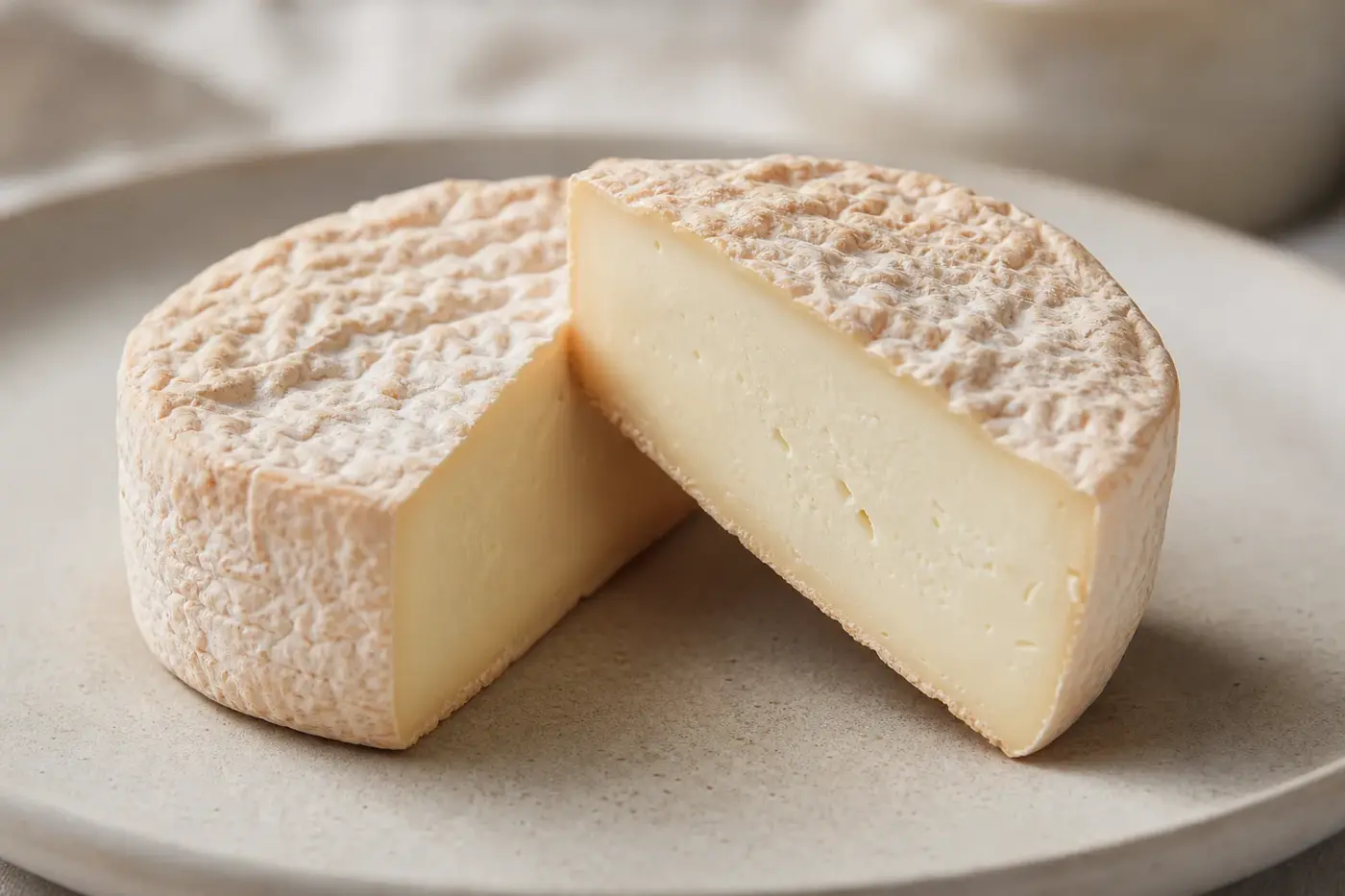
First, the wrinkles. Then the smooth interior beneath them. St Jude’s thin, folded rind gives you a close-up introduction to this small, soft raw cow’s milk cheese from Wheatacre, near the low pastures of the Norfolk Broads. Its maker, St Jude Cheese, describes a fresh young cheese that gains complexity as it ripens, with delicate lactic character beneath that mould-ripened surface. [1][2][3]
Your first taste of St Jude
| What to know | A closer look |
|---|---|
| Name | St Jude. [1] |
| Maker | St Jude Cheese. [7] |
| Home | Wheatacre, Norfolk, England. [2][3] |
| Milk | Raw cow’s milk. [2] |
| What sets the milk | Rennet in the maker’s account; animal rennet in Neal’s Yard Dairy’s ingredient declaration. [4][5] |
| Rind | Wrinkled and mould-ripened, with Geotrichum candidum. [1][4] |
| Usual eating age | 2 to 5 weeks. [1] |
Take the long road to Norfolk
The pleasure is in the contrast: that thin, folded rind gives way to a delicate interior. St Jude belongs to the lactic school of soft cheesemaking, in which milk acidifies slowly before the curd drains. Neal’s Yard Dairy, which matures and sells it, describes a particularly light texture beneath the surface. [4][5]
Norfolk is the latest stop on a journey through Hampshire and Suffolk. Neal’s Yard Dairy records early development in Hampshire, followed by production at Fen Farm Dairy in Suffolk. In July 2025, the business moved into a purpose-built creamery at its new supplying farm near Beccles. If you have seen St Jude described as a Suffolk cheese, that explains it: current accounts place it in Norfolk. [6]
The ambition was small in scale, but certainly not in flavour. In an October 2025 interview with Rennet & Rind, the maker described wanting a small lactic-set cheese with depth of flavour, using relatively little equipment. Moving dairy meant learning the ways of new milk, rather than reinventing the make. That included getting to know its behaviour through a complete year of lactation. [3]
St Jude is also the business’s name, with a family of cheeses under its roof. Alongside St Jude are its washed-rind relation St Cera, the semi-soft St Helena and fresh St Jude Curd. If you are choosing between St Jude and St Cera, start at the surface. St Jude has the wrinkled mould rind; St Cera follows a different surface-ripening route. [7]
Meet the herd at Wheatacre
The milk comes from the Burroughs family farm at Wheatacre, on the edge of the Norfolk Broads. The maker dates the change of supply to 2025 and names British Friesian cows, Brown Swiss and Ayrshires in the herd. These are the breeds behind the cheese you find today, rather than the Montbéliarde herd associated with its earlier Suffolk production. [2][4]
According to St Jude Cheese, cheesemaking starts within two hours of milking. The milk is raw, not pasteurised, and added cultures begin its acidification. The maker links seasonal changes in the cheese to the cows’ diet and stage of lactation. That means the point they have reached in their milk-producing cycle. [2]
If you are curious about what milk treatments mean for cheese, start with raw, thermised and pasteurised cheese.
Give the curds time and a gentle hand
There is no rushing St Jude’s fermentation. The maker says acidification can take up to 24 hours before ladling, with rennet also helping to set the milk. What follows is a fragile curd that needs careful handling. [4]
The curds are cut into cubes to release whey, the liquid that drains away, then ladled into individual moulds. Within two hours of ladling, the cheeses are turned. Each is dry-salted on both sides before going into the maturation rooms. Setting, draining, turning, salting: every small cheese receives individual attention. [4]
The maker adds two strains of Geotrichum candidum, the organism it identifies with the rind. As that growth develops, it helps break down proteins and release flavour in the paste, or interior, according to the maker’s account. Those wrinkles are doing rather more than looking distinguished. [4]
At Neal’s Yard Dairy, the cheeses are normally dried on arrival, then turned frequently. The affineur, a specialist cheese maturer, studies rind growth and texture to choose the environment each batch needs. Ripening calls for attention, not simply patience. Changes inside and out guide the next decision about where the cheeses should mature. [5]
The maker’s product page gives two to five weeks as the usual eating age. Its broader process account also describes cheeses enjoyed from ten days and developed to six or seven weeks. Tell your cheesemonger when you want to eat yours, and ask how ripe it is now. Together, those details make the age useful. [1][4]
For the wider journey from milk onwards, explore how cheese is made.
Taste the difference a season makes
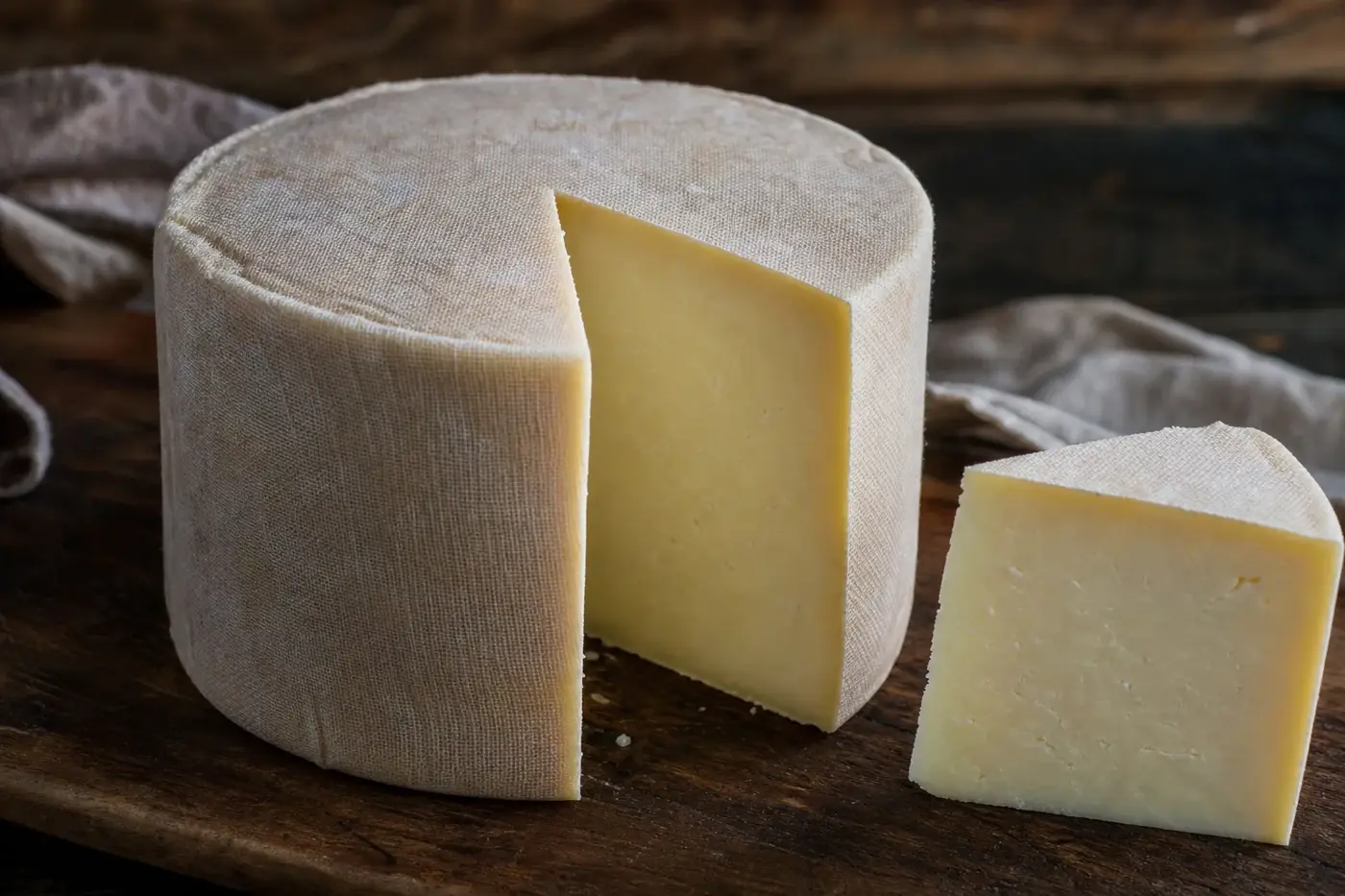
In the maker’s description, St Jude has a thin, wrinkled surface and smooth paste. Neal’s Yard Dairy describes a light texture, while its product photographs show a pale interior beneath the folded rind. When you discuss ripeness with a cheesemonger, look at a cut face as well as the outside. Each gives you something to consider. [1][5]
To explore ageing, ask for two examples with known ages and taste them side by side. Notice how readily each paste yields, how distinct the rind feels and how long the flavour stays with you. Record age and season separately, with the maker’s tasting notes alongside as a reference.
Young St Jude is fresh and creamy, says its maker, gaining complexity with time. Seasonal notes lean towards butter in winter, then vegetal, grassy flavours when the cows are grazing. In the October 2025 interview, the maker also described savoury flavours and an occasional gentle cowy note during the grazing season. [1][3]
Age and season tell different stories, so give yourself a moment with each. First, look for the freshness of a younger cheese or the greater flavour development described for later maturation. Then consider the milk’s seasonal influence. In the maker’s account, winter and grazing-season cheeses can reach the same eating age and still taste different. [1]
Make a little space for St Jude
Eat the rind and paste together, recommends Fen Farm Dairy, a stockist with a longstanding connection to St Jude. Its advice is to bring the cheese to room temperature one hour before eating. Warm only the portion you intend to serve, keeping the rest refrigerated. [6][8]
For England, Wales and Northern Ireland, the Food Standards Agency advises keeping chilled food out of the fridge for the shortest possible time, with a maximum of four hours during preparation. Its picnic guidance says to discard chilled food after four hours at 8 °C (46 °F) or above, or after two hours in extreme heat. The warming period counts towards that time, too. [9][10]
Keep your first mouthful simple: a little rind and paste together, followed by plain bread or an unseasoned cracker. Give yourself time to notice the folded surface and smooth interior before adding anything sweet, sharp or spiced. You are getting to know the cheese, not auditioning the chutney.
For company on the plate, try sliced apple or pear and leave strongly spiced chutney to one side. Put less accompaniment beside a younger cheese. With a more developed example, taste it plain before adding a little fruit. These suggestions follow the maker’s descriptions of freshness, butter and grass. [1]
For an alcohol-free drink, start with sparkling water or lightly brewed black tea. Water lets you return to the cheese without another strong flavour; tea gives you a different contrast to explore. For the broader approach, turn to Cheese and wine pairing.
Keep it well, from fridge to final slice
Keep St Jude refrigerated and follow the storage instructions and use-by date on its packaging. The Food Standards Agency’s home guidance for England, Wales and Northern Ireland recommends a fridge between 0 and 5 °C (32 and 41 °F), checked with a fridge thermometer. After serving, return the cheese promptly, within the time limits above. [8][9]
If you are buying for a particular day, ask your cheesemonger to choose a suitable maturity. Ask them to explain that cheese’s wrapping and storage instructions, too. Keep the label so you have its date and batch details. For wider handling questions, see How to store cheese at home.
The wrinkles are an intended part of St Jude’s development. The maker also documents occasional blue mould during maturation, while Neal’s Yard Dairy describes variable surface moulds on the cheeses it handles. If a patch concerns you, ask the supplier about your particular cheese. A photograph of another batch cannot reliably guide you about the one in front of you. [4][5]
Unwanted mould on soft cheese means discarding the whole cheese. The Food Standards Agency’s cheese recovery guidance for England, Wales and Northern Ireland distinguishes mould integral to production from contamination. It says unwanted mould must not be removed from soft cheese for recovery, because it can penetrate the product. With St Jude, that distinction matters: its intended rind is itself a mould-ripened surface. [12]
Follow the use-by date even when the cheese looks and smells acceptable. UK government guidance says not to eat food after that date, because appearance and smell cannot establish safety. If you suspect a safety concern, throw the cheese away and follow any applicable recall notice. [11]
Follow your curiosity about the rind
- How to Tell Cheese Styles Apart: Milk, Rind, Texture and Method: find where St Jude’s lactic make and wrinkled rind sit among other styles.
- Mould on Cheese: When to Cut and When to Bin: learn to distinguish intended ripening from unwanted growth.
General information only, not medical advice: follow the official guidance where you live.
Questions people ask
Is St Jude made with raw milk?
Yes, St Jude is made with raw cow’s milk. The milk comes from the Burroughs family farm at Wheatacre in Norfolk.
Does St Jude contain animal rennet?
Neal’s Yard Dairy lists animal rennet in its ingredient declaration. The maker also says rennet is used to help set the milk.
What does St Jude taste like?
The maker describes young St Jude as fresh and creamy, with greater complexity as it ripens. Seasonal flavours tend towards butter in winter and vegetal, grassy notes when the cows are grazing.
Can you eat the rind of St Jude?
Fen Farm Dairy recommends eating the rind and paste together. The rind is thin, wrinkled and mould ripened.
What if St Jude develops unwanted mould?
The Food Standards Agency says unwanted mould must not be removed from soft cheese for recovery because it can penetrate the product. See its cheese recovery guidance for England, Wales and Northern Ireland.
Sources
- St Jude Cheese, St. Jude, undated product description, retrieved November 2026. Maker’s account of style, usual eating age and seasonal flavour.
- St Jude Cheese, About, undated current account incorporating the 2025 milk-supply change, retrieved November 2026.
- Rennet & Rind, St Jude in Norfolk, published maker interview, 6 October 2025. A commercial cheesemonger’s interview, used as evidence of the maker’s statements.
- St Jude Cheese, Process, undated process account and captioned production photographs, retrieved November 2026.
- Neal’s Yard Dairy, St Jude, undated product and maturation account, retrieved November 2026. Commercial affineur’s ingredient declaration, descriptions and account of its own handling.
- Neal’s Yard Dairy, Supporting a New Chapter for St Jude Cheese, 27 April 2026. Commercial partner’s account of the production chronology.
- St Jude Cheese, Home, undated current range and raw-milk statement, retrieved November 2026.
- Fen Farm Dairy, St Jude Cheese 95g wheel, undated product information, retrieved November 2026. Commercial stockist’s serving, refrigeration and date instructions.
- Food Standards Agency, How to chill, freeze and defrost food safely, published 18 December 2017, current retrieved edition, November 2026. Applies to England, Wales and Northern Ireland.
- Food Standards Agency, Keeping food safe on a picnic, current retrieved PDF edition, November 2026. The associated publication identifies England, Wales and Northern Ireland as its scope.
- UK Government, Understanding food labelling: Best before and use-by dates, current retrieved edition, November 2026.
- Food Standards Agency, Cheese recovery guidance, first published 2007, current retrieved PDF edition, November 2026. Business guidance, used specifically for its distinction between intended rind mould and unwanted mould contamination of soft cheese.
This piece was researched from the maker’s published accounts, a published maker interview, documented commercial maturation and serving information, and official food-handling guidance.
Last checked: November 2026
Last checked November 2026.
The editors suggest you read next
West Country Farmhouse Cheddar Cheese
Large pieces of curd turn and stack under the cheesemaker’s hands.