St Tola Divine
A spoon slips into something white, smooth and unexpectedly light.
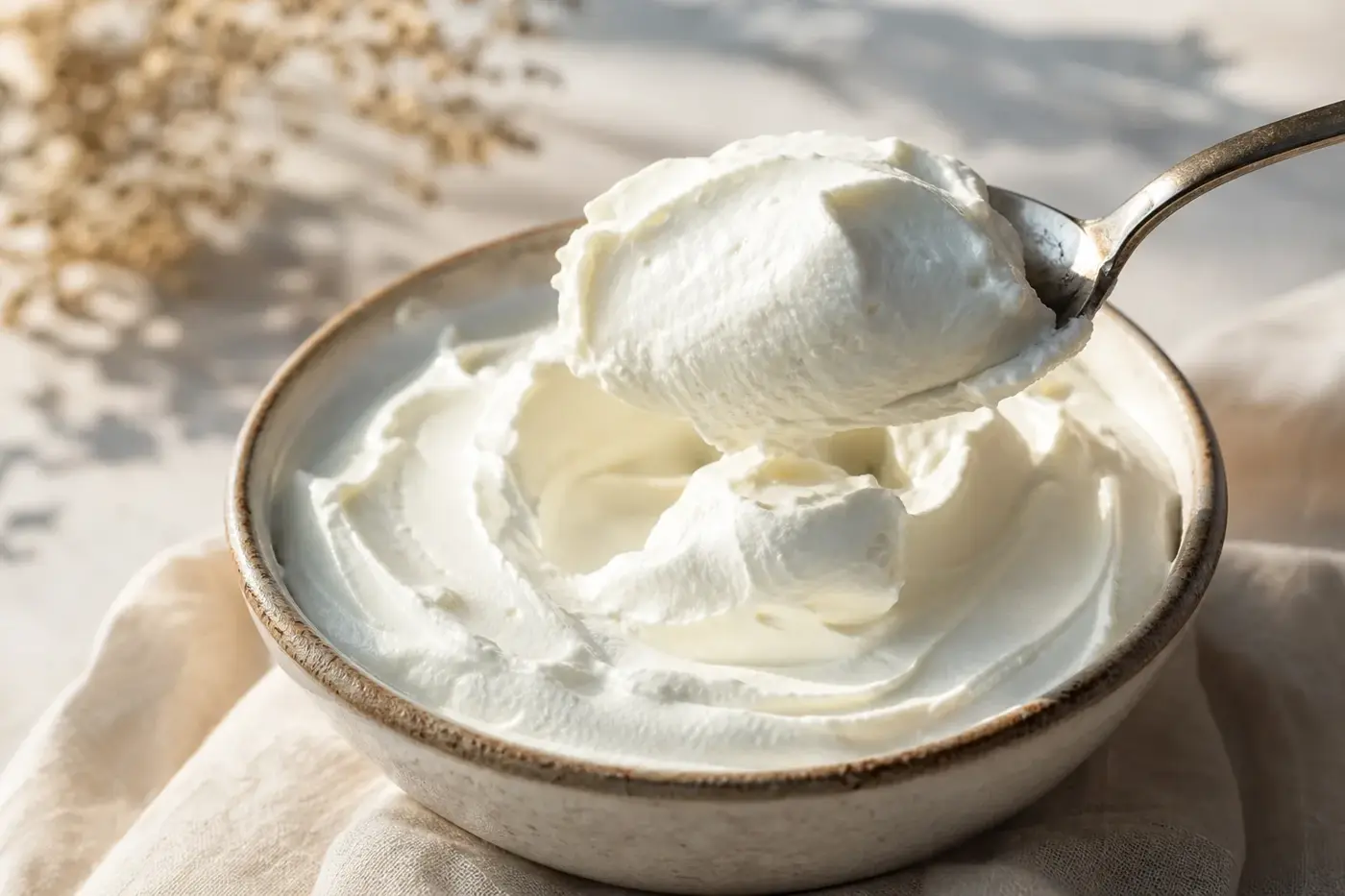
A spoon slips into something white, smooth and unexpectedly light. This is St Tola Divine, a fresh Irish goat cheese with a whipped texture that makes the cheese knife look rather overdressed. Made by Inagh Farmhouse Cheese in County Clare, it offers lemony flavour and light floral notes, ready for you to spread, spoon or blend into sweet and savoury dishes.[1]
| At a glance | What to know |
|---|---|
| Name to look for | St Tola Divine.[1] |
| Maker | Inagh Farmhouse Cheese Ltd.[2] |
| Home | Inagh, County Clare, Ireland.[2] |
| Style | Fresh, soft goat cheese with a whipped texture.[1] |
| Milk treatment | Pasteurised.[1] |
| Maker’s declared coagulant | Vegetarian rennet.[1] |
| Pack sizes | 120 g and 1 kg.[1] |
| Full ingredient declaration | Not provided here. |
| Registered name, authority and register ID | Not provided here. |
| Protection status by jurisdiction | Not provided here. |
| Exact age at dispatch | Not provided here. |
| After opening | Best within three days, according to the maker. Treat this as quality guidance, not a separate safety limit. Follow the pack’s instructions and any use by date.[5] |
Give this soft cheese a spoon and some space
Divine takes the softest route through the St Tola range. Alongside it sit logs with natural rinds, cheeses coated in ash and firmer brined cheese, but this is the fresh, whipped option. St Tola’s homepage recommends blending it, baking with it and incorporating it into recipes, so you need not save it for a solo appearance.[3]
For your first serving, set out a small bowl and a spoon. Its soft texture lends itself to spreading over bread or spooning beside vegetables, rather than arranging in slices on a board. Give it room to be soft.
You can choose a small household pack or a larger format. Buy the amount you can use after opening, because the bigger pack needs just as much care with storage and timing.[1][5] To find Divine’s place among fresh, soft and ripened cheeses with rinds, explore how to tell cheese styles apart.
Meet the hands behind the cheese in Inagh
In 1999, St Tola changed hands. Inagh Farmhouse Cheese’s company profile records the business passing from its original cheesemakers to a neighbouring farmer. Today, the company describes a range made by hand in Inagh, in small batches.[2]
Divine is one expression of goat milk in that established dairy’s repertoire. Fresh cheese, cheese with natural rinds and cheese coated in ash all have their place here. Your spoonful comes from a maker working across several distinct styles, rather than a business devoted to a single spreadable product.[2][3]
Behind the cheeses is a small team whose work stretches from the milking parlour to the make room.[4] In the company’s account, farming and cheesemaking sit close together. Managing the herd and making the cheese are both part of the daily work that brings St Tola to your table.
Look just south of the Burren, towards peaty ground
Picture the Burren and exposed limestone pavement may come to mind. St Tola often describes its location through its proximity to that limestone country, but the farm lies just south, on land the maker calls peaty.[4] Hold that landscape in mind, rather than imagining goats grazing permanently across bare limestone.
The herd includes Saanen, Toggenburg and British Alpine goats. According to the maker’s sustainability page, they are housed mainly indoors. In summer, fresh grass is cut and brought to them alongside grain; when fresh grass is unavailable, haylage provides their forage.[6]
Those practical details connect the landscape to the cheese. There is the ground, the forage it grows and the way that forage reaches the goats. The maker credits clover and wild herbs in the grass with some of its cheeses’ character, explaining the milk’s character rather than offering a tasting note for Divine itself.[4]
Grass cutting and feeding follow the farm’s seasonal cycle.[6] This is the story of the maker’s own herd. It does not identify which herd supplied the milk in your individual tub of Divine.
Get to know the milk behind your spoonful
Divine’s product information specifies pasteurised milk and vegetarian rennet.[1] Keep that distinction in mind as you browse the wider St Tola range. Some other cheeses come in versions made with raw milk, and the maker’s general advice about traditional cheesemaking with raw milk reaches beyond Divine.[5]
St Tola draws its milk from two sources. It says it uses all the milk from its own farm and buys milk from another farmer nearby, outside Ennistymon. According to the maker, those two supplies stay separate during cheesemaking.[4]
That gives you a picture of sourcing across the range, rather than the provenance of a particular tub. To trace yours, contact the maker with the information on its pack. The farm account alone does not identify the herd behind an individual batch.
Pasteurisation and rennet tell you different things, too. One is a treatment of the milk; the other helps it set during cheesemaking. You can explore those separate choices in the guides to raw, thermised and pasteurised cheese and rennet.
Step into the dairy, where fresh curd comes first
A published interview with the cheesemaker identifies Divine as a fresh curd. It offers a glimpse of St Tola’s working day: milk entering cheese vats, starter and rennet being added, and decisions shaping which cheese a batch will become.[8]
Starter cultures are microorganisms used in cheesemaking. Rennet helps coagulation, the setting of milk into curd. The interview also describes moulds being prepared for filling the following day, while existing cheeses are assessed for further maturation or dispatch.[8]
For Divine itself, the current product information describes a fresh cheese with a light, whipped consistency.[1] The interview does not give its individual production steps or a precise ageing period.[8] Think of the wider dairy’s routine as context, rather than a recipe you could follow for this particular cheese.
Shelf life is a separate matter. The product page lists 35 days, and an older brochure specifies that this runs from the factory.[1][9] That is the keeping period under the intended conditions, not a maturation target or an allowance for storage after opening.
Choose Divine when you want that fresh character. Then use the date on the pack to plan when you will eat it. Freshness describes the cheese; storage instructions tell you how to look after it.
Start with lemon, then look for the flowers
Cool freshness, lemon and a light floral character lead St Tola’s current tasting notes for Divine.[1] On its homepage, the maker adds three texture words: light, whipped and smooth.[3] Together, they suggest a cheese whose appeal lies in softness and brightness.
Try a little plain before adding anything acidic, sweet or strongly seasoned. Give those qualities room to register before an accompaniment changes the balance. Your first mouthful needs no elaborate arrangement.
Next, spread a little on plain bread with a crisp surface. Compare it with the cheese on its own, noticing the texture, the acidity and what stays in the finish. You are finding your own words, not sitting an exam in someone else’s tasting notes.
Keep additions modest at first. Once you know how Divine tastes by itself, you can judge what an accompaniment contributes. You may find the cheese needs less company than you expected.
Choose your company: bread, beetroot or berries
The maker suggests berries, beetroot, crusty bread and lemon as accompaniments.[1] Pick a direction rather than inviting everything onto the plate. Bread gives you a simple first taste, vegetables take you somewhere savoury, and fruit offers a sweeter route.
Start with crusty bread and a separate dish of Divine. Spoon it beside beetroot rather than immediately mixing the two, so you can choose how much cheese goes into each mouthful. With berries, taste the fruit first and then decide whether the pairing needs anything else; you are in charge of the proportions.
Divine can also disappear into a dish in the best sense. St Tola’s homepage recommends blending it through recipes.[3] Consider it when you want a soft cheese component distributed evenly, rather than distinct slices or shavings.
For a baked filling, follow a suitable recipe. Changing the cheese can change the result. Being obliging on bread does not qualify Divine for every other soft cheese’s job in your kitchen.
Set out a small bowl, and keep the rest cool
St Tola’s general serving advice is to take cheese out of the fridge about 30 minutes before serving.[3] For a fresh cheese, take out only what you expect to eat. Leave the rest refrigerated.
Keep that flavour advice alongside the Food Safety Authority of Ireland’s temperature guidance. It advises keeping refrigerated food between 0 °C and 5 °C, and discarding food that has been warmer than 5 °C for more than two hours.[7] Preparation time and serving time count together.
A shallow bowl, a small spreading knife and modest quantities of accompaniments are enough. Replenish a small serving when you need to, rather than putting the whole pack on the table. Your presentation stays simple, and the remaining cheese stays in the fridge.
Save the next spoonful with care
Refrigerate your purchases promptly and follow the label’s storage instructions. For readers following Irish guidance, both are among the FSAI’s recommendations for keeping cold food.[7] Its food safety booklet also advises keeping foods that are ready to eat separate from raw foods, and cleaning utensils and preparation surfaces.[11]
St Tola says Divine is best within three days of opening.[5] Use that as quality guidance alongside the pack’s storage instructions and any use by date. It is not a separate safety limit.
Note when you open the pack. Use a clean utensil to take out what you need, then return the remaining cheese to refrigeration. Keep bread, beetroot, berries and other accompaniments separate until serving, so the stored cheese is ready for another dish.
Some general advice on the maker’s website is intended for cheeses with natural rinds.[5] For Divine, follow the instructions supplied with the fresh product. For a fuller household routine, including fridge organisation and packaging, turn to how to store cheese at home.
General information only, not medical advice: follow the official guidance where you live.
Questions people ask
What does St Tola Divine taste like?
The maker describes it as fresh and lemony, with light floral notes. It has a smooth, whipped texture.
Is St Tola Divine pasteurised and suitable for vegetarians?
St Tola Divine is made with pasteurised goat milk and vegetarian rennet. The page notes that the full ingredient declaration has not been verified.
How can I serve St Tola Divine?
The maker suggests serving it with berries, beetroot, crusty bread or lemon. Its soft texture also suits spreading, spooning and blending into recipes.
How long does St Tola Divine last after opening?
St Tola says it is best within three days of opening, as quality guidance rather than a separate safety limit. Follow the pack’s storage instructions and any use by date. The Food Safety Authority of Ireland advises keeping refrigerated food between 0 °C and 5 °C; see its food safety guidance.
Where does the milk for St Tola cheese come from?
St Tola uses milk from its own farm and buys milk from another farmer nearby, outside Ennistymon. The maker says the two supplies are kept separate during cheesemaking, but the farm account does not identify the herd behind an individual tub.
Sources
- St Tola, St Tola Divine, undated current product page, retrieved November 2026. Product information.
- Inagh Farmhouse Cheese Ltd, Company Profile, undated, retrieved November 2026. Maker and history.
- St Tola, St Tola Irish Goat Cheese, undated current homepage, retrieved November 2026. Range, uses and serving advice.
- St Tola, Our Story, undated, retrieved November 2026. Milk sourcing and farm.
- St Tola, Frequently Asked Questions, undated, retrieved November 2026. Product handling and milk treatment.
- St Tola, Sustainability, undated current page, retrieved November 2026. Herd and feeding.
- Food Safety Authority of Ireland, Storing food safely, undated consumer guidance, indexed text retrieved November 2026. Irish storage guidance. Direct page access was blocked during research; publication verification is outstanding.
- The Lodge at Ashford Castle, Meet the supplier: St Tola cheese, undated published supplier interview, retrieved November 2026. Cheesemaker’s production account. The publisher is a hospitality customer of St Tola.
- St Tola, St Tola Bio Ziegenkäse, undated historical German-language product brochure, retrieved November 2026. Historical product description.
- St Tola, Caramelised Red onion St Tola Goats Cheese galette, undated recipe, indexed text retrieved November 2026. Published recipe. Direct retrieval returned an error; publication verification is outstanding.
- Food Safety Authority of Ireland, Healthy eating, food safety and food legislation, publication year not verified, food-safety section, printed pages 78 to 79, retrieved November 2026. Official booklet.
This piece was researched from the maker’s product and farm information, a published supplier interview and Irish food-safety guidance; serving suggestions are editorial synthesis.
Last checked: November 2026
Last checked November 2026.
The editors suggest you read next