Swaledale Ewes' Cheese
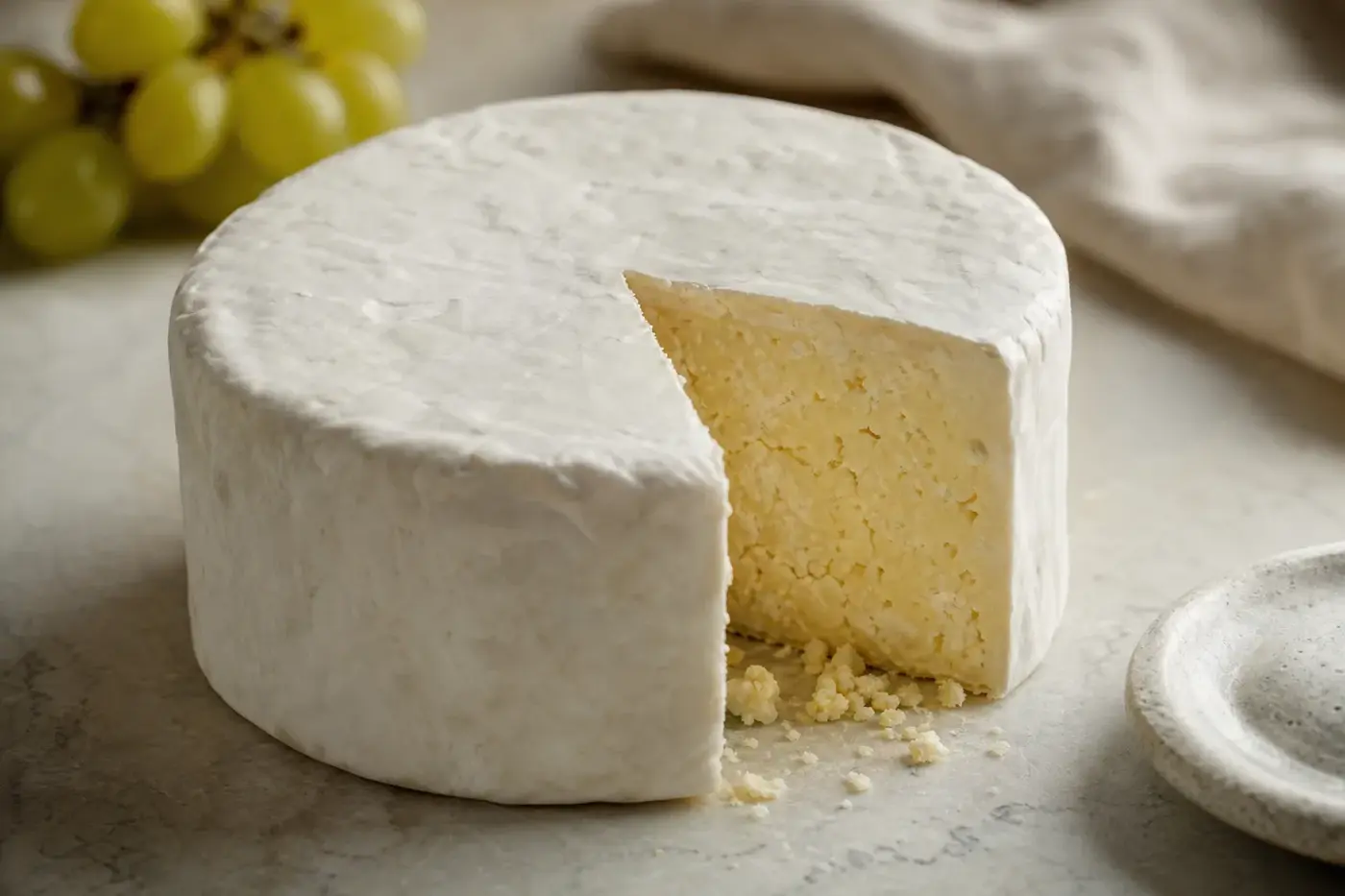
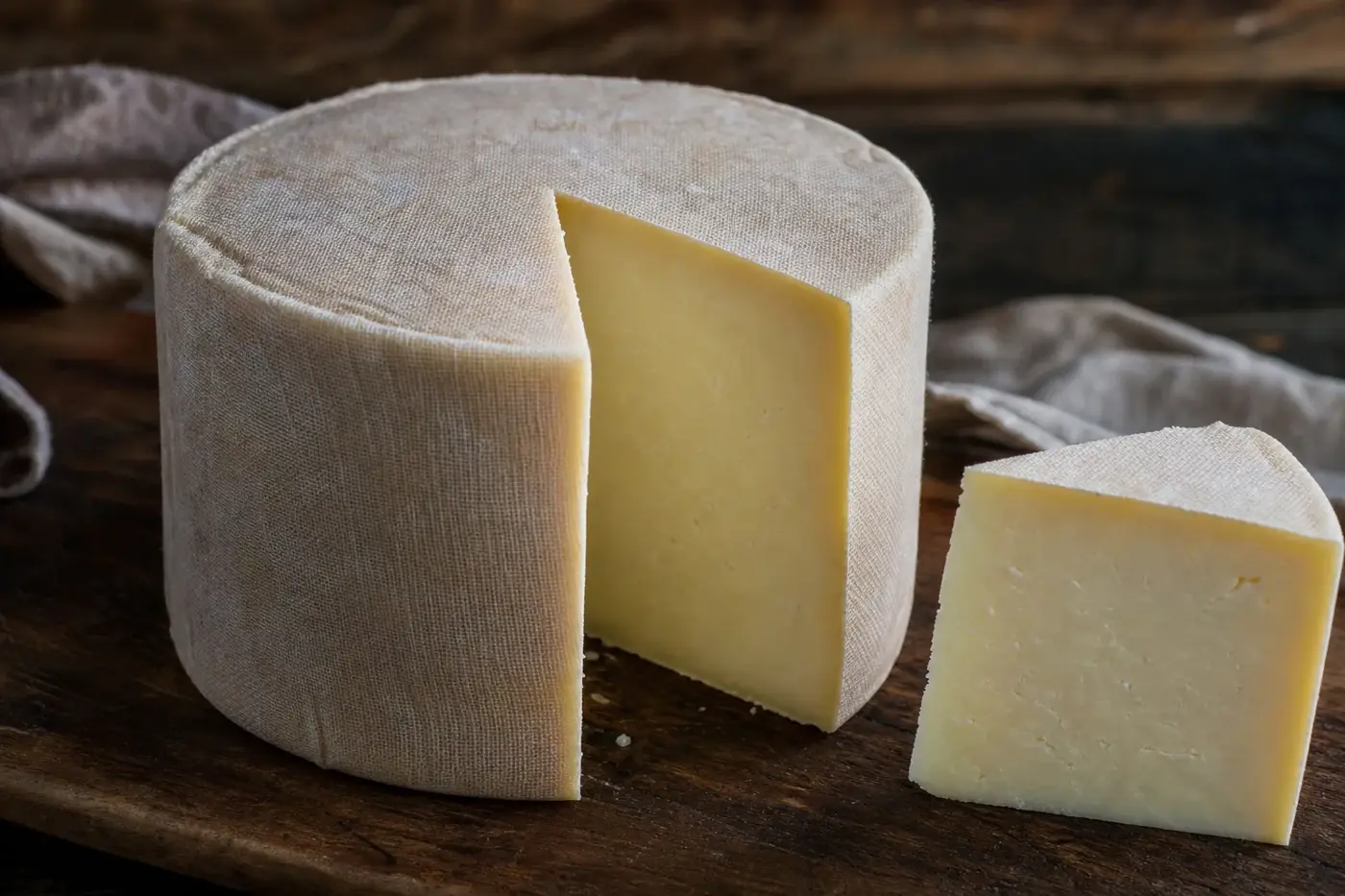
Break into the white cylinder and it gives way in open crumbs.
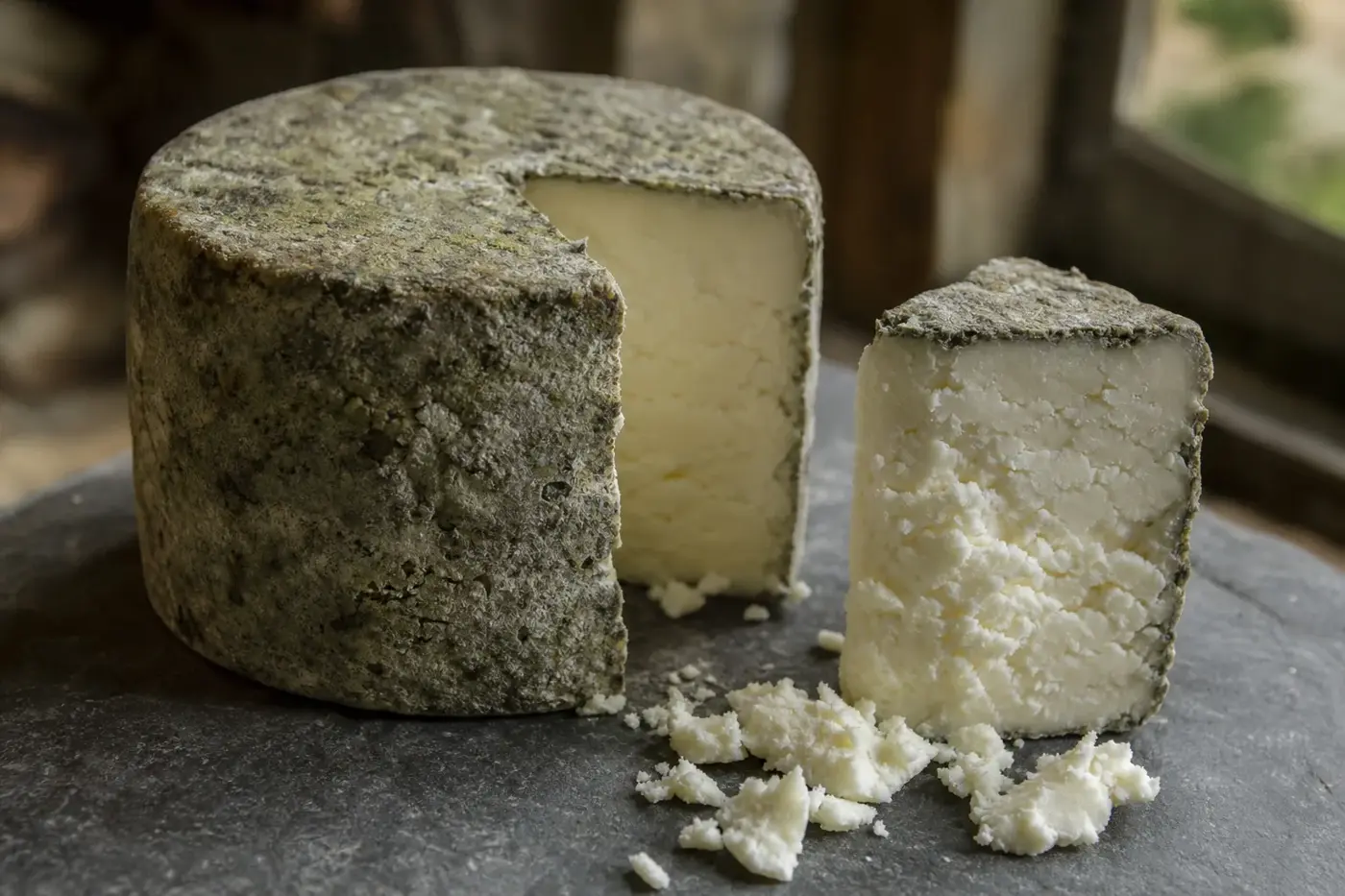
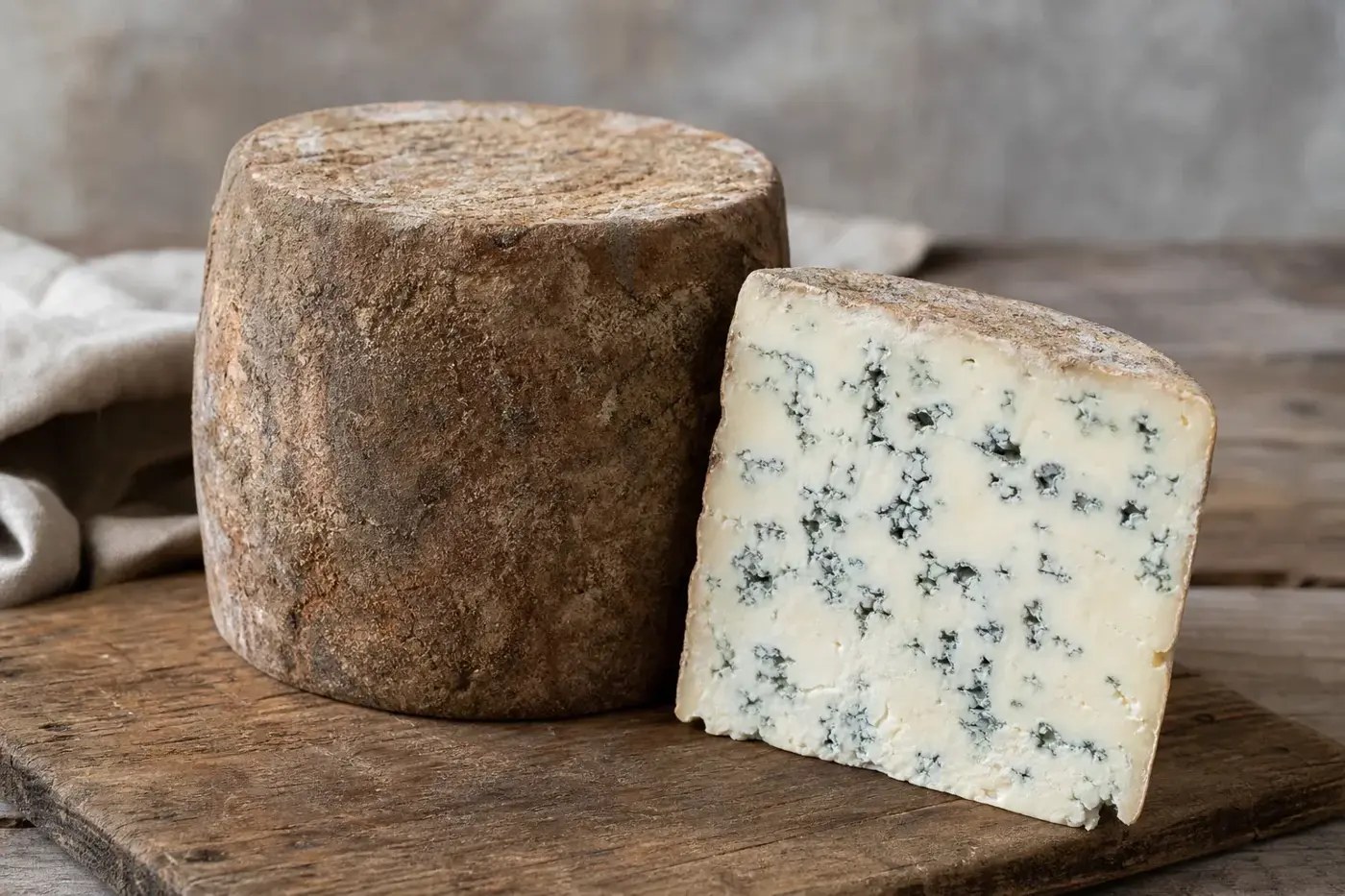
Break into the white cylinder and it gives way in open crumbs. Beneath greenish-blue-grey surface mould or wax, you find a cheese that is firm yet moist, fresh, slightly acidic and sweet. This is sheep's milk meeting Swaledale's crumbly cheesemaking tradition in North Yorkshire. [2]
Before you reach for another piece, look at the name. Swaledale Ewes' Cheese has its own registered identity, separate from cows' milk Swaledale Cheese. It remains a protected designation of origin in the Great Britain register as of November 2026. [1, 2]
Get to know the cheese behind the name
- Look for a firm, moist cheese that breaks into crumbs, just as the specification describes. [2]
- Read the full name: the separate cows' milk entry was cancelled from the Great Britain register on 29 August 2022. [3]
- The producer traces the recipe to medieval monks, although its published account supplies no medieval document supporting that origin tradition. [5]
| What you might like to know | The details |
|---|---|
| Familiar name | Swaledale Ewes' Cheese |
| Registered name in Great Britain | Swaledale Ewes´ Cheese [1] |
| Who holds the registration | Department for Environment, Food & Rural Affairs, Great Britain GI register [1] |
| Great Britain status | Registered PDO, November 2026 [1] |
| UK scheme registration | 31 December 2020 at 23:00 [1] |
| Original EU registration date | 21 June 1996, recorded by Defra [1] |
| Defined production area | Swaledale, North Yorkshire [2] |
| Milk | Full fat sheep's milk from the designated area [2] |
Two Swaledale names worth telling apart
Those three letters, PDO, mean protected designation of origin. For this cheese, they connect the name to Swaledale and to milk from sheep grazed within the designated area. [2]
The two Swaledale names have different stories in the register. Swaledale Cheese, made with cows' milk, lost its protection under the UK scheme on 29 August 2022. The separate ewes' cheese entry remains registered as of November 2026; the status of one does not determine the other. [1, 3]
At the counter, give the complete product name a moment of your attention. A Yorkshire address or familiar place name cannot identify the designation on its own. Ask whether the particular cheese is supplied under the registered name, who made it and where.
Keep the label or counter ticket with your cheese. Cheese lovers can remember a lovely mouthful long after forgetting everything printed on its wrapping. For the broader difference between a geographical designation and a product description, see protected names explained.
From farmhouse milk to a fresh start
Picture surplus milk becoming food for the household, then something to exchange with grocers and corn merchants. That is the farmhouse world described in the historical account attached to the former cows' milk specification. It also follows the growth of creameries and the decline of cheesemaking on individual farms, telling the story through an application record rather than contemporary records of each event. [4]
The Swaledale Cheese Company's published history brings you to a precarious point in that story. By 1980, it says, only one farm remained in production. The traditional process passed to the company's founders, before production was revived in 1987. [5]
Then come the medieval monks. The company associates the original sheep's milk recipe with them, although its account supplies no medieval document establishing who invented it. The tangible thread is the cheesemaking knowledge passed from farms to a later specialist dairy. [5]
What sheep's milk brings to your cheese
Sheep's milk gives a cheesemaker a rich starting point. The Food and Agriculture Organization describes it as generally higher in fat and protein than cows' milk, with substantial overall solids that make it particularly suitable for cheesemaking. Breed, feed, season and stage of lactation all influence what the milk contains. [6]
A 2016 laboratory study offers a closer comparison. Researchers examined six milk samples from each of five animal species, analysing them in triplicate. The sheep's milk samples contained more fat, protein and casein than the cows' milk samples. [7]
Casein is the principal group of milk proteins that forms the structure of rennet-set curd. Those results describe the samples studied, not a fixed formula for every milk. [7]
What reaches your plate depends on more than milk species alone. The recipe matters, so ask about maturation as well as milk when you reach the counter. Comparing younger and older cheese tells you more than a general promise that sheep's milk means stronger flavour.
Follow the curd from vat to rind
Cut, drain, stack, then break by hand. In the specified method, those steps in handling the curd follow the addition of lactic starter culture and rennet. Next come muslin-lined moulds, light pressing and brining. [2]
From there, maturation takes one of two routes. A natural rind receives regular turning; a waxed cheese goes into cold storage. [2]
If you are new to the vocabulary, curd means the coagulated milk solids, while whey is the liquid separated from them. The company's general process description also covers cutting curd, draining whey, moulding, pressing and controlled ripening. It says the company pasteurises its milk, describing company practice rather than the designation's requirements set out in the registered specification. [5]
For a closer look at the journey, turn to how cheese is made. You can follow each stage without committing your kitchen to a new career.
Find the moisture in that white crumble
Firm does not have to mean dry. The specification describes a cylinder with white paste and a moist, open, crumbly texture, beneath either greenish-blue-grey mould or wax. Freshness, slight acidity, sweetness and mildness shape the flavour, without bitterness. [2]
Ask your cheesemonger to show you the cut face. Notice how readily a small piece breaks, then how moist or dry it feels in your mouth. Give this cheese a little attention on its own before comparing it with another sheep's milk cheese.
Leave a moment for aroma, too. Start with a fresh piece and make a note before adding bread or fruit. That way, your first impression belongs to the cheese rather than everything beside it.
Make room for Swaledale and Wensleydale
The two Swaledale specifications describe related regional methods, but their milk and texture differ. The former Swaledale Cheese specification describes cows' milk, an off-white colour, a smoother body and a very moist, crumbly texture. The ewes' specification belongs to a registered Great Britain name; the cows' milk specification remains with the cancelled entry. [1, 2, 3, 4]
Nearby Wensleydale brings another naming distinction to your cheeseboard. Wensleydale is used as a style name, while Yorkshire Wensleydale is the particular name registered as a PGI in Great Britain. Its specification describes a pressed cows' milk cheese, made with raw or pasteurised milk, with a crumbly, flaky texture and a slightly sweet, honeyed finish. [8, 9]
| Name to look for | Milk in its specification | Great Britain register position, November 2026 |
|---|---|---|
| Swaledale Ewes´ Cheese | Sheep's milk [2] | Registered PDO [1] |
| Swaledale Cheese | Cows' milk in the former specification [4] | Cancelled, 29 August 2022 [3] |
| Yorkshire Wensleydale | Cows' milk [9] | Registered PGI [8] |
Fancy tasting them side by side? Ask for clearly identified pieces and note their ages. Taste each alone, then come back to each with the same plain bread.
Keeping the accompaniment consistent gives you a fairer comparison of milk and texture. With a different pairing for every piece, it becomes harder to pick out what belongs to the cheese itself.
Let the cheese lead at the table
Begin with cheese, plain bread or an unsweetened cracker, and water. Taste before you assemble the rest of the plate. Once you know the cheese on its own, you can judge what each accompaniment adds.
The suggestions below give you contrasts to explore. They are not a reconstruction of a documented local serving custom:
- Fresh pear: put a thin slice beside a small piece of cheese. Compare the fruit's sweetness with the cheese alone.
- Apple: try a tart variety alongside a sweeter one. Let your tasting decide, rather than picking a winner beforehand.
- Walnuts: serve them separately, so everyone can choose how much toasted or bitter character to add.
- A restrained fruit preserve: start with a little. You want the cheese to remain part of the conversation.
- Alcohol-free drinks: water, unsweetened tea and apple juice offer three different directions to explore.
For a meal, crumble the cheese over warm potatoes after cooking, or serve it beside beetroot and leaves. Keep dressings and pickles on the side to begin with. You can add acidity and sweetness after tasting; an overpowering dressing is harder to take away.
Ask your cheesemonger for the whole story
Ask for the exact cheese, not simply “Swaledale”. Establish the milk species, maker, place of manufacture, age, surface treatment and storage instructions. If your piece comes from a larger cylinder, ask to see the original identification rather than relying on the counter name alone.
Does pasteurisation or rennet affect your choice? Ask for an answer about the particular product in front of you. Information attached to that cheese is more useful than a general account of a dairy's methods.
For help with the wrapping, turn to how to read a cheese label. Keep those details alongside the cheese rather than leaving them to memory after the first slice.
Take the same precise approach when ordering online. Confirm which product will be dispatched and what information comes with it, then keep the wrapping and batch details until you finish the cheese. If you have a particular meal in mind, ask directly about dispatch arrangements rather than planning around an undated product listing.
Give the surface treatment a question of its own. Whether you choose wax or a natural rind, ask how the seller recommends cutting, wrapping and handling that particular finish.
Bring it home and keep it chilled
Follow the cheese's packaging instructions for storage. For England, Wales and Northern Ireland, official chilling guidance recommends a fridge between 0 and 5 °C, with a thermometer to monitor it. Food Standards Scotland likewise recommends 0 to 5 °C and returning food to the fridge promptly; both sources inform this November 2026 guidance. [10, 11]
Keep any instructions for after opening with your cheese. UK government guidance distinguishes a use-by date, which concerns safety, from a best-before date, which concerns quality. If the label also gives a limit for use after opening, follow whichever applicable limit comes first. [12]
For preparing and serving chilled food in England, Wales and Northern Ireland, consult the Food Standards Agency's chilling guidance. Use that guidance for those steps. [10]
Return the remaining cheese to its stated storage conditions. For more on wrapping and caring for cut pieces, see how to store cheese at home.
Found the name? Ask about the cheese
In November 2026, the Swaledale Cheese Company's website lists products called Swaledale Sheep and gives a contact address at Metcalfe Farms, Leyburn. That gives you a current product listing and a place to contact the company. Ask directly where the cheese on offer is manufactured and under which designation it is supplied. [13]
If you want Swaledale Ewes' Cheese PDO specifically, say so before ordering. Ask whether the available batch is sold under that registered name, where its milk originated and where it was made.
Keep three questions separate as you shop. Does the name remain registered, does a supplier list a sheep's milk product, and does this particular cheese meet the registered specification? Each needs its own answer and its own source.
General information only, not medical advice: follow the official guidance where you live.
Questions people ask
Is Swaledale Ewes' Cheese a protected name?
Yes. It was a registered protected designation of origin in Great Britain when checked in November 2026. The separate cows' milk Swaledale Cheese name was cancelled from the register on 29 August 2022.
What does Swaledale Ewes' Cheese taste like?
The specification describes it as fresh, mildly acidic, sweet and mild, without bitterness. It has a firm, moist and crumbly texture.
How is Swaledale Ewes' Cheese made?
After starter culture and rennet are added, the curd is cut, drained, stacked and broken by hand. It is then moulded in muslin, lightly pressed and brined, before maturing with either a natural rind or a wax coating.
Is it pasteurised, and is the rennet suitable for vegetarians?
The registered specification does not state the milk treatment or the origin of the rennet. The Swaledale Cheese Company says it pasteurises its milk, but you can ask about the particular cheese being offered.
Where can I find Swaledale Ewes' Cheese?
When checked in November 2026, the Swaledale Cheese Company's website listed products called Swaledale Sheep and gave a contact address at Metcalfe Farms, Leyburn. If you want the protected cheese specifically, ask the company whether the available batch is supplied under the registered name and where it was made.
Sources
- Department for Environment, Food & Rural Affairs. Swaledale Ewes´ Cheese. Great Britain protected food names register, published 2021; live entry checked November 2026.
- Defra. Product specification: Swaledale Ewes Cheese. Undated specification linked from the current register entry, sections 4.1 to 4.6.
- Defra. Swaledale Cheese. Great Britain register entry, updated 29 August 2022.
- Defra. Product specification: Swaledale Cheese. Undated former specification, retained with the cancelled register entry.
- Swaledale Cheese Company. About. Undated company history and process account, checked November 2026. A producer's account of its own history and practices.
- Food and Agriculture Organization of the United Nations. Milk composition. Gateway to dairy production and products, undated, checked November 2026.
- Asian-Australasian Journal of Animal Sciences. Chemical Composition, Nitrogen Fractions and Amino Acids Profile of Milk from Different Animal Species. 2016; methods and Tables 1 and 2.
- Defra. Yorkshire Wensleydale. Great Britain protected food names register, published 2021; checked November 2026.
- Defra. Product specification: Yorkshire Wensleydale. Undated specification linked from the current register entry, sections 4.2 and 4.3.
- Food Standards Agency. How to chill, freeze and defrost food safely. Published 18 December 2017; live guidance checked November 2026. Applies to England, Northern Ireland and Wales.
- Food Standards Scotland. Chilling food. Undated live consumer guidance, checked November 2026.
- UK Government. Understanding food labelling: Best before and use-by dates. Undated live guidance, checked November 2026.
- Swaledale Cheese Company. Official product listings and contact details. Undated live website, checked November 2026.
Researched through official register entries and specifications, national food guidance, published milk-composition research and clearly attributed producer accounts.
Last checked: November 2026
Last checked November 2026.
The editors suggest you read next
West Country Farmhouse Cheddar Cheese
Large pieces of curd turn and stack under the cheesemaker’s hands.