Swaledale Cheese
Picture a piece of cheese being tasted, its crumb and tang carrying a recipe into new hands.
Picture a piece of cheese being tasted, its crumb and tang carrying a recipe into new hands. In November 1986, that recipe passed from a farming household at Harkerside, above Reeth, to the future founders of Swaledale Cheese Company. Its previous custodian helped judge the revived cheese, teaching the method through instruction and tasting. [8]
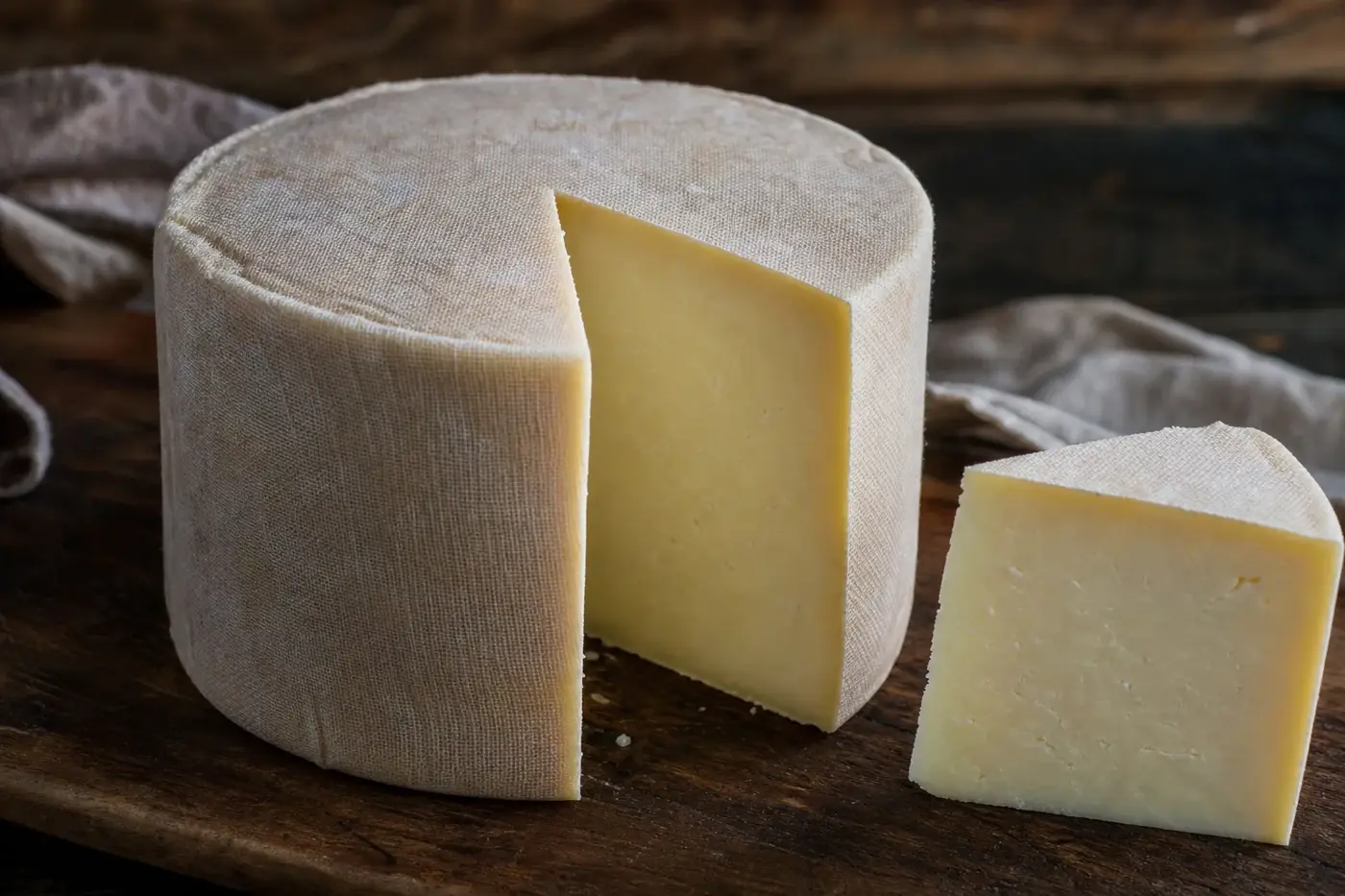
That inheritance belongs to Swaledale in North Yorkshire. You meet it in a round cheese with a natural rind and a pale, moist, crumbly interior. Its Great Britain Protected Designation of Origin, or PDO, was cancelled on 29 August 2022 after the producer named in the notice moved production outside Swaledale. The company continues to offer cheese under the Swaledale name. [1][2][3][6]
| What you might want to know | The detail |
|---|---|
| Familiar and former registered name | Swaledale Cheese. [1] |
| Registration authority | Department for Environment, Food & Rural Affairs, UK geographical indications register. [1] |
| GB protection status | PDO cancelled on 29 August 2022; November 2026 status. [1] |
| Historical production area | Swaledale, North Yorkshire, as defined in the former specification. [2] |
| Milk in the former specification | Full-fat cows’ milk. [2] |
| Current named product | Swaledale Farmhouse, offered by Swaledale Cheese Company. [6] |
| What the current product tells you | Pasteurised milk; suitable for vegetarians, according to the producer. [6] |
Meet the moist crumble and gentle tang
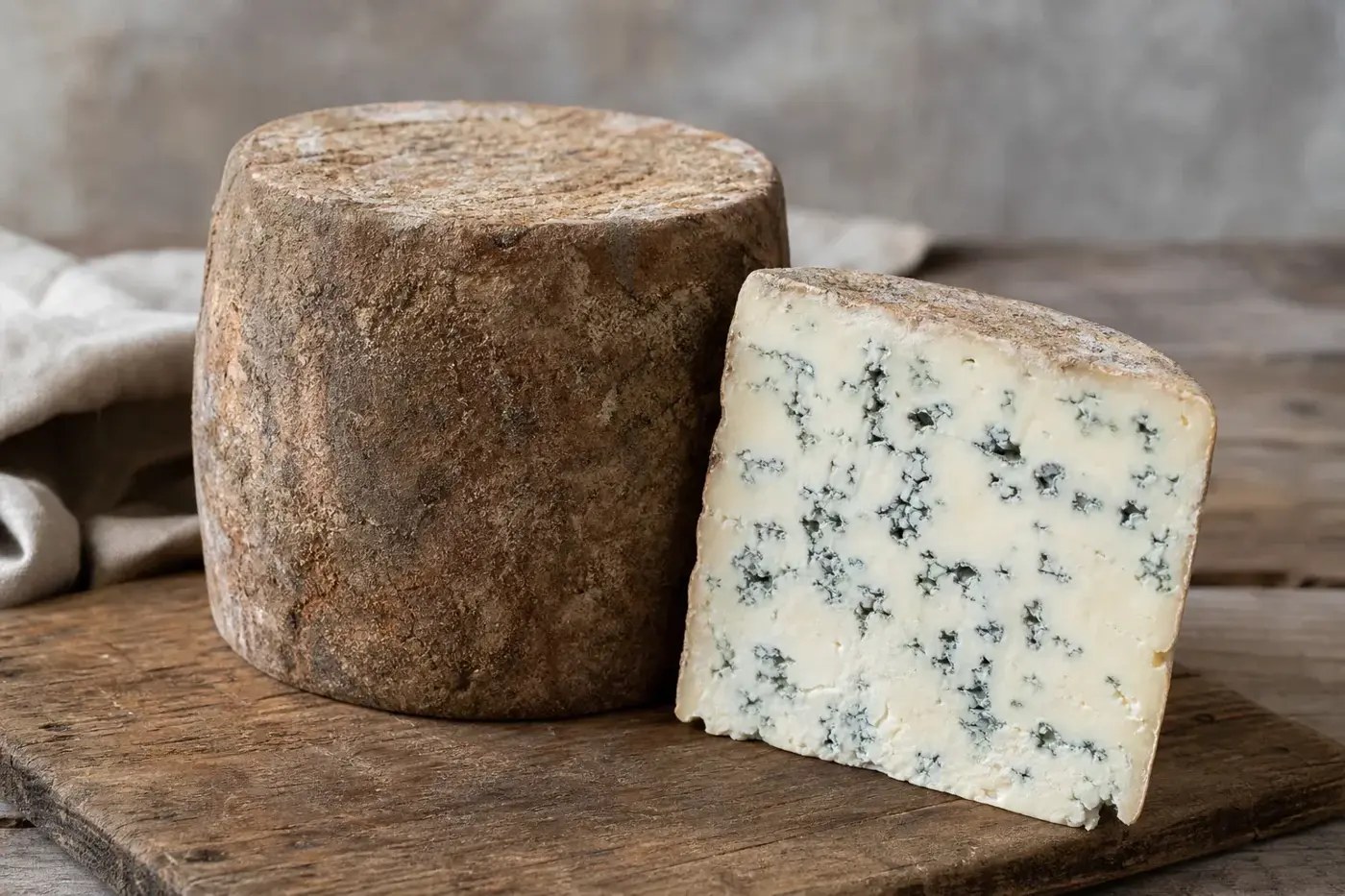
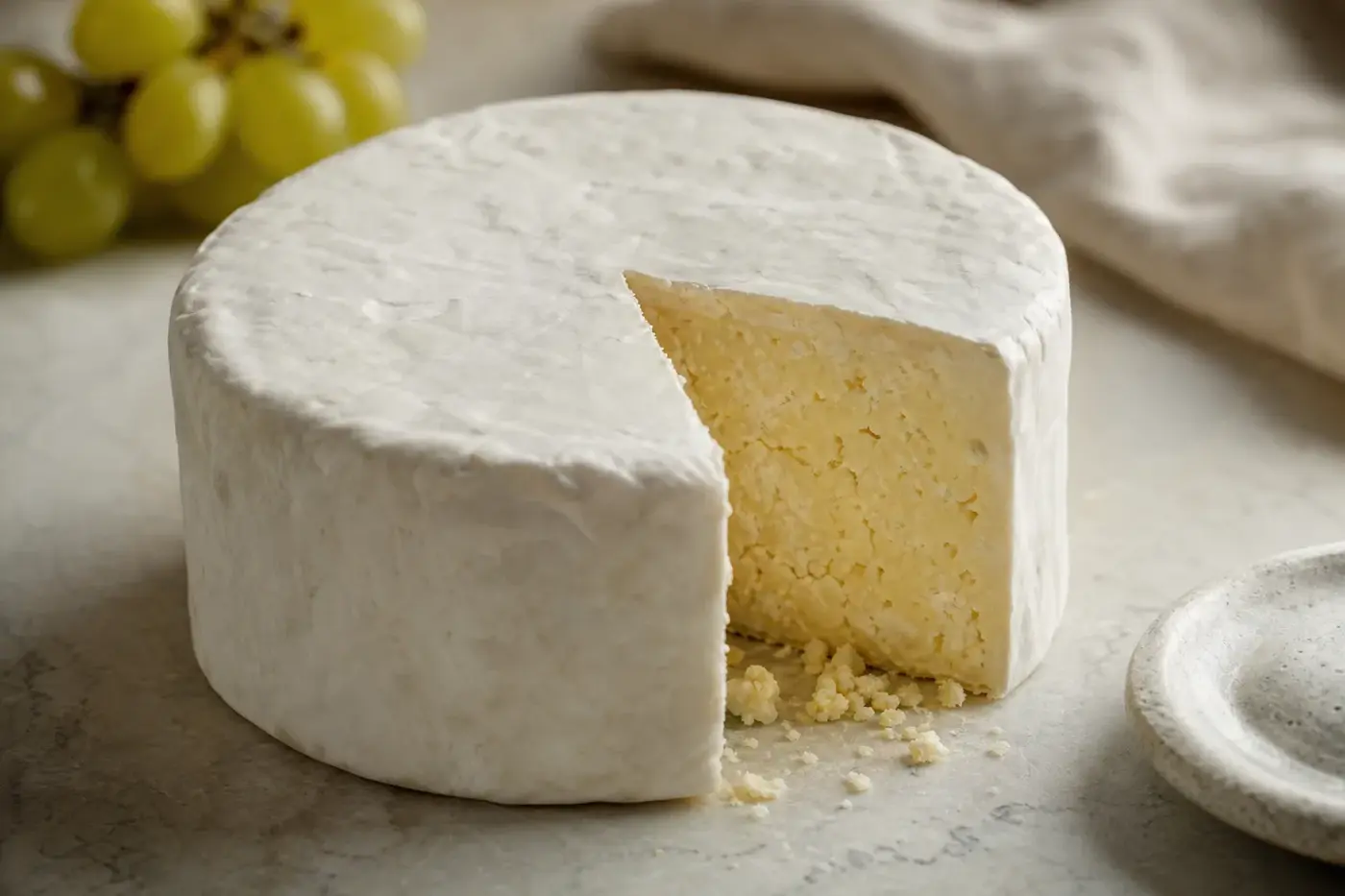
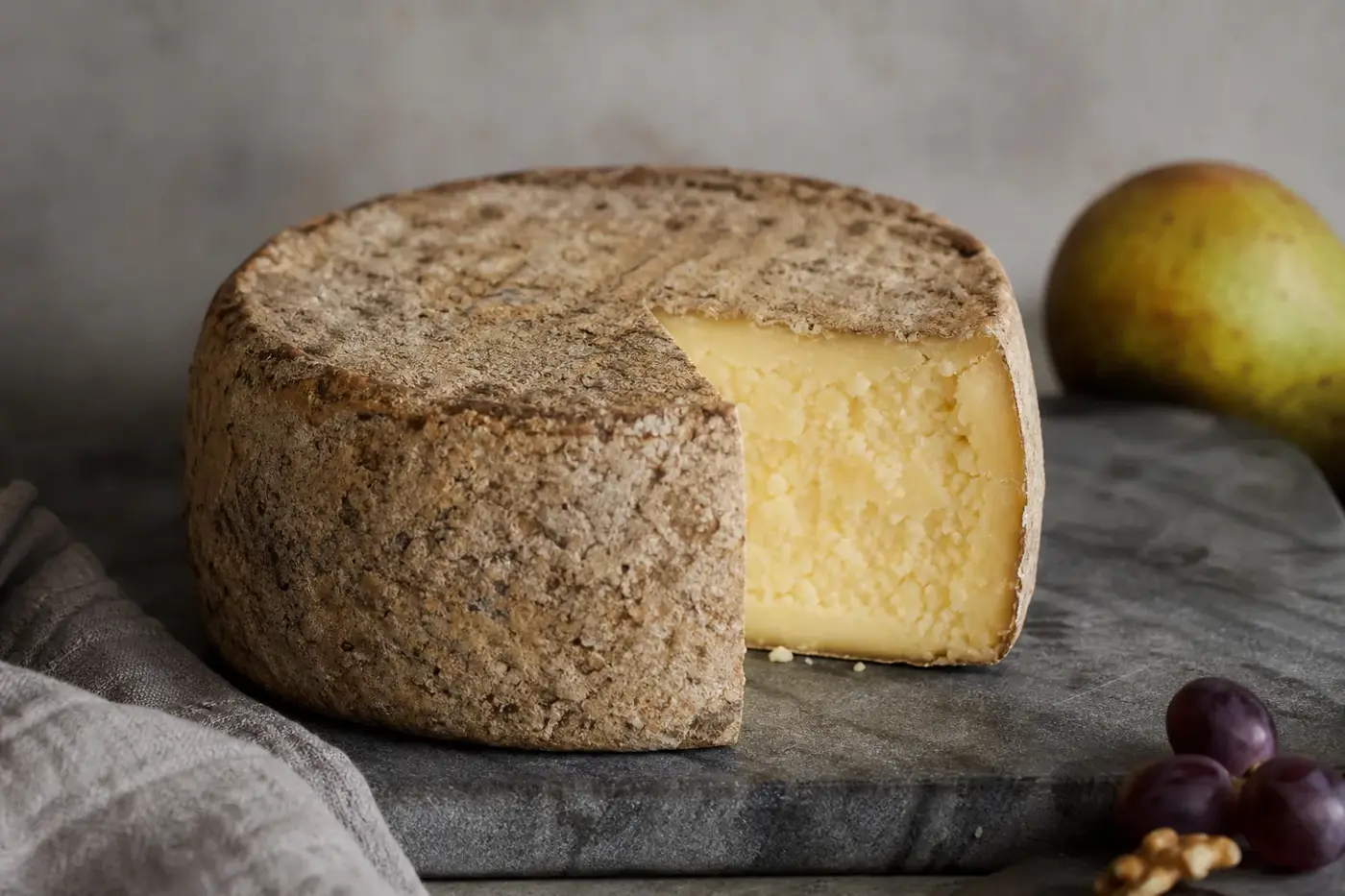
Think moist crumble, not dry brittleness. The former specification describes a cylinder with an off-white interior, a moderately firm body and an open, crumbly texture. Its recorded flavour is fresh, gently acidic and mild, without bitterness. [2]
The outside has its own story to tell. Greenish-blue and grey mould could develop on the natural surface, although a wax coating was also permitted. [2] At the counter, ask how old your piece is, how its texture has developed and whether that outside is natural rind or coating.
Today’s Swaledale Farmhouse is described by its producer as pale yellow inside, with a textured natural rind, fresh milk flavours and a lightly tangy finish. The broader range description gives a crumbly yet moist texture that grows smoother with maturation. Start with those maker’s descriptions, then let the cheese in front of you have its say. [5][6]
Curious about what the outside tells you about the inside? Explore how to tell cheese styles apart for the relationship between surface, texture and method.
The household that kept Swaledale’s recipe alive
Before the revival came the everyday business of making milk last. The historical account accompanying the ewes’ cheese specification describes Swaledale farmers keeping some cheese for their households and trading some for other provisions. As creameries expanded, farmhouse production declined. [8]
By 1980, that account identifies a farming household at Harkerside, above Reeth, as the remaining keeper of the traditional method. Then came the November 1986 handover, with the recipe’s custodian helping the future founders judge their revived cheese. Swaledale Cheese Company followed in February 1987. [8]
The present company also credits this transfer of knowledge and dates the revival to 1987. [4] What survived was more than a regional name. It was a working method, passed from person to person through direct instruction and tasting.
You will also find medieval monks in the company’s account of the cheese’s origins. That remains an attributed origin tradition. The modern revival has the firmer documented chronology. [4]
This page summarises published guidance from the official sources it cites. It is not medical advice. Guidance differs between countries and changes over time, so check the current source for where you live, and ask your doctor, midwife, pharmacist or dietitian about your own circumstances.
Follow the curd from milk to mould
There is something pleasingly hands-on about the former cows’ milk specification: the curd was broken by hand. First, cultured milk was set with rennet, then the curd was cut, drained and stacked. After breaking, it went into muslin-lined moulds for light pressing and brining. It then matured with regular turning in a controlled store or beneath wax. [2]
To picture the process, it helps to know the parts. Curd is the solid material formed when milk coagulates; whey is the liquid that separates from it. Rennet is the preparation that sets the milk.
The producer’s current account describes pasteurising locally sourced milk, adding cultures and rennet, then cutting and draining the set curd. Pressing in moulds comes next, followed by ripening. [4]
The sequence is recognisable, but keep the former protected method separate from today’s product declarations. The current Swaledale Farmhouse page states that the cheese is pasteurised and suitable for vegetarians. [6] If you want a particular coagulant, ask for the product’s ingredient information.
Ask about your cheese’s age, too. The producer describes different ripening periods across its range, rather than one age for every cheese. [4] Your cheesemonger can explain how long that particular piece has matured; how cheese is made takes you through the wider process.
What changed for Swaledale on 29 August 2022?
Swaledale Cheese no longer carries protection under the GB PDO scheme. It entered the UK scheme on 31 December 2020. The government record gives 21 June 1996 as its original EU registration date and now marks the GB registration as cancelled. [1]
The cancellation decision explains the change. Swaledale Cheese Company, identified there as the sole producer, had moved production outside Swaledale and requested cancellation. The Secretary of State approved the request, and no objections were received. [3]
There are two dates to keep distinct. The decision notice was published on 9 August 2022. Removal from the register took effect on 29 August 2022. [1][3]
What disappeared was the geographical indication, not the ability to carry on making cheese. The decision concerned a producer that had moved, and the company’s current catalogue offers Swaledale Farmhouse. For you as a buyer, the important change is the name’s loss of GB PDO protection. [1][3][6]
PDO stands for Protected Designation of Origin. The UK scheme protects registered names in Great Britain, while the EU scheme governs GI protection in Northern Ireland and the EU. Status in one jurisdiction therefore does not settle status in another. [9]
When choosing a cheese today, look at the maker’s name, product description and disclosed production information. The guide to protected names explains the difference between a regional tradition and a registered geographical indication.
Two Swaledale names, two milks to know
A little attention to the full name pays off here. Swaledale Cheese and Swaledale Ewes’ Cheese have separate registration records. In November 2026, the GB register still lists Swaledale Ewes´ Cheese as a registered PDO, with a UK registration date of 31 December 2020 and an original EU registration date of 21 June 1996. [7]
The ewes’ cheese specification calls for sheep’s milk from animals grazed in Swaledale. That makes it distinct from the cows’ milk cheese covered by the cancelled Swaledale Cheese registration. [2][8]
The surviving registration belongs to the ewes’ milk name. If you are considering a sheep’s milk cheese, establish its maker and production details too. A name’s legal status and a particular cheese’s identity are different questions.
This matters especially when a catalogue shortens the name to “Swaledale”. Read the full product name and milk declaration before choosing. A shared regional name should not blur the difference between cows’ milk and ewes’ milk.
Find your way to today’s Swaledale Farmhouse
In November 2026, Swaledale Cheese Company’s website listed Swaledale Farmhouse and described its cheesemaking process. The company gave its address as Metcalfe Farms, Leyburn, North Yorkshire. For a particular cheese, ask separately about its production place and date rather than relying on the website listing alone. [4][6]
The farmhouse product page explicitly declares pasteurised milk and vegetarian suitability. There is also a separate oak-smoked Swaledale product in the company’s descriptions. [5][6] Start with the plain farmhouse cheese to explore the underlying milk flavour and texture, then try the smoked version another time.
Before arranging a purchase, consult the producer’s current listing or ask your cheesemonger about the latest delivery. Confirm stock, cutting dates and dispatch arrangements for your order. A place in the catalogue is not quite the same as a piece ready for your plate.
If you keep tasting notes, put the maker’s name beside the cheese name. When you return for another piece, that detail makes the comparison more useful than the regional name alone. It also gives your cheese notebook something to do beyond making you look agreeably obsessed.
Take four questions to the cheese counter
Who made it? Which milk was used? How was it ripened, and what covers the rind? Since the GB cancellation, those four questions are especially useful when you choose a cheese sold under the Swaledale name. [1]
Find out whether your piece is plain farmhouse cheese or a flavoured variation. Ask its maturation age and, for a cut portion, request the storage instructions supplied with the original cheese. If vegetarian suitability matters to you, consult that product’s declaration. The current farmhouse listing makes the claim explicitly. [6]
With a natural-rind piece, you can explore the contrast between the surface and the pale interior described in the historical specification. [2] Ask the seller how the rind has been treated and how it is intended to be used.
Keep the label, or photograph it before the wrapper goes. The maker, batch details and date marking will tell you more later than an anonymous piece of cheese. For help making sense of them, turn to how to read a cheese label.
Keep it cool and serve a little at a time
Let the packaging lead on storage, including its date marking and directions after opening. For readers following Food Standards Agency guidance in England, Wales and Northern Ireland, the fridge should be between 0 and 5 °C. That is the guidance for November 2026. [10]
Keep those instructions with a cut piece. If none came with it, ask the seller rather than judging by appearance alone. You will find more practical detail in how to store cheese at home.
Bring a manageable portion to the table, not your whole supply. The FSA advises keeping chilled food out of refrigeration for the shortest possible time during preparation, with a maximum of four hours. [10] Follow any stricter instruction on your product.
For your first taste, try a small piece on its own. Notice the texture and acidity before you bring in bread, fruit or a drink. That first bite gives you something to compare with everything that follows.
Let bread, fruit and cheese take their turns
Crusty bread and chutney are the producer’s recommendations for its farmhouse cheese. [5] You could begin more simply with bread and one fresh fruit. Keep the chutney separate so its flavour does not take charge before the cheese has had a chance.
The suggestions below follow the maker’s descriptions of milky flavour, gentle tang and moist texture. Use them as starting points for your own tasting. [5][6]
| Try alongside | How to serve it | What to look for |
|---|---|---|
| Plain crusty bread | Begin without strong toppings | A simple start, following the producer’s suggestion. [5] |
| Fresh pear | Offer a few thin slices | Restrained sweetness beside the stated tang. [6] |
| Apple | Taste a small piece after the cheese | A suggested texture contrast, with the cheese first. |
| Water or unsweetened tea | Offer with every serving | Alcohol-free choices for a simple tasting. |
Keep strongly spiced chutneys to one side at first. Taste the cheese with bread, add a little accompaniment, then decide which balance you prefer. The chutney can wait; it rarely suffers from a lack of confidence.
For more possibilities, explore cheese and wine pairing, including its alcohol-free alternatives.
Questions people ask
What does Swaledale Cheese taste like?
The former specification describes it as fresh, mildly and gently acidic, without bitterness. The producer describes Swaledale Farmhouse as having fresh milk flavours and a lightly tangy finish.
Is Swaledale Farmhouse pasteurised and suitable for vegetarians?
The producer states that Swaledale Farmhouse is made with pasteurised milk and is suitable for vegetarians. If you want to know which coagulant is used, ask for the product’s ingredient information.
Why did Swaledale Cheese lose its GB PDO status?
Swaledale Cheese Company, identified as the sole producer in the cancellation decision, had moved production outside Swaledale and requested cancellation. The GB PDO was cancelled on 29 August 2022, but the company continues to offer cheese under the Swaledale name.
Is Swaledale Ewes’ Cheese different from Swaledale Cheese?
They have separate registration records and use different milks. The ewes’ cheese specification calls for sheep’s milk from animals grazed in Swaledale, while the former Swaledale Cheese specification used cows’ milk. As checked in November 2026, Swaledale Ewes’ Cheese remained registered as a GB PDO.
How should I store Swaledale Cheese?
Follow the packaging instructions, including the date marking and any directions after opening. The Food Standards Agency advises a fridge temperature between 0 and 5 °C in England, Wales and Northern Ireland. Check the current Food Standards Agency guidance and ask the seller for instructions if none came with a cut piece.
Sources
- Department for Environment, Food & Rural Affairs. Swaledale Cheese. UK geographical indications register entry, updated 29 August 2022, retrieved November 2026. Official register entry.
- Department for Environment, Food & Rural Affairs. Product specification: “Swaledale Cheese”. Undated archived specification linked from the cancelled registration; sections 4.1 to 4.5. Product specification.
- Department for Environment, Food & Rural Affairs. Decision to cancel Swaledale Cheese: Protected Designation of Origin (PDO). Published 9 August 2022. Decision notice.
- Swaledale Cheese Company. About, including “Our History” and “The Cheese Making Process”. Undated producer account, retrieved November 2026. Producer history and process.
- Swaledale Cheese Company. Our Cheese. Undated producer descriptions and pairing suggestions, retrieved November 2026. Commercial source with a direct interest in the products described. Producer range descriptions.
- Swaledale Cheese Company. Swaledale Farmhouse 750g. Undated product listing, retrieved November 2026. Commercial source; tasting notes and product declarations are the producer’s. Current farmhouse product.
- Department for Environment, Food & Rural Affairs. Swaledale Ewes´ Cheese. UK geographical indications register entry, retrieved November 2026. Separate register entry.
- Department for Environment, Food & Rural Affairs. Product specification: “Swaledale Ewes Cheese”. Undated specification, sections 4.2 and 4.6, retrieved November 2026. Ewes’ cheese specification.
- Department for Environment, Food & Rural Affairs. Protected geographical food and drink names: UK GI schemes. Updated 8 March 2024, retrieved November 2026. Scheme and jurisdiction guidance.
- Food Standards Agency. How to chill, freeze and defrost food safely. Published 18 December 2017, current retrieved text checked November 2026; applies to England, Northern Ireland and Wales. Official storage guidance.
- Food Standards Agency. Alerts. Live official recall and allergy-alert service, retrieved November 2026. Official alerts.
This desk-researched article compares the archived specifications and official cancellation record with the producer’s current descriptions and published food-storage guidance.
Last checked: November 2026
Last checked November 2026.
The editors suggest you read next
West Country Farmhouse Cheddar Cheese
Large pieces of curd turn and stack under the cheesemaker’s hands.