Valtellina Casera
Picture milk arriving from several farms, ready to come together in one communal dairy.
Picture milk arriving from several farms, ready to come together in one communal dairy. In sixteenth-century Valtellina, that shared effort helped shape the cheese you know as Valtellina Casera. The valley’s cheese consortium traces its beginnings to partially skimmed cow’s milk, northern Lombardy’s valley floor and the province of Sondrio.[1][2][3]
Taste it young and you find something supple and milky. Give it time and it becomes firmer and more aromatic, ready for the valley’s buckwheat cooking.[3][5] Between those stages, there is plenty worth making room for.
| What you might like to know | The detail |
|---|---|
| Name to look for | Valtellina Casera.[1] |
| Who registers the name | European Commission for original EU registration; Defra for the Great Britain register.[1] |
| Original EU registration | Dated 2 July 1996 in Defra’s record.[1] |
| Protection in Great Britain | Registered PDO; scheme registration dated 31 December 2020; register information as at November 2026.[1] |
| Historical production specification | Italian Ministerial Decree of 19 April 1995, Articles 2 to 4, original text; current operative text unconfirmed.[2] |
| Where it comes from | Province of Sondrio, Lombardy, Italy.[2][4] |
| Milk and rennet | Partially skimmed cow’s milk; calf rennet.[2] |
| Minimum time to mature | 70 days in the published specification.[2] |
| Size of the wheel | Cylindrical, 7 to 12 kg; diameter 30 to 45 cm; height 8 to 10 cm.[2] |
Down in the valley, a cheese made together
This Alpine story takes you to settled farms as well as summer pastures. Valtellina lies in Alpine Lombardy, with Sondrio the province named in the production rules. The consortium places Casera in valley-floor dairies supplied by local farms, followed by maturation in traditional casere or other suitable premises.[3][4]
Go back to the sixteenth century and you find farmers pooling their milk in latterie turnarie e sociali. These dairies organised shared processing and cooperative activity. Place matters here, but so do the people who learnt to make something together.[3]
Winter was once Casera’s production season, according to both the industry association AFIDOP and Latteria Sociale di Chiuro. Both now describe production throughout the year. AFIDOP connects that change with herds staying on the valley floor, rather than all heading off to summer grazing.[4][5]
Read the name before you choose the cheese
Those three letters, PDO, mean protected designation of origin; in Italian, you will see DOP. For Valtellina Casera, the published specification ties the name to a defined milk-producing area and prescribed cheesemaking characteristics. Milk, rennet, curd treatment, maturation and the finished wheel all have their place in those rules.[2]
The original specification names the whole province of Sondrio as the milk’s geographical area. AFIDOP describes that province as the production territory, too. Think of the administrative boundary, not simply the valley you might picture: an Alpine description on a label cannot replace the protected name and its requirements.[2][4]
Protection also depends on the market. The Great Britain register lists Valtellina Casera as a registered PDO, with scheme registration dated 31 December 2020, and records the original EU registration separately.[1] For the distinction between production rules and protection in a particular market, turn to the guide to protected names.
From pooled milk to a wheel of Casera
Start with partially skimmed cow’s milk, one of Casera’s defining features. The published method combines milk from two or more milkings, skimmed before coagulation, when liquid milk sets into curd. Calf rennet does that work, while the text also refers to the spontaneous development of cheesemaking microflora.[2]
The specification gives no fixed percentage of cream removal. Nor does “partially skimmed” tell you whether a particular cheese uses raw, thermised or pasteurised milk. If that matters to you, ask separately at the counter; the guide to milk treatments explains the differences.
AFIDOP describes curd cut into grains approximately the size of maize kernels, then heated at 40 to 45 °C. Moulding and light, progressive pressing follow, before dry salting or brining. Then the wheels move into suitable rooms to mature.[4]
Its account gives a minimum maturation of 70 days. From that point, a successful examination allows the consortium’s fire-brand to be applied.[4] These descriptions concern commercial production; for the wider journey from setting milk to draining and ripening, see how cheese is made.
Look closely: the rind, the colour, the holes
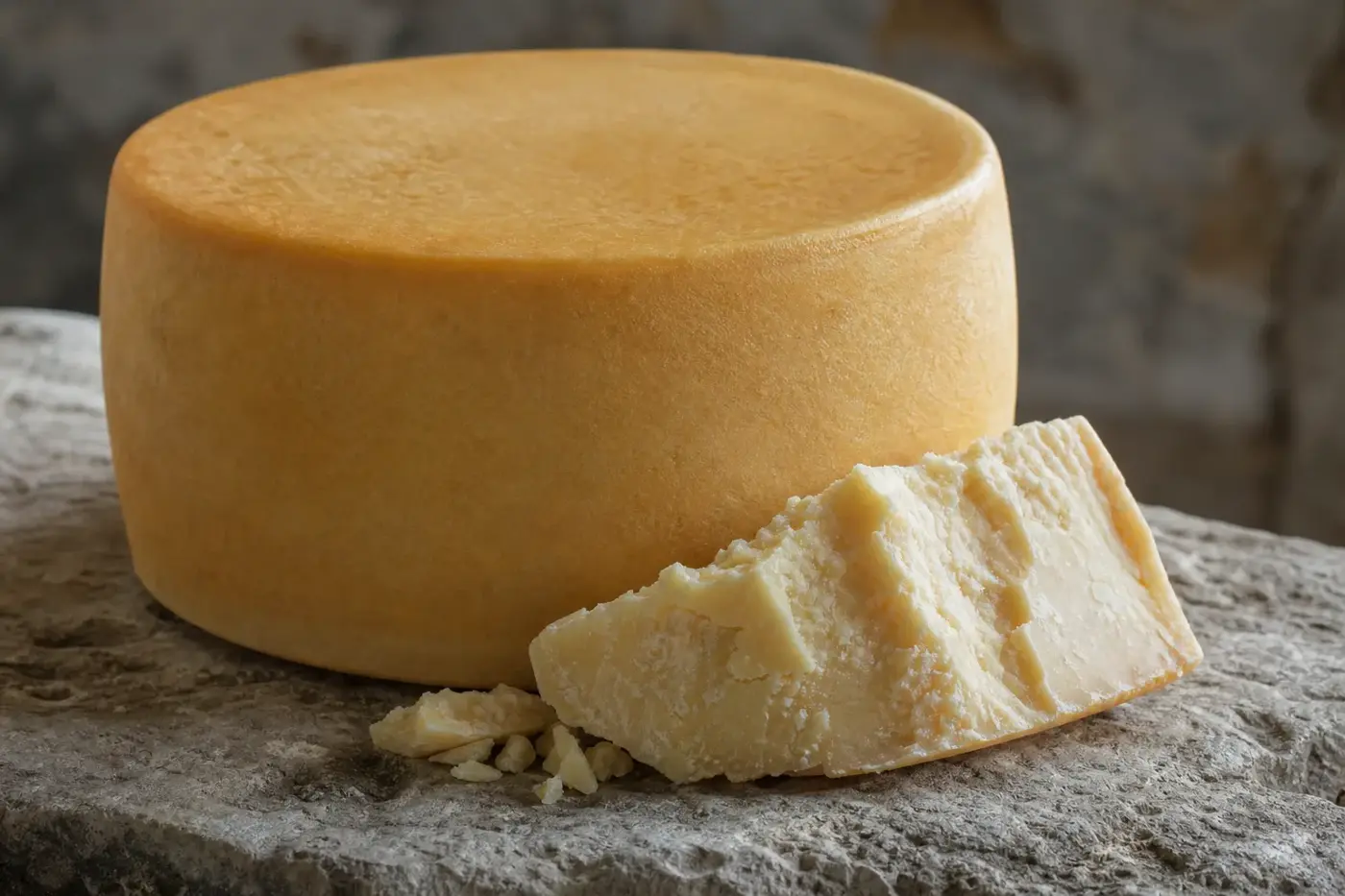
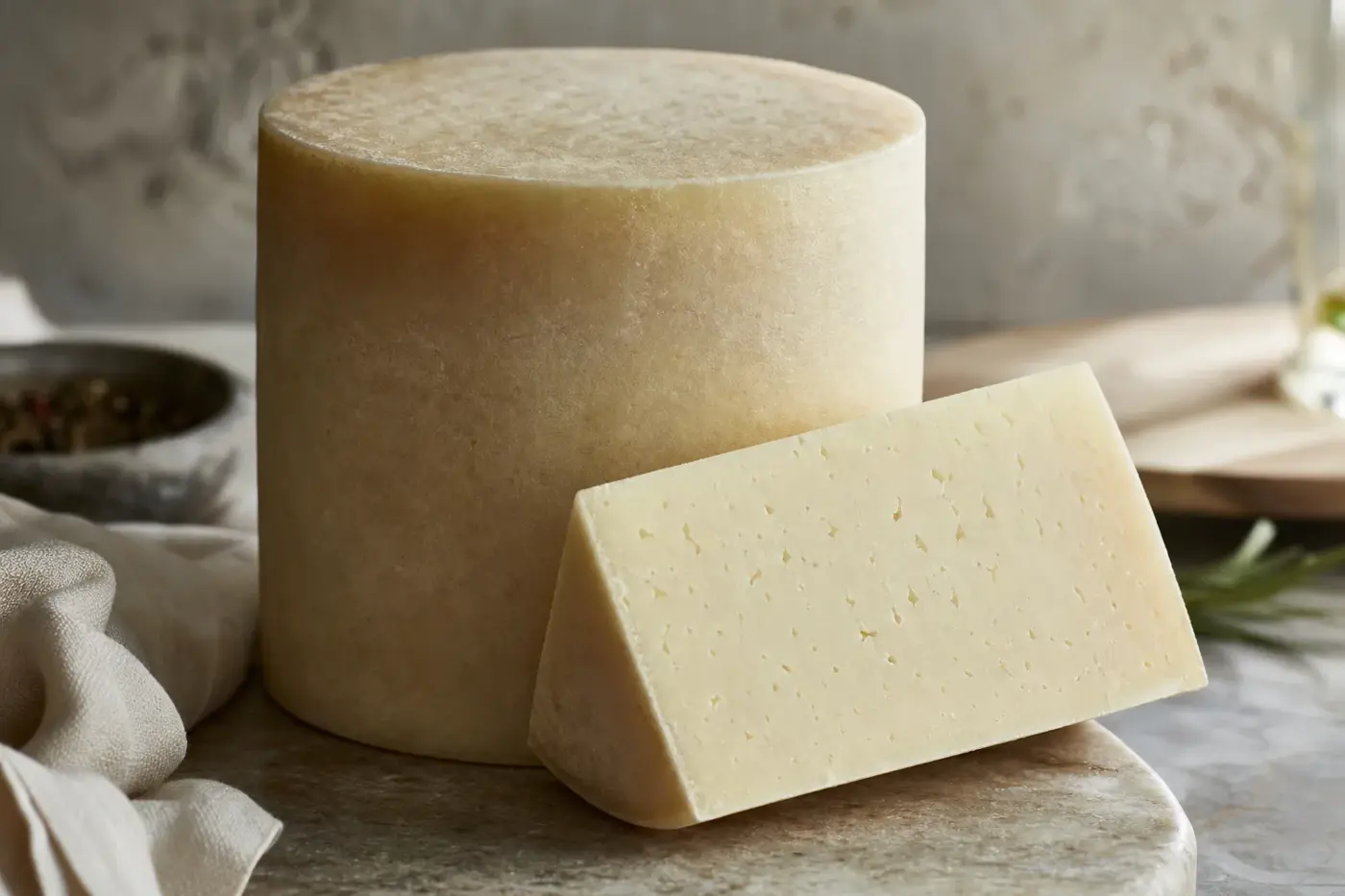
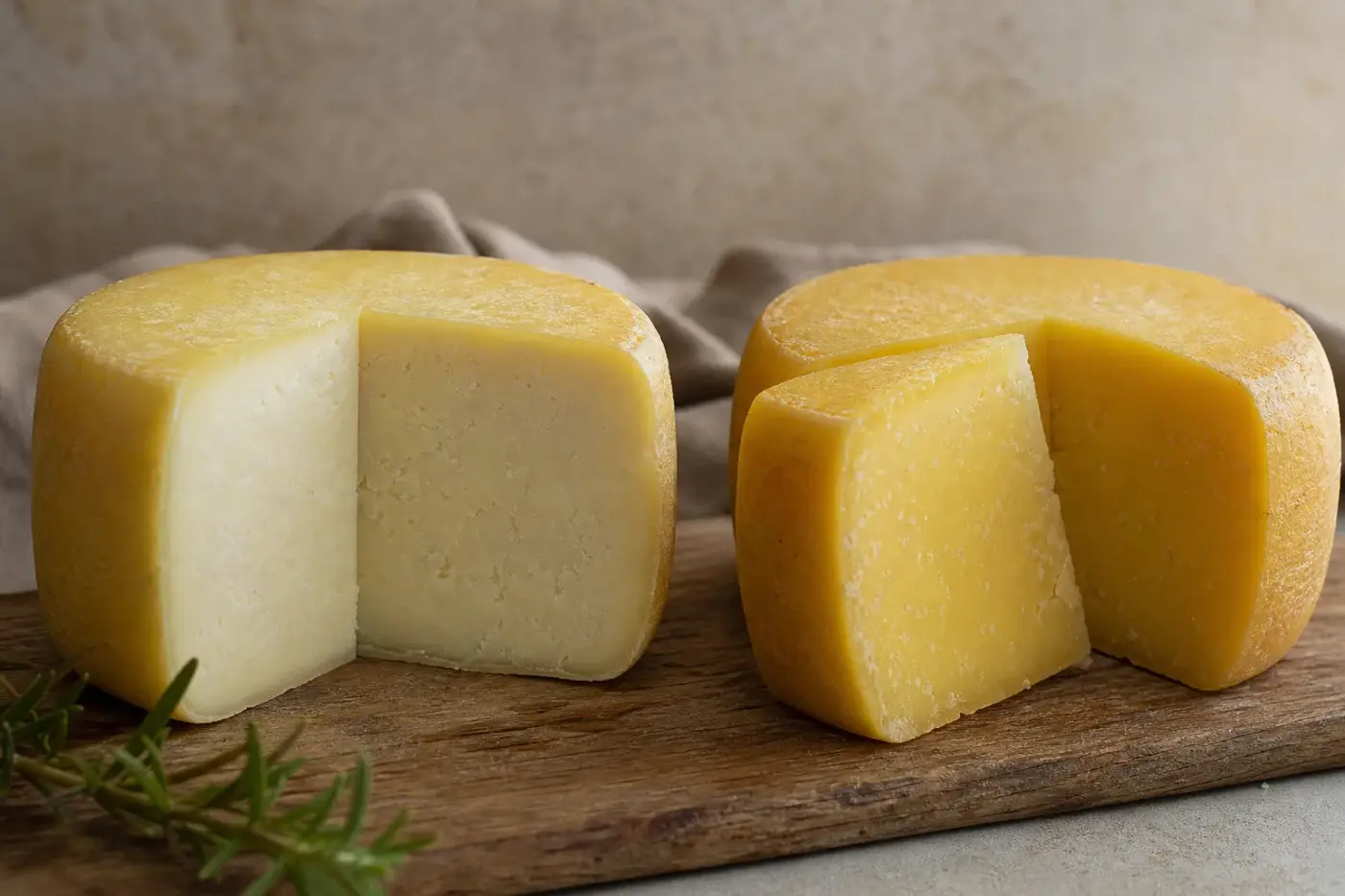
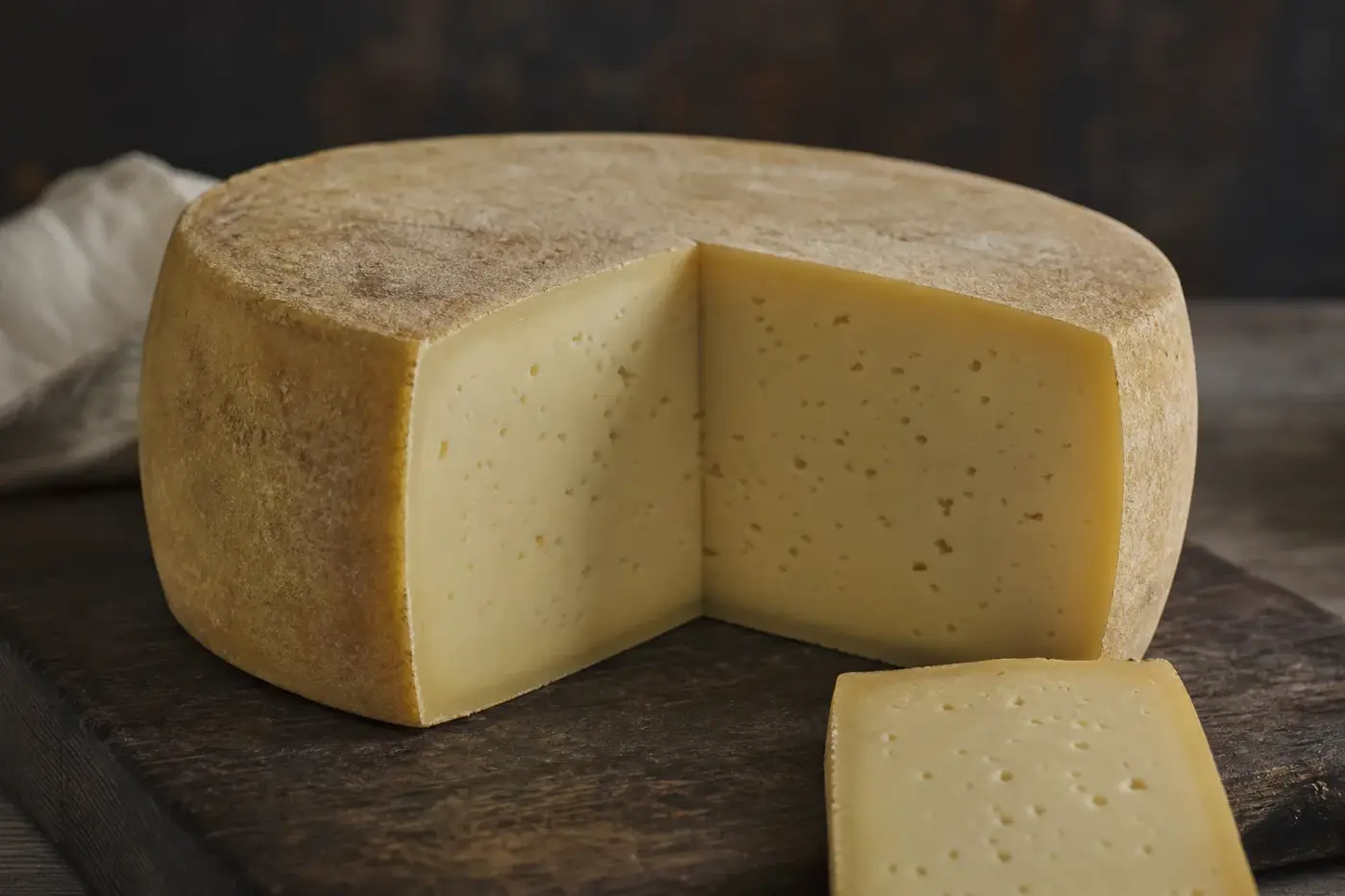
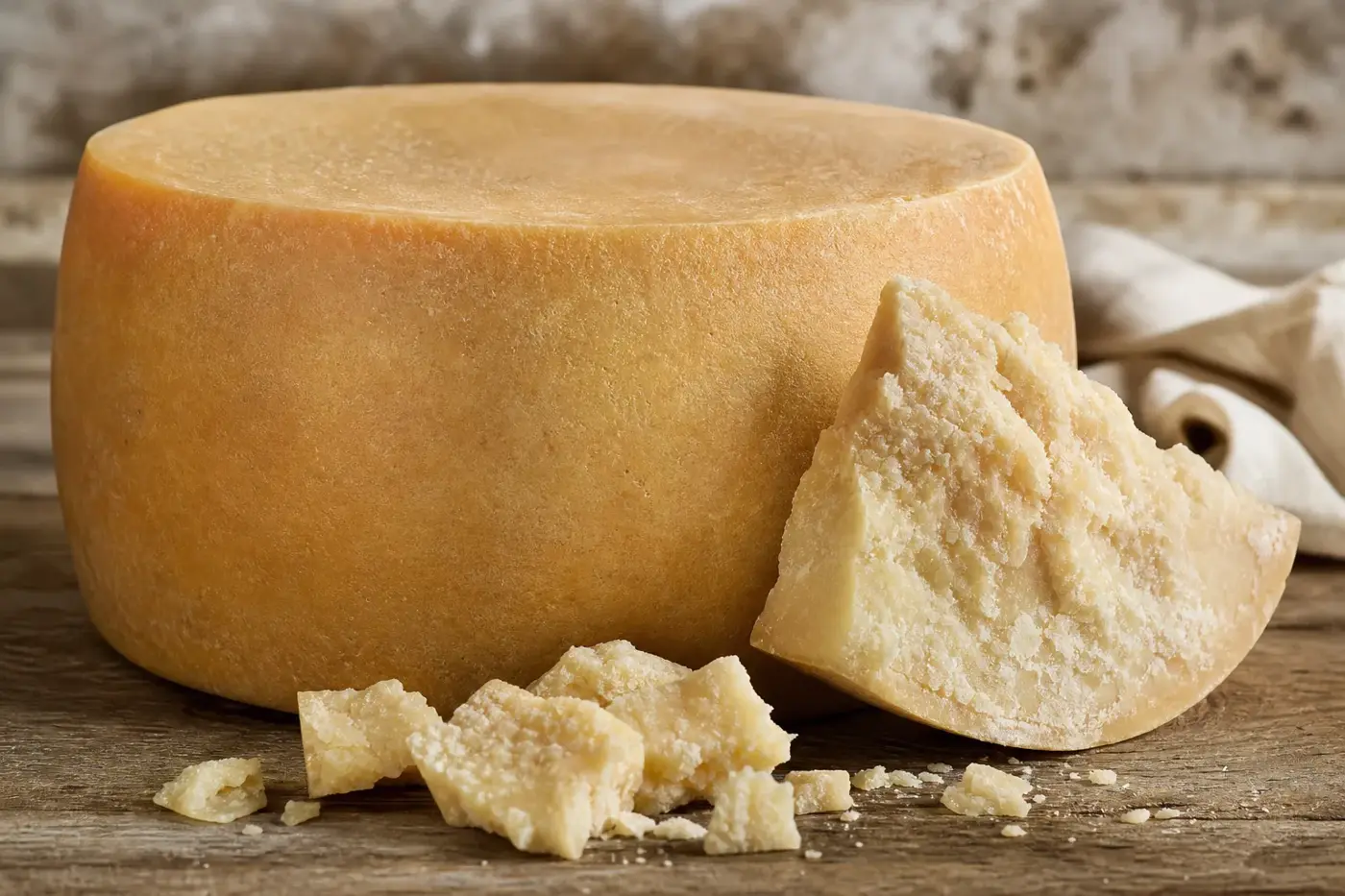
You are looking for a regular cylinder with flat faces and a straight side. The original specification describes a compact, straw-yellow rind that deepens in colour as the cheese matures. Inside, the paste, or body of the cheese, ranges from white to pale straw-yellow according to production period and age.[2]
Give the holes a little attention, too. They should be scattered and generally fine, rather than absent or conspicuously large as in some other Alpine styles. The specification describes a paste with medium consistency and elasticity, useful clues when you are considering a cut piece.[2]
For a producer’s example, Latteria Sociale di Chiuro describes its 70-day cheese as straw-yellow with amber shades. It also notes fine, evenly distributed holes. That is the dairy describing its own cheese, rather than a fromage.co.uk tasting.[5]
Let age lead your tasting
Young Valtellina Casera is sweet and milky, with a soft paste, according to the consortium. As it matures, the body firms and the colour deepens. The flavour becomes more intense, bringing dried fruit and hay to mind.[3]
That 70-day minimum is a starting point, not a promise that every wedge will taste alike. Latteria Sociale di Chiuro already describes dried-fruit flavours in its 70-day cheese. Age helps you get your bearings; the producer’s description adds the detail.[3][5]
Ask the seller for the maturation in days or months and a description of the current cut. Better still, choose two maturations from the same producer, keeping the maker constant so you can concentrate on age. Compare how each piece bends, how deep its colour runs and how long the flavour lasts. Two pieces of cheese: a modest research department.
Casera and Bitto: neighbours with different stories
Valtellina Casera and Bitto share a consortium and a regional setting, but their production identities are distinct. The consortium describes Casera through partially skimmed milk and valley dairies. Bitto’s story centres on freshly milked whole milk and summer production on mountain pastures.[3][6]
Bitto’s production area also reaches into specified neighbouring territories beyond Sondrio, according to the consortium.[6] Shared geography and a shared minimum maturation do not make these cheeses interchangeable. If you are following a local recipe, choose the cheese it names; a substitution makes your dish a variation, not the original.
Into the kitchen with pizzoccheri and sciatt
In pizzoccheri, Casera joins buckwheat, butter and cabbage, an association described by Latteria Sociale di Chiuro. Here, the cheese works inside the dish rather than waiting for a final sprinkle.[5] It has not come all this way to be a garnish.
The consortium also publishes a fritter recipe using buckwheat and wheat flour, with diced Valtellina Casera tucked inside. That particular version includes artichokes.[7] It gives the cheese a different job from the one it does in pizzoccheri.
The collection ventures beyond those regional associations to a milk-based fonduta served with pea dumplings. AFIDOP also publishes a soufflé with younger cheese in the mixture and mature cheese around the mould. These industry sources have a commercial interest, but their recipes show different maturations taking on different kitchen roles.[4][7]
Before choosing a recipe, decide what you want the cheese to do. Should it disperse through the dish, melt into a sauce or remain as a soft centre? Then follow a published preparation designed around that result.
Give the first mouthful a moment
Start with a piece on its own. Do you notice milkiness first, sweetness, or a savour that lingers? Bring in bread or fruit afterwards, keeping things simple enough that you can still follow the cheese.
For an uncomplicated board, try younger Casera with plain bread and fresh apple. A firmer example could sit beside rye bread and a few walnuts. Treat these as suggestions for exploring contrasting textures, rather than established site pairings. A small selection gives the cheese some breathing room.
Water is a useful alcohol-free starting point when you are comparing maturations. It keeps your attention on the cheese. At a meal, consider cooked vegetables alongside it, or choose one of the published melting preparations above.
Before you start cooking, save a separate piece to taste. That small step helps you connect the flavour and texture of the finished dish with the cheese you started with.
Choose well, then care for your cut
Look for the full name, producer and stated maturation. At a counter, ask to see the information accompanying the cut wheel rather than relying on a shortened ticket. AFIDOP describes two identifying marks: the impressed name on the wheel’s side and the fire-brand applied later, after examination.[4]
If milk treatment matters to you, ask whether it is raw, thermised or pasteurised. Remember the rennet, too: the published specification names calf rennet, so do not assume this cheese uses a vegetarian coagulant.[2] The rennet guide explains the different sources.
Keep the wrapper or counter label, including its storage instructions and date information. For England, Wales and Northern Ireland, the Food Standards Agency advises a home fridge temperature of 5 °C or below.[8] Consult its current guidance and follow the packaging instructions.
Buying a cut portion? Ask the seller how to store it and what advice applies once opened. Keep it covered and separate from raw foods, following the FSA’s fridge-storage advice.[8] For broader handling questions, turn to storing cheese at home.
General information only, not medical advice: follow the official guidance where you live.
Questions people ask
Where is Valtellina Casera made?
It comes from the province of Sondrio in Lombardy, Italy. The published specification names the whole province as the milk’s geographical area.
What does Valtellina Casera taste like?
The consortium describes the young cheese as sweet and milky. As it matures, its flavour becomes more intense, recalling dried fruit and hay.
Is Valtellina Casera vegetarian?
The published specification names calf rennet as its coagulant. Do not assume it uses a vegetarian coagulant.
Is Valtellina Casera made with pasteurised milk?
The published specification calls for partially skimmed cow’s milk, but does not verify whether it is raw, thermised or pasteurised. Ask for the milk treatment separately when buying.
How is Valtellina Casera used in cooking?
It is used in pizzoccheri with buckwheat, butter and cabbage. The consortium also publishes a fritter recipe filled with diced Valtellina Casera and including artichokes.
Sources
-
Department for Environment, Food & Rural Affairs. Valtellina Casera, protected food and drink names register entry, published 4 January 2021; retrieved November 2026.
Read at gov.uk -
Italian Ministry of Agriculture. Disciplinare di produzione della Denominazione di origine del formaggio “Valtellina Casera”, Ministerial Decree of 19 April 1995, published in GURI No. 103, 5 May 1995. Original text reproduced by ONAF; retrieved November 2026.
Read at onaf.it -
Consorzio per la Tutela dei Formaggi Valtellina Casera e Bitto. Valtellina Casera DOP: gusto e tradizione, undated webpage; retrieved November 2026. Producer consortium account of history, production and sensory character.
Read at ctcb.it -
AFIDOP. Valtellina Casera DOP, 4 April 2024; retrieved November 2026. Industry association account of production, identification and culinary use.
Read at afidop.it -
Latteria Sociale di Chiuro. Casera PDO 70 Days, undated product page; retrieved November 2026. Maker’s account, including its own sensory descriptions.
Read at lattevaltellina.it -
Consorzio per la Tutela dei Formaggi Valtellina Casera e Bitto. Bitto DOP: alpeggio e natura, undated webpage; retrieved November 2026.
Read at ctcb.it -
Consorzio per la Tutela dei Formaggi Valtellina Casera e Bitto. Ricette, undated recipe collection; retrieved November 2026. Sections on Valtellina Casera fonduta and artichoke fritters.
Read at ctcb.it -
Food Standards Agency. How to chill, freeze and defrost food safely, published 18 December 2017; current webpage retrieved November 2026. Applies to England, Northern Ireland and Wales.
Read at gov.uk -
Food Standards Agency. Alerts, live official alert index; retrieved November 2026. Editorial checking source only.
Read at alerts.food.gov.uk -
Regione Lombardia. Valtellina Casera DOP, BuonaLombardia, undated webpage. Culinary association visible in the retrieved search extract; the opened page did not render its substantive text.
Read at buonalombardia.regione.lombardia.it
This desk-researched draft brings together the original published specification, the Great Britain register, attributed consortium and maker accounts, culinary sources and official refrigeration guidance.
Last checked: November 2026
Last checked November 2026.
The editors suggest you read next
Parmigiano Reggiano
Break into a wheel of Parmigiano Reggiano and flakes fall away, revealing a finely granular cheese, pale straw to straw in colour.