Country: Venezuela
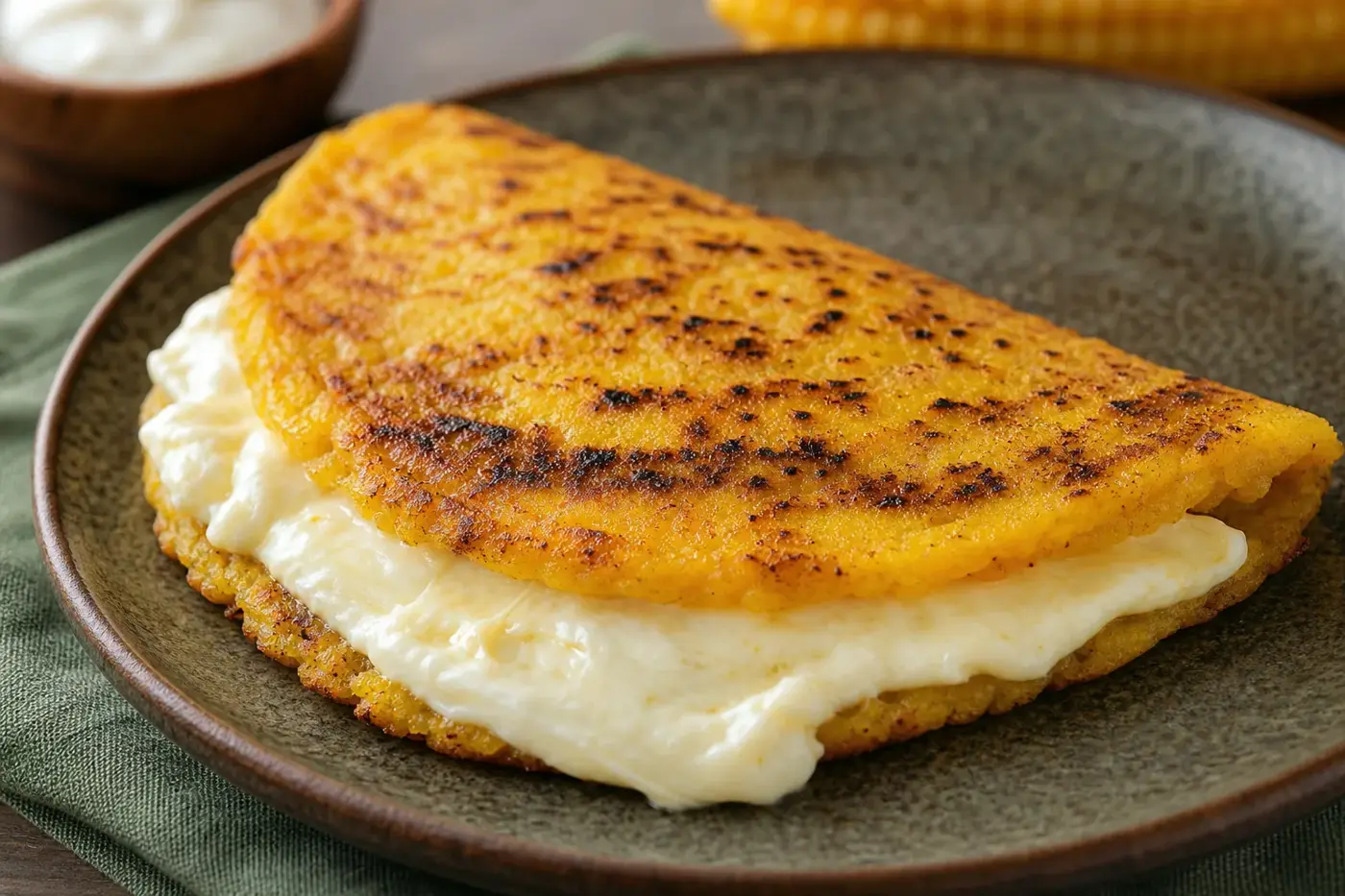
Fold a cachapa around queso de mano and take a bite. Tender sweetcorn meets soft, elastic cheese, and suddenly waiting until after dinner for the cheese course seems a rather poor arrangement. CIPEG Lara’s gastronomic dictionary records this traditional partnership, with cachapas and arepas giving Venezuela’s fresh cheeses an everyday place at the table.[1][7]
| Your starting point | What to know |
|---|---|
| Country | Venezuela |
| Cheeses to get to know | Queso de mano, queso guayanés, queso llanero and queso telita.[2][3][7] |
| Milk traditions | Cow’s milk cheesemaking; regional goat dairying in Lara and Falcón.[2][5][6][8] |
| More regional discoveries | Andean smoked cheeses and regional pressed white cheeses.[8] |
| Reference date | November 2026. |
Let your meal choose the cheese
In Venezuela, fresh cheese has plenty to do. It fills bread and maize cakes, brings salt to a dish and gives food its particular texture. CIPEG Lara’s culinary dictionary distinguishes elastic queso de mano, soft queso guayanés and firm, salty queso llanero through these everyday roles.[7]
Start with moisture, firmness and salt. What you grate over a dish needs different qualities from what you fold into a cachapa. Choose for your meal, rather than expecting every white Venezuelan cheese to behave alike.[2][7]
There is a distinctive stretched-curd tradition to explore, too. In pasta hilada cheesemaking, the curd, the solid portion separated from milk, is worked and stretched while hot. Venezuelan research documents this method in telita, with an important difference between its acidification and the process used for queso de mano.[2]
Want a better sense of how your cheese will behave? Explore cheese styles for more on texture and method. Two fresh white cheeses can look remarkably alike while having quite different structures.
Follow the milk across Venezuela
Start in Coro and El Tocuyo, then follow the cattle
The journey to your cheese counter begins with cattle. Original historical research presented through a Venezuelan veterinary faculty traces livestock’s colonial introduction through Coro and El Tocuyo. During the sixteenth century, cattle farming spread towards the plains and Andes.[4]
Those regional farming traditions help explain why there is no single national cheese recipe. A Venezuelan university review places queso de mano and queso llanero within plains food traditions. It also records Andean smoked cheeses and cow’s milk cheeses associated with Zulia and other western districts.[8]
In Guayana, the connection comes into sharper focus. A university field study of cheese businesses in Piar and Padre Chien, Bolívar, describes an established relationship between cattle farming and milk production. Cincho cheese and stretched-curd cheeses form part of that local picture.[3]
Make room for the goat dairies of the north-west
Lara and Falcón bring another milk to your table. Agricultural research in Lara records work with goat farmers, including extensive production systems. It also describes participatory projects developed with the producers themselves.[5]
On Falcón’s Paraguaná peninsula, a University of Zulia study surveyed ten experienced goat-dairy production units. These businesses held considerable practical knowledge. They also faced difficulties with distribution, infrastructure and access to supplies.[6]
Keep that regional picture in mind at the market, then ask for details. Which milk was used, where was it produced, and who made the cheese? “Goat cheese from Falcón” connects you to a place; the producer’s name and product details tell you what is on the counter.
Meet the cheeses worth getting to know
Your first useful distinction is between soft filling cheeses and firmer cheeses for grating or serving alongside food. Start with what you want to eat, then explore the individual textures. These descriptions draw on Venezuelan research and the culinary terminology recorded by CIPEG Lara.[2][3][7]
| Cheese | What to expect | Milk and method | Where to start |
|---|---|---|---|
| Queso de mano | Fresh, soft and elastic.[7] | Stretched-curd acidification discussed in Venezuelan research.[2] | Cachapas and arepas.[7] |
| Queso guayanés | Fresh and soft; described by CIPEG Lara as creamy.[7] | Guayana research records overlapping “guayanés telita” terminology.[3] | Cachapas and arepas.[7] |
| Queso llanero | White, firm and salty.[7] | Cow’s milk recorded in the university review.[8] | Grated or served alongside food.[7] |
| Queso telita | Soft, high-moisture stretched-curd cheese.[2] | Cow’s milk; pre-acidification documented in the studied production.[2] | Compare its yielding texture with firmer white cheeses. |
| Queso palmita | Character not established here | Milk and method not established here | Ask for the producer’s description and milk declaration. |
Give queso de mano a place in your cachapa
Fresh, soft and elastic, queso de mano is a natural starting point for a cachapa. You will also find it in arepas and hot preparations, uses recorded by CIPEG Lara. Its behaviour matters just as much as its flavour.[7]
That elasticity starts with the curd. The telita research describes fermentation of the curd to reach stretching conditions for queso de mano, rather than the pre-acidification of milk documented for telita. The distinction lies in how the workable structure develops, not simply how the finished cheese is shaped.[2]
Ask whether your particular queso de mano is intended for slicing, folding or warming. Taste a little on its own before adding it to your cachapa. Then pay attention to that meeting of cheese and sweetcorn.
Taste Guayana through queso guayanés
Queso guayanés takes its regional association from Guayana. CIPEG Lara describes a fresh, soft cheese with a creamy texture. Cachapas and arepas are among the places you will find it.[7]
Its name can overlap with telita, so a conversation with the maker is especially useful. The Bolívar field study uses “queso guayanés telita” for the businesses and products it investigates. It describes a soft stretched-curd cheese with a mild flavour and milky appearance.[3]
If you are comparing guayanés and telita, ask about firmness, salt and intended use. Those answers give you something practical to work with. Names alone can leave the distinction less clear.
Take your time with queso telita
Telita has an unusually substantial Venezuelan research record. A study published in Agronomía Tropical examined cheeses from three dairies and assessed production practices at seven centres in Aragua. It also identified the cheese’s traditional association with southern Bolívar.[2]
The researchers describe a cow’s milk cheese with a stretched paste and high moisture. Their account records acidification before coagulation. The operations that develop the stretched structure come afterwards.[2]
A separate University Simón Bolívar experiment used three milk batches to examine telita’s composition and sensory characteristics. The published samples differ. A single moisture figure would squeeze too much variety into one number.[2][15]
Instead, notice how the paste yields and separates as you taste. Consider moisture, acidity and salt together. “Creamy” is useful, but it does get asked to do rather a lot of work.
Let llanero and palmita show you their texture
Queso llanero changes the pace: white, firm and salty, rather than a soft filling cheese. CIPEG Lara records it grated or served as an accompaniment. The university review includes it among cow’s milk cheeses made through the cincho or moulding tradition.[7][8]
Try a little beside plain food, then grate some over a dish. You are tasting two different roles. One gives you a distinct bite of cheese; the other carries salt through the food.
For queso palmita, ask the seller to identify the maker. Get a description of that particular product’s moisture, salt and firmness. You can then decide whether it belongs in slices, in crumbles or inside a filling.
Look beyond the regional name
Guayana, the Llanos and the Andes give cheese a connection to place. That connection may be cultural or tied to production. Legal protection is a separate matter, requiring an identifiable registration and jurisdiction.
Venezuela’s intellectual property authority, SAPI, provides an official route to geographical-indication information. International coverage depends on the relevant registers and agreements. A regional reputation alone does not establish it.[9][10]
| Jurisdiction or register | Protection status of the featured Venezuelan cheese names, November 2026 |
|---|---|
Explore the distinction between origin-linked schemes and other forms of protection in protected names explained. At the counter, read your label in three parts. Look for the cheese’s name, the named manufacturer and the actual place of manufacture.
Pull up a chair at the Venezuelan table
A cachapa gives you the clearest first taste. CIPEG Lara describes a tender, sweet cake of ground fresh maize, cooked on a budare, a flat cooking surface. Queso de mano is its traditional companion.[1]
Next, turn to arepas. The same culinary dictionary records queso de mano and queso guayanés as fillings or accompaniments, alongside named combinations with yellow cheese. A catira brings shredded chicken and grated yellow cheese together; a pelúa pairs shredded meat with grated yellow cheese.[7]
You will find cheese in other memorable forms, too. A tequeño encloses white cheese in wheat dough before frying. The Zulian mandoca is a fried ring made with maize, papelón, ripe plantain and cheese.[11]
A golfeado takes your tasting in a sweeter direction. This rolled bun brings together papelón, anise and cheese. It may arrive with queso de mano or another fresh cheese.[11]
Let the food guide you. Taste a small piece of cheese alone, then with its intended companion: plain maize bread for a firm white cheese, or a cachapa for a soft filling cheese. Does sweetness bring the salt forward, or does the bread change how you notice the texture?
Trace the long road to local dairies
Behind those meals lies a longer agricultural story. Livestock arrived and expanded during the sixteenth century, establishing the setting for Venezuela’s regional dairying. Veterinary historical research traces that development earlier than any securely documented origin story for the individual cheeses discussed here.[4]
The traditions recorded later are far from uniform. The university review distinguishes moulded white cheeses, heated or stretched cheeses, and regional smoked cheeses. Its Andean examples take you well beyond the soft fillings familiar from cachapa menus.[8]
Today’s cheesemaking story also includes organised networks of small businesses. The Guayana study examined 38 production units, using business and production variables to investigate their differences. It records producers working with university and public-sector support to improve their operations.[3]
Think of this history in layers: introduced livestock, regional farming, local cheesemaking knowledge and later technical development. Each helps you understand a different part of the story. A date for cattle farming gives you agricultural background, not the birthday of a named cheese.
Bring home the right Venezuelan cheese
Shopping in Venezuela? Start with the region
Let geography guide your search. In the Llanos, ask market cheese counters and local dairies about llanero and de mano. In Guayana, particularly the Bolívar districts documented by the field research, ask about guayanés and telita.[3][8]
The Andes give you local smoked cheeses to explore. In Lara and Falcón, include goat-dairy producers in your search. Following the regional milk traditions will give you a broader picture than following one cheese name alone.[5][6][8]
Markets are useful places to pick up the local vocabulary. Ask a specialist shop or producer who made the cheese, where the milk came from, which milk treatment was used and how to store it. Before travelling to a dairy, confirm visitor access directly.
For food safety, the United States FDA advises choosing queso fresco and other soft cheeses made from pasteurised milk. Pasteurisation is not the whole story, however. The FDA also explains that contamination can occur afterwards.[12]
The US FDA advises refrigerating perishable foods within two hours, or within one hour when the outside temperature exceeds 32.2 °C (90 °F). Keep your refrigerator at or below 4.4 °C (40 °F). Follow the product’s storage directions, too.[13]
Shopping elsewhere? Read beyond the name
Start with Venezuelan food shops, Latin American grocers and cheesemakers serving Venezuelan communities. Search for the individual cheese name, then read the manufacturer’s details. Your Venezuelan-style cheese may have been made in your own country.
If you need a practical substitute, try mozzarella for a soft filling, or a firm white grating cheese for llanero’s culinary role. Compare moisture, salt and behaviour in the finished dish. Choose the replacement that suits what you are cooking.
For help with packaging, turn to how to read a cheese label. Before carrying cheese across borders, check official personal import guidance for the origin, destination and any transit countries. For journeys to Great Britain, consult the UK Government guidance.[14]
General information only, not medical advice: follow the official guidance where you live.
Questions people ask
What cheese is traditionally served with a cachapa?
CIPEG Lara records queso de mano as the traditional companion to a cachapa. The cachapa is a tender, sweet cake of ground fresh maize cooked on a flat surface called a budare.
What is the difference between queso de mano and queso telita?
Both are stretched curd cheeses. Research describes fermentation of the curd for queso de mano, whereas the studied telita production used acidification of the milk before coagulation.
What is queso llanero used for?
Queso llanero is white, firm and salty. CIPEG Lara records it grated or served as an accompaniment.
Is Venezuelan cheese made from goat milk?
Venezuela has regional goat dairying traditions in Lara and Falcón. A University of Zulia study surveyed ten experienced goat dairy production units on Falcón’s Paraguaná peninsula.
What can I substitute for Venezuelan cheese?
The page suggests mozzarella when a soft filling is needed, or a firm white grating cheese for llanero’s culinary role. It recommends comparing moisture, salt and behaviour in the finished dish.
Sources
[1] CIPEG Lara, Diccionario gastronómico: Cachapa, undated online entry, accessed November 2026.
[2] Universidad Central de Venezuela, Esquema tecnológico general y caracterización del queso hilado tipo telita, Agronomía Tropical, volume 61, issues 3 and 4, 2011 issue; manuscript approved April 2013.
[3] Universidad Nacional Experimental de Guayana and Universidad Politécnica de Madrid, Caracterización de la PYME agroalimentaria de la provincia venezolana: análisis comparativo de productoras de queso guayanés telita, LACCEI conference paper, 2011.
[4] Universidad Centroccidental Lisandro Alvarado, Aportes sobre la historia de la ganadería colonial venezolana y su base en el sur de España, proceedings of the XVI Congreso Nacional y VII Iberoamericano de Historia de la Veterinaria, 2010.
[5] INIA Lara and associated agricultural researchers, goat-production research abstracts, Revista Científica, FCV-LUZ, volume XXII, supplement 1, July 2012, abstracts SE-02 and SE-03.
[6] Universidad del Zulia, Comercialización de Productos Lácteos Caprinos elaborados en la Península de Paraguaná, Venezuela, Marketing Visionario, volume 7, issue 1, 2018.
[7] CIPEG Lara, Diccionario gastronómico: entries for queso de mano, queso guayanés, queso llanero and queso telita, and entries describing arepa fillings, undated, accessed November 2026.
[8] Universidad Pedagógica Experimental Libertador, gastronomic-diversity review, Tiempo y Espacio, number 80, volume XLII, July to December 2023, regional food tables and section “El Queso”.
[9] Servicio Autónomo de la Propiedad Intelectual, official website and geographical-indication service navigation, accessed November 2026.
[10] European Union Intellectual Property Office, GIview, register interface, accessed November 2026.
[11] CIPEG Lara, Diccionario gastronómico: entries for tequeño, mandoca and golfeado, undated, accessed November 2026.
[12] US Food and Drug Administration, Queso Fresco-type Cheeses Consumer Guidance, current online guidance, accessed November 2026.
[13] US Food and Drug Administration, Safe Food Handling, current online guidance, accessed November 2026.
[14] UK Government, Bringing food into Great Britain: Meat, dairy, fish and animal products, current online guidance, accessed November 2026.
[15] Universidad Simón Bolívar, Efecto de la adición de nisina en los parámetros físicos, químicos y sensoriales del queso “telita”, Anales Venezolanos de Nutrición, volume 20, issue 1, 2007.
This desk-researched article brings together Venezuelan food research, agricultural field studies, historical scholarship, culinary terminology and official consumer guidance.
Last checked: November 2026
Last checked November 2026.
The cheeses of Venezuela
The editors suggest you read next

French Cheese: The Complete Guide
Picture Normandy’s pastures, then follow the milk towards the Loire’s goat dairies, the Jura’s shared cheesemaking traditions and the sheep country of the Pyrenees.


