Queso de Mano
Fold a sweetcorn cachapa around a slice of white Queso de Mano, and watch the soft layers pull apart.
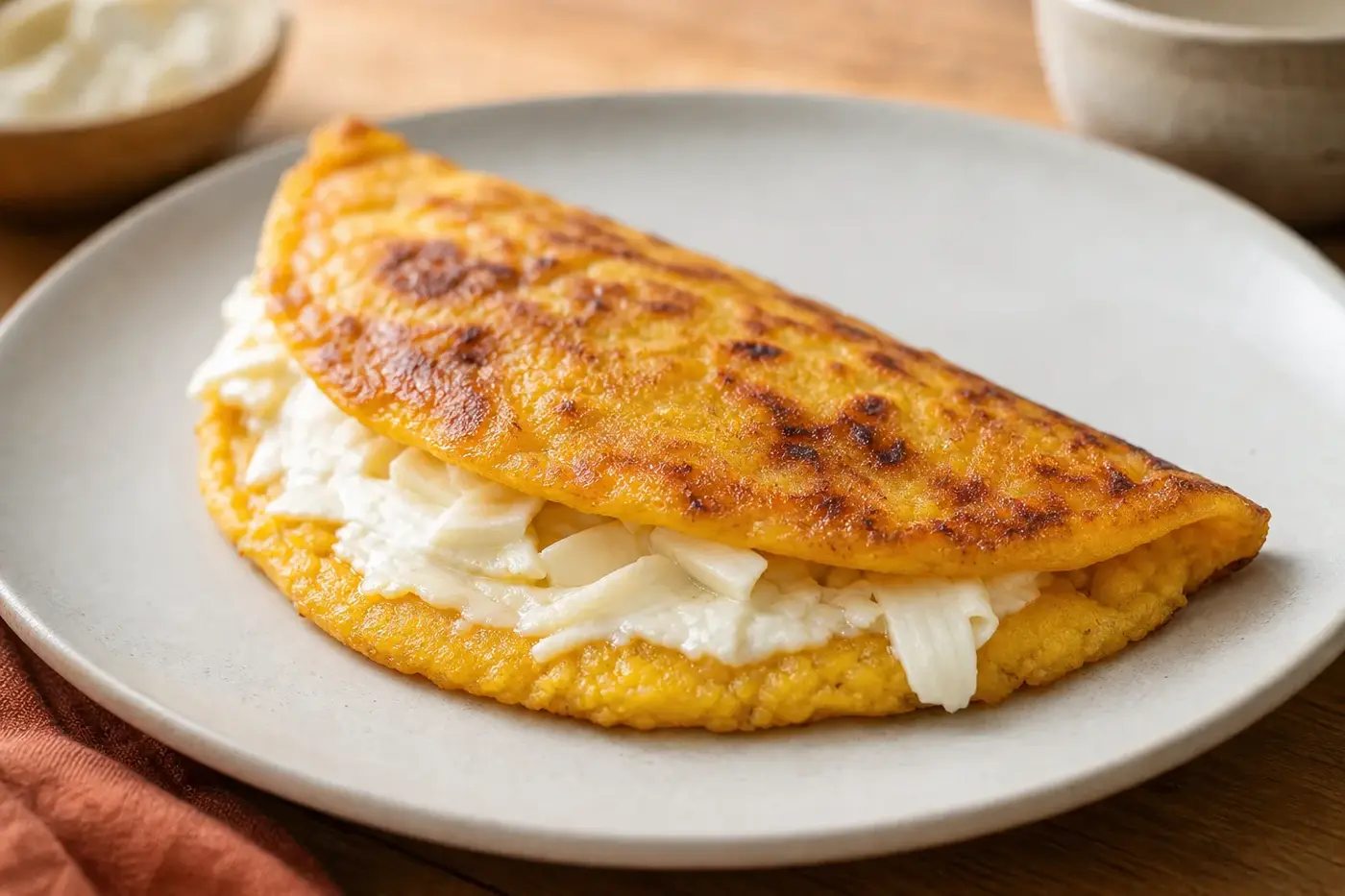
Fold a sweetcorn cachapa around a slice of white Queso de Mano, and watch the soft layers pull apart. This is one of Venezuela’s familiar cheese pairings, with a filling that yields rather than crumbles. Those layers tell you something about the skilled hands that stretch the curd and shape it into a flattened round. The name will give you another clue.[1][3][9]
| What you might want to know | The details |
|---|---|
| Familiar name | Queso de Mano.[1] |
| Country association | Venezuela.[1][3] |
| Cheese family | Fresh stretched-curd cheese, or pasta hilada.[1] |
| Milk | Cows’ milk in the Venezuelan technical description.[1] |
| Texture | Soft and elastic, with layers you can separate.[1] |
| Protection by jurisdiction | Venezuela: Not verified. EU: Not verified. Great Britain: Not verified |
| Pregnancy guidance | UK: NHS guidance on unpasteurised dairy products and soft cheeses, November 2026.[4] |
Meet the hands behind “hand cheese”
Queso de Mano means, quite literally, “hand cheese”. Stretching builds its layered body; shaping gives it that familiar flattened form. The Venezuelan university study uses “hand cheese” in its English title and places this fresh, white cheese in the stretched-curd family. Here is a name that gets straight to work.[1][9]
Do not let “fresh” throw you. It means the cheese is eaten without prolonged maturation, not that fermentation plays no part. Acid development helps prepare the curd for stretching, but the finished cheese belongs on the fresh-cheese counter, not among long-aged wheels. Fermentation during making and lengthy ripening are different things.[1]
There is a whole family to get to know beyond this flattened round. If you would like to explore it, start with how to tell cheese styles apart.
Follow the cachapa from Venezuela to Quito
Inside a folded cachapa, Queso de Mano has a particularly strong place in Venezuelan cookery. The cooked maize pancake wraps around a moist, yielding cheese filling. You taste the sweetcorn character of the maize against the cheese: two strands of Venezuelan food tradition tucked into one pancake.[3]
That connection travels with people. A university ethnographic study of Venezuelan food businesses in Quito recorded cachapa makers seeking Queso de Mano or Telita from Venezuelan suppliers. Their accounts connected those suppliers with the Llanos. They described the cheese as important to recreating the dish.[3]
The Quito study tells you about a living culinary connection, rather than drawing a production map. Aragua has a place in the technical literature too: a Venezuelan university investigation examined Queso de Mano sold through four outlets in Girardot municipality. Those locations establish a retail market, but not where every sample was made.[1]
Pull apart the layers and look closer
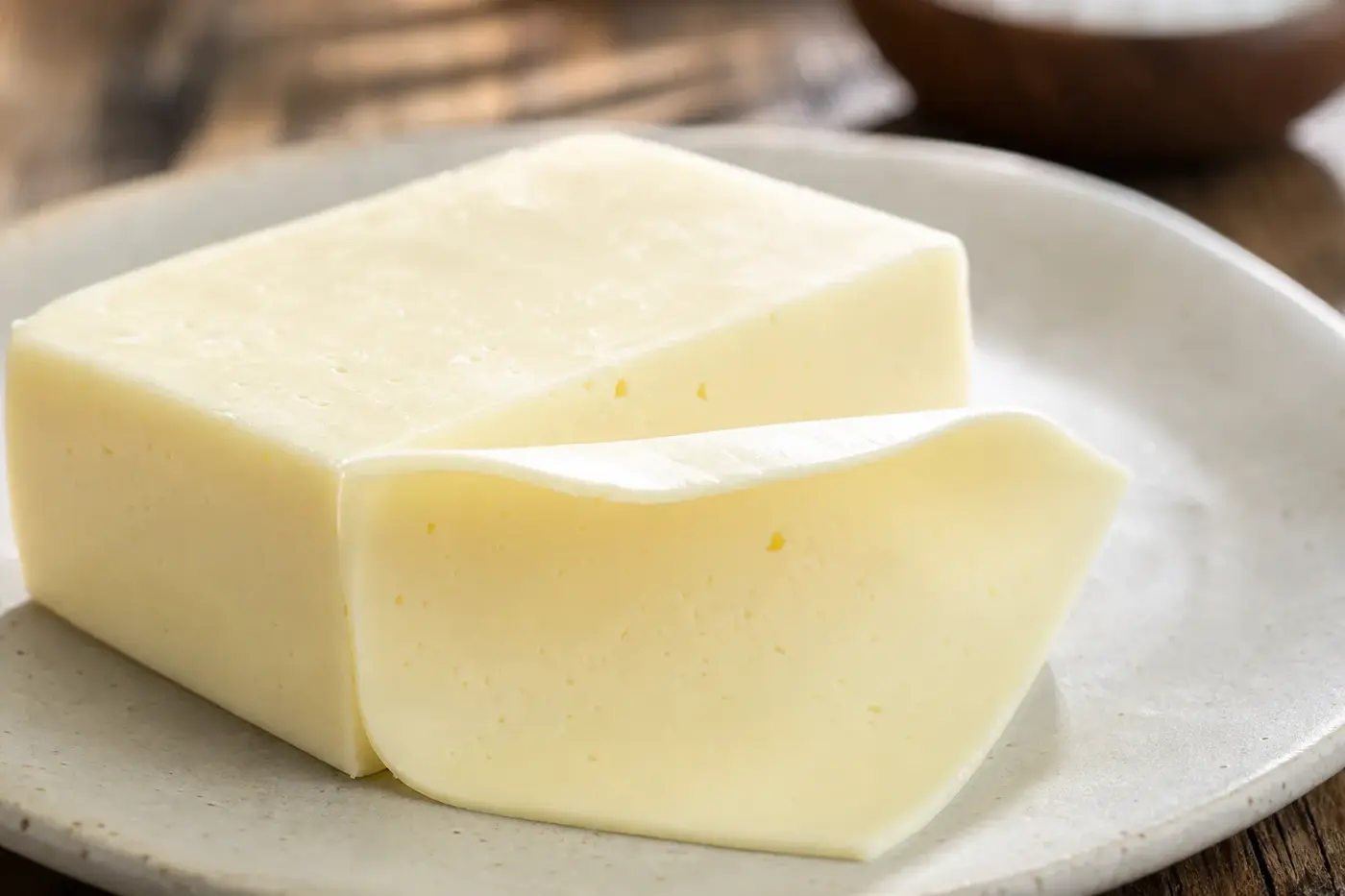
Pull apart the supple layers and you meet the cheese’s most telling feature. They separate rather than crumble, within a customary shape that is round and flat, more small plate than tall cylinder. Its white surface and fresh presentation also set it apart from cheeses with developed mould or washed rinds.[1][9]
Venezuelan technical literature describes Queso de Mano as soft and elastic. Think of peeling apart a folded sheet, rather than snapping a dry block. When you are identifying it, those layers deserve as much attention as the outline.[1]
For flavour, put a few questions to your supplier. Is this cheese gently milky, noticeably tangy or more strongly salted? Ask about milk character, mildness, salt and acidity. The name cannot do all the tasting for you.
There is good reason to ask. The Girardot investigation analysed 32 retail samples and found substantial variation in salt and acidity between batches and outlets. Get to know the individual cheese, rather than expecting every maker to deliver one fixed flavour profile.[1]
Before the layers, meet the curd
First, liquid milk has to become curd: the protein-rich mass from which cheese is formed. The Venezuelan technical account describes enzymatic coagulation of cows’ milk. You will usually hear the enzyme preparation that sets it called rennet.[1]
Then the curd needs to be ready for stretching. Acidification brings it into the right condition for that work. In the traditional process described by the Venezuelan researchers, fermentation takes it to its stretching point. Acid development is an essential step, not a footnote.[1]
Researchers have explored other ways to organise that acidification too. A Venezuelan research abstract investigated fermented whey and vinegar in a cooked-curd cheese, comparing it with commercial Queso de Mano. It examined the effects on elasticity and sensory acceptance. You get a glimpse here of how deliberately makers can approach acid treatment.[8]
You can follow the broad process in five stages:
| Stage | What happens to the cheese |
|---|---|
| Coagulation | An enzyme preparation turns milk into curd.[1] |
| Curd preparation | Cutting and whey separation prepare the curd for handling.[7] |
| Acid development | The curd reaches the condition it needs for stretching.[1][8] |
| Heating and working | Warmed curd is kneaded and stretched into a cohesive mass.[7] |
| Shaping | The worked cheese is divided into portions and given its finished shape.[7][9] |
Treat this as a guide to the process, not a production recipe. Detailed production controls call for a properly established manufacturing method and specialist supervision.
Watch the stretching become layers
Once the prepared curd is heated, pulling and folding turn it into a connected, layered mass. Heat makes it workable; repeated handwork builds its structure. A primary Colombian technical manual documents this broad stretched-curd sequence. Its regional cheeses and formats, though, are distinct from the Venezuelan product.[7]
For Queso de Mano, stretching and shaping explain what you find on your plate. Working the curd builds layers, which are gathered into a flattened round. That is a different construction from ordinary fresh curd pressed into a circular mould.[1][9]
The stretching also explains its relationship with mozzarella. Both belong to the stretched-curd family, but family resemblance only takes you so far. Different acidification methods, moisture levels, salting practices and final shapes help distinguish the finished cheeses.[7]
Get to know your maker’s version
Before choosing your cheese, ask about milk treatment. The Venezuelan study describes a traditional raw-milk process, while research has explored altered approaches to acidification too. “Queso de Mano” on a pack cannot, by itself, tell you the milk treatment or manufacturing controls behind it.[1][8]
Salt is another worthwhile question. Research on Venezuelan Telita, a fellow stretched-curd cheese, identified differences associated with salting methods and production practices. It helps explain why cheeses in this fresh stretched-curd family can share a recognisable structure without producing identical results.[2]
Look at what each maker tells you: milk treatment, ingredients, salt declaration, storage instructions and intended use. Those details say more about the cheese in front of you than an assumption that everyone follows one recipe. For help with the terminology, see raw milk, thermised and pasteurised cheese.
Give cachapas and arepas their cheese moment
Start with a cachapa. The university fieldwork recorded pancakes made from tender maize, cooked on a flat griddle and filled with a slice of Queso de Mano. It also documented versions with cheese in the batter. This pairing has more than one household or business expression.[3]
Let the cheese be your main filling first. Taste its saltiness against the corn before adding anything else. If you want more contrast, try a small accompaniment of chopped tomato or avocado, rather than several competing fillings. Your first cachapa need not host the entire contents of the fridge.
Arepas offer another familiar home for Queso de Mano.[9] Split your cooked arepa and tuck thin pieces into the pocket. Begin with cheese alone, then decide whether it needs anything else. You will find it easier to judge the particular cheese you are serving.
While you prepare the meal, keep the remaining cheese refrigerated. For England, Northern Ireland and Wales, consult the Food Standards Agency’s current advice on keeping chilled food out of the fridge.[5]
Meet Telita, a relative worth knowing by name
Queso Telita is a close relative, but it has a distinct name. Venezuelan research describes a soft, cooked stretched-curd cheese made from cows’ milk, traditionally associated with southern Bolívar. That investigation also documented production in Aragua.[2]
Acidification gives you a useful technical distinction. The Queso de Mano account describes fermentation of the curd before stretching. The Telita investigation describes pre-acidification, including acidified whey or organic acids added before coagulation.[1][2]
These are descriptions of the processes studied, and individual makers may differ. If you are choosing cheese for a dish, ask about thickness, moisture and handling. A supplier may recommend Telita for a cachapa as a culinary choice. That does not make the two names interchangeable.
Fresh mozzarella gives you another useful comparison. Here, method matters more than nationality: stretching explains the resemblance. The composition and format of each named product determine how it behaves.[7]
Ask at the counter, then make room in the fridge
Find out who made your cheese and whether the milk was pasteurised. Before buying, read the storage directions, date marking and after-opening instructions. If you are buying it loose, ask the seller for the same information. Appearance or name alone cannot tell you enough.
These five questions cover the essentials:
- Is the milk pasteurised?
- What storage temperature does the maker specify?
- What date marking applies?
- How should you keep the cheese after opening?
- Are there instructions for its packing liquid?
At home, keep the fridge between 0 and 5 °C and use a thermometer to check it. That is the Food Standards Agency’s November 2026 guidance for England, Northern Ireland and Wales. Refrigerate dairy products and follow their packaging instructions.[5]
A use-by date is about safety, not guesswork. UK government guidance says not to eat food after that date, even if it looks or smells acceptable.[6] Follow any shorter after-opening instruction too. For the wider routine, see how to store cheese at home.
Take extra care when you need to
If you are looking for foods to avoid during pregnancy, turn to the NHS guidance dated November 2026. This includes its advice on cheeses and unpasteurised milk.[4]
The NHS identifies pregnancy, older age and weakened immunity as circumstances associated with greater vulnerability to listeriosis. It also lists dairy products made from unpasteurised milk among foods that can carry Listeria.[10]
Find out the cheese’s actual milk treatment and follow the official guidance for where you live. Ask your doctor, midwife, pharmacist or dietitian about your own circumstances. You can find further explanation in Listeria and cheese safety.
General information only, not medical advice: follow the official guidance where you live.
Questions people ask
What is Queso de Mano and how is it made?
It is a fresh Venezuelan cheese with a soft, elastic texture and separable layers. The curd is acidified, heated, stretched and worked by hand before being shaped into a flattened round.
How is Queso de Mano served?
A familiar pairing is a slice folded inside a cachapa, a sweetcorn pancake. It is also served in arepas.
Is Queso de Mano the same as Telita?
They are close relatives, but have distinct names. The studies cited describe fermentation of Queso de Mano curd before stretching, while the Telita study describes acidification before coagulation.
How should Queso de Mano be stored?
The Food Standards Agency recommends keeping the fridge between 0 and 5 °C and checking it with a thermometer. Refrigerate dairy products and follow the instructions on their packaging.
Can you eat Queso de Mano during pregnancy?
The NHS provides guidance on foods to avoid during pregnancy, including cheeses and unpasteurised milk. Consult the current NHS guidance and check the milk treatment of the particular cheese.
Sources
- Universidad Central de Venezuela, Estudio de la calidad del queso de mano comercializado en el municipio Girardot, estado Aragua, Venezuela. Revista Científica, volume 18, issue 4, 2008. Full text.
- Universidad Central de Venezuela and Agronomía Tropical, Esquema tecnológico general y caracterización del queso hilado tipo telita. Volume 61, issues 3 to 4, nominal issue year 2011; manuscript approved 2013. Full text.
- FLACSO Ecuador, university thesis held as repository record TFLACSO-2024MCAR, 2024, pages 110 to 111, ethnographic account of Venezuelan cachapa businesses in Quito. Repository document. Full bibliographic title: Not verified.
- NHS, Foods to avoid in pregnancy, current online guidance, checked November 2026. Official guidance.
- Food Standards Agency, How to chill, freeze and defrost food safely, published 18 December 2017, current online version checked November 2026. Applies to England, Northern Ireland and Wales. Official guidance.
- GOV.UK, Understanding food labelling: Best before and use-by dates, current online guidance, checked November 2026. Official guidance.
- Universidad Nacional de Colombia and Junta del Acuerdo de Cartagena, Manual de elaboración de queso de mano, publication year not verified, digitised copy. This source concerns Colombian cheeses. Retrieved copy.
- REDI research repository, Evaluación del empleo de dos agentes ácidos en la elaboración de un queso de pasta cocida, 2018, retrieved abstract. Repository record.
- Wikipedia, Queso de mano, revision dated 17 May 2026. Secondary corroboration for flattened presentation and arepa service. Retrieved article.
- NHS, Listeriosis, current online guidance, checked November 2026. Official guidance.
Researched through Venezuelan technical literature, university fieldwork, a regional production manual and official UK consumer guidance, with secondary evidence identified separately.
Last checked: November 2026
Last checked November 2026.
The editors suggest you read next
American Cheese: The Processed Slice Explained
Watch a slice of American cheese soften over your burger.