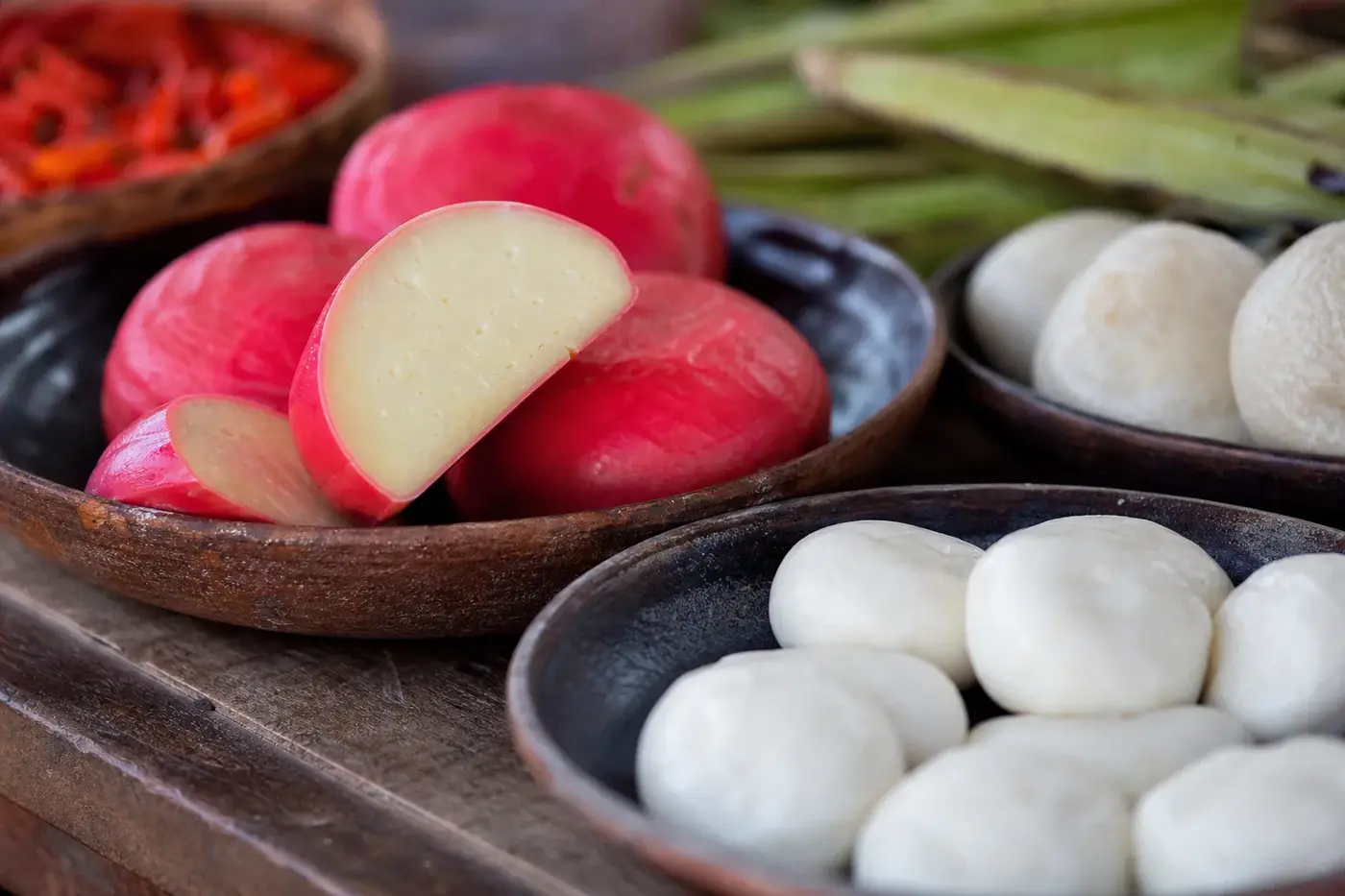
A pale piece of Wagashi meets the pan. Its edges brown, and suddenly you have a reason to linger by the cooker. Before reaching your plate, this fresh West African cheese has passed from herding communities through women’s production and trading networks. [1,2,6]
In Benin, plant extracts turn cow’s milk into cheese, with Fulani dairy makers closely associated with the tradition. Whether you eat it fried or cooked in sauce, Wagashi owes as much to traders and cooks as to its makers. [1,2,6]
| Field | What to know |
|---|---|
| Name | Wagashi; Wagashi Gassirè and waragashi in research [1,3] |
| Milk | Cow’s milk [1] |
| Traditional home | Benin, particularly Fulani communities [1,2] |
| Traditional coagulant | Calotropis procera extracts [1] |
| Surface | Fresh white or plant-coloured exterior; no ripened rind [1,6] |
| Registered name, authority and register ID | No registration details provided |
Meet the women behind your Wagashi
At least 97% of the cheese producers and sellers in one Beninese value-chain study were women. Behind that figure sits a chain of skills: caring for cattle, handling milk, making cheese and finding customers. The study also followed the containers and preservation practices that accompanied cheese through production and marketing. [3]
Give the market seller your attention, too. Maker and seller each handle a perishable food at a different stage. What reaches your kitchen depends on that whole journey, not simply the moment milk becomes curd. [3,5]
You will often see Fulani written as Peulh in Beninese research. The connection with Wagashi is strong, but the trade reaches beyond one community. A field survey in Nikki and Dassa-Zoumé found different groups of women makers and traders using different handling practices. Herders supply the milk; people from several cultural backgrounds may process and sell it. [2]
Think of Wagashi as a shared cheese tradition, rather than one fixed method. When you choose a piece, ask who made it and how it was handled. Its name is a useful introduction, not the whole conversation.
Follow Wagashi across the region
Northern Benin’s cattle-rearing areas are documented centres of Wagashi production, with important trading connections farther south. Benin is the centre of this story, but research also describes the cheese in neighbouring Togo and Nigeria, plus Ghana and Burkina Faso. You are exploring a regional tradition, not one exclusive production area. [2,3]
The names travel, too. Beninese studies use Wagashi Gassirè and waragashi, while a Ghanaian sensory study uses wagashie. A Beninese microbiology abstract identifies Gassirè as a Fulfulde name. These spellings help you recognise related accounts, but tell you nothing certain about a particular cheese’s milk treatment, coagulant or condition. [1,3,4,6]
Meet the plant that makes the curd
Traditional makers turn to Calotropis procera for milk-clotting enzymes, rather than animal rennet. Its extracts make liquid milk gather into a mass of curd, with watery whey separating around it. You can explore the wider process in how cheese is made. [1,6]
A Beninese production study found six variants using sap, stems, leaves or combinations of plant parts. Makers prepared extracts in milk or water, with differences in filtering, too. They heated the milk, added the coagulant and cooked the curd before gathering it into draining moulds. Vegetable-fibre or plastic colanders helped determine the cheese’s shape and size. [1]
At the counter, ask whether your cheese has already been cooked, coloured or fried. Ask about milk treatment separately. A traditional heating step tells you less than a clear account of how that particular batch was made.
Taste pale curd, then browned edges
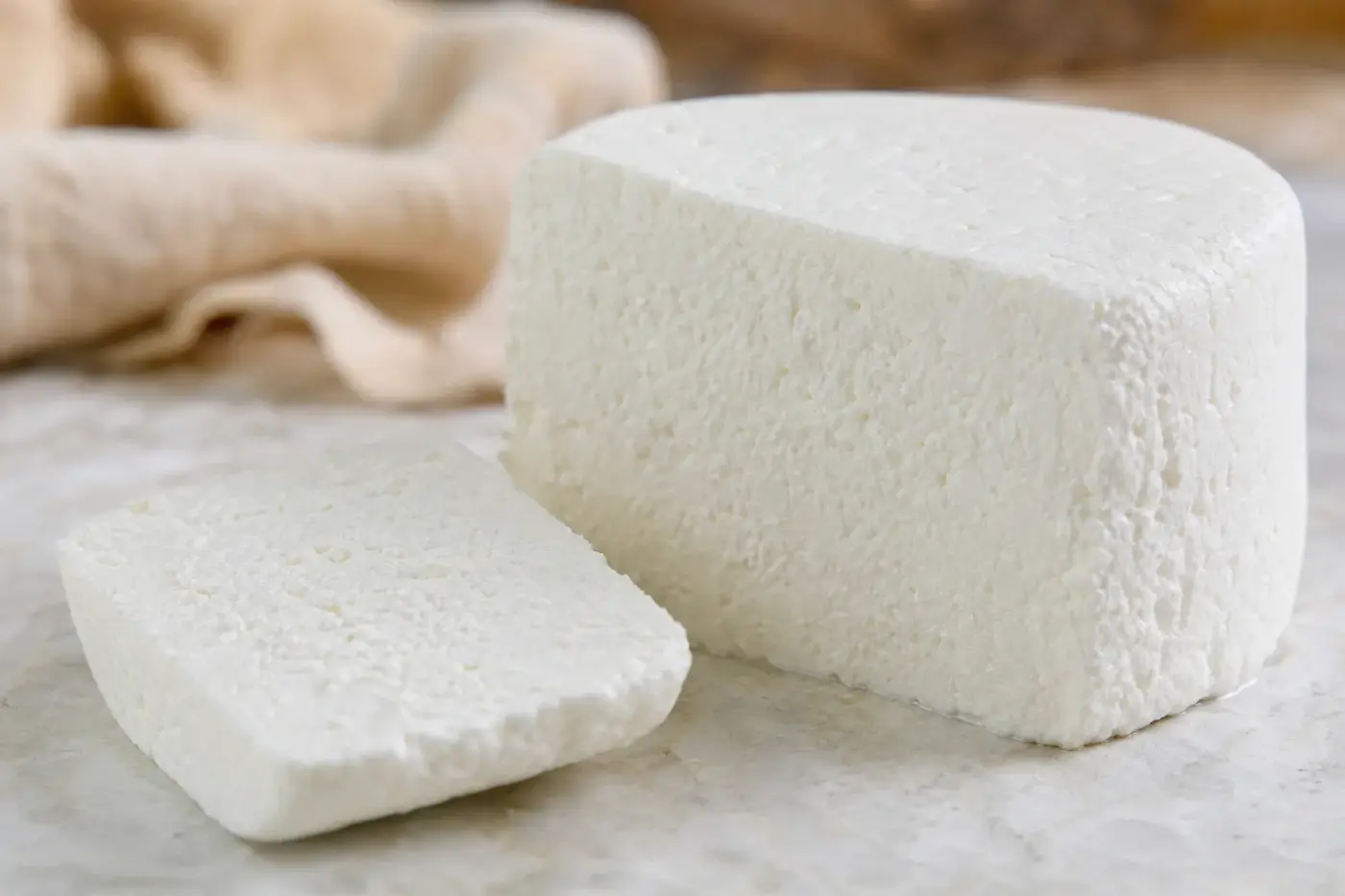
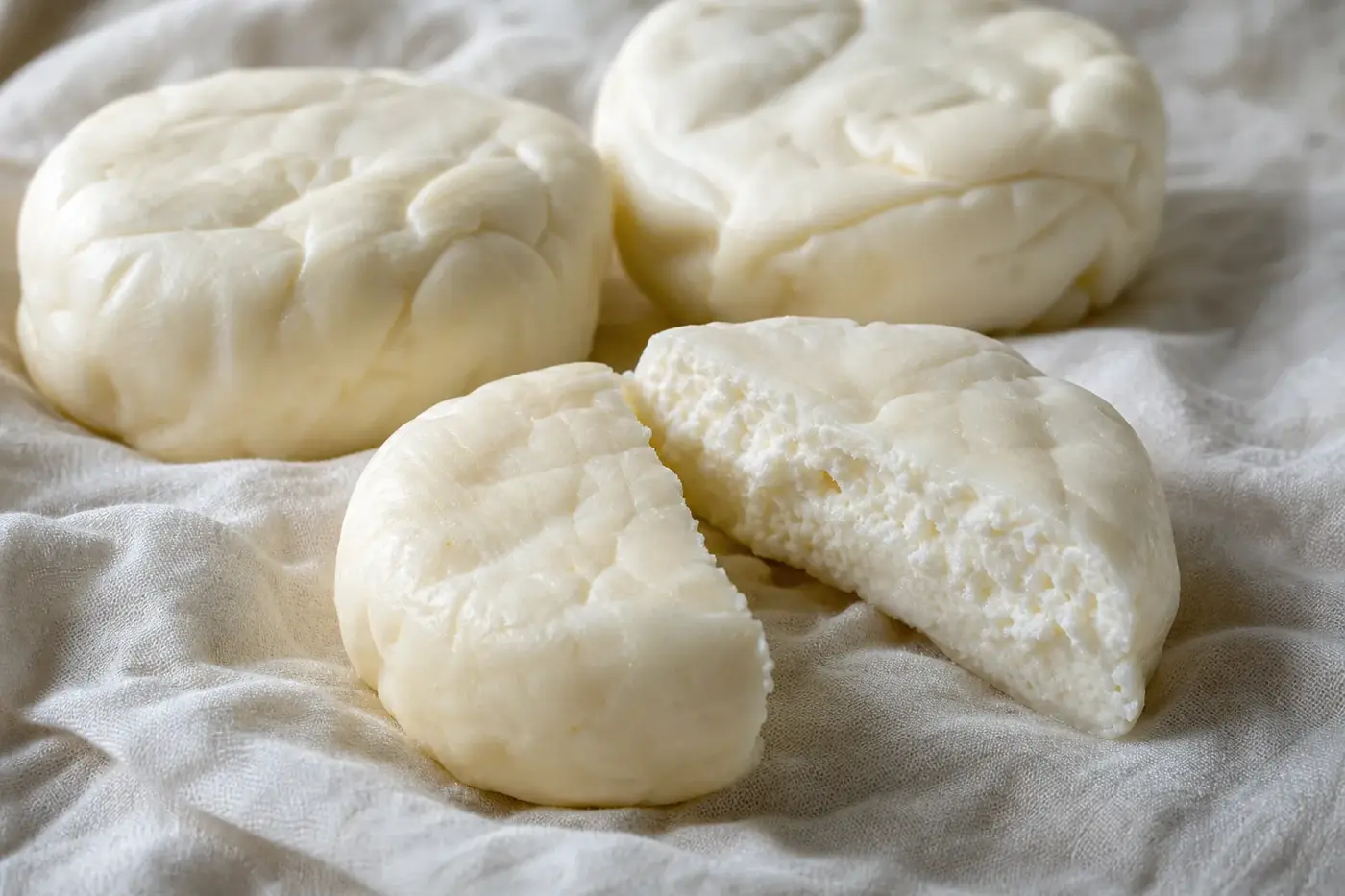
Fresh Wagashi is usually pale or white, with an unripened surface and a body you can cut into pieces. Beninese studies record preferences for whiteness, smoothness and firmness. Calling it a soft cheese need not contradict that firm body: fresh cheese can yield in your mouth yet hold together in the pan. [1,3]
For the clearest direct flavour description, turn to Ghana. In a 2023 study, a trained panel of 13 assessors developed a descriptive vocabulary for fresh and fried wagashie. Fresh samples suggested a whitish colour, yoghurt aroma and cheesy taste. Fried samples brought a brown colour and a fried-egg taste. [4]
That gives you rather more to work with than “mild”, a word often asked to do far too much at the cheese counter. Start with the dairy character, then notice what frying, smoking or colouring has contributed. Cooking can give the outside a browned character quite unlike the pale fresh curd. [4,5]
For your first encounter, compare a freshly cooked piece with one served in sauce. Taste the surface, centre and seasoning separately. There is plenty to notice before you reach for another spoonful. [4,5]
Discover why some Wagashi wears red
That red exterior is a treatment applied to the cheese, not a mould-ripened rind. Primary studies document dye sorghum as a traditional source. Makers may soak cheese in coloured water or treat it with an extract of the plant’s panicles, its branching seed heads. Colour is part of the cheese’s handling and presentation. [3,5,6]
The colouring material is not always the same. Another Beninese field study recorded sorghum material alongside teak bark and leaves among the materials used by one group of makers. Ask about your batch rather than trying to name the colouring plant by sight. [2]
White and red Wagashi give you different presentations to explore at the table. Before serving either, find out how it was coloured, whether it was subsequently cooked and how it has been stored.
Give Wagashi a place at dinner
Wagashi belongs in cooked meals, including dishes where it replaces meat or fish. Frying features in both Beninese preservation research and Ghanaian sensory work. The Ghanaian panel’s descriptions point to the appeal: a browned surface against a pale interior. [4,5,6]
For a simple serving idea, try fried pieces beside a pepper-and-tomato sauce. Or spoon vegetable sauce over the cheese and serve it with rice. These are suggestions, not a tested recipe. Keep the pieces recognisable so you can enjoy their texture as they take up seasoning.
If you fancy a grilled presentation, use a suitable pan or grill tray and follow the supplier’s cooking directions. Serve your cooked cheese with peppers and onions, or beside a simple grain dish.
Start with a little sauce on the side. Taste the cheese before adding more chilli, salt or acidity, then adjust the balance. Separate sauce lets everyone choose their seasoning, including the person who considers “a little chilli” a personal challenge.
Give fresh Wagashi the care it needs
Fresh, moist Wagashi needs attention to hygiene and temperature. A 2013 Beninese survey covered 318 producers, 164 retailers and 464 consumers across six agroecological zones. It recorded sun-drying, storage in whey or water, repeated cooking and smoking. Practices differed substantially between places and stages of the trade. [5]
Those methods show how much effort goes into keeping cheese usable as it moves through markets. But the researchers also warned that cooking spoiled cheese to improve its condition could leave hazards behind. If your cheese shows spoilage, discard it. Frying or boiling cannot make it safe. [5]
At home, keep your fridge at 5 °C or below, as the Food Standards Agency advises. This guidance applies in England, Wales and Northern Ireland, with November 2026 as the reference point here. [10]
Cool cooked leftovers and refrigerate them within one to two hours. Divide larger amounts into smaller portions, then eat refrigerated leftovers within 48 hours or freeze them. These are the agency’s general household instructions for cooked food. [10]
For uncooked cheese, follow the supplier’s storage and opening instructions. UK government guidance distinguishes use-by dates, which concern safety, from best-before dates, which concern quality. Storage matters throughout that stated life: mishandled food may become unsafe before its date. For the wider routine, see how to store cheese at home. [11]
Ask about life after the curd
Colouring and handling are part of the cheese’s microbial story, too. One study used bacterial marker gene sequencing to compare coloured and uncoloured Beninese Wagashi. The two had different bacterial communities, including groups containing potentially useful fermentation organisms and groups needing further investigation for foodborne strains. The researchers called for more detailed work on the organisms detected. [6]
Your practical question is simple: what happened after the curd was made? Colouring liquid, containers and later handling belong in a batch’s story just as much as milk and coagulant. The production studies make those later stages important questions when you choose your cheese. [2,6]
Leave the plant work to the specialists
Calotropis procera needs particular care. Clinical research documents injury after contact with its latex: a case series reported damage to the corneal cells of five patients exposed through their eyes. A separate case report described severe cardiac toxicity after oral and skin exposure to Calotropis used as a traditional treatment. These cases concern plant exposure in circumstances different from eating prepared cheese. [8,9]
Research on Wagashi itself offers a more specific finding. An experimental study made cheese using milk from three cattle breeds, then screened the plant, cheese and whey for several groups of phytochemicals. Those screening methods detected the compounds in the plant, but none in the finished cheese or whey. The authors attributed this to processing. [7]
That finding belongs to those experimental batches and tests. With any other method, plant identity, extract preparation and the full cheesemaking process still matter. Respecting traditional expertise means paying attention to those details. A plant’s ability to clot milk does not make it suitable for improvised cheesemaking. [7]
If you want a home project, choose a specialist-reviewed method using pasteurised milk and a commercially supplied food-grade coagulant specified by that method. Ask the reviewer to assess the milk, hygiene, acidification, temperatures, times and storage together. The coagulant is one part of the method, not a complete safety control.
For cooking, take the simpler route: finished cheese with clear handling instructions. If you want to explore the ingredients and processes further, read rennet explained and raw milk, thermised and pasteurised cheese.
Take your cheese curiosity further
- Cheese Food Safety: The Complete Guide: practical help with handling your cheese.
- How to Read a Cheese Label: useful questions to ask about a labelled product.
General information only, not medical advice: follow the official guidance where you live.
Questions people ask
What is Wagashi and where is it made?
Wagashi is a fresh cheese made from cow’s milk and closely associated with Fulani communities in Benin. Research also describes it in Togo, Nigeria, Ghana and Burkina Faso.
How is Wagashi made?
Traditional makers use extracts of Calotropis procera to clot the milk. They heat the milk, add the extract and cook the resulting curd before collecting it in draining moulds.
Why is some Wagashi red?
The red exterior comes from a treatment applied to the cheese, rather than a ripened rind. Studies document dye sorghum as a traditional source, while one field study also recorded teak bark and leaves among the materials used by a group of makers.
What does Wagashi taste like and how is it eaten?
A Ghanaian sensory panel associated fresh wagashie with a yoghurt aroma and cheesy taste, and fried samples with a fried egg taste. Wagashi is often fried or cooked in sauce and can take the place of meat or fish in meals.
How should Wagashi be stored?
For uncooked cheese, the page says to follow the supplier’s storage and opening instructions. The Food Standards Agency advises keeping the fridge at 5 °C or below, cooling and refrigerating cooked leftovers within one to two hours, and eating them within 48 hours or freezing them. See the Food Standards Agency’s general household instructions for cooked food.
Sources
- Heliyon, Processing and preservation methods of Wagashi Gassirè, a traditional cheese produced in Benin, 2022. Original survey and production-monitoring study, available through PubMed Central.
- Frontiers in Sustainable Food Systems, State of the art of breeding, milking, and milk processing for the production of curdled milk and Wagashi Gassirè in Benin: Practices favoring the contamination of its dairy products, volume 6, article 1050592, published 7 February 2023. Original cross-sectional field study.
- AgEcon Search, Handling practices, quality and loss estimation along the value chain of waragashi, a soft cheese from Benin. Original research abstract in the repository record; publication year not verified.
- Council for Scientific and Industrial Research, Ghana, Safety and sensory quality of wagashie, a West African cottage cheese, Ghana Journal of Agricultural Science, volume 58, number 2, pages 27 to 38, 2023. Institution-supplied research abstract retrieved through FAO AGRIS.
- African Journal of Agricultural Research, Endogenous methods for preservation of wagashi, a Beninese traditional cheese, 2013. Original survey; full paper retrieved from the Université d’Abomey-Calavi institutional repository.
- Microbiology Society, Bacterial diversity of two types of Wagashi, a traditional Beninese cheese, using High-Throughput Amplicon Sequencing, published 27 May 2022. Original research conference abstract.
- Food Science and Quality Management, Effect of Calotropis procera on the Proximate Composition and Potential Toxicity of Wagashi (Traditional Cheese) in Benin. Original experimental research abstract; publication year not verified from the retrieved record.
- Journal of Family Medicine and Primary Care, Calotropis poisoning with severe cardiac toxicity A case report, 2020. Clinical case report, available through PubMed Central.
- Cornea, Corneal endothelial cytotoxicity of the Calotropis procera (ushaar) plant, volume 27, number 4, pages 504 to 506, May 2008. Original clinical case series; abstract retrieved through PubMed.
- Food Standards Agency, How to chill, freeze and defrost food safely, published 18 December 2017, current GOV.UK publication retrieved November 2026. Applies to England, Northern Ireland and Wales.
- GOV.UK, Understanding food labelling: Best before and use-by dates, current online guidance retrieved November 2026.
- Food Standards Agency, Recalls and alerts, updated 7 July 2026, and the linked current food-alerts listing, retrieved November 2026.
This desk-researched article brings together original field observations, sensory research, experimental and clinical evidence, and official household food-handling guidance.
Last checked: November 2026
Last checked November 2026.
The editors suggest you read next