West African Cheese
A thin sheet of tchoukou meets hot tea in Niger.
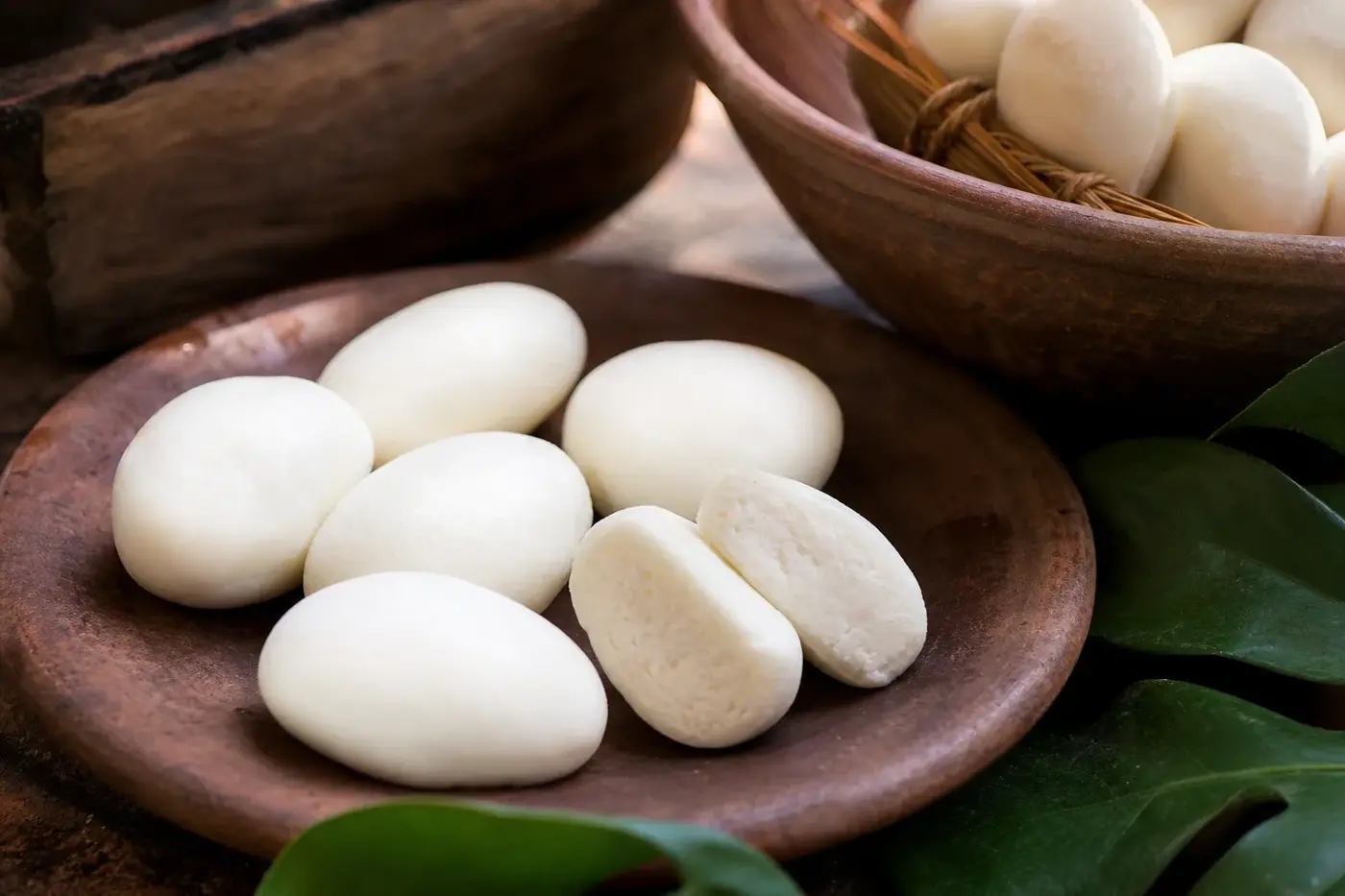
A thin sheet of tchoukou meets hot tea in Niger. In Ghana, fresh wagashi travels from the cheesemaker’s draining vessel to the frying pan. Crumble the tchoukou into a millet preparation instead, and you have another way to enjoy it. Already, your cheese board looks rather beside the point. [3, 4, 8]
Behind these cheeses are pastoral cattle herds, household milk processing and market stalls. Some stay soft, ready for cooking; others become dried sheets saved for later. Wagashi in Benin and Ghana, wara in Nigeria and tchoukou in Niger each bring their own part of the story to your plate. [1, 3, 4, 7, 8]
Let the place tell you about the cheese
A cheese’s name gets you only so far. Across West Africa, one broad name can cover different treatments, while neighbouring languages give related cheeses different names. Look at the locality, milk and method, and you begin to see particular places and producer networks, rather than one standard regional recipe. [1, 4]
Fresh and dried cheeses answer different needs. Soft cheese can move quickly from milk processing into daily cooking; dried cheese carries milk solids into another season. That distinction follows you into the kitchen: a fried portion of Ghanaian wagashi needs quite different treatment from a sheet of Nigerien tchoukou. [3, 4, 8]
Meet the women behind the milk
All 165 cheese processors interviewed in a Beninese survey published in 2022 were women. Women also dominated cheese trading. The survey covered 390 participants in Dassa and Nikki, including Peulh, Gando, Idaatcha and Fon producers. It puts people at the centre of the story, from processing milk to selling the finished cheese. [1]
Fulani producers, called Peulh or Peul in many francophone accounts, are central to several documented cheese traditions. They supply the milk, transform it and trade the cheese. Research in Benin also records Gando producers and traders from several communities, connecting pastoral knowledge with wider food markets. [1, 2]
Even nearby cheesemakers do things differently. A separate dairy chain survey in Nikki and Dassa-Zoumé included farmers, processors, traders and consumers, finding distinct groups with different production and preservation practices. Working conditions, equipment and the handling of milk and finished cheese varied within these two Beninese communes. Those differences are part of what you are buying, too. [2]
Follow wagashi from market to frying pan
At the market in Abomey-Calavi, Benin’s Wagashi Gassirè appears in both white and coloured forms. Investigators bought examples of each for a 2024 laboratory study. Both versions of this soft cow’s milk cheese belong to the documented local tradition, sharing the same market space. [15]
In Ghana, wagashi is a locally made fresh milk cheese, and frying is part of its story. Field research in Sissala East, in the Upper West Region, followed cow’s milk through cheesemaking and into the frying pan. Researchers surveyed milk suppliers and cheesemakers, then examined selected production chains more closely. You get a picture of both the process and the people bringing it to the table. [3]
The trail continues beyond those borders. The FAO’s historical inventory records related wagashi production in several neighbouring countries, including Togo and Burkina Faso, with differences in coagulants and handling. Read alongside later field studies, it shows a family of practices travelling through regional networks and adapting locally. The name travels; the recipe does not necessarily pack the same suitcase. [1, 3, 4]
Get acquainted with Nigeria’s soft white wara
Fresh, soft and white, wara also appears in research records as warankasi. A thesis from Obafemi Awolowo University documented village processing from cow’s milk and examined how the coagulant influenced the cheese. Its texture develops during manufacture, rather than through ripening. [5]
The market is where many consumers meet wara. Researchers in Ilorin bought locally sold cheese to examine boiling and salting, both used in its handling. Their discussion also records frying, drying and roasting. The cheese starts fresh, but what happens next changes how you handle and serve it. [10]
You will also find wagashi described as fried for soups and stews in the FAO inventory. Keep that serving detail attached to wagashi, though. It does not establish how wara is commonly served in Nigeria. [4]
Watch the curd take shape
Heat the milk, add plant extract, cook further, then drain. Researchers observed that sequence in Beninese cheesemaking, where coagulation gathers milk proteins into curd and leaves liquid whey behind. Makers transfer the cooked curd into oval colanders made from plant material or plastic. There, it drains and takes shape in the same vessel. [1]
Cow’s milk supplies the Beninese and Ghanaian traditions studied, along with much of the Nigerian production documented in research. With dried Sahelian cheese, you encounter a wider range. The FAO records cow, goat, sheep and camel milk for tchoukou, while the recent Zinder survey encountered producers using cow’s or goat’s milk. [1, 3, 4, 5, 7]
The coagulant helps shape what you end up tasting. Calotropis procera, often called Sodom apple, is one documented local plant coagulant. Nigerian laboratory researchers compared it with pineapple, lime and mango juices and moringa seed extract. Differences in yield and sensory assessment showed how substantially a change of coagulant can alter the result. [6]
Take the market road to dinner
Dassa is both a cheese production area and an important trading crossroads. Follow cheese from its draining vessel and you pass through a chain of processors, collectors, traders and cooks. Beninese surveys show different communities taking these roles, linking pastoral milk production with town markets. The route tells you as much as the recipe. [1, 2]
In the Ghanaian record, frying takes a prominent place. The Sissala East investigation followed production through to fried cheese, while the FAO describes wagashi used in soups and stews. Picture cheese within your meal, with fried pieces accompanying a sauce, rather than appearing only as a separate course. [3, 4]
Meet tchoukou, Niger’s delicate dried sheets
Tchoukou takes milk in quite another direction. Drained into thin sheets and dried, it becomes firm rather than remaining a moist fresh portion. Slow Food’s inventory describes a milky white, delicate cheese without a rind, associated with Fulani and Tuareg producers in the Sahel. [8]
A 2025 field study in Niger’s Zinder region brings more producers into view. Researchers interviewed 120 producers across eight villages; most were women, although men also made cheese. Participants included Fulani, Hausa, Kanuri and Tuareg producers. You are looking at a wider community than any single longstanding association might suggest. [7]
In the Zinder account, makers coagulate milk with rennet prepared from the dried abomasum of small ruminants. That is the animal’s fourth stomach. They separate curd from whey on mats, then dry it. Researchers recorded this shared sequence alongside differences in ingredients and execution. [7]
Now return to your cup of hot tea. Slow Food records tchoukou dipped into it, or crumbled into millet preparations. Thinness matters as much as firmness here. Broken up and incorporated into food, the sheet is eaten differently from freshly drained wagashi. [8]
Carry rainy season milk into the dry months
Tchoukou carries milk from one season into another. The FAO records production during the rains, followed by storage for consumption or sale in the dry season. Drying keeps those milk solids for later in the calendar. It helps you understand why thin sheets matter so much to this seasonal dairy tradition. [4]
Fresh cheeses have their own preservation histories. A Beninese survey published in 2013 recorded sun-drying, immersion in whey or water, repeated heating and smoking among producers, sellers and consumers. It also recorded an important warning: deodorising or recooking spoiled cheese could leave hazards behind. [9]
An Ilorin experiment shows the limits of boiling and salting. Researchers boiled market-bought wara, with and without salt, then stored it at room temperature. The samples deteriorated, and microorganisms were recovered from them. A recorded preservation practice is not necessarily reliable storage guidance: these treatments alone did not provide dependable control throughout storage. [10]
Leave wild plant coagulants to researchers
Calotropis procera can clot milk, but it also contains documented toxic constituents. A Beninese laboratory study examined the plant, cheese and whey. Its authors called for more sensitive analysis to confirm their findings. Further work was needed to establish what happens during traditional processing. [11]
Do not experiment with wild plant extracts to make these cheeses at home. Identification, the plant part and preparation all matter, and published studies describe differing practices. If you want to understand the technology, rennet explained introduces coagulant types, while how cheese is made takes you through curd formation and drainage. [1, 11]
Ask good questions when you buy
Appearance alone cannot tell you everything about handling. The Ghanaian field study identified milk collection, containers and transport as contamination points, and found improvements after hygiene interventions. Ask who made the cheese, what milk they used, how it was produced and how it has been refrigerated. Those answers help you understand the chain behind the portion on the stall. [3]
The World Health Organization’s international Five Keys to Safer Food offer a practical starting point. Keep hands and equipment clean, separate raw and cooked foods, cook thoroughly, control temperatures and use safe water. WHO also advises choosing foods processed for safety, including pasteurised milk. Ask sellers how they follow these principles. [12]
Cooking does not end the need for careful handling. An earlier Nigerian experiment found that heat and reduced pH conditions could lower microbial populations in wara, yet the finished cheese still kept poorly at ambient temperature. After manufacture, cooked curd can meet contaminated utensils, water, hands or containers. You need the whole chain to work. [3, 14]
-
At the stall: ask when the cheese was made, what milk was used and how it has been kept cold. WHO advises choosing fresh, wholesome food and ingredients processed for safety. Use the answers to understand handling, then follow storage directions and the expiry date on packaged cheese. [12]
-
On your way home: arrange chilled transport for fresh cheese. WHO recommends prompt refrigeration of perishable food, preferably below 5 °C. In the United States, FDA guidance specifies 4 °C (40 °F) or below for your refrigerator. Check with a thermometer, not just the control setting. [12, 13]
-
When you prepare it: wash your hands, clean equipment and keep fresh cheese separate from raw meat and its utensils, following WHO advice. For US readers, CDC guidance says to refrigerate perishable food within two hours, or within one hour when exposed to temperatures above 32.2 °C (90 °F). Shopping, preparation and serving time all count. [12, 16]
-
After cooking: refrigerate leftovers promptly in small containers, following FDA advice for US households. Discard perishable cheese if its temperature history is uncertain after a loss of refrigeration, and follow WHO advice against keeping food beyond its expiry date. For organisation, see how to store cheese at home, alongside your country’s guidance. [12, 13]
Choose your next cheese read
- How to Tell Cheese Styles Apart: Milk, Rind, Texture and Method: explore how moisture, rind and production separate fresh cheeses from dried styles.
- Cheese Food Safety: The Complete Guide: find official handling and storage advice for your country and the product you have.
General information only, not medical advice: follow the official guidance where you live.
Questions people ask
What is wagashi?
Wagashi is a soft cheese made in Benin and Ghana. In Ghana, it is made from fresh cow’s milk and can be fried.
What is wara cheese?
Wara, also called warankasi, is a fresh, soft white Nigerian cheese made from cow’s milk. Research records boiling, salting, frying, drying and roasting among its handling and processing methods.
What milk is used to make tchoukou?
The FAO records cow, goat, sheep and camel milk for tchoukou. A survey in Niger’s Zinder region encountered producers using cow’s or goat’s milk.
Why is tchoukou dried?
Drying preserves milk solids for another season. The FAO records tchoukou being made during the rains and stored for eating or sale in the dry season.
How should fresh cheese be stored?
The World Health Organization advises prompt refrigeration of perishable food, preferably below 5 °C. See its Five Keys to Safer Food and check the current guidance for where you live.
Sources
- Heliyon, Processing and preservation methods of Wagashi Gassirè, a traditional cheese produced in Benin, 2022, research article, sections 2 and 3.
- Frontiers in Sustainable Food Systems, State of the art of breeding, milking, and milk processing for the production of curdled milk and Wagashi Gassirè in Benin: Practices favoring the contamination of its dairy products, research article 1050592, online version retrieved November 2026.
- Journal of Food Research, Microbial Contamination Associated with “Wagashi-Cheese” Production in Sissala East District- Ghana, volume 5, number 4, 2016.
- Food and Agriculture Organization of the United Nations, The technology of traditional milk products in developing countries, online inventory, entries 1.13 to 1.15, version retrieved November 2026.
- Obafemi Awolowo University, Chemical Composition and Nutritive Value of Warankasi (Local Cheese) From Cow Milk, thesis, 1984, institutional repository abstract.
- University of Ibadan, Tropical Animal Production Investigations, Chemical composition, sensory properties and yield of soft cheese precipitated with different coagulants, volume 15, number 1, 2012, pages 15 to 18.
- African Journal of Food, Agriculture, Nutrition and Development, Diagnostic des Procedes Traditionnels de Production du Fromage Tchoukou au Niger: Cas de la Region de Zinder, volume 25, number 8, 2025, pages 27574 to 27590.
- Slow Food Foundation for Biodiversity, Tchoukou cheese, Ark of Taste inventory entry, undated, version retrieved November 2026.
- Université d’Abomey-Calavi institutional repository, Endogenous methods for preservation of wagashi, a Beninese traditional cheese, 2013, repository abstract.
- Journal of Microbiology, Biotechnology and Food Sciences, Assessment of local methods of processing for the preservation of the physico-chemical properties and microbiological quality of two local cheeses in Ilorin, Nigeria, volume 3, number 4, 2014, pages 337 to 342, publisher abstract.
- Food Science and Quality Management, Effect of Calotropis procera on the Proximate Composition and Potential Toxicity of Wagashi (Traditional Cheese) in Benin, volume 74, 2018, publisher abstract.
- World Health Organization, Five keys to safer food, poster WHO/SDE/PHE/FOS/01.1, version retrieved November 2026.
- US Food and Drug Administration, Refrigerator Thermometers, Cold Facts about Food Safety, current online consumer guidance retrieved November 2026.
- Food / Nahrung, Effects of heat, processing time and pH on the microflora, aflatoxin content and storability of “wara”, a soft, white cheese, volume 36, number 3, 1992, pages 259 to 264, publisher abstract.
- Dairy, Physicochemical Characteristics, Nutritional Composition, and Chemical Hazards Content of Wagashi Gassirè Cheese from Benin: Seasonal and Regional Variation, volume 5, 2024, pages 271 to 286, sampling section.
- US Centers for Disease Control and Prevention, Preventing Staphylococcal (Staph) Food Poisoning, reviewed 29 October 2026.
This desk-researched article brings together local production surveys, laboratory studies, institutional food inventories and official consumer guidance.
Last checked: November 2026
Last checked November 2026.
The cheeses of West Africa
The editors suggest you read next

French Cheese: The Complete Guide
Picture Normandy’s pastures, then follow the milk towards the Loire’s goat dairies, the Jura’s shared cheesemaking traditions and the sheep country of the Pyrenees.


