Triple Cream and Double Cream Cheeses
An ivory interior, the scent of mushrooms and fresh cream, then a slightly acidic, salty mouthful.
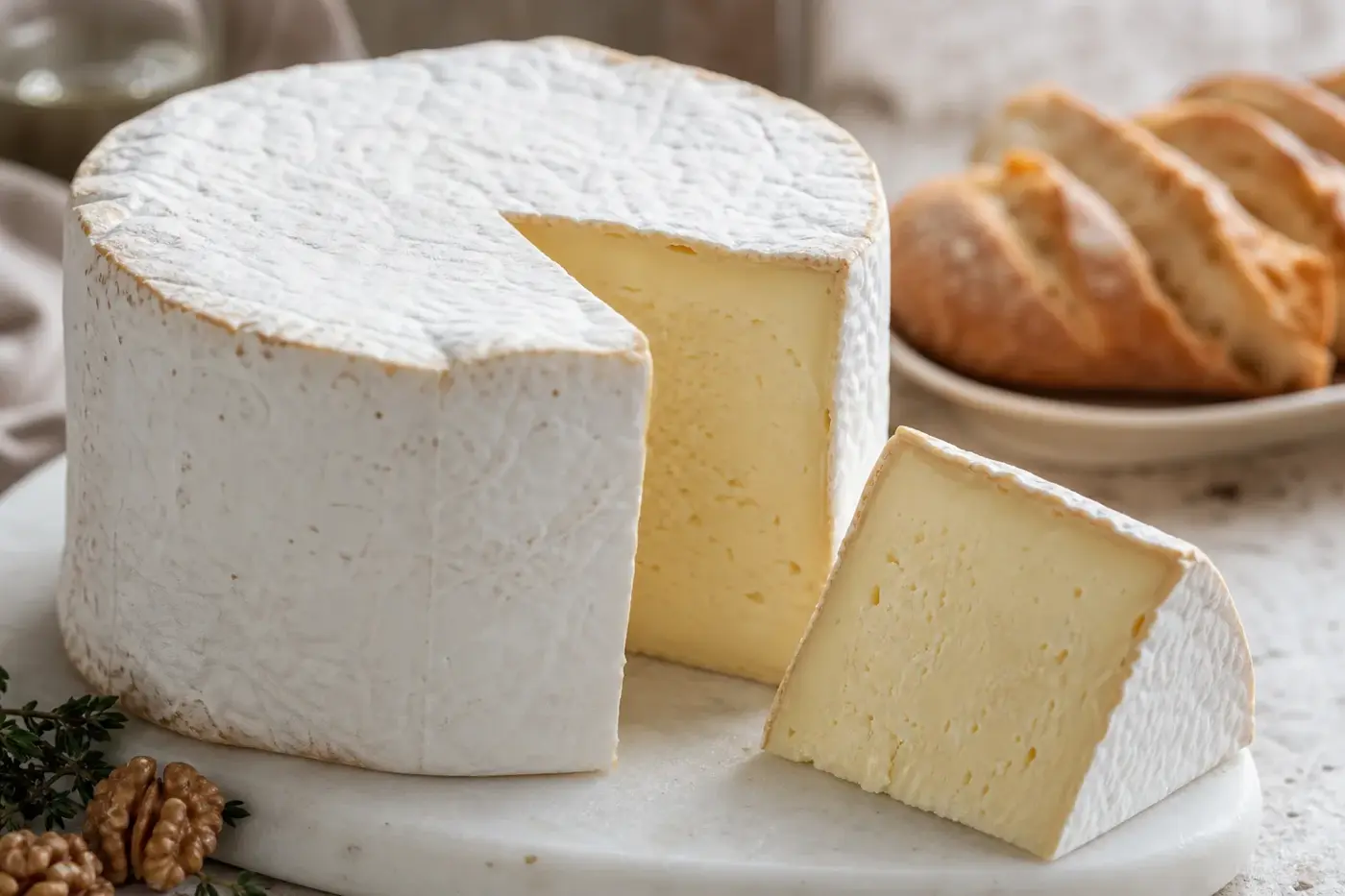
An ivory interior, the scent of mushrooms and fresh cream, then a slightly acidic, salty mouthful. Lincet’s description of its 2 kg Délice de Bourgogne gives you plenty to anticipate. [6] You can almost hear the bread being torn.
Before you reach for it, the numbers need a little unwrapping. A cheese labelled 75% fat in dry matter can contain far less than 75 g of fat per 100 g, because that first figure leaves out its water. Double cream and triple cream cheeses begin with milk enriched with cream; moisture, ripening and serving temperature help shape what you taste. [1][2][3]
Double or triple? Get to know the names
In France, double crème and triple crème have precise legal thresholds. Article 13 of Décret n°2007-628 defines them by the proportion of fat left after the cheese is completely dried. You will usually see that measurement called fat in dry matter, or FDM; these are the thresholds for November 2026. [1]
| French cheese description | Fat in dry matter | What the figure refers to |
|---|---|---|
| Double crème | At least 60% but less than 75% | The cheese with all its water removed |
| Triple crème | At least 75% | The cheese with all its water removed |
Those generous names describe composition. They do not promise twice or three times the fat of Cheddar, Brie or any other reference cheese. [1] Cheese names can sound rather more extravagant than their arithmetic.
Cross a border and the terminology can change. The Codex General Standard for Cheese is an international reference, not a universal law. It groups cheeses with at least 60% FDM under its high-fat description, so look at both the measurement and the naming convention when comparing imported cheeses. [2]
Two fat figures, and what each tells you
Water explains why these figures can look so different. Dry matter means everything left after water is removed; FDM tells you how much of that remainder is fat. Fat per 100 g measures the cheese you actually eat, water included.
French legislation uses FDM for double crème and triple crème. Codex recognises both ways of declaring milk fat. [1][2]
Here is the calculation:
Fat in dry matter (%) = fat in the cheese ÷ dry matter in the cheese × 100.
Imagine a hypothetical 100 g cheese containing 50 g water and 37.5 g fat. Its dry matter weighs 50 g, so its FDM is 37.5 ÷ 50 × 100, or 75%. On your plate, it still contains 37.5 g fat per 100 g.
Now picture another hypothetical cheese with the same 75% FDM, but 60 g water per 100 g. Its 40 g of dry matter contains 30 g fat. The FDM percentage is identical; the proportion of fat by total weight is not.
These are arithmetic examples, not product analyses. Compare real cheeses using the same measurement basis on both labels. For help separating the food description, ingredients and nutrition information, turn to reading a cheese label.
Follow the cream from milk to curd
The story starts with cream added to milk. Lincet describes this enrichment for Délice de Bourgogne, while the Brillat-Savarin specification requires whole cows’ milk and cows’ milk cream. [3][4]
That enriched milk must then become curd, the gel that forms the cheese. Whey, its liquid portion, must drain away. Codex’s definition of cheese recognises coagulation with rennet or other suitable agents, followed by partial whey drainage. [2]
Brillat-Savarin takes a particular route. Its specification combines acidification by starter cultures with calf rennet, followed by moulding and spontaneous drainage. Rennet is the enzyme preparation that helps set the milk; other cream-enriched cheeses need their own production information, rather than an assumption that they follow suit. [4]
You can follow the broader sequence in how cheese is made. Keep composition and technique separate: cream establishes the enrichment, while coagulation, drainage and ripening help give the finished cheese its character. [2][4]
Taste your way from fresh butter to woodland
A fat percentage cannot tell you what awaits beneath the rind. You might find a fresh cheese with a fine texture, or mushroom aromas in a ripened one. Brillat-Savarin can be sold fresh or ripened under its specification, with both presentations belonging to the same named cheese. [4]
INAO describes its pronounced lactic character, very fine paste and flavours of cream and fresh butter. With ripening come mushroom and woodland aromas, alongside discreet fruity and hazelnut notes. You are looking at a change in flavour as well as appearance. [5]
Moisture plays its part in each mouthful, too. As the examples show, cheeses with the same FDM percentage can contain different proportions of fat by total weight. Read about the paste, the cheese’s interior, as well as its composition.
At the table, compare a small piece served cool with another allowed to soften slightly. Not every cheese needs to become runny before you give it your attention. Follow any maker’s serving recommendation, and keep time outside the fridge within the handling guidance below. [8]
Meet Brillat-Savarin and Délice de Bourgogne
These two cheeses reward a closer look than the category nickname allows. Give the specification, maker and particular format a moment of your attention. They tell you more about what you are taking home.
Brillat-Savarin: a famous name with its own rules
Brillat-Savarin is an EU protected geographical indication, or PGI, as recorded by INAO. Its specification, homologated in July 2025, requires at least 72% fat in dry matter and at least 40% total dry matter at first marketing. [4][5]
That 72% minimum deserves a pause. INAO describes Brillat-Savarin as a triple-cream cheese, yet its specification minimum falls below France’s general 75% threshold for the optional triple crème description. The Brillat-Savarin name has its own specification requirements; a separate triple crème claim requires the corresponding composition. [1][4][5]
When you choose yours, ask whether it is fresh or affiné, meaning ripened. It is a small question that helps you find the presentation you want. [4]
Délice de Bourgogne: pay attention to the format
Lincet’s published technical sheet for its 2 kg Délice de Bourgogne gives 75% fat in dry matter and 40% fat by total weight. It also identifies pasteurised cows’ milk. Those percentages describe the same product in two ways, rather than offering rival accounts of its richness. [3]
On its current product page, Lincet describes this format as a soft, bloomy-rind cheese. There is that ivory interior again, with mushroom and fresh-cream aromas and a slightly acidic, salty flavour. [6]
The maker’s description of the 200 g format takes a different turn: a very fine rind, fresh texture and lactic aromas. Look at the format and packaging in front of you. One product sheet cannot speak for everything carrying the name. [7]
Let the rind tell its own story
Adding cream does not dictate a cheese’s rind. Fresh and ripened Brillat-Savarin, alongside Lincet’s different Délice presentations, show why white mould, rind thickness and maturity deserve separate attention. A bloomy rind is a surface covering of ripening mould: it describes the exterior, not the fat category. [4][6][7]
Choose with two questions in mind: how is the cheese enriched, and how is it finished? For fresh, lactic character, ask about fresh presentations. If you want mushroom aromas, look for that description in the producer’s account of a ripened, bloomy-rind cheese. [5][6][7]
For the wider picture, telling cheese styles apart explores how milk, rind, texture and method work together.
Have a better conversation at the cheese counter
Tell the cheesemonger when you plan to serve your cheese, then describe what you enjoy. Fresh lactic flavour or developed mushroom aromas? A sliceable piece or something softer? Your occasion and preferred character are better starting points than richness alone.
Read the label in this order:
- Find the cheese and format. Separate the named cheese, the producer’s product name and any double or triple cream description.
- Look at how fat is measured. Distinguish FDM from fat by total weight or fat per 100 g.
- Check milk treatment and ingredients. Use the information for that specific product.
- Read storage instructions and dates. Include the directions for after opening. [1][3][8][9]
Ask about the ripeness of the actual cheese or cut piece you are buying. “Fresh and slightly tangy” or “more developed, with mushroom aromas” gives the seller more to work with than “the richest one”. Those flavour directions appear in the documented examples above. [5][6][7]
For UK labels, GOV.UK says descriptions must be accurate and not misleading. Before drawing a conclusion from double or triple cream wording, compare the label’s measurement basis with the French thresholds. [1][10]
Set the table, and let the cheese shine
Start with cheese served cool rather than fridge-cold. Bring out a small portion and leave the rest refrigerated. If the packaging gives a serving temperature, follow it.
For England, Wales and Northern Ireland, consult the Food Standards Agency guidance on chilled food kept out of refrigeration during preparation. Follow the packaging instructions and return the remainder to the fridge promptly. [8]
Plain bread or an unsweetened cracker gives you a simple starting point. Try a crisp or tart contrast, such as apple, pear or a little fruit preserve, without covering the cheese’s lactic or mushroom character. These are suggestions for your table, not requirements.
Lincet recommends dry Burgundy white wines and Crémant de Bourgogne. For adults of legal drinking age who choose alcohol, offer a small serving; sparkling water or an alcohol free apple drink is an alternative. The accompaniments are editorial suggestions; the wine recommendations are Lincet’s. [6][7]
People who are pregnant, driving, taking medicines that interact with alcohol, or recovering from alcohol dependence should not drink. Consult NHS advice.
You will find more guidance in cheese and wine pairing.
Keep it chilled, and keep the label handy
For England, Wales and Northern Ireland, the FSA recommends a fridge between 0 °C and 5 °C, checked with a thermometer. Its guidance says dairy products should be refrigerated according to their packaging instructions. Follow the product’s directions after opening, too. [8]
Keep the label with a cut portion so you have its date and handling information to hand. Use the stated opening limit. Double and triple cream cheeses do not all have the same storage life.
UK government guidance makes an important distinction: use-by dates concern safety, while best-before dates concern quality. Eat refrigerated cheese within its use-by date and follow its storage instructions. [9]
For wrapping and arranging your fridge, see storing cheese at home.
This page summarises published guidance from the official sources it cites. It is not medical advice. Guidance differs between countries and changes over time, so check the current source for where you live, and ask your doctor, midwife, pharmacist or dietitian about your own circumstances.
Pregnancy or milk allergy? Look at the specific cheese
For pregnancy, consult the UK NHS guidance on cheese for November 2026, including its advice on soft cheeses and cooking. The particular cheese matters more than the promise of creaminess. [11]
The NHS also lists pasteurised soft cheeses such as cream cheese among its permitted choices. Compare the actual cheese’s milk treatment and ripening type with that guidance, and ask your midwife about your circumstances. [11]
For milk allergy, the examples here contain milk and cream. The NHS advises people with food allergy to avoid the food or ingredient they are allergic to, check labels carefully and follow their specialist’s management plan. Allergy is different from food intolerance. [3][4][12]
Use the official guidance linked below alongside cheese allergy versus lactose intolerance to understand the distinction.
Questions people ask
What is the difference between double cream and triple cream cheese?
In France, double crème cheese must have at least 60% but less than 75% fat in dry matter. Triple crème must have at least 75%. The names do not mean twice or three times the fat of another cheese.
Why can a cheese labelled 75% fat contain less than 75 g of fat per 100 g?
Fat in dry matter is measured after the water has been removed. Fat per 100 g is measured in the cheese as eaten, including its water.
How is Brillat-Savarin made?
Its specification requires whole cows’ milk and cows’ milk cream. It combines acidification by starter cultures with calf rennet, followed by moulding and spontaneous drainage.
How should double and triple cream cheeses be stored?
For England, Wales and Northern Ireland, the Food Standards Agency recommends a fridge temperature between 0 °C and 5 °C, checked with a thermometer. It says dairy products should be refrigerated according to their packaging instructions. Follow the product’s directions after opening too.
Can I eat these cheeses during pregnancy?
The NHS provides guidance on soft cheeses and cooking during pregnancy. It also lists pasteurised soft cheeses such as cream cheese among its permitted choices. Consult the NHS guidance and check the specific cheese’s milk treatment and ripening type.
Sources
- Légifrance. Décret n°2007-628 du 27 avril 2007 relatif aux fromages et spécialités fromagères, Article 13, version in force since 1 January 2014, checked November 2026. Official text.
- Codex Alimentarius Commission. General Standard for Cheese, CODEX STAN 283-1978, retrieved edition incorporating amendments through 2013, sections 2 and 7.2. International reference standard. Retrieved edition.
- Fromagerie Lincet. Délice de Bourgogne, 2 kg, coupe, undated producer technical sheet, retrieved November 2026. Technical sheet.
- French Ministry of Agriculture. Cahier des charges de l’indication géographique protégée « Brillat-Savarin », homologated by order of 7 July 2025. Specification.
- INAO. Brillat-Savarin, official product record, undated, retrieved November 2026. Product record and regulatory documents.
- Fromagerie Lincet. Délice de Bourgogne, 2 kg, undated producer product page, retrieved November 2026. Product description.
- Fromagerie Lincet. Délice de Bourgogne, 200 g, undated producer product page, retrieved November 2026. Product description.
- Food Standards Agency. How to chill, freeze and defrost food safely, GOV.UK publication, retrieved November 2026, applying to England, Northern Ireland and Wales. Official guidance.
- UK Government. Understanding food labelling: Best before and use-by dates, current web guidance retrieved November 2026. Official guidance.
- UK Government. Understanding food labelling: Overview, current web guidance retrieved November 2026. Official guidance.
- NHS. Foods to avoid in pregnancy, current web guidance retrieved November 2026, cheese, milk and other dairy section. Official guidance.
- NHS. Food allergy, reviewed 20 August 2026, retrieved November 2026. Official guidance.
Researched through French legislation, the current ministry-published Brillat-Savarin specification, official UK guidance and Lincet’s product information, with sensory descriptions attributed to their sources.
Last checked: November 2026
Last checked November 2026.
The editors suggest you read next
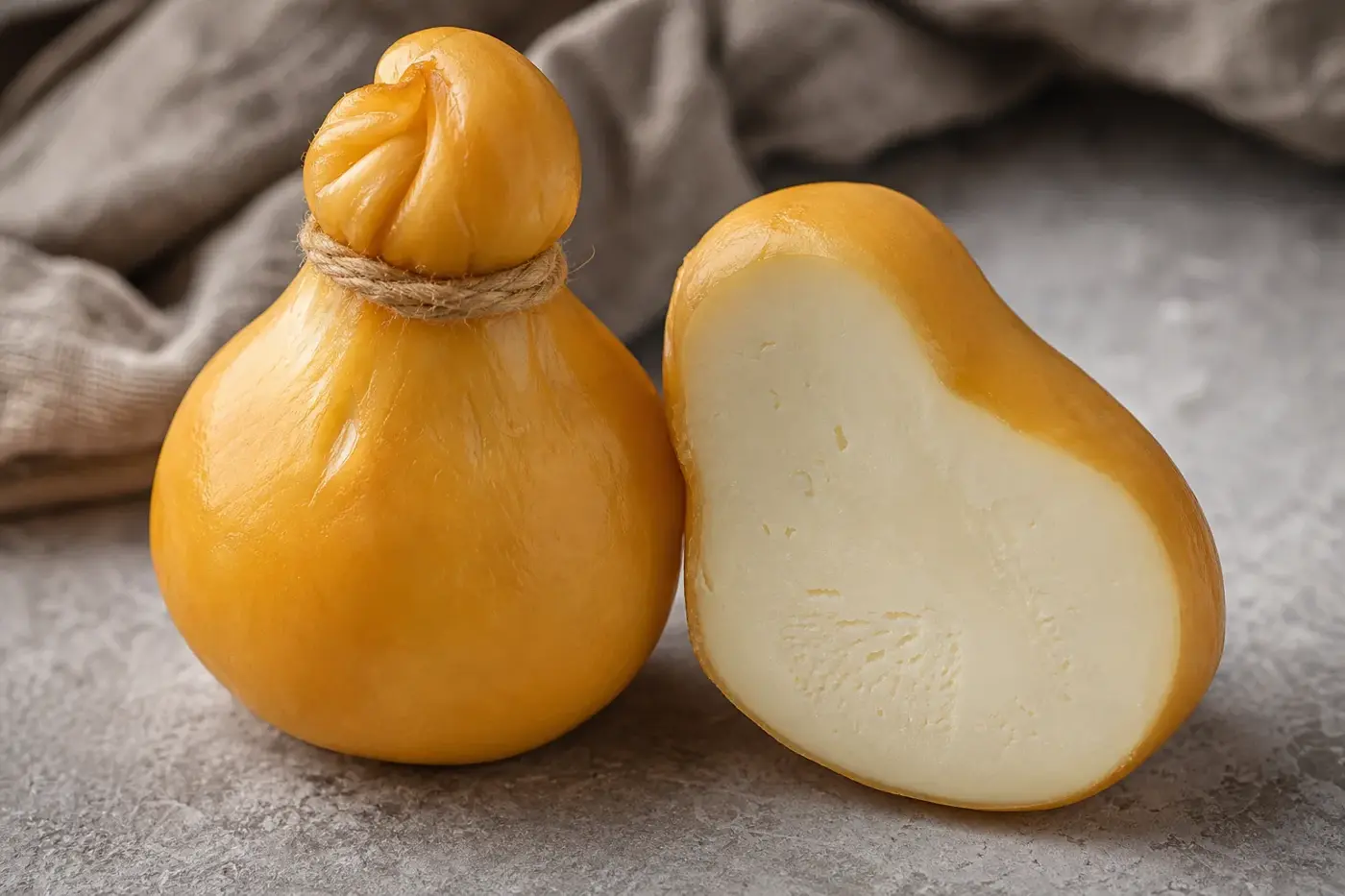
Smoked Cheese Explained
Your knife slips through the golden skin of a Puglian scamorza.