Argentinian Cheese
The cheese softens across your pizza.
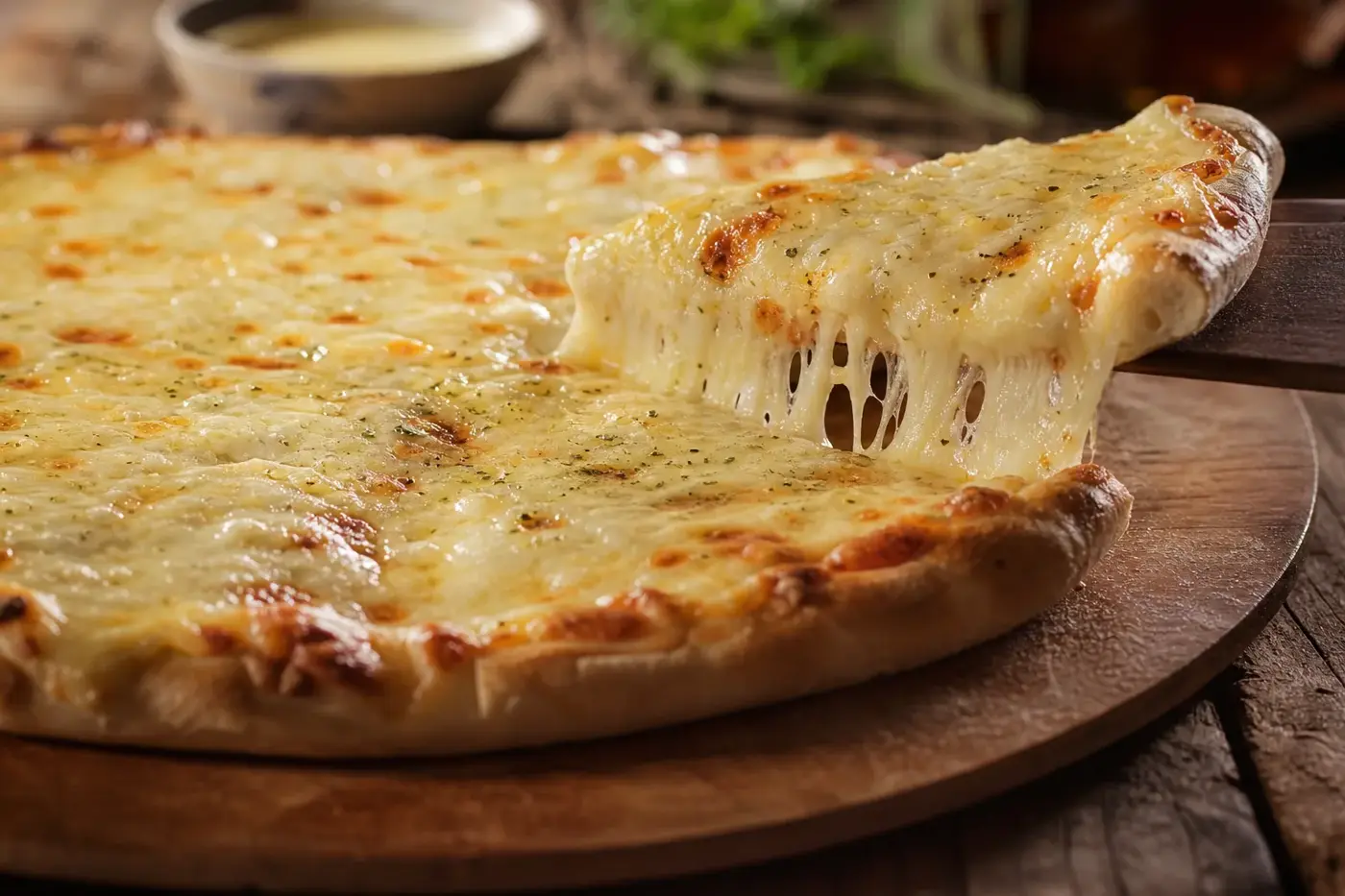
The cheese softens across your pizza. Beside the grill, provoleta gets its moment; at the pasta bowl, out comes a brittle wedge for grating. In Argentina, cheese is as much at home in everyday meals as on a cheese board. It has little interest in waiting for a special occasion.[6][7]
Follow your cheese back towards the dairy and you reach Córdoba, Santa Fe and Buenos Aires provinces, the country’s dairy heartland. European immigrant traditions helped shape what you find there. Argentinian kitchens made those traditions their own.[2][5][6][7]
| Your first taste of Argentina | Where to begin |
|---|---|
| The cow’s milk heartland | Córdoba, Santa Fe and Buenos Aires provinces.[2] |
| What stands behind the names | Código Alimentario Argentino, Chapter VIII, with separate standards for named varieties.[1] |
| Cheese at the everyday table | Soft cheeses for cooking; local cheeses for picadas, particularly associated with Tandil.[7][9] |
| Places worth exploring | Goat’s milk cheeses in Córdoba and San Luis; cow’s, goat’s and sheep’s milk cheeses around Tandil.[8][10] |
Follow the milk into the dairy heartland
Put Córdoba on your map first. It leads Argentina’s milk production, ahead of Santa Fe and Buenos Aires. INTA’s July 2025 regional study, using 2024 production figures, places these three provinces at the centre of the dairy industry. Together, they give you a sense of the scale behind the cheese counter.[2]
Within Córdoba, dairy basins stretch across the north-east, Villa María and the south. Provincial mapping using 2025 records highlights the centre-east and southern departments, particularly San Justo, General San Martín and Unión. These names bring the national figures down to earth. They show you where milk collection, processing and cheesemaking meet.[2][3]
In Santa Fe, turn towards the central and southern dairy basins. The national government’s provincial report describes an extensive network of farms and processors, including smaller cheese businesses supplying domestic consumers. Buenos Aires is another major production province. There, Tandil and Suipacha offer you a closer encounter with local dairy culture.[4][8]
You will find two scales of cheesemaking living side by side. A substantial dairy industry makes familiar varieties, while other cheeses speak more closely of a particular locality or maker. Leave room for both as you explore.
Taste the immigrant traditions that took root
Reggianito gives you a clear thread to follow through this history. The agricultural ministry’s 2008 protocol describes its technology as an adaptation of cheesemaking brought by Italian immigrants. The method travelled, then settled into a different country’s milk supply, manufacturing practices and meals.[6]
Swiss immigrants helped build the dairy economy too. Historical research held by CONICET documents Swiss-owned creameries and cheesemaking businesses around San Carlos, Lehmann and Rafaela in the early twentieth century. In Suipacha, national tourism material also records a Basque influence.[5][8]
Think of several immigrant strands, rather than one imported blueprint. Names keep some of those connections alive, but making, buying and eating the cheeses gave them Argentinian identities. You can taste your way through that meeting of inherited method and local practice especially clearly among the hard cheeses.
Cremoso and quartirolo: make room in your kitchen
Picture cheese softening into your pizza topping or empanada filling. Cremoso and quartirolo are useful first stops among Argentina’s soft cheeses. The food code describes both as closed-textured and slightly elastic, with gentle acidity. Cremoso may also contain added cream.[1]
On the packaging, look for Cuartirolo, the code’s spelling. According to the Universidad Nacional del Litoral’s Los quesos argentinos, modern vacuum packaging has brought the textures of these two cheeses closer together. The same account puts them in pizza, empanadas and gratinated dishes. These are jobs that call for cheese to soften and spread through a topping or filling.[1][7]
At the counter, let your dish do the talking. For pizza or another topping, ask how readily that particular cheese melts. For empanadas, ask how much moisture it brings to the filling. The name starts the conversation; the stove has the final say.
Save a thought for the end of the meal, too. The university account connects table cheese with quince or sweet potato paste in queso con dulce. Restrained dairy flavour meets a dense, sweet accompaniment. After a hot filling, it offers you quite a change of pace.[7]
Pategrás and tybo: find your favourite slice
Take your knife to pategrás or tybo and you reach Argentina’s sliceable middle ground. National standards describe pategrás as firm and elastic, characteristically sweet and sometimes marked by holes. Tybo is compact, smooth and elastic. Its permitted name, Tybo Sandwich, gives you a fairly direct serving suggestion.[1]
The descriptions overlap enough to invite a comparison. Neither name tells you exactly how the cheese in front of you will taste or behave under the knife. A small portion of each will tell you more.
Set strongly flavoured accompaniments aside for your first taste. Notice the resistance to your knife, how readily the slice bends, and whether sweetness or acidity comes forward. These are things for you to explore, not promises about every example of either variety.
For a broader framework, try telling cheese styles apart. It explains the differences between soft, semi-hard and hard cheeses. Then return to your slices with a clearer idea of where they sit.
Reggianito and sardo: reach for the grater
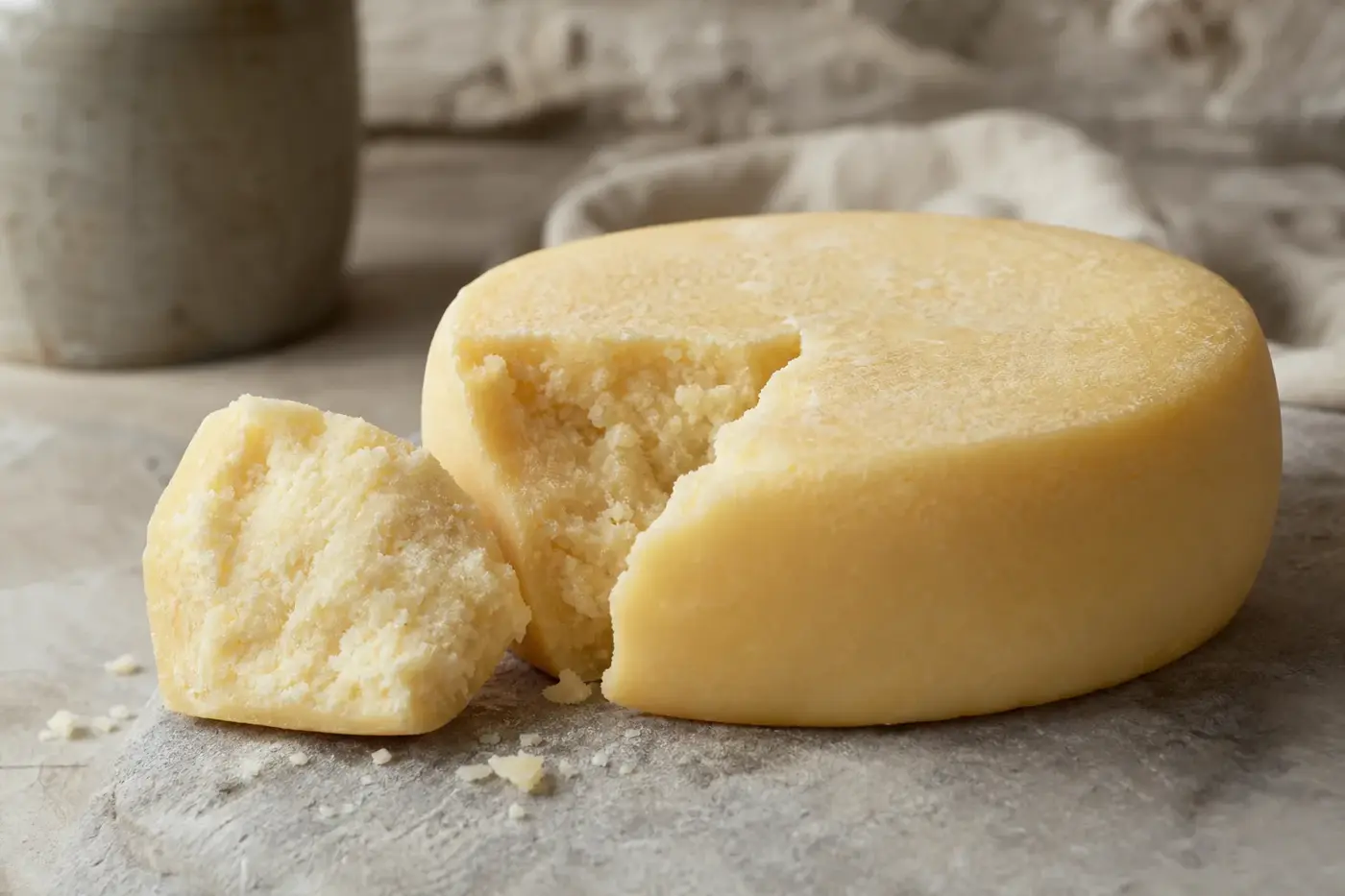
A brittle, granular piece of sardo brings you firmly to the harder end of Argentina’s cheese repertoire. The national standard also describes a pungent character associated with its coagulant or enzymes. Both sardo and Reggianito fall within the country’s low-moisture cheese standards.[1]
Reggianito’s Italian ancestry helps explain its place beside your pasta. The agricultural ministry’s protocol identifies Italian hard cheeses as its antecedents. The university account supplies the local chapter: Argentinian hard-cheese technologies developed their own characteristics under local conditions.[6][7]
When you want finely grated cheese, begin with Reggianito. Consider sardo when your dish would welcome a more pointed seasoning. Add either gradually and taste before reaching for more salt. Let the intensity of that maker’s cheese guide your hand.
Sardo also rewards a closer look at the label. The university account describes Argentina’s version as a cow’s milk cheese developed from a Sardinian sheep’s milk antecedent. Read the product’s milk declaration. The history of the name and the milk in your cheese are two different things.[7]
Provoleta: have a word before you light the grill
Tell the seller you are buying cheese for the grill. With provoleta, that is a more useful opening than judging by appearance alone. A cheese that slices beautifully at the table may behave differently under heat. Follow the cooking directions for your product.
There is another distinction worth taking home with you. Argentina’s food code defines Queso Provolone and Queso Provolone Hilado separately. Hilado means stretched curd. It tells you how the cheese is made, not how to cook it.[1]
Keep those two questions separate: making and cooking. If curd formation and the processing that follows catch your interest, how cheese is made takes you through the wider story. At the grill, come back to the instructions for your particular product.
Find the cheeses with a local address
Look beyond the familiar cow’s milk varieties and your cheese map becomes more varied. Argentina’s national tourism authority identifies goat’s milk quesillos with Rayo Cortado, Córdoba, and goat’s milk cheese with Nogolí, San Luis. These are specific local examples. They do not stand for everything made across either province.[8]
Tandil offers you another sort of variety within a single locality. Buenos Aires provincial tourism material documents cow’s, goat’s and sheep’s milk cheeses there, in soft, semi-hard and hard styles. This is a regional culture with several methods and milk sources, rather than one defining cheese.[10]
When you explore artisan production, keep three straightforward questions handy. Where was it made, which milk was used, and what makes this maker’s version distinctive? The answers give “local” an address and a process. That is more useful than leaving it as an appealing but rather roomy description.
This approach makes a rewarding travelling companion, too. Follow individual localities and documented makers, and let their differences shape your journey. You need not find one national artisan style to explain them all.
Pull up a chair for picadas, pizza and empanadas
A picada puts cheese in sociable company. National tourism material describes Tandil’s version as locally produced artisan cheeses alongside cured meats. Served in pieces, the cheese lets you explore the contrasts between the foods. Choosing your next bite becomes part of the pleasure.[9]
Pizza and empanadas give cheese a different job. The university account documents soft cheeses in both, particularly when melting is wanted. At the grill, provoleta gives heated cheese a place as a preparation in its own right. It need not be an ingredient in something else.[7]
For your own introduction, choose cheese by those jobs. Pick a sliceable cheese for a picada, a soft melting cheese for a filling, and a hard cheese for grating. Each has a purpose, without turning your shopping into a prescribed Argentinian menu.
There is plenty of room for regional and household preferences. Begin with how you plan to serve your cheese: in pieces on a shared plate, softened through a filling, or grated over a finished dish. That practical question leaves you free to explore other combinations.
Shop for your dish, then settle the cheese in
Start with the label and the job you have in mind. Ask about milk species, milk treatment and storage directions, particularly when buying a cut portion. Keep those details with the cheese, so you have more to go on than its variety name. Reading a cheese label explains what to look for.
If Argentinian varieties are hard to find, shop by function. Try a mild, supple semi-hard cheese for slicing, a soft cheese sold for melting for cooked fillings, and a hard grating cheese for pasta. Match moisture, firmness and flavour intensity to your dish. The right behaviour in your kitchen matters more than a foreign name that sounds equivalent.
For storage, the UK NHS’s November 2026 recommendations advise keeping chilled ready-to-eat foods at 5 °C or below, following the label and separating raw foods. Its general advice is to use opened food within two days unless the packaging says otherwise. Keep the product’s directions close at hand.[13]
Serve manageable portions and replenish your plate from the fridge as needed. Follow the product instructions for wrapping, refrigeration and handling after opening. For more detailed guidance, turn to storing cheese at home.
Milk treatment: let the label guide you
A familiar cheese name cannot tell you whether the milk was raw or pasteurised. Check the actual product before making your choice. Raw milk, thermised and pasteurised cheese explains the differences.
For pregnancy, consult the November 2026 UK NHS pregnancy food guidance. Follow its cheese categories, cooking instructions and exceptions. Those details matter when you are choosing what to eat.[11]
The November 2026 UK NHS dairy guidance covers unpasteurised dairy products for groups vulnerable to food poisoning. For advice about your individual choice, take the product information to your doctor, midwife or dietitian.[12]
General information only, not medical advice: follow the official guidance where you live.
Questions people ask
Which Argentinian cheeses are used for pizza and empanadas?
Cremoso and quartirolo are soft cheeses used in pizza, empanadas and gratinated dishes. Argentina’s food code uses the spelling Cuartirolo.
What cheese should I choose for provoleta?
Tell the seller that the cheese is destined for the grill and follow the product’s cooking directions. The term hilado means stretched curd and describes how the cheese is made, not how it is cooked.
What is the difference between Reggianito and sardo?
Both are low moisture cheeses, but sardo has a brittle, granular texture and a pungent character. Reggianito is used finely grated, while sardo can give a more pointed seasoning.
What is a Tandil picada?
National tourism material describes Tandil’s picada as a combination of locally produced artisan cheeses and cured meats. The cheese is served in pieces.
Where is most of Argentina’s milk produced?
Córdoba leads milk production, followed by Santa Fe and Buenos Aires. INTA’s July 2025 regional study places these three provinces at the centre of Argentina’s dairy industry.
Sources
- ANMAT. Código Alimentario Argentino, Capítulo VIII: Alimentos lácteos, official compilation updated October 2025, accessed November 2026. Relevant provisions: Articles 621, 622, 630, 630 bis, 633, 635, 637, 638 and 639. Official chapter.
- INTA, Estación Experimental Agropecuaria Manfredi. Caracterización del área de influencia EEA Manfredi, July 2025, dairy section and Figures 85 and 86, reporting 2024 production data. Institutional repository document.
- IDECOR, Government of Córdoba. Producción de litros de leche: el nuevo mapa de Ganadería, 2026, departmental mapping and 2025 data. Provincial publication.
- Argentina, Ministerio de Economía. Informe productivo provincial: Santa Fe, 2023, dairy territorial configuration. Official report.
- CONICET institutional repository. La inmigración suiza en la Argentina, undated document, section “Producción láctea”. Historical study.
- Argentina, Secretaría de Agricultura, Ganadería, Pesca y Alimentos. Resolución 16/2008: Protocolo de calidad para Queso Reggianito, original text, 2008. Used for its historical account, not as a substitute for current mandatory standards. Official text.
- Universidad Nacional del Litoral, Ediciones UNL. Los quesos argentinos: Producción, características y nuevas propuestas, digital edition, 2022, sections on soft and hard cheeses. University publication.
- Argentina, national tourism authority. Quesos y chacinados, regional guide, undated, accessed November 2026. Official regional guide.
- Argentina, national tourism authority. Quesos y chacinados, Tandil guide, undated, accessed November 2026. Official Tandil guide.
- Buenos Aires provincial tourism authority. Celebrar la industria quesera de Tandil, undated, accessed November 2026. Provincial account.
- NHS. Foods to avoid in pregnancy, reviewed 15 June 2026, accessed November 2026. Current guidance.
- NHS. Dairy and alternatives in your diet, current online edition, accessed November 2026. Current guidance.
- NHS. Listeriosis, reviewed 10 November 2023, accessed November 2026. Storage and handling advice only; pregnancy cheese categories follow source 11. Current guidance.
Researched through official Argentinian food standards, agricultural and tourism publications, institutional historical research, a university cheese reference and current NHS guidance.
Last checked: November 2026
Last checked November 2026.
The cheeses of Argentina
The editors suggest you read next
French Cheese: The Complete Guide
Picture Normandy’s pastures, then follow the milk towards the Loire’s goat dairies, the Jura’s shared cheesemaking traditions and the sheep country of the Pyrenees.