Baron Bigod
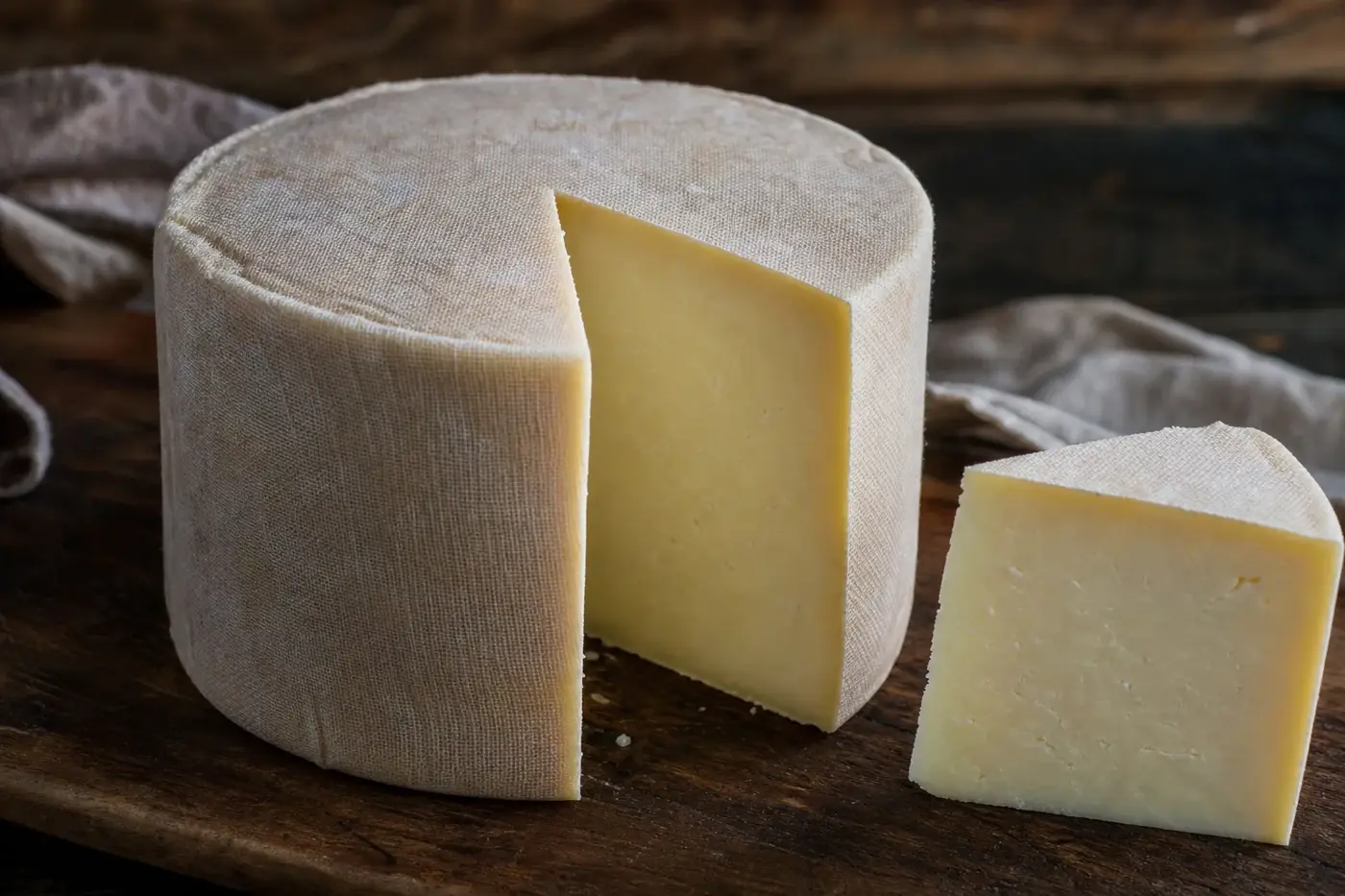
Your knife slips through the white rind into a silky golden layer, then meets a fresher, citrusy centre.
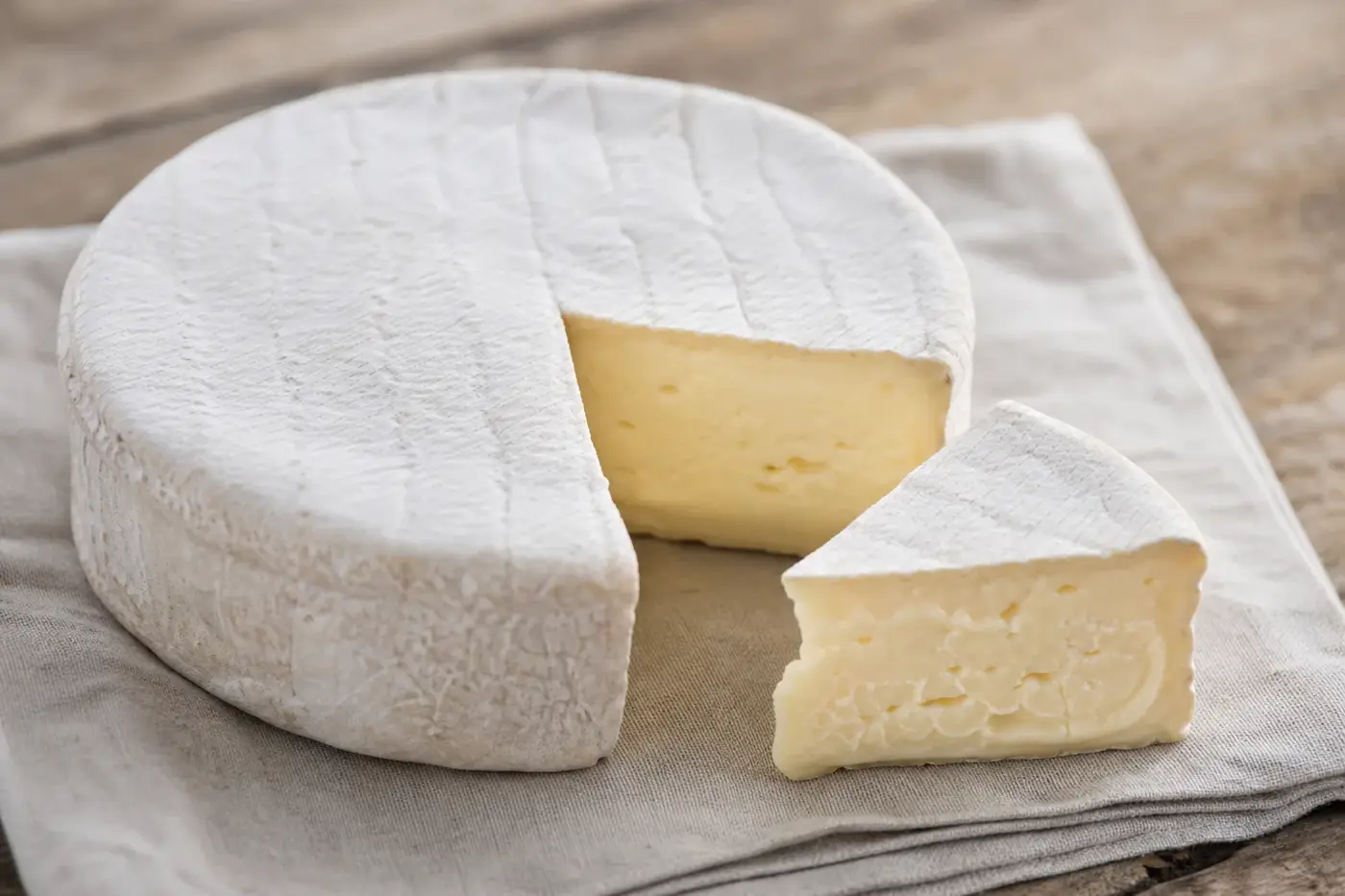
Your knife slips through the white rind into a silky golden layer, then meets a fresher, citrusy centre. That is the contrast Fen Farm Dairy describes in Baron Bigod, whose story begins on Suffolk’s Waveney Valley grazing marshes.[4] Here, Montbéliarde cows supply morning milk that travels just a few metres to the dairy near Bungay.[1][7]
Hand-ladled in the Brie style, this soft, white-mould cheese rewards a little attention beneath the rind. You will often see it described as raw milk, but the producer’s current information specifies pasteurised milk.[1][2][3][7]
| Your quick guide | The useful details |
|---|---|
| Name | Baron Bigod.[1] |
| Who makes it, and where | Fen Farm Dairy, Flixton Road, Bungay, Suffolk, England.[3] |
| Style | Soft, white-mould, Brie-de-Meaux-style cheese.[1] |
| Milk | Pasteurised cows’ milk from the farm’s own Montbéliarde herd.[2][3] |
| Rennet | Animal rennet; unsuitable for vegetarians.[4] |
| What ripens it | Lactic starter cultures and white surface mould, identified by the producer as Penicillium candidum.[1] |
| How long it matures | Up to eight weeks.[4] |
| Standard round sizes | Nominally 250 g, 1 kg and 3 kg; handmade weights vary.[3][5][6] |
| GI registration | EU: Not verified; Great Britain: Not verified; Northern Ireland: Not verified. Authority and register ID: Not verified. |
| Declared allergen | Cows’ milk.[3] |
| Pregnancy guidance | UK NHS guidance on white-rind soft cheeses, November 2026: see Sources [10]. |
Suffolk roots, with a little French influence
Just a few metres separate Fen Farm’s milking parlour from its dairy. Morning milk makes that journey within minutes, the farm says. The grazing and forage grown around the dairy link the herd’s food directly to the milk used for its products.[7]
You can follow this cheese back to one farm’s milk, made into cheese and matured on that same farm. Cultures, hand ladling and careful tending of the white rind shape what happens next.[1][7] It is a short journey with plenty of work along the way.
The French connection is Brie de Meaux, which Fen Farm names as its stylistic model. Broad rounds, hand-ladled curd and surface ripening reflect that influence, but Baron Bigod has its own name, producer, milk supply and production method.[1][4] You can meet the wider family in the guide to Brie.
The name stays closer to home. According to the dairy, it recalls the medieval baron associated with nearby Bungay Castle. Fen Farm dates the first Baron Bigod sales to 2013, following cheesemaking research and the purchase of Montbéliarde cows from France.[1][8]
Meet the herd on the Waveney marshes
For much of the year, Fen Farm’s cows graze the marshes of Stow Fen in the Waveney Valley. Generally between November and March, wet ground and slower grass growth bring them into open-sided straw barns.[9] The weather has a say in this cheese’s story.
Montbéliarde cattle are central to the dairy’s account. Fen Farm describes their milk as protein-rich and particularly suited to cheesemaking, and traces the breed’s history to France’s Jura region.[9] The milk in your Baron Bigod, though, is produced and transformed on the Suffolk farm.
Winter feed is mainly home-grown grass, herbal leys and wholecrop, with some purchased protein, vitamins and minerals. When Fen Farm says “grass-fed”, it means this seasonal system, winter feeding included.[2] It does not mean uninterrupted outdoor grazing.
If you are curious about the milk, ask about breed, feed and freshness together. The breed name opens the conversation. The herd’s diet and the handling of its milk give you the fuller picture.
Morning milk and the art of the shallow ladle
Work begins with fresh morning milk, heat treatment and lactic bacteria, according to Fen Farm’s current process description. These cultures acidify the milk. Cheesemakers monitor acidity and temperature before adding rennet, whose enzymes turn the milk into a jelly-like curd.[1]
Then the hands take over. The team cuts the curd to release whey, the liquid separated during cheesemaking, skims whey away and ladles small layers of curd into hoops. Turning helps more liquid drain; the next day, the cheeses leave their hoops for inspection and salting.[1]
Those ladles have a name: pelle-à-brie. The producer’s specification describes them as broad and shallow, and records hand salting and maturation for up to eight weeks.[4] Not a process for anyone hoping to hurry lunch along.
You can trace those steps in the wedge on your plate. Milk sets, curd loses whey, and surface ripening develops the young cheese. For a closer look at those stages, explore how cheese is made.
Follow the rind’s slow work inward
Around the fourth day, small spots of white mould begin to appear, Fen Farm reports. Daily turning during early maturation helps the covering develop evenly. Once it covers the surface, the cheeses are wrapped in waxed paper and placed in poplar boxes to mature further.[1]
That rind does more than dress the cheese. Beneath it, the producer describes a silky golden layer surrounding a fresher centre.[4] Cut a wedge and you can see ripening moving inward: soft paste near the rind, with a firmer middle.
Let that contrast guide your choice at the counter. Rather than asking only for something “ripe”, say whether you want a definite centre, softened edges or a more yielding paste throughout. The cut face gives you a better answer than that single word.
Take a tasting trip from centre to rind
Start with Fen Farm’s description: a nutty, mushroom-like rind, a smooth golden layer and a delicate, citrusy centre. Its specification gives the colour as cream, with a white to cream rind.[4] These are the producer’s sensory descriptions, and useful signposts for your own tasting.
The dairy’s maturity guide gives you two reference points. At three to four weeks, it describes firmer texture and lemony or lactic flavours. At four to five weeks, the centre stays firm while the edges soften, and earthy, mushroom and savoury notes develop.[2]
Current product pages also mention warm milk, earth and farmyard notes.[3][5][6] That gives you rather more to say than “strong”, the word so often asked to do all the work. Think fresh centre, growing savoury character and aromatic rind, with texture changing across the wedge.
Try a small piece from the centre, then another containing both paste and rind. Notice where the texture shifts and which part supplies most of the aroma. Keep accompaniments simple for this first comparison, so you can taste the differences clearly.
Before blaming the season, look at ripeness
Before you put a difference down to season, consider age and condition. Fen Farm’s maturity guide gives the clearest published account of how Baron Bigod eats.[2] Those are your most useful starting points when comparing pieces.
The farm’s feeding system does change through the year. Summer grazing gives way to winter forage when the marshes become unsuitable for the herd. Herbal ley, grass and wholecrop silage are among the feeds grown around the dairy.[11]
For a useful comparison, note the batch date, format and date eaten. Ask your cheesemonger whether the wedges are at a similar stage of ripeness. Otherwise, your seasonal comparison may really be a contest between a firm-centred cheese and a much softer one.
Fen Farm says its team tastes batches during maturation to decide their destination and when to sell them.[1] That tasting, selection and maturation work helps shape what reaches your cheese counter, alongside the farm’s milk.
Choose your wheel for the moment you have in mind
Start with how much you expect to eat, then talk about ripeness. Fen Farm lists rounds of approximately 250 g, 1 kg and 3 kg.[3][5][6] Size and maturity answer different questions, so you need not settle both at once.
Buying a wedge? Ask to see the cut face, and borrow the producer’s useful language: lemony and firm, or earthy with softened edges.[2] Tell the cheesemonger when you plan to serve it, rather than simply requesting the ripest piece.
For a boxed wheel, keep the label and batch information. Fen Farm puts the batch date on the back barcode label of the 250 g cheese, underneath the lid of the 1 kg cheese and on top of the 3 kg lid.[2]
Look at the actual product information for milk treatment, too. Fen Farm’s current pages list pasteurised milk for all three standard round formats.[3][5][6]
Bring it from fridge to plate with care
Refrigerate Baron Bigod and eat it before its use-by date, as Fen Farm instructs. The standard rounds come wrapped in waxed paper and boxed.[3][5][6] Keep that packaging and follow the instructions supplied with your particular cheese.
For home refrigeration in England, Northern Ireland and Wales, the Food Standards Agency advises a fridge temperature of 5 °C or below. It recommends keeping chilled food out of refrigeration for the shortest possible time, with a maximum of four hours during preparation.[12]
Fen Farm recommends bringing Baron Bigod to room temperature one hour before serving for flavour.[3] Take out the portion you need, rather than your whole supply. The NHS advises eating chilled, ready-to-eat food within four hours of removing it from the fridge.[13]
Cut a round into radial wedges so each piece gets some centre and outer edge. Give a soft wedge room to spread on the plate, with bread alongside rather than piled over it. For wrapping and fridge organisation, see how to store cheese at home.
Make room for bread, fruit and your own preferences
Plain country bread or a lightly toasted baguette is a simple starting point. You can still compare the centre with the rind. Keep fruit separate so you can adjust each mouthful, rather than committing every bite to the same combination.
Fen Farm recommends apples, pears, medlar, quince and walnuts with Baron Bigod.[2] For an easy first choice from that list, try apple or pear. There is no obligation to assemble the entire supporting cast.
Still water or a little apple juice are suggested drinks. These and the bread choices above are serving suggestions, not results from a recorded pairing test. Taste the cheese alone first, then add an accompaniment and see what you enjoy.
This page summarises published guidance from the official sources it cites. It is not medical advice. Guidance differs between countries and changes over time, so check the current source for where you live, and ask your doctor, midwife, pharmacist or dietitian about your own circumstances.
Pasteurised milk: the safety advice you need
Fen Farm’s FAQ explicitly states that Baron Bigod is pasteurised.[2] Look at current product information when choosing your cheese. The guide to milk treatments explains the differences between raw, thermised and pasteurised milk.
The UK NHS advises pregnant people not to eat mould-ripened soft cheeses with white rinds unless cooked until steaming hot all the way through. That advice applies whether the milk is pasteurised or unpasteurised.[10]
The NHS identifies pregnant people, newborn babies, people with weakened immunity and older people as groups at greater risk of serious listeriosis. Its guidance lists white-mould soft cheeses among foods associated with infection.[13] If you are in one of these groups, consult the dated official sources below and seek individual advice from your healthcare professional.
Refrigeration slows bacterial growth but does not stop it altogether, including the growth of Listeria monocytogenes, the FSA notes.[12] Follow your cheese’s storage instructions and use-by date.
Buying for a vegetarian? Start with the rennet
Baron Bigod is not suitable for vegetarians. Fen Farm’s specification states that it uses animal rennet and explicitly marks the cheese unsuitable. Current product ingredient lists also retain animal rennet.[3][4]
If you choose cheese by its coagulant, that is the deciding detail here. The guide to rennet explains animal, microbial and fermentation-produced alternatives.
Questions people ask
Is Baron Bigod made with raw milk?
Fen Farm’s current information specifies pasteurised milk from its own Montbéliarde cows. The producer’s FAQ explicitly states that Baron Bigod is pasteurised.
Can you eat Baron Bigod during pregnancy?
The UK NHS advises pregnant people not to eat mould ripened soft cheeses with white rinds unless they are cooked until steaming hot all the way through. This applies whether the milk is pasteurised or unpasteurised. See the NHS pregnancy guidance cited as source 10 on the page.
Is Baron Bigod suitable for vegetarians?
No. Fen Farm’s specification says the cheese contains animal rennet and is unsuitable for vegetarians.
What does Baron Bigod taste like?
Fen Farm describes a nutty, mushroom like rind, a silky golden layer and a delicate, citrusy centre. At three to four weeks, its maturity guide describes a firmer texture and lemony or lactic flavours.
How should Baron Bigod be stored?
Fen Farm says to refrigerate it and eat it before its use by date. For home refrigeration in England, Northern Ireland and Wales, the Food Standards Agency advises a fridge temperature of 5 °C or below.
Sources
- Fen Farm Dairy, Baron Bigod, current undated collection page and illustrated production account, retrieved November 2026. Includes naming, production, rind development and batch selection. Source.
- Fen Farm Dairy, Frequently Asked Questions, current undated version, retrieved November 2026. Sections on feeding, pasteurisation, batch dates, pairing and maturity. Source.
- Fen Farm Dairy, Baron Bigod Baby 250g, current undated product information, retrieved November 2026. Source.
- Fen Farm Dairy, Specification for Baron Bigod Cheese, Management Systems 3.6.1, version 1, 19 June 2024; copy hosted by Thomas Ridley, bearing an October 2025 receipt stamp. Source.
- Fen Farm Dairy, Baron Bigod 1kg, current undated product information, retrieved November 2026. Source.
- Fen Farm Dairy, Baron Bigod 3kg, current undated product information, retrieved November 2026. Source.
- Fen Farm Dairy, homepage, current undated version, retrieved November 2026. Sections on forage, proximity and milk handling. Source.
- Fen Farm Dairy, Our Story, current undated version, retrieved November 2026. Producer’s account of the 2012 research and cattle purchase and 2013 cheese launch. Source.
- Fen Farm Dairy, Our Herd, current undated version, retrieved November 2026. Source.
- NHS, Foods to avoid in pregnancy, live version retrieved November 2026, section “Cheese, milk and other dairy”. Source.
- Fen Farm Dairy, Greener Farming, current undated version, retrieved November 2026, section “Circular Farming System”. Source.
- Food Standards Agency, How to chill, freeze and defrost food safely, published 18 December 2017, live version retrieved November 2026; applies to England, Northern Ireland and Wales. Source.
- NHS, Listeriosis, reviewed 10 November 2023, live version retrieved November 2026. Source.
Researched from Fen Farm Dairy’s published production and product information, cross-checked against NHS and Food Standards Agency guidance; no site tasting or visit was conducted.
Last checked: November 2026
Last checked November 2026.
The editors suggest you read next
West Country Farmhouse Cheddar Cheese
Large pieces of curd turn and stack under the cheesemaker’s hands.