Boyne Valley Blue
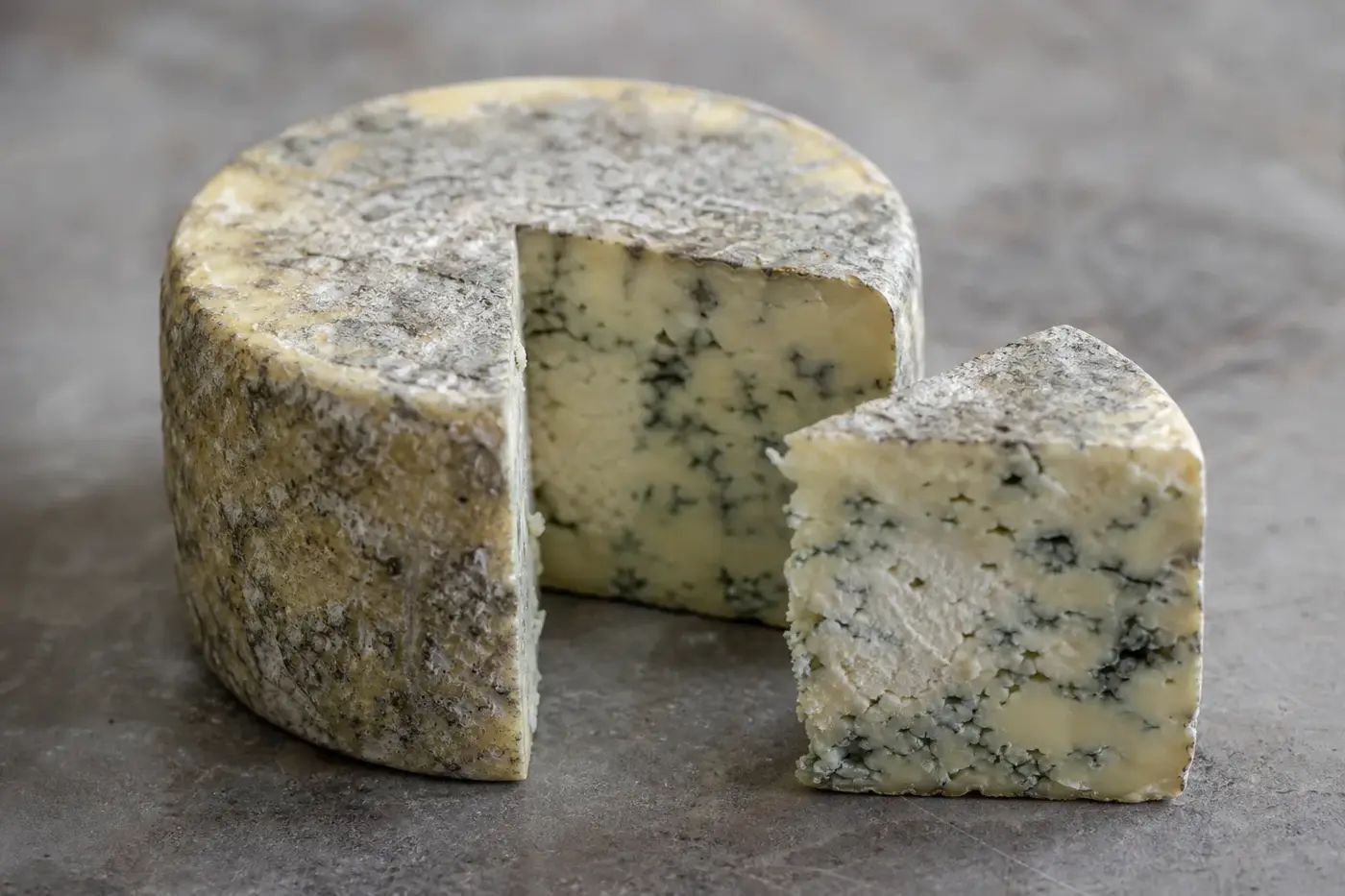
Cut through the brown natural rind and there it is: creamy-white cheese, threaded with blue, ready to crumble beneath your knife.
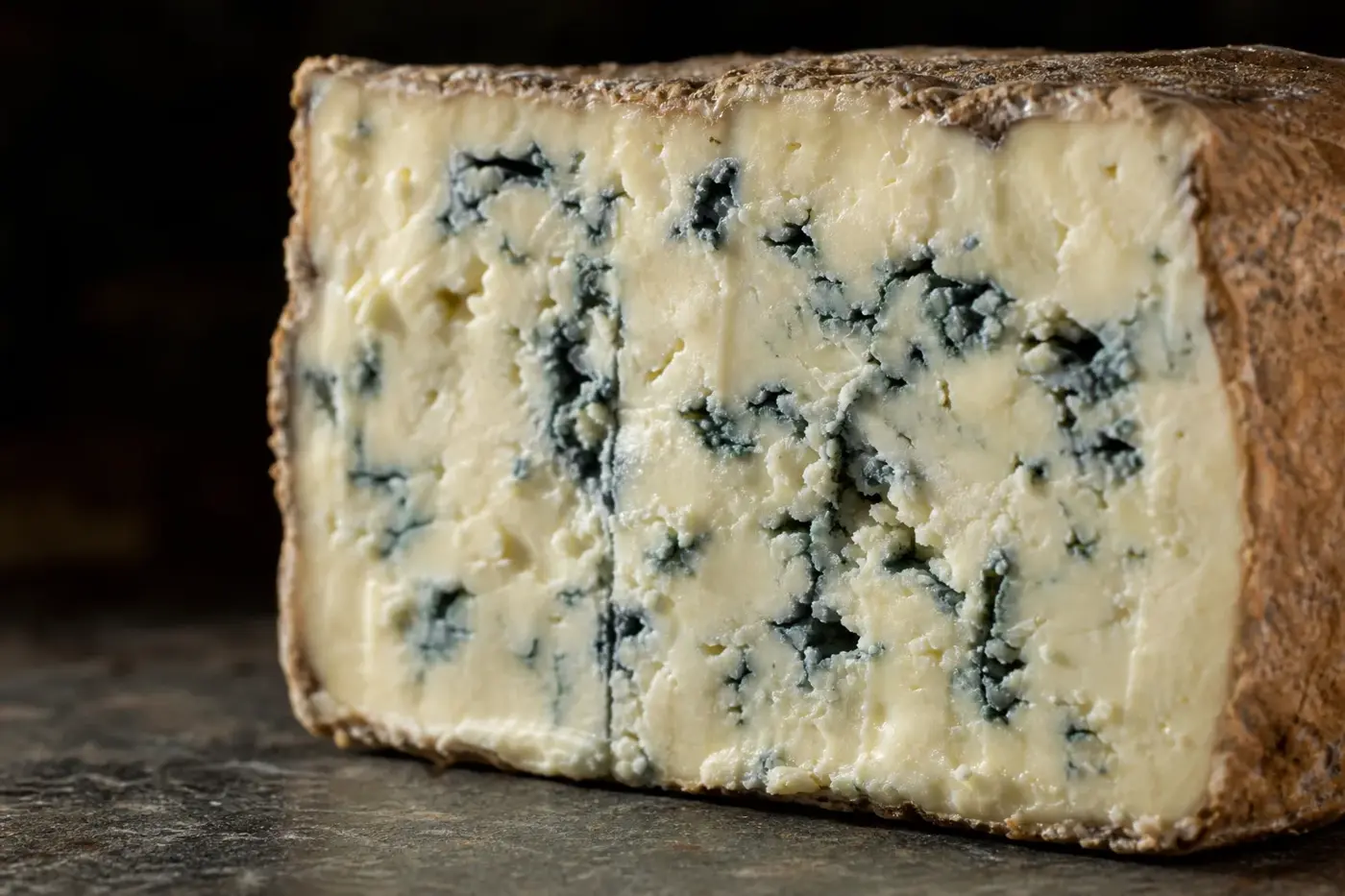
Cut through the brown natural rind and there it is: creamy-white cheese, threaded with blue, ready to crumble beneath your knife. Goat’s milk character meets blue mould, with neither meant to monopolise the conversation. This semi-hard Irish cheese comes from Boyne Valley Farmhouse Cheese at Mullagha Farm, near Slane in County Meath, where the dairy herd and cheesemaking business share a family farm. [1, 2, 3, 5]
| At a glance | What to know |
|---|---|
| Name to look for | Boyne Valley Blue [1] |
| Maker | Boyne Valley Farmhouse Cheese [2] |
| Home | Mullagha Farm, near Slane, County Meath, Ireland [2, 3] |
| Style | Semi-hard, blue-veined [2, 4] |
| Milk | Pasteurised goat’s milk for the listed product; treatment across the current range remains uncertain. [1] |
| Rind | Natural, brown [1, 4] |
| Texture | Crumbly [1] |
| Listed ingredients | Goat’s milk, culture, salt, rennet, mould, lysozyme from egg [1] |
| Current maturation period | Uncertain |
| Registered name and register ID | Uncertain |
| Aroma profile | Uncertain |
| Perceived saltiness | Uncertain |
A blue that lets the goat’s milk speak
If you expect every blue cheese to shout, Boyne Valley Blue asks you to listen a little more closely. It is neither a fresh goat’s cheese nor, in its published descriptions, an especially forceful blue. The maker describes a crumbly cheese with blue veins throughout; Bord Bia, Ireland’s food board, calls it medium-strength, with recognisable goat’s milk notes and a creamy-white paste. [1, 5]
That contrast is the attraction. You have pale cheese crossed with blue, with both milk and mould contributing to the flavour. Neither needs to have the last word. [1, 5]
It is also a useful little lesson in reading a cheese counter. “Goat’s milk” tells you the milk, “semi-hard” describes the body, and “blue-veined” describes the internal mould development. Together, they tell you far more than the broad heading of goat’s cheese alone. [1, 4]
You can follow those distinctions further in the guide to cheese styles.
From a Meath farm to its first cheese
Before Boyne Valley Blue, there were dairy goats and milk supplied to Glenisk. According to the producer’s account, the farm moved into dairy goats in 2008. Boyne Valley Farmhouse Cheese was established in 2010, with Boyne Valley Blue as its first cheese: something the farm could put its own name to. [2]
The family’s roots here reach further back. They purchased Mullagha Farm in 1935, and the farm outside Slane forms part of a mixed farming business with cereals, cattle and goats. When you taste this cheese, its connection to Meath is a working one: the farm’s goats supply the milk, and cheesemaking grew from the agriculture already there. [2, 3]
In 2016, an old stone farm building found a new purpose as a cheesemaking facility. The maker says the conversion increased capacity and made production more efficient. A white goat’s cheese, Boyne Valley Bán, followed in 2017. [2]
Keep those two names separate as you explore. Boyne Valley Blue and Boyne Valley Bán are different cheeses, each with its own identity and award record. A shared family name does not make them interchangeable. [2]
Meet the herd behind your wedge
Saanen, Alpine, Toggenburg and Anglo Nubian: the producer lists four breeds in its herd. These are the dairy animals connecting Mullagha Farm directly to your cheese. The maker also credits the grasses of the Boyne Valley with part of its character, expressing its view of how place shapes the milk. [3]
There is a useful detail behind that landscape. A historical producer presentation hosted by Teagasc describes an indoor herd fed silage and meal, with milking spread across the year. Local grasses can be part of the story without the goats grazing outdoors; the presentation records how feed, milk production and cheesemaking were organised at that point in the farm’s history. [4]
For the cheese itself, the published ingredient list specifies pasteurised goat’s milk, culture, salt, rennet, mould and lysozyme from egg. The producer also labels it suitable for vegetarians. When you buy a piece, use that product-specific milk declaration and read its pack, including the milk and egg declarations. [1]
What time brings to the blue
Eight weeks is the historical minimum maturation recorded in a producer presentation hosted by Teagasc, Ireland’s agricultural advisory and research body. The same presentation describes Boyne Valley Blue as mild to medium in strength. Producer records also identify the starting milk, cultures and mould, and the finished cheese’s natural rind. [1, 4]
| Part of the process | What you can learn from the descriptions |
|---|---|
| Milk preparation | Pasteurised goat’s milk, declared by the maker [1] |
| Culture and mould | Both listed; species uncertain [1] |
| Finished body | Semi-hard, with internal blue veining [1, 4] |
| Rind | Natural, described by the maker as brown [1, 4] |
At the counter, make maturation part of the conversation. The maker aims for a balance between goat’s milk character and blue-mould flavour, so the age and condition of your particular piece are worth discussing. Ask when the wheel was made or how long the seller has held it, then choose the condition and flavour description that suit your plans. [1]
For the bigger picture behind your wedge, turn to the guide to how cheese is made.
Look closely, then let it crumble
Begin with the colours: brown natural rind, creamy-white interior and blue veining throughout. That interior is what cheesemakers call the paste, and the maker describes it as crumbly. Bord Bia records a wheel format of 2.5 kg, a formed, matured cheese ready to be cut into wedges. [1, 5]
The flavour descriptions point towards moderate blue intensity, with a distinct contribution from the goat’s milk. The producer stresses the balance; Bord Bia puts the cheese at medium strength. Those visible blue veins need not mean an overpowering mouthful. [1, 4, 5]
Before you reach for bread or fruit, try a piece by itself. Smell the cut face, then notice what arrives first: milk character or blue flavour. Give yourself a moment to separate the impressions.
Consider saltiness on its own, too. A strong blue impression and a salty impression are different observations. Finally, notice how readily the paste breaks and how long the flavour stays with you; there is no need to rush towards a verdict.
A bronze medal along the way
Boyne Valley Blue received bronze at the British Cheese Awards in 2017, in the “Blue Goat / Ewe / Buffalo” category. The awarding body’s results list names both the cheese and Boyne Valley Farmhouse Cheese. It is a dated point of recognition to place alongside the farm’s story. [6]
At the counter or table, though, your most useful questions concern the piece in front of you. Which milk, what texture, how much age, and what condition? Those answers help you decide how to serve it.
Give the first mouthful some space
Begin simply: a small wedge, plain bread or an unsalted cracker, and water. Taste the cheese alone before adding anything else. Then you can decide whether sweetness, freshness or crunch makes the most appealing partner, rather than building a board around an assumed level of blue intensity.
Put out a modest portion and offer more if wanted. On a mixed board, a few small wedges make more sense than your entire supply. Cut from the centre towards the outside, so each wedge shows both rind and blue-veined interior.
For current food handling guidance in Ireland, consult the Food Safety Authority of Ireland. [7, 8]
Pear or apple slices bring a fresh contrast, while walnuts add crunch. If you enjoy sweetness with blue cheese, try a little honey. Keep each accompaniment beside the cheese, leaving that first mouthful entirely up to you.
Plain bread earns its place here. It lets you compare the cheese alone with the same cheese accompanied by fruit. Your cheese board need not become an audition for everything in the cupboard.
For an alcohol-free drink, start with water, or try lightly brewed black tea. Leave the tea unsweetened initially, especially if honey or fruit is already on your plate. A simple setting keeps your attention on the meeting the producer highlights: goat’s milk character and blue mould. [1]
Keep the label with your cheese
For current storage guidance in Ireland, consult the Food Safety Authority of Ireland and check the product label. Keep those details with the cheese so you can refer to them at home. [7, 8]
If a cheesemonger cuts your portion, retain the original label or ask for the storage and date information. Keep it with the cheese when you transfer it to a container at home. This preserves its identity, ingredient information and handling instructions.
The FSAI says food should not be used after its use-by date. For a cut piece, follow the producer’s or seller’s specific instructions, including any shorter period after opening. Take out only what you plan to serve, use clean utensils, and keep the rest covered and chilled. [7, 8]
The guide to storing cheese at home takes you through the wider handling routine. If the condition of a stored piece concerns you, consult the seller and the relevant official advice. Intentional blue veining alone cannot tell you how to judge every change in a stored cheese.
A little more for the curious
- How to Read a Cheese Label: make sense of the details that come with your cut piece.
- Mould on Cheese: When to Cut and When to Bin: explore the distinction between intentional ripening and questions about unwanted growth.
General information only, not medical advice: follow the official guidance where you live.
Questions people ask
Where is Boyne Valley Blue made?
It is made by Boyne Valley Farmhouse Cheese at Mullagha Farm, near Slane in County Meath, Ireland. The cheese was the first produced by the business, which was established in 2010.
What does Boyne Valley Blue taste like?
Bord Bia describes it as a medium strength blue with recognisable goat’s milk notes. The maker describes a balance between the goat’s milk character and blue mould flavour.
Is Boyne Valley Blue pasteurised and suitable for vegetarians?
The listed product is made with pasteurised goat’s milk, and the producer labels it suitable for vegetarians. Its ingredients also include lysozyme from egg. Check the pack for the particular piece, including its milk and egg declarations.
How long is Boyne Valley Blue matured?
A historical producer presentation records a minimum of eight weeks. The current maturation period has not been verified, so ask at the counter about the piece you are buying.
What goes well with Boyne Valley Blue?
Pear or apple slices offer a fresh contrast, while walnuts add crunch. A little honey suits those who enjoy sweetness with blue cheese. Plain bread, water or lightly brewed black tea are other options.
Sources
[1] Boyne Valley Cheese. Boyne Valley Blue, 200g. Undated producer product description and ingredient declaration, retrieved November 2026. Commercial producer source.
[2] Boyne Valley Cheese. The Story of Boyne Valley Cheese. Undated producer history, retrieved November 2026.
[3] Boyne Valley Cheese. The Story of Mullagha Farm. Undated producer account, retrieved November 2026.
[4] Boyne Valley Farmhouse Cheese, hosted by Teagasc. Boyne Valley Farmhouse Cheese. Producer presentation held in Teagasc’s 2020 publication directory; presentation date not printed in the retrieved text.
[5] Bord Bia. Boyne Valley Farmhouse Cheese. Undated producer profile and cheese description, retrieved November 2026.
[6] Royal Bath & West of England Society. British Cheese Awards 2017. Results by producer, 2017, page 3.
[7] Food Safety Authority of Ireland. Safe Food to Go. Food handling booklet, edition date not established from the retrieved text, pages 7 and 10.
[8] Food Safety Authority of Ireland. Healthy eating, food safety and food legislation. Edition date not established from the retrieved text, food safety section, pages 78 to 79.
This desk-researched article compares the producer’s product declaration, farm histories and historical presentation with Bord Bia’s profile, an awarding body’s results and Irish food safety guidance.
Last checked: November 2026
Last checked November 2026.
The editors suggest you read next