Chaource
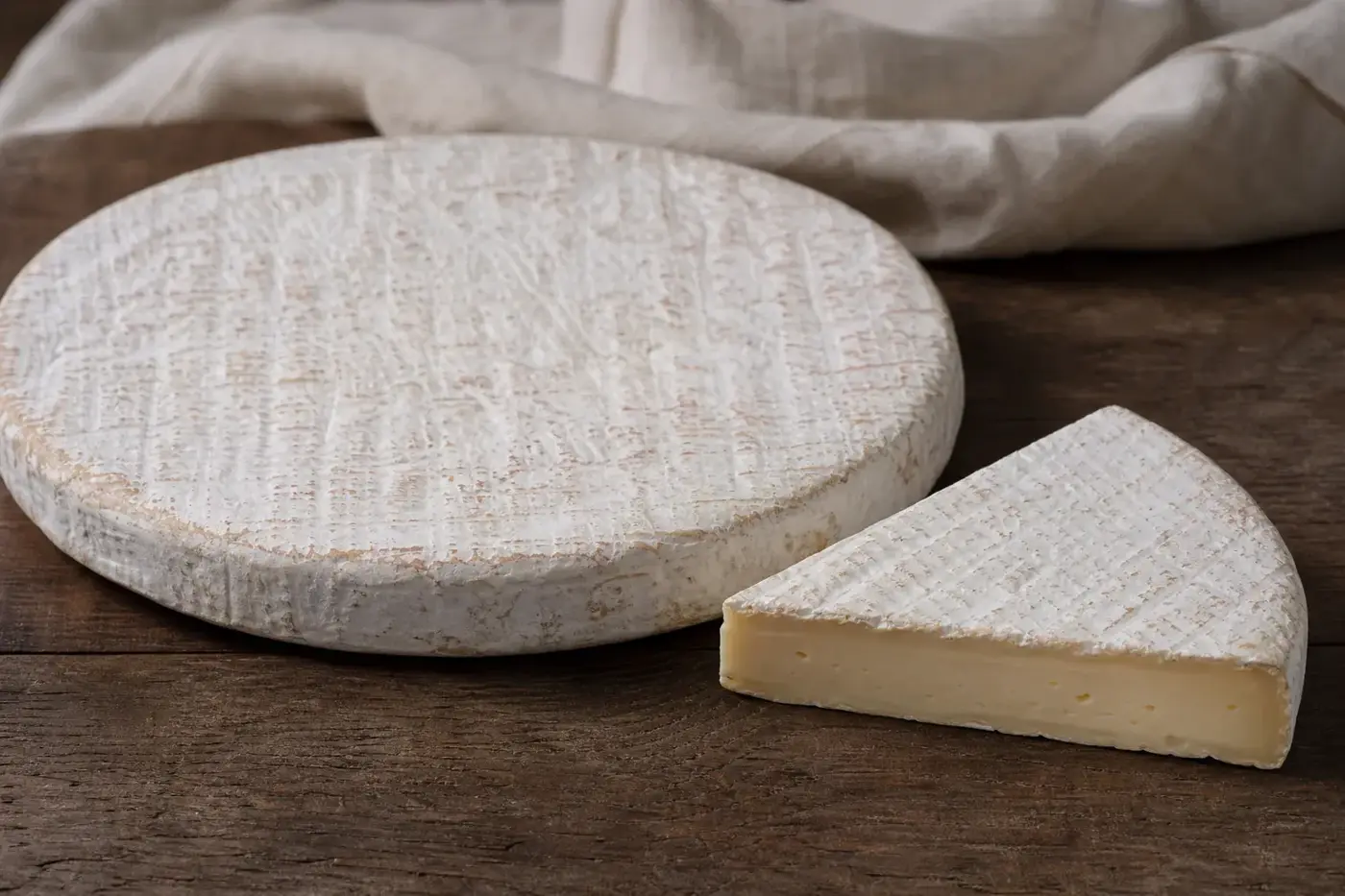
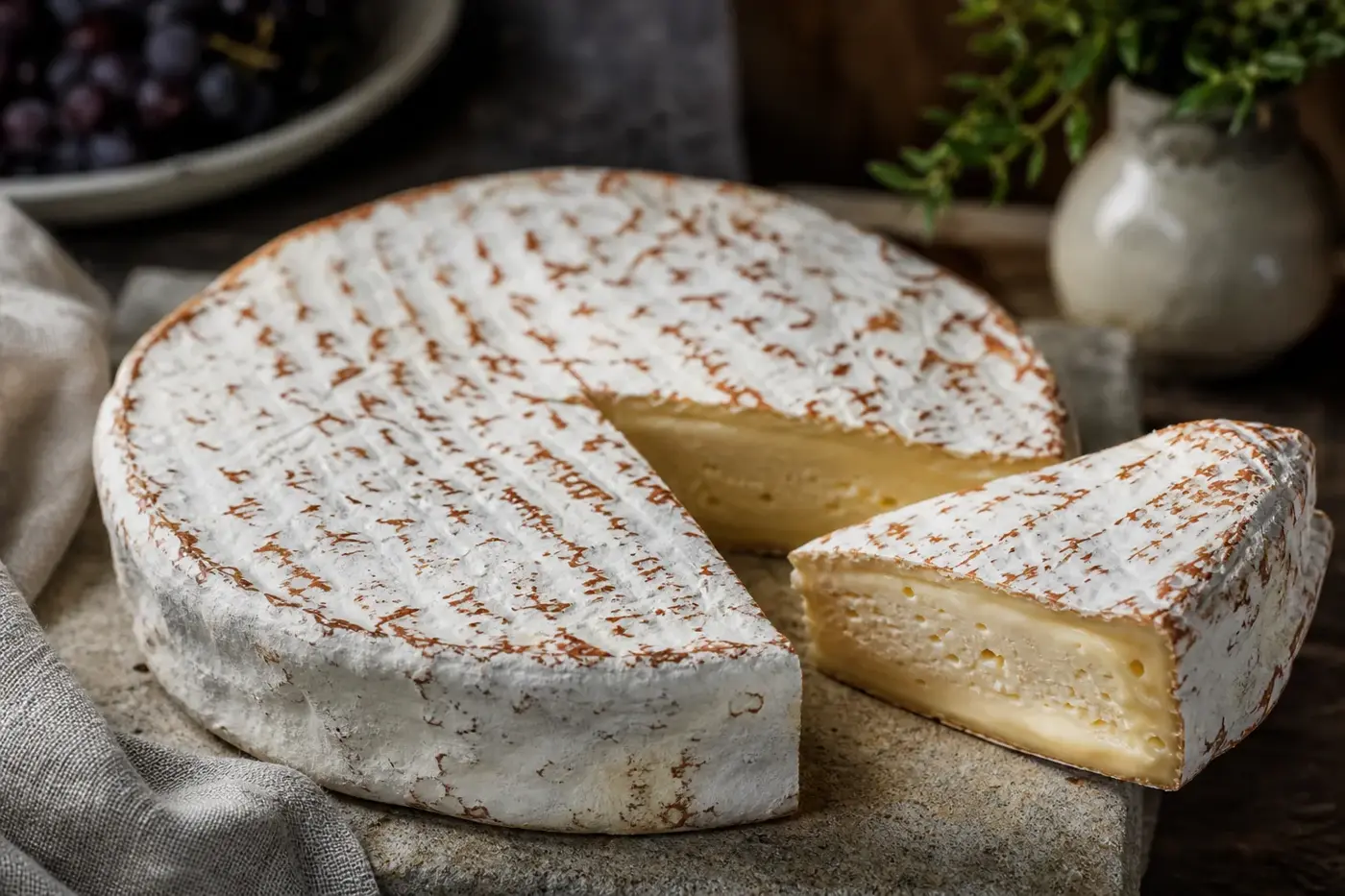
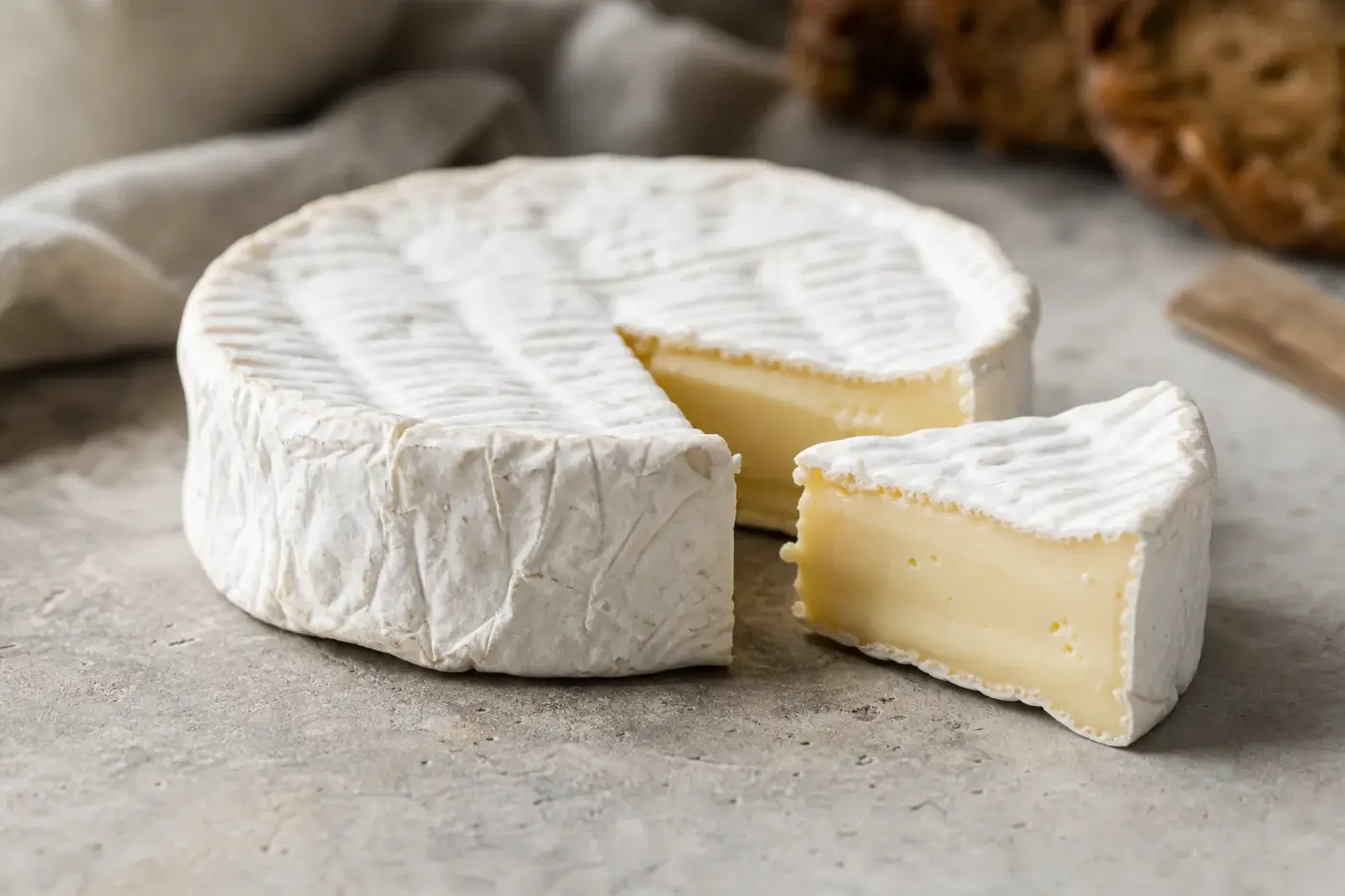
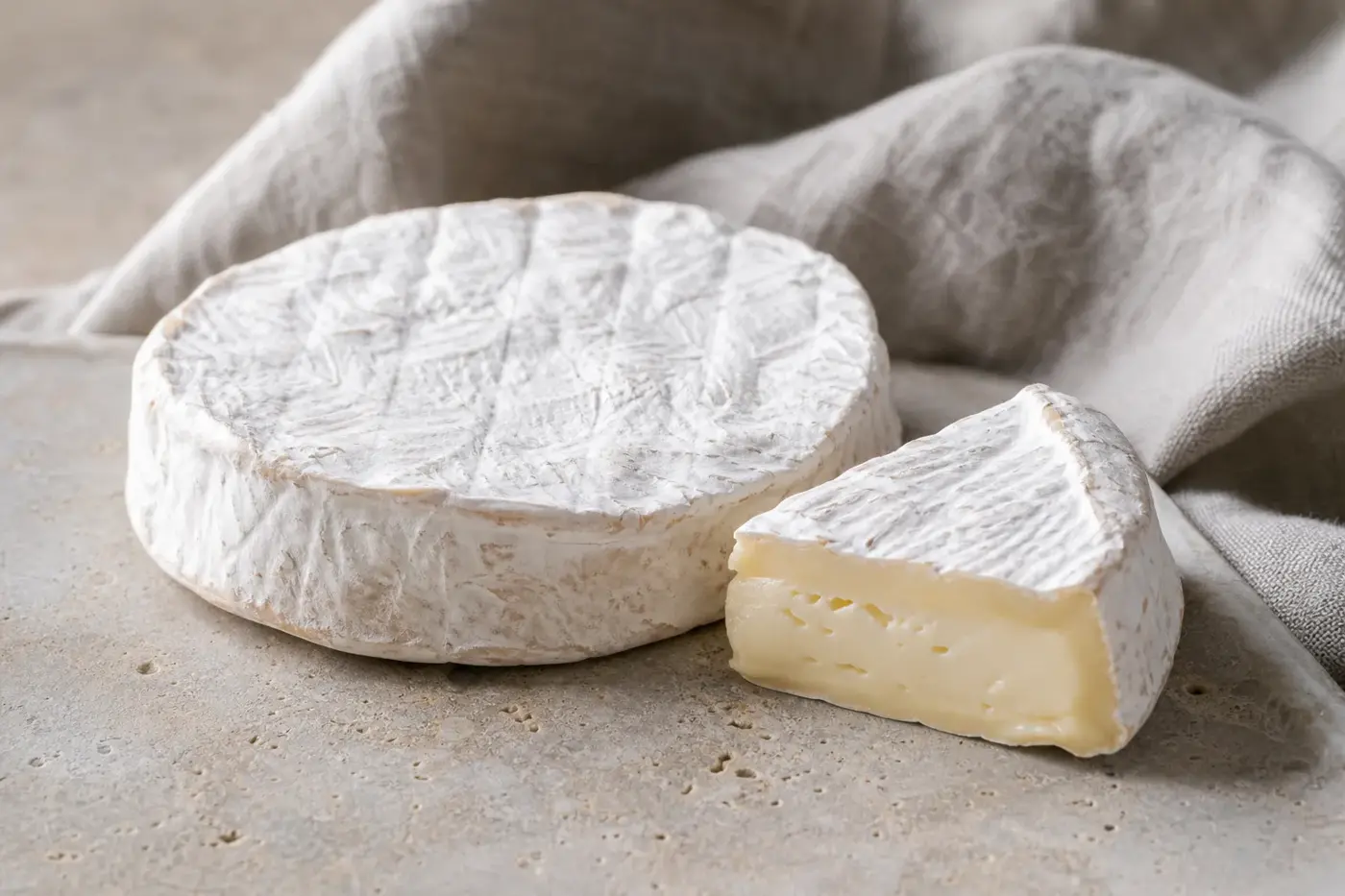
Your knife slips through Chaource’s fluffy white rind, then meets a small surprise: two textures in one slice.
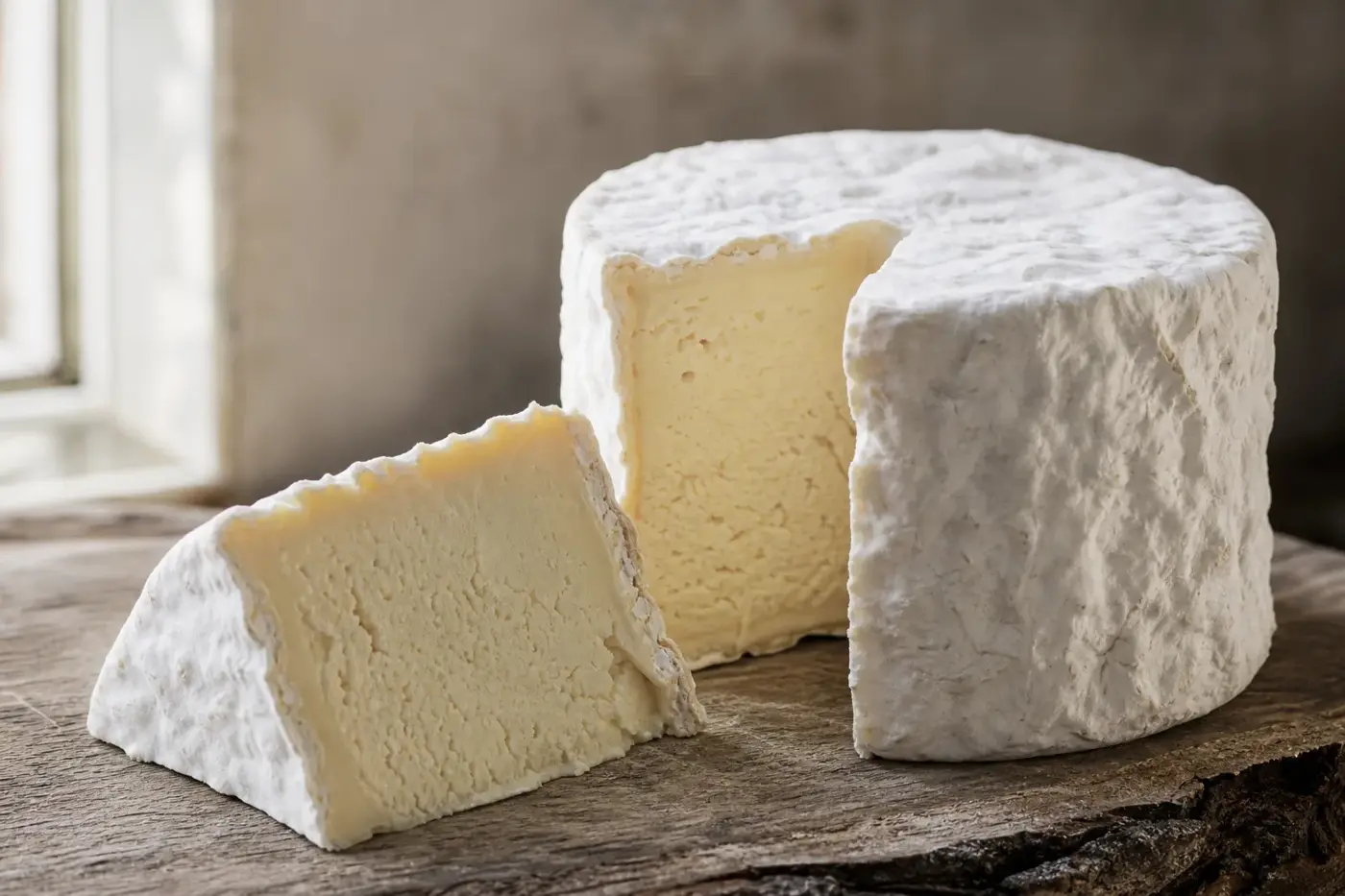
Your knife slips through Chaource’s fluffy white rind, then meets a small surprise: two textures in one slice. A softening cream line surrounds a pale heart that can stay fine-textured and crumbly. Named after a village in the Aube, this soft cow’s milk cheese gets its character from slow lactic setting and natural draining. Softness is only half the pleasure. [1,5,6]
Chaource at a glance
| What you want to know | The detail |
|---|---|
| Name to look for | Chaource [1,4] |
| Authority and register ID | EU PDO; register ID: unconfirmed. GB register: Chaource [1,4] |
| Protection, November 2026 | EU PDO; GB PDO, registered [1,4] |
| Its legally defined home | Parts of Aube and Yonne, France [2] |
| Milk | Whole cow’s milk; treatment: unconfirmed [2] |
| What sets the curd | Animal rennet [2] |
| Rind | White bloomy rind, predominantly Penicillium candidum [2] |
| Minimum ageing | 14 days from rennet addition [2] |
| Fat and dry matter | At least 48% fat in dry matter; at least 40% dry matter in the whole cheese [2] |
| Principal allergen | Milk [2] |
| UK pregnancy guidance | NHS advice on white-rind soft cheese, November 2026 [7] |
Come to the meeting of Champagne and Burgundy
Picture clay-rich country, rather than a wine label. INAO places Chaource village in Champagne Humide, a natural region that brings its surroundings into sharper focus. The village sits at the centre of a production area crossing Aube and Yonne, where Champagne meets Burgundy. Milk production, cheesemaking and maturation must all happen within this designated area. [1,5,10]
Grass and local feed belong in the scene, too. The producers’ syndicate describes a farming system in which both matter to the designation, with authorised farms, dairies and affineurs working inside the area. An affineur is the person or business responsible for maturing cheese. The name on your wrapper connects all that work, from supplying milk to making the cheese and seeing it through maturation. [10]
Read the history behind the name
Chaource’s French appellation d’origine recognition, usually shortened to AOC, dates to 1970, according to INAO. Defra’s register records its original EU registration as 21 June 1996 and its entry into the GB scheme as 31 December 2020 at 23:00. On French packaging, you may see AOP. It means the same category as PDO: protected designation of origin. [1,4]
Those letters govern more than geography. The approved specification sets the cheese’s composition, formats and production method; the EU approved a non-minor amendment in 2013. Makers work within that shared framework, though individual cheeses can still mature differently. For the distinction between a legally protected name and a general cheese style, visit protected names explained. [2,3]
Small cylinders with time on their side
Chaource comes as a tall cylinder with flat faces, in two recognised sizes. The small format weighs 250 to 380 g; the large weighs 450 to 700 g. Their mould diameters are 85 to 90 mm and 110 to 115 mm respectively. Those are measurements of the moulds, not the finished cheeses. [2]
The patience begins with the milk. In lactic coagulation, acid produced by starter bacteria takes a leading role in setting it. Chaource also uses animal rennet, the enzyme preparation that helps milk form a curd. Setting alone takes at least 12 hours. [2]
The curd then drains naturally in moulds, with turning, before the surface is dry-salted. Minimum ageing runs from rennet addition and includes at least eight days at 8 to 14 °C, excluding the initial drying stage. Each stage has its place in the timetable. [2]
The syndicate connects this unhurried rhythm to the farm household, where cheesemaking fitted around other daily work. Milk was left to set, then the curd drained slowly; its account describes drainage lasting two days. Time and gravity, rather than forceful handling, shape the method. Remember that as you taste: Chaource is a lactic cheese with a bloomy rind, not merely a cheese with an excellent white coat. [5]
Follow the cream line to the heart
A cut face lets you see maturation at work. INAO describes a fine, firm paste at 14 days, with a creamy layer gradually developing beneath the rind as it ages. Follow that layer inwards and the softer perimeter gives way to a fine-textured, firmer heart. That familiar chalkier centre tells you something useful: different parts of one cheese can be at different stages of softening. [1]
Cream and fresh mushroom lead the syndicate’s tasting description, sometimes joined by hazelnut and a small touch of salt. INAO adds woodland notes, with aromas becoming more pronounced as the cheese ages. Use those descriptions as a starting point, then let texture help you choose. Ask whether the cheese has a distinct, firmer centre or a softer paste, and pick the stage you enjoy. [1,6]
Give the milk label a proper look
Look for the milk treatment on the cheese you are buying. On a French label, lait cru means raw milk and lait pasteurisé means pasteurised milk. If the wording leaves you guessing, ask the seller to identify the treatment. Neither the cheese’s name, a farm picture nor a soft-looking centre tells you how its milk was treated. [7,8]
Keep the label for the storage instructions and date that apply to your particular cheese. For more on the processes, read raw milk, thermised and pasteurised cheese. At the counter, ask three separate questions: who made it, how the milk was treated and how far the cheese has matured. Each answer tells you something different.
Jot those details down if you would like to find a similar cheese again. Your future self may need more to go on than the affectionate but hopelessly vague “that lovely Chaource”. Buying for a particular day? Ask for the maker’s description of the current batch.
Choose the cheese for your meal
Tell your cheesemonger when you plan to serve Chaource and whether you prefer a distinct centre or a more yielding paste. That gives them something more useful than a request for perfect ripeness. If there is a cut cheese, ask to see its cross-section. For a whole one, request an assessment rather than repeatedly pressing it through the wrapping.
Choose an amount that suits your plans and will be straightforward to keep well. At home, the UK NHS advises keeping your fridge at 5 °C or below, following package instructions and using opened food within two days unless the packaging says otherwise. Keep raw foods separate from ready-to-eat cheese and observe its use-by date. [8]
Follow your own country’s official guidance where you live. Keep any remaining cheese covered as its packaging directs. For broader storage questions, turn to how to store cheese at home. [8]
Serve a little and explore the contrast
Put out a small portion first and leave the rest refrigerated. Let that portion lose its refrigerator chill while you prepare bread and plates, rather than leaving the whole cheese out through a long meal. The UK NHS says ready-to-eat foods should be eaten within four hours of leaving the fridge. Preparation and display time count towards that limit, not just time at the table. [8,9]
Cut a wedge that includes both rind and centre. Taste a small piece on its own, then compare the firmer heart with the softer edge before reaching for bread or a drink. You need no formal tasting kit to notice the difference. Include the rind if you wish, while respecting your guests’ preferences and the food safety guidance below.
Make room for bread, fruit and a glass
Start with plain bread, offering sliced pear or apple separately. Taste the cheese first, then add a little fruit and see whether you enjoy the extra sweetness. Simple accompaniments leave room for the cream and mushroom character described by the syndicate, rather than crowding each mouthful with stronger flavours. Separate servings let everyone find their own balance. [6]
If you are an adult of legal drinking age and choose alcohol, try a small serving of brut Champagne or a dry white wine. Neither comes with a regional obligation. An alcohol-free sparkling apple drink or sparkling water is equally welcome at your table.
People who are pregnant, driving, taking medicines that interact with alcohol, or recovering from alcohol dependence should not drink. Consult the NHS alcohol advice for the UK. Choose a drink that lets you enjoy the cheese, rather than following a conventional pairing for its own sake.
Take the comparison one step at a time: bread, then fruit, then your chosen drink. Keep that first plain piece of cheese as your reference. A successful pairing is one you enjoy with this meal. If something hides the qualities you liked in the cheese, leave it aside.
Get to know Chaource beyond the Brie comparison
Brie offers a useful starting point: it, too, belongs to the white-rind, mould-ripened soft cheese category identified by the NHS. But give Chaource’s taller cylinder and its contrast between edge and centre their own attention. Expecting miniature Brie can mean overlooking the character of the cheese on your plate. The separate Brie guide explores that cheese’s wider family. [1,7]
Langres offers another comparison, with a washed rind where Chaource has a white bloomy rind. With any of these cheeses, ask about the milk treatment and maturity of the particular examples on offer. The name starts the conversation. What you learn about the cheese at the counter helps you make your choice. [1,7]
Give the last piece somewhere to go
A suitable remaining piece can go into a familiar dish, such as a baked potato or vegetable gratin. A specific meal is a more useful plan than an unspecified future cheeseboard. Keep the original label and decide how to use the cheese within its stated storage instructions and date. [7,8]
If you are cooking for someone following UK pregnancy guidance, the NHS instruction is to cook the cheese until steaming hot throughout. Discard cheese past its use-by date. If a recall notice applies, follow it instead of cooking the cheese. [7,8]
This page summarises published guidance from the official sources it cites. It is not medical advice. Guidance differs between countries and changes over time, so check the current source for where you live, and ask your doctor, midwife, pharmacist or dietitian about your own circumstances.
Pregnancy and higher risk: find the guidance you need
UK NHS pregnancy guidance says pasteurised and unpasteurised mould-ripened soft cheeses with a white coating must be thoroughly cooked. It permits cheese cooked until steaming hot, including soft cheese. For Chaource, that white-rind soft-cheese category matters alongside the milk statement. Do not choose by milk treatment alone; consult the linked NHS guidance for its current wording. [7]
Pasteurisation is not the whole story. The US CDC also notes that soft cheeses can become contaminated during cheesemaking after the milk has been pasteurised. [11]
According to the NHS, newborn babies, people with weakened immunity and older people face a greater risk of serious listeriosis, with risk increasing with age. If you are in one of these groups, consult the current NHS advice on avoiding listeriosis and ask your healthcare professional about your circumstances. For an explanation of the underlying issue and links to further official advice, see listeria and cheese safety. The guidance here is dated November 2026. [8]
Find your next cheeseboard discovery
- How to Tell Cheese Styles Apart: Milk, Rind, Texture and Method: get to know what that white rind and lactic centre tell you.
- Cheese and Wine Pairing: The Complete Guide: explore the principles behind trying other drinks alongside cheese.
Questions people ask
Where does Chaource come from?
Chaource takes its name from a village in the Aube, France. Its designated production area crosses parts of Aube and Yonne, where Champagne meets Burgundy.
What does Chaource taste like?
The producers’ syndicate describes flavours of cream and fresh mushroom, sometimes with hazelnut and a little salt. INAO also describes woodland notes and says the aromas become more pronounced with age.
Is Chaource suitable for vegetarians?
Chaource is made with animal rennet. The rennet helps the milk form a curd.
Is Chaource made with pasteurised milk?
The milk treatments permitted by the current specification have not been verified on the page. On a French label, lait cru means raw milk and lait pasteurisé means pasteurised milk.
Can I eat Chaource during pregnancy?
The UK NHS advises that mould ripened soft cheeses with a white coating must be thoroughly cooked, whether made with pasteurised or unpasteurised milk. It permits cheese cooked until steaming hot, including soft cheese. Check the current NHS pregnancy guidance for its wording.
Sources
- Institut national de l’origine et de la qualité, Chaource, current online product record, accessed November 2026. Official description, geographical context, recognition year and maturation profile.
- French Ministry of Agriculture, Cahier des charges de l’appellation d’origine « Chaource », approved by Décret n° 2013-1063 du 25 novembre 2013, Bulletin officiel n° 48-2013, 2013. Official specification linked from INAO’s current record.
- European Commission, Commission Implementing Regulation (EU) No 1142/2013 of 12 November 2013 approving a non-minor amendment to the specification for a name entered in the register of protected designations of origin and protected geographical indications [Chaource (PDO)], Official Journal L 303, 14 November 2013.
- Department for Environment, Food & Rural Affairs, Chaource, GB protected food names register, published 4 January 2021, current entry accessed November 2026.
- Syndicat du Chaource, Le Chaource, undated online account, accessed November 2026. An industry organisation’s account of the cheese’s formats, production rhythm and history.
- Syndicat du Chaource, Le Chaource: fromage d’Appellation d’Origine Protégée, undated homepage, accessed November 2026. The syndicate’s published sensory description.
- NHS, Foods to avoid in pregnancy, current online guidance, accessed November 2026.
- NHS, Listeriosis, reviewed 10 November 2023, current online guidance accessed November 2026.
- Food Standards Agency, Food safety in a heatwave: advice for consumers, current GOV.UK guidance, accessed November 2026. The retrieved official extract supplies the two-hour advice for hotter-than-usual weather.
- Syndicat du Chaource, L’AOP, undated online account, accessed November 2026. The syndicate’s explanation of the production area and farming requirements.
- US Centers for Disease Control and Prevention, Listeria Outbreak Linked to Soft Cheese, update of 26 August 2026. Cited for its explanation of contamination after pasteurisation.
This desk-researched article brings together the official specification, register records, attributed industry descriptions and national consumer guidance, with serving suggestions identified as editorial recommendations.
Last checked: November 2026
Last checked November 2026.
The editors suggest you read next