Buffalo Milk Cheese
Tear open a white ball of buffalo mozzarella and notice that yielding centre.
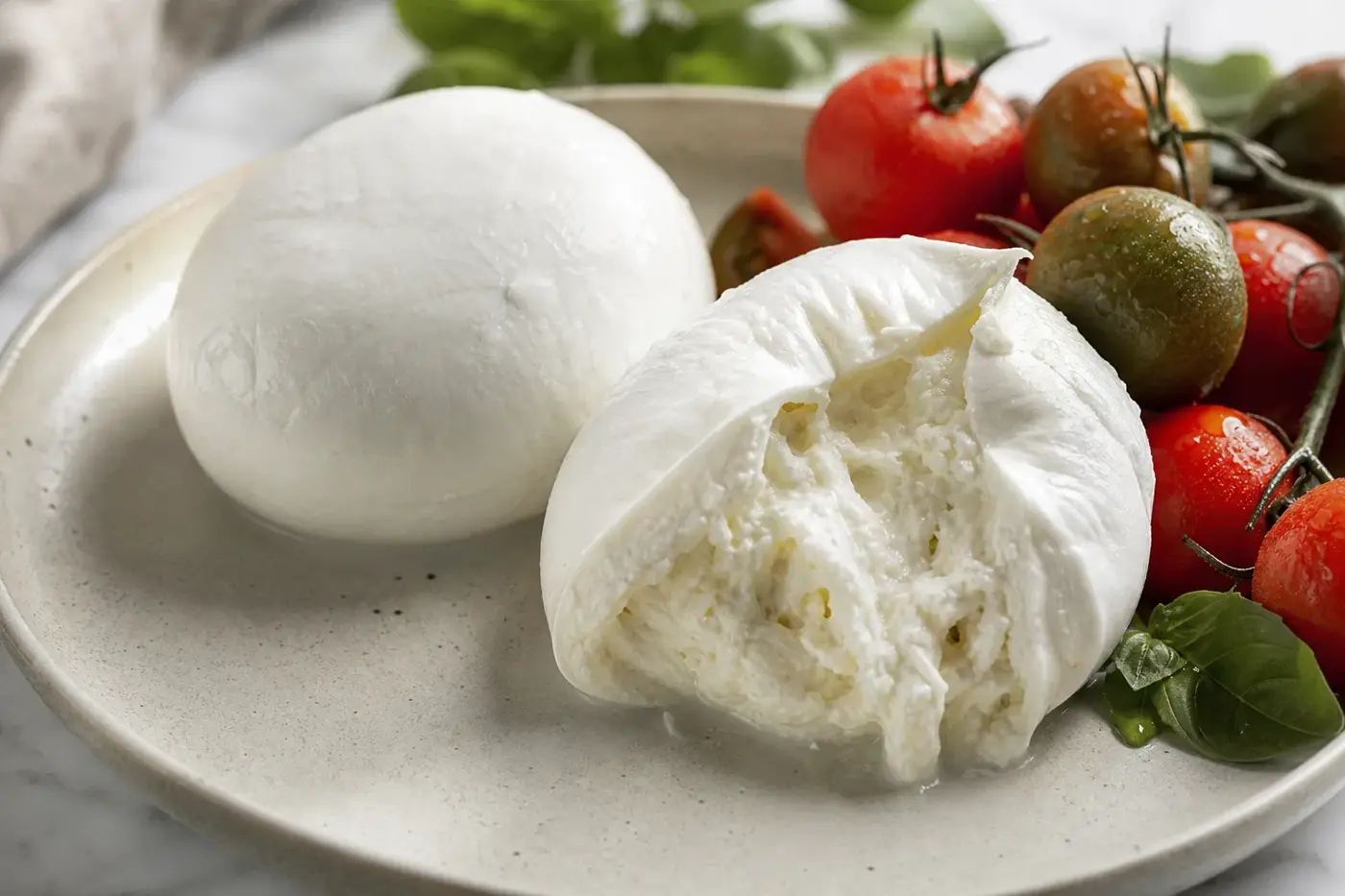
Tear open a white ball of buffalo mozzarella and notice that yielding centre. Lovely, certainly, but it is only the start. In Bergamo, Quattro Portoni takes the same milk towards blue veins, washed rinds, soft bloomy rinds and hard, cooked-curd cheeses.[8] Rich in fat and protein, milk from domesticated water buffalo, not American bison, can become anything from a yielding fresh cheese to a firm cheese matured for slicing.[1][2]
Start with what you fancy eating
Perhaps you want something moist to tear over vegetables. Perhaps a block that holds its shape in a sauce, or a matured cheese for slicing. Buffalo milk has all those possibilities up its sleeve.
“Buffalo milk cheese” tells you the milk source, not a single recipe, texture or place. The animal is the water buffalo, Bubalus bubalis. FAO distinguishes river buffalo, particularly important for dairying, from swamp buffalo, traditionally associated more closely with draught work.[1]
That milk can become fresh, stretched, pressed, surface-ripened or blue-veined cheese. Documented examples include fresh mozzarella, paneer, washed-rind cheeses and hard matured cheeses.[4][5][8] The species tells you where the cheesemaker starts; the method tells you much more about what lands on your plate.
Once you know what you fancy, check the particular product’s milk declaration, treatment and ingredients. “Buffalo” opens the conversation. It does not finish it.
Take your cheese shopping beyond Italy
Step away from the mozzarella counter and the map opens up. FAO identifies India and Pakistan as major buffalo milk producers and describes river buffalo milk as important in the Near East. Many animals in its account belong to small-scale, mixed farming systems.[1]
Paneer offers one route from that milk to your plate. The Canadian Dairy Commission describes it as a fresh cheese traditionally made with buffalo milk in Indian and Pakistani food cultures. Heat and acid form the curd, which is drained and pressed into a block.[5]
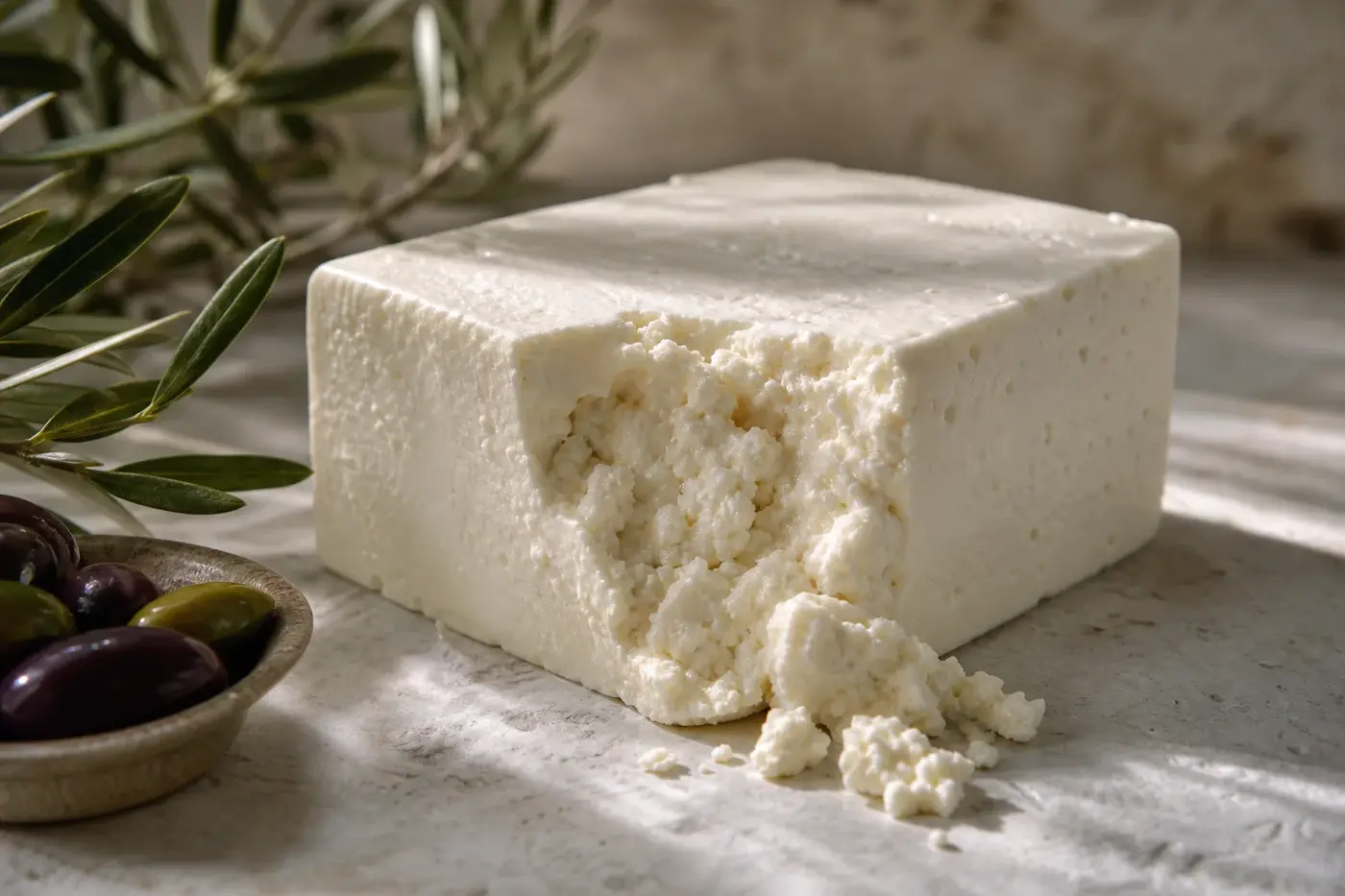
Italy’s stretched-curd mozzarella follows another path. FAO’s account of Mediterranean buffalo dairy traditions also records fresh and brined cheeses in Egypt, Iraq and neighbouring countries. Each has its own local tradition; mozzarella need not be the measuring stick.[4]
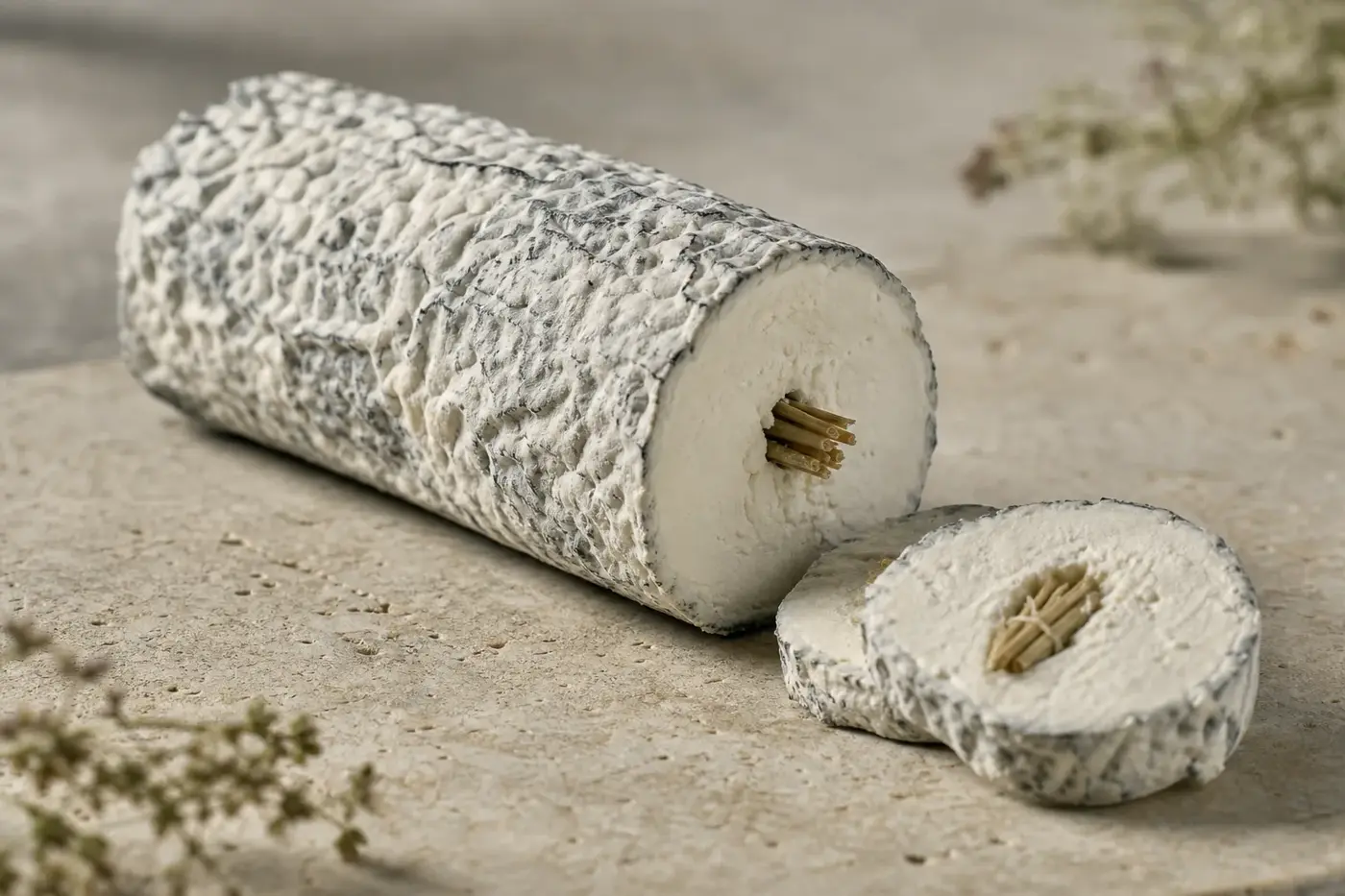
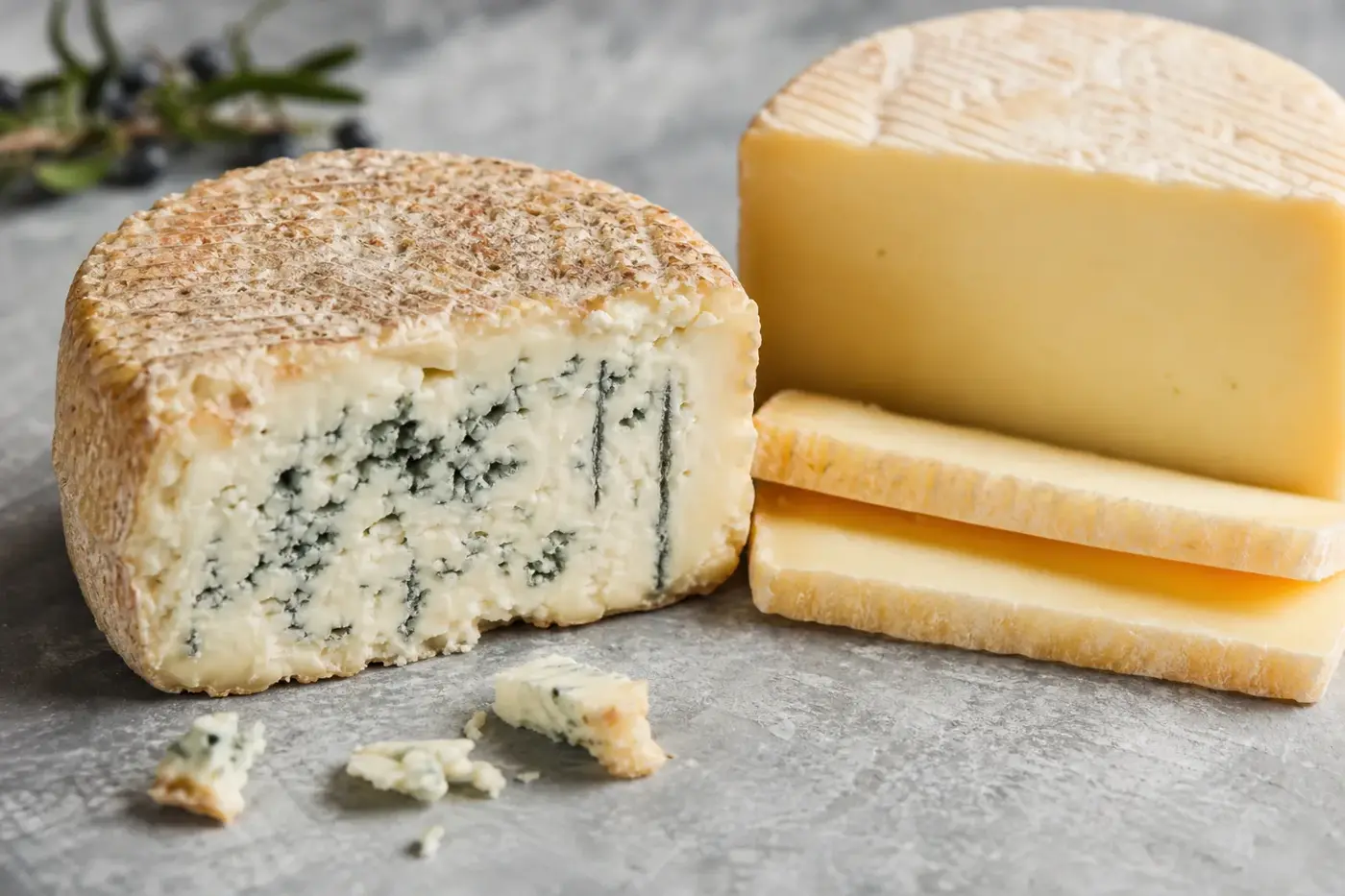
Back in Bergamo, Quattro Portoni’s contemporary range includes blue veins, washed rinds, bloomy rinds and hard, cooked curds. Think of buffalo milk as the beginning of a whole cheese counter, not just one familiar white ball.[8] Your shopping list may need a little more room.
See what rich milk brings to the vat
Buffalo milk’s richness matters before you ever take a bite. A comparative dairy science study examined milk from six species using composition analysis, coagulation measurements and laboratory cheesemaking. In that experiment, buffalo and sheep milk produced higher fresh-cheese yields than cow and goat milk, associated with their greater fat and protein contents.[2]
Protein builds the curd, the solid network that forms as milk coagulates. Fat becomes incorporated within it, while draining removes whey, the liquid fraction. More recoverable milk solids can mean more cheese from a given quantity of milk, while retained water also adds weight to fresh cheese.[2][3]
There is no universal milk-to-cheese calculation, though. A separate study of individual buffalo milk samples found that stage of lactation was an important source of variation in cheese yield and nutrient recovery. The cheese being made and manufacturing losses also affect a dairy’s result, so experimental figures are not a fixed conversion formula.[3]
Nor must rich milk become soft cheese. A wet stretched curd and a drained, cooked curd can begin with milk from the same species and finish with quite different textures. Composition supplies the material; acidification, moisture removal and ripening help shape what you eat.[2][4][8]
Follow the flavour from sweet to assertive
Quattro Portoni describes sweetness as a characteristic of its buffalo milk. Yet its cheeses range from short-aged soft varieties to blue-veined cheese and firmer products the producer describes as intense and persistent. There is no single “buffalo cheese flavour” for you to pin down.[8]
For fresh cheese, look for the maker’s notes on milk flavour, acidity, moisture and elasticity. For matured cheese, seek details of rind development, firmness and the strength of the finish. These particulars help you choose between restrained and assertive far better than “buffalo” alone.
Season gets a say, too. A published study analysed ten batches of buffalo mozzarella produced in summer and winter and reported seasonal differences in composition and colour.[9] Even within one named style, milk and production season can change the cheese.[9]
If you want to explore the milk itself, compare cheeses of similar ages made by similar methods. Put fresh buffalo mozzarella beside a long-matured cow’s milk cheese and you mostly discover differences in cheesemaking. Two fresh mozzarellas give you a more useful starting point for noticing differences associated with milk.
Get to know Mozzarella di Bufala Campana
Look closely at the name on the pack. Mozzarella di Bufala Campana is a particular Italian cheese with a protected designation of origin, or PDO, in the EU and Great Britain. The Great Britain register records it as registered, with original EU registration dated 21 June 1996 and entry into the UK scheme on 31 December 2020.[6][7]
That exact name connects the cheese to a defined Italian production area and specified production requirements. The European Commission’s account describes buffalo milk, calf rennet, stretching, shaping, salting and packaging at the place of production. DOP is the Italian abbreviation corresponding to PDO.[6]
“Buffalo mozzarella” on a pack describes the milk and cheese style. The full protected name identifies the product covered by the designation in the relevant jurisdiction. Protection in one jurisdiction does not establish the name’s legal position everywhere else.[6][7]
For the broader style, explore mozzarella. The guide to protected names explains what an origin designation tells you beyond the milk species.
Leave room for paneer, ripened cheese and ricotta
Paneer gives you a compact block rather than mozzarella’s stretched structure. Its heat-and-acid process, followed by draining and pressing, offers a different route for buffalo milk when you want pieces of fresh cheese. The Canadian Dairy Commission describes that process.[5]
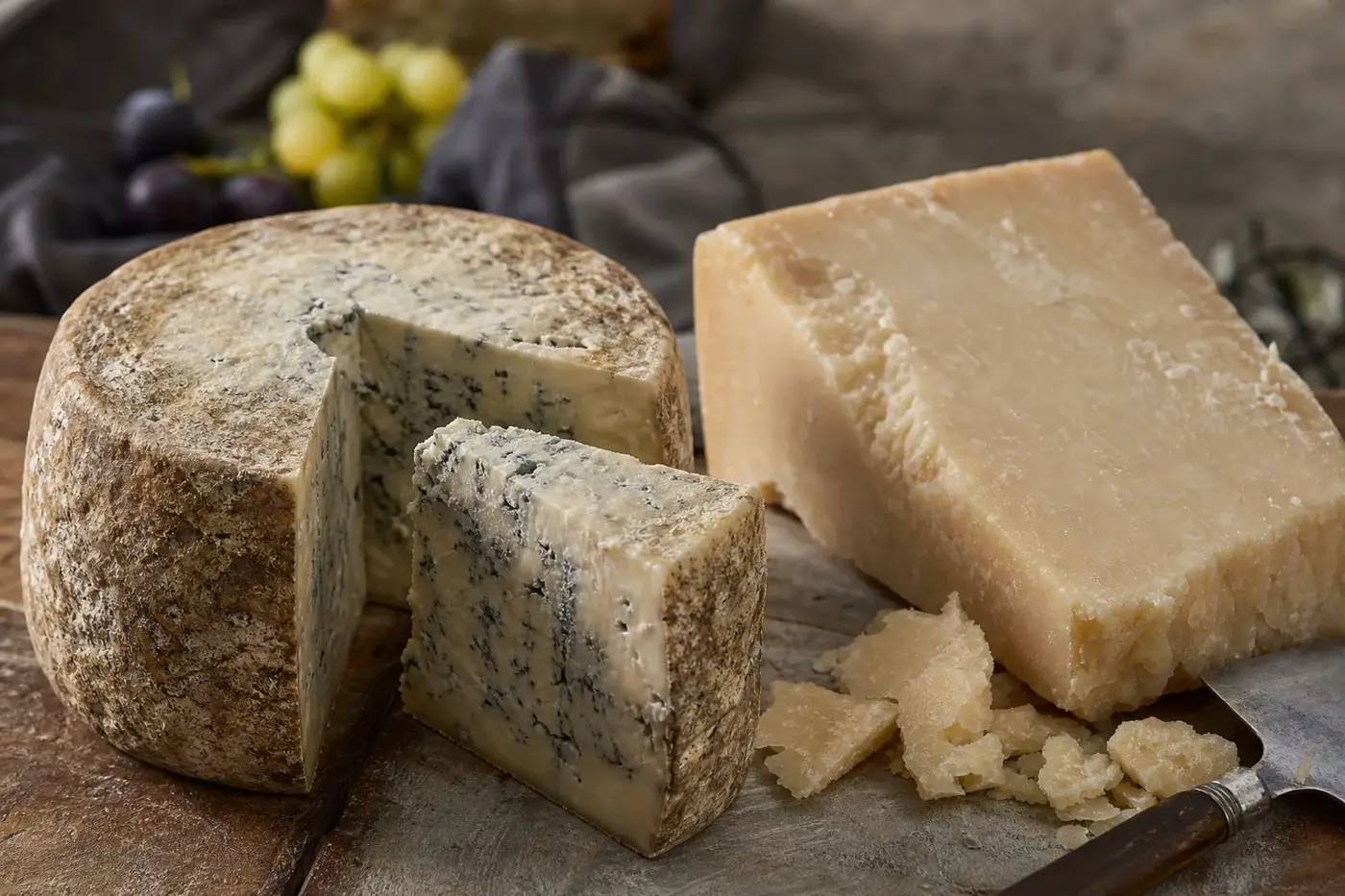
If matured cheese is more your thing, Quattro Portoni offers plenty to explore. It lists buffalo caciocavallo as an aged stretched-curd cheese, Casatica as a short-aged bloomy-rind cheese, Quadrello as washed-rind, and Blu di bufala as blue-veined. The producer describes its Granbù as a hard cheese made with cooked curd.[8]
Ricotta takes a different path again. Traditional whey ricotta begins with the whey left after another cheese has been made. Heat and acid recover proteins from that liquid, rather than setting the casein-rich curd directly from a vat of milk.[4]
Buffalo whey can therefore become ricotta alongside buffalo milk cheese. Read the individual product’s ingredients: whey tells a different production story from whole milk. For a closer look at the stages, visit how cheese is made.
Buffalo or cow’s milk mozzarella? Look past the picture
Both mozzarellas belong to the stretched-curd tradition. Acidification prepares the curd for working in hot water, then stretching and shaping create its characteristic structure. The European Commission describes this sequence for Mozzarella di Bufala Campana.[6]
Buffalo milk brings a greater concentration of fat and protein than cow’s milk. But moisture, milk standardisation and manufacture also shape the finished mozzarella. If you want to compare fat content or texture, compare the actual products, not just the species names.[2][4]
A buffalo on the pack cannot do the milk declaration’s job. Where an ingredient list is supplied, look for buffalo milk, cow’s milk or a mixture. If the species is unclear, ask the seller or manufacturer before choosing.
Great Britain’s food information rules require milk used as an allergenic ingredient to be identified and emphasised in the ingredients list. Some straightforward cheeses qualify for an ingredients-list exemption. A food name that clearly identifies the allergen can satisfy the relevant requirement.[10][11]
The Food Standards Agency expressly includes buffalo in its guidance on the milk allergen category. Allergen and species declarations answer different questions: “milk” identifies the allergen. It does not, by itself, establish that a cheese contains only buffalo milk.[10]
Follow five routes from milk to cheese
Want to know how a buffalo cheese might behave at the table? Start with how it is made. These are the main routes documented in the sources.[4][5][6][8]
| Making route | What happens along the way | Cheeses to look for |
|---|---|---|
| Stretched curd | Acidified curd is worked in hot water and shaped | Mozzarella; buffalo caciocavallo |
| Heat-and-acid coagulation | Heat and acid separate curd, which is drained and pressed | Paneer |
| Surface or internal ripening | A rind or blue-veined interior develops during maturation | Washed-rind, bloomy-rind and blue buffalo cheeses |
| Cooked-curd maturation | Curds are cooked and the formed cheese matures | Hard buffalo cheese |
| Whey recovery | Heat and acid recover proteins from cheesemaking whey | Traditional buffalo whey ricotta |
Stretching names a method, not a milk species. Maturation covers plenty of ground, too: the documented buffalo range includes soft rind-ripened cheeses and hard cooked-curd cheeses with quite different structures.[6][8]
Choose with care, then let the cheese shine
Choose for the occasion, then check the milk, treatment, coagulant and storage instructions. For fresh mozzarella, consider whether you want cheese packed in liquid. For matured cheese, ask about age, rind treatment and the maker’s description of its texture.
Let the particular cheese dictate storage, rather than borrowing instructions from another buffalo cheese. Food Standards Agency guidance for England, Wales and Northern Ireland recommends a home fridge between 0 and 5 °C. It also says to follow packaging instructions for chilled food.[12]
Keep the opening instructions with the cheese. A use-by date concerns safety; a best-before date concerns quality. GOV.UK guidance warns that incorrect storage can make food unsafe before its use-by date, so that printed date depends on keeping the food under the stated conditions.[13]
At the table, start simply. Try fresh mozzarella with bread and tomatoes, paneer with vegetables and spices, or firm matured cheese in thin slices alongside pear or crackers. Give the cheese room to register before bringing in stronger accompaniments.
Water or unsweetened tea makes an uncomplicated alcohol-free starting point. Choose drinks and other accompaniments around the individual cheese’s acidity, salt and strength. One pairing need not do duty for every buffalo cheese.
Serve modest portions and replenish as needed. In November 2026, FSA guidance for England, Wales and Northern Ireland says to keep chilled food out of the fridge for the shortest possible time during preparation and for no more than four hours. Follow any stricter product instruction: the maximum is a limit, not a serving target.[12]
Ask these practical questions before you choose
Understand the difference between lactose intolerance and milk allergy
Buffalo milk is dairy milk, and “buffalo” does not mean lactose-free. The NHS distinguishes lactose intolerance, a difficulty digesting milk sugar, from milk allergy. Check the particular cheese’s information: neither species nor maturity alone settles its lactose content.[1][14]
Cambridge University Hospitals explains that buffalo milk proteins resemble those in cow’s milk. Buffalo, goat and sheep milk cheeses are not safe substitutes for someone with cow’s milk allergy; lactose free dairy products are not suitable for milk allergy either. Discuss alternatives and any dietary introduction with your allergy team, rather than testing a reaction at home.[15]
Choosing vegetarian cheese? Check the coagulant
The milk species cannot tell you whether a cheese is vegetarian. The European Commission describes calf rennet in Mozzarella di Bufala Campana production, while the Canadian Dairy Commission describes acid coagulation for paneer. Check the actual product’s vegetarian declaration and coagulant information.[5][6]
If another cheese’s label leaves you wondering, ask the maker. The guide to rennet explains animal, microbial and fermentation-produced coagulants.
During pregnancy, look at type and treatment
In November 2026, UK NHS guidance lists pasteurised mozzarella and ricotta among cheeses that can be eaten during pregnancy. It also lists pasteurised or unpasteurised hard cheeses, but specifies pasteurised milk for semi-hard cheeses.[16]
In November 2026, NHS guidance advises against soft cheeses made with unpasteurised milk, mould ripened soft cheeses with a white coating and soft blue cheeses unless cooked until steaming hot all the way through. Check the current NHS guidance for its full advice and exceptions. Ask your midwife about your circumstances.[16]
General information only, not medical advice: follow the official guidance where you live.
Questions people ask
How is buffalo mozzarella different from cow’s milk mozzarella?
Both are stretched curd cheeses, but buffalo milk has a greater concentration of fat and protein than cow’s milk. The finished cheese also depends on moisture, milk standardisation and manufacture, so compare the actual products for texture or fat content.
What does Mozzarella di Bufala Campana mean?
It is a particular Italian cheese with a protected designation of origin in the EU and Great Britain. The name connects it to a defined Italian production area and specified production requirements.
Is buffalo cheese vegetarian?
The milk species does not determine whether a cheese is vegetarian. The European Commission describes calf rennet in Mozzarella di Bufala Campana production, so check the product’s vegetarian declaration and coagulant information.
Can someone with a cow’s milk allergy eat buffalo cheese?
Cambridge University Hospitals says buffalo milk proteins resemble those in cow’s milk and that buffalo cheese is not a safe substitute for someone with cow’s milk allergy. It advises discussing alternatives and dietary introduction with your allergy team rather than testing a reaction at home.
Can I eat buffalo cheese during pregnancy?
NHS guidance lists pasteurised mozzarella and ricotta among cheeses that can be eaten during pregnancy. It advises against soft cheeses made with unpasteurised milk, mould ripened soft cheeses with a white coating and soft blue cheeses unless cooked until steaming hot all the way through. Check the current NHS guidance for its full advice and exceptions, and ask your midwife about your circumstances.
Sources
- Food and Agriculture Organization of the United Nations. Buffaloes, Gateway to Dairy Production and Products, undated live reference page, accessed November 2026.
- Journal of Dairy Science. Composition and aptitude for cheese-making of milk from cows, buffaloes, goats, sheep, dromedary camels, and donkeys, 2022, abstract retrieved November 2026.
- Journal of Dairy Science. Phenotypic analysis of cheese yields and nutrient recoveries in the curd of buffalo milk, as measured with an individual model cheese-manufacturing process, 2015, abstract retrieved November 2026.
- Food and Agriculture Organization of the United Nations. Buffalo Production and Research, REU Technical Series 67, 2005, chapters IX and X.
- Canadian Dairy Commission. Paneer, undated live reference page, accessed November 2026. Used for its description of production and food tradition, not Canadian legal requirements.
- European Commission, Directorate-General for Agriculture and Rural Development. Mozzarella di Bufala Campana PDO, undated explanatory page, accessed November 2026.
- Department for Environment, Food & Rural Affairs. Mozzarella di Bufala Campana, Great Britain protected food names register, published 2021, live record checked November 2026.
- Quattro Portoni. Buffalo cheese, undated producer catalogue, accessed November 2026. Commercial primary source for its own products and descriptions.
- Journal of Dairy Research. Seasonal variations of Italian Mediterranean Buffalo (Bubalus bubalis) Mozzarella cheese quality, volume 83, issue 4, 2016, pages 476 to 478. Abstract accessed through PubMed.
- Food Standards Agency. Food allergen labelling and information requirements technical guidance, updated 3 November 2026, particularly paragraphs 40 to 42. Applies to England, Northern Ireland and Wales.
- UK legislation. Regulation (EU) No 1169/2011, assimilated Great Britain text, Article 21, current text accessed November 2026.
- Food Standards Agency. How to chill, freeze and defrost food safely, published 2017, live guidance accessed November 2026. Applies to England, Northern Ireland and Wales.
- GOV.UK. Understanding food labelling: Best before and use-by dates, live guidance accessed November 2026.
- NHS. Lactose intolerance, live guidance accessed November 2026.
- Cambridge University Hospitals NHS Foundation Trust. Milk allergy, patient information, live version accessed November 2026.
- NHS. Foods to avoid in pregnancy, live guidance accessed November 2026.
This desk-researched article brings together official dairy references, published experimental research, register information, attributed producer descriptions and UK public health guidance.
Last checked: November 2026
Last checked November 2026.
The editors suggest you read next
Cow's Milk Cheese
Picture a drum of Blue Stilton, its curd settling under its own weight, without a press.