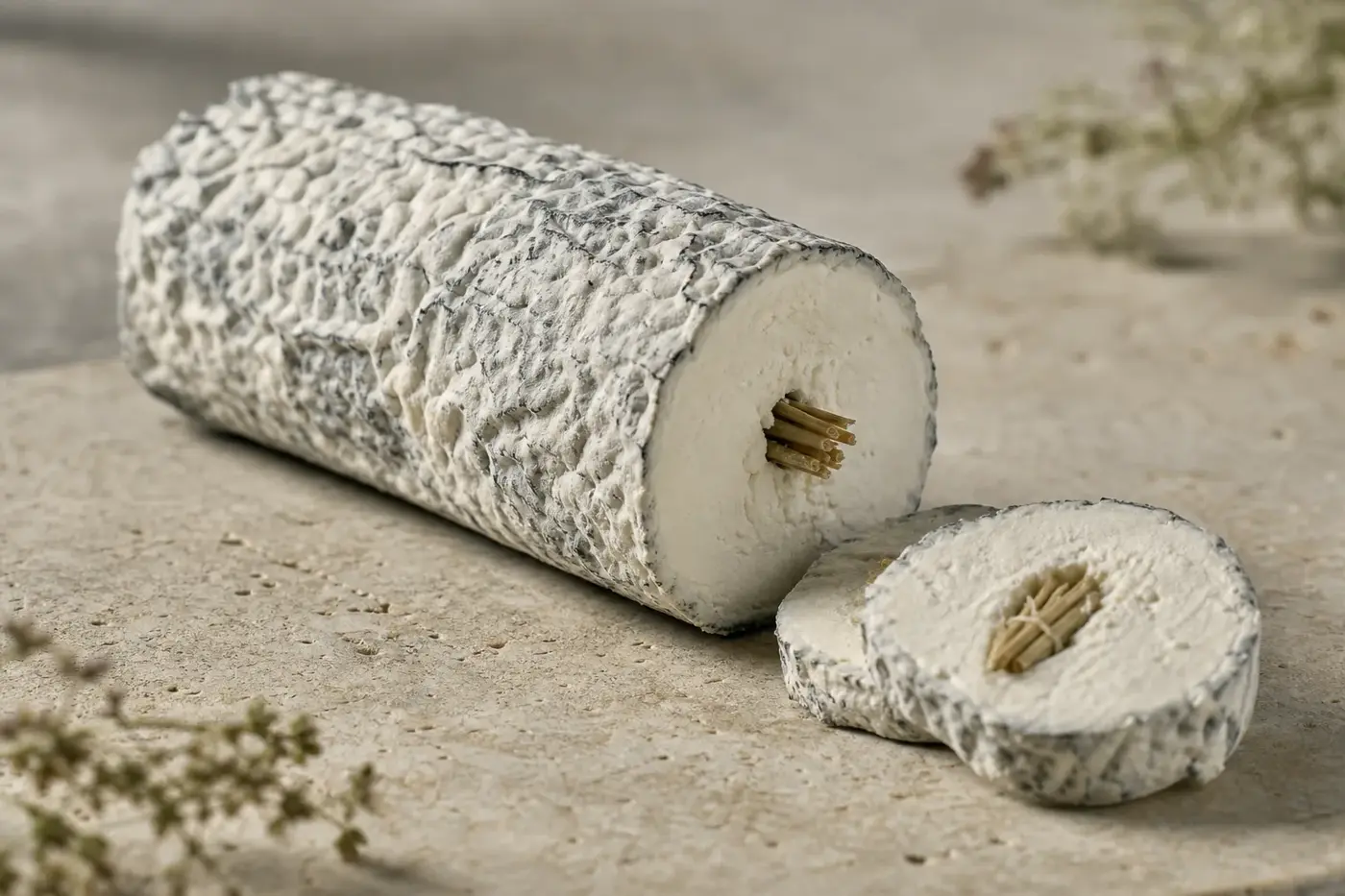
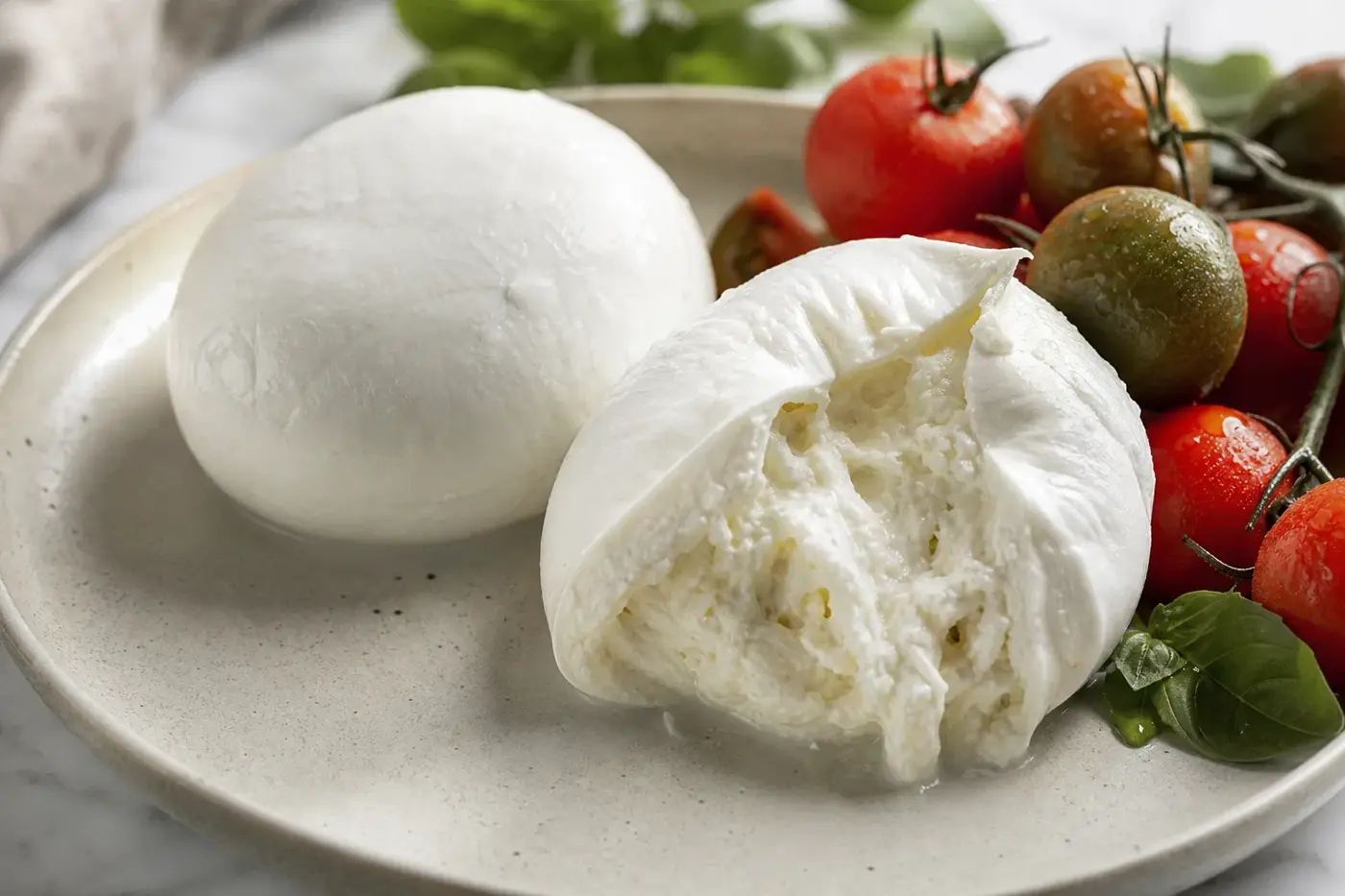
Sheep's Milk Cheese
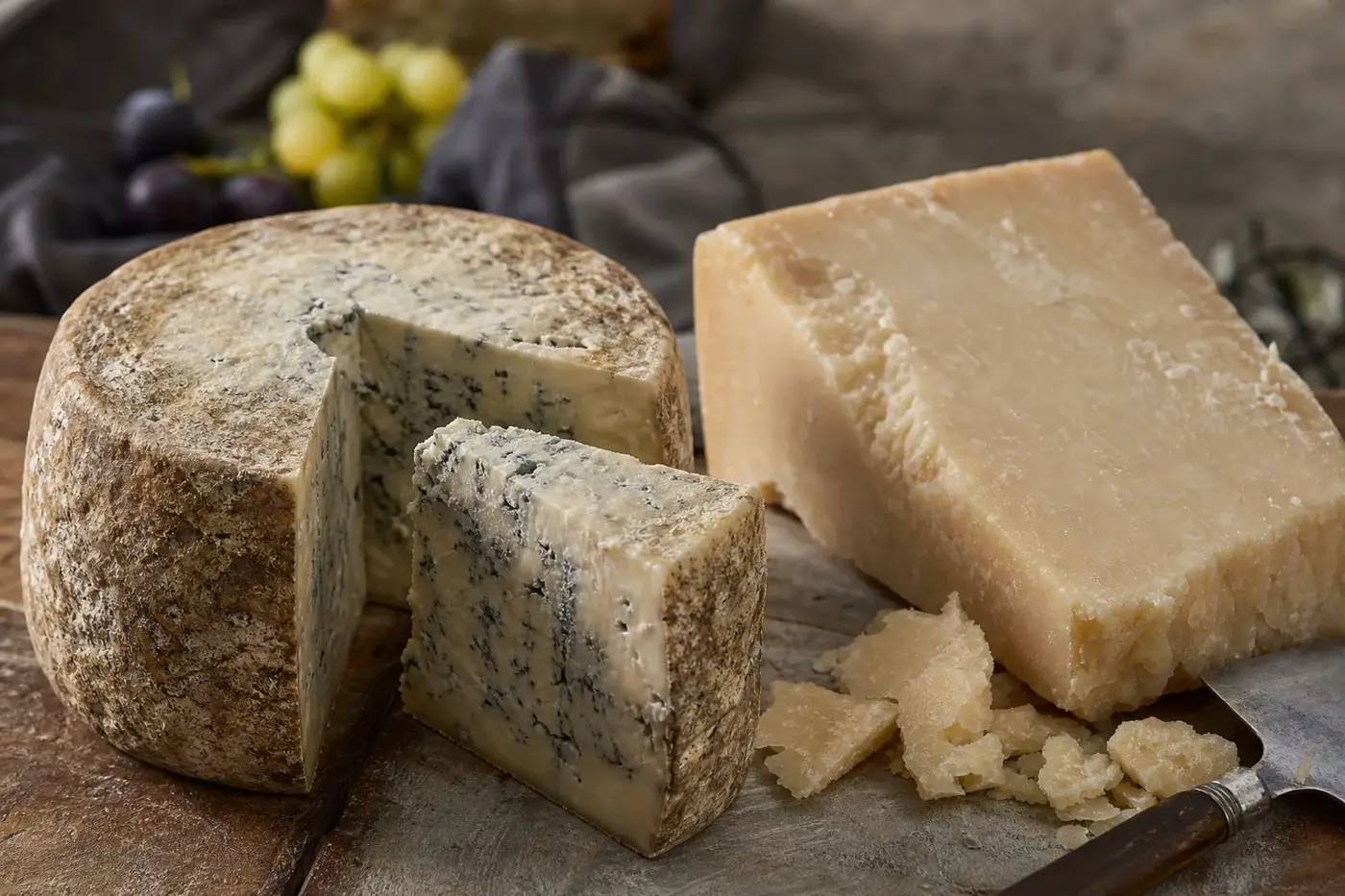
Look at the light blue marbling running through Brighton Ewe's white interior.
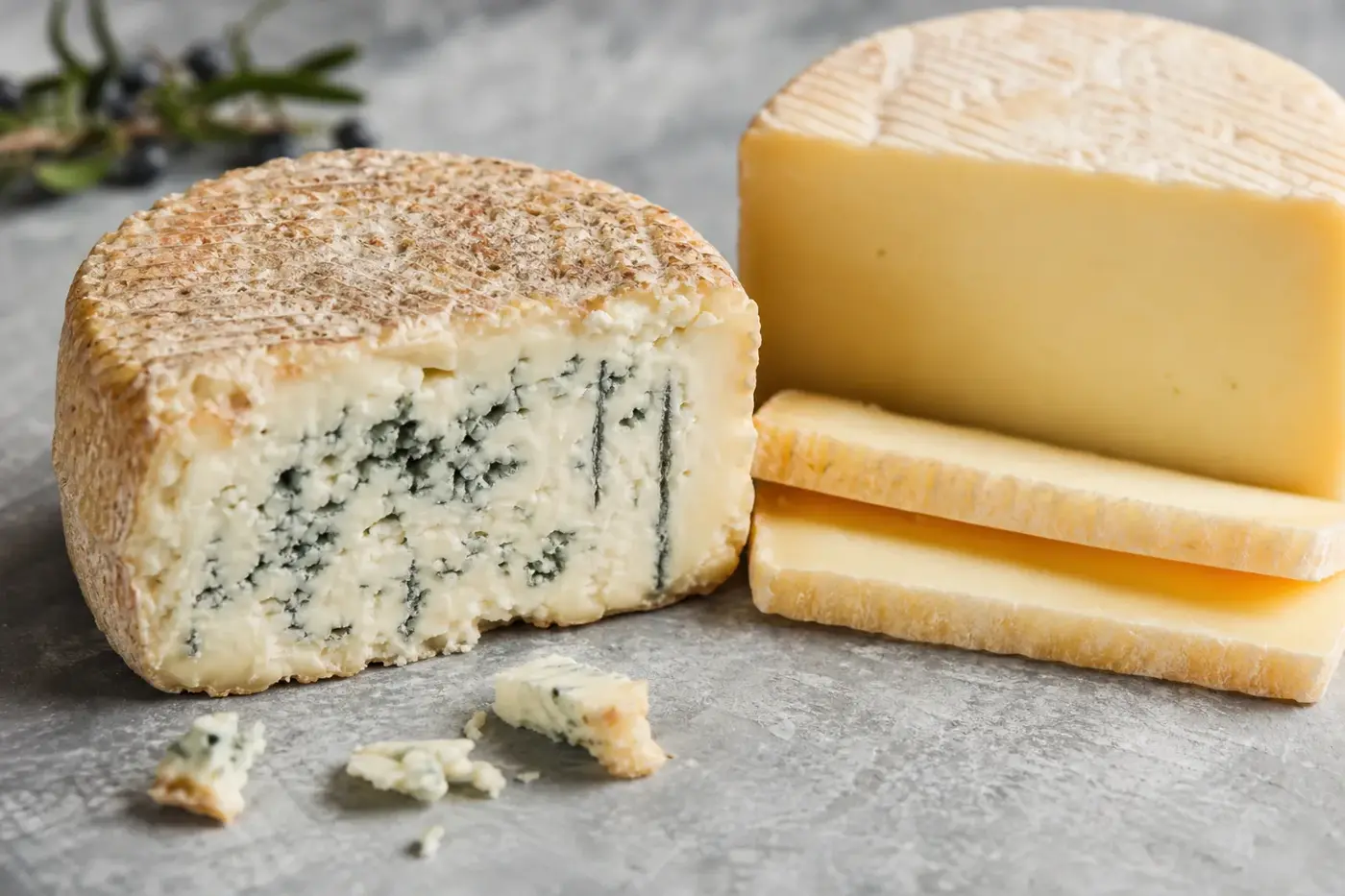
Look at the light blue marbling running through Brighton Ewe's white interior. Now slice into smooth, firm Duddleswell. Both come from High Weald Dairy, and both begin with ewe's milk.[4] You could hardly accuse them of dressing alike.
That milk gives cheesemakers plenty of possibilities. It generally contains more fat, protein and total solids than cow's milk, yet can become fresh, firm or blue-veined cheese.[1,2] Sheep's milk cheese is made wholly or principally from ewe's milk; the recipe or protected specification decides whether other milks can join it.
Inside the milk: a cheesemaker's generous starting point
The useful word here is solids: everything in milk apart from water. Fat contributes to composition and mouthfeel, while protein, particularly casein, supplies much of the structure that holds cheese together. Sheep's milk generally brings more of both than cow's milk.[1,2]
One published comparison of milk from five animal species measured 6.82% fat, 5.15% protein and 18.05% total solids in its sheep's milk samples. Those figures describe the study's Kajli sheep milk, not every ewe's milk you might encounter. The researchers analysed six samples per species, each in triplicate, and identified breed, feeding, season and stage of lactation among the influences on composition.[1]
For the person making your cheese, that concentration matters. Fat and casein are important contributors to cheese yield, and the University of Wisconsin's Center for Dairy Research explains that sheep's milk gives higher cheese yields than cow's milk. Its account also shows how changes in milk composition change the result.[2]
There is no single answer to how many litres make a kilogram of cheese. Moisture and the making process matter too. A cheesemaker can retain moisture for softness or remove more whey, the liquid separated from the curd, for a firmer cheese.[2,3]
So concentrated milk does not promise you one particular texture. The work in the dairy shapes what eventually reaches your plate.
Follow the curd from fresh and fluffy to mature blue
The journey from fresh cheese to mature blue depends on much more than the animal. Cultures, the microorganisms added or encouraged during making, develop acidity and contribute to ripening. Rennet, a preparation containing milk-clotting enzymes, helps form the curd.[3]
Cutting, draining, pressing, salting and maturation all shape what follows.[3] High Weald Dairy makes the process tangible in its published account: starter culture and vegetarian rennet go in, the curd is cut, and whey is removed. Different cheeses receive different treatment during maturation, giving results from soft and fluffy to firm and blue-veined.[3]
When you spot “sheep's milk” on a label, keep reading. Style, age, milk treatment and maker all deserve a moment of your attention. A mild young cheese and a strongly flavoured mature one can share their milk species without giving you remotely the same mouthful.
Follow the broader journey in how cheese is made. When choosing, begin with a texture and flavour you already enjoy. Then find out what ewe's milk brings to that style.
Find the texture that makes you reach for another slice
These descriptions are useful guides, not separate boxes into which every cheese must fit. “Soft” tells you about texture, “blue” about a kind of ripening, and “brined” about an important part of the treatment. Your cheese may belong under more than one heading.
| Style or example | What to look forward to | A good place to start |
|---|---|---|
| Fresh and soft cheeses | High Weald describes Sussex Slipcote as soft and fluffy.[3] | Read the producer's description and milk declaration. |
| Blue, Brighton Ewe | Its maker describes a white interior, light blue marbling and a soft, creamy texture.[4] | Taste it beside a firm sheep's milk cheese. |
| Soft blue, Roquefort | The NHS lists Roquefort among soft blue-veined cheeses.[5] | Read the guidance for your circumstances before serving. |
| Brined, Feta | The NHS lists pasteurised Feta among its soft cheese examples.[5] | Read the pack's milk declaration and storage instructions. |
| Firm, Manchego | Its specification describes compact paste with low elasticity, becoming granular when very well aged.[6] | Try different ages and notice the changing texture. |
| Hard, Duddleswell | Its maker describes a smooth, firm, Cheddar-style sheep's milk cheese.[4] | Try a slice before choosing how to cook with it. |
Freshness, softness and intensity tell you different things. Begin with the bite: does the cheese spread, crumble, bend or fracture? Then notice acidity, salt and how long the finish lasts.
That gives you more to go on than immediately awarding a strength score. Give the cheese a moment before asking it to take an exam.
Meet Manchego, Roquefort, Pecorino Romano and Feta
Manchego: a taste rooted in La Mancha
The exact registered name is Queso Manchego, and its connection to place is precise. The specification linked from the Great Britain register requires milk exclusively from Manchega-breed sheep in the defined production area of La Mancha. That area covers specified municipalities in Albacete, Ciudad Real, Cuenca and Toledo; production and maturation both take place within it.[6]
On your plate, expect a firm, compact interior with slight acidity, according to the specification. As maturation advances, the character becomes more piquant. Very well-aged cheese can turn granular.[6]
If you need vegetarian cheese, read the particular product's information rather than relying on its name. Coagulation may use natural rennet or other legally authorised coagulating enzymes.[6]
Roquefort: get to know this protected soft blue
Roquefort takes ewe's milk into soft, blue-veined territory.[16] Its texture matters beyond the tasting board: the NHS classification of Roquefort as a soft blue cheese is relevant when you apply the UK's pregnancy guidance.[5]
The Great Britain register records Roquefort as a registered protected designation of origin, or PDO.[7] Within that jurisdiction, it is a protected name governed by a product specification, not a general description for blue cheese. The register's linked page does not supply its production specification.
Pecorino Romano: leave room for aromatic intensity
Pecorino Romano's consortium describes a cheese made exclusively with sheep's milk. Its flavour is aromatic, intense and piquant. As it matures, that character changes.[8]
When choosing it for cooking, look for the complete name Pecorino Romano, registered as a PDO in Great Britain.[9] Simply “pecorino” on a label does not promise you an interchangeable cheese. Let the full name guide your choice.
Feta: sheep's milk, with room for goat's milk too
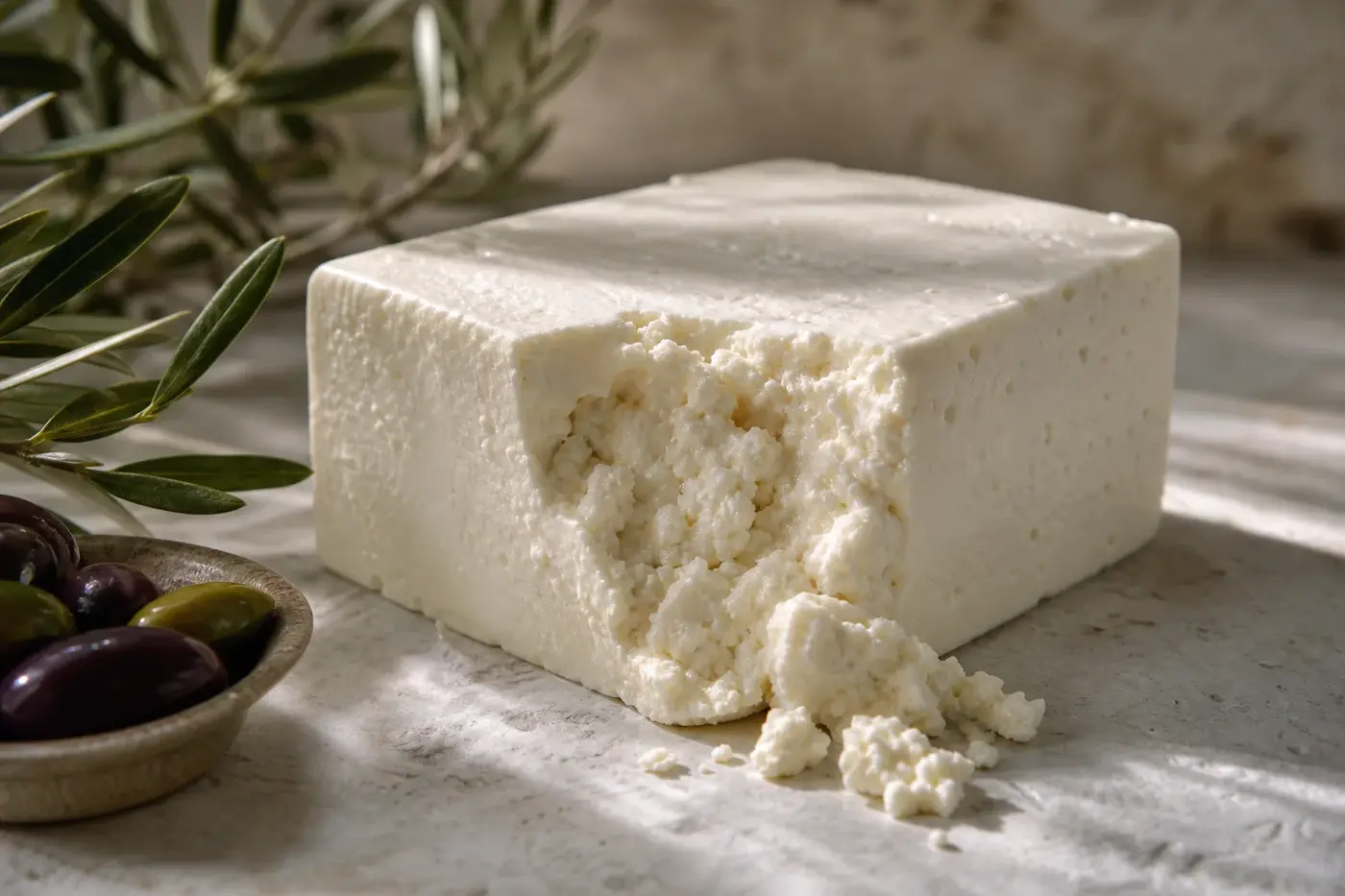
Feta can be made entirely from sheep's milk. It can also contain a mixture of at least 70% sheep's milk and no more than 30% goat's milk.[15] Before deciding how to use yours, read the particular product's pasteurisation and storage information.
| Detail worth looking for | What you need to know |
|---|---|
| Queso Manchego milk and breed | Exclusively Manchega sheep's milk.[6] |
| Roquefort milk, breed and production requirements | Consult the production specification for these requirements. |
| Pecorino Romano specification requirements | Consult the operative official specification before publication. |
| Feta permitted sheep's and goat's milk proportions | Entirely sheep's milk, or at least 70% sheep's milk and no more than 30% goat's milk.[15] |
Get better acquainted with Feta. For the distinction between a production rule and protection in a particular market, explore protected cheese names.
Put two British sheep's milk cheeses side by side
At High Weald Dairy, Duddleswell gives you a smooth, firm starting point. The dairy describes this hard, Cheddar-style sheep's milk cheese as slightly sweet and nutty. Its maturation is around five months.[4]
Beside it, try Brighton Ewe, the producer's sheep's milk blue. Light marbling runs through a white interior, and High Weald's published notes describe a softer texture and slightly nutty flavour.[4] Here you have two interpretations from one dairy, rather than a single national style.
High Weald states that it uses pasteurised milk and vegetarian rennet for its cheeses.[3] Treat that declaration as product information. For pregnancy decisions, follow the official guidance for the cheese's style too.
Let the finished cheese tell you its story
To explore sheep's, cow's and goat's milk cheeses, give them a fair comparison. Taste fresh with fresh, blue with blue, and pressed cheeses at reasonably similar maturities. Otherwise, moisture and ripening may account for more of the difference than the animal does.
Sheep's milk generally starts with more total solids than cow's milk, but composition varies and overlaps. A research review reports substantial differences within each species associated with breed, feeding, climate and stage of lactation.[10]
Even “richer” deserves a closer look. Do you mean more fat, a softer mouthfeel, more concentrated flavour or simply a generous impression on your palate? Each describes something different, rather than one universal quality.
Starting milk composition cannot establish that every sheep's milk cheese tastes richer or stronger than every cow's or goat's milk cheese.[2,10] When you are choosing something to eat, “firm and sliceable” often helps more than a claim about the animal. Follow the description of the finished cheese.
Build your board, then see what belongs in the kitchen
Start with what you want the cheese to do. For a board, choose contrasting textures rather than several cheeses with only ewe's milk in common. Duddleswell and Brighton Ewe give you a documented comparison of firm and blue.[4]
For a simple tasting, try each cheese alone before adding accompaniments. Notice texture first, then acidity, salt, aroma and finish. Keep the packaging or counter label beside your notes, so finding a favourite again does not become detective work.
These serving suggestions are starting points, not reported tasting results:
- Fresh or spreadable cheese: serve with plain bread, cucumber and tender herbs. Let the accompaniments stay in the background.
- Firm slicing cheese: try a plain bite, then one with apple or pear. Notice whether the fruit changes your perception of acidity.
- Blue cheese: taste it with pear or a little dried fruit, then return to the cheese alone.
- A piquant mature cheese: try a small shaving before adding it to a dish.
Water or unsweetened tea makes a straightforward alcohol-free accompaniment. If you want to compare cheeses, choose plain crackers rather than several flavours competing in every mouthful.
In the kitchen, think about function before milk species. For a salad, do you want distinct pieces or cheese that becomes part of the dressing? For pasta, choose between finely grating, shaving over the finished dish or incorporating into a sauce.
A filling brings another question: does the cheese need to hold its shape? Taste before adding more salt, and remember that substitutions change a dish. Swap a moist cheese for a dry one and you alter both flavour and the moisture it contributes.
Tell your cheesemonger what the recipe needs. You will have a more useful conversation than if you ask for just any sheep's milk cheese.
Give your cheese a suitable place in the fridge
Follow the particular cheese's storage instructions, including directions after opening. For England, Northern Ireland and Wales, the Food Standards Agency recommends a refrigerator between 0 and 5 °C, monitored with a fridge thermometer.[11]
Keep those instructions with the cheese when you rewrap it or transfer it to a covered container. For a cut piece, ask the maker or cheesemonger which wrapping suits it. Keep different cheeses separately identifiable.
Take out only the portion you intend to serve and leave the rest refrigerated. Follow the FSA's current guidance for England, Northern Ireland and Wales alongside the product's storage instructions.[11]
Dates matter, but they have different purposes. UK government guidance says a use-by date concerns safety, while a best-before date concerns quality. Discard cheese after its use-by date and follow its storage instructions before then.[12]
Expected blue marbling and unexpected mould need different consideration. Do not assume every growth belongs to the ripening process. Consult current official guidance for where you live and mould on cheese.
This page summarises published guidance from the official sources it cites. It is not medical advice. Guidance differs between countries and changes over time, so check the current source for where you live, and ask your doctor, midwife, pharmacist or dietitian about your own circumstances.
Find the guidance you need on lactose, allergy, pregnancy and rennet
Lactose and milk allergy: know the distinction
Changing the animal does not remove lactose. The NHS states that lactose occurs in sheep's, goat's and cow's milk, so do not choose sheep's milk cheese on that assumption. Discuss dietary exclusions with a GP or dietitian, as the NHS advises.[13]
Milk allergy requires different advice. Royal United Hospitals Bath NHS Foundation Trust's paediatric guidance says sheep's and goat's milks contain proteins similar to cow's milk and should also be excluded when managing cow's milk allergy.[14]
The same guidance states that lactose-free milk is unsuitable for treating milk allergy because the protein remains.[14] Follow your allergy team's advice rather than trying another animal's milk at home.
Pregnancy: look at the cheese's style and treatment
The NHS's UK pregnancy guidance, November 2026, distinguishes between cheese types and treatments.[5] Ewe's milk alone is not the deciding factor.
- Hard cheeses may be eaten whether made with pasteurised or unpasteurised milk.
- Pasteurised soft cheeses listed by the NHS include Feta.
- Soft mould ripened cheeses with a white coating and soft blue veined cheeses, including Roquefort, should be avoided unless cooked until steaming hot, whether made with pasteurised or unpasteurised milk.[5]
Consult the current NHS source when making your choice. Discuss your individual circumstances with your midwife or doctor.[5]
Vegetarian rennet: let the product declaration guide you
Look at the particular product, not simply the milk species. High Weald says it uses vegetarian rennet, while the Queso Manchego specification permits more than one category of coagulant.[3,6]
Neither milk species nor pasteurisation tells you whether the rennet is vegetarian. For a closer look at the terminology, turn to rennet explained.
Questions people ask
How does sheep's milk compare with cow's milk for cheesemaking?
Sheep's milk generally contains more fat, protein and total solids than cow's milk. The University of Wisconsin's Center for Dairy Research explains that it gives higher cheese yields than cow's milk.
Is sheep's milk cheese suitable for vegetarians?
It depends on the cheese and the rennet used. High Weald Dairy says it uses vegetarian rennet, while Queso Manchego may use natural rennet or other authorised coagulating enzymes, so suitability must be checked on the particular product.
Is sheep's milk cheese suitable for someone with lactose intolerance or a cow's milk allergy?
The NHS states that lactose occurs in sheep's, goat's and cow's milk and advises discussing dietary exclusions with a GP or dietitian. Royal United Hospitals Bath NHS Foundation Trust's paediatric guidance says sheep's and goat's milks contain proteins similar to cow's milk and should also be excluded when managing cow's milk allergy. Check the NHS and Trust guidance and follow your allergy team's advice.
Can I eat sheep's milk cheese during pregnancy?
The NHS says hard cheeses may be eaten whether made with pasteurised or unpasteurised milk, and lists pasteurised Feta among its soft cheese examples. It advises avoiding soft blue veined cheeses, including Roquefort, unless cooked until steaming hot, whether made with pasteurised or unpasteurised milk. Check current NHS pregnancy guidance and discuss your circumstances with your midwife.
How should I store sheep's milk cheese?
Follow the cheese's storage instructions, including directions after opening. For England, Northern Ireland and Wales, the Food Standards Agency recommends a refrigerator between 0 and 5 °C, checked with a fridge thermometer.
Sources
- Asian-Australasian Journal of Animal Sciences. “Chemical Composition, Nitrogen Fractions and Amino Acids Profile of Milk from Different Animal Species”, volume 29, issue 7, 2016. Methods and Tables 1 and 2.
- University of Wisconsin Center for Dairy Research. Dairy Pipeline, volume 25, number 4, 2013. Discussion of milk composition, coagulation and sheep's milk cheese yield.
- High Weald Dairy. “Learn about our cheese-making process”, undated, retrieved November 2026. Producer account of making, milk treatment and vegetarian rennet.
- High Weald Dairy. “Duddleswell”, undated, retrieved November 2026. Product description and the page's Brighton Ewe description. Producer tasting notes are attributed in the article.
- NHS. “Foods to avoid in pregnancy”, current page retrieved November 2026. Section “Cheese, milk and other dairy”.
- Department for Environment, Food & Rural Affairs. “Queso Manchego”, Great Britain register entry, with linked English product specification, document filename Queso_Manchego_DOP_20.pdf, retrieved November 2026.
- Department for Environment, Food & Rural Affairs. “Roquefort”, Great Britain register entry, published 4 January 2021, retrieved November 2026.
- Consorzio per la Tutela del Formaggio Pecorino Romano. English homepage, undated, retrieved November 2026. Consortium statements on milk and flavour.
- Department for Environment, Food & Rural Affairs. “Pecorino Romano”, Great Britain register entry, published 4 January 2021, retrieved November 2026.
- Frontiers in Nutrition. “Composition, Structure, and Digestive Dynamics of Milk From Different Species, A Review”, volume 7, article 577759, 2020. Comparative composition section and Table 1.
- Food Standards Agency. “How to chill, freeze and defrost food safely”, published 18 December 2017, current text retrieved November 2026. Applies to England, Northern Ireland and Wales.
- UK government. “Understanding food labelling: Best before and use-by dates”, current text retrieved November 2026.
- NHS. “Lactose intolerance”, current text retrieved November 2026.
- Royal United Hospitals Bath NHS Foundation Trust. Milk Allergy guideline, document PAEDS-045, retrieved November 2026. Section “Other milks”.
This desk-researched article brings together published dairy research, the retrieved specification and register records, official health guidance and attributed producer descriptions.
Last checked: November 2026
Last checked November 2026.
The editors suggest you read next
Cow's Milk Cheese
Picture a drum of Blue Stilton, its curd settling under its own weight, without a press.