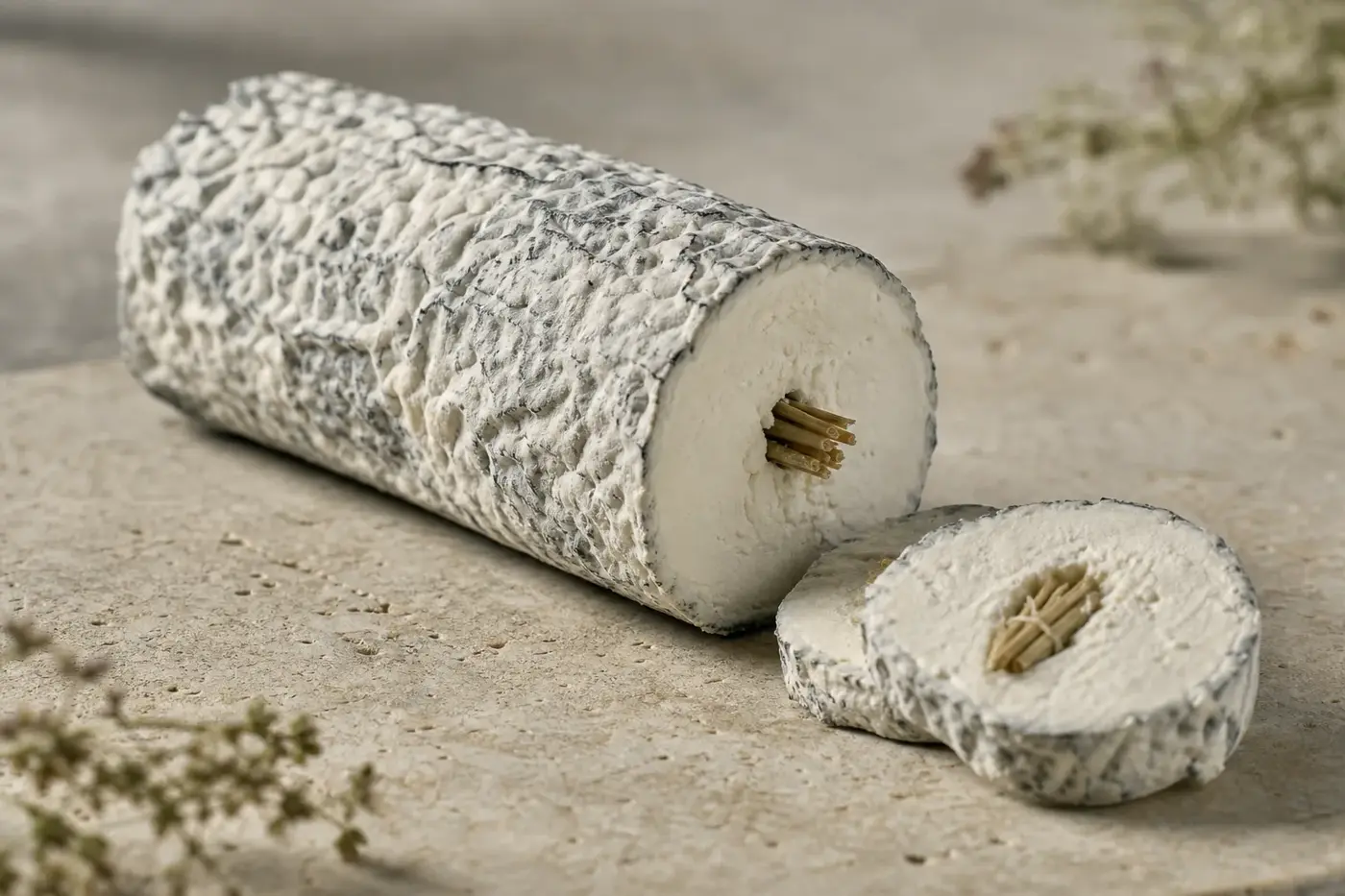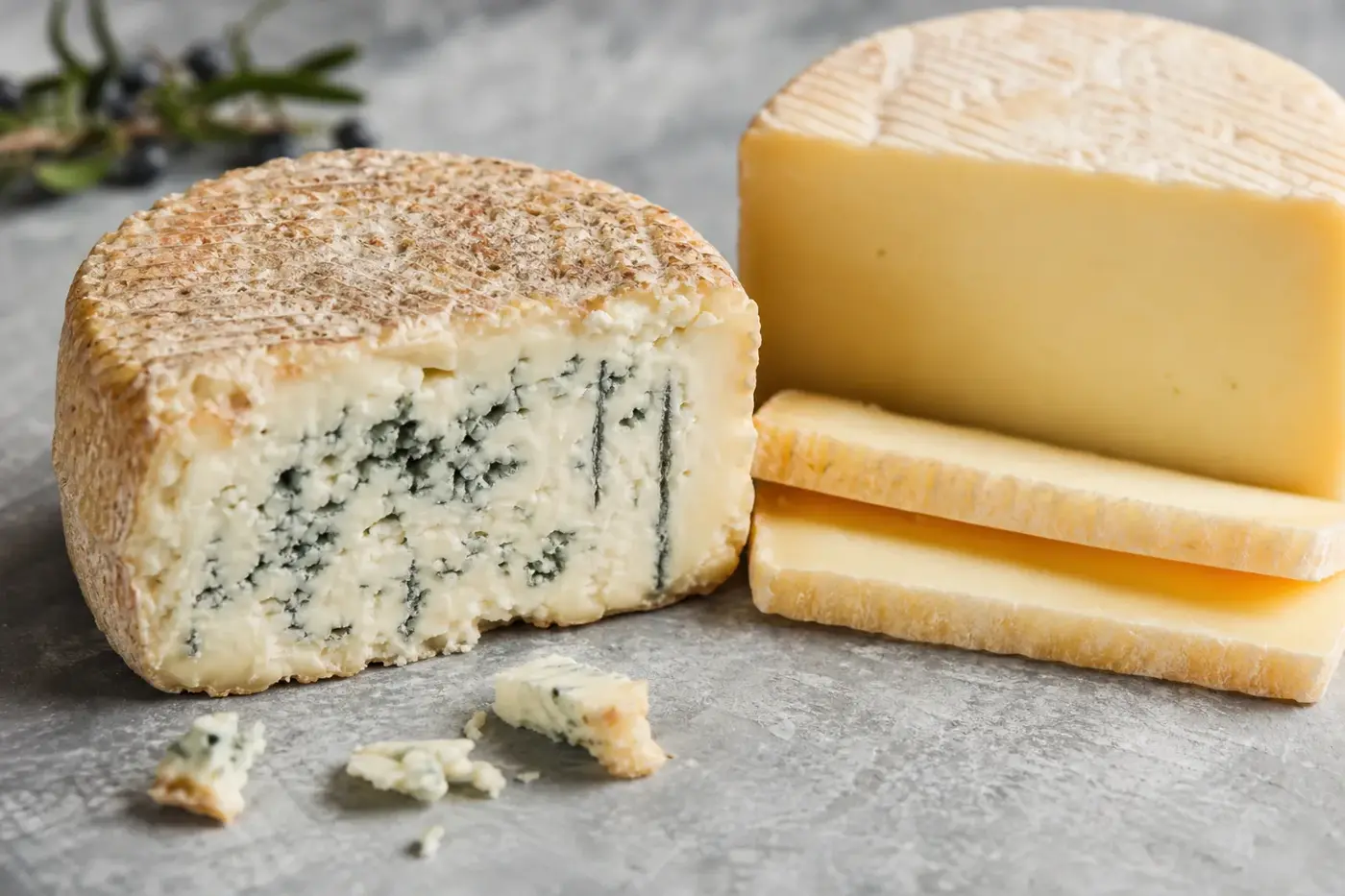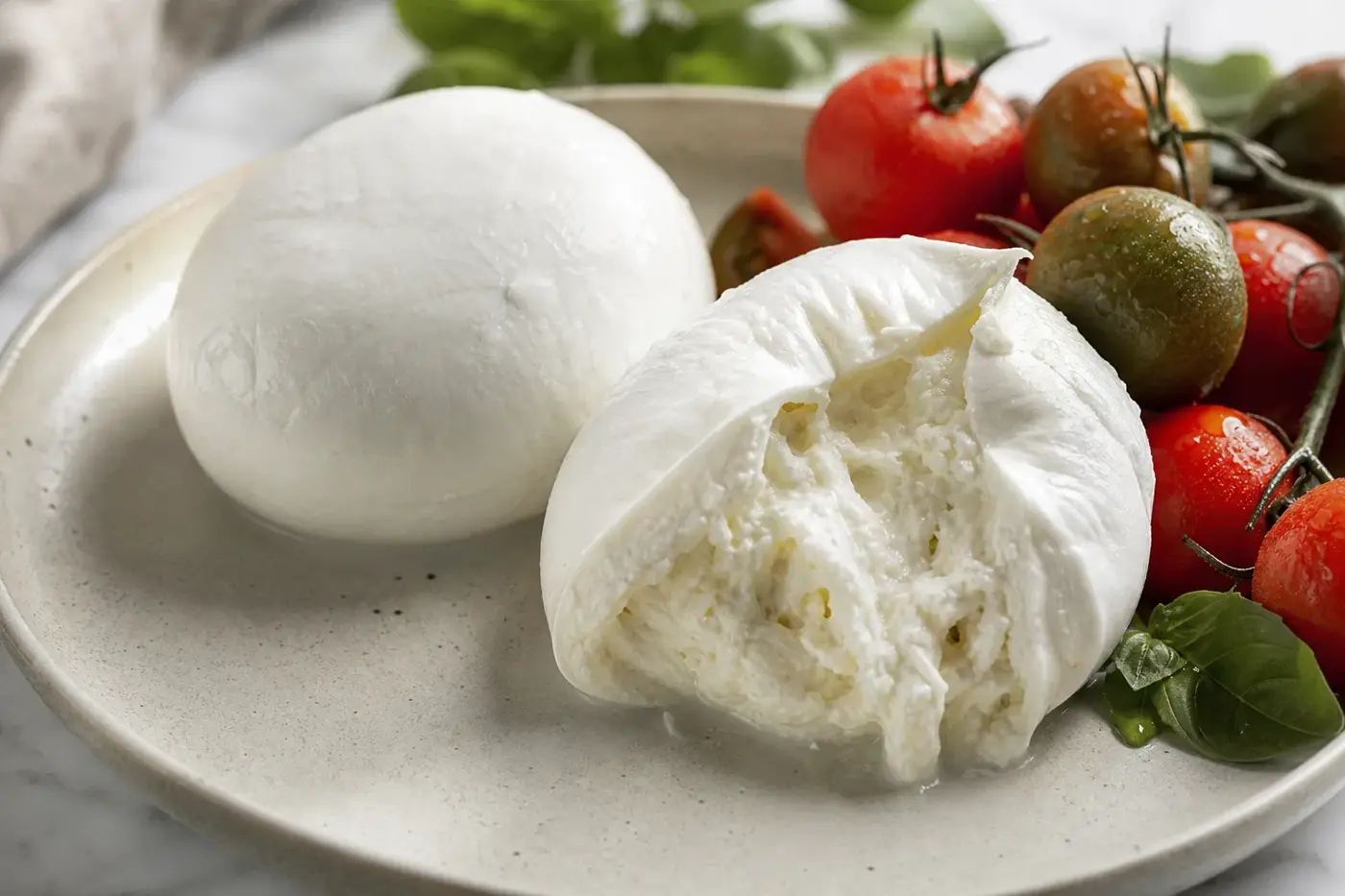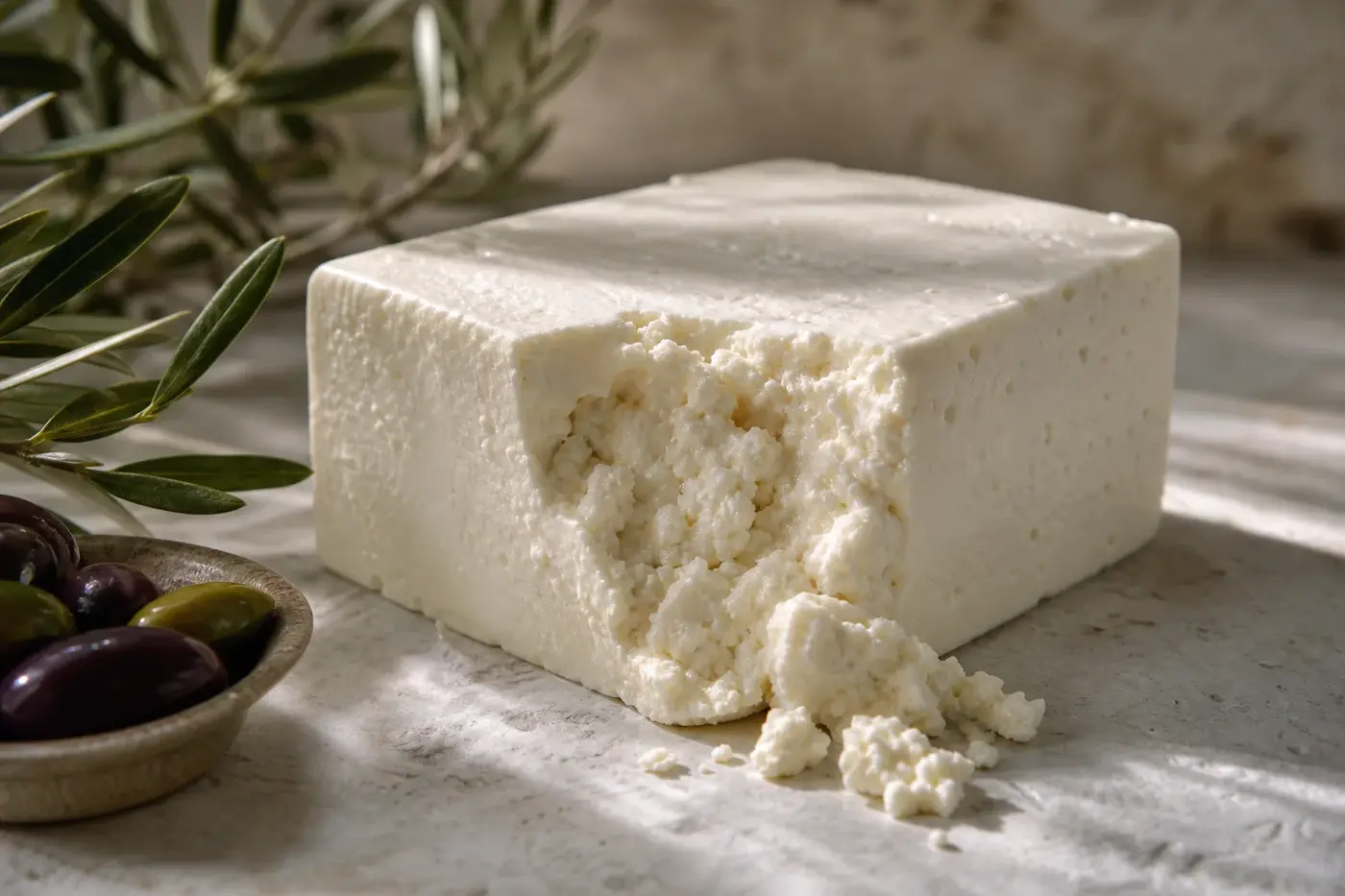
Take a bite. A crumble, a soft smear, an aroma that refuses to leave: your cheese may have more than one animal's milk behind it. But blending is not simply a matter of inviting another flavour to the party. In a laboratory comparison, sheep and buffalo milk brought more fat and protein to the vat than cow and goat milk, and produced more fresh cheese.[1,2]
Mixed milk cheeses bring together milk from more than one animal species. Each milk behaves differently during cheesemaking. Proportions matter, but so do cultures, drainage and ageing: the vat is only the beginning of the cheese on your plate.[1,2]
Where the milks come together
The mixing happens during cheesemaking. Cow and sheep, sheep and goat, or another combination of species enter the process together. Experimental cheesemaking has used both two-species and three-species blends.[3]
Put separate cow's and goat's cheeses on a board and you have a selection, not a mixed milk cheese. Two breeds of cow still mean one species, too. If a description celebrates a mixed herd, ask whether that means several breeds or several animal species.
That small question gets you to the heart of what is being blended. To explore the wider vocabulary of texture and rind, start with how to tell cheese styles apart.
Why a cheesemaker adds another milk
Blending gives a cheesemaker another way to shape the raw material. In that laboratory comparison across dairy species, sheep and buffalo milk contained more fat and protein and yielded more fresh cheese than cow and goat milk. A blend can therefore change the balance of solids entering the vat.[1]
Then flavour develops alongside texture. In experimental Lighvan cheese, changing the sheep-to-goat ratio altered the cheese's composition and its development during ripening. A maker can aim for a particular balance, then adjust the process to suit the milk.[2]
Supply and tradition have a say, too. If a seasonal blend catches your eye, ask which milk becomes available at which point in the year, and whether the proportions change. A traditional name needs its current specification alongside its history: Roccaverano, below, shows how yesterday's permitted mixture can differ from today's cheese.[5,6]
Meet the milks, then trust your taste
Ask about the milk and the intended cheese style together. Comparative research offers useful starting points, but the finished cheese gives you the flavour and texture you can judge.[1,2]
- Cow's milk: a useful comparison point, with laboratory performance that differed from sheep and buffalo milk. Calling it neutral tells you little about the finished cheese.[1]
- Goat's milk: changes curd drainage and, in the Lighvan experiment, the blend's aroma-related chemistry.[1,2]
- Sheep's milk: contained more fat and protein in the comparative study, bringing more cheese-forming solids to a blend.[1]
- Buffalo milk: also contained more fat and protein in that study, with strong curd formation.[1]
At the counter, pay attention to what you can taste: a clean sourness, a crumbly bite, a supple centre or an aroma that stays with you. Ask your cheesemonger which qualities the maker associates with the blend. Keep those descriptions attached to that cheese, its maker and its age, rather than the milk alone.
What percentages can and cannot tell you
A milk percentage tells you what enters the vat. It does not divide the finished flavour into shares belonging to each animal, or tell you how much moisture remains after draining. Read the proportions alongside the cheese's style, age and handling.[1,2]
The Lighvan researchers made five sheep-to-goat ratios in three separate trials, following the cheeses during ripening. Changing the ratio affected acidity, dry matter and protein, among other measurements. For a useful tasting comparison, choose similar cheeses at similar ages rather than two unrelated styles.[2]
Give heat treatment, cultures, rennet and ageing equal attention. Ask whether the milk was raw or heat treated, which cultures guided fermentation, which rennet was used and how long the cheese matured. Rennet is the milk-clotting preparation; for Roccaverano, the producer association documents animal rennet and raw whole goat's milk.[6]
Those details tell you much more than the species name alone. Pasteurisation is a heat treatment used to kill bacteria, as the NHS explains.[9] Cultures guide acid production, while rennet helps form curd, the solid part separated from liquid whey.
Ripening then changes that curd over time. The texture you taste reflects all this making and maturing, not just the blend of milks.[2,3]
Feta: get to know your piece
At the cheese counter, Feta gives you a useful question to ask. Is this one entirely sheep's milk, or a blend of sheep's and goat's milk? Ask for the actual ingredients and any declared proportions, because the name alone does not give you a complete recipe.
Great Britain's register, in November 2026, records Φέτα / Feta as a registered protected designation of origin, or PDO, with Greece as its country of origin.[4] For more of its story, follow Feta. Keep the name's protection distinct from the ingredients on an individual pack.
Roccaverano: a recipe with a turning point
An old cheese book and today's producer can tell you different things about Robiola di Roccaverano. In February 2023, the producer association announced a move to exclusively goat's milk, excluding cow's and sheep's milk. Its current website likewise describes Roccaverano as made with 100% raw whole goat's milk.[5,6]
An account of its variable milk recipe therefore needs a date beside it. An older mixed milk description belongs to the earlier recipe; today's purchase needs today's product information. If a retailer's description and the producer's differ, ask when each was written and which version of the cheese it describes.[5,6]
Read past the front of the label
Start with the ingredients or the producer's technical information, not the front-of-pack description. Look for the animal species, milk treatment and any stated percentages. Ask what each percentage measures: a share of the milk blend is different from a percentage of the whole product.
In England, Wales and Northern Ireland, the FSA says milk is one of the regulated allergens. It must be emphasised wherever it appears in a prepacked food's ingredients list. For loose cheese, the business must provide allergen information, either in writing or verbally with clear signposting.[7]
Ask separately about the species and recipe. Allergen information has a different job to do. It does not replace those questions.
Four questions make a good conversation with your cheesemonger: which species are used, are the proportions fixed, what is the milk treatment, and how mature is this piece? If vegetarian suitability matters to you, ask about the coagulant too. You can explore the wider label in reading a cheese label.
Taste the cheese before inviting the chutney
A small side-by-side tasting tells you more than hunting for one animal's flavour in isolation. Choose two cheeses with similar texture and maturity, and ask for their milk details before tasting. You get a clearer comparison and a way to learn your preferences, without assigning every sensation to a particular milk.
- Taste a small piece on its own, using a clean knife for each cheese.
- Notice texture first: does it crumble, spread, bend or cling to your palate?
- Separate sourness, saltiness and bitterness from aroma. Write your own words before reading the maker's notes.
- Add an accompaniment afterwards. Does it clarify what you enjoyed, or obscure it?
Begin with plain bread, water and a little fresh pear or apple. Match accompaniments to the cheese's actual texture and intensity: cucumber beside a salty, crumbly cheese, perhaps, or crisp apple beside a firmer slice. These are starting points for your own tasting, and alcohol-free drinks are perfectly suited to the exercise.
For a meal, decide the cheese's role before choosing the blend. A fresh, spreadable cheese can take the centre of a simple plate with bread and vegetables; a firm piece can arrive in thin slices with fruit. Planning a sauce or baked dish? Ask the seller how that particular cheese behaves when heated.
Leave chutney, heavily seasoned crackers and competing accompaniments aside at first. The cheese deserves a moment without an entourage. Add one thing at a time, and keep a short note of the maker, milk species, declared proportions and age alongside your impressions. Those details help you recognise a cheese you enjoyed when you meet it again.
Put out only what you expect to eat and keep the rest chilled. The FSA's November 2026 guidance for England, Wales and Northern Ireland advises keeping chilled food out for the shortest possible time during preparation, with a maximum of four hours.[10]
Give your cheese the right place in the fridge
Follow the individual product's storage instructions, however many milks went into it. The FSA's home guidance for England, Wales and Northern Ireland recommends a fridge between 0 and 5 °C and following packaging instructions, including date marks. Keep raw meat, poultry and fish contained below ready-to-eat foods so they cannot drip onto them.[10]
Keep the label with your cheese after opening. If the pack gives an after-opening limit, note the opening date; if you buy a cut piece from a counter, ask the seller for storage instructions. For practical details suited to different textures, see how to store cheese at home.
This page summarises published guidance from the official sources it cites. It is not medical advice. Guidance differs between countries and changes over time, so check the current source for where you live, and ask your doctor, midwife, pharmacist or dietitian about your own circumstances.
Allergy, lactose and rennet: know what to ask
Milk allergy concerns milk protein. Lactose intolerance concerns difficulty digesting milk sugar. The NHS explains the distinction and notes that lactose occurs in cow's, goat's and sheep's milk.[8,9]
If you have milk allergy, take the complete product information to your clinician before considering cheese made from another species. For lactose questions, seek information about the actual product rather than relying on a mixed milk description. The NHS advises seeking GP or dietitian advice before cutting foods from your own or a child's diet.[8]
Look at additional ingredients and precautionary allergen statements, too. The FSA explains that cross-contamination can occur during manufacture and handling.[7] The whole product matters here, not just its headline milk.
Vegetarian suitability needs its own product-level enquiry. The Roccaverano association, for example, specifies animal rennet on its website.[6] Ask where any rennet comes from rather than guessing from the milk species; Rennet explained sets out the distinctions to discuss with your seller.
Pregnancy: the cheese style matters too
UK NHS pregnancy guidance, in November 2026, lists pasteurised soft cheeses including Feta among foods that can be eaten. It also lists pasteurised or unpasteurised hard cheeses. Soft mould-ripened cheeses with a white coating and soft blue-veined cheeses, whether pasteurised or unpasteurised, belong to the group requiring thorough cooking.[11]
Questions people ask
What makes a cheese mixed milk?
Mixed milk cheese is made with milk from more than one animal species. Milk from two breeds of cow still comes from one species.
Is Feta a mixed milk cheese?
Feta can be made entirely from sheep's milk or from a blend of sheep's and goat's milk. Ask for the actual ingredients and any declared proportions.
How can I tell if a mixed milk cheese is vegetarian?
Ask for the source of the rennet rather than guessing from the milk species. The Roccaverano producer association specifies animal rennet for its cheese.
Does mixed milk cheese contain lactose?
The NHS says lactose occurs in cow's, goat's and sheep's milk. For questions about lactose, seek information about the actual product and consult the NHS, which advises seeking GP or dietitian advice before cutting foods from your own or a child's diet.
Can I eat mixed milk cheese during pregnancy?
NHS pregnancy guidance lists pasteurised soft cheeses, including Feta, and pasteurised or unpasteurised hard cheeses among foods that can be eaten. It says soft cheeses with a white mould coating and soft blue cheeses require thorough cooking, whether pasteurised or unpasteurised. Consult the NHS pregnancy guidance for details.
Sources
- American Dairy Science Association, Journal of Dairy Science, “Composition and aptitude for cheese-making of milk from cows, buffaloes, goats, sheep, dromedary camels, and donkeys”, volume 105, issue 3, 2022, pages 2132 to 2152. Original comparative research using milk analysis, coagulation measurements and laboratory cheesemaking.
- Wiley, Food Science & Nutrition, “Influence of the Blends of Sheep's and Goat's Milk on the Functional Properties and Volatile Compounds of Lighvan Cheese During Ripening: A Comparative Study”, 2024. Original research comparing five milk ratios in three cheesemaking trials.
- American Dairy Science Association, Journal of Dairy Science, “A rapid high-performance liquid chromatography-tandem mass spectrometry assay for unambiguous detection of different milk species employed in cheese manufacturing”, volume 98, 2015, pages 8405 to 8413. Experimental single-species and mixed-species cheeses; retrieved search extract included the experimental blend tables.
- Department for Environment, Food & Rural Affairs, “Φέτα / Feta”, Great Britain protected food name register, published 2021, live entry checked November 2026. The entry records registered PDO status; its product specification is unavailable on that page.
- Roccaverano producer association, “Roccaverano DOP: cambia il nome e il disciplinare”, announcement dated 16 February 2023, published 17 February 2023. The association describes the change to exclusively goat's milk.
- Roccaverano producer association, “Roccaverano DOP”, undated live website, checked November 2026. Its production account specifies raw whole goat's milk and animal rennet.
- Food Standards Agency, “Food allergy and intolerance advice for consumers”, updated 7 August 2026. Sections on regulated allergens, prepacked and loose food, and precautionary allergen labelling.
- NHS, “Lactose intolerance”, reviewed 8 July 2026. Sections on lactose-containing foods, the distinction from allergy and dietary advice.
- NHS, “Dairy and alternatives in your diet”, reviewed 11 December 2023. Sections on pasteurisation, lactose intolerance and cow's milk allergy.
- Food Standards Agency, “How to chill, freeze and defrost food safely”, published 18 December 2017, live guidance checked November 2026. Applies to England, Northern Ireland and Wales.
- NHS, “Foods to avoid in pregnancy”, reviewed 15 June 2026. Milk and dairy section, including the hard-cheese exception and categories requiring thorough cooking.
This piece was researched from original dairy studies, the Great Britain register, producer association records and official UK guidance, with practical tasting suggestions identified as editorial recommendations.
Last checked: November 2026
Last checked November 2026.
The editors suggest you read next
Cow's Milk Cheese
Picture a drum of Blue Stilton, its curd settling under its own weight, without a press.