Mozzarella di Bufala Campana
Your knife slips through an exceptionally thin skin.
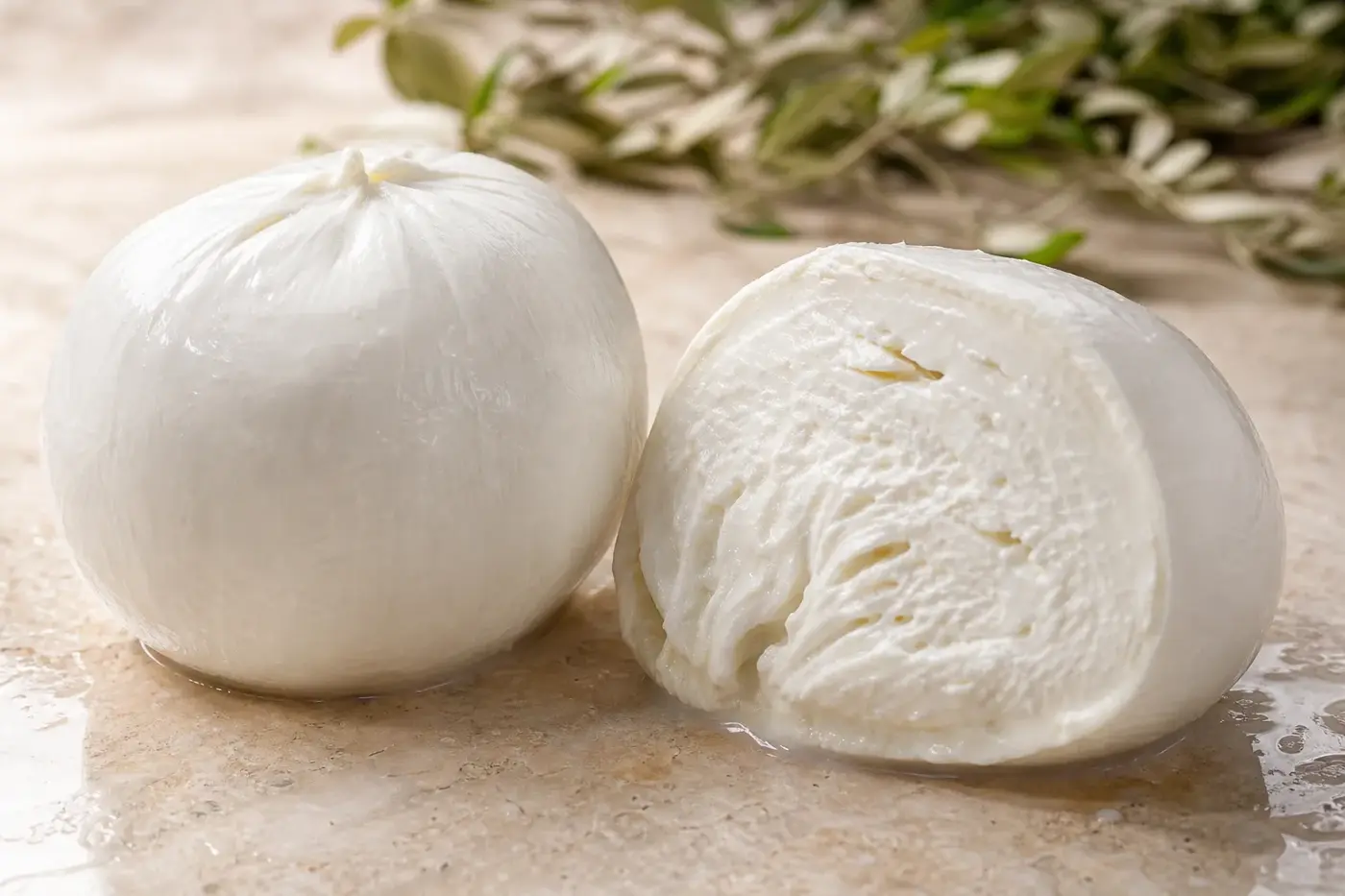
Your knife slips through an exceptionally thin skin. Fine layers part, and a little whitish, fatty liquid escapes onto the plate.[1] Inside, Mozzarella di Bufala Campana is moist and milky. Fresh water buffalo milk and pasta filata, the stretching of curd in hot water, give this white cheese its contrast of smooth surface and delicate elasticity.[1][2]
| What to know | The details |
|---|---|
| Name to look for | Mozzarella di Bufala Campana.[3] |
| Registration authorities | European Commission for the EU scheme; Defra for the Great Britain scheme.[2][3] |
| EU register identifier | Unavailable from the linked record’s inaccessible fields.[15] |
| Protection | EU: described as PDO by the European Commission; current register status unavailable.[2] Great Britain: registered PDO, with UK scheme registration dated 31 December 2020; information dated November 2026.[3] Northern Ireland, Switzerland and the United States: status unavailable. |
| Applicable binding instruments | Information unavailable. |
| Where it is made | Specified territories in Campania, Lazio, Puglia and Molise, Italy.[1] |
| Milk | Exclusively fresh whole buffalo milk; raw, thermised or pasteurised milk permitted.[1] |
| Coagulant | Natural calf rennet.[1] |
| Style and ageing | Fresh stretched-curd cheese, eaten without a cheese-ageing stage.[4] |
| Surface | Smooth, exceptionally thin outer skin, rather than a developed ripened rind.[1][7] |
| Pregnancy guidance | UK: NHS guidance includes pasteurised mozzarella among cheeses that can be eaten during pregnancy. Information dated November 2026.[13] |
Follow the curd into the hot water
Lift, pull, stretch. In hot water, the curd becomes a cohesive mass, ready for shaping and cooling.[4] This operation, called filatura, sits at the heart of the cheese’s character. Campania’s regional agriculture authority singles it out alongside buffalo milk, particularly the milk’s fat and protein content.[4]
You can taste the result, but you can feel it too. The producers’ consortium describes a porcelain-white exterior, a smooth surface and a lightly elastic paste with a sweet, delicate milk flavour.[5] Keep those qualities in mind when choosing a cheese and trying it at home.
Before reaching for tomatoes or oil, cut yourself a piece. Look at the fine layers, the moisture on the cut face and the way the paste yields.[1][5] Give that first mouthful a moment alone. The tomatoes can wait their turn.
From Campania’s plains to a wider map
The Volturno and Sele plains are part of this cheese’s historical landscape. Campania’s regional authority connects them with buffalo husbandry and cheesemaking, and records a dairy developing at the royal estate of Carditello in the eighteenth century.[4] When did buffalo first reach Italy? Its account acknowledges competing explanations, rather than one tidy beginning.
Campania gives the cheese its name, but not its entire map. The protected area covers the whole provinces of Caserta and Salerno, specified municipalities elsewhere in Campania, defined territories in Lazio and Puglia, and Venafro in Molise.[1] Those boundaries govern both where the milk comes from and where the cheese is made.
So “Campana” tells you about a legally defined origin, not simply today’s Campania administrative boundary. A cheese from an eligible part of Lazio can carry the designation too, provided it meets the remaining requirements.[1] That distinction matters when you turn a packet over and find an address you were not expecting.
The whole name earns its place
A buffalo on a packet may catch your eye. The full name tells you more: Mozzarella di Bufala Campana identifies a particular cheese, not mozzarella in general.[1][2] PDO means Protected Designation of Origin; the Italian equivalent is DOP, Denominazione di Origine Protetta.
That protection ties the cheese to an authorised production area, buffalo milk, a prescribed manufacturing method and defined finished characteristics.[1][2] Defra’s Great Britain register records the exact name as Mozzarella di Bufala Campana, with registered PDO status.[3]
The register gives 21 June 1996 as the original EU registration date and 31 December 2020 as the UK scheme registration date.[3] These mark separate registration events. They are not two dates for the same event.
When you shop, give the full name more weight than a buffalo illustration or an Italian-looking brand. The guide to protected names explains how origin protection differs from a brand. For help separating the product name from everything else on the packet, turn to reading a cheese label.
Inside the dairy, where the stretch matters
The transformation starts with milk, natural whey starter and rennet. Whey is the liquid separated from curd, and here it carries one production into the next: whey from earlier buffalo-milk cheesemaking supplies the starter that acidifies the next batch.[6] The consortium describes this continuity as part of the dairy’s manufacturing process.
After warming, rennet coagulates the milk into curd. The specification requires natural calf rennet and a milk temperature of 33 to 39 °C.[1] The curd then matures under whey before draining and stretching.
This is maturation during production, not prolonged ageing of the finished cheese. According to the consortium, the cheesemaker tests a sample to see whether it stretches evenly.[6] Once ready, the drained curd is cut into strips and worked with boiling water until it becomes one unified, stretchable mass.
While that paste is still workable, portions are shaped by hand or mechanically. Cold water firms them, salting follows, and the cheese goes into its packaging with covering liquid at the production establishment.[2][6] You can follow the wider sequence in how cheese is made.
A closer look beneath that white skin
The first cut reveals what the smooth, coherent white exterior has been holding. Fine layers open up, a little whitish, fatty liquid escapes, and the specification describes a lactic aroma.[1] That extremely thin outer skin is quite unlike the developed rind of a mould-ripened or aged cheese.
Ambrosi calls its own PDO product sweet and typically milky, with a soft, elastic paste that grows more yielding over time.[7] It lists the rind as absent. The apparent difference from the specification’s thin “skin” is principally a matter of terminology.
The consortium also describes slight springiness and a delicate milk flavour.[5] The surrounding liquid matters too. It is acidified and can be salted; the European Commission notes that it contributes to taste as well as protecting texture.[2]
Do not expect freshness to mean one unchanging texture until the date on the pack. These descriptions point to a shifting balance between elasticity and softness.[5][7] Read the producer’s description alongside the storage instructions and date. Then notice how the paste yields when you taste it.
Choose your shape, from pearls to braids
The familiar ball is only one permitted shape. The specification also recognises bocconcini, perline, ciliegine, nodini, ovoline and trecce, or braids.[1] Permitted weights run from 10 to 800 g according to form, while braids can reach 3 kg.
Let your meal guide the choice. Small pieces suit individual plates or a shared bowl; a larger ball gives you broad cuts that show the layered paste. A braid puts the shaping on display. None of these shapes wins you extra cheese connoisseur points.
There is a smoked version too. The specification permits smoking by natural, traditional processes, in which case the designation must be followed by affumicata, meaning smoked.[1] Look for that word to distinguish it from the unsmoked cheese’s delicate milk character. Smoking is an additional treatment, not a sign of extended ageing.
Buffalo mozzarella and fior di latte, side by side
“Mozzarella” alone does not promise buffalo milk. In its published comparison, buffalo-milk producer Fattorie Garofalo identifies fior di latte as a fresh stretched-curd cheese made from cow’s milk.[8] The milk source and Campana production requirements distinguish these cheeses from Mozzarella di Bufala Campana DOP.
Fattorie Garofalo describes cow’s-milk versions as firmer and more structured, with buffalo mozzarella more elastic and milkily soft.[8] These are that producer’s comparative descriptions, not a rule that makes every mozzarella identical. You will find variation between individual cheeses.
For shopping, keep it simple: look at the milk, then the full product name. Buffalo milk alone does not establish that a cheese meets the Campana PDO specification. Cow’s-milk mozzarella has its own character and uses too. The broader mozzarella guide takes you beyond this designation.
What your packet can tell you
Start with the full protected name. The consortium’s packaging guidance points you towards the designation, its trademark, the PDO identification and the dairy’s authorisation information.[9] Keep the label until you have finished the cheese. That way, the storage instructions and batch information stay within reach.
Next comes the date, and a little meal planning. UK government guidance distinguishes a use-by date, which concerns safety, from a best-before date, which concerns quality.[12] Follow a use-by date even if the food looks or smells satisfactory. Appearance and smell do not override it.
Choose an intact pack, and keep the covering liquid if some cheese will remain after opening. That liquid is part of the product’s intended presentation, not something to discard automatically. The consortium advises keeping the cheese in its own liquid and following the temperature printed on the label.[5]
From the fridge to your plate
For storage at home, follow the pack’s refrigeration instructions. Ambrosi, for example, specifies refrigerated storage for its PDO mozzarella.[7] The Food Standards Agency’s guidance for England, Northern Ireland and Wales advises keeping a home fridge between 0 and 5 °C and refrigerating dairy products.[10]
Keep the cheese covered in its original liquid and follow any after-opening instruction. Plan to eat it promptly: the unopened pack’s date is not permission to keep it that long after opening.[5][12] UK date-labelling guidance specifically tells you to follow instructions such as “eat within” a stated period once the pack is open.[12]
A short spell out of the fridge before serving can make the cheese more expressive. Fattorie Garofalo recommends around 30 minutes.[11] Treat that as preparation time, not permission to leave it out indefinitely.
The FSA advises leaving chilled food out for the shortest possible time, with a maximum of four hours during preparation. In hotter weather, its guidance says to try not to exceed two hours.[10][14] Take out only what your meal needs and leave the rest refrigerated. For the broader principles, see storing cheese at home.
Make room for the milk flavour
Begin with cheese, bread and a little olive oil, with tomatoes alongside if you fancy them. Taste the cheese before adding salt, then season the tomatoes separately. This simple approach lets you notice the milk flavour and lightly elastic texture described by the consortium and Ambrosi.[5][7]
For a tomato salad, drain your portion just before arranging it. Go gently with the dressing and let bread collect the juices. You are not trying to dry the cheese. You are simply allowing for the liquid that the specification describes escaping from the cut face.[1]
The consortium’s culinary material also includes pizza, pasta, filled dishes and risotto.[16] For pizza, cut the cheese into pieces and let loose liquid drain away in the fridge before topping. Its moist structure asks for enough cheese to enjoy, without covering the dough in accumulated liquid.[1][16]
Milk treatment: look beyond the protected name
The protected name does not reveal how the milk in your particular pack was treated. The PDO permits raw, thermised or pasteurised buffalo milk, so read the label or ask the producer.[1] Ambrosi’s example product also explicitly identifies buffalo milk in its ingredient declaration.[7]
For the UK, NHS guidance dated November 2026 lists pasteurised mozzarella among cheeses that can be eaten during pregnancy.[13] Consult the current NHS guidance for its advice on unpasteurised milk products and cooked cheese.
If you are pregnant, follow the current NHS page for the UK, or the official advice where you live. Ask your midwife or doctor about your individual circumstances. Consider the milk treatment, storage and particular product label together when making that decision.[13]
General information only, not medical advice: follow the official guidance where you live.
Questions people ask
What is the difference between buffalo mozzarella and fior di latte?
Mozzarella di Bufala Campana is made exclusively from fresh whole buffalo milk. Fior di latte is a fresh stretched curd cheese made from cow’s milk.
Can you eat Mozzarella di Bufala Campana during pregnancy?
The NHS lists pasteurised mozzarella among cheeses that can be eaten during pregnancy. The protected name permits raw, thermised or pasteurised milk, so consult the current NHS guidance and check the label or ask the producer.
Is Mozzarella di Bufala Campana vegetarian?
The specification requires natural calf rennet. This is used to coagulate the milk into curd.
How should you store Mozzarella di Bufala Campana?
The consortium advises keeping it in its own liquid and following the temperature printed on the label. Follow any instruction for how long to keep it after opening.
What does PDO mean on Mozzarella di Bufala Campana?
PDO means Protected Designation of Origin. The specification ties the cheese to an authorised production area, buffalo milk, a prescribed manufacturing method and defined characteristics.
Sources
- Italian Ministry of Agricultural, Food and Forestry Policies. Disciplinare di produzione della DOP «Mozzarella di Bufala Campana», published by provision of 11 February 2008, Articles 2 to 4. Ministry text reproduced by the producers’ consortium. Production specification.
- European Commission, Directorate-General for Agriculture and Rural Development. Mozzarella di Bufala Campana PDO, undated explanatory profile, accessed November 2026. Commission profile.
- Defra. Mozzarella di Bufala Campana, Great Britain protected food name register entry, published 4 January 2021, accessed November 2026. Register entry.
- Regione Campania, agriculture authority. Mozzarella di bufala campana D.O.P., undated product and historical profile, accessed November 2026. Regional profile.
- Consorzio di Tutela Mozzarella di Bufala Campana DOP. Le caratteristiche del prodotto, undated, page 1, accessed November 2026. Industry-body description; only its sensory and storage passages are used. Product characteristics.
- Consorzio di Tutela Mozzarella di Bufala Campana DOP. Manufacture, undated, accessed November 2026. Manufacturing account.
- Ambrosi. Mozzarella di Bufala Campana, Busta 125g, art. 40039, undated product information, accessed November 2026. Commercial supplier’s own product description and instructions. Product information.
- Fattorie Garofalo. Che differenza c’è tra Mozzarella di Bufala, Fiordilatte e Provola?, 1 March 2022. Commercial producer’s comparison. Milk and style comparison.
- Consorzio di Tutela Mozzarella di Bufala Campana DOP. Bufala Campana, “The trademarks” section, undated, accessed November 2026. Packaging recognition guidance.
- Food Standards Agency. How to chill, freeze and defrost food safely, published 18 December 2017, accessed November 2026. Applies to England, Northern Ireland and Wales. Chilling guidance.
- Fattorie Garofalo. Come conservare al meglio la Mozzarella di Bufala Campana DOP?, 14 February 2022. Commercial producer’s serving advice; ambient-storage recommendations are not adopted here. Producer advice.
- UK Government. Understanding food labelling: Best before and use-by dates, live guidance, accessed November 2026. Date guidance.
- NHS. Foods to avoid in pregnancy, live guidance, accessed November 2026. Pregnancy guidance.
- Food Standards Agency. Food safety in a heatwave, advice for consumers, published 27 June 2024, accessed November 2026. Applies to England, Northern Ireland and Wales. Hotter-weather guidance.
- European Commission. eAmbrosia, record address EUGI00000012996, reached through the Commission’s cheese profile in November 2026. The record’s dynamic fields were not readable in the retrieved response. EU register record.
- Consorzio di Tutela Mozzarella di Bufala Campana DOP. Videoricette, undated culinary index, accessed November 2026. Culinary uses.
Research combined the published specification, official registration information, national food guidance and attributed producer descriptions; serving and draining suggestions are editorial synthesis, not recorded kitchen tests.
Last checked: November 2026
Last checked November 2026.
The editors suggest you read next
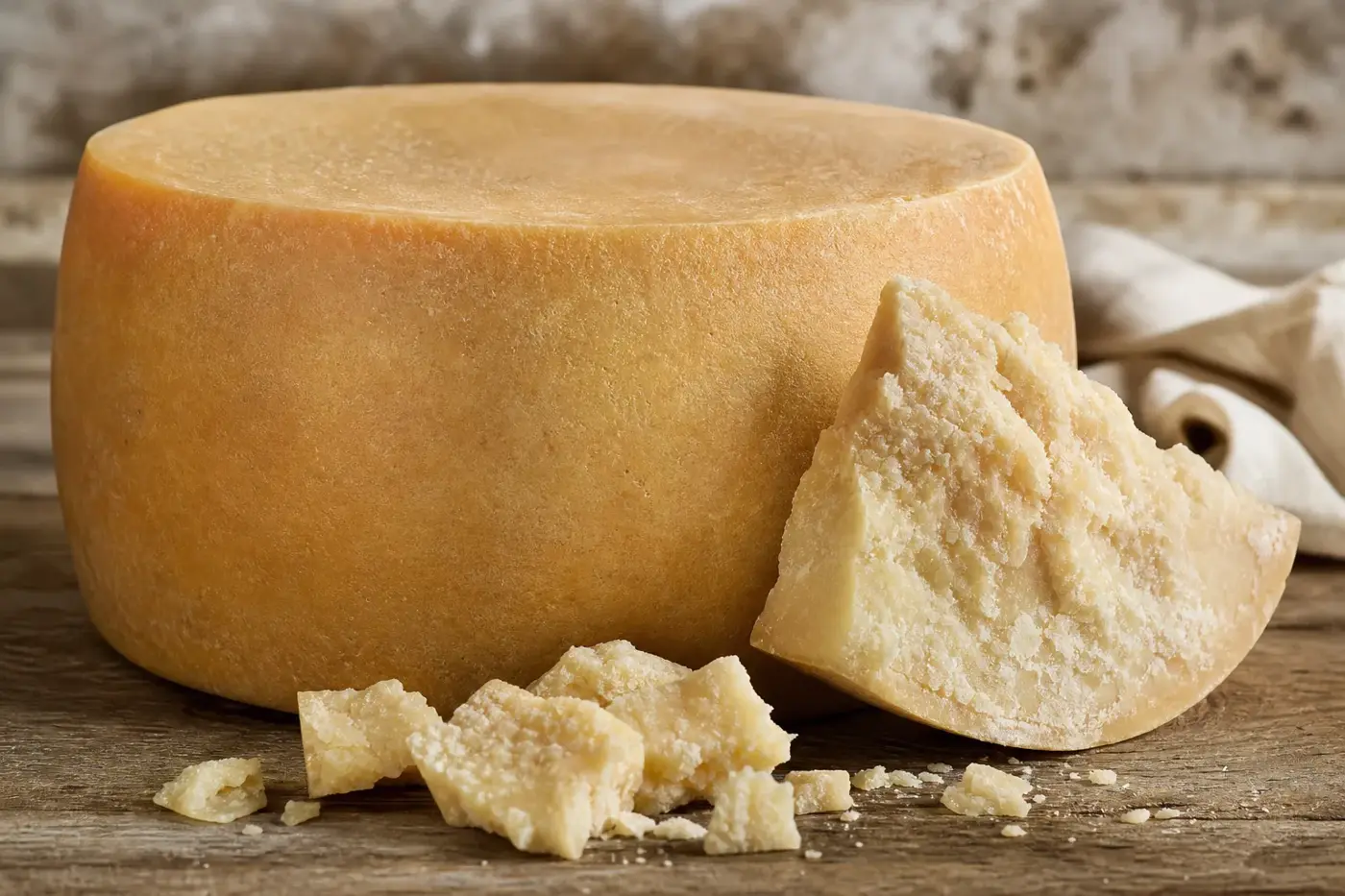
Parmigiano Reggiano
Break into a wheel of Parmigiano Reggiano and flakes fall away, revealing a finely granular cheese, pale straw to straw in colour.