Goat's Cheese: The Complete Guide
Look beneath the ash-coated surface of Sainte-Maure de Touraine, past its visible ripening mould, and you find a cereal straw running lengthways through the cheese.
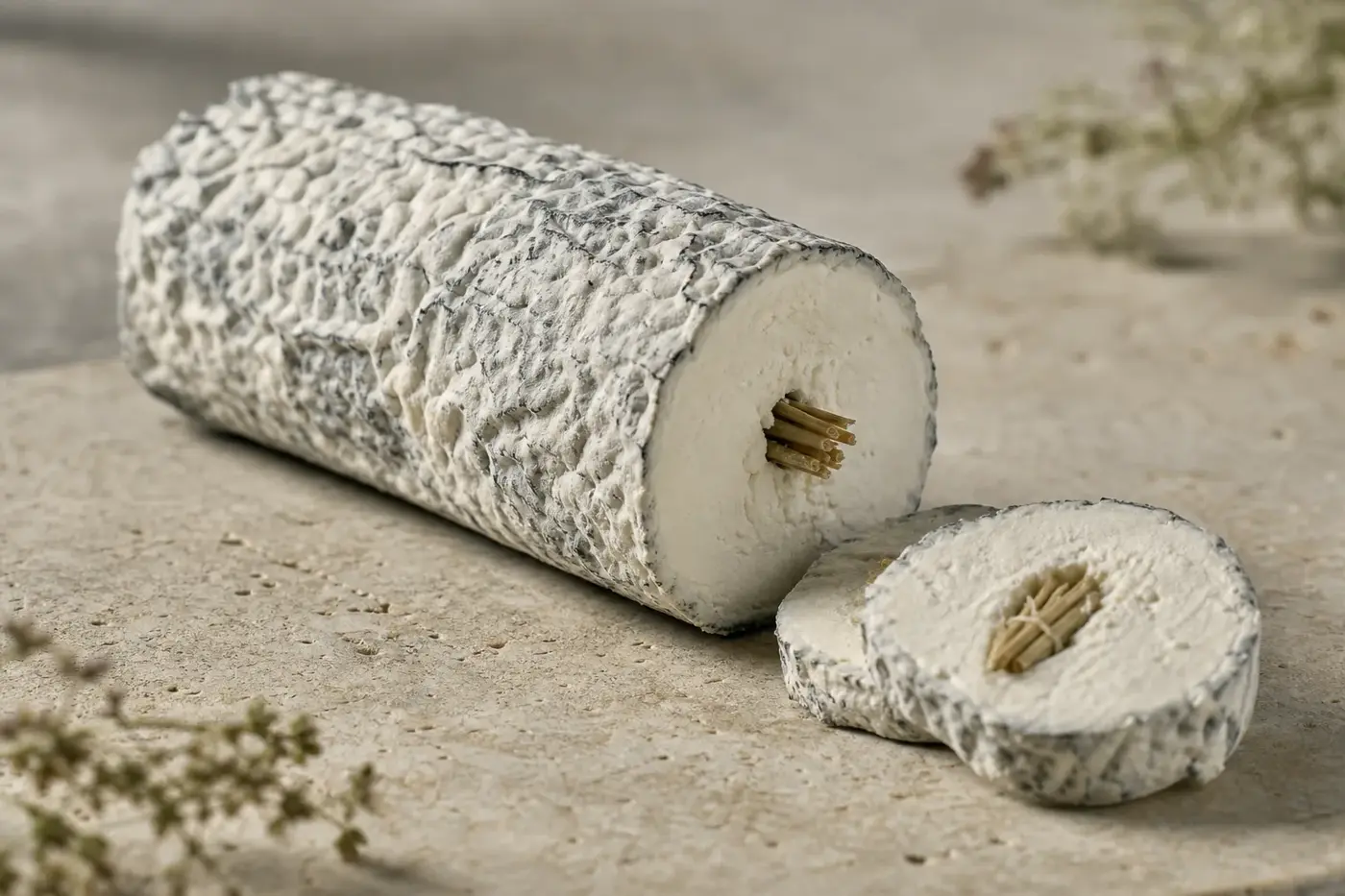
Look beneath the ash-coated surface of Sainte-Maure de Touraine, past its visible ripening mould, and you find a cereal straw running lengthways through the cheese. Like the tapering log shape, it belongs to the specification. The cheesemonger has not taken up flower arranging. Remove the straw before you eat. [3]
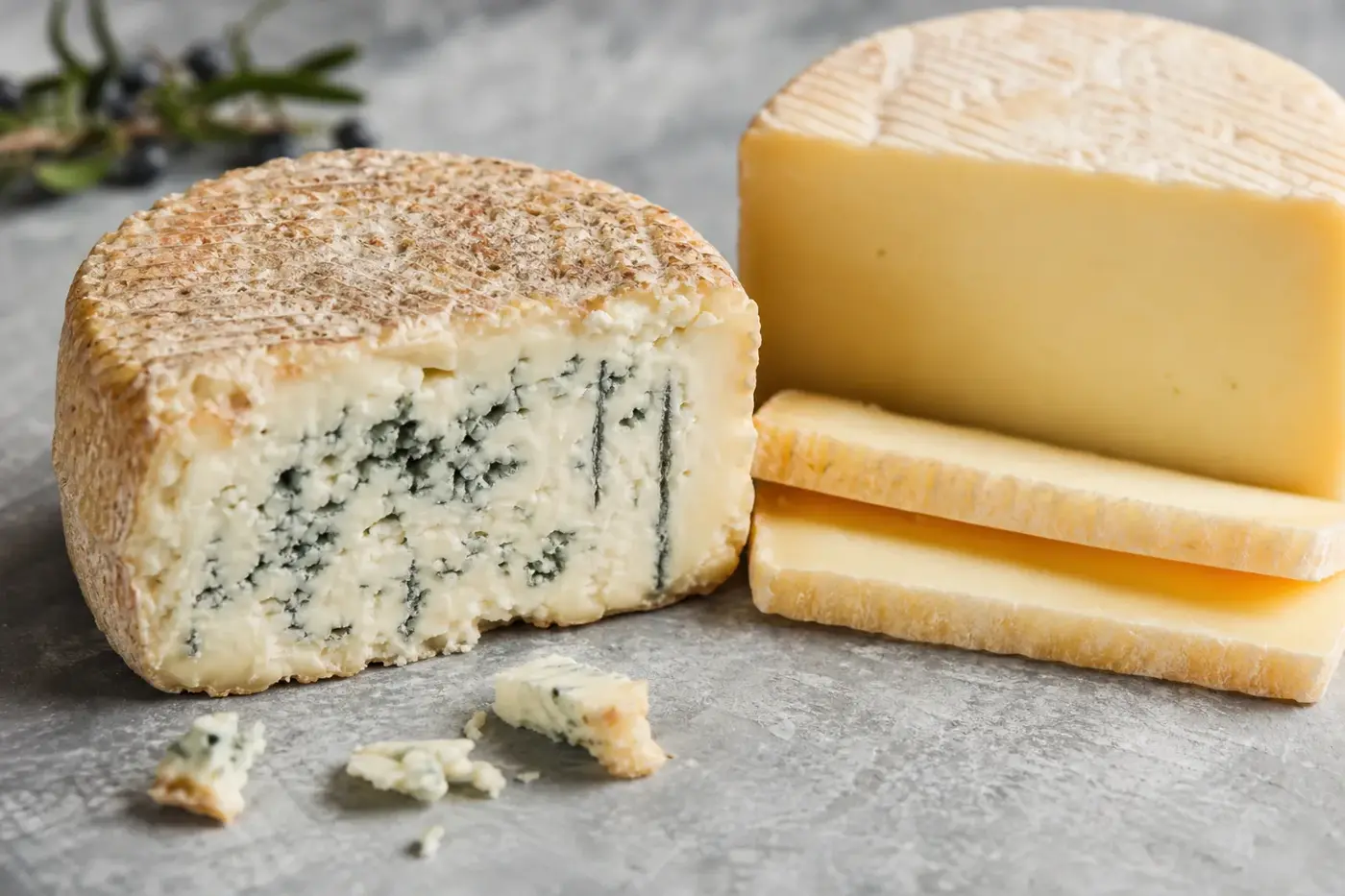
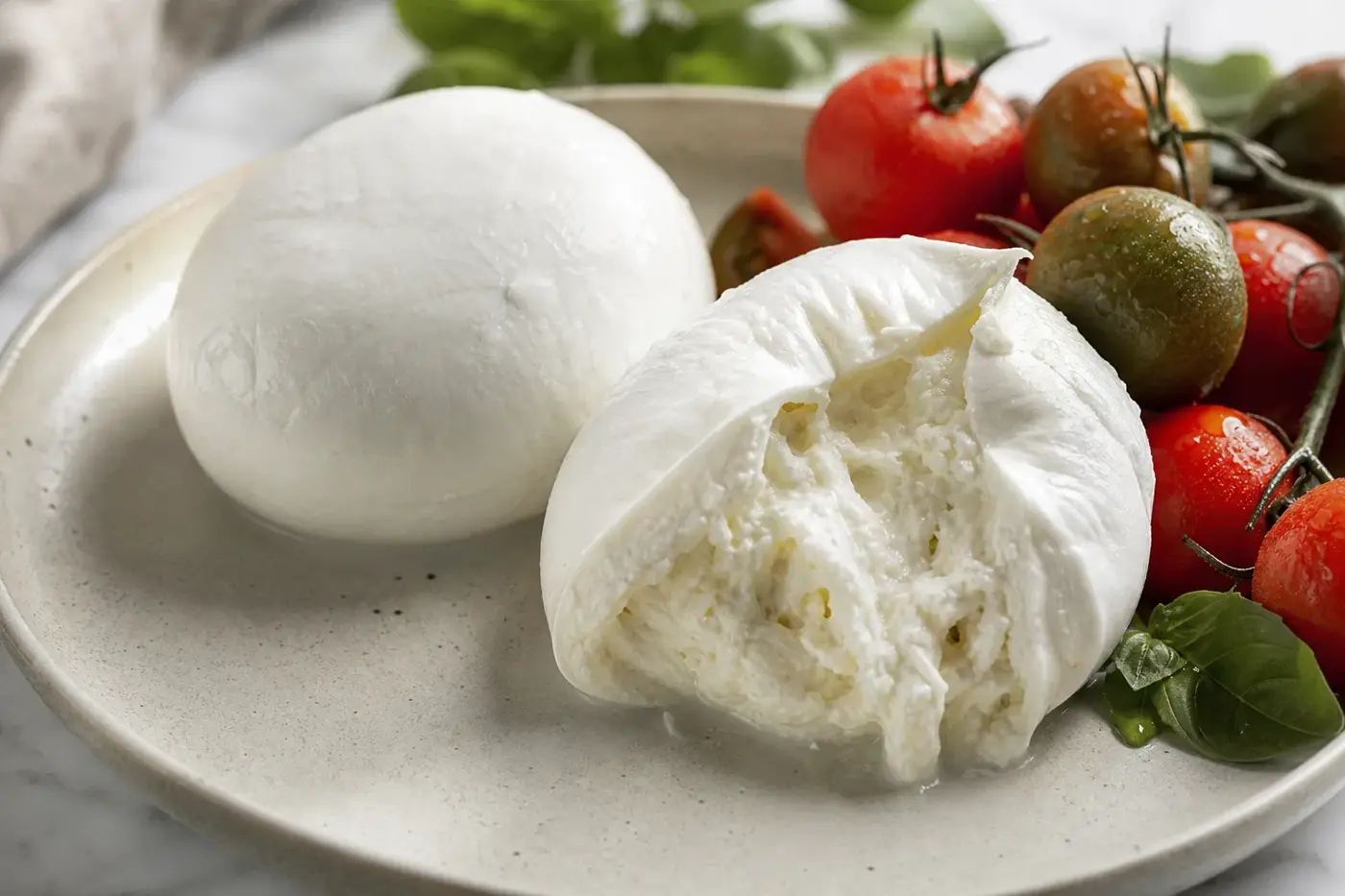
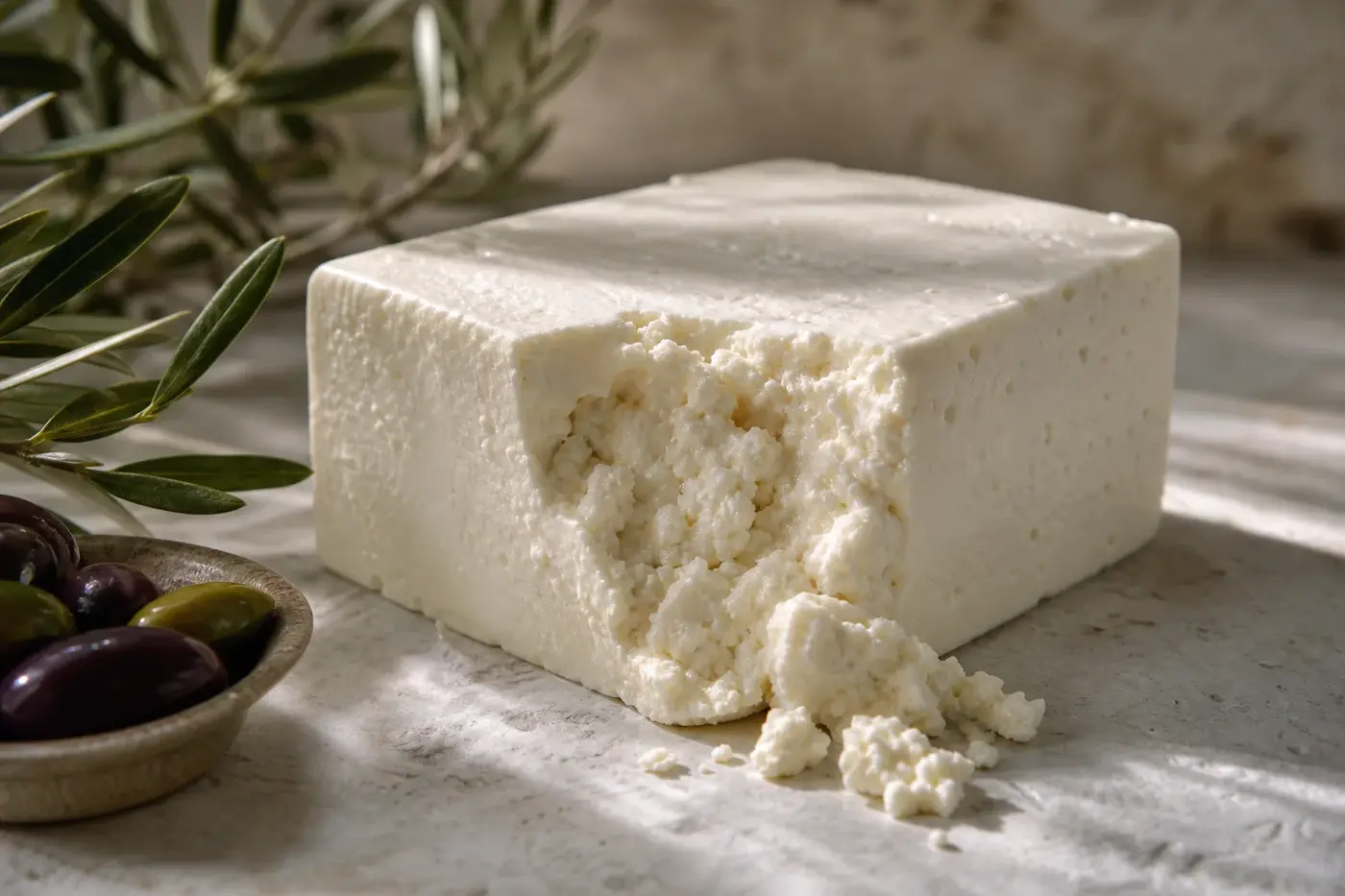
That log is just one face of goat's cheese. You might meet mild, spoonable fresh curd, soft cheeses with ripened rinds or firm wedges ready for slicing and grating. Milk is the starting point; cultures, draining and maturation take it towards remarkably different textures and strengths. [1,2,3]
Your bearings at the cheese counter
| What to look for | What you need to know |
|---|---|
| Milk | Goat's milk is the starting point; check the label for blended milks. [1] |
| Styles | Choose from fresh, soft ripened, semi-hard, hard and blue. [1] |
| Rinds | You will find rindless, naturally ripened, bloomy and ash-coated cheeses. [1,3] |
| Milk treatment | Raw or pasteurised: look to the product label. [2,3,8] |
| UK pregnancy guidance | NHS advice, November 2026; see the pregnancy section below. [8] |
Goat's cheese or chèvre? A question worth asking
You spot chèvre on a menu and picture a soft, fresh cheese. That may be what the kitchen means. In French, the word means goat; in a cheese context, it refers to goat's cheese. English-language menus often use it for a fresh, soft style, so ask if the distinction matters to your dish. [1,4]
Goat's cheese names a milk category, not a single recipe or flavour. The milk tells you the animal; a named cheese introduces you to a particular tradition or product. For the bigger picture, explore how to tell cheese styles apart. [2,3]
Taste the season, but leave room for the maker
The milk changes before the cheesemaker even gets to work. Goat's milk brings fat and protein into cheese, and their proportions can shift through the year. Research connects that changing composition with how much cheese the milk produces. [5,6]
An original twelve-month study deposited at the University of Maryland measured milk fat, protein and non-fat solids alongside cheese yield and composition. Milk composition varied seasonally, with higher values in winter, and yield correlated with milk composition. The cheese's own composition did not consistently follow that seasonal pattern. [5]
At the counter, ask about the batch and its age. Season helps explain variation, but the maker's handling of milk and curd still shapes what you taste. A spring cheese has a story beyond the season on its label. [5]
Follow the milk from soft curd to finished cheese
Many small French goat's cheeses begin with mainly lactic coagulation. Cultures acidify the milk, helping its proteins gather into curd: the soft solid that separates from liquid whey. A little rennet, a preparation of milk-clotting enzymes, helps it set. The balance between acid and rennet varies with the style. [2,3]
Then comes draining, which removes whey and helps determine moisture and texture. Fresh cheese reaches you without extended ripening. Other cheeses are salted and matured, with the maker's chosen conditions shaping their surfaces and interiors. Garrotxa's documented journey includes cutting, gentle pressing, brining and humid maturation. [1,2,3]
Older does not always mean firmer. Sainte-Maure de Touraine becomes drier and sometimes crumbly, according to its specification. INAO describes Chavignol's repassé form as stronger and softer, matured in a confined atmosphere. Follow the process in how cheese is made. [3,7]
Find your texture, then plan your supper
Start with texture, then ask about strength. These five styles cover the documented range of goat's cheese. The suggested uses give you a practical way to choose something that suits your dish. [1,4]
| Style | The texture you're after | Try it in |
|---|---|---|
| Fresh | Moist, spreadable or gently crumbly curd, without a developed rind. | Salads, toast, dips and sauces. |
| Soft ripened | A developed surface rind; ask whether the centre is chalky or yielding. | Tarts and a cheeseboard. |
| Semi-hard | A sliceable, closely knit paste, meaning the interior. | Sandwiches, or thin slices with fruit. |
| Hard | Firm enough for shaving or grating. | Pasta, vegetables and small cheeseboard portions. |
| Blue | Blue mould inside the cheese, not just on the surface. | Crumbled over dishes or served with fruit. |
Want something delicate and lemony? Ask for a mild fresh cheese with a clear lactic tang. For savoury, nutty flavours, look for a matured cheese whose maker describes those qualities. If distinctly goaty is your thing, say so: “the oldest one” is not quite a tasting note.
Descriptions of particular cheeses give you useful reference points. Vermont Creamery describes its fresh goat's cheese as mild and smooth, tasting of fresh milk. Sainte-Maure de Touraine's specification describes lactic flavour, dried-fruit or nut aromas and hay-like notes. Borrow those descriptions when you explain what you enjoy. [3,4]
Three cheeses to spend a little time with
Crottin de Chavignol: get to know its many ages
Small and slightly rounded, Crottin de Chavignol is a cylinder made from whole raw goat's milk. Also named Chavignol in its specification, it comes from a defined French production area covering much of Cher and parts of Nièvre and Loiret. Its curd sets mainly through lactic coagulation, helped by a small addition of rennet. [2]
INAO describes maturities from demi-sec through blue-covered and dry forms to repassé. Ask which stage you are buying, rather than stopping at the name. The changing rind and texture make Chavignol a rewarding way to discover what maturation does. [7]
Sainte-Maure de Touraine: a log with a signature straw
Whole raw goat's milk becomes that distinctive tapering log in Sainte-Maure de Touraine. Its defined production area lies in and around Touraine. The specification requires an ash-coated surface, visible ripening mould and a cereal straw running lengthways through the cheese. Remember to remove the straw before eating. [3]
Garrotxa: something firmer from Catalonia
If you want a sliceable interior beneath a mould-covered rind, look to Catalan Garrotxa. The International Goat Association's product atlas describes pasteurised goat's milk becoming cut curd. Gentle pressing, brining and humid maturation follow. [1]
The EU's published product description specifies whole goat's milk. It also describes the distinctive fuzzy rind as greyish or bluish, a useful detail when you meet it at the counter. [12]
Read the rind before you take a bite
A grey surface need not mean something has gone wrong. It can belong to the cheese's intended character. Sainte-Maure de Touraine has its specified ash coating and ripening mould, while Chavignol's specification allows white or blue surface mould. [2,3]
A natural rind develops during maturation. A bloomy rind carries visible ripening mould, sometimes alongside an ash coating on goat's cheeses. Ash coating and smoking are different treatments, so do not expect one to tell you about the other. [2,3]
Ask whether your particular cheese's rind is intended to be eaten. Remove packaging, wax and any other non-food covering. Once the maker confirms that the rind is edible, try a little with the paste. Whether you enjoy what it adds is entirely up to you.
Make room for goat's cheese at the table
Let the cheese lead and keep its company simple. Crisp vegetables contrast with soft curd, bread provides a neutral background, and fruit brings sweetness alongside something more savoury. These are invitations, not rules.
For a salad, crumble fresh cheese over tomatoes, lentils or roasted beetroot. Add it after tossing to keep some distinct pieces. In a tart, fresh curd gives you spoonable pockets, while slices of a soft-ripened log make a defined topping. Vermont Creamery's recipe collection includes fresh goat's cheese in salads, sauces and tarts. [4]
For a quick sauce, gradually loosen fresh cheese with a little of the dish's cooking liquid until the texture suits you. Start modestly and taste before adding salt. Mature hard goat's cheese has a different role: shave or grate it over the finished dish.
On a cheeseboard, contrast textures rather than choosing three cheeses of similar strength. Fresh curd, a ripened log and a firm wedge show you the breadth of goat's cheese. Offer bread, pear and an alcohol-free drink such as sparkling water or unsweetened tea. Simple accompaniments leave you room to notice each cheese.
Give your cheese the right place in the fridge
Keep your fridge at 0 to 5 °C and follow the packaging's storage instructions, advises the UK's Food Standards Agency. Reseal fresh cheese in its original container, and keep the instructions with cut cheese. Your cheesemonger can suggest wrapping suited to your cheese's rind and moisture. [9]
Take out only what you plan to serve. The FSA advises keeping chilled food out of the fridge for the shortest possible time. If food has been out for four hours, throw it away rather than returning it to the fridge. [9]
Recognising ripening is not the same as judging spoilage. Chavignol's permitted blue surface belongs to its documented character; unexpected mould on fresh curd is a reason not to eat it, so consult current official disposal advice. The FSA says a use by date concerns safety: discard food after that date even if it looks and smells normal. Find more detail in mould on cheese. [2,10]
This page summarises published guidance from the official sources it cites. It is not medical advice. Guidance differs between countries and changes over time, so check the current source for where you live, and ask your doctor, midwife, pharmacist or dietitian about your own circumstances.
Nutrition, lactose and allergy: keep the distinctions clear
Milk and dairy foods provide protein and calcium, according to the NHS. It also advises watching cheese portions because cheese can be high in saturated fat and salt. Compare products' nutrition per 100 g, especially when choosing between moist fresh curd and firmer matured cheese. [11]
Changing the animal does not remove the milk sugar. Goat's milk contains lactose, and the NHS distinguishes lactose intolerance, difficulty digesting milk sugar, from allergy to milk protein. Read the product information and discuss your dietary needs with a dietitian. [11,13]
To establish a lactose figure, you need evidence for the particular product. Age alone cannot tell you the amount. The guide to lactose in cheese explains how to compare documented values.
Goat's cheese is not a safe substitute if you have cow's milk allergy. The NHS says goat's milk formula is unsuitable for infants with cow's milk allergy because the proteins are very similar. Lactose free dairy still contains milk proteins. Ask your allergy team for advice about your circumstances. [11,14]
Pregnancy: start with the milk, style and rind
For UK NHS pregnancy guidance, both milk treatment and cheese style matter. The advice below reflects NHS guidance in November 2026. Follow the current NHS source, and ask your midwife about any product you cannot confidently identify. [8]
- Pasteurised soft goat's cheese without a white rind is listed among cheeses you can eat during pregnancy. [8]
- Mould ripened soft cheese with a white rind, including chèvre, and soft blue cheese should be cooked until steaming hot, whether made with pasteurised or unpasteurised milk. [8]
- Hard cheeses made with pasteurised or unpasteurised milk, and pasteurised semi hard cheeses, are also listed among cheeses you can eat. [8]
The NHS advises avoiding unpasteurised milk, including goat's milk, during pregnancy. Its cheese guidance distinguishes hard cheeses from other categories. Compare the particular cheese's milk treatment, texture and rind with the current advice. [8]
Take your next cheese question a little further
- How to Store Cheese at Home: practical help with wrapping, chilling and keeping cut cheese.
- Cheese Allergy vs Lactose Intolerance: understand the difference between milk protein allergy and difficulty digesting lactose.
Questions people ask
What is the difference between goat's cheese and chèvre?
French chèvre means goat and, in a cheese context, refers to goat's cheese. On English language menus it often means a fresh, soft cheese.
Is goat's cheese made with raw or pasteurised milk?
Goat's cheese can be made with either raw or pasteurised milk. Sainte-Maure de Touraine is made with whole raw goat's milk, while the International Goat Association describes Garrotxa made with pasteurised goat's milk. Check the product label.
Can you eat goat's cheese during pregnancy?
The NHS lists pasteurised soft goat's cheese without a white rind among cheeses that can be eaten during pregnancy. It advises cooking mould ripened soft cheese with a white rind, including chèvre, and soft blue cheese until steaming hot, whether pasteurised or unpasteurised. Check the current NHS pregnancy guidance for the particular cheese.
Does goat's cheese contain lactose?
Goat's milk contains lactose, and changing the animal does not remove that milk sugar. The NHS distinguishes lactose intolerance, which is difficulty digesting milk sugar, from an allergy to milk protein. See NHS guidance and discuss dietary needs with a dietitian.
How should you store goat's cheese?
The UK's Food Standards Agency advises keeping the fridge at 0 to 5 °C and following the packaging's storage instructions. It also advises keeping chilled food out of the fridge for the shortest possible time and throwing it away if it has been left out for four hours. See the FSA's current guidance.
Sources
- International Goat Association, Atlas of Goat Products, undated edition, including the “Chèvre log” and “Queso Garrotxa” profiles. Documentary reference for the range of products and the recorded Garrotxa process.
- French Ministry of Agriculture, Cahier des charges de l'appellation d'origine « Crottin de Chavignol » ou « Chavignol », specification homologated 21 March 2022, published in Bulletin officiel 2022-14. Sections 2, 3 and 5.
- French Ministry of Agriculture, Cahier des charges de l'appellation d'origine protégée « Sainte-Maure de Touraine », specification homologated 17 November 2021; associated amendment publication, April 2022. Product description, geographical area and production provisions.
- Vermont Creamery, Classic, undated product page, and Kitchen Journal, recipe collection with individually dated entries. Commercial producer sources, used for the producer's own sensory description and documented culinary uses.
- University of Maryland, Seasonal Variation in Goat's Milk Composition and Its Effect on Cheese Quality, master's thesis, 2021, repository abstract. Original twelve-month observational research.
- Seasonal Variations in the Composition and Physicochemical Characteristics of Sheep and Goat Milks, peer-reviewed research article, 2022, abstract record indexed by the US National Library of Medicine.
- INAO, Chavignol, undated official product profile, sections “Le produit” and “Arômes et saveurs”.
- NHS, Foods to avoid in pregnancy, live guidance checked November 2026, section “Cheese, milk and other dairy”.
- Food Standards Agency, How to chill, freeze and defrost food safely, live guidance published on GOV.UK, checked November 2026, section “Chilling food”.
- Food Standards Agency, Understanding food labelling: Best before and use-by dates, live GOV.UK guidance, checked November 2026.
- NHS, Dairy and alternatives in your diet, live guidance checked November 2026, sections on cheese, allergy and dairy alternatives.
- European Commission, published application concerning Formatge Garrotxa / Queso Garrotxa, Official Journal notice 2023/C 303/07, 28 August 2023. Used for the published product description, not as evidence of present registration status.
- NHS, Lactose intolerance, live guidance checked November 2026.
- NHS, Types of formula milk, live guidance checked November 2026, section “Goats' milk formula”.
- Food Standards Agency, Alerts, live official recall and alert index, retrieved November 2026.
Researched from official specifications, NHS and FSA guidance, original research records and attributed producer descriptions, with culinary suggestions identified as editorial judgements.
Last checked: November 2026
Last checked November 2026.
The editors suggest you read next
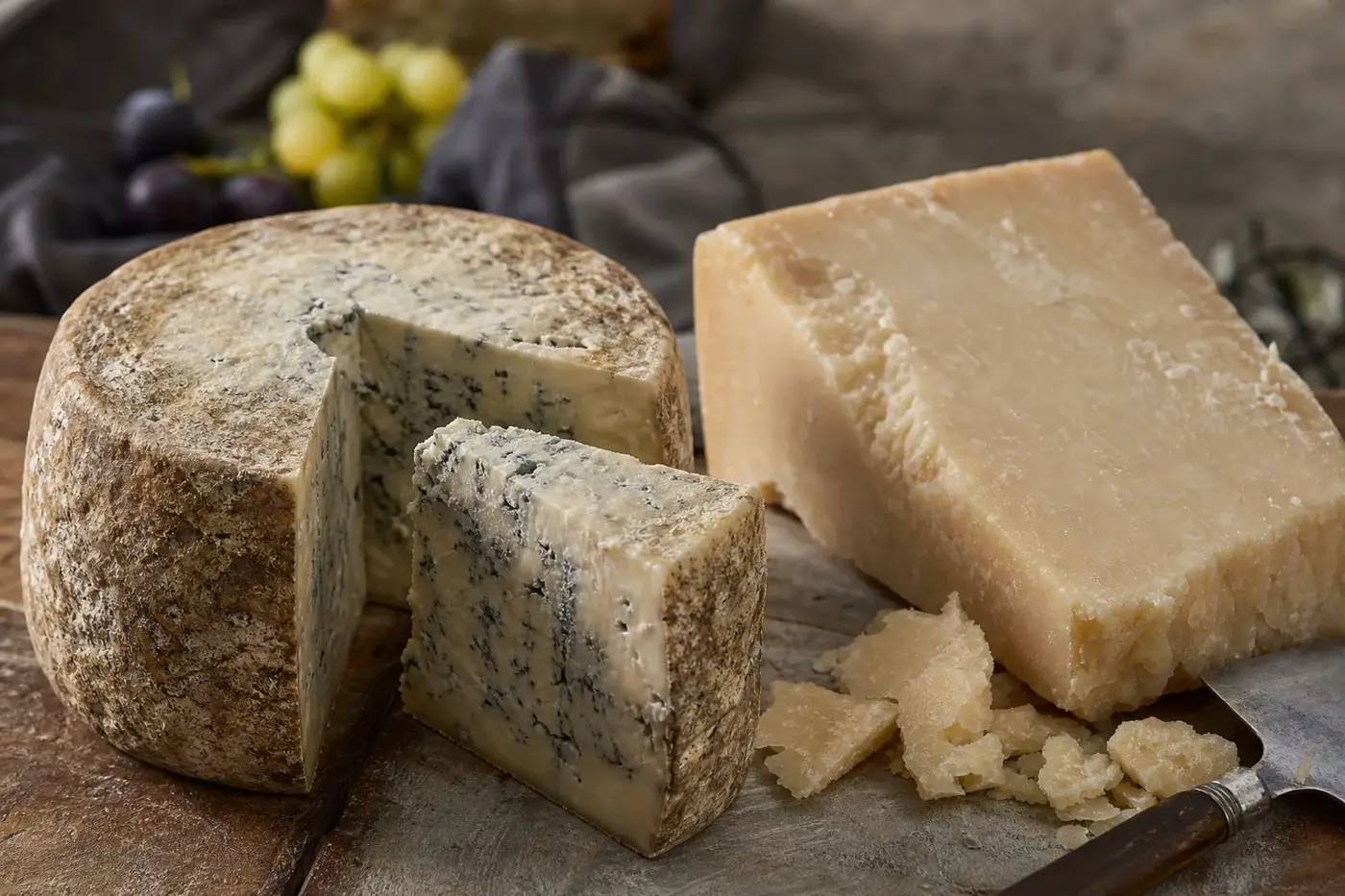
Cow's Milk Cheese
Picture a drum of Blue Stilton, its curd settling under its own weight, without a press.