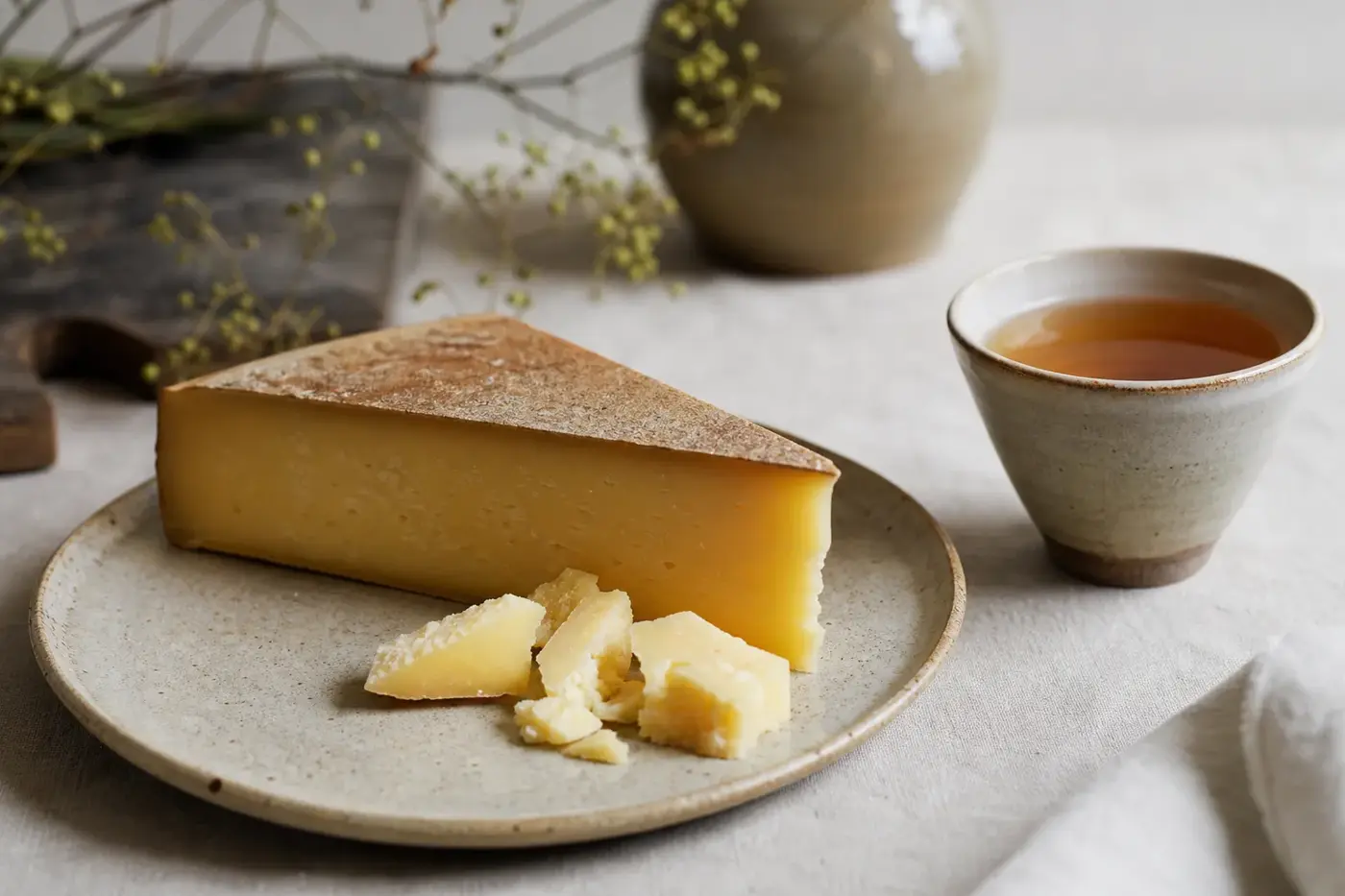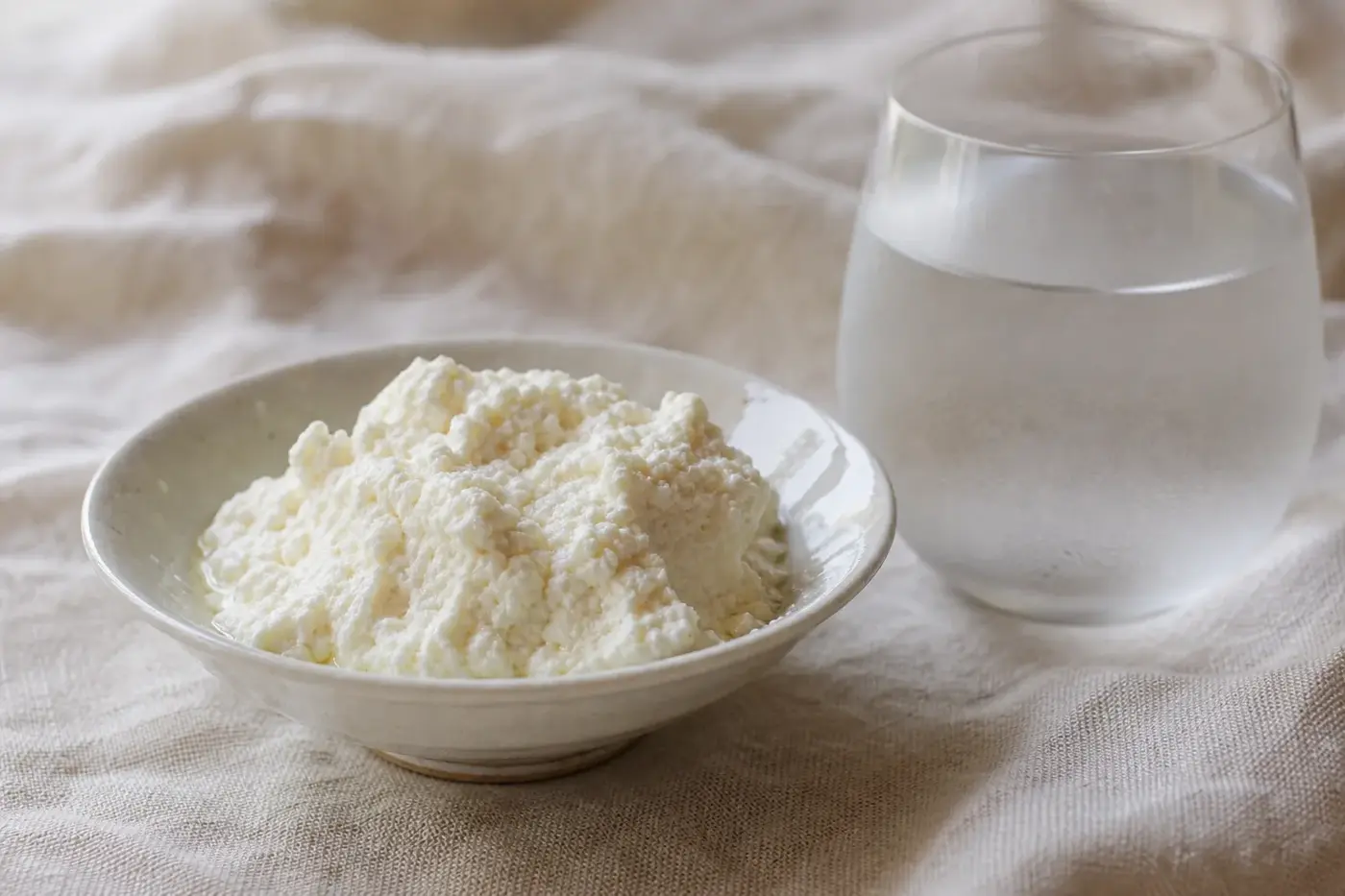
First, a bite of cheese. Then a sip of sake, and that savoury finish seems in no hurry to leave. It may linger more strongly than it does with white wine: in research summarised by the National Research Institute of Brewing, a taste sensor measured precisely that difference. Adding tartaric or malic acid to sake reduced the measured umami aftertaste, though the findings apply only to the combinations studied and do not establish a mechanism. [6]
Your first pairing need not be a grand undertaking. Start with mild fresh cheese and chilled, delicate sake, then move towards a savoury hard cheese with a fuller junmai. If its maker recommends warming, compare that junmai cool and gently warmed. Temperature gives you another way to find your preferred balance. [2, 8]
Meet the rice, koji and yeast in your glass
Two transformations lie behind your glass. Koji, rice cultivated with a mould that supplies enzymes, helps turn rice starch into sugar; yeast turns that sugar into alcohol. Gekkeikan describes both steps in its brewing introduction. Sake is brewed, not distilled: some categories permit added brewing alcohol, but sake itself is a fermented rice drink. [1, 2, 10]
At your cheese board, the character of the drink matters more than that distinction. Read the maker's description of sweetness, acidity, aroma and body, with the category name as another clue. A delicate sake and a concentrated, savoury one bring quite different personalities to the same cheese. [3, 8]
Find your way through junmai, ginjo, daiginjo, nigori and aged sake
Begin with junmai: it means no added brewing alcohol. Under Japan's National Tax Agency labelling standard, its ingredients are rice, rice koji and water, with no fixed polishing threshold. Ginjo requires rice polished to 60% or less of its original brown rice weight; daiginjo requires 50% or less. Both must also meet the prescribed production and quality requirements under the standard current in November 2026. [1]
Those percentages describe what remains, not what has been removed. Junmai ginjo and junmai daiginjo combine their respective polishing requirements with no added brewing alcohol. These are useful clues for your bottle, but they are Japanese production and labelling categories, not fixed sweetness levels. [1, 3]
Nigori announces a difference before you take a sip: its name means cloudy. Rice particles remain after coarse filtering, giving the drink its appearance, as Gekkeikan and Hakkaisan describe. Gekkeikan calls its example sweet and full bodied, with a thicker texture. The amount of suspended material, and the way the sake feels in your mouth, depend on your bottle. [4, 9, 10]
Aged sake, often called koshu, opens up another broad territory. The National Research Institute of Brewing records varied tastes and qualities among matured sakes. Some develop the nutty or caramelised notes described by WSET. Let the producer's account of your particular bottle show you where to begin. [3, 9]
Taste beyond the salt and sweetness
Salt meeting sweetness is only part of the pleasure. Consider five elements: sweetness offers contrast to salt, acidity brings a tangy edge, and aroma can echo fruit or introduce a competing scent. Texture gives the drink lightness or weight, while savouriness, often called umami, can extend the cheese's finish. These tasting prompts draw on sake pairing guidance. [8, 9]
The interest lies in how those elements work together. A separate study of fifteen commercial sakes combined chemical analysis with one expert's sensory scores; sugars, organic acids and amino acids contributed to the researchers' flavour prediction models. At home, judge the whole balance rather than chasing one component. Amino acids alone are no shortcut to a successful match. [7]
Let fresh cheese make the introductions
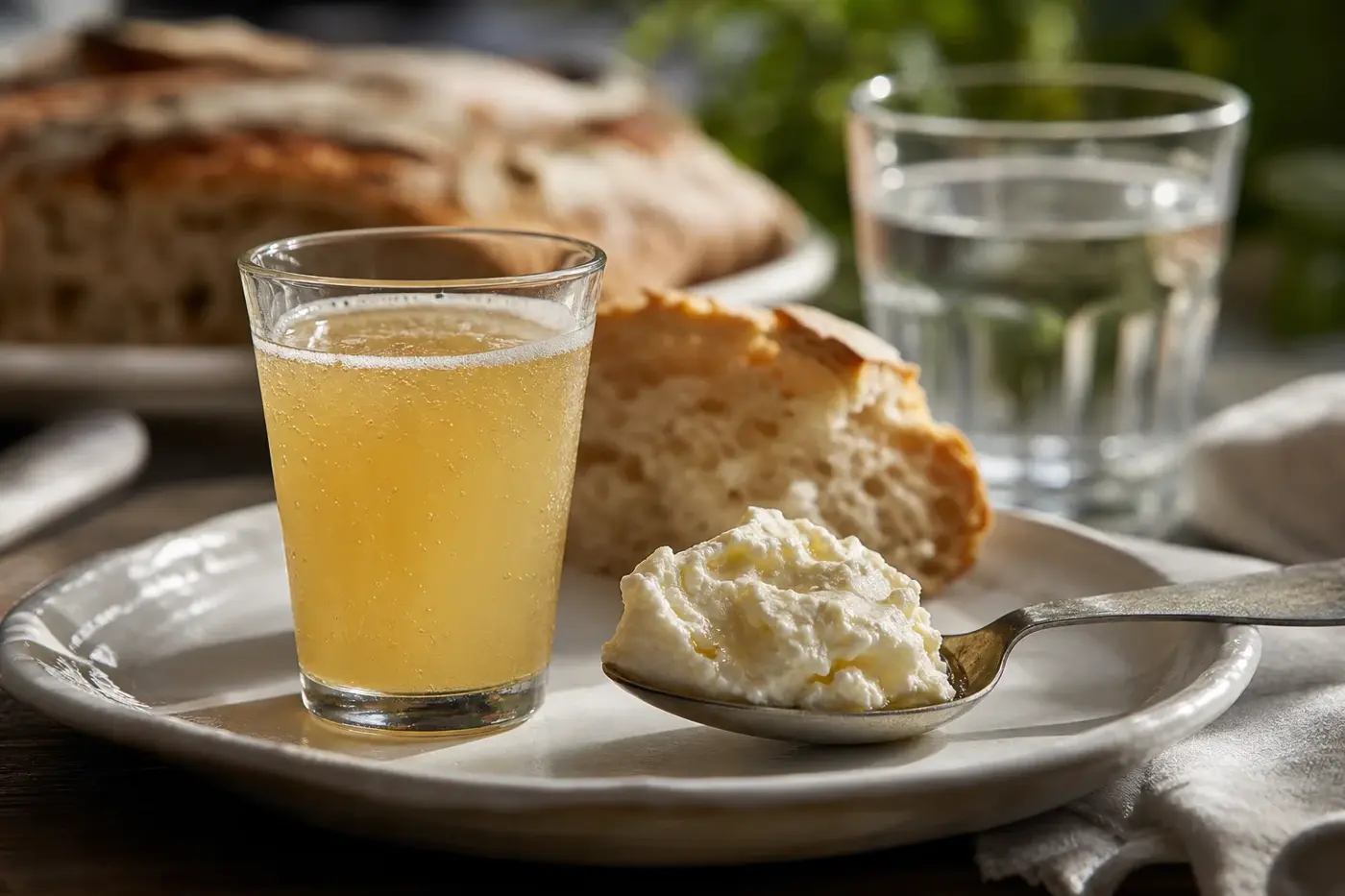
Give a light, delicate sake room to show itself beside a mild, unflavoured fresh cheese. Choose your bottle by the maker's description, then begin with fresh ricotta or try mild fresh goat's cheese for a tangier comparison. If you fancy a gently sparkling alternative, WSET recommends fresh cheeses with sparkling sake. [9]
Taste the cheese plain before reaching for bread. Take a small sip and ask yourself three questions: does the milk flavour stay distinct, does the tang sharpen, and can you still identify the sake's aroma? Keep this first comparison restrained. Smoked, herb coated and heavily seasoned cheeses can have their turn later.
This page summarises published guidance from the official sources it cites. It is not medical advice. Guidance differs between countries and changes over time, so check the current source for where you live, and ask your doctor, midwife, pharmacist or dietitian about your own circumstances.
Give fruity sake a soft white mould companion
Try a fruity ginjo or daiginjo beside a mild Brie style cheese. Let the maker's tasting notes guide your choice of sake, then taste a little rind with the cheese. Does the fruit aroma remain clear after that bite? [8, 9]
If the cheese takes over, taste paste and rind separately. A mild Gouda style offers a firmer alternative for the same comparison. Keep it restrained rather than choosing a strongly flavoured mature cheese. You want two distinct partners, not an argument at the cheese board. [8]
Bring mature Cheddar together with fuller junmai
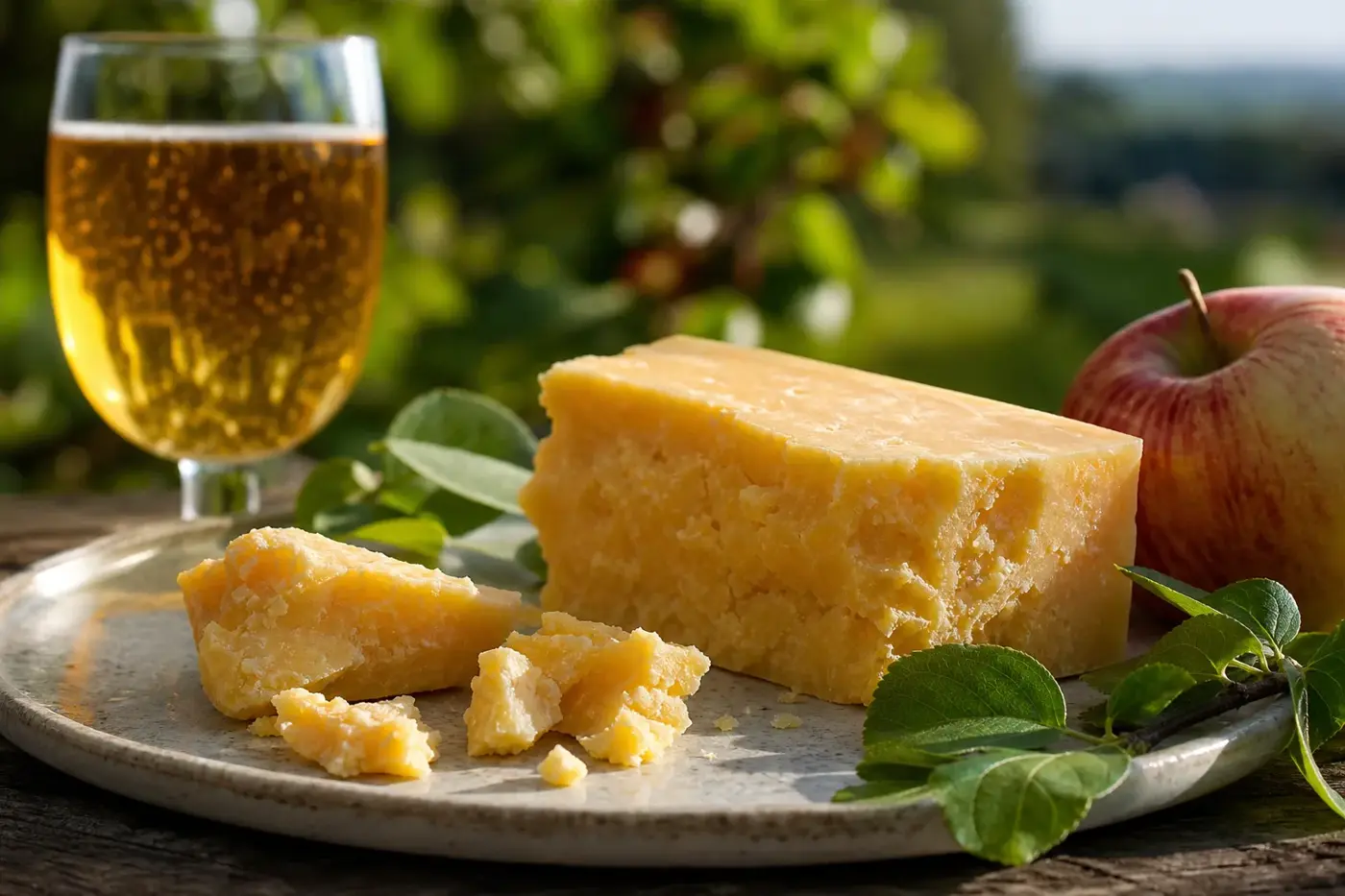
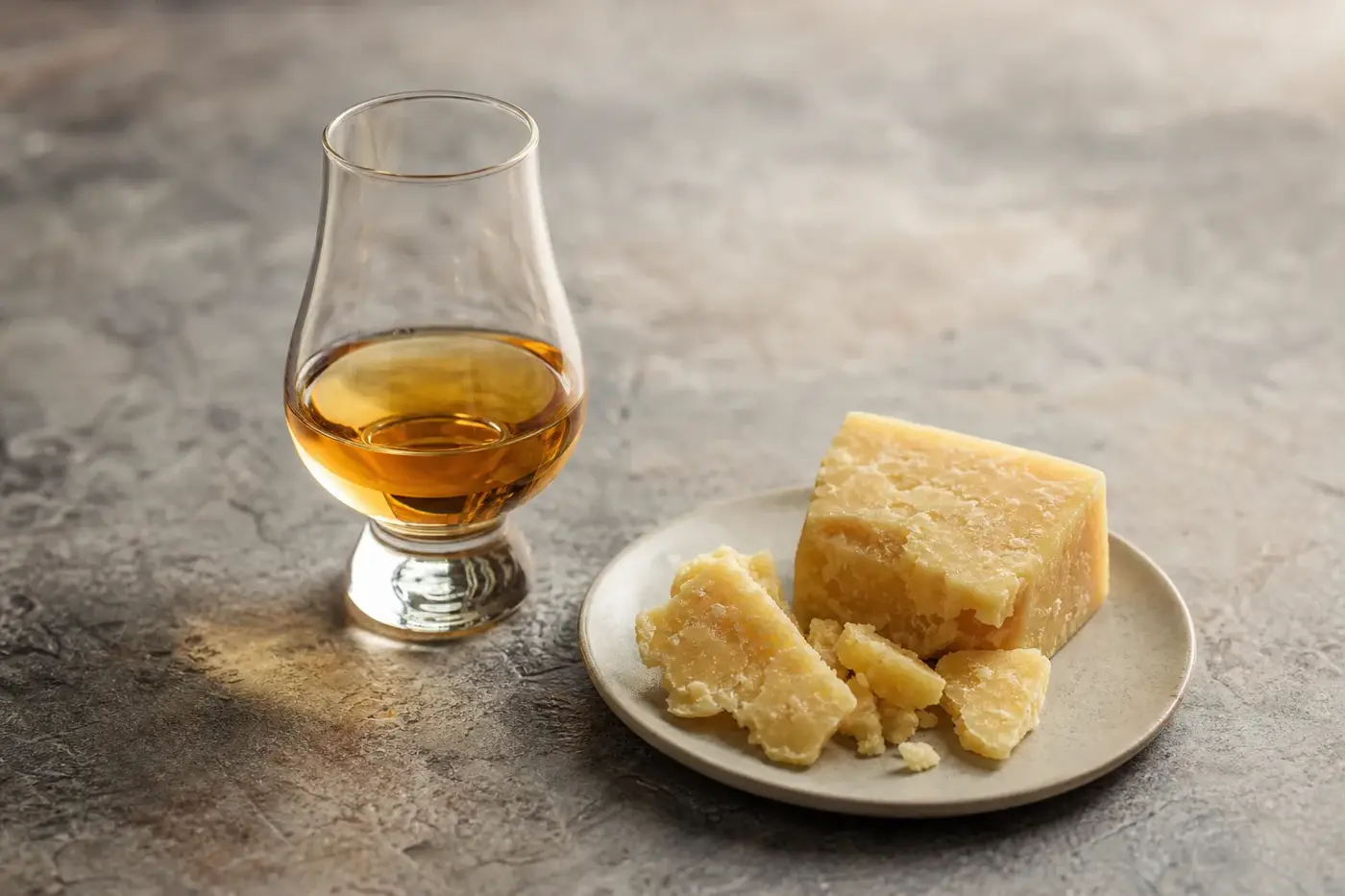
A fuller bodied junmai gives mature Cheddar a savoury partner. Look for a bottle its maker describes as rounded or savoury, then follow the transition from the cheese's finish to the sake. The Japan Sake and Shochu Makers Association, an industry body, recommends exploring this shared savoury character. [8]
Does the pairing lengthen the finish, or does it simply feel heavy? If the flavours blur, take a smaller bite, choose a less forceful cheese or serve the same sake cooler. Another savoury hard cheese can do the same job. Follow the character of the piece in front of you, rather than its style alone.
Take blue cheese towards aged or sweeter sake
Blue cheese gives you more than one path to explore. Try an aged sake described as mellow or caramelised, or a sweeter bottle with enough flavour to remain distinct. Sweetness, acidity and intensity matter more than age alone. WSET also recommends aromatic daiginjo with blue cheese, another possibility for your table. [8, 9]
Start with a little cheese and leave the chutney and honey aside. Notice whether the sake softens the impression of salt, whether the cheese overwhelms its aroma, and whether the finish feels balanced or cloying. A dry aged sake and a sweet aged sake may give you very different answers. [8, 9]
Try four pairings, with alcohol free options alongside
Use these starting points to explore the published principles of matching weight and balancing salt, sweetness and savouriness. Choose still water if you want to concentrate on the cheese itself. It also gives your palate a reset between comparisons. [8, 9]
| Your cheese | Sake to try | What to look for | Alcohol free option |
|---|---|---|---|
| Mild fresh cheese | Delicate, lightly aromatic sake | Does the milk flavour feel at home with the drink's lightness? [8] | Still water |
| Soft white mould cheese | Fruity ginjo or daiginjo | Taste the fruit aroma against both paste and rind. [8] | Still water |
| Mature Cheddar or savoury hard cheese | Fuller junmai | Follow the shared savouriness and see how long the finish lasts. [8] | Still water |
| Blue cheese | Aged or sweeter sake | Notice the balance of salt, sweetness and intensity. [8, 9] | Still water |
See what a little warmth brings out
Warmth can reveal another side of sake. Gekkeikan says serving it warm at 45 °C (113 °F) makes fullness of body and mellow flavour more pronounced. Its Nigori Sake comes with different advice: chilled at 5 to 15 °C (41 to 59 °F), or at room temperature, with no warm recommendation. [2, 4]
Start at the temperature recommended for your bottle. For a second comparison, let a small portion approach room temperature, around 20 °C (68 °F). Notice whether aroma, sweetness or alcohol becomes more apparent. A thermometer makes the comparison easier to repeat.
Only warm a sake whose maker supports that serving style. Hakkaisan says its seasonal nama products are better cold or at room temperature than warmed, while some of its other sakes can be enjoyed warm. For your Cheddar comparison, choose a suitable bottle and gently warm a separate small portion in a heatproof vessel standing in warm water. [5]
Aim for the maker's suggested temperature. Keep the rest of the bottle unheated, so you can compare the portions.
Set a small table for a proper tasting
Two cheeses and one suitable sake are enough to begin. Set out a few small bites of each cheese and use a small tasting measure, for example 15 ml, for each temperature comparison. That is a sampling suggestion, not an amount to finish: leave any pour unfinished if you wish. Keep drinking water available throughout.
Hakkaisan recommends either small ceramic sake cups or wine glasses. For aroma comparisons, use the same shape of glass for each sample, with suitable heatproof drinkware for a warm portion. A consistent vessel keeps your attention on temperature and pairing. There is no need to audition the entire glass cupboard. [10]
- Begin with mild fresh cheese and delicate sake.
- Try white mould cheese, or the firmer alternative, with aromatic sake.
- Move on to hard cheese and fuller junmai.
- Finish with blue cheese and the aged or sweeter bottle.
- Taste each cheese alone, then take a small sip. Note what changes and pause with water between combinations.
Keep plain bread or unseasoned crackers within reach. Leave honey, pickles and strongly flavoured chutneys until afterwards, then try accompaniments individually once a combination works for you. If rind and paste are unfamiliar terms, the guide to telling cheese styles apart explains the differences.
Take the chill off your cheese safely
Bring out only the cheese you intend to serve, leaving the rest refrigerated. Let that small portion lose some refrigerator chill while you arrange the tasting, keeping preparation and serving within the official limit. Check its texture as you go. You do not need a single target temperature for every style.
For England, Wales and Northern Ireland, the Food Standards Agency's November 2026 guidance advises keeping the fridge between 0 and 5 °C (32 to 41 °F). Chilled food should be out for the shortest possible time during preparation, with a maximum of four hours. Follow the cheese's storage instructions and any shorter limit. [13]
Follow the label's instructions after opening, keep serving utensils clean and promptly return reserved cheese to refrigeration. GOV.UK guidance distinguishes a use-by date, which concerns safety, from a best before date, which concerns quality. Serve chilled cheese within its use-by date. [13, 14]
For longer term handling, turn to storing cheese at home. If unexpected mould appears, consult mould on cheese for advice specific to your cheese type. Follow any official recall notice for your product. [16]
Let your sake bottle guide storage
Reseal opened sake and refrigerate it. Gekkeikan advises consuming it as soon as possible after opening; Yaegaki likewise recommends refrigeration and prompt consumption. Follow the individual maker's instructions rather than giving every sake the same opened life. Mark the opening date on your bottle to help you keep track. [11, 17]
Nama means unpasteurised sake, and cold storage deserves particular attention. The National Research Institute of Brewing's storage guide recommends 4 °C (39 °F) or lower for nama, sparkling sake and ginjo; Hakkaisan also specifies refrigeration for its nama products. Keep bottles away from light. Treat storage temperature separately from the serving temperature of a small portion. [5, 11, 12]
Welcome everyone, and keep alcohol in mind
Check your bottle's alcohol strength and keep the tasting for adults of legal drinking age. Anyone can join the cheese comparison with water instead. In the UK, the NHS advises that the safest approach during pregnancy, or when pregnancy is possible, is to avoid alcohol entirely. Consult its current guidance and ask your clinician about your circumstances. [15]
You can explore the cheese without drinking sake. Choose alcohol free servings if you are driving or avoiding alcohol.
Questions people ask
Which cheeses go well with sake?
Try mild fresh cheese with a delicate sake, or a fruity ginjo or daiginjo with a mild Brie style cheese. Fuller junmai can accompany mature Cheddar, while aged or sweeter sake offers a starting point for blue cheese.
What makes nigori sake cloudy?
Nigori means cloudy. Rice particles remain after coarse filtering, though the amount suspended and the texture depend on the bottle.
Should sake be served warm or cold with cheese?
Begin at the temperature recommended on the bottle, and warm only a sake whose maker supports that serving style. Gekkeikan recommends its Nigori Sake chilled at 5 to 15 °C or at room temperature, with no warm recommendation.
How should opened sake be stored?
Reseal it and refrigerate it, following the individual maker’s instructions. Gekkeikan advises consuming it as soon as possible after opening, and Yaegaki also recommends prompt consumption.
Can I drink sake during pregnancy?
In the UK, the NHS advises that the safest approach during pregnancy, or when pregnancy is possible, is to avoid alcohol entirely. Check the NHS’s current guidance and ask your clinician about your circumstances.
Sources
- National Tax Agency, Japan. 清酒の製法品質表示基準を定める件, standards for sake production method and quality labelling. Notice No. 8, 22 November 1989, consolidated text listing amendments through July 2022. Sections 1 and 2 establish the ingredient and polishing requirements discussed above.
- Gekkeikan. Sake 101, undated web edition, retrieved November 2026. Producer explanation of fermentation and its account of serving sake at 45 °C.
- National Research Institute of Brewing. Varieties, Japanese Sake Essentials, undated web edition, retrieved November 2026. Classification table and explanation of matured sake.
- Gekkeikan. Nigori Sake, undated product information, retrieved November 2026. Producer's filtration explanation, tasting description and serving recommendations.
- Hakkaisan. Q&A, Japanese web edition, undated, retrieved November 2026. Producer guidance on nama storage and suitability for warming.
- National Research Institute of Brewing. Difference in the palatability of sake and wine when paired with food, undated research summary in its 2018 research collection. Taste sensor measurements and organic acid addition experiment.
- Food Science and Technology Research. Enantioselective Amino Acid Profile Improves Metabolomics-based Sensory Prediction of Japanese Sake, volume 25, issue 6, pages 775 to 784, 2019. Original chemical and sensory study of fifteen commercial sakes.
- Japan Sake and Shochu Makers Association. Why Cheese and Charcuterie Pairs Well with Sake, undated web edition, retrieved November 2026. Industry guidance on savouriness, salt, sweetness and pairing.
- Wine & Spirit Education Trust. Sake and cheese pairing, undated web edition, retrieved November 2026. Published expert recommendations, including fresh cheese with sparkling sake and blue cheese with aromatic daiginjo.
- Hakkaisan USA. FAQ, undated web edition, retrieved November 2026. Producer explanations of fermentation, nigori and suitable drinkware.
- Gekkeikan. FAQ, undated web edition, retrieved November 2026. Producer guidance on opened storage, serving recommendations and nama sake.
- National Research Institute of Brewing. Handy Storage Guide to Sake, undated PDF edition, retrieved November 2026. Guidance on temperature, light, resealing and sensitive styles.
- Food Standards Agency. How to chill, freeze and defrost food safely, published 18 December 2017, current web text retrieved November 2026. Applies to England, Northern Ireland and Wales.
- UK Government. Understanding food labelling: Best before and use-by dates, undated current web edition, retrieved November 2026. Date meanings and storage instructions.
- NHS. The risks of drinking too much, current web edition retrieved November 2026. Published UK advice on avoiding alcohol during pregnancy or possible pregnancy.
- Food Standards Agency. Food and allergy alerts, live alert index, checked November 2026.
- Yaegaki Corporation of USA. Frequently Asked Questions, undated web edition, retrieved November 2026. Producer guidance on refrigerating opened sake and consuming it promptly.
Researched through Japanese official labelling rules, original brewing research, published pairing guidance, producer instructions and official food safety sources; the tasting sequence and suggested comparisons are desk research synthesis.
Last checked: November 2026
Last checked November 2026.
The editors suggest you read next