Dorset Blue Vinny
In the kitchen and larder at Woodbridge Farm near Sturminster Newton, cheesemaking experiments begin to outgrow their surroundings.
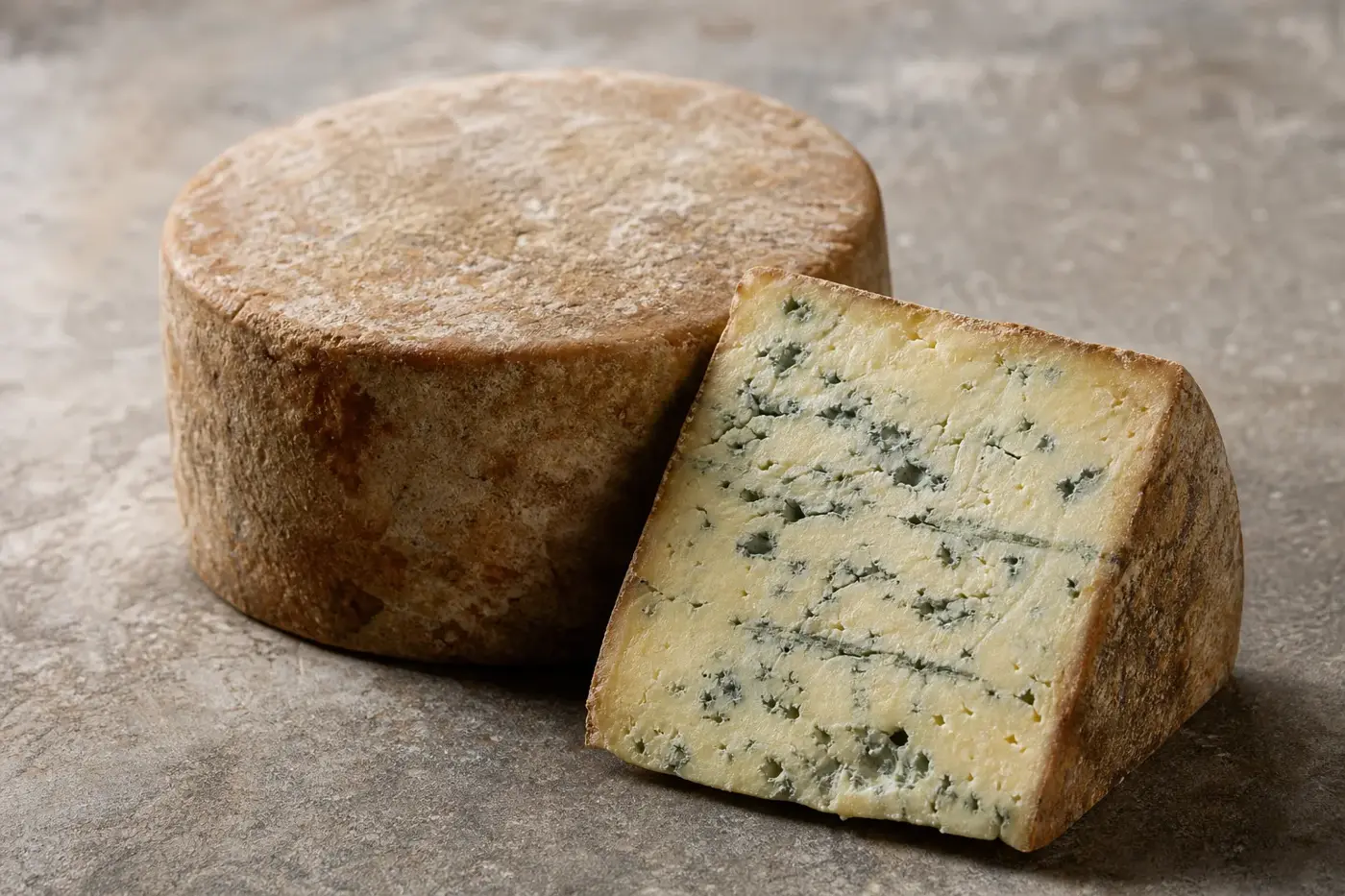
In the kitchen and larder at Woodbridge Farm near Sturminster Newton, cheesemaking experiments begin to outgrow their surroundings. Next stop: the old cow byre. The producer dates Dorset Blue Vinny’s revival to 1980, but its defining ingredient, milk skimmed of cream, carries you further back into Dorset’s butter making past and the practical beginnings of this firm, crumbly blue. [4,5]
| At a glance | What to know |
|---|---|
| Familiar name | Dorset Blue Vinny. [4] |
| Registered name | Dorset Blue Cheese. [1] |
| Authority and register | Defra, Great Britain food geographical indications register. [1] |
| Protection in Great Britain | Registered PGI, November 2026. [1] |
| Registration dates | See the protected name section below. [1] |
| Where it must be made | County of Dorset, England. [2] |
| Milk | Cow’s milk; maker declares pasteurised and hand-skimmed. [3] |
| Specification’s milk treatment | Unpasteurised. [2] |
| Time to ripen | Maker reports up to 20 weeks. [3] |
| Rind | Natural, rough, dry and brown. [7] |
| Allergen | Milk. [3] |
Follow those wandering blue veins
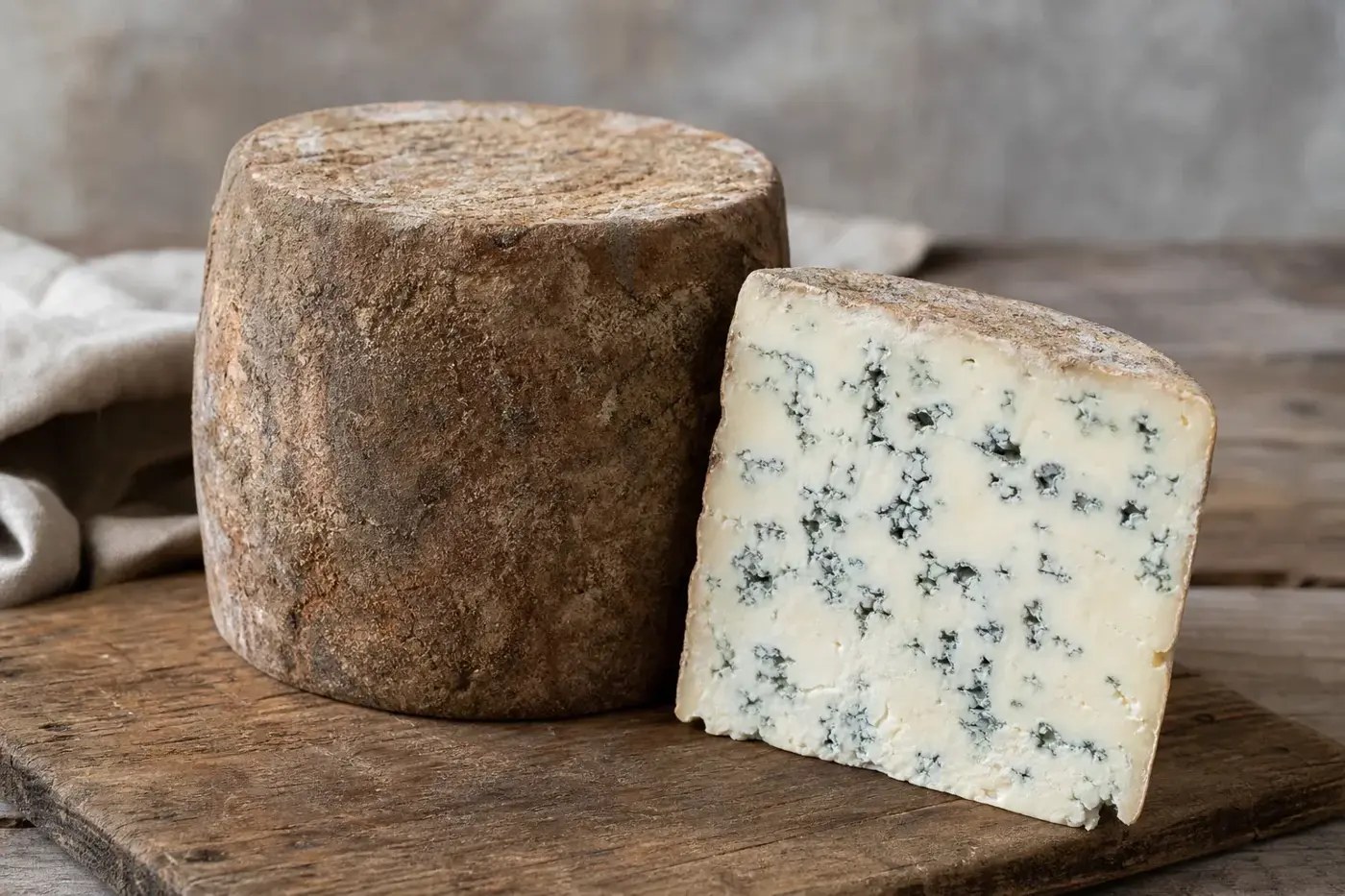
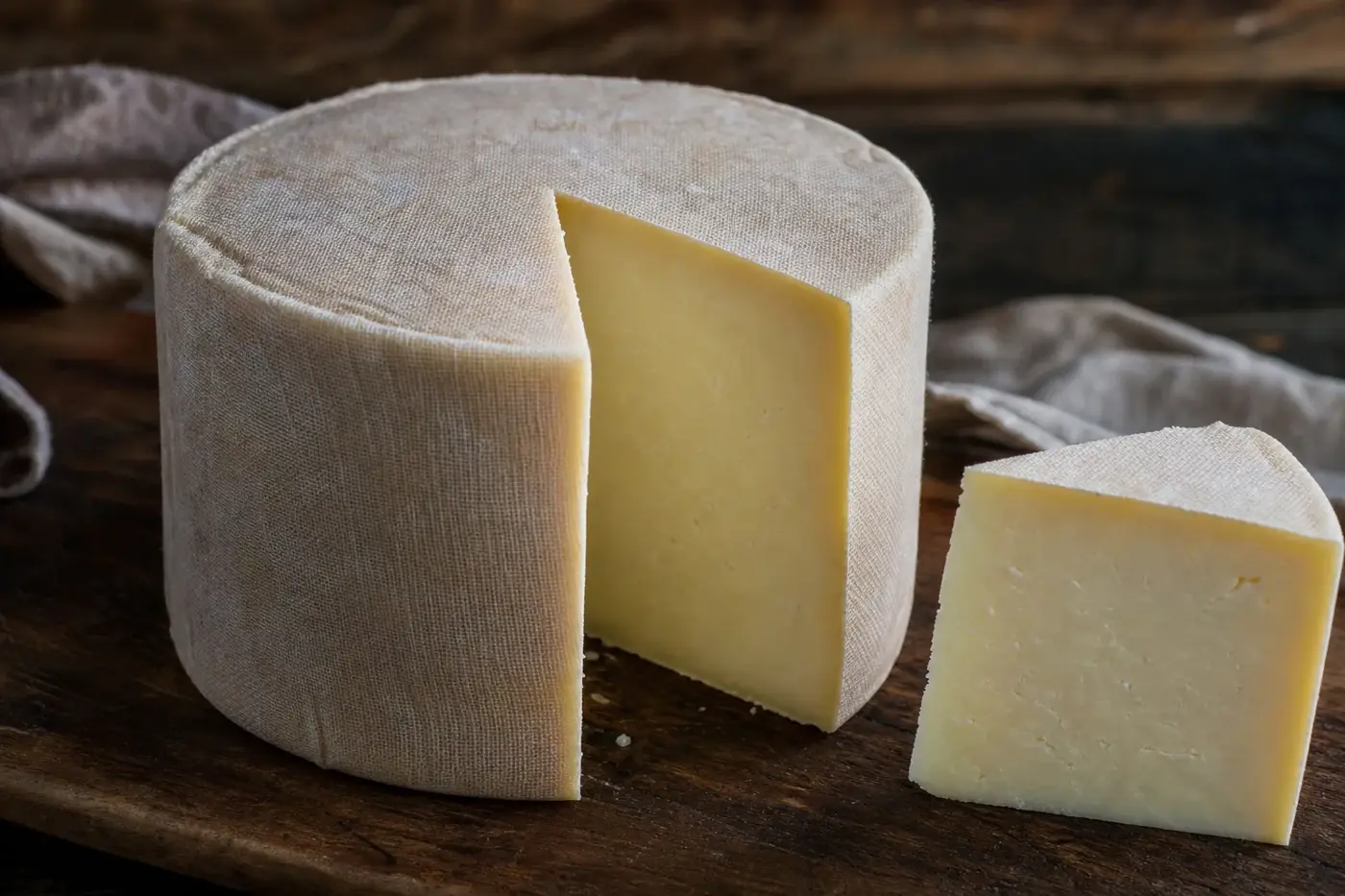
Cut into Dorset Blue Vinny and irregular blue-green veins branch through pale paste, beneath a rough, dry brown mould coating. The Academy of Cheese describes a firm cheese whose flavour ranges from mild to strong, with a peppery, piquant character. There is plenty to catch your eye before you take a bite. [2,7]
Cheesemonger Rennet & Rind describes its selection as crumbly and lactic, with bright acidity, slight fruitiness and gentle bitterness. Think lively and tangy, rather than simply strong. Ask your monger how the particular wheel is showing: “blue” is a colour, not a complete personality. [6]
For aroma, let your nose lead your first tasting. Smell the freshly cut paste and rind separately, then try a small piece on its own.
Before the cheese, there was butter
Cream went into butter; the milk left behind became Blue Vinny. The producer’s history describes that farmhouse cheese as dry and very crumbly. This was practical economy, with butter and cheese coming from the same milk, not cheese trying to be a lighter version of something else. [5]
The Academy of Cheese places the tradition in the eighteenth and nineteenth centuries. Its account connects Dorset Blue Vinny with Dorset Blue Cheese: two names for the same cheese. You may also meet “Vinney”, a spelling found in historical accounts and the published specification’s discussion of the name. [2,7]
Michael Davies makes room for a revival
Production declined around the Second World War, according to the farm’s history, and afterwards the cheese became difficult to find. That account preserves colourful stories about old ways of encouraging blue mould. Enjoy those as local storytelling: today’s maker describes deliberate culture addition and piercing to develop the veins. [3,5]
The producer credits Michael Davies with reviving Dorset Blue Vinny at Woodbridge Farm in 1980. The family history traces his experiments from kitchen and larder into the old cow byre, giving cheesemaking more room. Woodbridge Farm remains the maker’s stated production home, so that revival leads directly to the cheese you can buy today. [4,5]
Hand-skimming, patient turning and long pins
The maker begins with milk from its own Friesian herd, pasteurises it and skims it by hand. Starter culture, rennet and blue mould culture follow. Rennet sets the milk into curd; whey is the liquid released when that curd is cut and drained. [3]
The set milk is cut and left overnight. Next morning, the whey is drained, and the curd is ground, salted and put into moulds. After a few days, the cheeses move into the maturing room, where they are turned daily during the first weeks, then weekly. [3]
Then come the long pins. These pierce the cheese to open air passages, allowing the mould inside to develop its blue veining. The maker reports maturation of up to 20 weeks, with added culture and access to air both shaping that blue interior. [3]
If you want to follow the process more closely, start with how cheese is made. Then turn to rennet explained for the coagulant’s different sources.
The Dorset name, and what protects it
Dorset Blue Cheese is the name registered as a Protected Geographical Indication, or PGI, on the British register. Defra records its original EU registration on 23 December 1998 and UK scheme registration on 31 December 2020 at 23:00. Its Great Britain status in November 2026 is registered. [1]
The specification linked from the register carries the heading “Dorset Blue Vinny Cheese”. It defines the area as the county of Dorset and describes local milk supplies and production on a Dorset farm. You will therefore find both the familiar Vinny name and the register’s shorter name in the official documentation. [1,2]
There is a milk treatment difference to keep in view. The linked specification describes unpasteurised milk, while the producer describes pasteurised milk. The legal significance and current product’s compliance remain open questions here. [2,3]
A protected name is not the same thing as a brand. You can explore the distinction in protected names explained.
Make room for a thoughtful Stilton comparison
Start with milk and method when you put Dorset Blue Vinny beside Stilton. Stilton’s Great Britain specification describes full cream pasteurised cow’s milk and no applied pressure. The linked Great Britain specification for Dorset Blue Cheese describes skimming and light pressing: both have blue veins, but they take different routes to get there. [2,8]
Age matters, too. Stilton’s specification distinguishes younger, mature and vintage flavour and texture profiles, so establish which wheels and ages you are comparing before calling Dorset Blue Vinny milder. Rennet & Rind places its Dorset selection between a territorial blue and Blue Wensleydale, describing that selection rather than assigning every British blue a fixed position. [6,8]
Find the crumbly piece for you
Start with the cut face and, if offered, a sample. Tell your cheesemonger whether you want a crumbly piece for a board or cheese to crumble into cooking. Ask when it was cut, how it has been kept and when they recommend using it at its best.
Look for the published characteristics: irregular veining and a dry brown natural rind. Those veins need not line up neatly for inspection. Rennet & Rind describes assessing the paste of incoming batches before further maturing them, so give texture as much attention as colour. [2,6]
For milk treatment, ingredients and dietary requirements, read the current label or ask for the original product information. If you are buying a cut piece with only a short shop label, keep how to read a cheese label handy.
Start with bread, then try a pear toastie
For your first serving, choose plain bread or a savoury biscuit, leaving room to taste the cheese alone. The Academy of Cheese recommends Dorset Knobs, the county’s hard savoury biscuits. [7]
If you want an alcohol free drink, try apple juice diluted with sparkling water. Serve it alongside a plain cracker.
The producer’s recipes offer pear toasties, pasta with walnuts, stuffed mushrooms, potato gratin and leek, potato and blue cheese soup. You have several ways in: fruit beside that blue flavour, vegetables carrying it through a dish, or a little cheese distributed through pasta. [9]
Try the pear toastie or vegetable soup first. Each gives the cheese a clear role without several other strong ingredients competing for your attention. Follow the published recipe and your ingredients’ handling instructions when you turn the idea into a meal. [9]
Give your piece a good home
For home storage in England, Wales and Northern Ireland, the Food Standards Agency recommends a fridge between 0 and 5 °C (32 to 41 °F). Follow the packaging instructions and date marking, including directions for use after opening. Keep your cut piece covered and separate from raw foods. [10]
When you prepare and serve it, consult current Food Standards Agency guidance on keeping chilled food out of the fridge. [10] For wrapping and fridge organisation, see how to store cheese at home.
When your cheese choices need extra care
In November 2026, NHS guidance lists Stilton among hard cheeses that can be eaten during pregnancy and advises cooking soft blue cheeses until steaming hot. Dorset Blue Vinny’s classification remains an open question here. Check current NHS guidance and ask your midwife about your circumstances. [11]
The NHS also identifies blue-veined cheese among chilled foods associated with listeriosis. If you follow clinical advice because of age, illness or weakened immunity, take the official guidance and your particular cheese’s label to your healthcare professional. [12]
Dorset Blue Vinny contains cow’s milk, and the NHS distinguishes food allergy from food intolerance. For advice about a milk allergy, including recipe ingredients and substitutions, consult a healthcare professional. [3,13]
General information only, not medical advice: follow the official guidance where you live.
Questions people ask
What does Dorset Blue Vinny taste like?
The Academy of Cheese describes it as firm, with a flavour ranging from mild to strong and a peppery, piquant character. Rennet & Rind describes its selection as crumbly and lactic, with bright acidity, slight fruitiness and gentle bitterness.
Is Dorset Blue Vinny made with pasteurised milk?
The producer says it pasteurises milk from its own Friesian herd and skims it by hand. The linked specification describes unpasteurised milk, and the legal significance of that difference has not been verified.
Is Dorset Blue Vinny a protected cheese?
Dorset Blue Cheese is registered as a Protected Geographical Indication on the British register. Its specification defines the production area as the county of Dorset.
Can you eat Dorset Blue Vinny during pregnancy?
The NHS advises that Stilton is among the hard cheeses that can be eaten during pregnancy and that soft blue cheeses should be cooked until steaming hot. Dorset Blue Vinny’s classification has not been verified, so check current NHS guidance and ask your midwife about your circumstances.
How should Dorset Blue Vinny be stored?
The Food Standards Agency recommends a fridge between 0 and 5 °C for home storage in England, Wales and Northern Ireland. Follow packaging instructions and date markings, and keep the cut piece covered and separate from raw foods.
Sources
-
Department for Environment, Food & Rural Affairs. Dorset Blue Cheese. Great Britain geographical indications register entry, published 4 January 2021, accessed November 2026. Official register entry.
-
Defra. Product specification: Dorset Blue Vinny Cheese. Undated specification linked from the current register entry, sections 4.1 to 4.6, accessed November 2026. Published specification.
-
Dorset Blue Vinny, Woodbridge Farm. Dorset Blue Vinny. Undated producer account of milk preparation, cheesemaking and maturation, accessed November 2026. Producer’s making account.
-
Dorset Blue Vinny, Woodbridge Farm. The Story so far... Undated family account, accessed November 2026. Producer’s revival account.
-
Dorset Blue Vinny, Woodbridge Farm. The History of Dorset Blue Vinny. Undated producer history, accessed November 2026. Producer’s historical account.
-
Rennet & Rind. Dorset Blue Vinny. Undated cheesemonger’s product description and maturing notes, accessed November 2026. Commercial seller, cited for its own sensory observations. Cheesemonger’s account.
-
Academy of Cheese. Level Two cheese brochure, February 2022 edition, “Dorset Blue Cheese PGI (AKA Vinny)”. Published cheese profile.
-
Defra. Stilton cheese product specification. Undated document linked from the Great Britain register, sections 4.2 and 4.5, accessed November 2026. Published Stilton specification.
-
Dorset Blue Vinny, Woodbridge Farm. Dorset Blue Vinny Recipes. Undated producer recipe collection, accessed November 2026. Commercial producer, cited for its published uses. Producer’s cooking ideas.
-
Food Standards Agency. How to chill, freeze and defrost food safely. Published 18 December 2017; current retrieved version, November 2026. Applies to England, Northern Ireland and Wales. Official storage guidance.
-
NHS. Foods to avoid in pregnancy. Current retrieved version, November 2026, “Cheese, milk and other dairy”. Official pregnancy guidance.
-
NHS. Listeriosis. Current retrieved version, November 2026, “How you get listeriosis”. Official listeriosis guidance.
-
NHS. Food allergy. Current retrieved version, November 2026, definition, causes and distinction from intolerance. Official allergy guidance.
-
Food Standards Agency. Alerts. Current official alert index, accessed November 2026 for the editorial recall check. Official alert index.
Research combined the official register and specifications with attributed producer and cheesemonger accounts, published cheese education material and official food guidance.
Last checked: November 2026
Last checked November 2026.
The editors suggest you read next
West Country Farmhouse Cheddar Cheese
Large pieces of curd turn and stack under the cheesemaker’s hands.