Driftwood
Cut across Driftwood’s little log and you get a striking contrast: dark ash outside, pale cheese within.
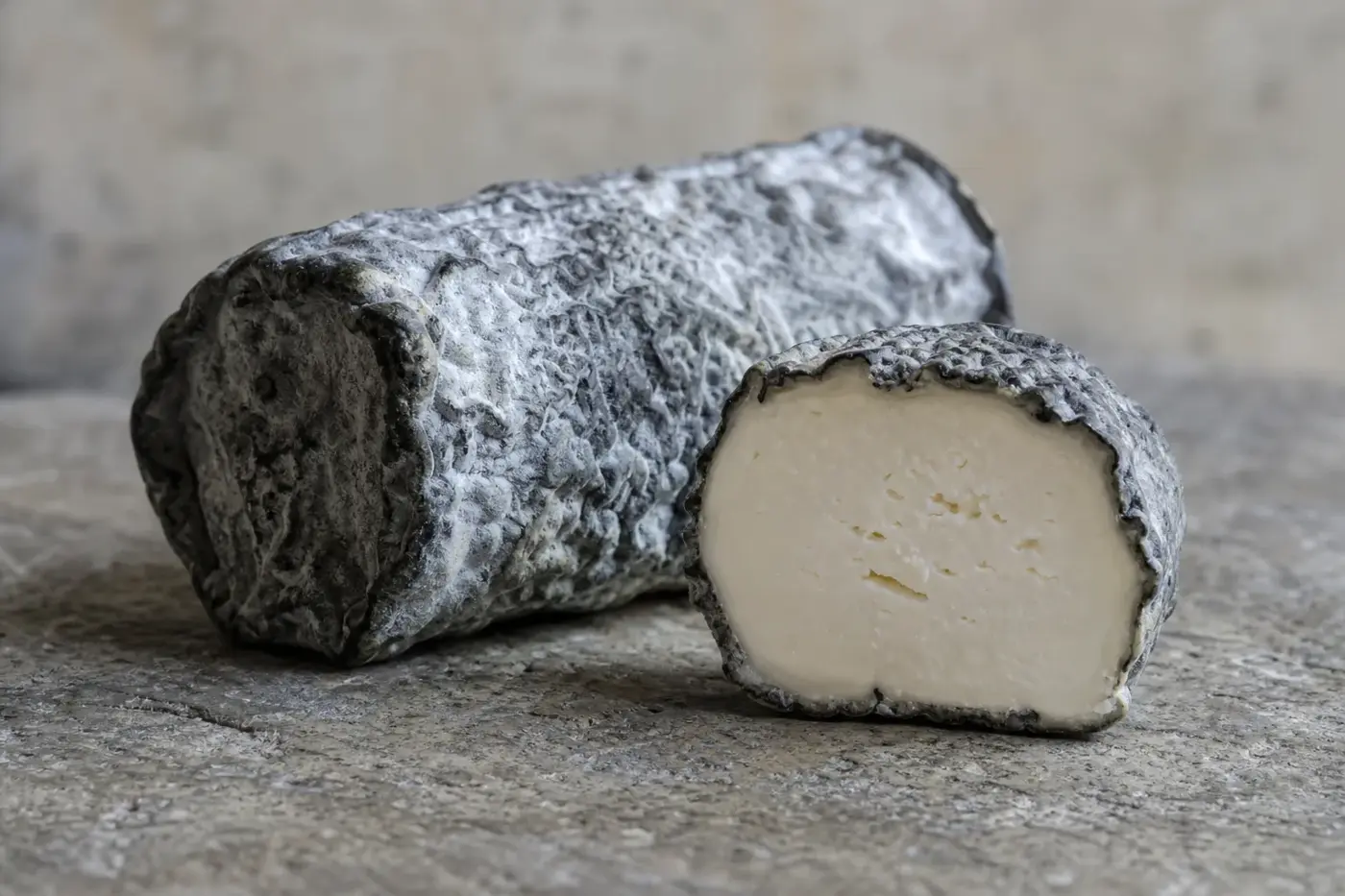
Cut across Driftwood’s little log and you get a striking contrast: dark ash outside, pale cheese within. This soft, mould-ripened Somerset goat’s cheese comes from White Lake Cheese at Bagborough Farm in Pylle. Small it may be, but it knows how to make an entrance. [1, 2, 3]
| Your questions | The details |
|---|---|
| What to ask for | Driftwood. [1] |
| Who makes it, and where | White Lake Cheese, Bagborough Farm, Pylle, Somerset, England. [3] |
| Where the milk comes from | Goat’s milk from the maker’s own herd, according to White Lake. [4] |
| How the milk is treated | Thermised; described by the maker as unpasteurised. [1] |
| Which rennet is used | Vegetarian, according to the maker. [1] |
| Shape and size | Soft, ash-coated log; listed weight 200 g. [1, 2] |
| What grows on the rind | Geotrichum yeasts, identified by the Academy of Cheese. [2] |
| Time to mature | Three to eight weeks, according to the Academy of Cheese. [2] |
| Protection status | Unconfirmed for the EU, Great Britain, Northern Ireland, Switzerland and United States. |
| Pregnancy guidance | UK: NHS guidance on soft ripened and mould-ripened cheeses, November 2026. See the pregnancy section below. [7] |
Take a closer look at those wrinkles
Driftwood’s dark coat rewards a second look. Applied ash gives it colour, but a living surface develops as the cheese matures. The Academy of Cheese links those wrinkles to yeast growth: there is more going on here than a handsome jacket. [2]
At the counter, look at the whole cheese, then a cut face if one is available. Ask about the current batch’s texture and tell the cheesemonger when you plan to serve it. For your first purchase, readiness for that meal matters more than the darkness of the rind.
Give Driftwood its own space on a British cheeseboard, perhaps beside Cheddar for contrast. Several similar soft cheeses can crowd out the differences you came to explore. A little plain bread between tastes helps you follow each one.
Follow the milk back to Somerset
The goats supplying Driftwood’s milk live where the cheese is made. White Lake says it takes goat’s milk directly from its farm herd, bringing the cheese and its Somerset setting closely together. The maker describes a UK-sourced diet supplemented with hay from unfertilised fields on the Somerset Levels; these are its own farming details, not an independent environmental assessment. [4]
Home is Bagborough Farm at Pylle, near Shepton Mallet and Glastonbury. White Lake dates its establishment to 2004, with a family farming background and cheesemaking roots reaching back to the 1930s. Small batches, new cheeses and developing methods run through its story. [3]
That gives you more than a county name to read on a label. The maker identifies both the milk’s source and the animals’ home, rooting Driftwood in a particular agricultural setting.
When you explore a cheese’s origins, ask about the dairy and the milk source separately. The county gives you the broad geography. The farm and herd bring the picture into focus.
Make sense of the milk on the label
White Lake describes Driftwood’s milk as both thermised and unpasteurised. You will find those two terms together in its product description. Neither tells the whole story on its own. [1]
If you see “unpasteurised” on a counter ticket, it does not tell you whether the milk received the lighter heat treatment called thermisation. The guide to raw, thermised and pasteurised milk takes you through the differences.
White Lake also declares vegetarian rennet, the coagulant that helps milk set into curd. Its product page does not identify the precise source of Driftwood’s vegetarian preparation. [1] You can explore the different coagulants in rennet explained.
Buying for someone with dietary requirements? Read the current pack information and ask the seller to confirm the particular product you will receive.
From ladled curd to ash-coated log
Ladling, draining, ash and time give Driftwood its distinctive shape and surface. The Academy of Cheese describes predominantly lactic-set milk being ladled into moulds. The formed cheeses are then removed and sprinkled with ash, while Geotrichum yeasts help create the wrinkles during maturation. [2]
You can follow the transformation through four connected stages:
- First, the curd sets: milk becomes curd, the solid component from which the cheese takes shape.
- Then the log takes form: curd is ladled into moulds while liquid whey drains away.
- On goes the ash: the unmoulded cheese receives its surface dusting.
- Time develops the rind: surface ripening continues as the cheese matures. [2]
White Lake explains that charcoal ash on some of its cheeses helps neutralise surface acidity and encourages rind development. It also credits the coating with a subtle contribution to flavour. That dark dusting is doing more than dressing for dinner. [5]
The Academy’s three to eight weeks of maturation gives you a useful opening question at the counter. [2] How far has this cheese developed, and is its texture better for slicing or spooning onto bread? White Lake’s wider cheeseboard guidance notes that suitable cheeses keep changing in flavour and texture as they mature. [10]
Curious about the journey from milk to finished cheese? Start with how cheese is made. It follows the underlying sequence of setting, draining and ripening.
Start with citrus, then explore the rind
White Lake describes Driftwood as soft, with citrus notes and quieter earthy and peppery qualities. Take the maker’s tasting notes as an invitation, not a test you have to pass. [1]
Its descriptions help you picture “lactic” and “earthy”, too. Lactic character means a refreshing, yoghurt-like sourness, particularly associated with its younger cheeses. Earthiness points towards damp soil and a leaf-covered woodland floor. [5]
Try separating that fresh acidity from the character associated with the rind. You need not find every quality in every mouthful. What matters is noticing what stands out to you.
Taste a little interior first, then a bite with both paste and rind. Notice the acidity, how readily the cheese spreads and how the finish changes. No scorecard is required, which leaves more room on the table for cheese.
Next time, tell the cheesemonger whether you most enjoyed the fresher impression, softer texture or rind character. That gives them a much clearer steer than “something stronger”.
Let the first serving stay simple
Start with the cheese, plain bread or crackers, and one accompaniment. White Lake specifically recommends chilli jam. Its wider suggestions for goat’s cheese include honey, figs, apricots, plums and caramelised onion chutney. [1, 6]
Bread and fresh fruit make an easy first serving. Put preserves in a separate dish so you can adjust the sweetness and keep your first taste focused on the cheese. Cut across the log to give every piece both pale interior and surrounding rind.
The listed 200 g log divides into eight equal pieces of approximately 25 g each. [1] That is a handy serving division, not an obligation. Adjust the amount to suit the other cheeses and the board’s place in your meal.
For home handling in England, Wales and Northern Ireland, the Food Standards Agency advises a fridge temperature of 0 to 5 °C. Plate only what you intend to serve and refrigerate the rest. Chilled food should spend the shortest possible time outside refrigeration during preparation, with a maximum of four hours. [8]
Pour a drink, then look beyond the board
White Lake recommends a light Pinot Noir or white Sancerre with Driftwood, as recorded by the Academy of Cheese. [2] If you are an adult of legal drinking age and choose wine, start with a small amount. Compare it with a bite of cheese before adding chutney to the picture.
For an alcohol-free table, you could try sparkling water, unsweetened iced tea or a little apple juice diluted with sparkling water. Treat these suggested combinations as starting points for your own tastes. Begin with the least sweet option if you want to keep the cheese’s acidity easy to notice.
There is life beyond the cheeseboard, too: White Lake recommends Driftwood for salads and pizza. [1] Try slices over dressed leaves, with bread alongside. On pizza, use it deliberately as a goat’s cheese topping, rather than an interchangeable substitute for every melting cheese.
Keep your first attempt simple, then decide what you would change. Would more sweetness, acidity or savoury contrast suit you? The broader cheese and wine pairing guide gives you a framework for those choices.
Shop for your meal, and save the wrapper
Ask for White Lake’s Driftwood by name, then look at the producer, milk treatment, date marking and storage instructions on the cheese supplied. Buying a cut portion? Ask for the original product information, and mention your serving date and whether you prefer a firmer or softer texture.
White Lake advises refrigerating soft cheeses and keeping its cheeses in their original wrapping, or using foil for the remaining portion. Its care page says the cheeses carry a best-before date and batch information. Keep those details with your cheese. [9]
Follow your purchase’s label, including any instructions after opening. UK government guidance distinguishes best-before dates, which concern quality, from use-by dates, which concern safety. Correct storage matters if food is to remain suitable within its stated date. [11]
Keep the wrapper until the last piece is gone, so the batch and handling information stay available. For wrapping, fridge placement and managing cut portions, turn to how to store cheese at home.
This page summarises published guidance from the official sources it cites. It is not medical advice. Guidance differs between countries and changes over time, so check the current source for where you live, and ask your doctor, midwife, pharmacist or dietitian about your own circumstances.
Pregnant? Cook it until steaming hot
For the UK, the NHS guidance recorded here in November 2026 advises against eating mould ripened soft cheese, including soft goat’s cheese, during pregnancy unless cooked until steaming hot. If you are pregnant and considering Driftwood, follow that guidance and discuss individual questions with your midwife or doctor. [7]
Choose a dish in which the cheese is steaming hot throughout. A softened slice or briefly warmed topping does not establish that it meets the NHS advice. If you live elsewhere, consult your own national authority. [7]
Questions people ask
What is Driftwood cheese?
Driftwood is a soft goat’s cheese made by White Lake Cheese at Bagborough Farm in Pylle, Somerset. It comes in a small log with a dark, ash coated rind and a pale interior.
Is Driftwood made with pasteurised milk?
White Lake describes Driftwood’s milk as thermised and unpasteurised. Thermisation is a lighter heat treatment.
Is Driftwood suitable for vegetarians?
White Lake says Driftwood is made with vegetarian rennet. The precise source of the rennet is not identified on its product page.
What goes well with Driftwood?
White Lake recommends chilli jam and suggests honey, figs, apricots, plums and caramelised onion chutney with goat’s cheese. The maker also recommends a light Pinot Noir or white Sancerre with Driftwood.
Can you eat Driftwood during pregnancy?
The NHS advises against eating mould ripened soft cheese, including soft goat’s cheese, during pregnancy unless it is cooked until steaming hot. See the NHS guidance and discuss individual questions with your midwife or doctor.
Sources
- White Lake Cheese. Driftwood. Undated product page, retrieved November 2026. Maker’s product declaration, tasting notes, format and serving suggestions. Product page.
- Academy of Cheese. Driftwood, Cheese Library downloadable profile. Undated edition, retrieved November 2026. Make, surface development, age profile and attributed wine recommendations. Cheese profile.
- White Lake Cheese. Sustainability at White Lake. Undated company account, retrieved November 2026. Establishment, family farming history and Bagborough Farm location. Company account.
- White Lake Cheese. Sustainability. Undated company account, retrieved November 2026. Own-herd goat’s milk and published feeding account. Milk sourcing account.
- White Lake Cheese. Cheese Terminology Explained!. Undated journal article, retrieved November 2026. Maker’s explanations of thermisation, lactic flavour, earthiness and ash coating. Terminology article.
- White Lake Cheese. Perfect Pairings. Undated journal article, retrieved November 2026. Maker’s goat’s cheese accompaniment suggestions. Pairing article.
- NHS. Foods to avoid in pregnancy. Current online guidance retrieved November 2026, cheese and dairy section. NHS pregnancy guidance.
- Food Standards Agency. How to chill, freeze and defrost food safely. Published 18 December 2017, current online text retrieved November 2026. Applies to England, Northern Ireland and Wales. Official chilling guidance.
- White Lake Cheese. Caring for Your Cheese. Undated guidance, retrieved November 2026. Refrigeration, wrapping and batch information. Maker’s care guidance.
- White Lake Cheese. My top tips for the perfect Christmas Cheeseboard. 29 October 2026. General maturation advice and Driftwood’s place on a board. Maker’s cheeseboard article.
- UK Government. Understanding food labelling: Best before and use-by dates. Current online guidance retrieved November 2026. Official date-marking guidance.
This piece was researched from the maker’s published information, the Academy of Cheese’s product profile and official UK consumer guidance; practical editorial suggestions are identified in the text.
Last checked: November 2026
Last checked November 2026.
The editors suggest you read next
West Country Farmhouse Cheddar Cheese
Large pieces of curd turn and stack under the cheesemaker’s hands.